
When the topic of chronic diseases is discussed in the United States, an increasing amount of attention has been directed, and rightfully so, toward clean ingredients in our food supply and getting adequate exercise. However, not many people consider or monitor the quality of the physical spaces that hold our presence - environments where we live, work, and sleep.
As my mentor would say, “You cannot heal in the same environment where you got sick.”
Just like food, your home is medicine too.
The Overlooked Factor: Where We Spend 90% of Our Lives
We spend 90% of our time indoors, and the current medical literature recognizes that 70% to 90% of disease risks may be due to environmental differences.
A health-conscious individual could get 100+ blood tests every 6 months and keep adding to the supplement stack, but if the underlying environmental factors contributing to the symptoms, such as chronic mold or PFAS exposure, are not addressed, at what point is the current wellness industry (a $1.8T market) simply putting band-aids over problems without ever addressing the underlying causes, all the while draining people’s wallets?
The Unseen Disease-Causing Substances in Our Homes
It is estimated that approximately 47% of residential buildings show signs of mold, and that chronic indoor damp/mold-contaminated air exposure can contribute to low-grade pro-inflammatory responses and damage human airways. Evidence suggests that building dampness and mold are associated with a 30-50% increase in a variety of respiratory and asthma-related health outcomes.
And chronic mold exposure is just the tip of the iceberg.
Flame Retardants
Applied to prevent or slow the growth of fire, these chemicals are found in couches, mattresses, carpets, and building materials.
Flame retardants are associated with adverse health effects such as endocrine and thyroid disruption, immunotoxicity, reproductive toxicity, and cancer.
Imagine sleeping on these chemicals for approximately 1/3 of our lives.
Phthalates
Widely found in personal care products, scented products, and plastic coatings, phthalates are known endocrine disruptors and can have detrimental impacts on the human reproductive, neurological, and developmental systems.
Volatile Organic Compounds
VOCs are found in a wide range of everyday products and materials such as paints, adhesives, carpets, beauty products, and cleaning products. These chemicals cause oxidative stress, inflammation, and elevated lung cancer risk.
The level of VOCs can also be higher indoors than outdoors, with some compounds reaching levels two to five times higher inside homes.
PFAS (”Forever Chemicals”)
Per- and polyfluroalkyl substances are everywhere, from personal care products and food packagings, to non-stick cookwares and water-repellent chemicals used on upholstery. The USGS estimates that at least 45% of tap water in the U.S. has one or more types of PFAS.
Studies have revealed associations between specific PFAS exposure with negative health effects such as altered immune and thyroid function, liver disease, insulin dysregulation, kidney disease, adverse reproductive outcomes, and cancer. What’s more concerning is that these substances bind to proteins and accumulate in the body.
PFAS can also permeate the skin barrier and reach the body’s bloodstream, making dermal exposure another route of adding to the accumulated burden of PFAS.
Man-made Electromagnetic Radiation (EMR)
Man-made EMR, in contrast to natural EMR, are polarized, and the health effects include DNA and protein damage, which may result in cell death, reproductive declines, and cancer.
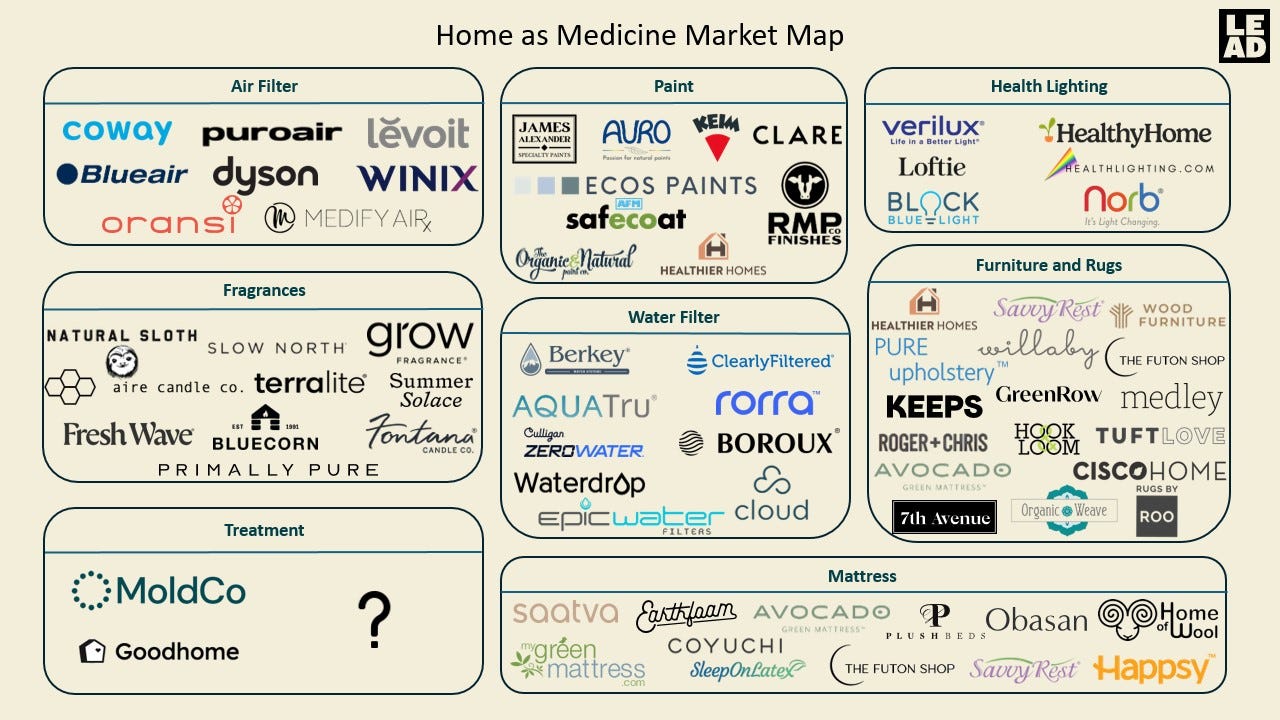
The Opportunity:
From 2017-2023, more than 40 million people moved in the United States, and the average person in the U.S. can expect to relocate 11.7 times in their lifetime.
What if every time someone moves, they could order a test kit to make sure that the new environment is supportive of health? What if in humid environments, people could check the health of their homes every six months?
What if one platform could test for:
Lighting
EMF
Water quality
Air quality
Mold
Chemical hazards
…and then instantly connect consumers with home specialists and solutions to address the issues found, rather than providing only pharmaceutical treatments or supplements?
If you are an innovator, builder, or passionate about solving these challenges, reach out to me on LinkedIn or connect with us at dealflow@lead.vc.
Thanks for reading! Feel free to share it!
No posts
Comments
Nothing yet. Say the first thing.
Sign in to join the conversation.