
Alzheimer’s disease (AD) is characterized by an accumulation of aggregated beta amyloid and tau proteins in the brain. While there is a debate about the fact that they are the true root cause of AD1, these proteins are clearly a sign that there is an issue. Clinical trials for drugs reducing the accumulation of beta amyloid have mainly failed for the moment2.
That being said, naturally removing them or preventing their accumulation could be a good sign that the disease’s root cause has been treated.
Multiple mechanisms or substances have been proposed to fight AD and some of them are detailed in this post because of their potential link with dry fasting / water homeostasis.
Autophagy is a mechanism that is involved in the degradation of dysfunctional parts of the cell. Its functioning seems to be impaired in AD:
Autophagy is an evolutionarily conserved lysosome-dependent cellular event in eukaryotes. It is closely linked to modulation of protein metabolism, through which damaged organelles and mis-folded proteins are degraded and then recycled to maintain protein homeostasis. Accumulating evidence has shown that impaired autophagy also contributes to AD pathogenesis.
Autophagy in Alzheimer's disease pathogenesis: Therapeutic potential and future perspectives
The data presented below shows that (in a rat study), dry fasting (rightmost graph) almost doubled autophagy markers in rats’ brain during the first day. In comparison, water fasting (middle graph) autophagy markers were minimally increased during the 2 first days and then a little bit more on the third day.
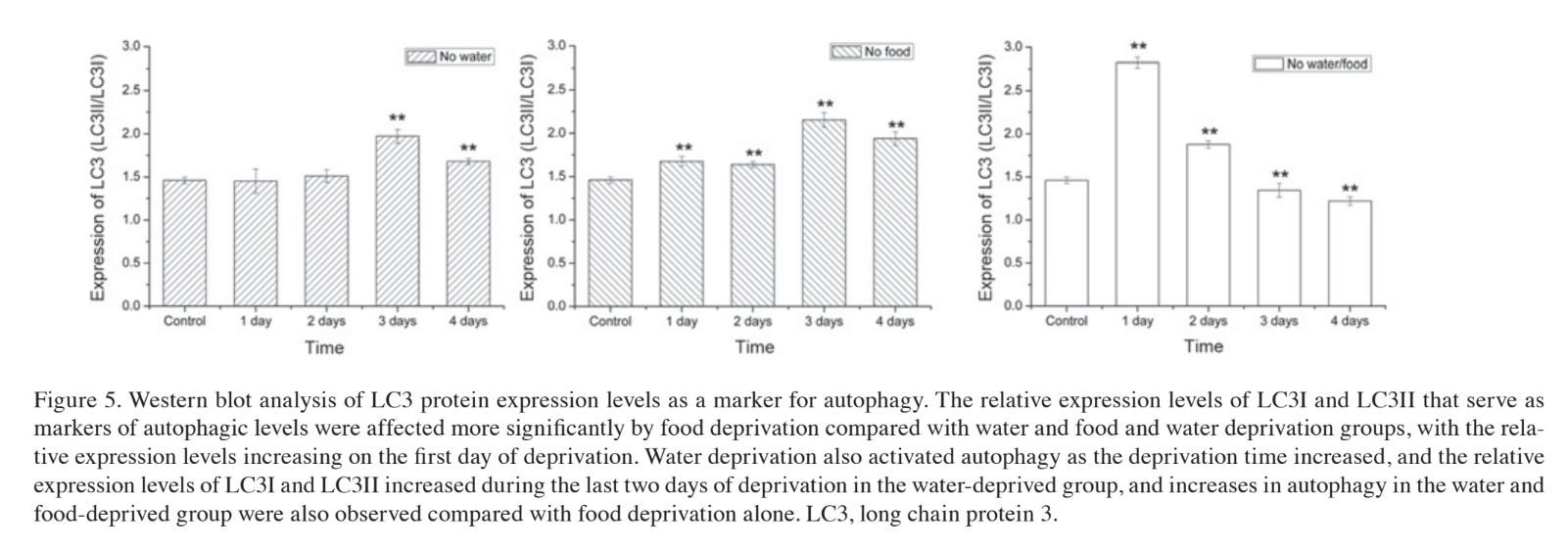
The 'selfish brain' is regulated by aquaporins and autophagy under nutrient deprivation
Metabolism of rats aren’t comparable to that of humans, we should thus not necessarily expect that autophagy in the brain would be twice that of the control but if these results transfer to human, it would indicate that dry fasting is best to stimulate autophagy, at least in the short term (as the marker then is reduced to control levels after the second day).
The glymphatic system (the cleansing mechanism of the brain) is thought to have a crucial role regarding AD, as it could help cleanse the metabolic wastes and aggregated proteins. The glymphatic system could rely in part on a protein, named AQP4 (Aquaporin 4), that allows the movement of cerebrospinal fluid into the brain. Thus, this protein seems to have an important role with respect to AD and its dysfunction could be a cause of accumulation of beta amyloid:
This revealed a mitigating role of AQP4 in Aβ pathogenesis, suggesting that regulating the glymphatic system via targeting at AQP4 may be an effective therapeutic strategy for clearing soluble Aβ in the brain of patients with AD.
Interestingly (even if it is considered in a pathological situation in the following publication), the glymphatic system flow could be increased in the case of peripheral (i.e. not directly related to the central nervous system directly) dehydration:
Moreover, animal studies demonstrated that peripheral dehydration triggers central up-regulation of AQP 4 receptors.
Water for thought: is there a role for aquaporin channels in delirium?
Among the sources which are cited to make this claim, the following publication analyzed the expression (via quantification of mRNA, which might differ from the quantity of proteins produced) of AQP4 in the hypothalamus of chickens and found an increase after dehydration:
Quantitative analysis by real-time RT-PCR analysis showed that the mRNA expression of AQP4 in the hypothalamus significantly increased after dehydration.
Effect of water deprivation on aquaporin 4 (AQP4) mRNA expression in chickens (Gallus domesticus)
Thus, conditions of dehydration could upregulate the AQP4 protein expression, facilitate the CSF entry in the brain and improve the glymphatic flow.
Finally, a post about the link between water homeostasis and the glymphatic system has already been written on this Substack, describing how vasopressin and hyperosmolarity (blood osmolarity should normally increase when water is lost) could help boost the glymphatic flow:
Glymphatic system
·
May 12, 2023
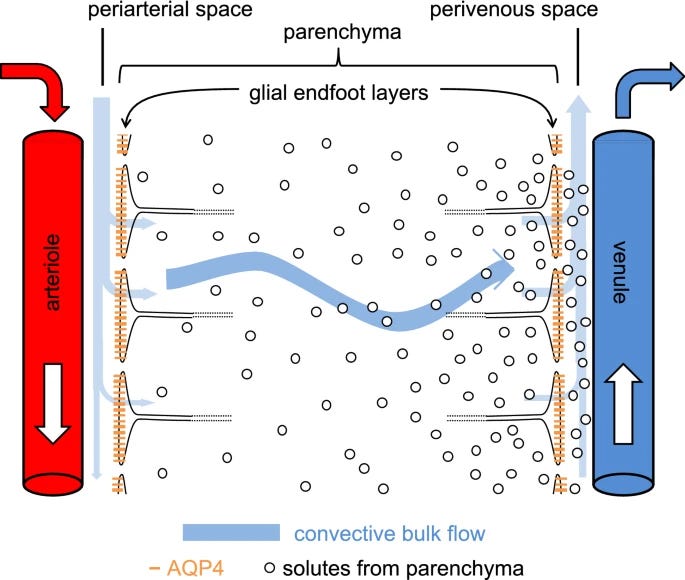
The glymphatic system is the recently discovered cleansing system of the brain. Similarly to the lymphatic system for the rest of the body, it allows the metabolic waste products to be taken out of the central nervous system. The glymphatic system is known to be most active during sleep, but there are other factors determining its efficiency.
There is a number of studies about Ramadan fasting but there are two of them on which we will focus as they imply that dry fasting could have a beneficial effect regarding AD.
First, Ramadan fasting seems to increase the BDNF (Brain-Derived Neurotrophic Factor) protein quite substantially (almost doubled), as described in this excerpt and the graph above.
Our findings suggest that plasma levels of serotonin, BDNF and NGF were significantly increased during fasting month of Ramadan.
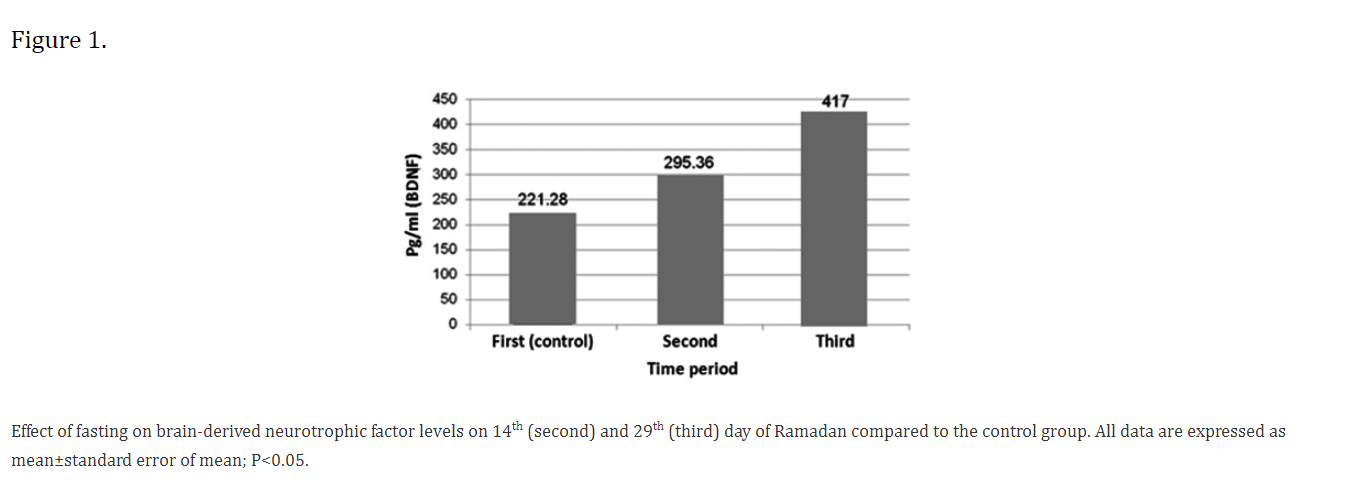
BDNF is thought to play a role in memory and has been found to be lowered in AD:
BDNF is a key neurotrophic molecule that has been shown to enhance synaptic plasticity and improve learning and memory. Disruption of BDNF has been found in different stages of AD. In this review, we discuss the effect of BDNF on AD-related pathologies, including Aβ accumulation, tau phosphorylation, neuroinflammation, neuronal apoptosis, and cognitive decline.
Brain-derived neurotrophic factor in Alzheimer’s disease and its pharmaceutical potential
Also, Ramadan fasting could also play a role with respect to beta amyloid accumulation as it seems like it could reduce the availability of its precursor, the APP (Amyloid-beta Precursor Protein) protein:
APP, the precursor of amyloid β, appears to play a significant role in the development of Alzheimer's disease [27]. APP was proposed to trigger atherothrombosis after the accumulation of amyloid β peptides in the cerebral vessels in Alzheimer's disease [70]. We observed a significant reduction in the APP GP level at the end of 4th week during 30day intermittent fasting compared with the level before 30-day intermittent fasting.
Dry fasting might induce the production, transport and uptake of osmolytes by cells of the body, to sustain the loss of water. Indeed, osmolytes are needed to protect cells against osmotic stress, for example, this publication describes the accumulation of osmolytes (proline in this case) in cells submitted to osmotic stress:
Proline is known to be up-regulated during hypertonic stress in plants and bacteria and to have an osmoprotective function. Proline functions as an organic osmolyte, molecular chaperone, metal chelator, and reactive oxygen species scavenger independent of caspase activation (52). These properties make proline an efficient stress response molecule. We argue that proline has an underestimated and critical role in protecting human cells from cell death in hypertonic conditions […].
Kinetics of osmotic stress regulate a cell fate switch of cell survival
By the way, this publication also explains that osmotic stress is less stressful when the time is given to the body to adapt (i.e. by accumulating osmolytes). So, dry fasting should not be practiced in very dry and/or hot conditions. Sports should be limited too so as to avoid quick dehydration.
Osmolytes are thought to be helpful regarding AD and aggregation of beta amyloid:
The key cytopathologies in the brains of Alzheimer's disease (AD) patients include mitochondrial dysfunction and energy hypometabolism, which are likely caused by the accumulation of small aggregates of amyloid-β (Aβ) peptides. […]
The second is to use the naturally occurring osmolytes to prevent the formation of toxic forms of Aβ and prevent oxidative stress. […] Osmolytes are brain metabolites which accumulate in tissues at relatively high concentrations following stress conditions. Osmolytes enhance thermodynamic stability of proteins by stabilizing natively-folded protein conformation, thus preventing aggregation without perturbing other cellular processes. Osmolytes may inhibit the formation of Aβ oligomers in vivo, thus preventing the formation of soluble oligomers.
Therapeutic Approaches to Delay the Onset of Alzheimer's Disease
Dry fasting could act on the risk of AD in multiple ways:
By increasing autophagy levels which might help degrade proteins aggregates / misfolded proteins,
By improving the glymphatic flow which could help to flush beta amyloid or other brain’s wastes,
By reducing the APP protein (precursor to the beta amyloid) availability and increasing BDNF levels,
By leading to osmolytes metabolism and thus their availability to brain’s cells, protecting them fromt beta amyloid or other stresses.
Regarding this last point, osmolytes (proline, betaine, etc.) intake could be decisive.
No posts
Comments
Nothing yet. Say the first thing.
Sign in to join the conversation.