
Hello Shaker,
Here’s all that you’ll experience in today’s issue:
💡Learning Bites: What really drives workplace learning?
🗓️ Community Calendar: Be part of Leadership Cluster, ID Power Hour, The L&D Strategy Clinic, and other events happening in the Shakers Community
🖌️ Community Creations: Welcome new Core Team members and Celebrating 6 years of L&D Shakers
🔖 Resource Reel: A collection of resources on learning, instructional design, L&D thought leaders and many more
A new systematic review by Marijn Wijga, Simon Beausaert, and Eva Kyndt (2025) pulled together 73 studies (2012–2022) to unpack one big question:
What actually drives people to learn at work and what stops them?
The researchers examined both individual and contextual antecedents, or in simpler terms, the personal traits and workplace conditions that either enable or inhibit learning in the flow of work.
Their goal was to understand how workplace learning actually occurs and how it can be effectively supported in modern, evolving work environments where traditional training alone is no longer sufficient.
They found that engagement in learning depends on more than just access to opportunities. It’s deeply shaped by who the person is (their motivation, confidence, career stage, and beliefs) and where they work (the job design, learning culture, leadership, and organisational systems around them).
Here’s what the researchers identified as the two broad categories of antecedents driving workplace learning:
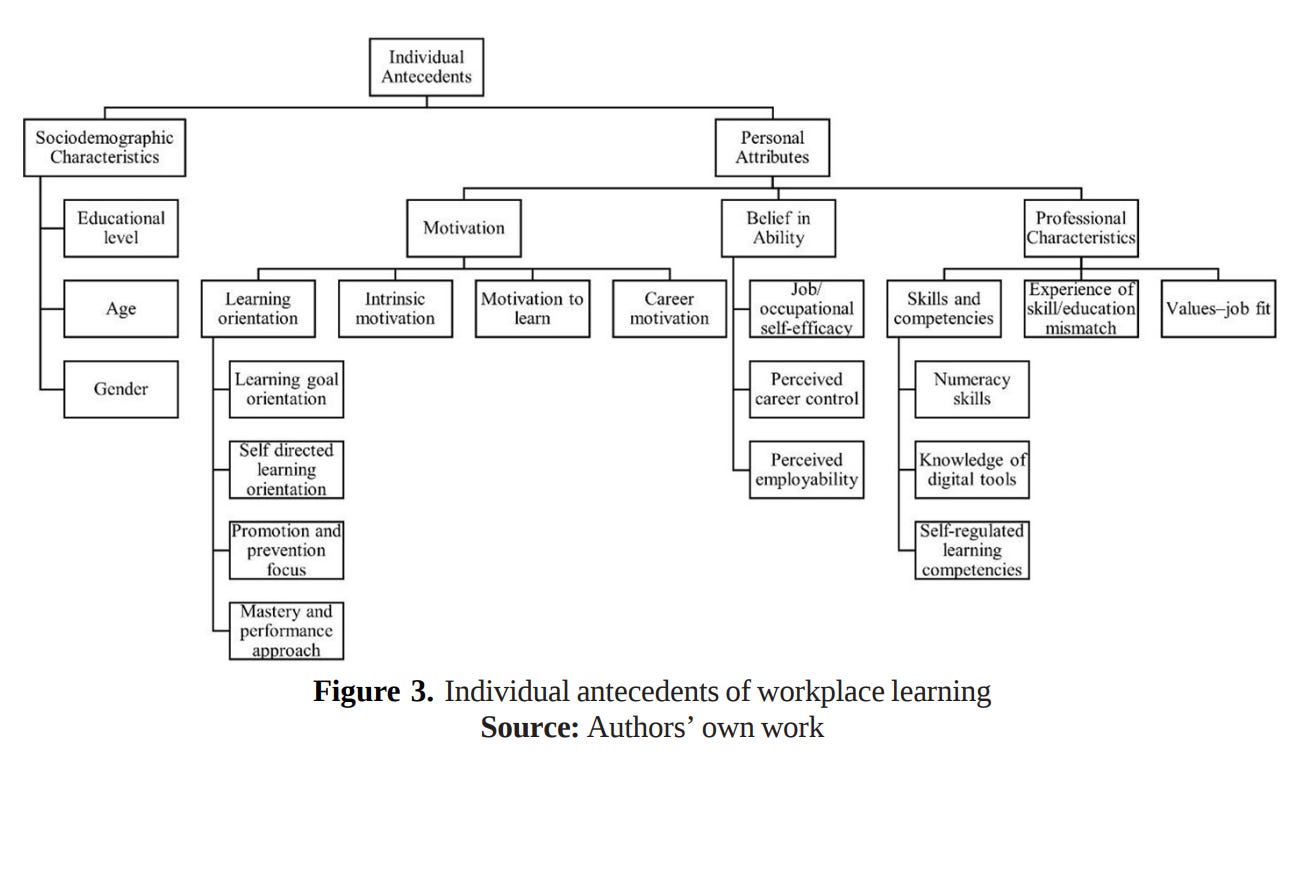
and,
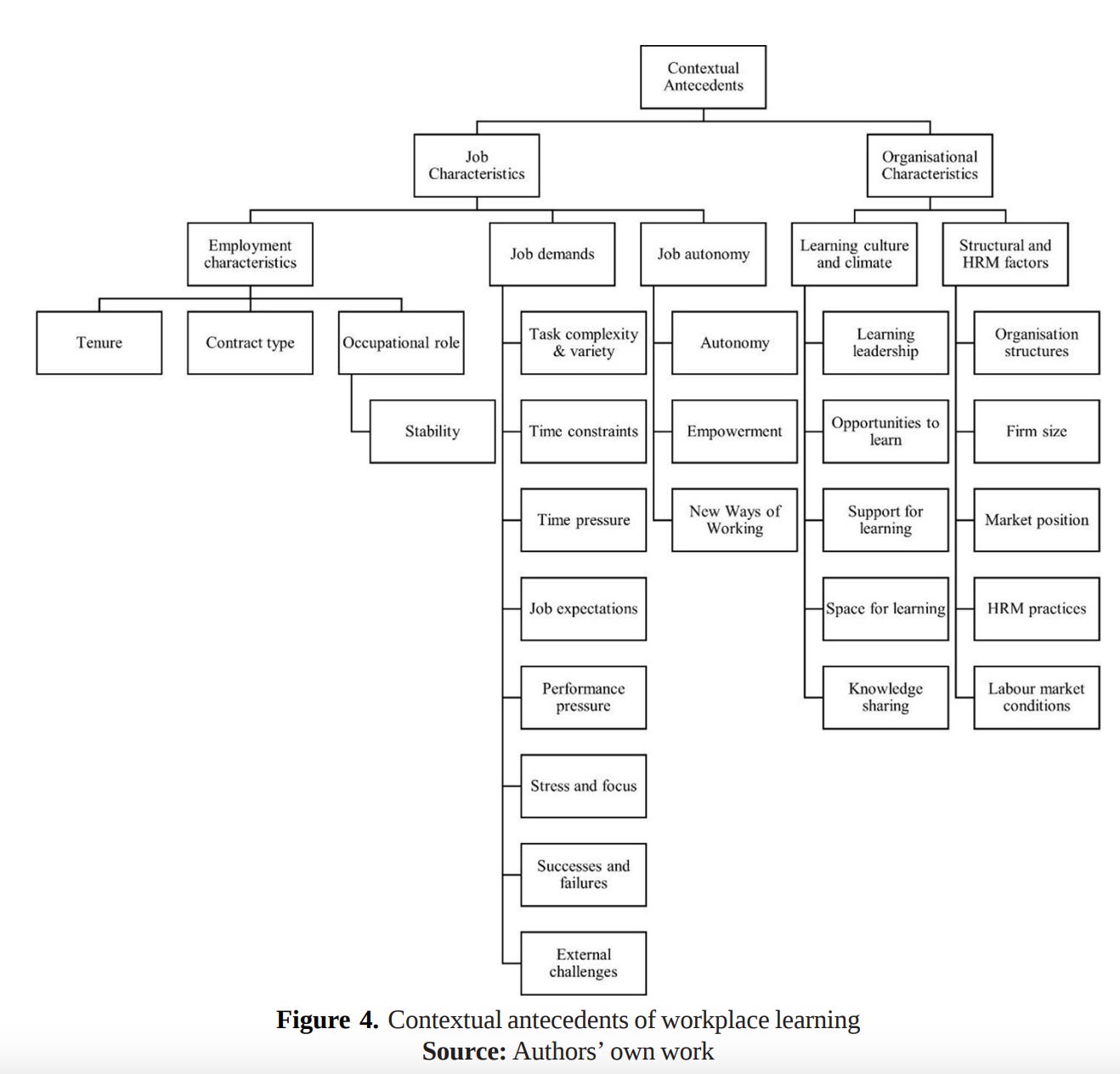
Workplace learning is contextual. It’s not a standalone event but a process embedded in the daily rhythm of work, influenced by both who the employee is and the conditions they work in.
Individual differences matter. Motivation, self-efficacy, and learning orientation consistently predict how actively people engage in feedback-seeking, reflection, and experimentation.
Education level and career stage shape engagement. Higher-educated employees and those in mid-career stages show the highest participation in workplace learning. Learning dips slightly as employees approach retirement, suggesting a need for targeted re-engagement strategies.
Gender differences are nuanced. Women tend to engage more in feedback and peer learning, while men report slightly lower participation in those areas, though overall participation rates don’t differ much.
Perceived skill gaps can drive learning. Employees aware of their capability gaps are more likely to self-teach and learn from colleagues, especially when they feel ownership over their career growth.
Job characteristics are powerful levers. Variety, autonomy, and moderate challenge foster learning. Routine, overload, and unclear expectations suppress it.
Culture still trumps content. Supportive leadership, psychological safety, and time for reflection are the backbone of any learning culture.
HR systems and structure matter too. Transparent performance appraisals, career paths, and autonomy-supportive design are all enablers.
Digital tools are reshaping learning. Virtual collaboration and access to organisational knowledge boost learning but only when paired with trust and intentional design, not just technology for its own sake.
Honestly, what struck me while reading this study and in my conversations with other L&D practitioners is how often we still treat learning as something we deliver, instead of something we design for.
This research makes it pretty clear: workplace learning doesn’t only need to live in workshops; it can live in the work itself.
Here’s what L&D can really do across different areas of practice:
Design for reflection, not just completion. Build in after-action reviews, peer check-ins, or “learning huddles” after projects. These moments create space for sensemaking and turn experience into insight.
Make learning challenges feel like part of the job. Replace artificial scenarios with real business problems; this taps into intrinsic motivation and learning orientation.
Start with meaning, not modules. Frame learning initiatives around why this matters to you in your work today. People don’t learn because they “should” , they learn because it helps them get better at what matters most to them.
Reframe managers as learning multipliers. Equip them to give regular feedback, model curiosity, and share what they’re learning.
Psychological safety is a learning KPI. Help leaders see that when people fear mistakes, learning shuts down. Encourage “safe-to-fail” discussions and normalise talking about experiments that didn’t work.
Micro-culture beats macro-policy. Learning culture is built in small day-to-day acts like who gets credit for trying something new, how time for reflection is treated, and how curiosity is rewarded.
Co-design work that teaches. Partner with HR and line managers to identify where variety, stretch, or problem-solving can be intentionally built into roles.
Use performance reviews as reflection tools. Simple questions like, “What did you learn this quarter?” or “What feedback helped you improve?” make learning visible and valued.
Balance challenge and capacity. Overload shuts down reflection. A moderate stretch, enough to challenge but not burn out, is the sweet spot for learning.
Curate for connection, not just content. The best digital learning ecosystems enable the flow of knowledge and collaboration, not just consumption.
Think Slack learning channels, digital peer circles, or quick “office hours” for experience sharing.Make informal learning visible. Celebrate stories of “I figured this out last week” or “Here’s how I solved that problem.” It reinforces that learning happens in the doing.
Use digital autonomy wisely. New Ways of Working (NWW) - flexibility, autonomy, and access to resources, boost learning when paired with support and psychological trust.
Personalise learning by career stage.
Early career: structure, clear feedback loops, and mentors.
Mid-career: challenge, autonomy, and mastery opportunities.
Late career: mentoring, storytelling, and codifying expertise.
Connect learning to identity. People learn when they see it as part of who they’re becoming, not just what they’re supposed to know.
What this review reminded me of is that learning isn’t a luxury; it’s a by-product of good work design and good leadership.
We don’t need to “make” people learn; we need to make it safe, meaningful, and possible for them to do so in the middle of their real work.

What’s better than learning? Learning together. Discover our upcoming local hub events and community sessions, crafted by the Core Team to help you connect, collaborate, and learn together.
🩺 And, The L&D Strategy Clinic is back!
A hands-on space where L&D pros turn training requests into business stories and walk away with a sharper, business-focused L&D strategy. Get real-time feedback, frameworks, and peer coaching to connect learning with impact.
Upcoming cohorts:
🗓️ 5 Nov → Join here
🗓️ 3 Dec → Join here
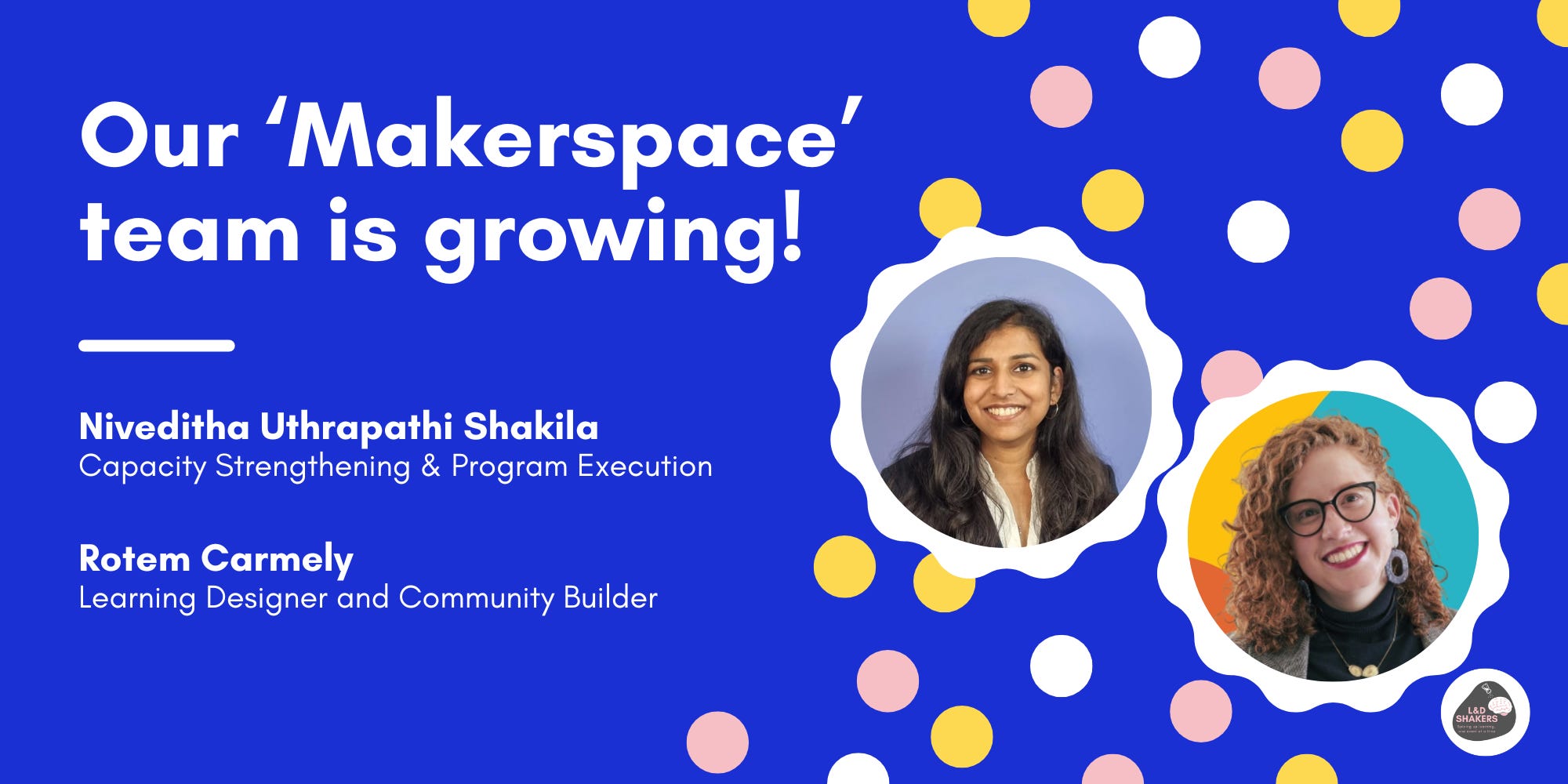
Join us in welcoming Rotem Carmely and Niveditha Uthrapathi Shakila to the Makerspace Core Team, alongside Petra and Supriya Harikumar! 💛
Huge thanks to Anna Carolina for her incredible contributions this past year, and a warm welcome to our new Makerspace leads! 🌻
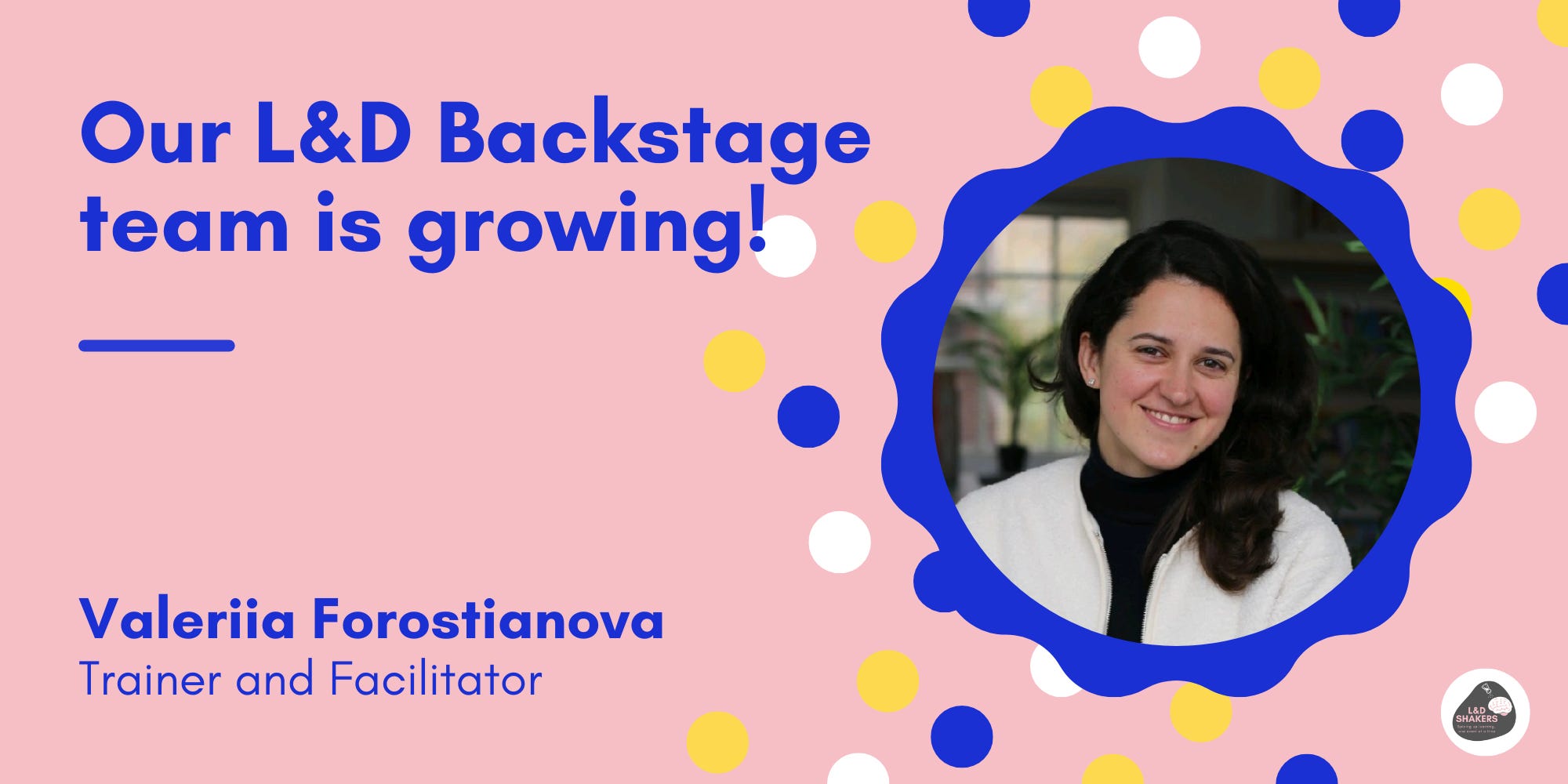
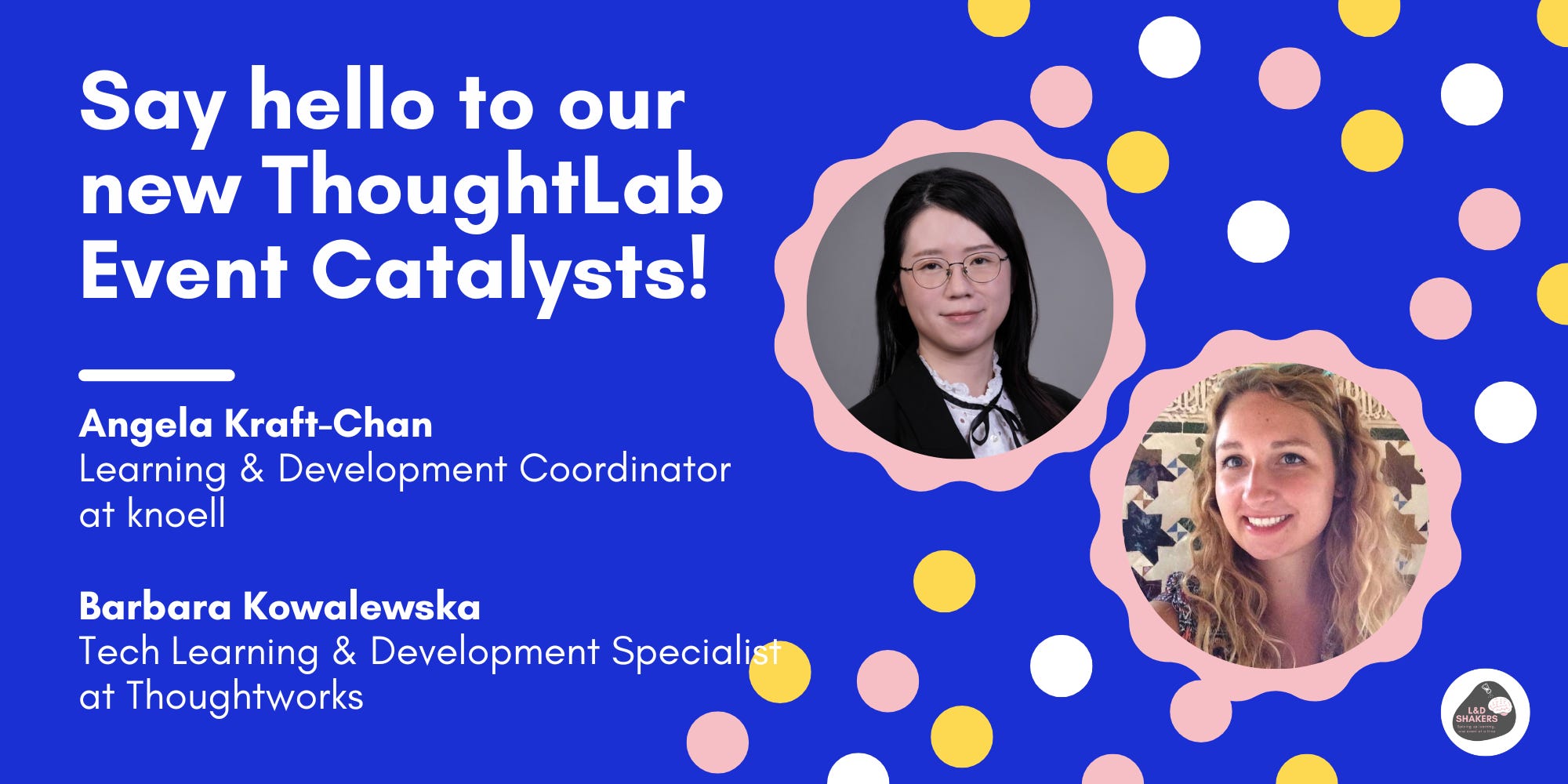
After two years leading ThoughtLab, Valeriia Forostianova is moving to co-lead L&D Backstage with Joana Alexandrino, bringing her trademark energy to a new format! 💛
Taking the ThoughtLab forward, we’re thrilled to welcome Angela Kraft-Chan and Barbara Kowalewska, two brilliant new Shakers ready to evolve our longest-running event. 💛
A big thank you to Patrícia Bochňáková for her time and heart in co-leading Backstage this year! 🌻
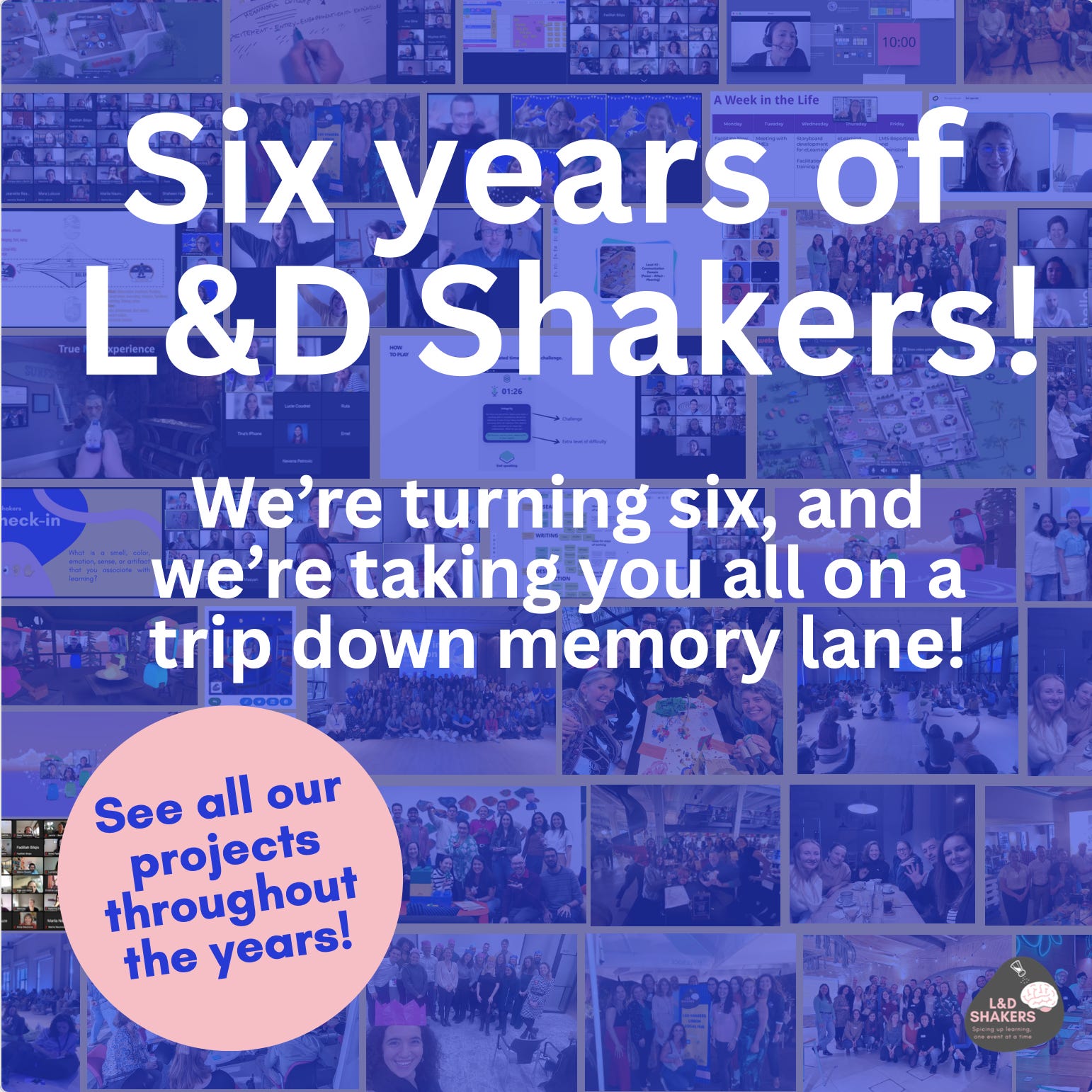
6 Years of L&D Shakers
Six years. 8,000+ members. One incredible community. 💛
What started as five strangers at lunch in Amsterdam became a global movement to spice learning up! 🌶️
A huge thank-you to Anamaria for starting this community and inspiring us every single day, and to all our Core Team members and Shakers who continue to contribute, create, and keep the spirit alive.
Here’s to six years of shaking up L&D, and many more to come! 🎉 #HappyCommuniversary

The Learning Environment Analysis (LEA) Guide – A practical toolkit to design smarter, frustration-free L&D strategies. Built on the Double Diamond framework, it helps you map learning needs, run field sessions, and turn insights into action with ready-to-use templates and tools for every step.
The Future of the CLO - As work and learning merge, the role of the CLO is being redefined. This piece explores how today’s learning leaders can make learning truly live inside work, not sit beside it.
How to Influence Senior Leaders in 10 Minutes - From the #3-lnd-means-business Learning Cluster, smart, tactical advice on framing proposals that land, using the right language, tone, and tools to make your message stick.
From Storyboard to Interactive Prototype (with AI) - Dr Philippa Hardman shares three AI tools that turn your storyboard docs into interactive prototypes, bridging design and delivery faster than ever. A gem for L&D designers testing what’s next.
Introducing the First Validated OD Competency Framework - A milestone moment for the OD field. The MOST framework (Mastering Organisational and Societal Transformation) finally gives practitioners a research-backed map of what great OD practice looks like, plus a free self-assessment to explore your strengths.
30 L&D Voices Worth Following - If your LinkedIn feed feels noisy, this curated list spotlights the thinkers consistently sparking real learning and reflection in the L&D space. A brilliant shortcut to finding signal in the noise.
The Behaviour Change Technique Tool - A powerful, evidence-based tool that links 74 behaviour change techniques to the mechanisms that make them work. Great for anyone designing interventions and wanting to ground them in science, not guesswork.
Thank you very much, Matt, for sharing the cool stuff always!
6 Low-Lift Ways to Coach in the Flow of Work - Coaching doesn’t have to mean hour-long sessions and frameworks. This one shows six simple, human ways leaders can coach in real time through moments, not meetings.
〜See you soon
Till then, keep spicing up your learning! 🧠🧂
Sejaal
Thank you for reading The Learning Brief. Would you mind helping us spice up the learning of others? Click below!
No posts
Comments
Nothing yet. Say the first thing.
Sign in to join the conversation.