
Now that the United States is on the cusp of what will be a frenetic campaign season, political prognostication will become as much a national sport as predicting which teams will play in the World Series or whether Harry and Meghan’s marriage will survive their return to the UK. Much of the political maelstrom will revolve around poll-watching, each new result evoking either hope or dread depending on which side of the ideological chasm one resides.
But polls no longer seem to have the predictive value they were once thought to. The question many Americans now ask as they peruse the results of the latest poll is, “Why do I bother when polls are always wrong?” Then they ask the very same question as they peruse the results of the next one.
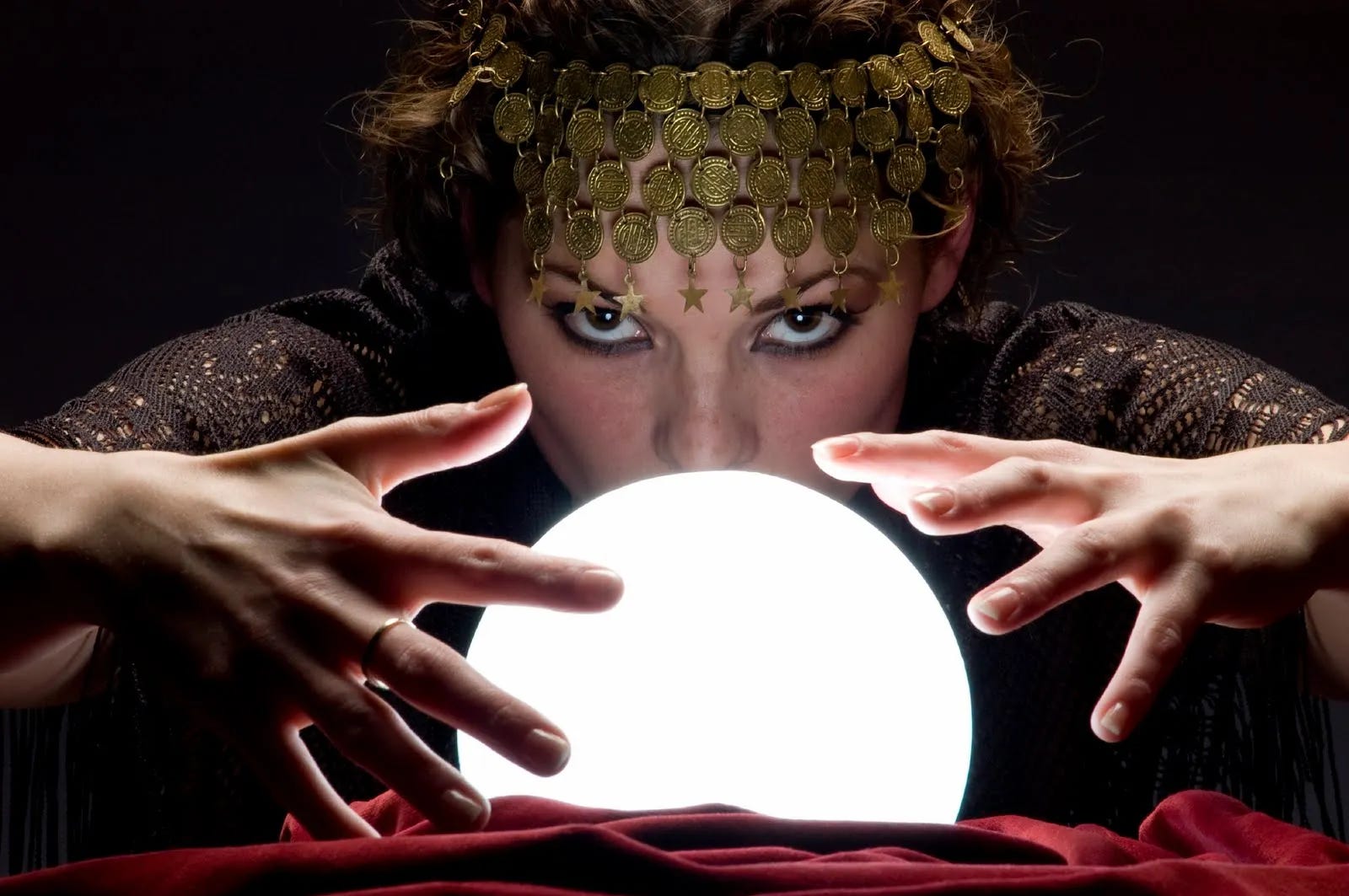
Although acknowledging some recent difficulties, pollsters protest that they are right far more often than they are wrong. That’s true, but, well, so what? How is a reader supposed to figure out if this is one of the many times they are correct or one of the less frequent times when they blew it? After all, five chambers of the gun are empty in Russian roulette but that will hardly make someone confident of the result when they pull the trigger.
Generally, pollsters ascribe their (occasional) errors to flawed modeling and they are correct that how a model is constructed will be the key determinant of the results it produces. The recent Democratic primary in Michigan is an excellent case in point. Most respected polls had Dr. Abdul El-Sayed, a progressive, well in the lead, often by double digits. When the results were counted, however, El-Sayed barely squeaked by against moderate Haley Stevens, winning by less than 15,000 votes out of the 1.5 million cast.
Pollsters then frantically thrashed about, trying to explain away such an enormous disparity between what they predicted and what actually transpired. Most settled on primaries being much more difficult to forecast—which doesn’t stop them from trying—although some grudgingly admitted that their algorithms might have been slightly flawed…because primaries are so difficult to forecast.
And the Michigan race was hardly an exception. In addition to polls grossly underestimating Donald Trump’s support in 2016 and to a lesser extent in 2024, even polls whose methodology was considered the most scientific and whose operations were the most transparent have endured a recent string of gross blunders in both national and statewide elections. And this does not include Allan Lichtman who, rather smugly, boasted that his 13 keys to victory would land Kamala Harris in the White House. (The Wisconsin gubernatorial primary, often cited as another example, actually was not. Most pollsters had progressive Francesca Hong winning approximately 40% of the vote and she finished with 39.4. That race was thrown asunder by other candidates either dropping out or dropping back in.)
The accuracy of poll results is dependent on turnout, not proclivities. What modeling determines is a potential vote, how things will play out if turnout, broken down by a complex formula weighting various demographics, matches the poll’s assumptions. In Michigan, for example, El-Sayed’s support was heavily weighted to voters under 30, who were considered highly passionate this time around, although that is traditionally a demographic that does not turn out in great numbers as compared to, say, voters over 55. In the end, however, the under-30 vote did not meet expectations while moderates, fearing El-Sayed would lose in November, voted in far greater numbers than expected.
As such, it is easy to dismiss polls as empty forecasts, much as soft drinks are empty calories. But polls do have some efficacy and can provide useful indications of which way sentiment is shifting and also whether the coming vote has the potential of moving in one direction or another.
One way to achieve this is to compare the results of the same poll over time, since watching how results trend when the model is the same is more reliable than comparing polls. For example, in presidential approval polls, Reuters/Ipsos is widely considered as good as they come. Most recently, Trump had sunk to 33% approval from 35% just two weeks prior. Two weeks before that he was at 37% and his approval ranged from 34% to 38% since February, when it dropped out of the low 40’s. What that tells us is not just that Trump’s approval has eroded slightly in six months, but that he has failed to improve his standing with an extremely limited window in which to do so before the midterms.
On the other hand, paying attention to aggregators, like Nate Silver, may provide a broad picture but his results are skewed by the inclusion of transparently partisan polls in his averages. But here as well, both Rasmussen and RMG, both with a distinct Republican bias, show Trump’s unpopularity remaining much the same and perhaps increasing slightly at a time when Republicans can least afford it.
But these results are not especially helpful in a vacuum and must be overlaid with real world factors, such as economic statistics and election outcomes. What the last year has demonstrated is that economic conditions are growing a lot more perilous for a lot more Americans—there is virtually no metric that indicates otherwise—and voters have expressed extreme displeasure at the ballot box, both in special elections and the off-year results in 2025.
As such, we do not need forecasters like Larry Sabato or Cook Political Report to tell us that Republicans are in trouble. But how much trouble is difficult to determine. This is when going back to less predictive polls is a mistake. It seems clear, for example, that Mary Peltola’s senate race in Alaska or Scott Turek’s in Iowa are closer than anyone would have thought six months ago. And James Talarico and Sherrod Brown are without question breathing down their opponents’ necks. But are any of them ahead? We won’t know that until November.
One of the best sports’ aphorisms is that no matter how big your lead, always play like you’re behind. (The San Antonio Spurs forgot that one.) The same is true of the coming election. Thanks to Donald Trump’s arrogance and incompetence, these midterms are more there to be won than Democrats had any right to expect.
So let’s stop fixating on polls and keep playing like we’re behind.
No posts
Comments
Nothing yet. Say the first thing.
Sign in to join the conversation.