
I’m not entirely sure whether Milan changed this year or whether I did.
Perhaps it was simply the lens I was looking through. Perhaps it was a coincidence. Or perhaps there really was a noticeable divide emerging between the spaces I found myself drawn towards and those I couldn’t wait to escape.
Are you coming to the Milan In-Review event? Bree and I will be presenting an un—biased breakdown of what matters from Milan Design Week. The colours, themes, stand-out furniture releases and more. Can’t wait to see you there!
What I noticed throughout Milan Design Week was a growing tension between what I can only describe as masculine and feminine interiors.
Not male and female designers. Not biological gender. But two very different ways of thinking about space.
One prioritised intellect, architecture, control and restraint.
The other prioritised emotion, comfort, atmosphere and human connection. And nowhere was this divide more apparent than at the annual Elle Decor exhibition.
Every year, Elle Decor takes over the same extraordinary Palazzo Bovara in Milan and transforms it into an immersive installation exploring ideas around contemporary living. It is one of the most anticipated exhibitions of the week.
Last year was designed by Patrica Urquiola, and this year anticipation was even higher.
Thanks to Bree Banfield, my Design Anatomy co-host, we were invited to a private press preview before Milan Design Week officially opened. No queues. No crowds. Just a guided tour through the installation with time to absorb every detail.
This year's title was Sensory Landscape — a project conceived by Piero Lissoni alongside Antonio Perazzi for the landscape design and the contribution of netsuke studio for the exhibition design coordination.
As we entered, I was impressed.
As I left, I realised I hated it, which is unusual.
As a designer, there are many spaces I admire but wouldn’t choose to live with. There are spaces I don’t personally connect with but can still appreciate intellectually.
This was different.
I wanted to leave.
The strange thing is that I loved how strongly it made me feel.
Because indifference is far worse than dislike.
The concept was focused ‘on the senses as a means of reconnection with space’ however I could not connect at all, no matter if the scents were tailor made for the space with a specific soundtrack - I just wanted to get out of there.
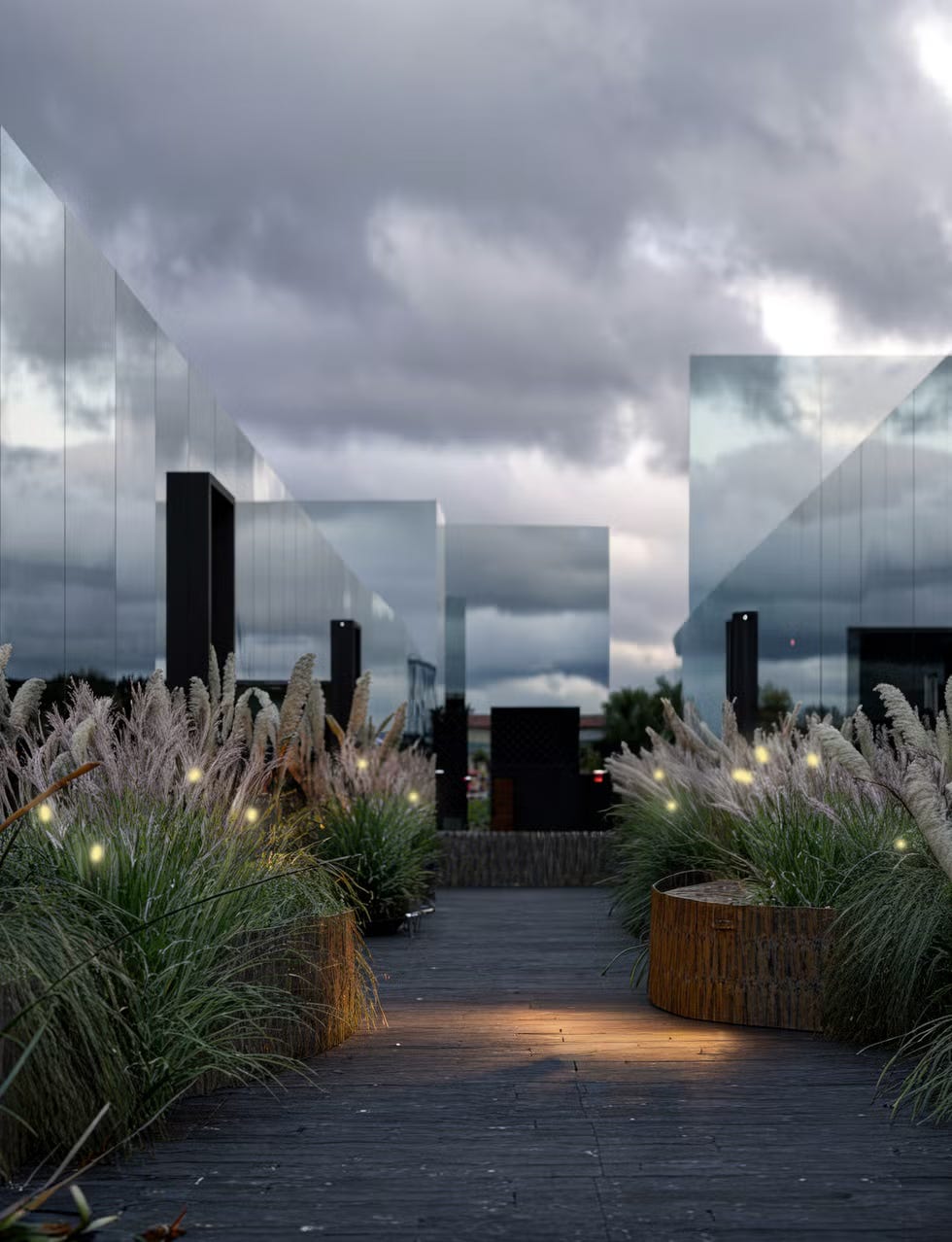
The opening sequence was magnificent. A winding pathway cut through tall grasses beneath a painted cloud mural. Mirrors expanded the boundaries and created the illusion that the landscape continued infinitely beyond the room. The lighting was theatrical and moody. Nature, reflection and atmosphere combined beautifully.
Then things changed.
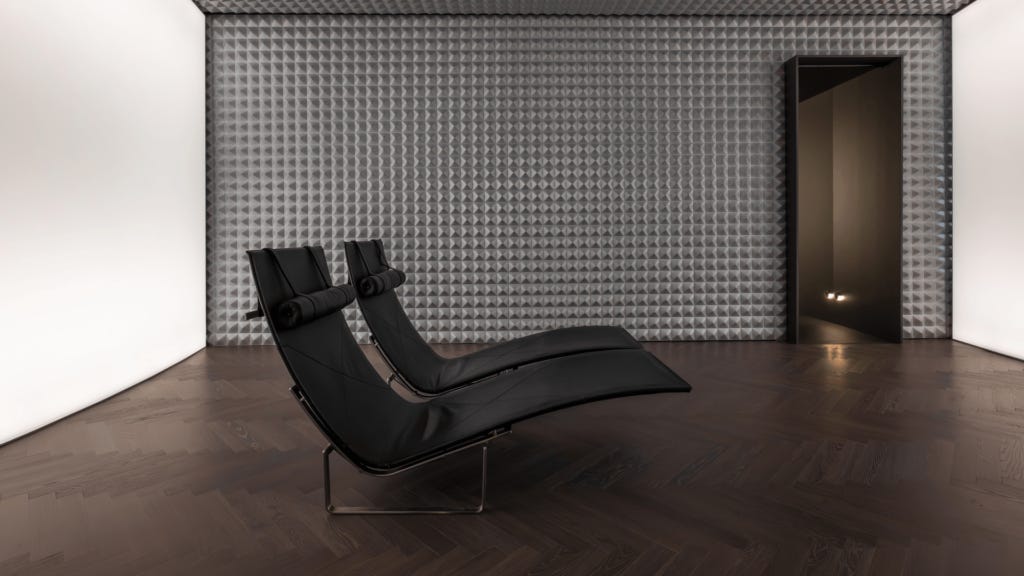
One room felt disturbingly like an interrogation chamber. The walls were lined in dark grey acoustic foam with a pyramid texture. In the centre sat a pair of chaise longues.
It was probably intended as a meditation on sound, isolation or sensory experience.
What I felt was anxiety.
Another room was little more than black walls displaying a Picasso beside an Andy Warhol.
The implication seemed to be that proximity to greatness creates meaning.
I’m not convinced it does.
There was a beautiful AI-generated floral installation by Fuse within the space which I found genuinely captivating. But the room itself felt hollow. A collection of important names rather than a compelling idea.
The library was perhaps the clearest expression of what troubled me.
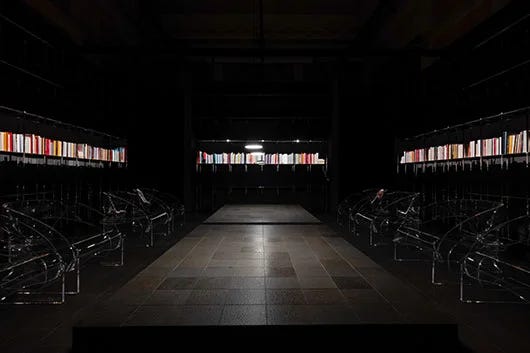
Black gloss walls. Black gloss floors. Empty chrome USM shelving wrapping the perimeter. A single shelf of books. Furniture positioned with almost mathematical precision.
The lighting was intentionally disorientating. Small pendants hung below eye level so the fixtures themselves disappeared and only their effect remained visible.
It was clever. Very clever. Perhaps too clever.
The room felt hard, controlled, reflective and distant. It reminded me of a certain strain of 1990s minimalism that valued intellectual purity above all else.
Piero Lissoni's approach is radical and precise, founded on a conscious subtraction: “No superfluous decorative elements; even the presence of materials is discreet and essential. In my vision, Sensory Landscape is a catalog of clear-cut, almost black-and-white sensory experiences, capable of leading the visitor not toward a neutral experience, but toward a clear stance. The invitation is to rediscover the value of measure and of a kind of ‘visual silence,’ where rationality is not a limit, but a tool to rediscover meaning and depth in space.”
I kept waiting for warmth. For softness. For humanity.
For some acknowledgement that people might actually want to spend time there. And perhaps that is where my discomfort originated. The exhibition seemed designed to be admired rather than inhabited. Observed rather than lived in.
Its success was measured in concepts rather than comfort. Yet what fascinated me was that this wasn’t an isolated experience.
As I moved through Milan, I kept noticing traces of the 1990s returning.
Black lacquer. Black leather. Reflective surfaces. Strong geometry. Monolithic forms.
And those glowing backlit white walls that seemed to appear everywhere.
I remembered seeing kitchens presented this way in magazines during the 1990s. Futuristic white membranes glowing from within. A vision of modernity that felt sleek and optimistic.
But then I visited Poliform, which complicated my theory entirely.
Because Poliform was also embracing some of this language. Black. Gloss. Reflection. Minimalism.
The difference was atmosphere.
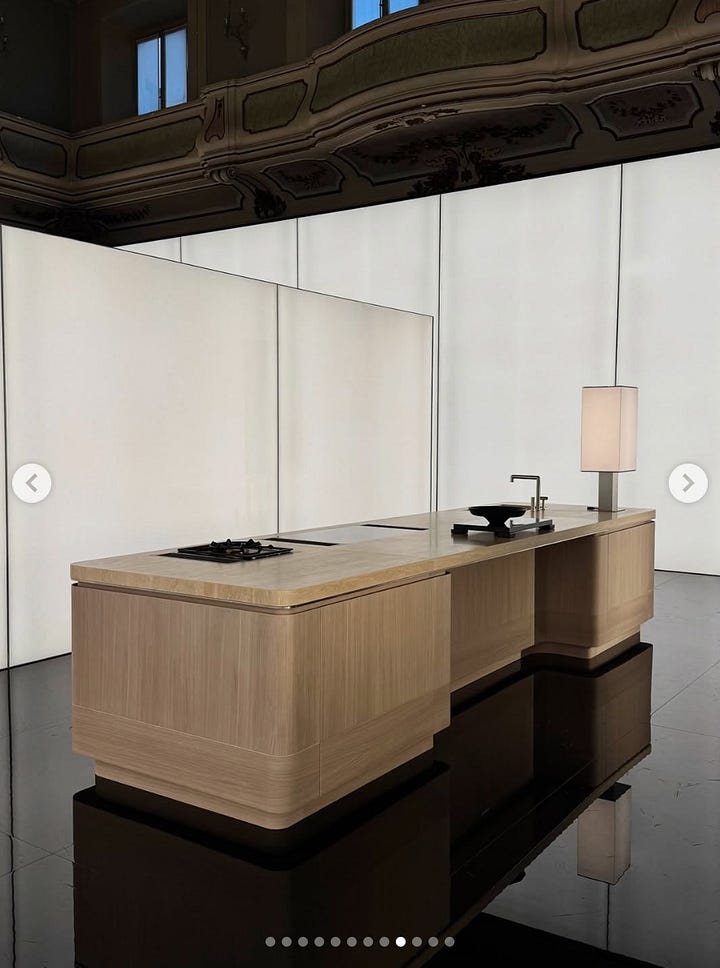
Inside a magnificent historic palazzo sat a kitchen installation composed of crisp architectural forms and a glowing backlit white wall. The contrast between the ornate decorative shell and the contemporary intervention was striking.
The white felt brighter because of the darkness surrounding it. The modernity felt sharper because of the history surrounding it.
The tension made the space interesting. The black surfaces no longer felt cold. They felt deliberate.
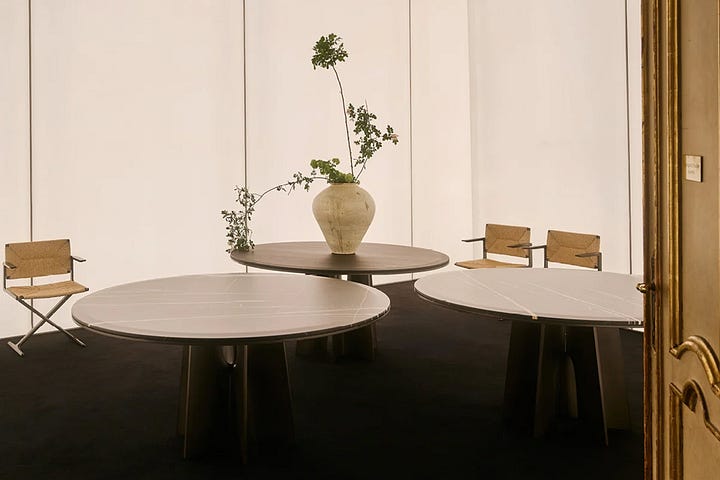
This was when I realised that perhaps what I was responding to wasn’t style at all.
Because Poliform was using many of the same ingredients. The difference was emotional.
The spaces that stayed with me this year weren’t necessarily softer. They weren’t necessarily more colourful.
They were simply more human.
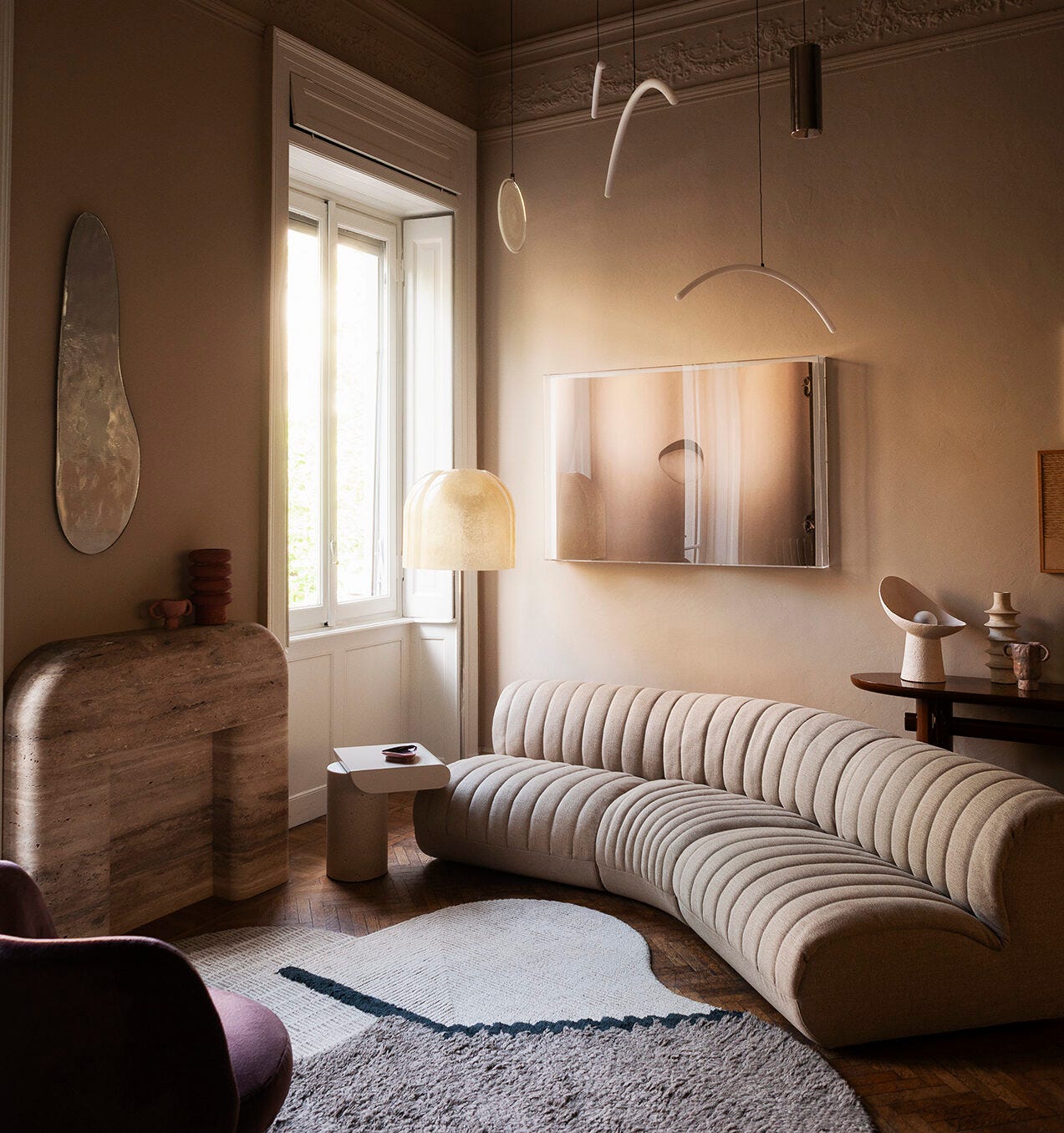
Instead of glossy surfaces, they offered materials you wanted to touch. Timber with visible grain. Handmade tiles. Textured wool upholstery.n Natural stone.
Layers that revealed themselves slowly rather than announcing themselves immediately.
The studio that embodied this most completely was Studio Pepe.
In fact, by the end of Milan, I realised almost every space I had fallen in love with shared one thing in common.
Studio Pepe had designed it. Their former studio space, reimagined as an installation called The Intimacy, was one of the most beautiful environments I experienced all week.
And when I say beautiful, I mean it brought an actual tear to my eye, which sounds dramatic. And perhaps it was.
It could have been exhaustion. It could have been the fact I hadn’t yet had coffee that morning. But I don’t think so.
The space possessed that elusive quality that designers spend entire careers trying to create.
It felt right. The scale felt right. The proportions felt right. The colours felt right. Everything felt intentional but never forced. Collected rather than curated.
There were creams, taupes and soft beiges layered together with unexpected moments of chartreuse, dusty pink and yellow.
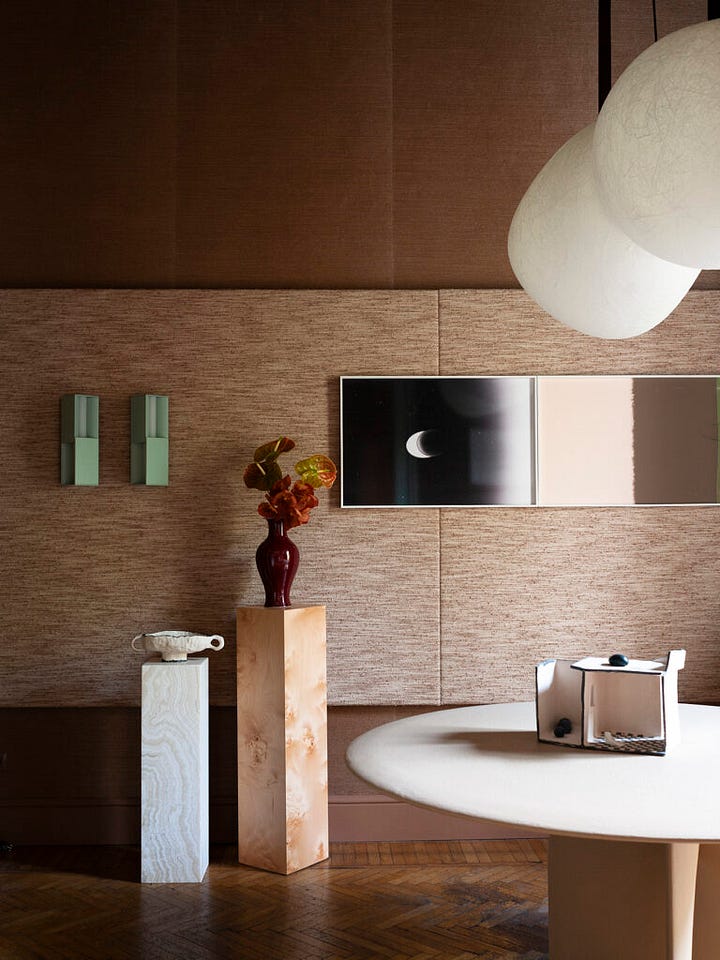
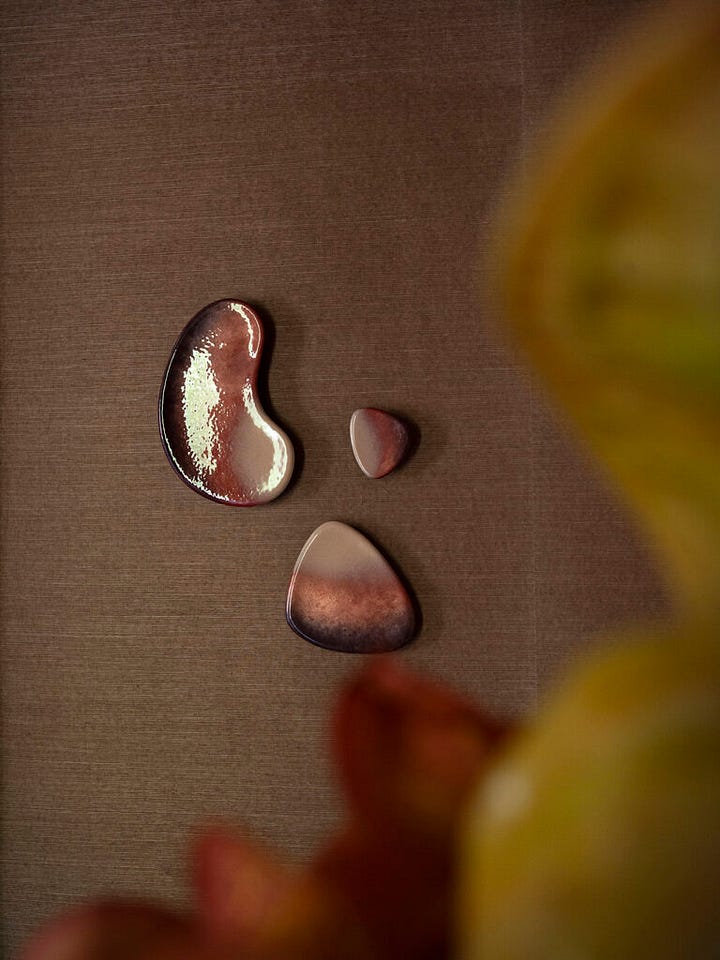
Nothing shouted. Nothing performed. Nothing demanded attention. And yet the space was unforgettable. It felt intimate, which is perhaps why the name was so perfect.
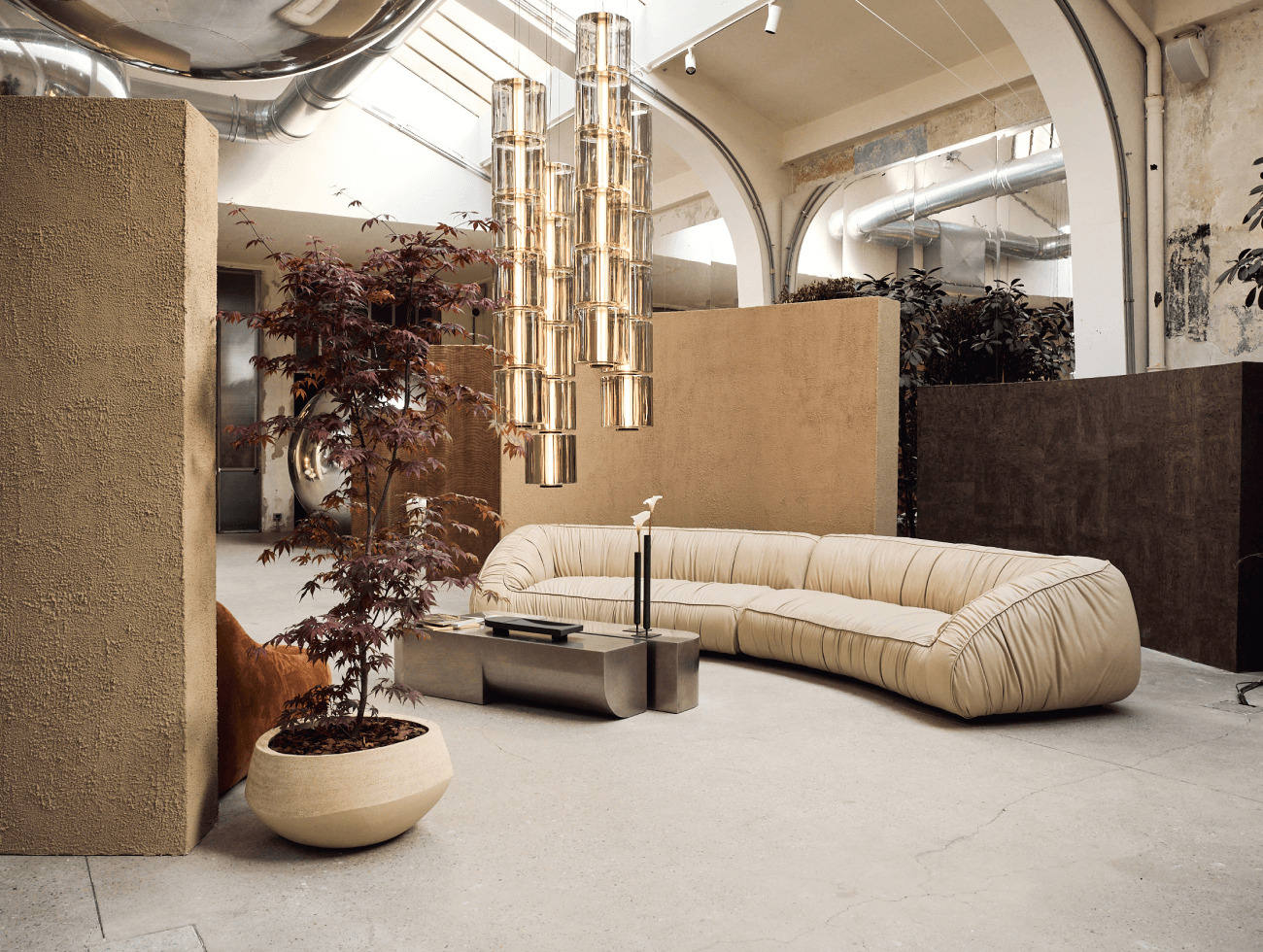
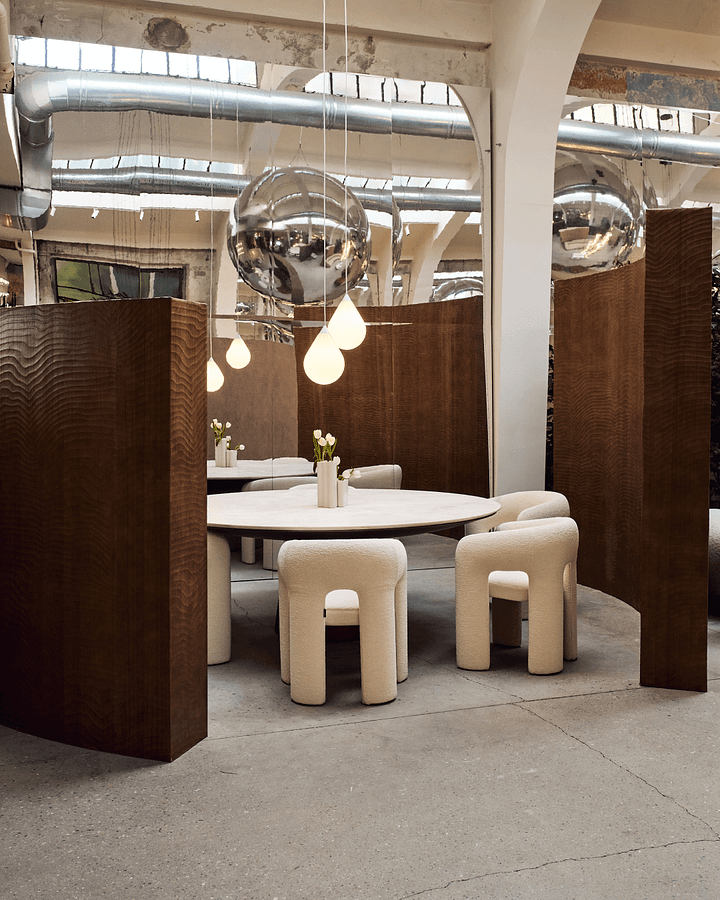
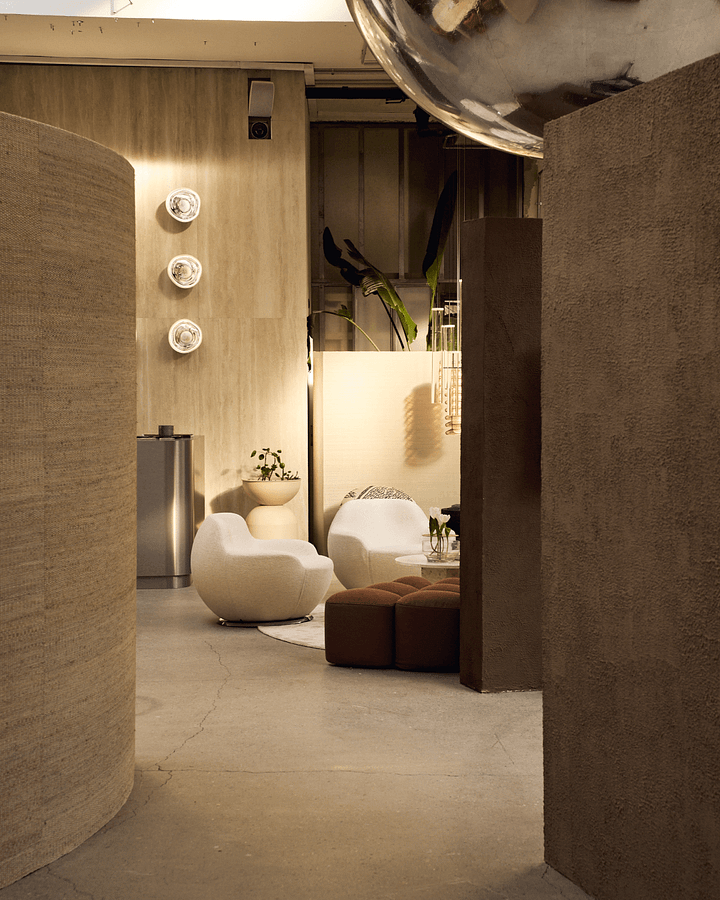
And then there was MOHD.
Huge metallic spheres floated within rooms of earthy materials and curved architecture. Reflection sat beside tactility. Glamour sat beside comfort.
It was one of the most sophisticated demonstrations of furniture, materiality and atmosphere I have ever experienced.
A masterclass in combining contrasts. A masterclass in restraint. A masterclass in emotion. And perhaps that’s ultimately what I realised in Milan this year.
The divide wasn’t really masculine versus feminine.
It was emotional versus intellectual.
The spaces I loved acknowledged that human beings don’t simply look at rooms.
We inhabit them. We touch them. We rest in them. We create memories within them.
The most successful interiors weren’t asking to be admired.
They were asking to be lived in.
Are you coming to the Milan In-Review event? Bree and I will be presenting an un—biased breakdown of what matters from Milan Design Week. The colours, themes, stand-out furniture releases and more. Can’t wait to see you there!
No posts
Comments
Nothing yet. Say the first thing.
Sign in to join the conversation.