
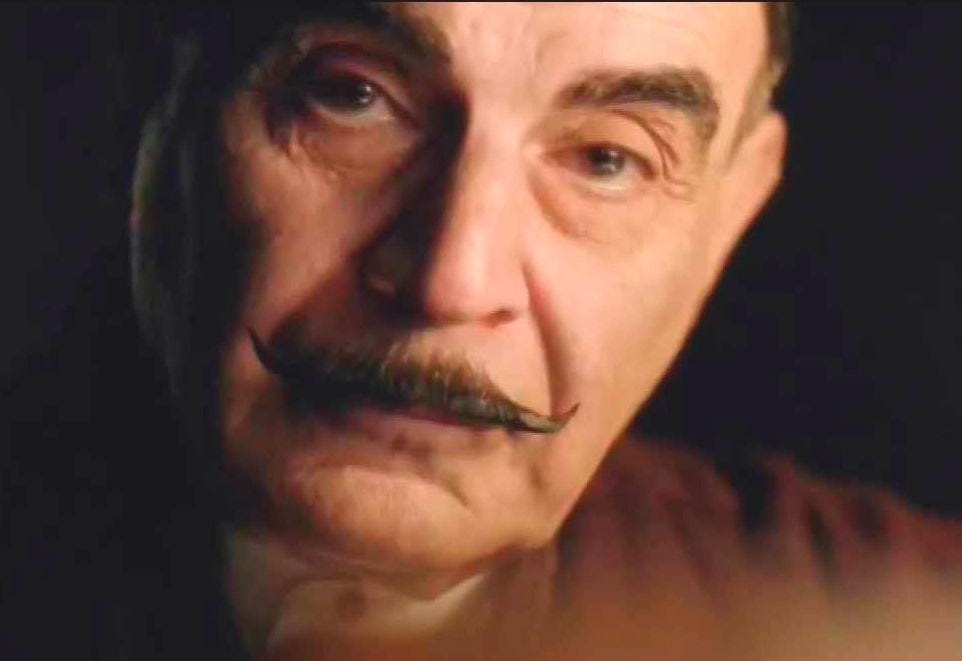
Yes: apparently a new Poirot will appear in 2027 on the BBC, fourteen years after the old boy breathed his last on ITV. That was when David Suchet closed the curtain in Curtain, the seventieth episode of a series that had begun in 1989. I filmed an Agatha documentary with him a few years ago; he was extremely lovely, and rather sweetly said that he had asked for Curtain not to be his final performance in the role - I think Dead Man’s Folly was the last one actually shot - so as to leave Poirot alive, as it were, in his head.
I had thought that Poirot was definitively DONE by Suchet, the completeness of whose performance arc is surely unarguable, but I quickly realized that this was not so. Within weeks of Poirot’s appointment-to-view death he was - much to my surprise at the time - up and about, Lazarus in spats, being played by Robert Powell at my local Richmond Theatre. Then he regenerated again: Branagh. John Malkovich offered a further incarnation, as a tormented priest manqué/ human Brexit metaphor in the BBC’s ABC Murders. More recently Poirot was back in Richmond in the shape of Michael Maloney (whom I wish I’d seen - one of my favourite actors and, with his ability to disseminate gravitas with lightness, perfect for the new TV series, which means it won’t be him).
It does seem somewhat remarkable that this character, who let’s face it is not really a character but an intensely vivid assemblage of traits, omniscience plus a moustache, should be played by men who in their other lives have taken on the roles of Prospero, Jesus, James Tyrone… and that there will no doubt be much Dr Who-style competition as to who will next play the part. But there it is. Poirot is not merely box-office, he is a cultural phenomenon (and, it would seem, the middle-aged actor’s bridge between Hamlet and Lear). The paradox, to my mind, is that his appeal derives from his cartoon-like déraciné quality, the way in which he hovers between the real and the unreal; as soon as he is fleshed out something is lost - what one might call the mercurial literary element. (His love of neatness, for instance, is a felicitous little Christiean inspiration, not a signifier of OCD). That is why John Moffatt, who played him on the radio, is perhaps the most successful of all Poirots, and - I suspect - the one of which Agatha herself would have most approved.
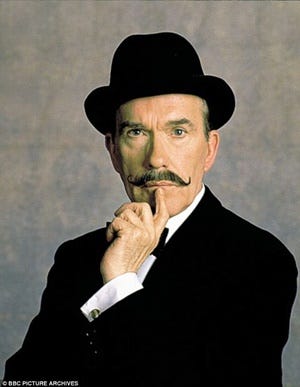
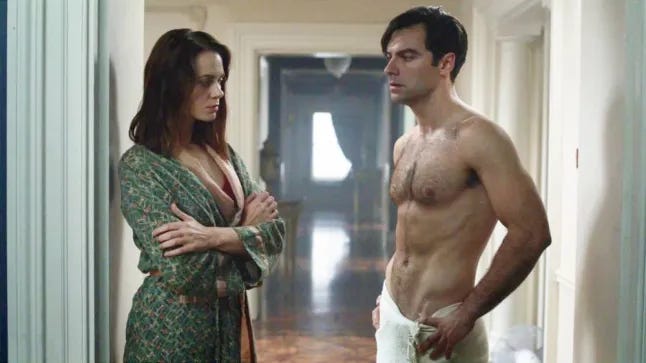
It is not known which of the 33 Poirot novels will be adapted by the BBC. Certainly many of the Suchet adaptations could be improved upon. Not his fault - there had been a choice to emphasize tweedom in those early series (they always remind me of Miranda Hart’s line ‘but it’s nearly nine! Four words: rush home for Poirot’) and an over-compensatory choice to go full Greek-drama-plus-ration-books in some of the later ones. The first novel to be filmed, Peril at End House in 1990, is a period acting fest reminiscent of an am-dram production of Design for Living, with much manipulation of cigarette holders and silvery laughter; thus the tone was set, until - in 2003 and season 9 - the square crumpets were suddenly drenched in neat absinthe: everything went dark and subtextual, which sometimes worked but was quite often overdone, viz the execution scene in Five Little Pigs. Semi-pornographic, and a distortion of the book. Elaboration is one thing; distortion is another.
In ONE’s opinion, and I had no idea I had it in myself to be so nerdish as to make this list, the successful Poirot adaptations are: the season 9 Sad Cypress, then the whole of the brilliant season 10 - The Mystery of the Blue Train, Cards on the Table, After the Funeral and Taken at the Flood, when everything fell into place, and continued on to the Mrs McGinty’s Dead of season 11… then some duds, then a very good The Clocks in season 12, and, fortunately, most of the whole final season, including a very clever riff on The Big Four. These shows (whose writers included Nick Dear and Kevin Elyot) were graced with some of the best actors on earth - the goddesses Lindsay Duncan, Lesley Manville and Geraldine James; the goddesses-in-waiting Kelly Reilly and Lucy Punch; Alex Jennings, Paul Rhys, Tom Burke, Mark Gatiss… all of which helps no end, but really it is about the tone. That quality of high-style sincerity; that elegant balance between the facade and what lies beneath; harder to achieve than it seems, perhaps, as it almost always tips in one direction or the other.
Anyway: that leaves a lot of books that one could adapt quite brilliantly (it is a given that there should never again be an adaptation of Orient Express or Death on the Nile) - top of my list would be Lord Edgware Dies, with its very fascinating central character - therefore what I feel about the new Poirot is that I would be interested, intensely so, if I thought these prospective adaptations would be as well done as they can be. What I actually think is that they will be done in a way to attract the maximum amount of pre-publicity; the really amazing part of which is that the changes wrought upon the originals are still viewed as ‘modernizing’. Who, except a person who has spent the last ten years exclusively watching Talking Pictures, thinks that there is anything radical about multi-ethnic casting? Who, unless they buy into the extremely 20th century image of Agatha as ‘cosy’, thinks it is daring to insert sex and snorting scenes? Agatha knew all about every kind of sin. She just didn’t, as dear Nancy wrote of Louis XV’s foreign minister the Duc de Choiseul, ‘go droning on about things’.
Comments
Nothing yet. Say the first thing.
Sign in to join the conversation.