
If you’re new here, welcome! I regularly share essays, insights and actionable ideas on writing, travel writing and green travel through the lens of a novelist and travel writer (Lonely Planet, DK Travel, etc.). Access my free masterclass on travel writing here, and for other resources available see The Writer’s Toolkit and Work With Me. Thanks for coming on the journey!
If the post is too long for your email, open in the browser to read the full post.
[An extract from an upcoming collection of writing, the following piece on the Drâa River is based on travels in Morocco in the 2000s - before the N9 had a much-needed engineering overhaul and was at that time one of the most dangerous roads in North Africa].
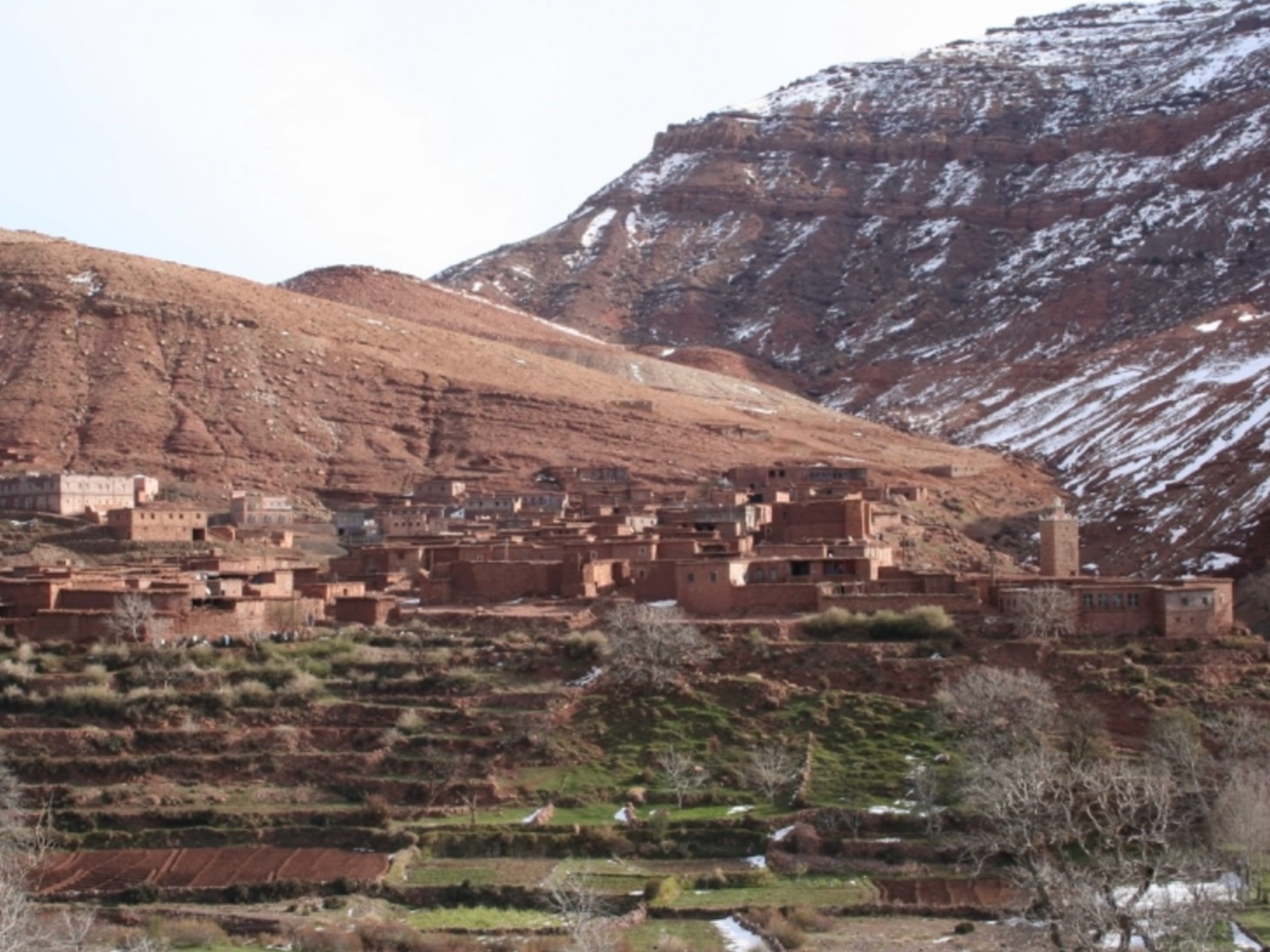
I’m at over 7000 feet above sea level. The air is thin, cold. The view is a close up of the Tichka Massif ridge, with snowy Jebel Tistouit’s pyramid point to the east, and to the west distant glimpses of the snow-capped peaks of Jebel Toubkal, Ouanoukrim and Aksoual. Below snakes the Tizi n’Tichka Pass.
Peer over the crumbling asphalt edges, and you see rockfall in the ravines, potholes pock-marking switchbacks, and the upturned belly of a lorry - a journey abruptly cut short on the treacherous mountain road.
I put my jacket back on, and steal a sideways glance at the car’s worn tyre threads.
The driver Saïd is a small, careful man. He has the look of a perpetual worrier. On the dashboard of his cream-coloured, 1980s Mercedes are small photographs - his daughters, Nour and Nadia, he tells me. Nour is eleven, enjoys school and is always reading. Nadia is nine and is keen on football. He says this with a proud smile. Prayer beads, amber-coloured, swing from the mirror as we round each seemingly impossible hairpin bend.
We have been on the road since before 6 a.m. He wanted to get away early - it’s about five or six hours over the mountain road from Marrakech to Ouarzazate, the first stop on our journey south. Pulling up by a row of trinket sellers, each with a market stall fashioned out of reddish-brown rocks by the wide curve of the road, he stops to smoke a Marquise, and gestures at me to stretch my legs.
I wait by one stall. The other two sellers glance in my direction. From a distance it appears all three are offering the same goods - fossils, improbable neon-purple geodes, rose quartz, amethyst, small tagines, leather slippers, woven kilim rugs and heavy blankets displayed on the stone walls, Tuareg silver jewellery (made of brass, nickel and pewter), wood carvings of animal figurines, and desert scarves.
Saïd chats with the men in Darija, sipping on a mint tea poured from a kettle heated by a gas flame next to one of the stalls. Then, glass empty, he sidles over, pointing at a pale pink cotton headscarf.
“Useful for the desert,” he says matter-of-factly.
I consider the advice and buy it. I don’t haggle. It’s still early in the morning and my stomach is somersaulting from the hairpin bends. I hand over 100 dirhams, and we’re on our way again, descending into the foothills of the High Atlas towards Ouarzazate.
Saïd is curious about Ireland. What kind of mountains do we have? Are they as beautiful as these? How do people live there? Does it snow often? What is it like to live with so much rain? Is it as green as they say?
After a while, I begin to wonder whether he is really so curious, or simply trying to keep my mind off the road and its sheer drops as the car swings around each impossibly tight bend. We chat mostly in French, though he slips into Darija now and then - usually on the sharpest corners, or when an oncoming lorry squeezes past, leaving only inches to spare.
From time to time we stop - to take pictures Saïd says, though I think it is more to steady his nerves. For a long while it’s all steep river canyons, foothills, and the Aït Ben Haddou plateau. Only when we near Ouarzazate can I see the meltwater of the streams running down the mountainside to the El Mansour Eddahbi Reservoir below - a vast turquoise lake shimmering against the desert landscape.
Here, most places have names in Arabic, Tamazight and French. The reservoir is known as Barrage El Mansour Eddahbi, named after legendary Sultan Ahmed el-Mansour ed-Dahbi, who had conquered Timbuktu in the 16th century, bringing great wealth to Morocco. This vast artificial lake was created in 1971–72 under King Hassan II to regulate the seasonal floods of the Drâa, store precious water from the High Atlas snowmelt, and expand irrigation in southern Morocco.
Today it’s an essential support for agriculture, provides much-needed drinking water, generates hydroelectricity and acts as a vital reserve during years of drought. Seen from above in the winter months, the water lies flat and glassy like an inland sea, its edges peppered with palms, tamarisk and acacia. In summer it transforms into sandy islands, where migratory birds gather to rest.
I’ve always had a fascination with rivers - how they determinedly carve their route through rock and land, how they somehow find their way, the stories and myths they hold, the life they support. Each river, with its bed and banks, forming a miniature world unto itself.
The Drâa carries its own stories. Among Amazigh communities, rivers are often understood as living presences, sustained by mountain spirits and watched over by invisible beings known as jnoun. Springs and riverbanks are places to be respected; many are believed to possess baraka - a blessing or spiritual power - and stories warn against disturbing the water after dark, when the unseen world is said to draw close. The river after all sustains life throughout the oasis villages and towns of the valley. This, I think is not so different to Irish notions of fairy spirits and Otherworld thresholds.
We continue down into the valley until we reach Ouarzazate, the traditional gateway to the Sahara. Saïd pulls up beside a clutch of dusty minibuses and waves in greeting to the other drivers. The oasis town, home to around 60,000 people, rises from the red dust and rock, its low buildings constructed from rammed earth, mud brick and straw, their colours almost indistinguishable from the surrounding hills. Date palms fringe the wadis, satellite dishes perch atop ancient-looking walls, and cafés spill onto broad streets where guides bargain for clients heading into the desert.
Films like Lawrence of Arabia (directed by David Lean in 1961-62) and The Man Who Would Be King (directed by John Huston in 1975) helped establish Ouarzazate’s early reputation as a film location, but it was the opening of Atlas Studios in 1983 with The Jewel of the Nile (1985) and Bond’s adventures in The Living Daylights (1987) that transformed the town into Morocco’s filmmaking capital. Producers were drawn by the reliable sunshine, dramatic desert landscapes, nearby kasbahs, and the ease with which the surrounding terrain could stand in for ancient Egypt, biblical kingdoms, North Africa or even distant planets. Seeing a boom in the 2000s with Ridley Scott and Oliver Stone shooting films here, Ouarzazate has appeared in everything from Gladiator to Game of Thrones.
Tall columns marked in Egyptian hieroglyphics incongruously stretch skyward. Temple façades, colossal statues and weathered sphinxes rise from the Moroccan desert, their illusion only broken by the snow-capped Atlas Mountains on the horizon. I think about how these stories shaped images in Western minds - of deserts as places of pharaohs, prophets and lost kingdoms - and wonder what the locals make of the steady stream of curious travellers (and actors) who come to stand in the shade of Ramses II or wander between the towering columns of a make-believe Temple of Karnak.
In the afternoon we stop for lunch, a café with plastic tables and chairs shaded by a billowing canvas awning. The air is warmer here, carrying the scent of charcoal smoke, grilled meat and sweet mint. We take a table outside. Almost immediately, a silver teapot arrives, followed by small glasses.
The waiter pours from an improbable height, lifting the pot high, tea splashing into the glass far below. A crown of froth gathers on the surface - the sign, he tells me, of a proper mint tea. The glasses are almost too hot to hold. I cradle mine by the rim and take a cautious sip. It is a burst of thick, sugary spearmint.
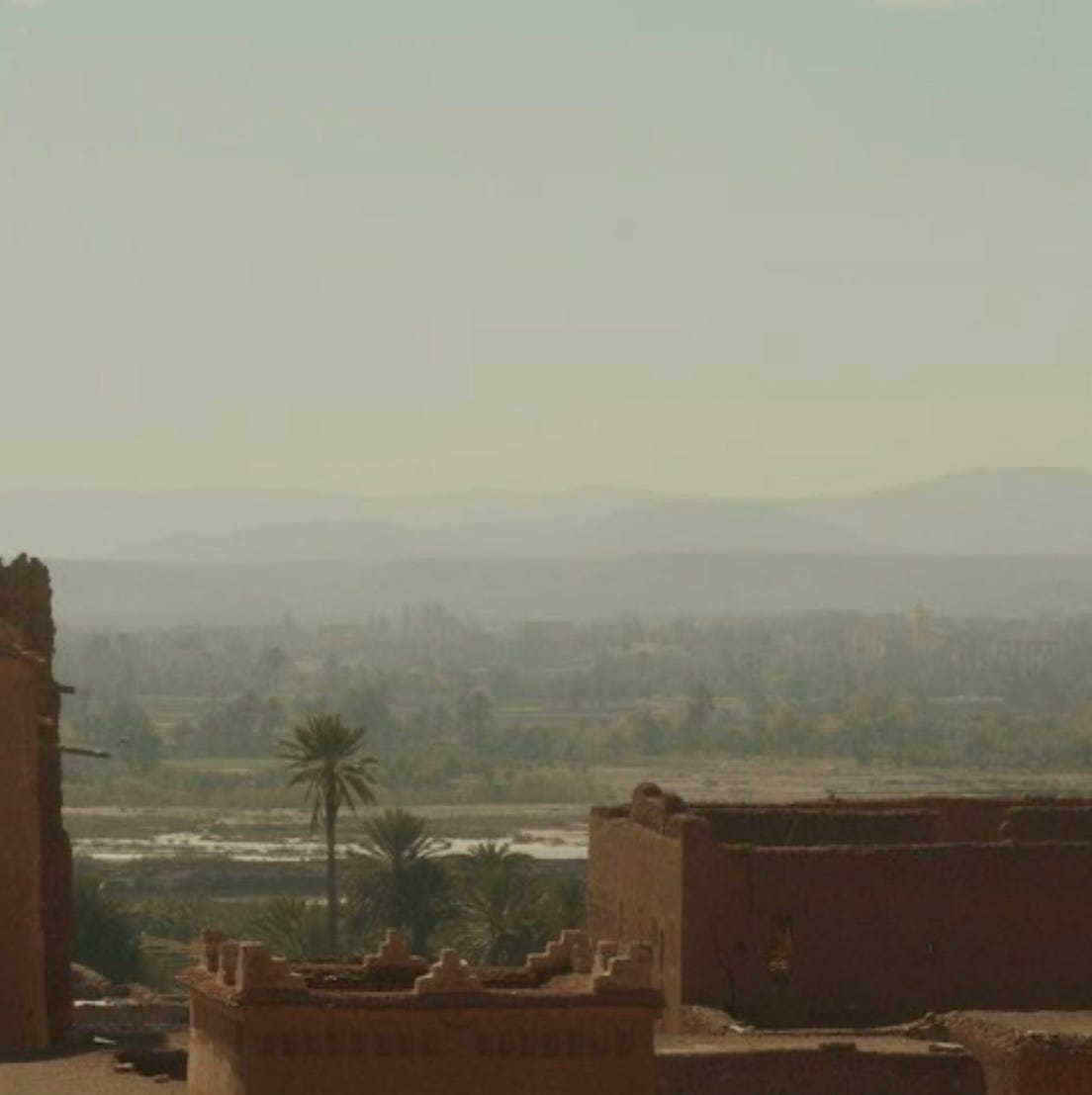
I look beyond the café wall. The mountains we crossed that morning have faded into a blue haze behind us. Ahead lies a swathe of green stretching into the ochre distance, following a course laid down over thousands of years by water that once began as snow, high in the Atlas.
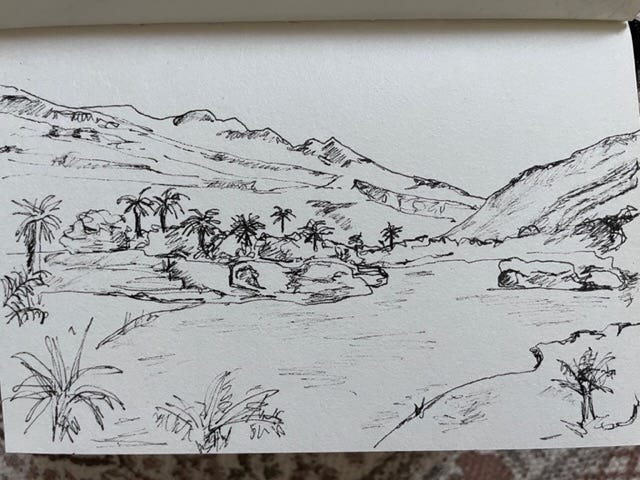
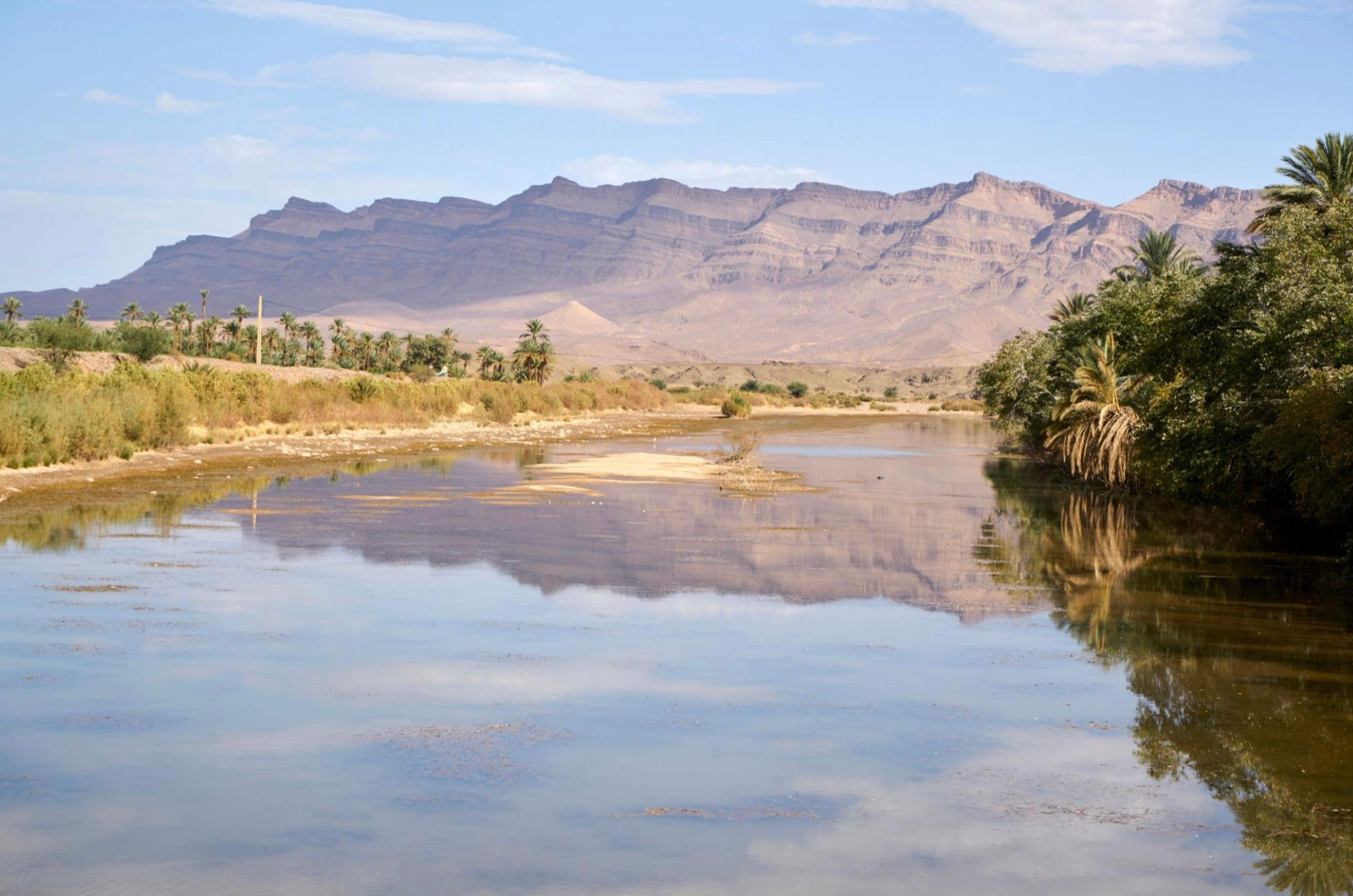
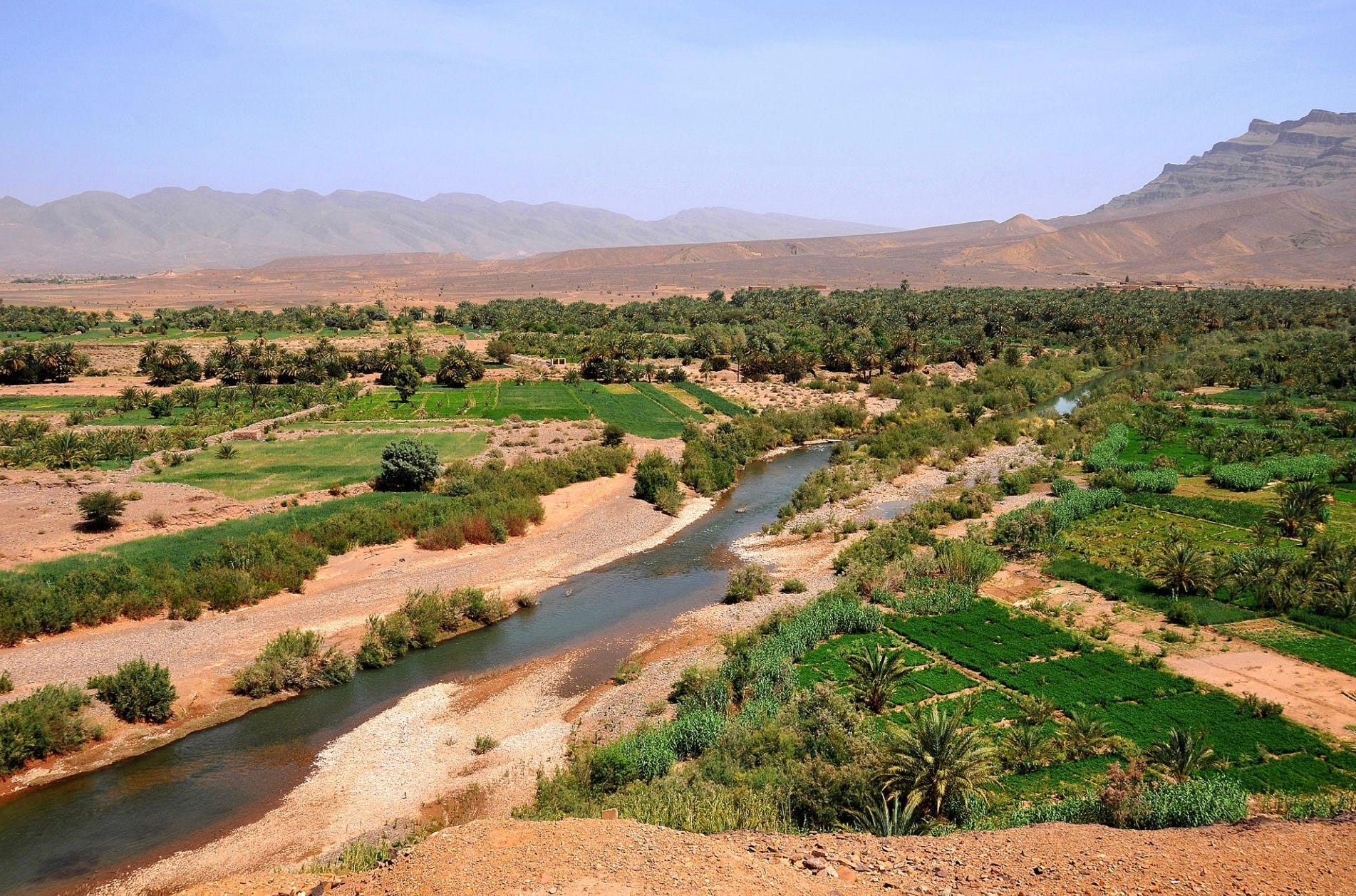
The first sight of the Drâa is almost understated. After hours of mountains and bare rock, I expected something broader, wilder. Instead, the river slips quietly through the valley, a velvety ribbon of green-brown water half-hidden beneath reeds and tamarisks. Date palms crowd its banks, their fronds stirring in the afternoon breeze, while irrigation channels peel away from the main course like veins, carrying life into small fields of barley, alfalfa (Al-Fassa) and henna sheltered by the shade of date palms. Beyond the palms the landscape changes abruptly. The fertile strip ends almost as soon as it begins, giving way to stony desert and rust-red hills. It is a reminder that the Drâa is a lifeline - a narrow corridor of green threading through an otherwise unforgiving landscape.
However it was not always this way.
Ancient stone petroglyphs south of Ouarzazate near Tazzarine show images of rhino, giraffes, elephants, lions and buffaloes carved into dark basalt rocks - all signs of the present-day desert - yet one-time abundant lush grassland - fed by the Drâa.
This farming system, which developed over centuries, today feels the pressures of climate change with less snowfall in the High Atlas, longer periods of drought, a decline in groundwater, and an increasingly saline soil - all impacting both the date palms that shelter the fruit trees, and the cereals, henna and vegetables grown in the shade, relying on water fed through canals and underground channels. The river is shrinking and along with it, the oasis landscape and the old way of life.
As we leave behind Ouarzazate, driving out into the so-called Valley of a Thousand Kasbahs (some bright spark in local tourism earning their keep), we pass two boys crossing the water by donkey, a cheerful multi-coloured striped blanket thrown across its back. They stop on the pebbly shore, waiting patiently in search of tourists looking for a photo opportunity.
The road has flattened now, and I almost nod off to sleep in the afternoon haze listening to Belkhayat singing on the radio, his deep baritone set against the sweeping sounds of the violins and the oud.
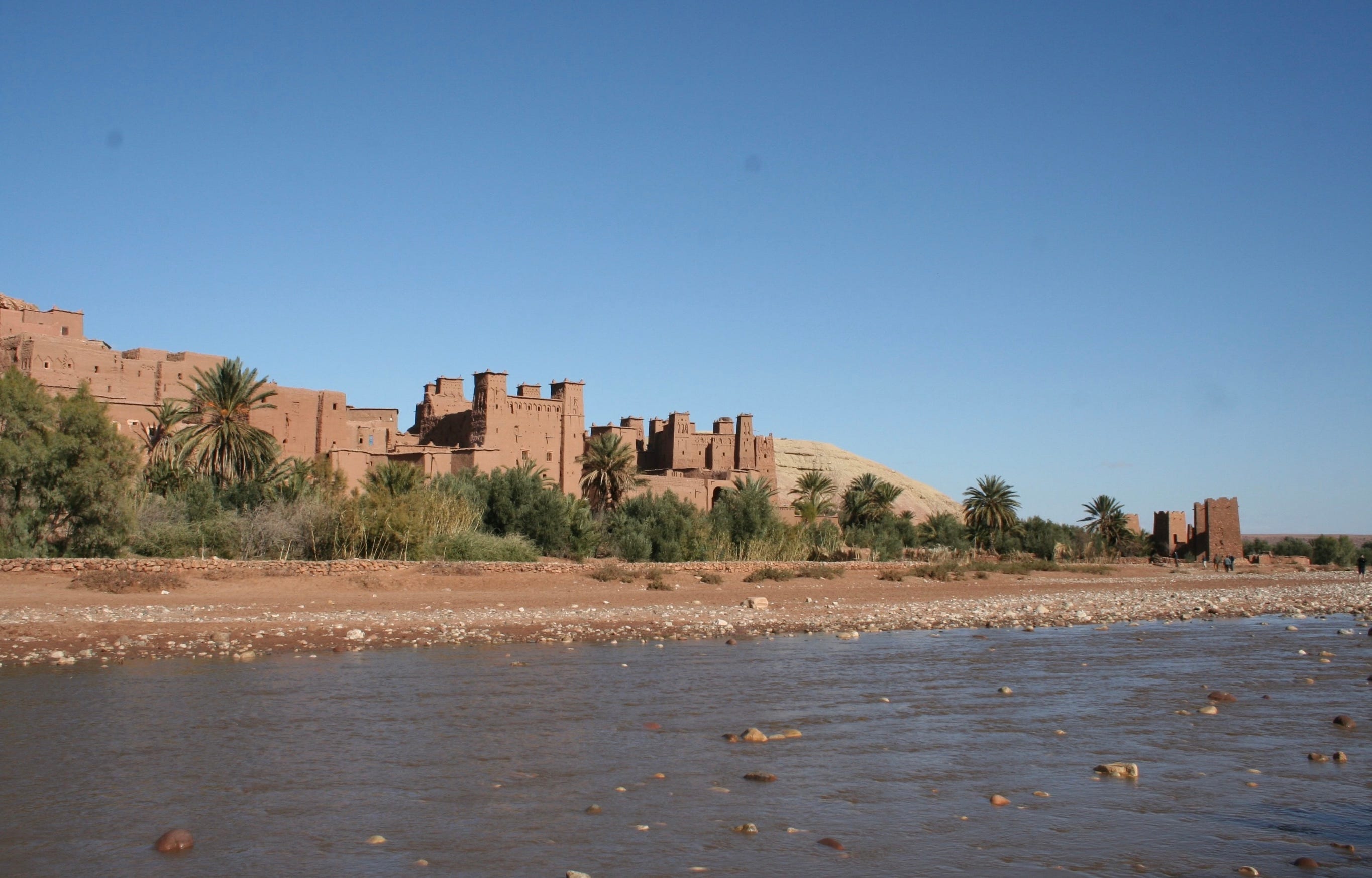
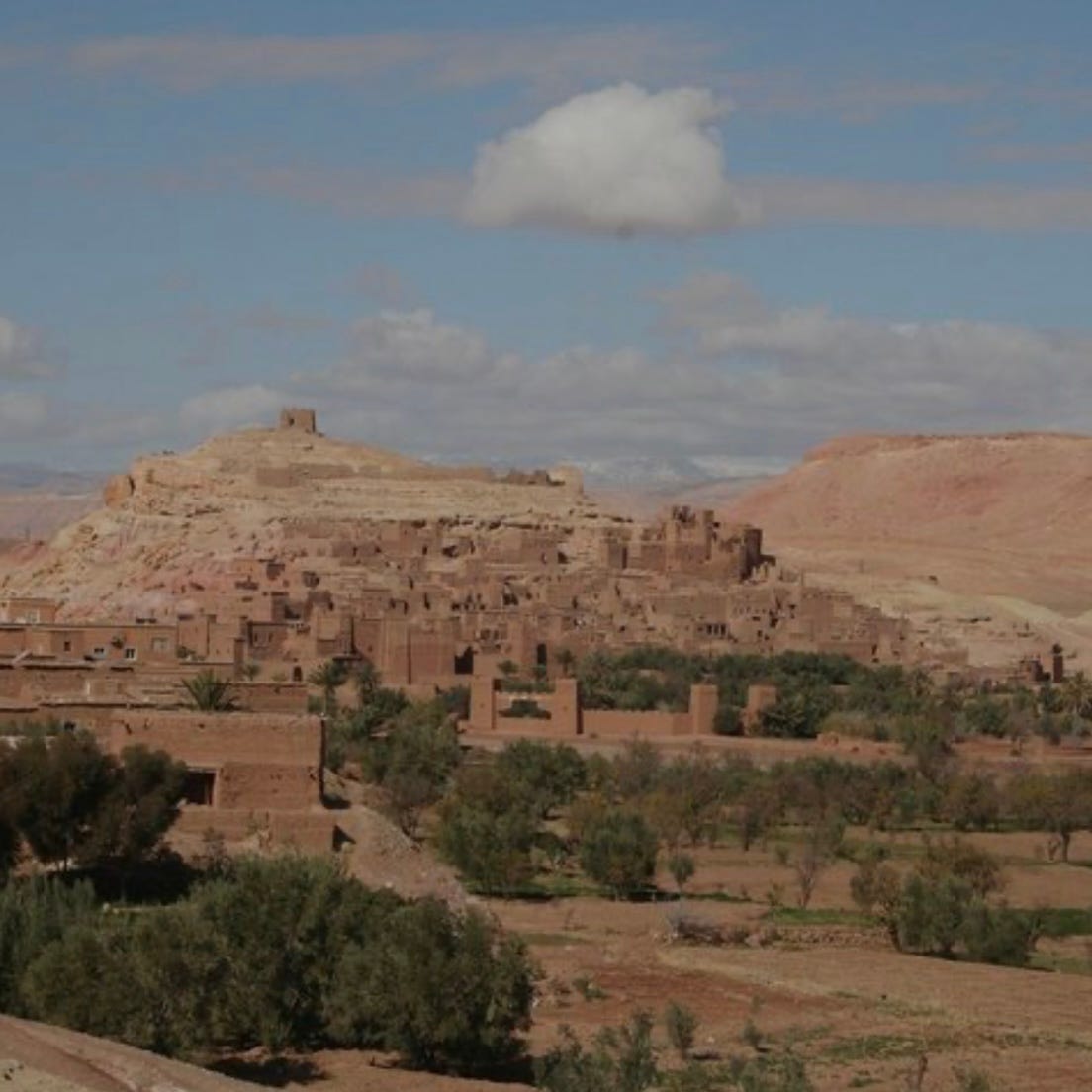
Saïd slows the car on a rise overlooking the valley before driving into Tamnougalt, one of the oldest settlements in the Drâa Valley, indeed once capital of the valley in the 16th century. From a distance its earthen walls appear to grow directly out of the hillside, blending so completely with the surrounding rock that the village is almost invisible until you’re upon it. The ksar - a fortified village - rises in layers of sun-dried mud brick, its square towers softened by centuries of wind and sand storms. Decorative geometric patterns - often chevrons and diamonds (protecting against the evil eye) are still visible around palm wood doorways and lattice windows, though many have begun to crumble.
Inside, the streets narrow to little more than shoulder width. The passageways twist and turn beneath overhanging houses, offering welcome shade from the afternoon sun. Wooden beams of palm trunk span the ceilings, and heavy carved doors open onto hidden courtyards. Somewhere nearby comes the rhythmic thud of grain being ground, and women calling to each other across the alleys. Children dart between doorways, pausing only long enough to smile shyly before disappearing around another corner.
Beyond the walls, the oasis begins immediately. Thousands of date palms cast a shifting canopy over orchards of pomegranate, fig, almond and apricot, while beneath them grow vegetables in carefully irrigated plots - a centuries-old system of layered agriculture that makes use of every single drop of water. The same system is now under threat as climate shifts, and many of the younger people leave for city life. Looking back from the palm grove, the ochre fortress towers of Tamnougalt seem to rise up out of the earth itself, shaped from the same clay that the river has carried down from the Atlas for millennia.
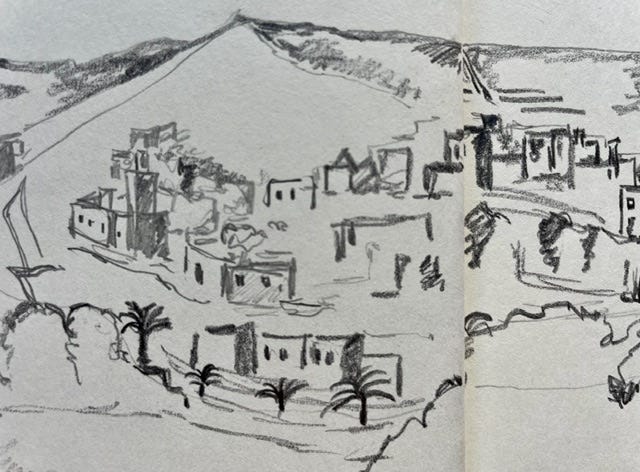
In Tamnougalt life is slow, suited to the rhythm of the oasis. Men in well-worn djellabas sit in the shade discussing the day and talk of El Jafaf (the drought) and hope for Al-Ghaith (the saving rain) over tiny glasses of mint tea, while women, wrapped in bright scarves, move quietly between the palm groves with baskets balanced effortlessly in their hands. Every few minutes someone calls out a greeting to Saïd. He seems to know everyone, stopping to shake hands gently or touching his right hand to his heart, in an effusive sea of greetings: questions on health, family, elders, the state of the crops, and praise Alhamdulillah, flowing forth with each exchange.
Conversation here always drifts naturally towards family, farming, the land and the weather, which is really another way of talking about water and the river. For those that remain there is a strong interest in protecting the earthen kasbahs and the collective oasis agriculture of the past.
Life revolves around the oasis. Dates are harvested in autumn, wheat and vegetables grow in mud squares beneath the date palms, and almost everyone has some connection to the river, whether tending fields, maintaining the ancient irrigation channels, or caring for livestock. The pace is much slower than in the cities. There is little sense of hurry. People work early, chat, pray, work some more and rest again.
As we leave, an elderly man sitting beneath a palm raises his hand in farewell without saying a word.
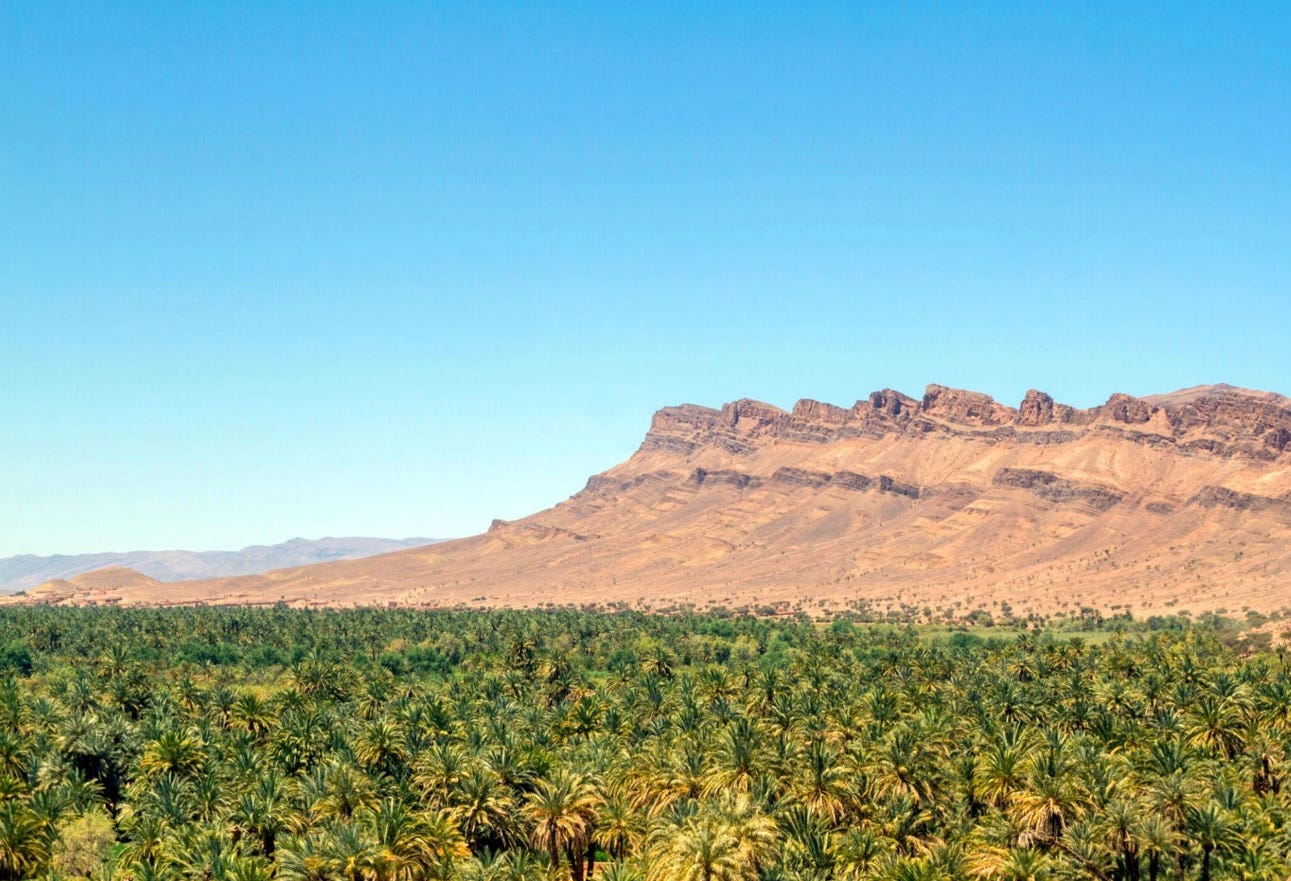
South of Tamnougalt the valley widens and narrows by turns, the Drâa appearing and disappearing behind curtains of dancing palms. Sometimes the river itself is little more than a broad, stony channel of slow-moving water. Elsewhere it spreads into shallow pools where white egrets pick their way through the reeds, hunting for frogs or small fish in the oasis waters.
The Drâa it seems has always been an unpredictable river. Before the construction of the dam it frequently flooded with the spring snowmelt from the Atlas, replenishing the soil but also sweeping away bridges, crops and, occasionally, whole sections of villages. Today its flow is largely controlled by releases from the reservoir upstream. In dry years, some stretches shrink to isolated pools, and farmers wait anxiously for water to be sent downriver. Drought is becoming a recurring concern.
The riverine route passes through villages whose lives remain inseparable from the oasis. At Tansikht, where the valley narrows between black volcanic hills, children cycle along dusty tracks shaded by palms while women wash vegetables in the irrigation channels. In Tinzouline in the Middle Drâa Valley, the palmeraie creates the same three-tiered planting in vertical layers: the towering date palms filtering the desert sun; olives, pomegranates, almond trees sheltering underneath; and flat fields that seem improbably green against the ochre earth, divided into neat rectangles of wheat, alfalfa and henna. Donkeys pull wooden carts piled high with freshly cut fodder, and every so often an ancient kasbah rises above the palms, its crumbling towers keeping watch over a landscape that has changed little in centuries.
Further on lies Tamegroute, (its Amazigh name meaning, the last outpost) with its adobe houses in the old ksar and palm groves, known as a centre for pottery making - with workshops where craftsmen, their hands stained olive-green with glaze, shape bowls and tagines exactly as generations before did.
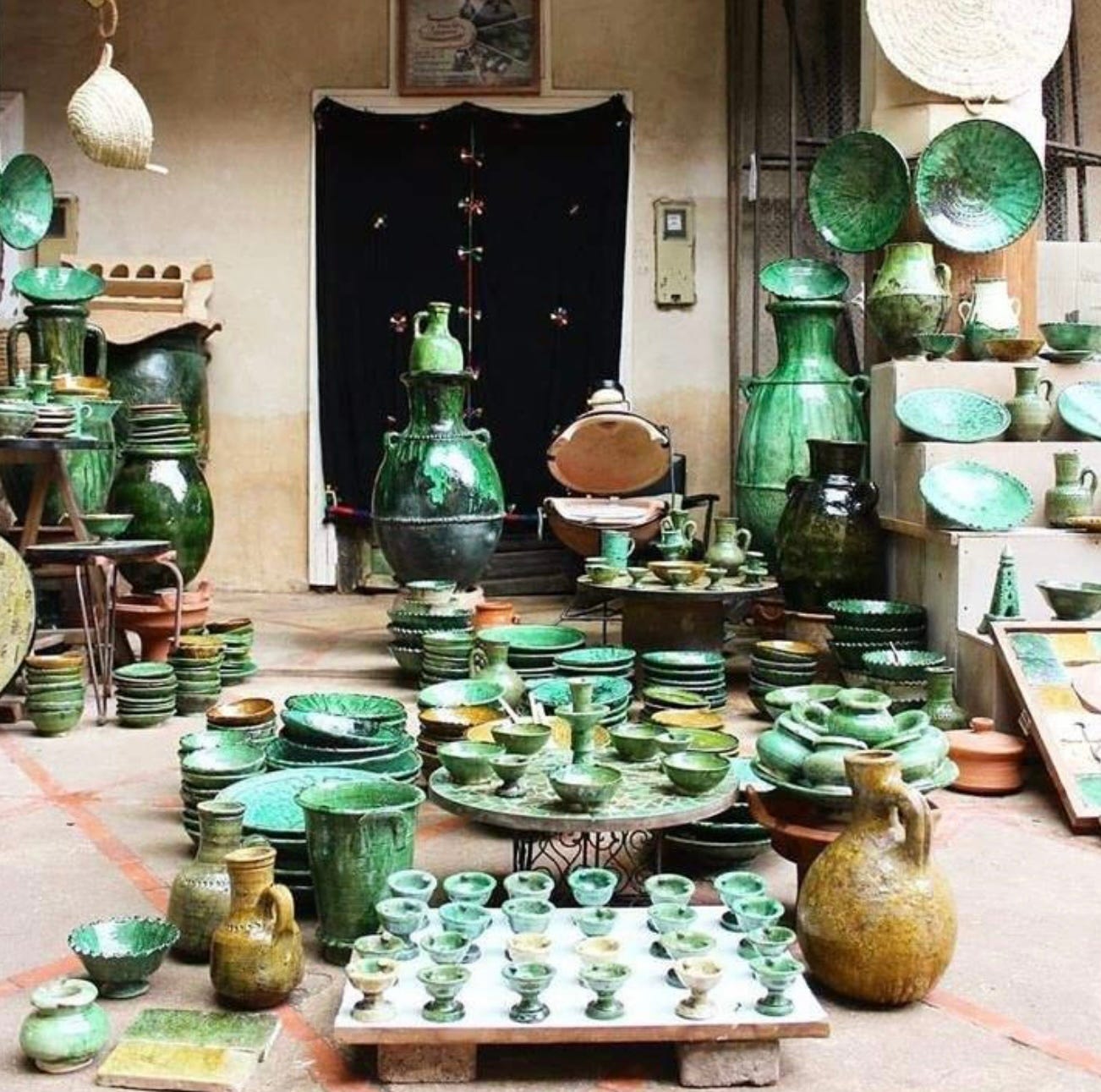
The village however holds another remarkable story.
Tamegroute is home to one of Morocco’s oldest Islamic libraries, the Nasiriyya Library, where centuries-old manuscripts on astronomy, medicine, philosophy, law, mathematics and theology are carefully preserved inside the zawiya, the historic Sufi complex. Today over 4000 manuscripts remain, but at one point it housed tens of thousands of manuscripts gathered by scholars travelling throughout North Africa and the Middle East - a reminder that these desert settlements were once places of deep scholarship as well as trade.
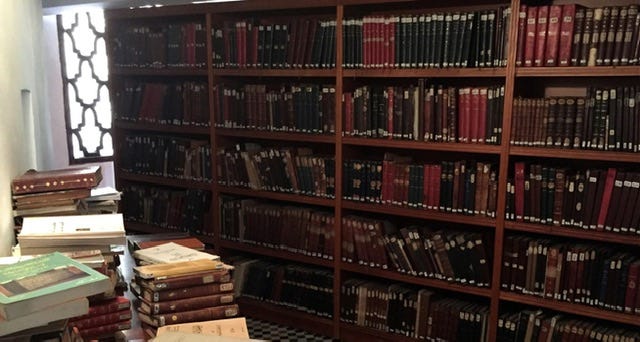
Travel further south and the more the desert presses against the oasis. The belt of palms grows narrower, the fields smaller. Beyond them lies a wilderness of gravel plains and wind-shaped rock, broken only by the occasional acacia tree. Without the Drâa there would be no band of green, no villages, no orchards. No library or scholars. Everything here owes its existence to a river that begins as snowmelt hundreds of kilometres away.
By late afternoon the road carries us into Zagora. Long before tourists arrived in search of dunes and camel treks, Zagora was one of the last major stopping places for the great trans-Saharan caravans. Camel trains laden with salt, cloth, spices and goods assembled here before setting out across the Sahara towards once-wealthy Timbuktu, returning months later with gold, ivory and sometimes enslaved people (a practice not fully eradicated until 1925).
The Drâa Valley became one of North Africa’s principal trade corridors, its oasis settlements offering water, food and shelter to travellers undertaking one of the world’s most arduous journeys.
That history still echoes in the town, home to around 35,000 people, now the administrative heart of the lower Drâa Valley. Near the centre stands the famous sign reading “Tombouctou - 52 jours” - “Timbuktu, 52 days” - a reference to the time it once took a camel caravan to cross the desert. Whether the journey always lasted precisely fifty-two days hardly matters; the sign has become a symbol of Zagora’s identity, a reminder that this place was long considered the edge of one world and the beginning of another.
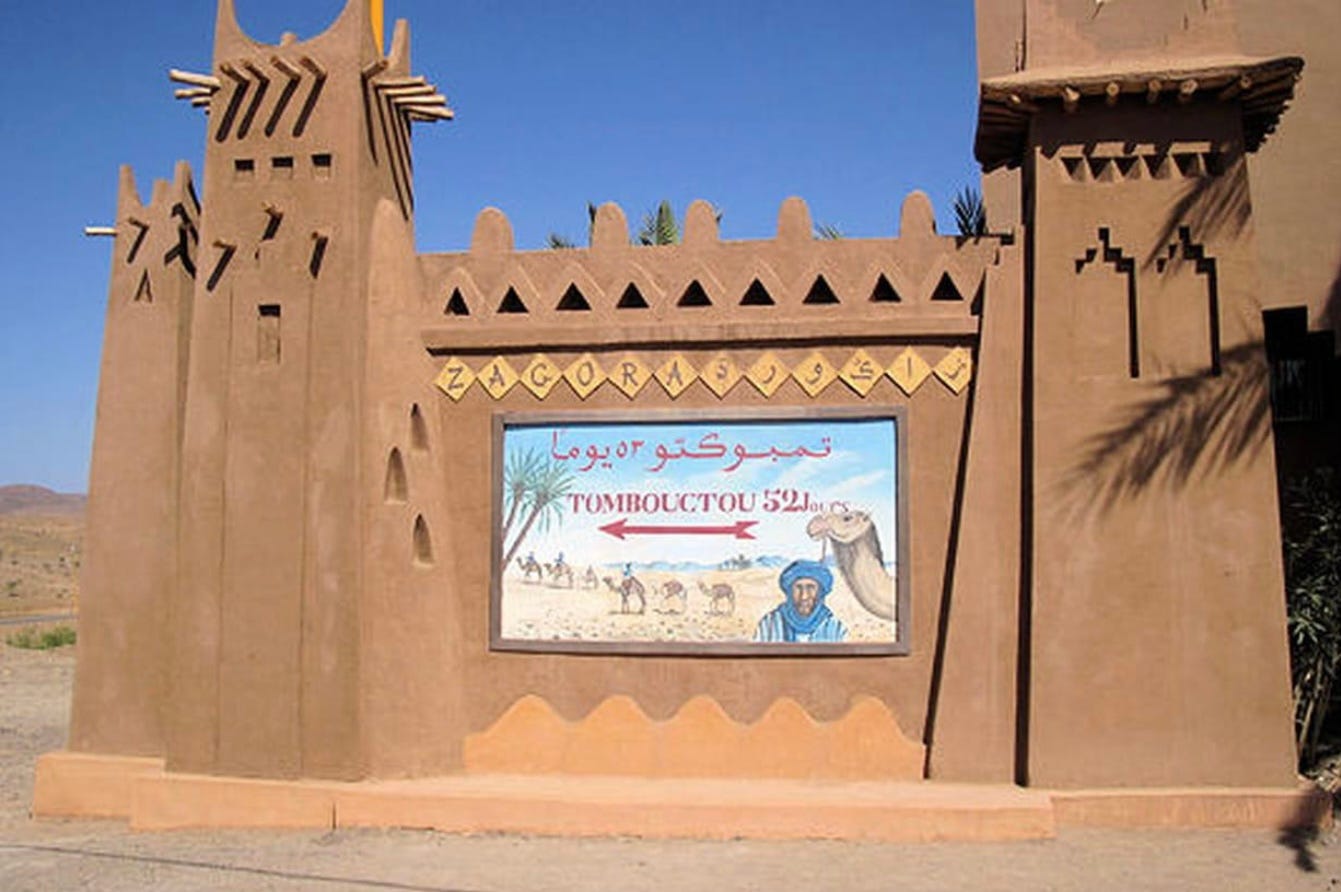
This lower Drâa region was also once the homeland of the Saadi dynasty - which brought together much of Morocco in the 16th century, defeating Portuguese expansion and, through controlling much of the caravan trade through the Drâa, went on to build one of Morocco’s most powerful kingdoms. The lower Drâa later became a colonial frontier, marking the boundary between the French and Spanish controlled territories in the first half of the 20th century.
These places then, that we think of as being at the edge, where in fact once at the heart of things.
The movement of people across the desert regions continues today - where once caravans travelled south, carrying commerce, learning and culture between Morocco and West Africa, now many journeys move north - migrants come in search of better opportunities, driven by conflict, hardship and climate pressures. Many travel from Mali, Guinea, Senegal, Côte d’Ivoire and elsewhere, journeying through the Sahara, some making a life in Morocco, others journeying on.
Modern Zagora is far busier than the villages upstream. Scooters weave between cafés, market stalls spill onto the pavements, and four-wheel drives loaded with camping gear wait outside hotels for tomorrow’s departures into the dunes, yet it too is fed by the river.
It’s hard not to contrast the enthusiasm of tourists heading out into the desert sands to the hardship many desert travellers navigate, and it’s an uneasy contrast.
Saïd’s family are Amazigh. He shares tales of nomadic ancestors - a resilient way of living that persists even today.
We leave Zagora in the early light. The cafés are only just opening, shopkeepers sweeping yesterday’s dust back into the street with long reed brooms. Saïd is already behind the wheel, his first cigarette finished before I’ve buckled my seatbelt.
The road is straighter now. The mountains have fallen behind us, replaced by a broad valley hemmed in by low, black ridges. Date palms still line the horizon, but the oasis has begun to narrow. The green oasis stripe we’ve followed since Agdz is slowly being pinched by the desert.
“You’ll notice the river disappearing,” Saïd says, pointing through the red-dust covered windscreen.
At first I don’t understand what he means. We cross a bridge, and below is a wide riverbed. Yet most of it is stone - rounded pebbles bleached white by the sun, patches of coarse sand, islands of reeds and tamarisk. Only a thin channel of water threads uncertainly through the middle.
“Before the dam,” Saïd says, “there was much more water. Floods too. Now people wait weeks for the water.”
“And if it doesn’t come?”
He shrugs, stoic.
“C’est le Mektoub.” Destiny.
Further south the channel splits again. In places it vanishes altogether beneath gravel, only to reappear a kilometre later in a shallow pool where children splash in the shade of palms. Egrets stand motionless, patient along the banks, while dragonflies skim over the low water’s surface.
The villages become smaller. Beni Zoli’s sprawling emerald ocean of date palms, and N’Kob’s earthen mud kasbahs, give way to outlying hamlets and smaller scattered clusters of houses gathered tightly around the last dependable irrigation channels. Men guide donkeys picking their way between palm trunks laden with bundles of alfalfa. Women spread dates on woven mats to dry in the sun. Everywhere the fields end abruptly. One step beyond the irrigation ditch and the earth returns to barren stone and scree.
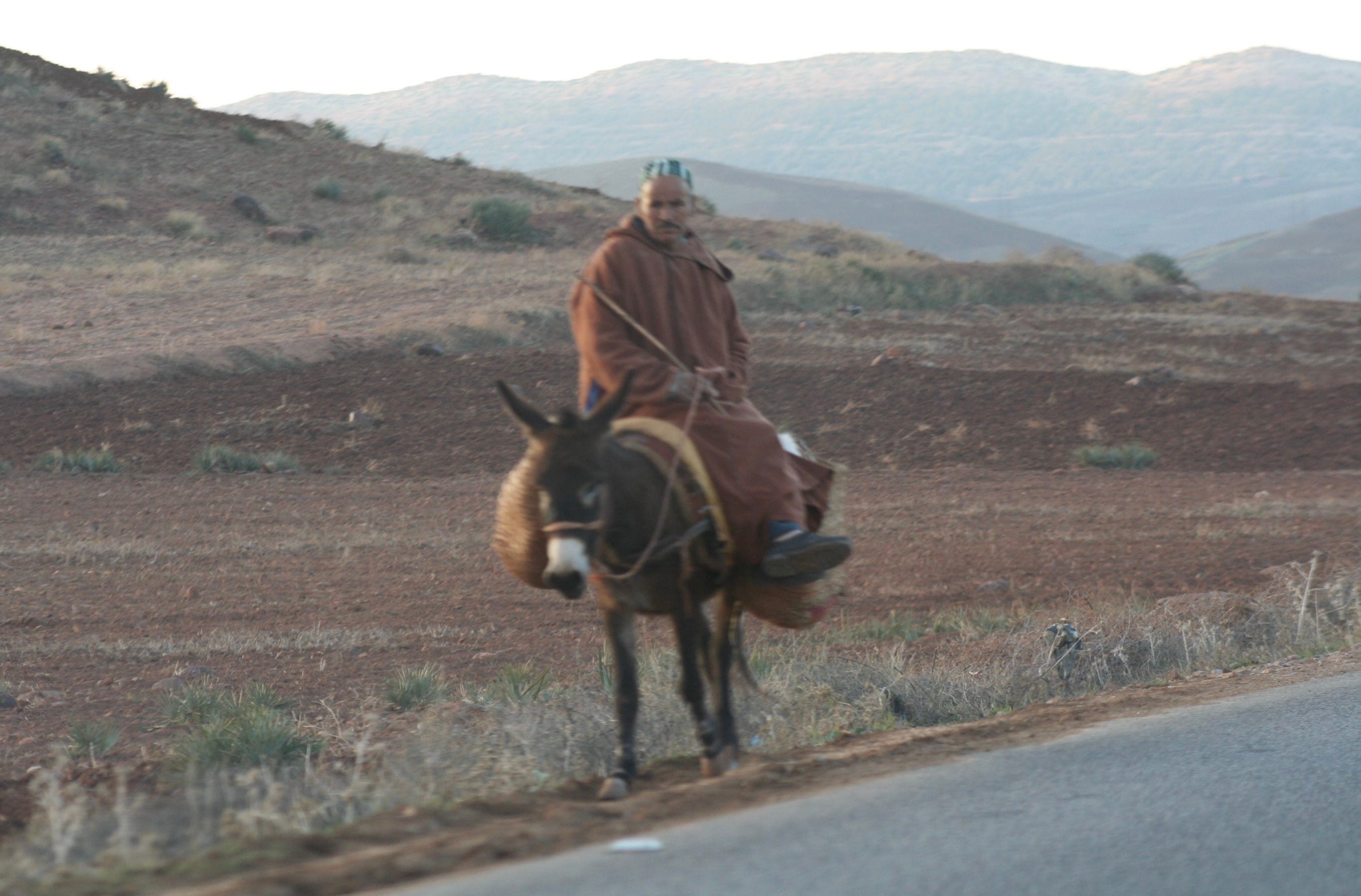
We stop beside a grove where an elderly man is repairing a khettara, one of the traditional underground channels that has carried water through the valley for centuries. Saïd crouches beside him, tracing the route of the water.
“People think this landscape is natural,” he says. “La, c’est pas vrai.”
As the morning wears on, even the palms begin to thin. The road runs through open desert where acacia trees stand alone against the horizon, their branches twisted by the wind. Sand gathers in drifts along the tarmac. Every few kilometres a sign warns of wandering camels.
By early afternoon we reach M’Hamid El Ghizlane.
The village sits at the edge of the Sahara, its adobe walls the colour of the surrounding earth, its narrow streets shaded by the last dense stands of date palms. Once, this too was one of the final caravan stops before camel trains struck out across the desert towards Timbuktu. Traders would spend days preparing here - repairing saddles, filling waterskins (Guerba), loading salt, cloth and tea - before disappearing into a landscape where there were no roads to follow.
Said leads me on foot towards the river.
“This is the Drâa,” he says simply.
Before us lies an immense bed of sand and rounded stones stretching into the distance. Reeds rustle in the breeze, but there is almost no flowing water to be seen. Here and there, shallow pools shimmer beneath the tamarisks, remnants of the river that began hundreds of kilometres away in the snowfields of the High Atlas.
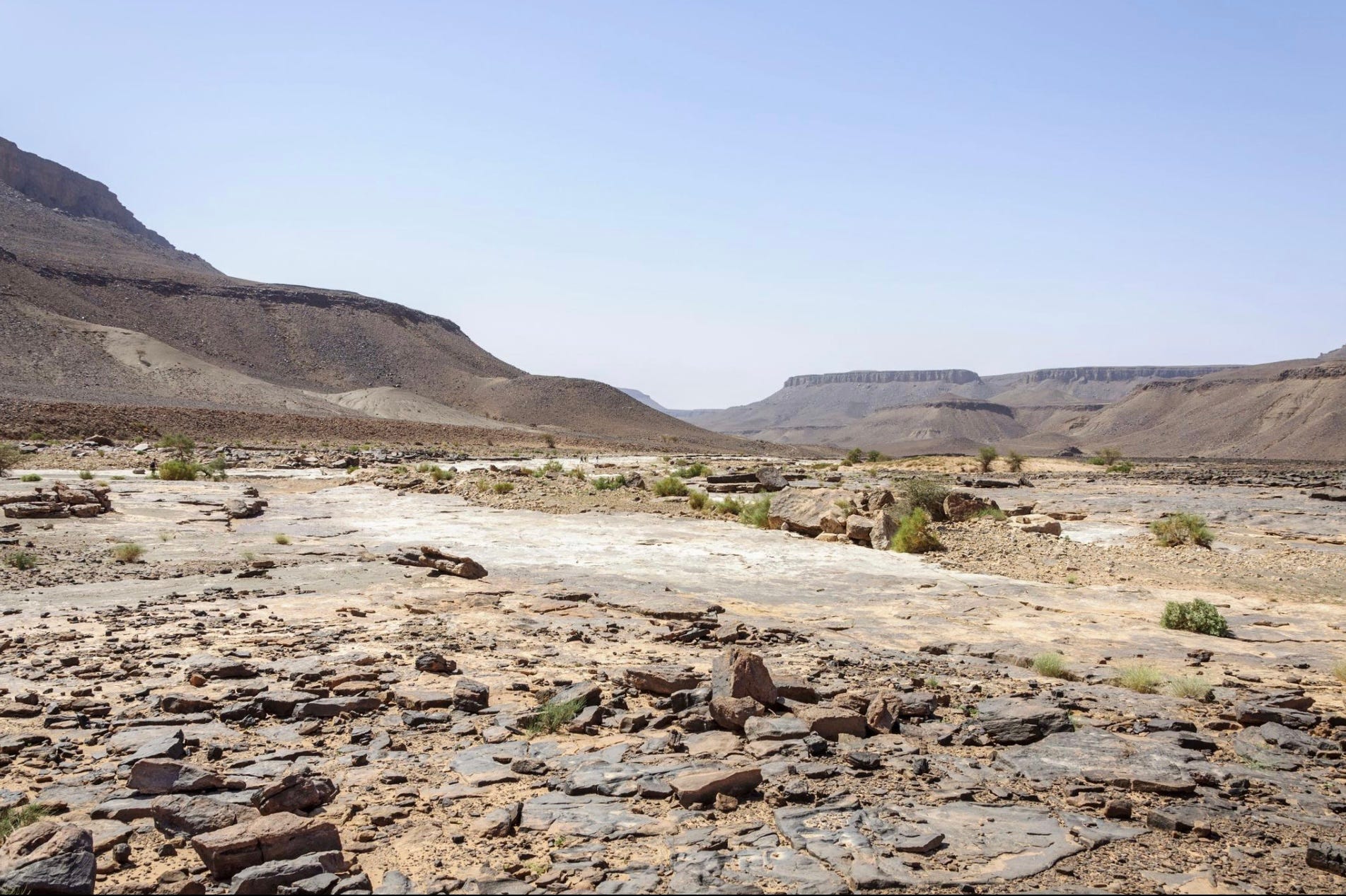
This great river - that sustains vast groves of hundreds of thousands of palms and oasis villages and towns - just disappears, yields to the desert, its water flowing underground.
Saïd lights another cigarette looking south. “The river is sleeping,” he says, and it seems a fitting description. Beyond M’Hamid the paved road ends. Ahead lie only tracks in the sand, erased and redrawn by the wind. The river has carried us as far as it can in Saïd’s ageing Mercedes.
If you’d like to keep writing with me, The Writer’s Studio opens in September. You can join me in my writing studio over eight weeks, for live sessions, small group work, 1:1 mentoring, detailed feedback on your writing, and guidance on building a career as a travelling writer.
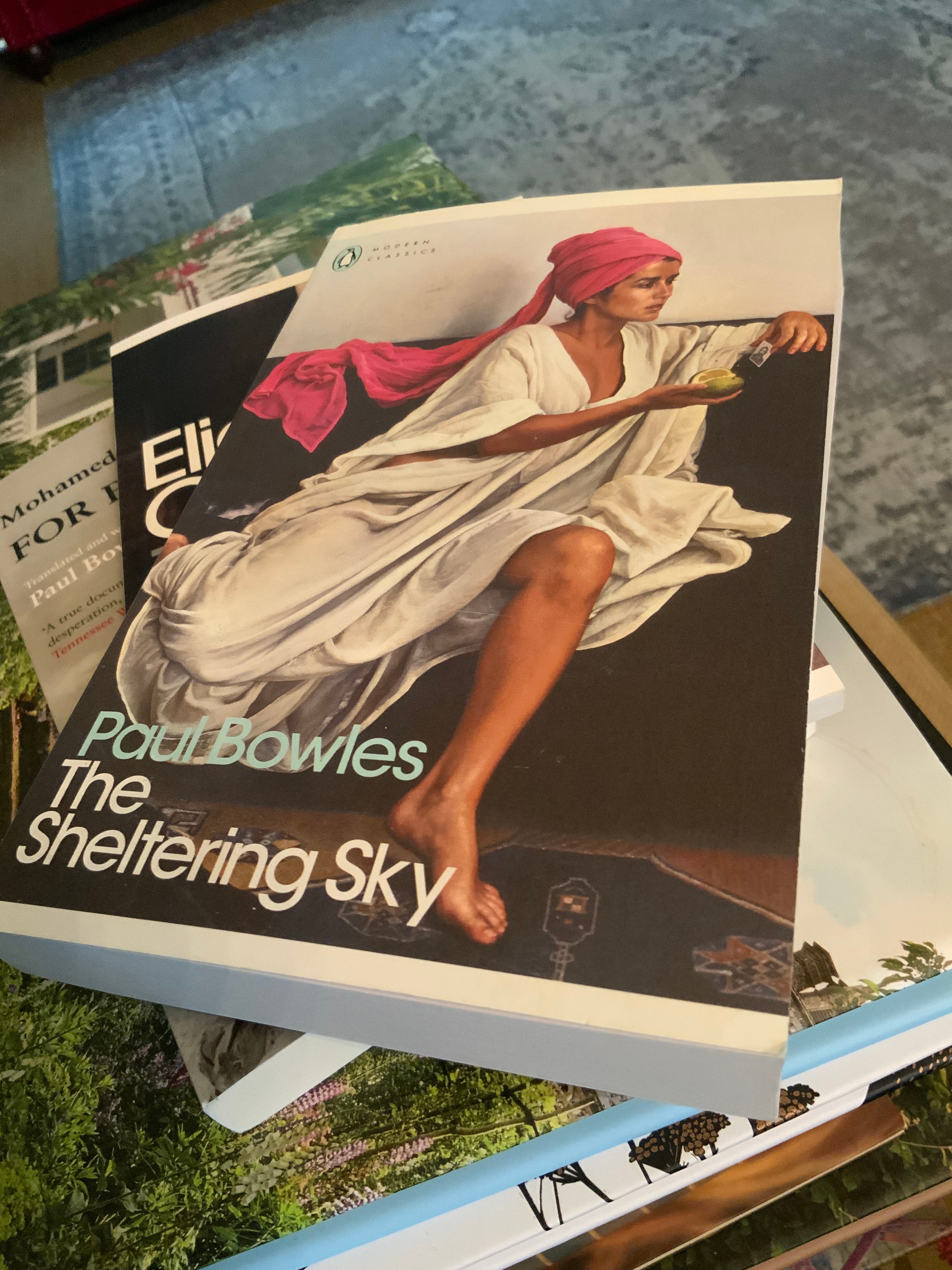
A haunting novel set in the Sahara where the desert becomes both a physical and psychological force. Spare, hypnotic prose makes it one of the defining literary works about desert landscapes. Powerfully written.
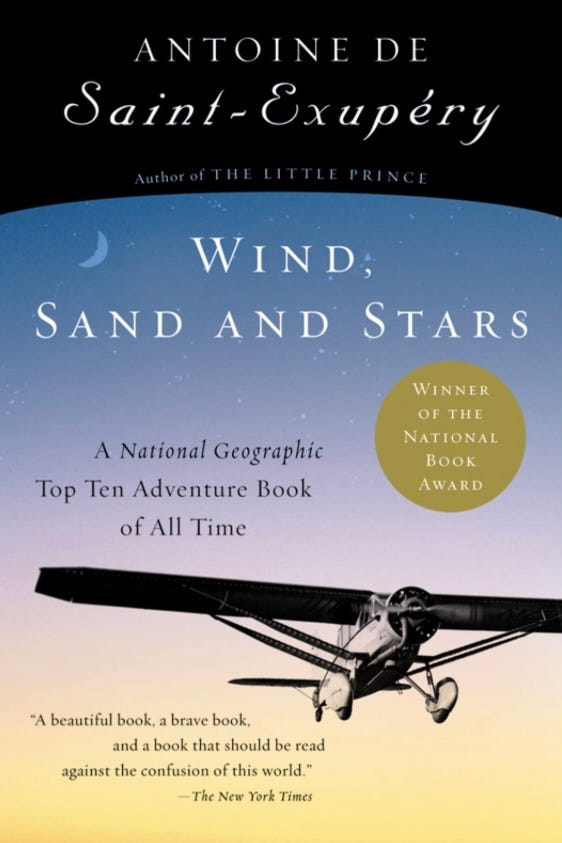
A lyrical memoir inspired by the author’s experiences as an aviator over the Sahara. Blending adventure with philosophy, it reflects on solitude, courage, and the human spirit. A truly beautiful reflective read.
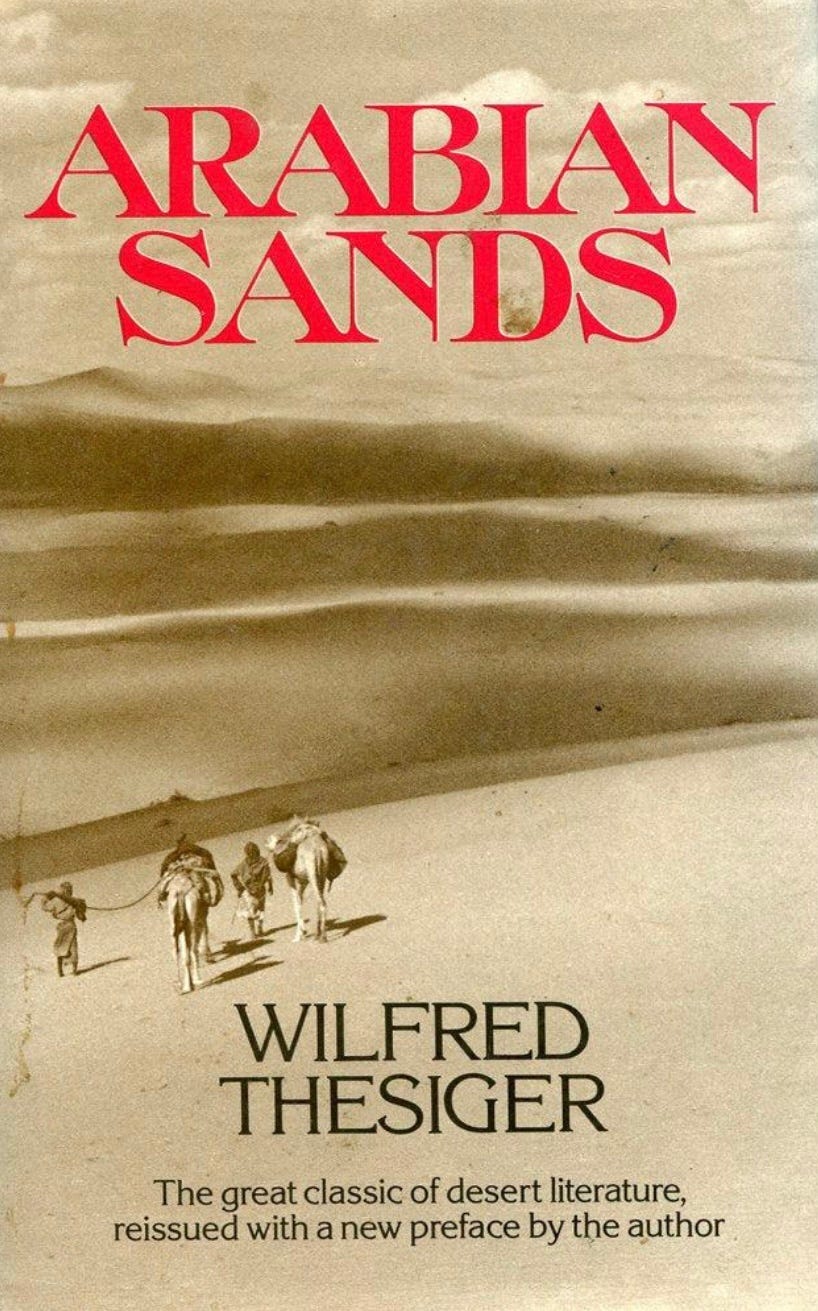
A classic account of journeys through the Empty Quarter alongside Bedouin companions. Thesiger’s elegant, restrained writing vividly captures the beauty and harshness of desert life.
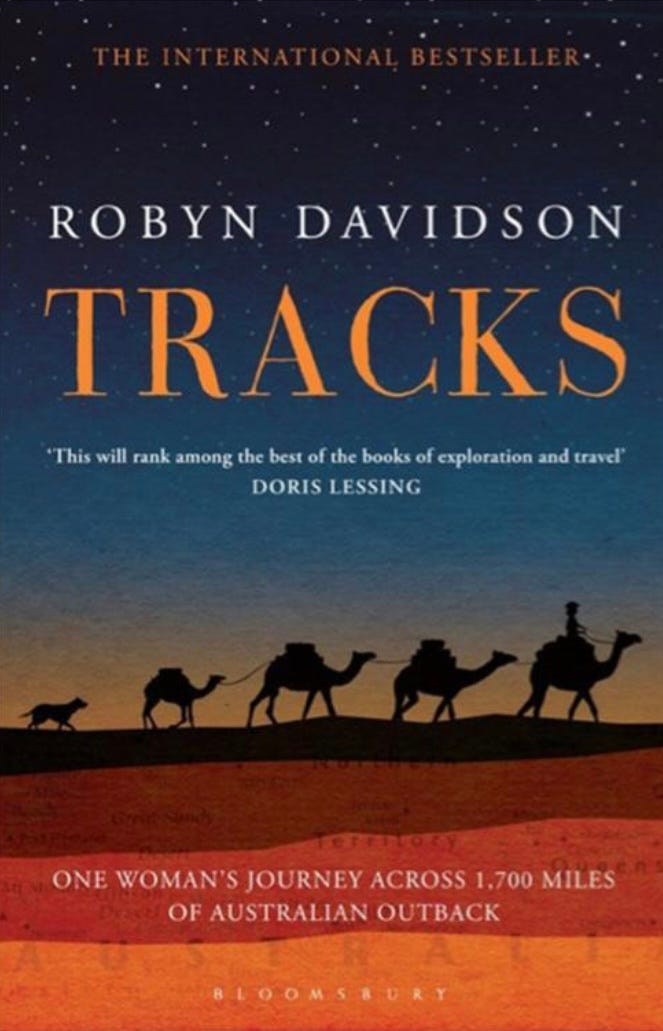
The story of a solo trek across the Australian outback with four camels and a dog. A deeply reflective memoir about independence, endurance, and finding meaning in vast, open landscapes.
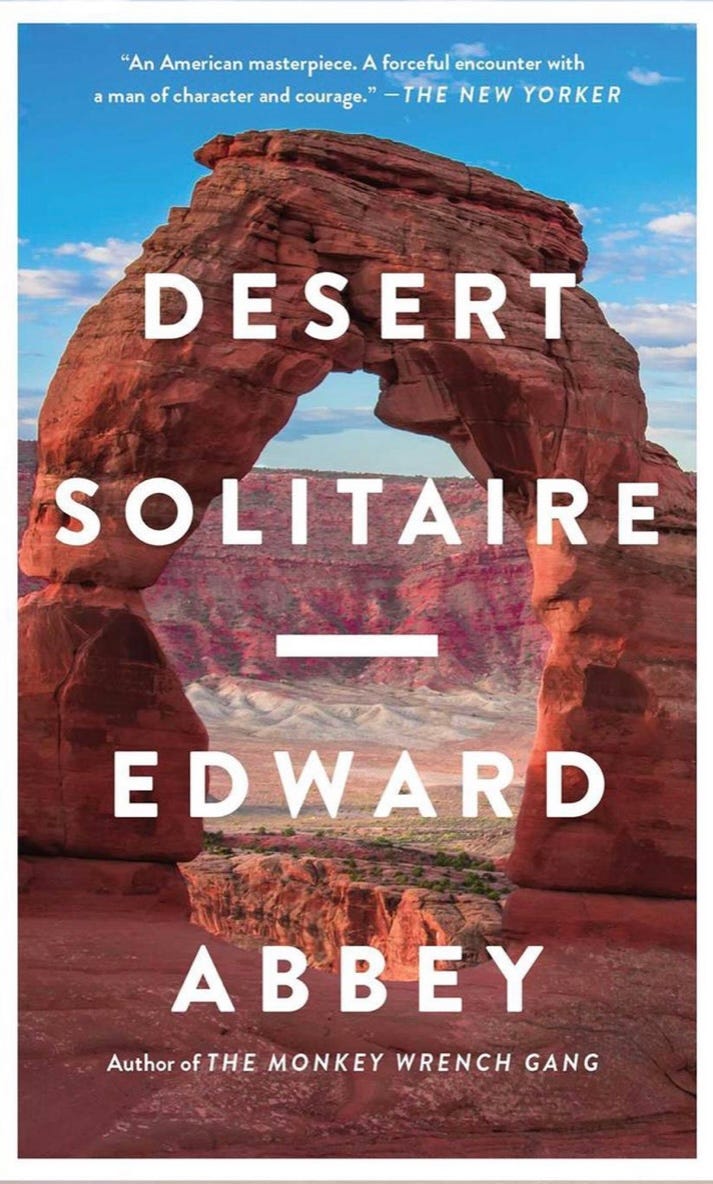
A passionate meditation on the deserts of the American Southwest, written during Abbey’s time as a park ranger. Both poetic and provocative, it remains a landmark of modern nature writing.
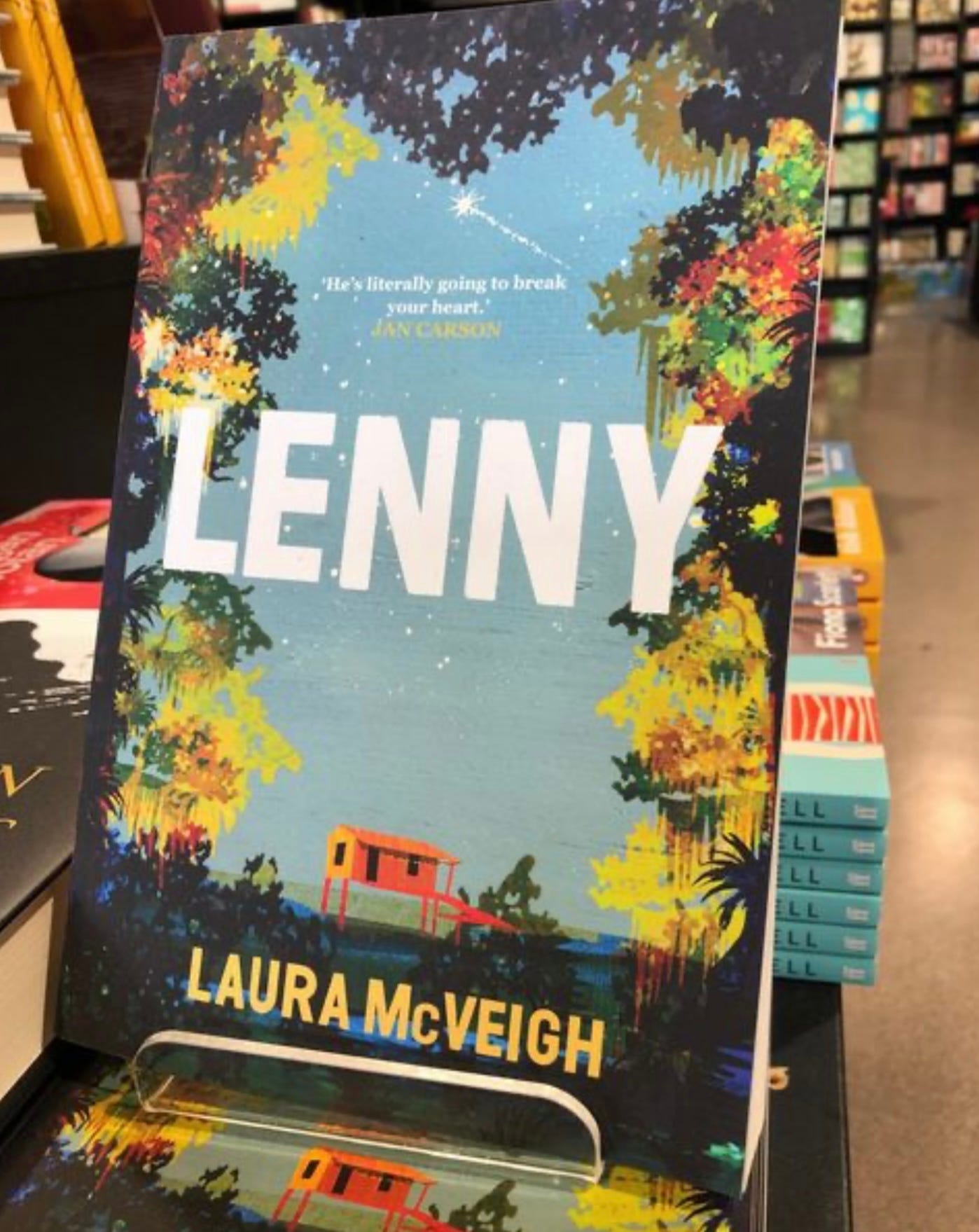
Fiction, a story of family, love and the power of one boy’s imagination to heal and survive. Set between two timelines - one in Louisiana, the other set in the desert in Libya.
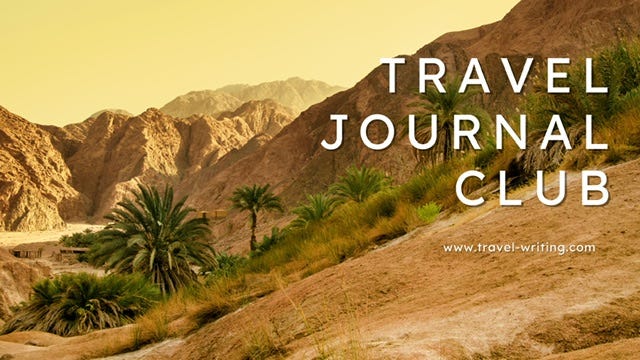
Choose one small section of desert - a dune face, a dry riverbed, a patch of thorn scrub. Spend ten minutes describing it with absolute precision. Notice colour, texture, movement, tracks, wind, and light. Avoid metaphor until your final sentence.
Notice: The desert becomes extraordinary through careful observation.
Write about one ordinary moment during a desert journey. Slow the scene down until the smallest actions become meaningful.
Notice: The most memorable travel writing often comes from ordinary moments observed with patience.
Imagine you’ve been walking for weeks. Today your entire world consists of the next sip of water, the next step, and the next patch of shade. Write 500 words in which nothing important happens - except that the character’s attention becomes completely absorbed by these small necessities.
Notice: The desert strips life back to essentials. Good writing does the same.
This interview with William Dalrymple by Rolf Potts is an excellent piece on travel writing and where the genre is headed.
Welcome to Ash Routen with At the Edge of the Map - writing on adventure travel and extreme journeys - recommend reading.
Stina and Erin are discussing inequalities in travel this week on Wednesday - drop by if you can for what should be an interesting discussion.
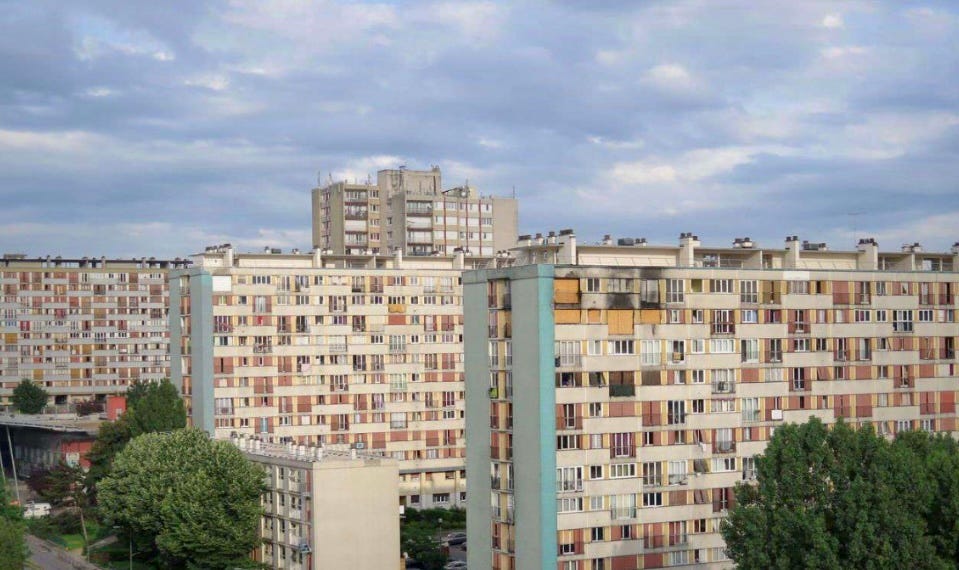
I’ve written recently on Paris as seen from the Banlieue in The Art of Paying Attention, on writing memorable stories:
Write Your Way Around The World
The Art of Paying Attention
·
Jun 16
If you’re new here, I regularly share insights and actionable ideas on writing, travel writing and green travel through the lens of a novelist and travel writer (Lonely Planet, DK Travel, etc.) in three newsletters: Storycraft, Write Your Way Around the World
I’ve written on Cuba in How to Write Travel Stories That Actually Matter:
And as I’m deep in novel writing at present, sharing my bookish summer - some reads I return to and a few new to the TBR pile:
StoryCraft
A Bookish Summer
·
Jun 23
If you’re new here, I regularly share insights and actionable ideas on writing, travel writing and green travel through the lens of a novelist and travel writer (Lonely Planet, DK Travel, etc.) in three newsletters: Storycraft, Write Your Way Around the World
Until next time, happy travels & writing!
Laura
Laura McVeigh
Author, Travel Writer, Storyteller
lauramcveigh.com | lauramcveightravel.com | travel-writing.com | greentravelguides.world
Laura McVeigh is a Northern Irish novelist and travel writer. Her bestselling work is widely translated. She has authored books for Lonely Planet, DK Travel, travel writing published by Bradt Guides, bylines in the Irish Times, Irish Independent, featured by the BBC, Newsweek, New Internationalist & many more. A polyglot and former PEN International CEO, she has worked with writers from 145 countries. She is founder of Travel-Writing.Com and Green Travel Guides. Laura writes on storytelling, travel writing and mindful travel on Substack.
Access : Free masterclass on travel writing - The Writer’s Studio - 1:1 support
Comments
Nothing yet. Say the first thing.
Sign in to join the conversation.