
The house that my sisters and I grew up in was a converted barn on the farthest edges of the county of Berkshire, an hour and a half south of London. Under the sign at the end of the road, which bore the name of our village, an additional inscription read, somewhat smugly, “Welcome to Jane Austen country”.
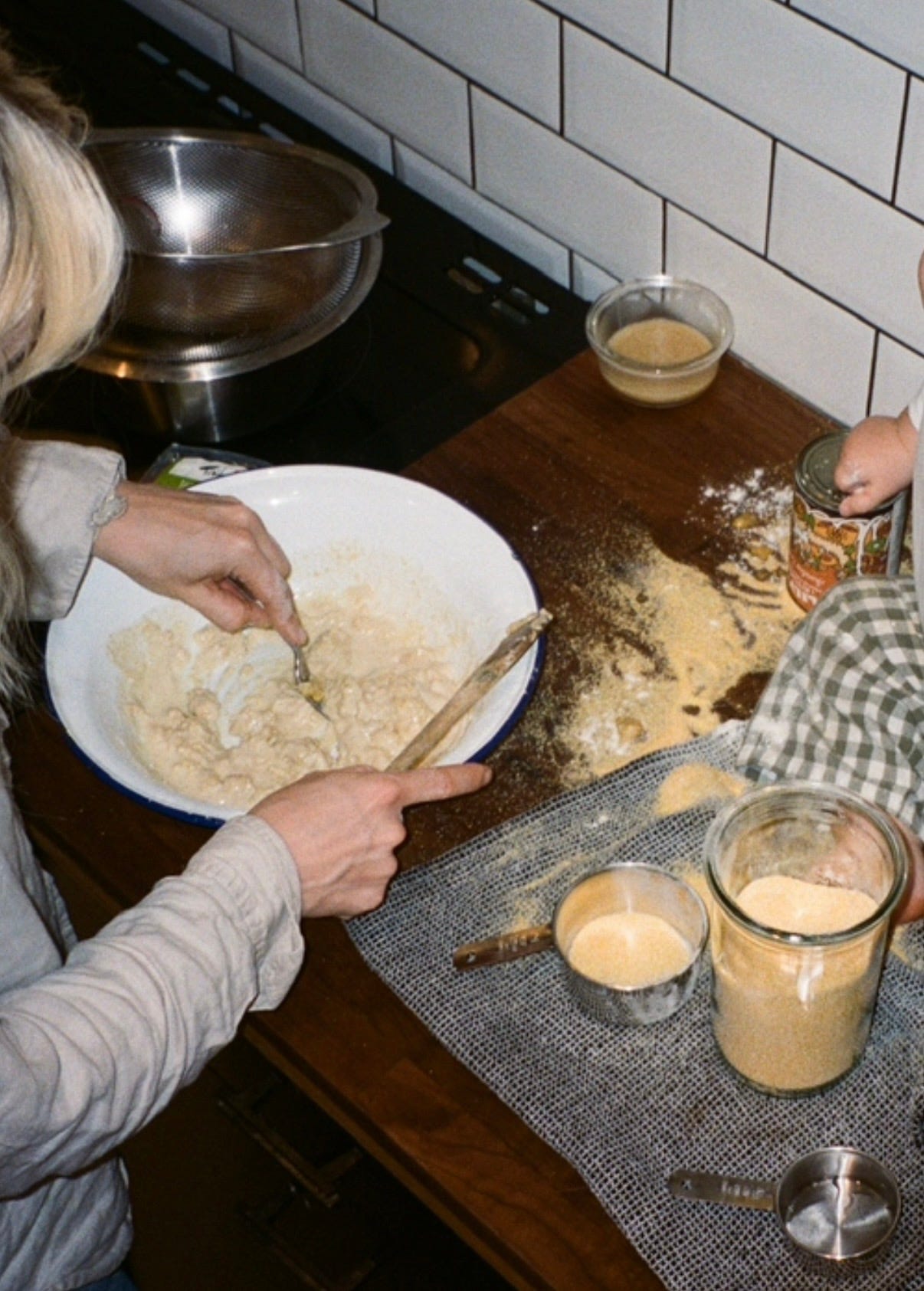
In the 1980’s when my parents moved to that house from their flat in London, perhaps this inscription felt in keeping with the quiet parade of cottages, thriving pub with ancient beams you had to duck under to get to the bar, and village shop manned by whatever go-getting teenager came of age that year. Maybe it was the inscription, perhaps it was the year we got Sense and Sensibility on VHS, maybe it was Kate Winslet yomping across a verdant pasture not all that dissimilar to the one beyond the end of our garden, that led me to believe that I was growing up in the great British countryside.
It wasn’t till I was a young teenager that I was overheard at a birthday lunch, by some snobby relative describing myself as living in the country, that I was set straight - she snorted through bucked teeth, interrupting to correct me “Rural suburbia, darling”. For any readers in America interested in the British class system, here is a shining example of a vanity of small differences that cumulatively compose the great farcical bouquet of the British middle classes. With one comment she had torn away my childish regalia - look, she seemed to say, it’s plastic! Garbage! Our family, like our home, hung between two worlds, surrounded by either the established or the aspirational. I didn’t feel we belonged to either of them.
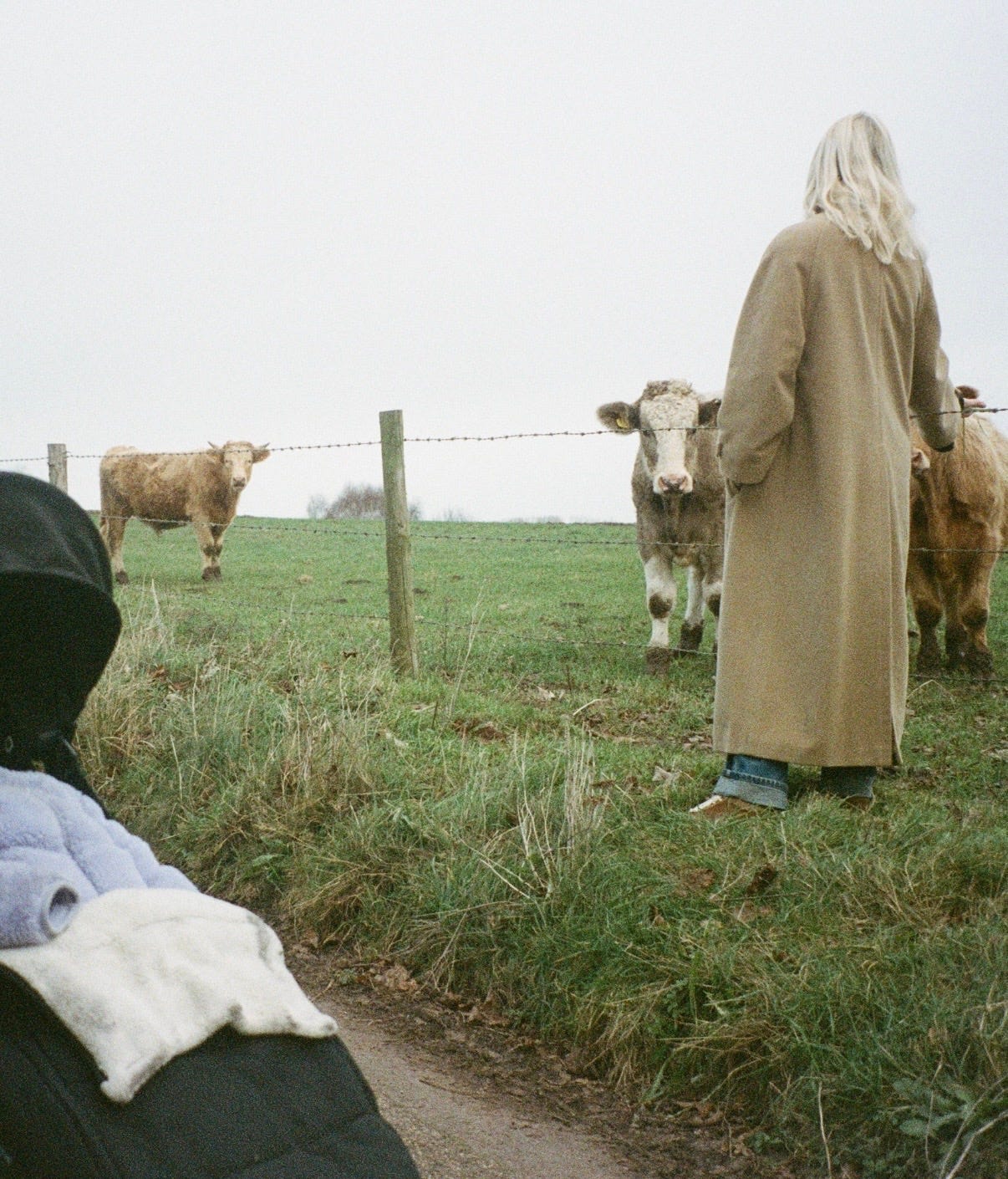
I suppose I thought of the countryside as a place where you could get lost in the woods tracking a deer, or see snakes eating frogs, or lie on your back in a grass meadow at sunset and watch the swallows as they abstracted themselves against a violet sky, all of which was possible where I grew up. But it seems I had missed some subtle societal clues - like the fact that our nearest station had a fast train to London for the herds of suited commuters, or that one village led right to another, with barely an agriculturally functioning field between them. Any gap in the landscape would be filled over the coming 25 years with more houses, new towns, in fact, on both sides of our village. You were far more likely to encounter lorries than tractors on the narrow lanes that now strained to contain their load.
By the time I was 30, the “Welcome to Jane Austen Country” sign seemed almost sarcastic - obscured as it was by near-constant traffic. The road where, as a child, I had walked out alone to stroll down to the nearby ford or buy a 20p surprise bag from the village shop, is now a roaring intersection between two major motorways which connect the west country with London. What’s more, in the last few years there has been an explosion in the Red Kite population, a native bird of prey hunted to near extinction in the 1800’s and virtually unheard of in the 90’s. When I return with my own children to the pine forest playground where I spent much of my youth, the grand scale of the Kite’s mewing and screeching from above casts the scene in an aura more reminiscent of Lynchian America than my own blackbird and starling serenaded infancy. These changes gave visiting my childhood home a sombre and incongruous feeling, change and the passage of time so vast and consuming it seemed to distort and disquiet the bucolic fantasies of my youth. How could I have ever believed I was a child of the British wilderness?
The village shop closed ten years ago, the pub is limping on though with ever more desperate signage outside “Hot Lunch!” “Under new Management!!” “Come one in!!!”. Yet my family home is unchanged. Its position, ten minutes off the M3 meant my parents did and still do get many regular visitors from London, though increasingly they opt not to stay the night because of the noise from the road. The house, lined at every inch with books, with its unique wall of panelled glass which faces the garden and lights the seventies style sunken living room with its fireplace, open and spacious, and high barn ceiling, ruined me for other houses - it has formed the blueprint in my mind of the architecturally perfect family home. So many happy congregations took place in this perfectly sized entertaining space. So many games of racing demon, so many books read by the fire, Christmas presents opened and new years toasted, new boyfriends welcomed and old friends caught up with. We sisters have at times begged them to move, to get further away from the road and enjoy some peace and quiet - but they can’t imagine leaving, and how can we blame them? So much of our home was the people who graced it with their presence, many of whom have now passed, but for the echoes of them that remain in that room. And now that we are all squeezed into tiny spaces in London, it’s still the only place we can all be together, and now the voices of our own children ring out there.
I often wonder how much the shape and form of my family home affects the shape and form of my inner world. I often dream within a twisted version of the architecture of that house; stairs that lead nowhere; endless corridors; overly still and silent rooms. Is this a two-way relationship? Had I had a different childhood home would my unconscious have contorted itself down alternative stairways and corridors, thus yielding different results?
A few years after moving to London and yet still attempting to be the type of thing that yomped across fields, twisting ankles and meeting more Willoughby’s then I’d have liked, I gave up the fantasy of being a child of the country and made absolutely firm my resolution that I would never return to live in Rural Suburbia. And for a long time, I never questioned my future in London, pleasantly punctuating city life with visits to the (slowly dwindling) sanctuary of my parents’ house and garden, drenched now though it was in the auditory backdrop of traffic and birds of prey.
I’m horrified to admit that after our most recent visit, my mind wandered towards imagining what a life out here in the burbs would feel like. Space, a garden, grandparents nearby… there’s decent coffee now, a good bakery even; increasingly, I see handsome couples with young children about. But this is how it happens, isn’t it? Expelled from the city, purgatory welcomes you with its feel of infinity, with a consoling suggestion that it was inevitable, because who has the time or strength for an alternate solution? I remember going to see the play Love Love Love as a teenager about two carefree young things who meet in the swinging 60’s in London, fall in love and have children - the second act takes place in their dull suburban living room 20 years later. During an argument in which the husband is making the case that their lives have become tiresome and unadventurous, the man says “I mean for Christ’s sake, how did we end up living in a suburb of READING!!??”. My sisters and I glanced down the aisle to our parents, who looked on, unmoved, blinking.
How much sharper is it than a serpent’s tooth is it to have an ungrateful child! as my father used to say, a slightly misremembered line from King Lear. For were they not faced with the very same prospect with which I am now reckoning? What life do we want for our children and can we offer it to them here? Indeed, many of my peers are the same. The city in which we invested so much of our young adulthood has forced us further and further out to the edges of cosmopolitan life - the libraries, the galleries, the cultural events that we thought would form the spine of how we raised our children are full to the brim and miles away. Perhaps most crucially, any friends that do remain in the city live so far away and are so consumed, as we are, with work and raising children that we barely ever see them. In this way the choice is different to that which some boomers may have made - the London I knew and aspired to be part of when I was young seems far away, even as I am living it.
Have any of you faced this question? Where did you go!??
No posts
Comments
Nothing yet. Say the first thing.
Sign in to join the conversation.