
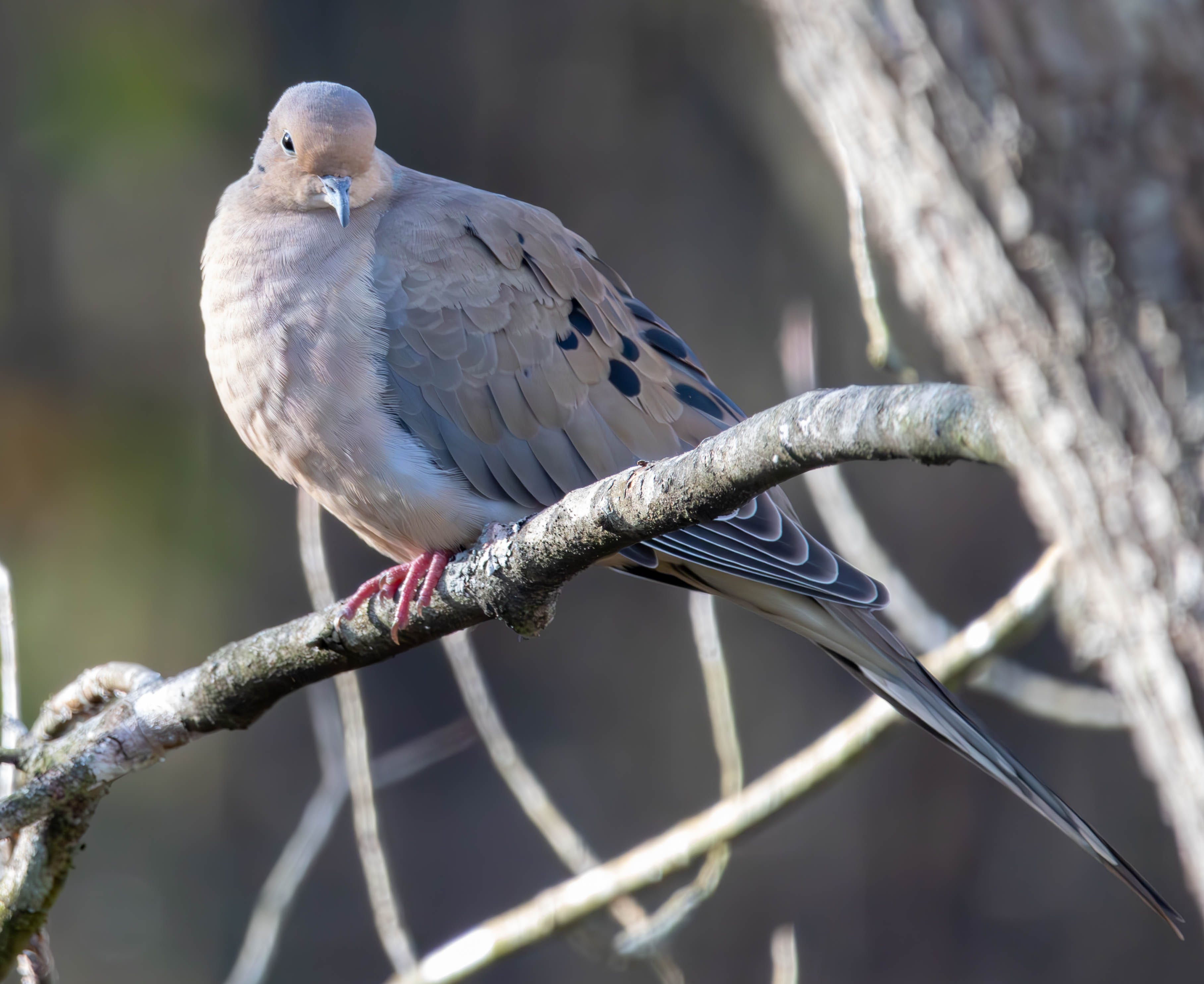
I heard singing. Me, alone, reading Ten Windows, becoming acquainted with Bashō and wabi-sabi, my husband still asleep in our bedroom at the end of the hall, my only company the mourning dove who had taken up a steady cooing outside the window. And I heard it—a deep-bass hum melody. I couldn’t make out the words, but it was singing me something. I closed my book and listened deeper—this is what Bashō would have done. A Northern cardinal took up the dove’s song, creating a call and response. I stood and looked out the window over our back yard, searched the trees for Bashō’s ghost, searched the skies for his “wind-swept spirit1,” searched as far as my eyes could see for some deep-voiced homunculus hiding in the shadows.
To listen to this post:
0:00
-9:07
As my eyes scanned the place where the sky fell down onto the growing things in my yard, I remembered what my stepmother said when we visited her in the hospital this past weekend. I had been anxious about the visit, for many reasons, but she was ebullient, radiant even, as those near death often are, her smile a universe of forgiveness and simple joy. She was lucid, grew ever clear the longer we talked, but seemed to be speaking from another place, another world. “Your dad stopped by,” she said, in telling us about a cookout they’d had before her CO₂ rose dangerously, sending her into the ER and a delirium so opaque she had no memory of it.
I had sat with my dad in this same way, in this very hospital, maybe this same room even, before his death three years ago. Dead these past three years but still a presence in the walls and halls and hills of the home he shared with my stepmom. “Really?” I ventured, unsure what else to say. “Did he talk to you?” I asked. Her smile was lit from within. “Yes!” she said. “He said ‘hi,’ got something to eat, and walked down the road.”
I looked up at my sister and my husband, eyebrows raised, a knowing glance between us. But standing here, looking out the window and searching the skies for an elusive songster, her story doesn’t seem so strange. Jane Hirshfield quotes Bashō as saying, “If you see for yourself, hear for yourself, and enter deeply enough this seeing and hearing, all things will speak with and through you.”
I close my eyes and try to enter the moment, believe. Every day lately it seems one more thing happens that makes me lose more faith in humankind, shakes my naïve belief in the Goodness. There are the BIG things, the things our government is doing to marginalized people, but there are smaller things too—the way people I encounter every day behave. People are driving differently, walking differently—more aggressive, less considerate, reckless. There are fewer niceties, less holding the door for others, less smiling when our eyes touch. Road rage, rudeness, selfish actions, casual disregard… I remind myself that people are hurting; people are scared. It’s harder to treat people with kindness when fear is the suit you don every morning.
I have been praying for encouragement.
Hirshfield tells me that the word sabi, in Japanese, refers to an “alloy of beauty and sadness” rooted in loneliness or solitude. “To feel sabi is to feel keenly one’s own sharp and particular existence amid its own impermanence, and to value the singular moment…” she says. Likewise, wabi “conveys the beauty of the most ordinary circumstances and objects.” Wabi-sabi is the inward change that embraces a marriage of these two concepts—a philosophy of life that accepts, even celebrates, the imperfect, impermanent nature of existence.
I see the wisdom in this.
For two weeks the European starlings have been murmuring over the new woods behind our house. In the evenings, when they flyover, noisy in their synchronized dance—filling the sky with their squeaky chatter—I run out back and stand beneath their winged ballet. The starling alone (or in small groups) is seen as an unwanted pest, often frightening away or bullying less aggressive birds. But here, in this particular moment of my particular existence, I see their beauty as they make their soaring, looping communal flight.
There is more than one way to receive a song from the sky. Why should I be surprised if the ghost of Bashō chooses to sing to me? Or if my dead father comes to a cookout given by his wife? In accepting that there are things I will never understand that happen every day, I am more able to embrace the imperfections of this world, this one life I have, with love.
a haiku for you to honor the art of Bashō:
the wings of starlings—
a low bass hum melody
the voice of God sings.
________
A quote from Matsuo Bashō’s Journal of a Travel-Worn Satchel included in Jane Hirshfield’s book Ten Windows: How Great Poems Transform the World. In more context: “In this mortal frame of mine, which is made of a hundred bones and nine orifices, there is something, and this something is called a wind-swept spirit, for lack of a better name, for it is much like a thin drapery that is torn and swept away at the slightest stir of the wind. …”
No posts
Comments
Nothing yet. Say the first thing.
Sign in to join the conversation.