
Hi friends,
We survived the heat wave and the giant rainstorm, and the flowers on the farm are growing! They aren’t blooming yet, mainly because I’ve been cutting their heads off to make them grow taller before they start investing all their energy in flowers.
Recently the septic treatment plant in the city where I live had a catastrophic failure after a 42-inch main pipe broke in two spots, causing eight to ten million gallons a day of raw sewage to be dumped into the Merrimack River.
The farm is on the river, so we have been careful not to go in it. The spill caused a lot of downstream beaches to be closed. The Merrimack River Watershed Council has a helpful website about it here.
They write:
“Haverhill has an average of 35 combined sewer overflow (CSO) events in a year. A median Haverhill CSO discharges roughly 60,000 gallons. However, a large Haverhill CSO (top 2%, or roughly once every 2 years) can discharge approximately 10 million gallons. Typical Haverhill CSOs impact an area immediately downstream for roughly 3 days.”
Ugh. I think the city has temporarily fixed the problem but the long-term question of repairs and system maintenance remains unanswered. Will a failure like this happen again? Maybe yes.
Living on a river, it is painfully obvious that the funding decisions one city makes affect all the cities downstream. And since the river is tidal, it flows both ways.
So it goes, sharing a planet with people who may or may not make decisions that are best for the future.
Cooperation and community are crucial.
Queenslander book two is out with a last round of beta readers, including Aussies and sensitivity readers. Thank you beta readers and sensitivity readers!
In the meantime, I’ve been working on designing the cover. As always, there are finicky little details to fuss over that don’t really matter in the long run, like what color the clouds are. Here are two options to give you a sense of what I’m thinking about:
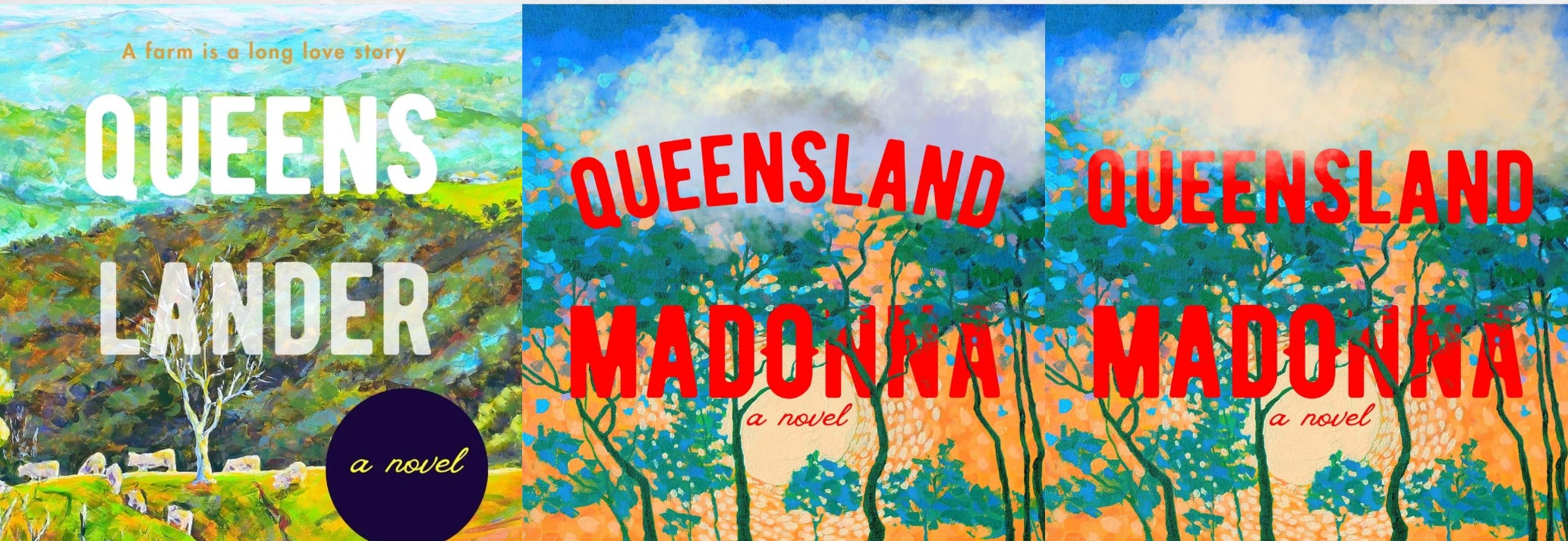
If you have a strong opinion one way or the other, let me know.
I’ll be in discussion with Lamba award winning author Milo Todd, talking about Queenslander at Belmont Books on July 30th at 7pm. If you live in Boston, that’s not far for you! I can’t wait. This will be so much fun.
Bella Books will sell copies of Queenslander at the GCLS annual conference in Orlando, Florida, August 5-9th.
I’ve been invited to be on a Debut Author panel at the Concord Festival of Authors in October, which is super exciting.
Like many people, I’ve been obsessed with the World Cup and emotionally invested in the older players.
The Women’s World Cup is a year from now in Brazil!
I don’t usually enjoy watching sports on television, other than the Olympics, but there is something nice about sitting down with the family (and snacks) to watch a soccer game, especially if you don’t know who will win, and there are high stakes, like whoever loses will retire and that will have been their last international game ever. It feels dramatic, even cinematic.
Is this World Cup more exciting than the last one? It feels like it.
As a person in their mid-to-late thirties, I find the “older” players compelling. They aren’t really that old, but professional sports are meat grinders that favor young blood.
Women’s soccer players tear their ACLs in their knees more often than male soccer players— 2.5 to 8 times more often, which seems awfully unfair. (source)
The oldest player on the US Women’s National Team roster is currently 32 years old. Megan Rapinoe played her last World Cup at 38 years old.
By comparison, Ronaldo may have just played his last World Cup match at 41. Messi is 39. The Cape Verde goalkeeper, Vozinha, is 40.
On average, male soccer player retire at an older age than female soccer players. There are many reasons for this, including higher pay in the men’s league, but I’m sure injuries are a large factor in many athletes decisions when to retire.
No posts
Comments
Nothing yet. Say the first thing.
Sign in to join the conversation.