
A man, a moment and a miraculous event. Those three predictable pillars of most political reporting are excellent material for clickbait, soundbites and hero-centered biopics, but they are an inaccurate way to describe how politics works, and they do a damaging job of obscuring the public’s role in democracy and governance.
I thought about this in preparation for a talk at the Kopkind Colony, a uniquely wonderful summer residency program for independent journalists and community organizers at a fabulous farm in Vermont.1 (This post is adapted from the AI-assisted transcription of that talk.)
How do you cover time as an organizing terrain in a media economy and a culture that prizes mostly clicks, celebrity and “now”, and when you cover political “surprises” what work are you doing if you only cover the surprise? The question seems more relevant than ever in this summer of mid-term primaries. Election victories and defeats are one-day or two-day stories to the market-driven media, but the work of changing politics is life-long, and when it comes to people, power, and moving it around, the stories most media miss are the stories that matter most.
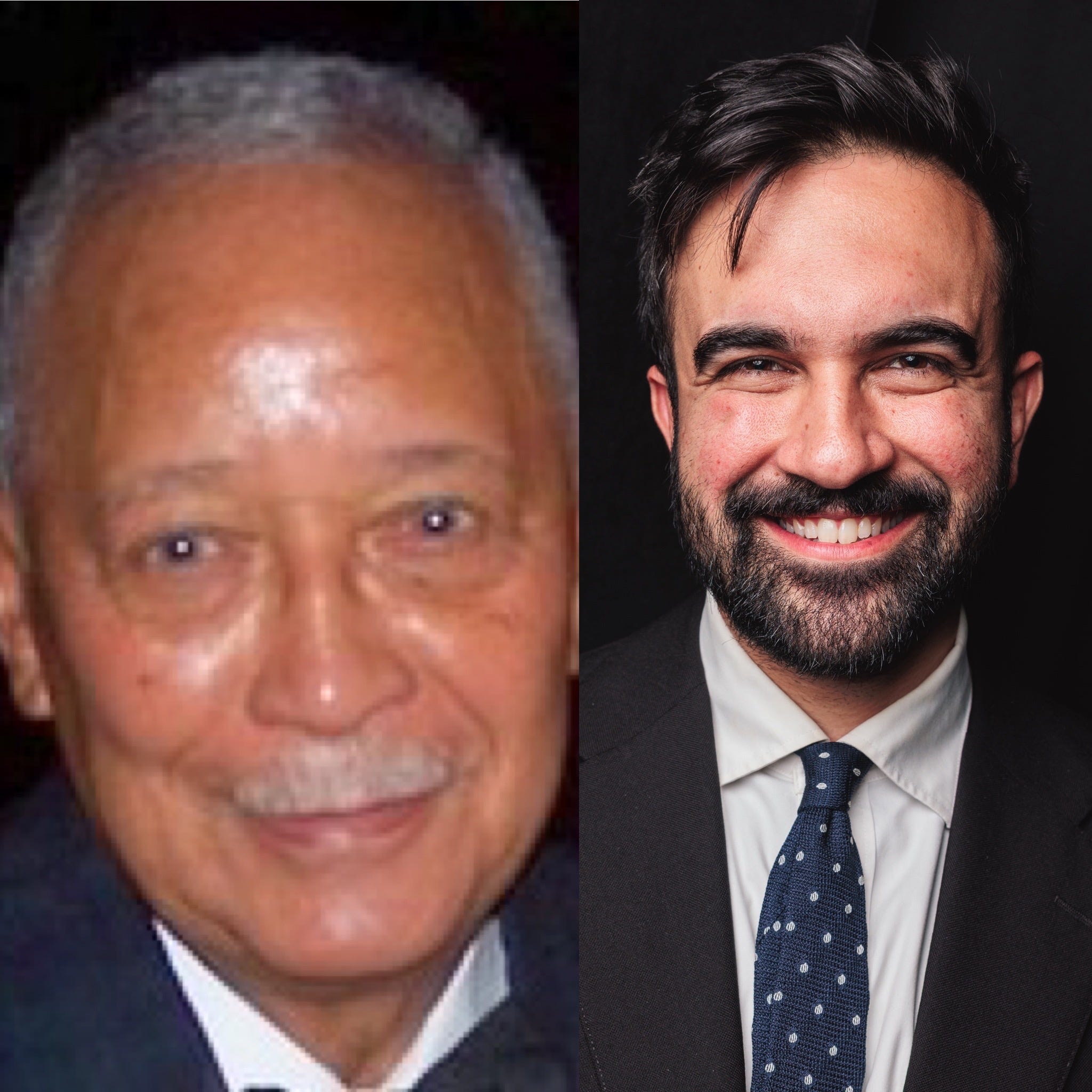
Take two New York City mayors — two “firsts” — thirty-six years apart. One: David Dinkins, the city’s first African American mayor; a man remembered fondly, if sadly, by his supporters, who was defeated too soon by his own caution, by racism, by Wall Street, and the fragility of his hold on office. The other, Zohran Mamdani, New York’s first Muslim and Asian American mayor, who is exciting his people, advancing his agenda, shifting some narratives and speaking with unprecedented candor. His success will nonetheless be decided by what happens next, and the public’s understanding of their role in that.
Let’s start with two scenes.
Scene one: a union hall in Harlem in late summer 1989. Folding chairs, no computers no cellphones, perhaps a fax machine. David Dinkins has just become the Democratic nominee for mayor of New York. The media who’ve found their way up to that room see the man, the moment, and an upset win against a two-term incumbent mayor. They don’t see the decade of fair housing fights, and hospital worker strikes, the laborious coalition-building by Black and Latino ministers and labor leaders that led up to this victorious night. They don’t see the legacy of Jesse Jackson’s Rainbow Coalition runs for president in 1984 and '88.
Scene Two: Washington Square Park, this past May Day. An energetic young mayor bounds onto the stage where generations of organizers have stood before him. It’s Zohran Mamdani — the first sitting New York City mayor to address a May Day crowd since Fiorello LaGuardia. Behind him, in big letters, bold as brass: No War, No Ice, No Billionaires. His win didn’t come from nowhere either. Nor does his candor, or his confidence.
The first thing to know is that visibility is not the same as origin. The cameras simply have a habit of turning up at the end and declaring it the start.
The cameras showed up for Dinkins on election night in November 1989. They did not show up for the years of relationship-building in a city that Ed Koch had taught to distrust itself along racial lines. Koch’s New York was a city of “us” and “them,” of racial arithmetic where every gain for one group was read as a loss for another. Dinkins ran on a phrase - “gorgeous mosaic” — that was itself an argument against that arithmetic. But a catch phrase hadn’t won City Hall. That took years of unglamorous, mostly un-covered work.
Mamdani’s cameras showed up for a rent freeze platform, and a free-bus proposal and a perky outsider who could out-organize a former governor. They did not show up for DSA’s slow rebuild after 2016, for the tenant organizing that turned “affordability” from a talking point into a movement, or for a generation of young organizers who cut their teeth in Bernie Sanders’ campaigns and stayed in the work long after the campaigns ended. What looked sudden to the press had been building for a decade.
Although Mamdani is generally hailed as the city’s first Democratic Socialist mayor, in fact, Dinkins was also a member of DSA. He admired the great anti-segregationist artist, activist and friend of the Soviet Union, Paul Robeson, and throughout his career he hung a framed picture of Robeson on the wall of his office.2 But Dinkins kept his private convictions quiet in public. Mamdani not only accepted the endorsement of the DSA. He ran, explicitly, proudly, excitedly, as a member of that organization.
Likewise on race, the two answered to their moments differently. Twenty days before the 1989 primary, a sixteen-year-old named Yusuf Hawkins was shot dead by a mob of white teenagers in Bensonhurst3 . It happened in the middle of the campaign, and it turned the race into a referendum on the city’s racial climate. Dinkins, running on a Democratic Party coalition that needed both Black Brooklyn and white ethnic outer-borough votes, chose his words with visible care. He didn’t accuse Koch of causing the murder. He gestured, gently, toward the idea that the tone of a city gets set by its leadership, and left the rest for others to shout. It wasn’t until after he’d won, after a jury acquitted the shooter of the top charge, that the new mayor let himself say the plain thing: that Yusuf Hawkins died of racism. Full stop.
Facing a radio host suggesting he’d cheer a second 9/11, a rival mayor implying the city would “become Europe” if it elected a Muslim, and months of attacks on his position on Palestine that a lot of Democrats quietly hoped he’d just outlast, in 2025, Mamdani stood outside a Bronx mosque three weeks before the election, and said the true thing out loud: that Islamophobia had become one of the only issues left with bipartisan agreement in this country, that his own strategy of staying quiet and biting his tongue had been wrong, and that no amount of redirection was ever going to suffice.4 He said it while he was still, technically, a man who could lose.
The difference in their approach is partly generational: a matter of two men with different experiences, one born Black in apartheid America. It is partly a matter of character and charisma, too, but it’s not fully explained by any of that.
Comments
Nothing yet. Say the first thing.
Sign in to join the conversation.