
(Listen to the radio version here.)
This week, I heard a meteorologist on the radio say that “meteorological autumn” begins on September 1. Of course, astronomical autumn won’t come till three weeks later, on the equinox which, this year, falls on September 22. The equinox is what calendar makers usually mark as the first day of fall.
I’ve always thought of Labor Day, which can fall anywhere from September first through seventh, as the last day of summer. When I was a student, and then a teacher, and then a mom with kids in school, it always felt like the first day of school was the first day of autumn. Back then, school always started after Labor Day, but that’s no longer a given, even in Minnesota.
My sense of Labor Day marking the end of summer, rather than the start of autumn, was reinforced when our high school, in a working-class suburb of Chicago, had a woman who ran a charm school come to the girls’ gym classes to teach us how to act like proper young ladies. She emphasized that we should never, ever wear white dresses or shoes (except at our own wedding) after Labor Day until Easter Sunday. But wearing white on Labor Day itself was just fine.
The Minnesota State Fair is always scheduled for the twelve days leading up to and ending on Labor Day.
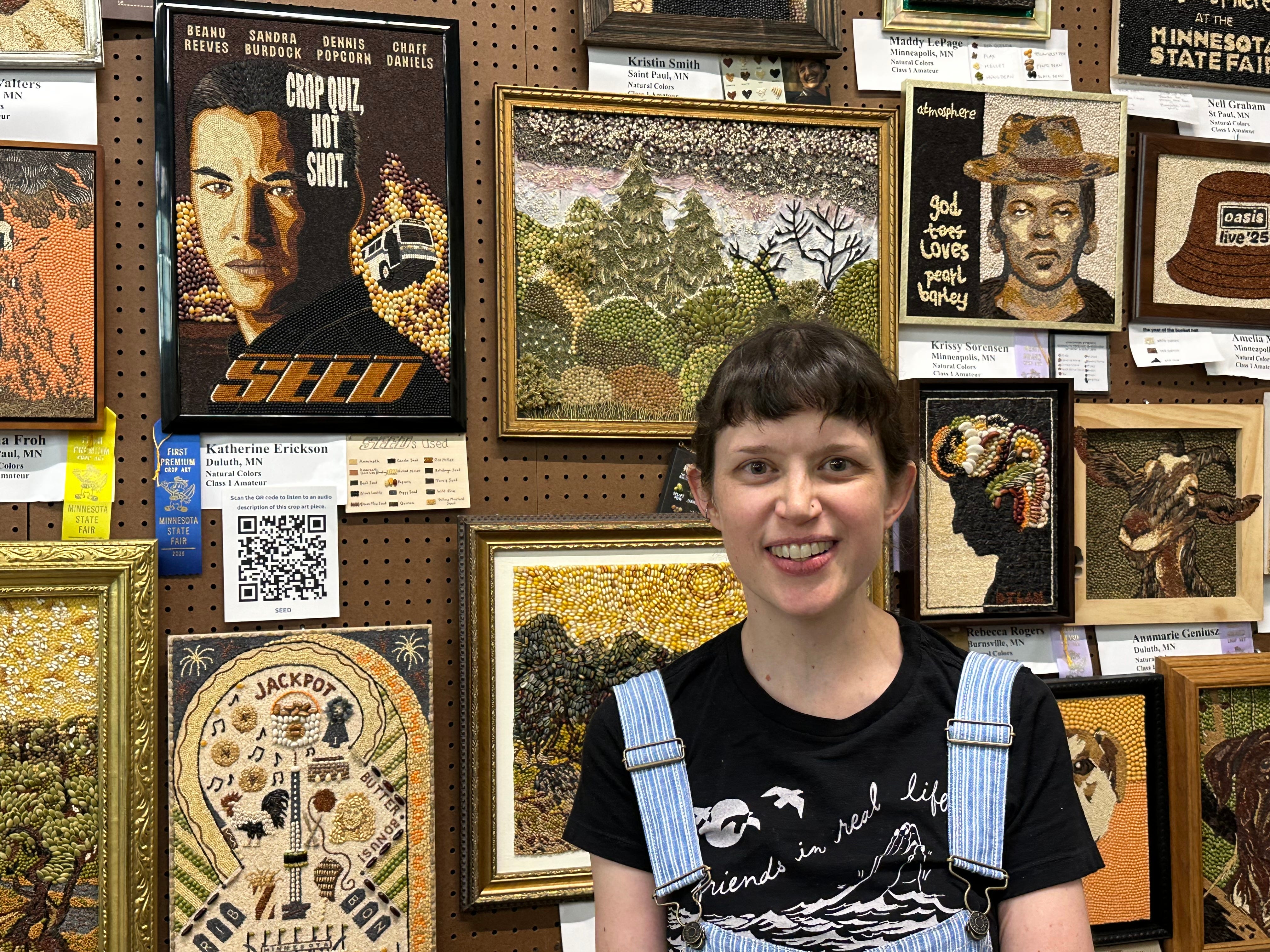
Yet Port Wing, Wisconsin’s annual Fall Festival is always scheduled for Labor Day weekend, and I never questioned that—somehow the holiday weekend does dual duty, marking both the end of summer and the beginning of fall.

I never paid the least bit of attention to most sports until high school, when our football team played in autumn and our basketball team in winter. I thought of baseball as strictly a summer sport. Yes, I know a lot of kids in a lot of places kept track of baseball well into the school year, but I was a Chicago Cubs fan. For us, baseball season was always pretty much over before the school year started.
So there are many different ways to pinpoint when we transition from summer to autumn. When I became a birder, I learned of yet another way: we kept track of the four seasons based on annual cycles of migration, breeding, and hunkering down for winter. For state and continental seasonal reports, winter was defined as December through February; spring as March through May; summer, the shortest season, as June and July; and autumn, the longest season, from August through November.
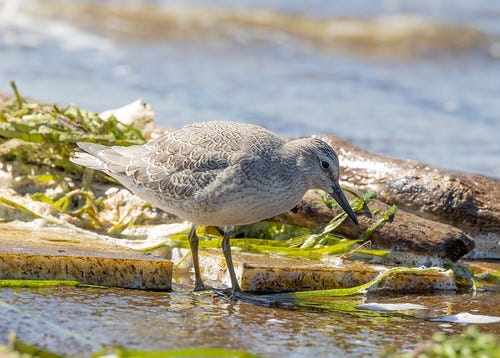
The birds themselves, both as individuals and as species, see seasonal transitions with much more nuance. Some shorebirds on the tundra are done with nesting and already on the move in July.
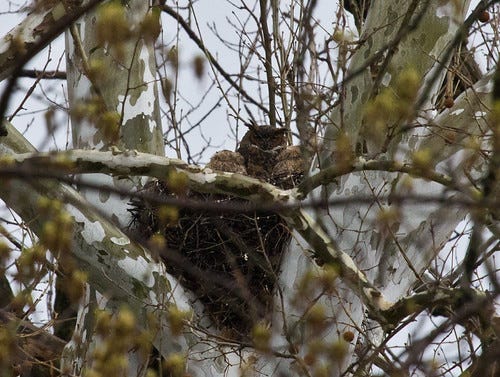
Some hardy ducks and geese hang on in north country until lakes and rivers freeze in December, January, or even February. A few hardy species, such as Great Horned Owls, Canada Jays, and crossbills, may start nesting in February up here.
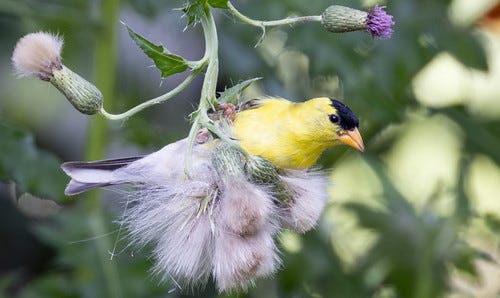
Some waxwings and goldfinches may be in the early stages of nesting in August.
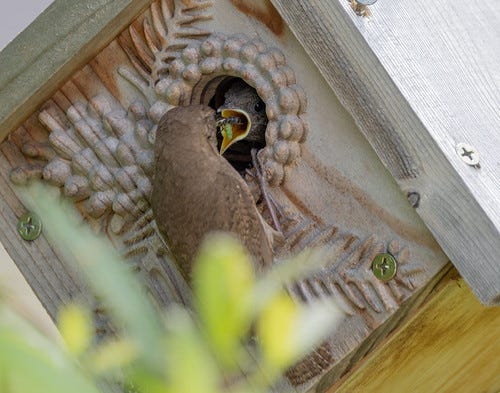
I’ve always loved Gershwin’s song, “Summertime.” As a small child, the living really was easy—I loved sitting in my apple tree for hours, reading books and watching caterpillars. But what is for many of us the vacation season is the time of endless work for birds. The House Wrens on my corner of Peabody Street have been spending just about every waking moment in a frenzied search for food for at least two batches of babies.
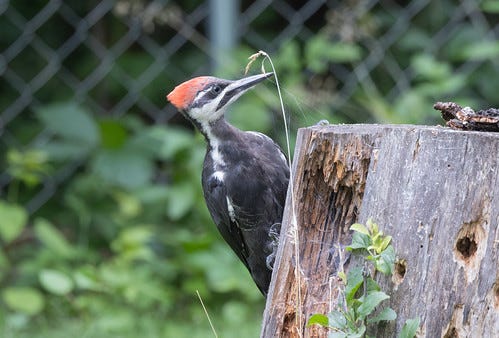
The male Pileated Woodpecker who supplanted BB here has brought his daughter to my yard twice and his son once. Those young birds make a soft but insistent little call pretty much constantly, relentlessly pressuring their poor dad, who is looking pretty bedraggled now.
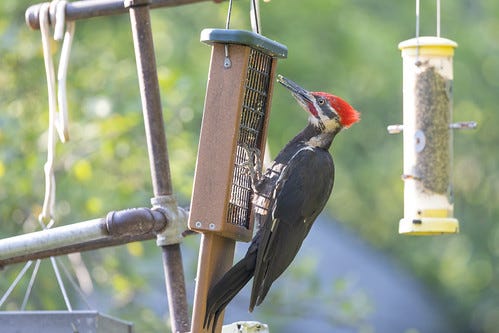
As young birds grow independent, adults can stop giving the lion’s share of the food to them. Even then, summertime won’t be easy—molting, preparing for migration, and then setting out on the long journey are taxing, too.
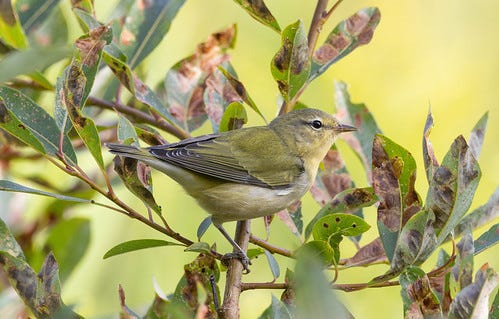
I took a walk at Waabizheshikana—what we used to call the Western Waterfront Trail—this week, and fall was in the air. A small flock of warblers was flitting about in the vegetation at the start of the trail —Tennessee, Black-and-white, and American Redstarts were the ones I got clear looks at.
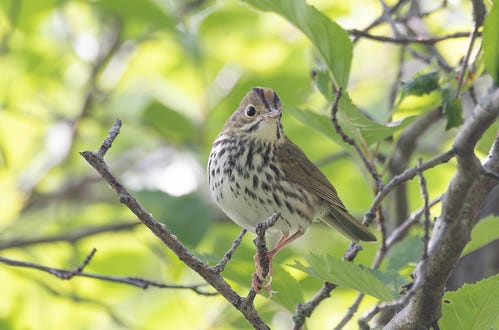
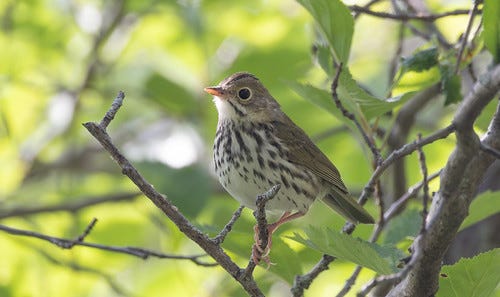
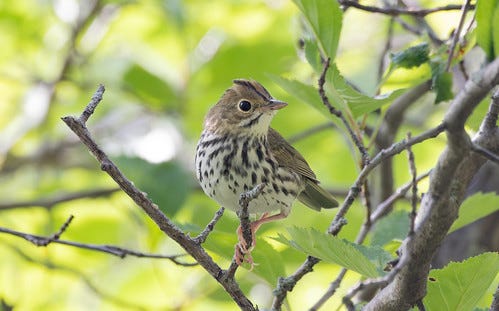
An Ovenbird in dense, leafy vegetation found the one spot where I could take several unobstructed photos as it posed for me.
But overall, it was a very quiet morning—literally so. In one spot I came across a Red-eyed Vireo family, one making querulous calls. On my two-hour walk, a Blue Jay yelled out just once or twice, a Veery making a couple of raspy veer calls, and one catbird mewed, but that was it. I turned on my Merlin app a few times to see if this was an issue of my hearing impairment, but no, the birds were pretty much silent.
I always have trouble hearing one of my favorite August birds, the Cedar Waxwing, but Merlin didn’t pick out any, either, even in the berry bushes where they usually abound.
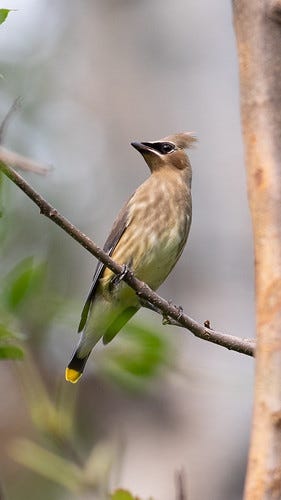
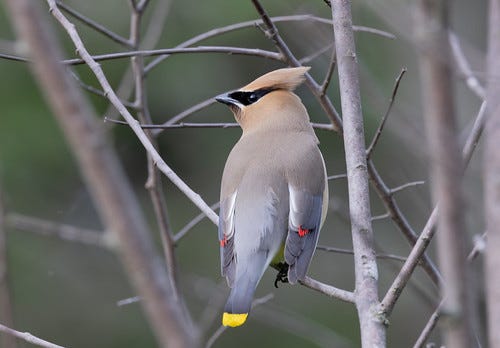
I found three catbirds where usually I’d have found several. Based on the catbird disappearance in my own backyard after our intense heat and the horrible air quality, and now this, I’m wondering if waxwings and catbirds might be more vulnerable than most birds. But numbers of just about every species were lower than I’d have expected.
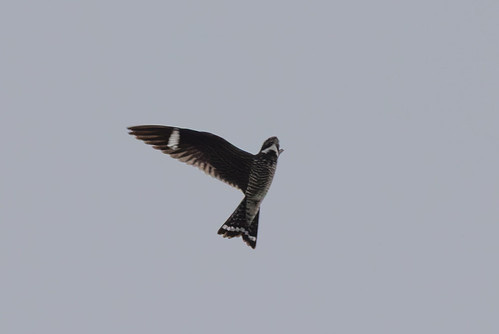
Nighthawks are migrating now—there were about 4,000 counted a couple of nights ago. This is of course thrilling, even if when we moved to Duluth 45 years ago, that would have been just an average night. The seasonal counts now total about what we used to have on several single nights back then, but young people don’t see the loss—their expectations started out much lower.
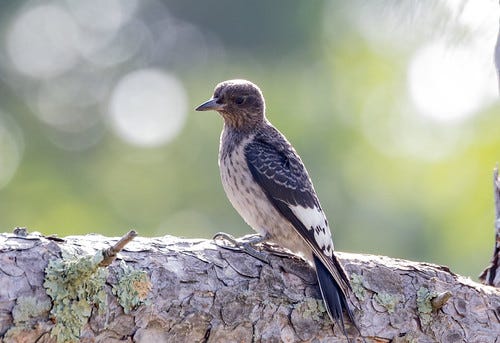
One happy surprise was a young Red-headed Woodpecker—I didn’t see the parents, but with all the dead ash trees scattered about, there were plenty of places where it might have been raised. Even as many of my fears about climate change, habitat destruction, and everything else are clearly materializing, there is always hope.

No posts
Comments
Nothing yet. Say the first thing.
Sign in to join the conversation.