
Half of you are doubtless on a beach right now (I hope so). I’m nowhere near one, unless you count Paris Plage, but there’s no way I’m sticking so much as a toe in the Seine, no matter how clean they claim it is. Nevertheless, in the spirit of beach season, I thought I’d share with you a little read I produced years ago and recently unearthed. When it’s not mortifying, it’s rather amusing to come across thoughts written by our younger selves.
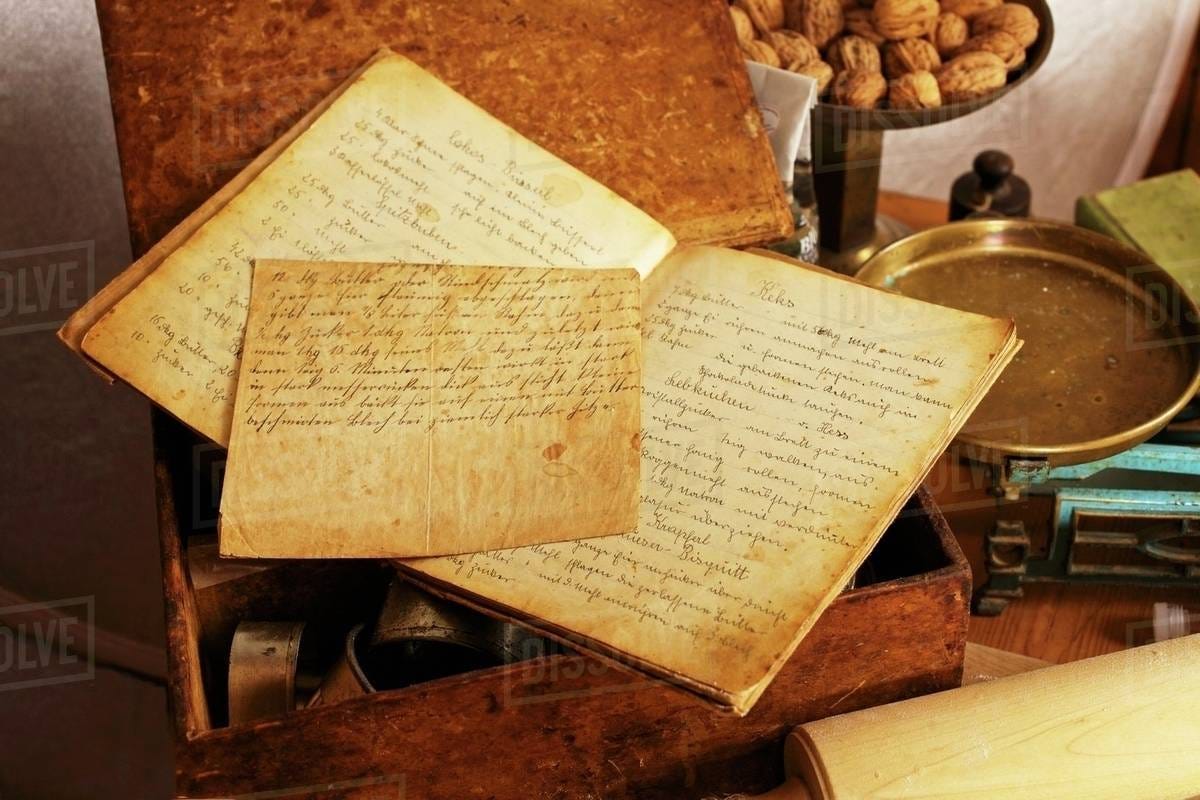
What I’m going to share is something I wrote when I was working for Anne Willan, the celebrated cookbook author and founder of École de Cuisine LaVarenne. Her HQ was a château in Burgundy called Le Fëy, which housed a formidable cookbook library containing over 3,000 volumes, the oldest in the collection dating back to the 16th century. It was while perusing some of the quirkier volumes in that collection that I came up with the following piece about how the way recipes are written affects the spirit of them.
I sold the story to an online magazine called Salon, and it was later picked up by, I believe, The Times, which flattered me back then, though I was miffed that they’d published it without asking me, let alone paying. I’d never have known if they hadn’t been caught red-handed by Anne’s husband Mark, who happened to be on a trip to London. A friend there had clipped the article and saved it for him, knowing he had an interest in old cookbooks. Well, he just about fell over backwards when he started reading it. “Goodness gracious!” he exclaimed, “This is about MY library!”
Here you go, then. A bit of food for thought from a younger me (who had yet to write her first cookbook) before you get all hot and drippy on your beach towel and need your next dip in the water.

How To Execute the Recipe
by Laura Calder
He ate and drank the precious words
His spirit grew robust.
—Emily Dickinson
How often people boast, “Oh I read cookbooks like novels.” It’s a suspect claim; in fact, knowing what passes for reading these days one wonders if the trend isn’t actually the other way around. But when it comes to cookbooks, it’s hard to be critical, because the poor modern recipe is about as original and engaging as the dishwasher manual, and every bit as literary.
Nevertheless, standard recipe format, which goes something like this, is for reasons far beyond me fiercely defended: First, the ingredients are listed in order with precise measurements in imperial, metric and cups. The method is then hacked into bite-size pieces and arranged in a reassuring cooking-by-numbers format. A nutritional breakdown of the end result generally follows, including a calorie count per serving for dieters, and often at the very end is placed a thoughtful little star to indicate the name of the catalog from which the required specialty ingredients (unavailable in the average supermarket) might be obtained.
All of this presumably is for the cook’s own good. “Safety in numbers” takes on a whole new meaning and the cook is protected from the faintest dependency on his feeble, out-of-shape instincts. Indeed, such a regression would be a virtual return to witchcraft and we couldn’t have that! So, any recipe that strays in a corruptingly liberal direction is quickly scented out, hunted down and put to a silent death. When people talk about how to “execute” their recipes, I gather this is not what they mean, but it is unfortunately what they do. As a result, countless innocent dishes die tortured deaths on pages right under our noses every day.
The British cookery writer Elizabeth David, like a prophet, saw it coming, and in reviewing a cookbook by an American called Mrs. Brown, she tried to warn us. She praised the woman’s recipes for being “easy on the eye and the mind” and “very far removed from those interminable recipes of American magazine cookery which call for one half-cup or one-quarter-teaspoon of everything but the washing-up water.” But no one listened and now we must live with the mournful consequences.
For example, one of my favorite recipes to read is Elizabeth David’s own “Salad of Lettuce Hearts with Melted Butter”:
Use only the tenderest of lettuce hearts for this exquisite salad; arrange them in a salad bowl, season them very lightly with salt and a scrape of sugar, and at the last moment pour over them warm melted butter into which you have pounded a very small piece of garlic and a squeeze of lemon juice.
In the hands of America’s recipe executioners, I know full well what would become of it:
Comments
Nothing yet. Say the first thing.
Sign in to join the conversation.