
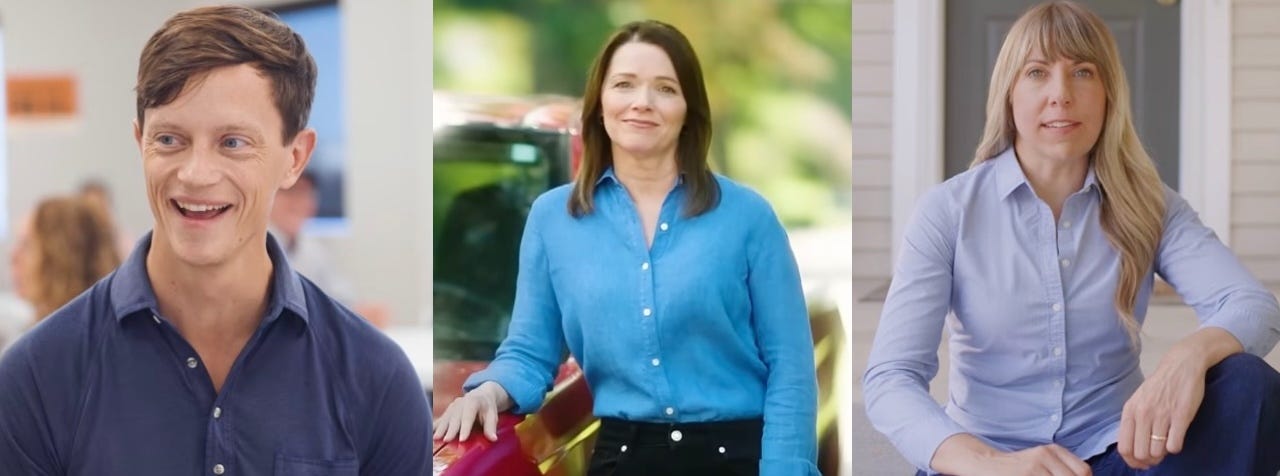
It’s going to be a big week for 2026 candidate appearances. This afternoon I’m heading to a couple of Rob Sand town halls. The Iowa Democratic Wing Ding (one of my favorite events to cover) is happening Thursday evening, with Senator Mark Kelly of Arizona giving the keynote and eight candidates speaking. The Iowa State Fair opens Thursday as well, and many 2026 contenders are scheduled for the Des Moines Register’s Political Soapbox on Friday, Saturday, and Monday.
So let’s get to it: the audio file for the August 10 edition of “KHOI’s Capitol Week” is at the top of this post. Here’s the detailed summary—100 percent written by me, no AI involved!—for those who would rather read than listen. If your email provider truncates this message, you can read it without interruption here.
Here’s what Spencer Dirks and I covered this week:
We began with the latest news from Iowa Libertarians. We mentioned last week that Polk County District Court judges upheld the decisions to remove their candidates from the ballot in the governor’s race and third Congressional district. The party won’t appeal those rulings—but hasn’t given up trying to replace Jules Cutler (for lieutenant governor) and Marco Battaglia (for Congress) on the November ballot.
I thought they would hold special nominating conventions. However, they clarified their plans at a State Central Committee meeting Sunday night, which was online and open to the media.
The Libertarian Party plans to use a process for filling a candidate vacancy through a meeting of the party’s central committee. You might wonder, how can a party fill a vacancy if the candidate didn’t qualify for the ballot? The Iowa Code chapter on “non-party political organizations” says vacancies “may be filled” if an objection to a candidate’s nomination is sustained.
Worth noting: The GOP trifecta changed state law in 2021 to make it harder for third parties to hold nominating conventions. To choose a new candidate for lieutenant governor through a convention, Libertarians would need to convene at least 500 eligible voters, including at least one person from at least 25 counties. To nominate someone in the third Congressional district, a convention would need attendance by at least 200 voters, including at least one from at least half the counties in IA-03.
Libertarians have scheduled another central committee meeting for Wednesday to accept nominations and vote on new candidates for lieutenant governor and in IA-03.
I expect Republicans to challenge this process, saying Libertarians did not in fact have “insufficient time” to hold nominating conventions. So looks like I will be back at the Polk County courthouse soon. The ballot needs to be finalized by mid-September.
I wanted to remind listeners why we’ve spent a lot of time on recent shows talking about Iowa Libertarians. Election results from the past couple of decades show that when Libertarians are on the ballot in Iowa, they often get around 2 percent of the vote—sometimes a little more or less—in races for governor or Congress.
Former U.S. Representative Cindy Axne won elections in IA-03 with less than 50 percent of the vote in 2018 and 2020. Both times, third-party candidates combined to get more than 2 percent. When there were no Libertarian candidates on the ballot for that Congressional race, the write-in vote was minuscule (less than 0.2 percent in 2022 and less than 0.3 percent in 2024).
There’s a reason Iowa Republicans have changed the law several times since 2019—moving up the filing deadline, increasing the signature requirements, and changing the rules on conventions—to make it harder for third-party or independent candidates to qualify.
We spent several minutes talking about key findings from the Emerson College/Nexstar Media poll released last Thursday. In the governor’s race, Democrat Rob Sand leads Republican Zach Lahn by 48.4 percent to 42.7 percent (outside the poll’s margin of error of +/- 3.7 percent).
I wrote more about these findings, with some nuggets from the cross-tabs, over the weekend:
Looking beyond the toplines: Emerson's latest Iowa poll
·
Aug 8
This original reporting and analysis first appeared at Bleeding Heartland and is shared here as part of the Iowa Writers Collaborative. For regular emails linking to all recent Bleeding Heartland articles and commentary, subscribe…
Sand is better known and has a much better ratio of favorable to unfavorable ratings. When asked, “How important is it to you, if at all, that a candidate for statewide office has lived in Iowa for most of their adult life?”, more than three-quarters of respondents said very important or somewhat important. (In retrospect, GOP front-runner Randy Feenstra should have gone all in on Lahn’s residency, instead of running a last-minute negative ad about a sex toy company investment.)
Inside Elections just changed their rating on the governor’s race to tilt Democratic. Other forecasters still have it as a toss-up.
The Emerson poll found Republican Ashley Hinson ahead of Democrat Josh Turek by 47.5 percent to 45.0 percent, a lead within the margin of error. Another 6.1 percent were undecided and 1.4 percent were for “someone else.” I’m waiting for a pollster to name Libertarian Thomas Laehn, who will be on the ballot.
Hinson is better known than the Democrat, and is running quite a bit ahead of Lahn; or conversely, Turek is running a bit behind Sand. That could give Turek an opportunity to gain support as voters get to know him better. On the flip side, it means Hinson’s campaign and GOP-aligned groups could define the Democrat in a negative way before voters make up their minds.
The Emerson poll’s cross-tabs indicate Turek is doing a bit better with Kamala Harris voters than Hinson is doing with Donald Trump voters. We noted a couple of weeks ago that Hinson still seems focused on shoring up her conservative support, and this poll gives us some insight as to why.
Inside Elections just moved Iowa’s Senate race from lean Republican to tilt Republican. Others have see the race as leaning Republican.
Donald Trump carried Iowa by a 13-point margin in 2024. But Emerson’s new poll found that only about 43 percent of likely 2026 Iowa voters approve of the job he’s doing as president, while 51 percent disapprove. That’s in a poll sample with more Republicans than Democrats, where respondents said they supported Trump over Harris by a 10-point margin.
Why should we care about presidential approval ratings when Trump’s not going to be on the ballot? The president’s popularity is often correlated with how the president’s party does in midterm elections.
Since Iowa’s fourth Congressional district is strongly Republican, it’s a safe bet Trump is even more underwater in the competitive first, second, and third U.S. House districts. That’s good news for the Democratic nominees (Christina Bohannan in IA-01, Lindsay James in IA-02, and Sarah Trone Garriott in IA-03).
Emerson’s poll asked likely Iowa voters, “Do you support or oppose Iowa’s state-funded private school tuition assistance program for K-12 students?” The result was almost a perfectly even split, with a little more than 41 percent both for and against the program.
Looking at the cross-tabs, you can see Democratic respondents overwhelmingly oppose the policy, while Republicans strongly support it. Independents split with 35.0 percent supporting school vouchers, 42.0 percent opposing them, 18.5 percent neutral, and 4.5 percent in the “don’t know” column.
I’ve previously reported that Sand talks about the school voucher program at almost every public event. This poll finding could explain why his focus is on bringing back income limits and more accountability through audits, rather than eliminating Education Savings Accounts. In a video just posted to his social media on Monday, Sand called for “funding public education at a meaningful level,” and said Iowans can say, “I believe that school choice is a good thing, and yet the law as it is currently written is an absolute invitation to waste, fraud, and abuse of tax dollars.”
The Democratic and Republican candidates for governor and Senate still haven’t agreed on a schedule for televised debates this fall. Last week Libertarian candidate Thomas Laehn criticized Iowa PBS for not inviting him to the “Iowa Press” Senate debate. In a video posted to social media, Laehn called the decision “unethical” and “undemocratic.” He accused public television of “perpetuating our broken and corrupt two-party system” and said Iowans would be “disenfranchised.”
Michael Bridgford, the independent running in the first Congressional district, claimed last week that he met the public broadcaster’s criteria. But he hasn’t gotten a debate invitation yet.
Iowa PBS posted its requirements for being included in a debate here. Candidates not nominated by Democrats or Republicans must have a website or social media account containing at least three statements on public policy (both Laehn and Bridgford do), must have accepted at least $50,000 in net campaign contributions by the end of the second quarter of the election year (Bridgford has), must have been featured in at least five bona fide news stories (both candidates have), and must have received “a minimum of 10% support (not including any margin of error) in a public opinion survey professionally conducted after the primary for the current election by an independent pollster.”
Bridgford’s campaign has touted a recent poll showing 11 percent support for his candidacy among IA-01 voters. I don’t know whether Iowa PBS considers that poll adequate, because of the margin of error or because it was commissioned by the Independent Leadership Council, which supports Bridgford’s candidacy.
Joe Mitchell, the Republican nominee in Iowa’s second Congressional district, wants Libertarian candidate Rick Stewart and independent Dave Bushaw to be included in his debates against Democratic candidate Lindsay James. The Iowa Standard website published Mitchell’s press release.
Neither Bushaw nor Stewart meet the Iowa PBS criteria for debates. I’m not sure whether other media seeking to host an IA-02 candidate would include them. I’m seeking comment from Lindsay James’ campaign on whether she would agree to a four-way debate or would insist on a one-on-one competition with Mitchell.
The Iowa State Fair opens this Thursday, and 21 people running for state or federal offices (including most of the Republican candidates) have accepted invitations to speak publicly on the Des Moines Register’s Political Soapbox.
That’s a big change from 2022, when most Republican nominees declined to appear on the Soapbox.
The Register published the full Political Soapbox schedule here. The busiest days will be this Friday, Saturday, and Monday. Candidates who accepted the invitation:
independent Michael Bridgford (IA-01)
Democrat Lindsay James, Republican Joe Mitchell, Libertarian Rick Stewart, independent Dave Bushaw (IA-02)
Democrat Sarah Trone Garriott and Republican Zach Nunn (IA-03)
Democrat Dave Dawson (IA-04)
Democrat Josh Turek, Republican Ashley Hinson, and Libertarian Thomas Laehn (U.S. Senate)
Democrat Rob Sand and Republican Zach Lahn (governor)
Democrat Nate Willems and Republican Brenna Bird (attorney general)
Democrat Chris Jones and Republican Mike Naig (secretary of agriculture)
Democrat Ryan Peterman and Republican Paul Pate (secretary of state)
Democrat John Norwood (state treasurer)
Democrat Taylor Wettach (state auditor)
I forgot to mention on the air that according to the Register, Naig, Bird, and Hinson requested to speak for 10 minutes instead of the usual 20 minutes.
The candidates who did not accept the Des Moines Register’s invitation to speak on the Political Soapbox are Republican Mariannette Miller-Meeks and Democrat Christina Bohannan (IA-01), Republican Chris McGowan (IA-04), Republican State Treasurer Roby Smith, and Lieutenant Governor Chris Cournoyer (the GOP nominee for state auditor). UPDATE: McGowan did end up scheduling an appearance and spoke at the state fair on August 17.
Since the primary, Rob Sand has been touting support from registered Republicans. And his campaign’s latest TV ad features one of those “Rob-publicans.” Mace Hensen says he still believes in the things Republicans talk about, but “the extremes on the left and the right are just souring everybody’s attitude.” And Rob Sand is “genuine as the day is long.” Watch:
Sand often tells audiences that his campaign has 2,400 Republican donors, which is more than the total number of individuals who have given to Lahn. I expect Iowans will see more ads like this one closer to the election.
Lahn’s campaign claimed the ad was deceptive, saying Mace Hensen “was a volunteer coordinator for Joe Biden and Iowa Democrats during the 2020 election.”
Having spent most of my life in the suburbs of Des Moines, I know a lot of moderate Republicans. Many of them voted for Biden (and later for Kamala Harris) because they didn’t like the direction of the party under Donald Trump. But some still consider themselves Republicans.
We mentioned last week that Lahn was doing a campaign swing across northern Iowa. I wasn’t able to attend those events, but Erin Murphy reported for the Cedar Rapids Gazette that Lahn emphasized the same core issues his campaign has highlighted all along: “addressing Iowa’s high cancer rates, keeping young people in Iowa, addressing water quality and improving the state’s standing in public education.”
Murphy reported that after his stump speech, Lahn took audience questions at each meet and greet. He also spoke to reporters after the last event of the day. (Sand takes questions from reporters shortly before each of his town halls.)
The Oelwein Daily Register estimated around 200 people showed up for Lahn’s town hall in Fayette County, which focused on agriculture issues.
Data centers have become a hot topic in Iowa and across the country. Lahn has called for a moratorium on new data centers. Radio Iowa quoted him as saying at a recent event in Mitchell County,
“I’m the only candidate that’s called for a moratorium on data centers to allow counties the ability to set the rules of the game and negotiate better because this is happening at breakneck speeds,” Lahn said. “I’ve actually had two of the largest data center companies come to me now and say these words: ‘We don’t want any more incentives.’ What a novel idea. Pay your fair share. That’s progress.”
Before the primary election, Lahn called for data centers to pay five times more in property taxes.
Sand released his proposed data center policy last week. The details are here. Among other things, he would end tax breaks for the projects and make sure data centers “pay their own way, including covering any increase in costs on utilities.” He also wants “strong consumer protections” and says he would “Stop data centers from eroding our natural resources and utilities,” “Require investments in Iowa’s workforce,” “Demand accountability and transparency,” and impose setback requirements to protect Iowans living near a data center.
We haven’t heard much from Zach Wahls this summer, but he announced on Monday that he’s launching the “Build the Barn PAC,” and the first candidate the PAC is endorsing will be Senate nominee Josh Turek, who defeated Wahls in the primary.
“Build the Barn” is “a tribute to the classic line often attributed to Sam Rayburn: “Any jackass can kick down a barn, but it takes a good carpenter to build one.”
Wahls will formally launch the PAC at an event in Coralville this weekend.
Christina Bohannan, the Democratic nominee in the first Congressional district, launched her first television commercial of the cycle last Tuesday. Blending biography with messaging about policy, she talks about growing up in a mobile home in a town of 700, and how her dad worked construction, until he got sick and they cancelled his insurance. “I waited tables to help out, but it wasn’t enough. Washington has forgotten the hardworking people who built this country.” Watch:
We spent a few minutes talking about my reporting from last week about access to health care as a central issue in Bohannan’s race against Miller-Meeks. Voters have long favored Democratic candidates to handle health care, but the issue is more salient now because of fallout from Republican policies.
Southeast Iowa has been particularly hard-hit in terms of clinic closures and loss of labor and delivery services. Read more about that here:
Health care shaping up as central issue in IA-01 campaign
·
Aug 7
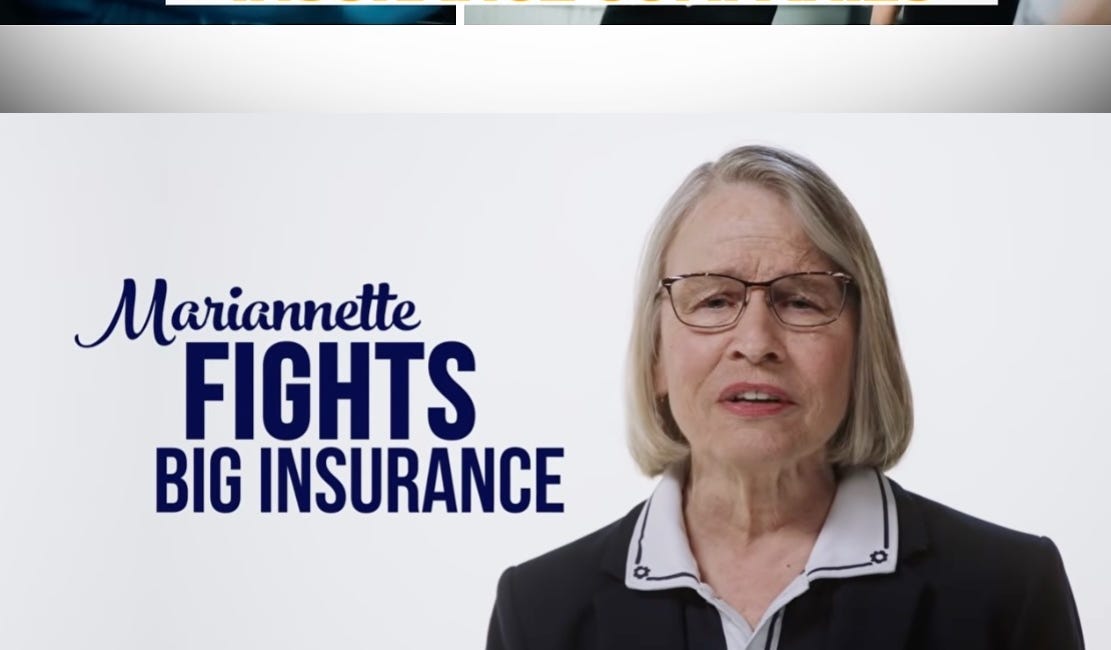
This original reporting and analysis first appeared at Bleeding Heartland and is shared here as part of the Iowa Writers Collaborative. For regular emails linking to all recent Bleeding Heartland articles and commentary, subscribe to the free Evening Heartland …
That post also covers Miller-Meeks’ first TV ad of this cycle (which was on the air in May), playing up her role as “the Doctor in the House.” The outside group 314 Action, which supports Democratic candidates with backgrounds in science, is planning to focus on health care issues and will spent around $750,000) on ads and mail against Miller-Meeks.
Another change will affect many Iowans living in the first district: Planned Parenthood closed its Iowa City clinic at the end of July, leaving only one brick and mortar clinic in the entire state, which is in Des Moines.
The independently operated Emma Goldman Clinic in Iowa City and Planned Parenthood’s Susan Knapp Center in Des Moines are the only places offering medication abortion in Iowa now.
In 2025, Planned Parenthood closed clinics in Ames, Cedar Rapids, Sioux City, and Urbandale. Last year’s budget reconciliation bill exacerbated the problems facing clinics across the country, by excluding Planned Parenthood from Medicaid reimbursement for non-abortion services.
Planned Parenthood North Central States has emphasized they are still offering telehealth services across Iowa, seven days a week. Those include “cervical and breast cancer screenings, contraception care, sexually transmitted infection (STI) testing and treatment, HIV testing, PrEP and PEP, immunizations, pregnancy testing, emergency contraception, health care for trans people including hormone management, and abortion information and options.”
Planned Parenthood North Central States also said their patient navigators are helping people who need to travel to terminate a pregnancy. They’ve served thousands of Iowans since our state’s near-total abortion ban went into effect in July 2024.
Other Democratic candidates, including Sarah Trone Garriott (IA-03) and Lindsay James (IA-02) have highlighted the loss of clinics or health care staff. Sand regularly criticizes Medicaid privatization and has often remarked that Iowa has physician shortages. One reason, he says, is politicians getting in the way of how doctors practice medicine.
The high cost of health insurance affects Iowans in all parts of the state. Health policy analyst Charles Gaba has estimated that nearly 10 percent of Iowans who had previously purchased coverage through the Affordable Care Act exchanged dropped their coverage this year (that’s around 13,000 people). KFF has estimated an even larger number of Iowans lost coverage.
Those who kept their Affordable Care Act policies are paying far more in health insurance premiums and out of pocket expenses.
I expect some people who were priced out of insurance and others who are paying more will turn up in campaign ads for Democratic candidates (or against Republicans) this fall.
The House Majority PAC, which supports Democratic candidates, released partial results last week from a poll of the second Congressional district. We didn’t spend as much time on this as we did on Emerson College poll because 1) the poll was commissioned by an interested party, 2) it looks they didn’t include Rick Stewart or Dave Bushaw, and 3) House Majority PAC did not share the full questionnaire or cross-tabs.
For what it’s worth, their poll found the generic ballot (testing support for an unnamed Democratic or Republican candidate for Congress) was tied at 45 percent each. When candidates were named, Lindsday James led Joe Mitchell by 46 percent to 45 percent. Trump was underwater with a 44 percent favorability rating and 53 percent unfavorable—even though he carried the IA-02 counties by a 10-point margin in 2024.
The major election forecasters have (belatedly) all moved this race from “likely Republican” to “lean Republican.”
We reported a few weeks ago that Mitchell had described James, an ordained Presbyterian minister and chaplain, as a “Marxist” and a “pastor in name only” (PINO). Last week the Democrat highlighted her opponent’s comments in a social media video. She said she’s devoted her life to showing up for others and was disappointed to hear her opponent say people like her aren’t real pastors. According to James, people are tired of partisan politics and want someone with “moral compass and a courage of conviction.”
Mitchell shared the video on social media, adding a Trump-like insult: “My niece and nephews who watch VeggieTales know far more about Christianity than you do!”
I’m not sure this is a winning strategy. It seems to reflect the ongoing Republican focus on riling up the conservative base, rather than pivoting to the middle.
I wanted to flag good reporting by Marissa Payne for the Des Moines Register about the third Congressional district race. Democratic nominee Sarah Trone Garriott is an ordained Lutheran minister and chaplain, but she is “encountering a steady drumbeat of attacks from the right over how she expresses her faith and what it signals about how she would govern.” Republicans have repeatedly characterized her as a “so-called” or “fake” minister, citing some of her past comments embracing diversity and opposing Christian nationalism.
The Register fact-checked several of the GOP claims and provided context.
Trone Garriott built strong relationships with central Iowa faith communities while working for eight years as Coordinator of Interfaith Engagement for the Des Moines Area Religious Council. (She left that position last year.) She told the Des Moines Register, “I think it’s really important to have elected leaders who are going to push themselves to get out there and spend time with their communities, especially the people who might be different than them, or see the world differently, or be of a different political party.”
Trone Garriott’s campaign launched their first TV ad last week. The Democrat said to the camera, “In scripture, it’s taught to be quick to listen and slow to speak,” adding, “As a Lutheran minister and a state senator, I make listening a priority.”
Trone Garriott advocated for three policies in this ad: term limits, requiring politicians to hold town halls, and banning politicians from trading stocks. GOP incumbent Zach Nunn has co-sponsored bills to ban members of Congress from trading stocks, but he has not held a single public town hall during his four years as a federal elected official.
Nunn’s campaign started running a positive TV ad in June, mostly about his background and role as a father. We are likely to see an avalanche of negative ads from both sides soon.
We had time for a little news about the Iowa delegation in Congress. Before senators left town for more than a month, Republicans tried to get a new Farm Bill out of the Agriculture Committee. It failed on a party-line vote because Senator Mitch McConnell of Kentucky has been out of commission. Republicans made a few concessions to Democrats, but not enough to gain their support.
A policy Ashley Hinson has championed, the Save Our Bacon Act, was removed from the Senate’s version of the Farm Bill during the markup process. It would prohibit states from setting standards for the sale of livestock products produced in other states. This battle isn’t over yet, since there will be another markup after the summer recess. But it’s not likely Republicans will have the votes to include Save Our Bacon.
A well-funded ad campaign in Iowa and other states has depicted the policy as “a giveaway to Chinese corporations overriding our laws.” Small hog farmer Anna Pesek recently explained why “the biggest winners from the Save Our Bacon Act won’t be independent Iowa farmers. They’ll be multinational corporations and large integrators that already dominate the country’s pork industry.”
Even if the Senate manages to pass a Farm Bill this fall, there will need to be some negotiation with House leaders to finalize its provisions. Or maybe Congress will extend the 2018 Farm Bill yet again.
After the Farm Bill failed to get out of committee, Josh Turek released a statement blaming Democrats.
Iowa farmers have been waiting three years for an overdue Farm Bill, and today Democrats in the Senate failed them by letting perfect be the enemy of the good. To be clear: I would have voted in support of this Farm Bill. This is just another example of a fundamentally broken Washington, and as Iowa’s next U.S. Senator, I’ll work with anyone to pass a damn Farm Bill — and I’ll make it so Congress can’t recess without passing one. Our farmers deserve no less.
The statement struck me as odd, since Turek is on record opposing some of the policies that were deal-breakers for Democrats (such as cuts to federal food assistance and legal immunity for farm chemical manufacturers).
On the other hand, Republicans have tried to portray Turek as a rubber-stamp for his party and Senate Minority Leader Chuck Schumer, so I wouldn’t be surprised to see other statements putting some distance between Turek and other Democrats.
Turek has worked on agriculture policy as a member of the Iowa House. On Sunday, he attended the Iowa Corn 350 NASCAR race and posted on social media, “NASCAR runs on E15 and America should too, year-round.”
Last week, the Senate confirmed Todd Blanche as U.S. Attorney General. As has been the case for every Trump appointee for a cabinet position, Iowa’s Senators Chuck Grassley and Joni Ernst voted yes.
I mentioned this because in the runup to the confirmation vote, there was a lot of speculation about whether other lame-duck Republican senators (Thom Tillis of North Carolina, John Cornyn of Texas, and Bill Cassidy of Louisiana) would support Blanche. No one spent any time wondering about Iowa’s junior senator, even though Ernst is retiring this year.
We reported in June that Grassley gave Blanche high praise while presiding over his Judiciary Committee confirmation hearing.
That’s all for now–thanks for reading and subscribing.
Comments
Nothing yet. Say the first thing.
Sign in to join the conversation.