
Connie Converse may be one of the most fascinating almost-lost figures in American songwriting.
Born Elizabeth Eaton Converse in New Hampshire in 1924, she grew up in a strict Baptist household, excelled in school, and earned a scholarship to Mount Holyoke College. She lasted there two years before she decided to quit school and go to New York City. There she began shaping a life that didn’t quite fit the expectations of her time.
In the 1950s, long before “singer-songwriter” became a recognized category, Converse was writing intimate, literate, deeply personal songs and accompanying herself on guitar. Her songs were deeply emotional: lonely, funny, wistful, sometimes startlingly frank, and often years ahead of the audience that might have understood her.
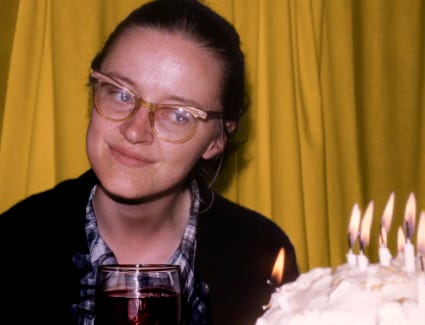
During her New York years, Converse performed mostly for friends and small gatherings. One important supporter was Gene Deitch, a graphic artist, animator, and audio enthusiast who recorded some of her songs in the 1950s. Those recordings would later become crucial to her legacy.
Converse did have one brief brush with public exposure: a 1954 appearance on CBS’s The Morning Show with Walter Cronkite. But nothing much came of it. No record deal, no sudden career breakthrough. Her songs remained largely private.
Her best-known collection, How Sad, How Lovely, includes songs such as “Talkin’ Like You (Two Tall Mountains)”, “Roving Woman”, “One by One”, “Father Neptune”, “Honeybee”, and the title track. They are simple recordings, often just her voice and guitar, with the imperfections like tape hiss, spoken introductions, and false starts left in.
Such intimacy can be powerful.
Frustrated by her lack of success in New York, Converse moved in 1961 to Ann Arbor, Michigan, where her brother Philip was a professor at the University of Michigan. Connie went to work there as a writer and editor, eventually becoming managing editor of the Journal of Conflict Resolution. She wasn’t just filling time while waiting to become famous. She was intellectually serious, socially aware, and deeply engaged with ideas. She wrote, edited, thought, observed, and kept trying to find a place where her gifts could be useful.
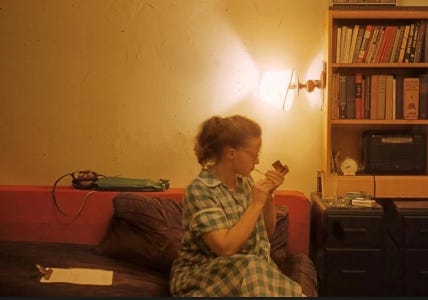
In 1974, shortly after her 50th birthday, Connie Converse wrote letters to family and friends, packed her belongings into her Volkswagen Beetle, and drove away from Ann Arbor. She was never seen or heard from again.
It is tempting to turn that into the whole story, because mystery attracts attention. But to focus only on her disappearance would be to lose sight of what she left behind. Her vanishing is part of the sadness, yes. But the songs are the reason we are still talking about her.
Her recordings survived: some from Gene Deitch, some from tapes she had sent to her brother. In 2004, Deitch played one of those recordings, “One by One”, on David Garland’s WNYC program Spinning on Air. Listeners were stunned. How had music this original stayed hidden for so long?
That question led to renewed interest, restoration work, and the 2009 release of How Sad, How Lovely, the album that finally brought Connie Converse to a wider public.
“One by One” captures the feeling of aching loneliness, even when being near others. Using images of darkness, tall grass, the absent moon, Connie creates a world where human beings pass close by each other without quite connecting. The song’s final wish for a hand to hold reveals her fragile hope for some kind of companionship.
Official Website
Birthday Variations (gift for Connie’s brother)
To Anyone Who Ever Asks (biography by Howard Fishman)
How Sad, How Lovely (album on Bandcamp)
Spotify
WNYC / Spinning on Air: “Connie Converse Walking in the Dark”
🎶 Spotlight No. 61
If you know a singer-songwriter who’d be a great fit for a future spotlight, ask them if they’re interested. If yes, click the button below and let me know.
This newsletter is completely free—no paywall, no catch. If you’d like the next issue delivered to your inbox, just hit “Subscribe now” below. When you see an invitation to make a pledge of money, click “No pledge”. This is a free newsletter.
Thanks for reading—and for helping shine a light on under-the-radar brilliance.
Disclaimer
All biographical details and quotes, thoughts and opinions in this post come directly from the artist’s public online presence. I use AI tools to help organize information and smooth out the writing, but every spotlight is personally curated, shaped, and approved by me. Songwriter Safari isn’t responsible for the accuracy of submitted details or the availability of external links.
Comments
Nothing yet. Say the first thing.
Sign in to join the conversation.