
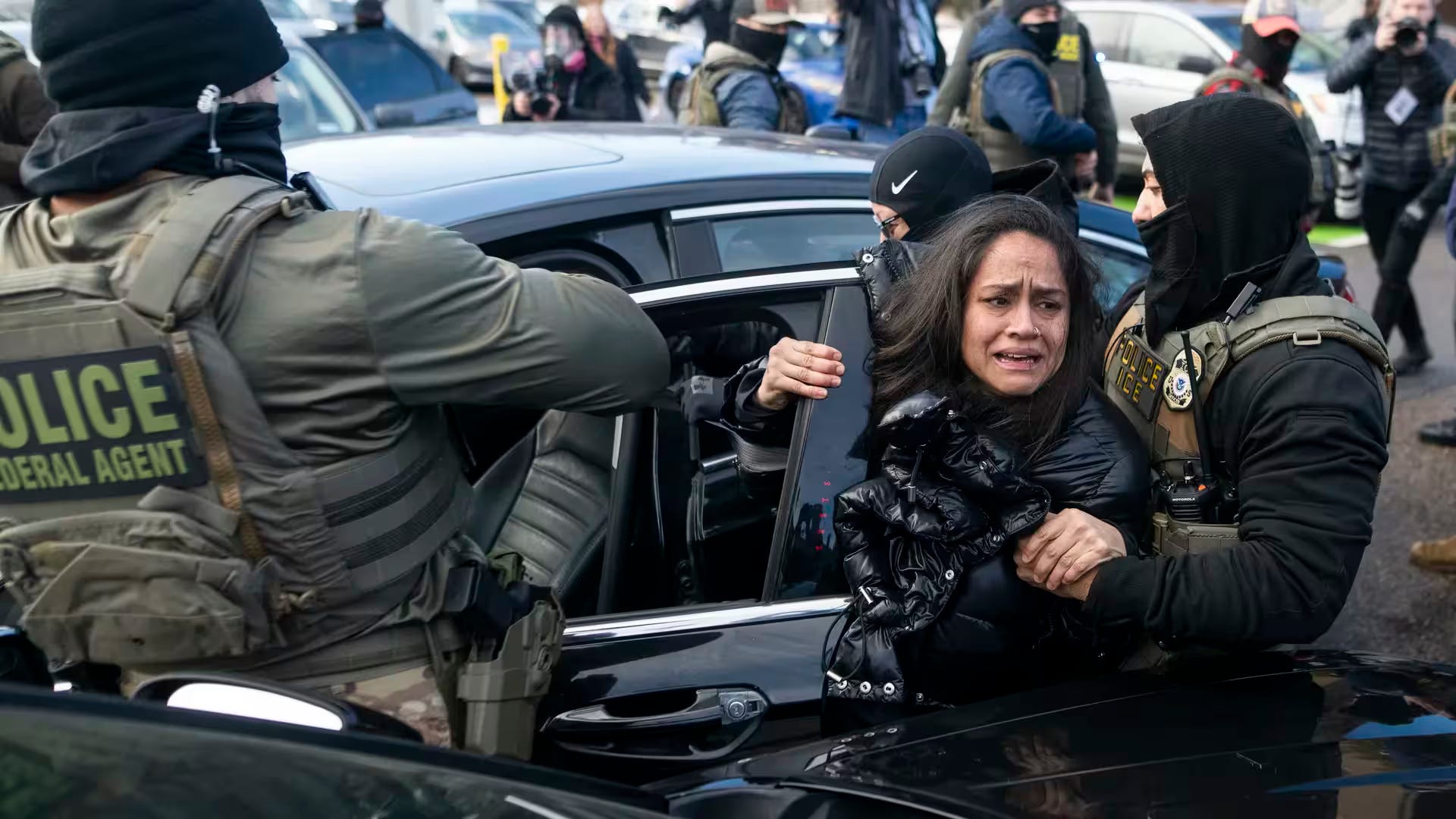
Suddenly, three unmarked cars and a black SUV pulled up at the intersection of Broadway and 7th Street. Using the element of surprise and military tactics, 10 heavily armed, masked federal agents descended and rushed to snatch the street vendors and anyone who looked Latino. It was a warm day in Los Angeles during the summer of 2026.
People panicked and ran, trying to get out of the federal agents’ sight. Some vendors left their merchandise behind, while others did not have time to flee. A pregnant woman selling fruit tried to run but was easily caught. An ICE agent grabbed her shoulder. Then two agents slammed her hard and mercilessly against the sidewalk, hitting her belly first. One agent’s knee found the small of her back, shifting her weight and pushing her face toward the hot, smelly concrete, as she desperately shouted in Spanish, “Estoy embarazada, no me lastimen.”
While the woman remained on the ground, some agents moved to secure the scene, facing the growing crowd. Approximately 30 people were on the scene, some shouting at the agents about the illegality of their actions and the inhumane treatment of the detained. One of the ICE agents pointed his gun at a bystander who was recording the ICE agents’ actions.
In a matter of seconds, the vibrant, bustling area of Downtown Los Angeles turned into a scene of chaos.
A woman in a baseball hat and a bright yellow vest stood silently on the sidewalk, scribbling notes and recording video as federal agents loaded the pregnant woman into an unmarked black SUV. She neither intervened nor spoke. Yet her presence was deliberate; she was there to witness.
People were outraged by what they saw. Three people were detained during the operation, including the pregnant woman. The scene devolved into a chaotic fight. Protesters pushed back and tried to prevent people from being taken.
The crowd surrounded the agents, blocking their way out as they tried to leave the area.
Out of nowhere, the agents began throwing flash-bang grenades and tear gas to disperse the crowd. The smoke rapidly filled the air, immediately stinging protesters’ eyes and throats as canisters hissed on the ground. Demonstrators cough, try to cover their faces, and scramble away from the plumes of thick chemical fumes. As they escape the intense pain, some stumble because of the difficulty breathing and blurred vision. People help one another as they navigate the haze.
During this time of confusion, federal ICE agents left the area, covered in smoke, while discarded canisters littered the intersection.
Between June 2025 and February 2026, Americans and people around the world witnessed similar scenes in cities like Los Angeles, Chicago, Minneapolis and many others. Immigrants and non-immigrants alike were unlawfully arrested and restrained without legal justification or probable cause, primarily due to racial profiling.
Approximately 70% of Americans disagree with the tactics and abusive behavior of ICE agents used to detain people; they view these actions as inhumane and destructive to families. As a result, hundreds of thousands of people from all walks of life join the front lines to protect their immigrant friends and neighbors and to document the aggressive tactics used on the ground.
Cell phone recordings by legal observers and ordinary citizens became a critical tool for documenting and exposing aggressive tactics by federal immigration agents.
Videos have been widely circulated showing the violent arrests and physical altercations. The case of Aliha Rahman, a U.S. citizen and activist, involved a traffic stop triggered by an ICE operation while she was driving to a doctor’s appointment. The video showed agents smashing her car window, cutting her seatbelt, and dragging her from the vehicle. Reports indicate that millions of people have viewed the online photos and video of her arrest.
The case of Carlitos Parias (Richard, LA), a TikToker who was shot and arrested in Los Angeles on Oct. 21, 2025. The killings in January of Renee Nicole Good and Alex Jeffrey Pretti by federal immigration agents in Minneapolis sparked a significant outcry from the community.
The official response from the DHS labeled them “domestic terrorists,” alleging they attacked law enforcement.
At the time, hundreds of live videos were streamed, informing millions about the tragedy, revealing what had gone unnoticed, and prompting a shift in the official narrative. Their claims were challenged by legal observers and by bystander videos that debunked the official account, prompting criticism and calls for the resignation of Department of Homeland Security Secretary Kristi Noem. Following the backlash over the fatal shooting, Gregory Bovino, a top U.S. Border Patrol commander overseeing immigration enforcement, was removed from his position and reassigned.
Legal observers matter; they are trained witnesses who monitor and document the actions of federal agents during immigration enforcement raids. Their presence is intended to take notes, photos, and videos of interactions during the enforcement operation, aiming to create a record of facts that can be used to challenge potential abuses of power.
They act independently and do not intervene or obstruct operations, a key element to their legitimacy and legal protection. Their presence serves as a deterrent to unlawful behavior and civil rights violations. Their visibility can limit abuse, and real-time records can matter in court, the press, and public debate.
Consider the potential losses that may arise in the absence of witnesses during an immigration enforcement operation: confusion, rumors, and baseless claims can proliferate.
Due to the current circumstances surrounding the mass deportation policy, thousands of people have been trained as legal observers, but there remains an urgent need for more people to receive know-your-rights education and community readiness training to document immigration raids safely and effectively.
When people understand what to record, how to remain nonconfrontational, and how to protect themselves and others, they become a crucial line of witness against abuse, helping preserve facts that might otherwise be denied, erased, or lost.
Consider becoming a legal observer if you feel secure being present during an immigration operation. Contact the nearest organization that advocates for immigrants’ rights regarding its upcoming training session.
No posts
Comments
Nothing yet. Say the first thing.
Sign in to join the conversation.