
This is Last Week in Collapse, a weekly newsletter compiling some of the most important, timely, soul-crushing, ironic, amazing, or otherwise must-see/can’t-look-away moments in Collapse.
This is the 243rd weekly newsletter, and perhaps the longest one yet. The August 9-15, 2026 edition is available here on Reddit if you missed it last week. Thank you for subscribing to the Substack.
——————————
The U.S. government has stepped in with a deal to resolve the water negotiations relating to the drying of the Colorado River. California, Nevada, and Arizona are going to see their water allocations cut by around 25-30% each. The states will have to rely more on groundwater extraction, improving water efficiency measures, and/or water rationing, to manage their needs. The deal, while it may end some legal conflicts among the states, cannot address the core problems of Drought and widespread, ongoing reservoir depletion. Approximately 40M people use water from the Colorado River across seven U.S. states, and two Mexico states.
The oncoming Super El Niño is on track to become the strongest on record. Meteorologists say that the American South—from the Carolinas all to California—and northern Mexico will experience a wetter and cooler winter than usual. A wide swath of the US-Canada border area will be warmer than normal; precipitation rates will likely vary. Meanwhile, an analysis of this El Niño’s effect on 12 Asian cities found Southeast Asia getting drier (especially Indonesia, increasing the risk of wildfires), while cities in East China are getting wetter. The El Niño 3.4 region in the Pacific has seen more than 83 consecutive days of daily sea surface temperature record highs, and is poised to see another 80+ days as runaway ocean heating drags on. The heat is truly unprecedented.
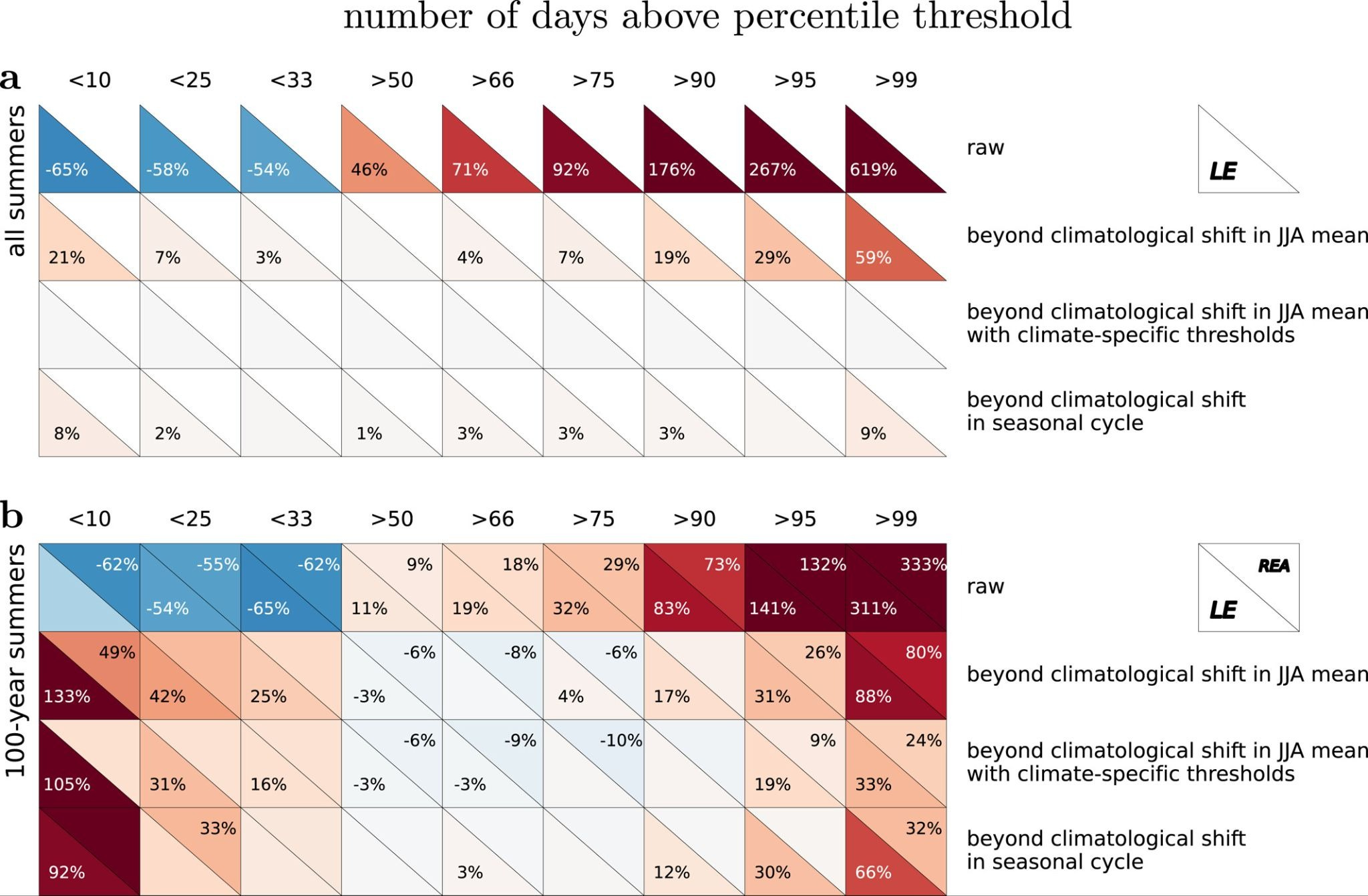
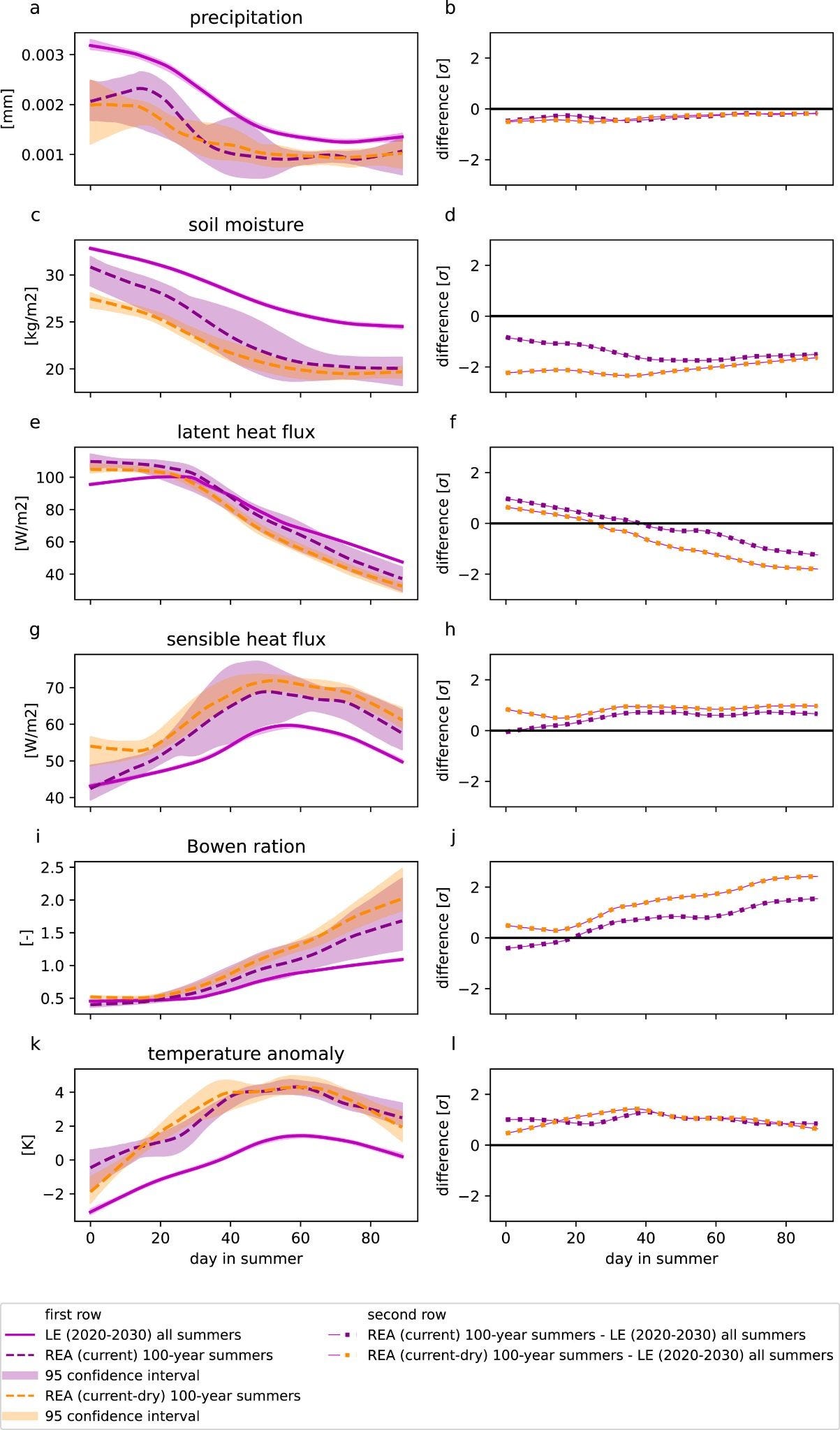
A study found that hot summers in Western Europe are going to feel even hotter extremes, because the “drying of soils has a particularly strong effect on heat waves in hot summers.” The drier the soil, the more extreme the heat, since there is no moisture left to cool the air. The next 1-in-100-year summer, a so-called “mega-summer in western Europe likely differs from past summer extremes with more persistent and intense heatwaves during peak summer and in the second half of the season.
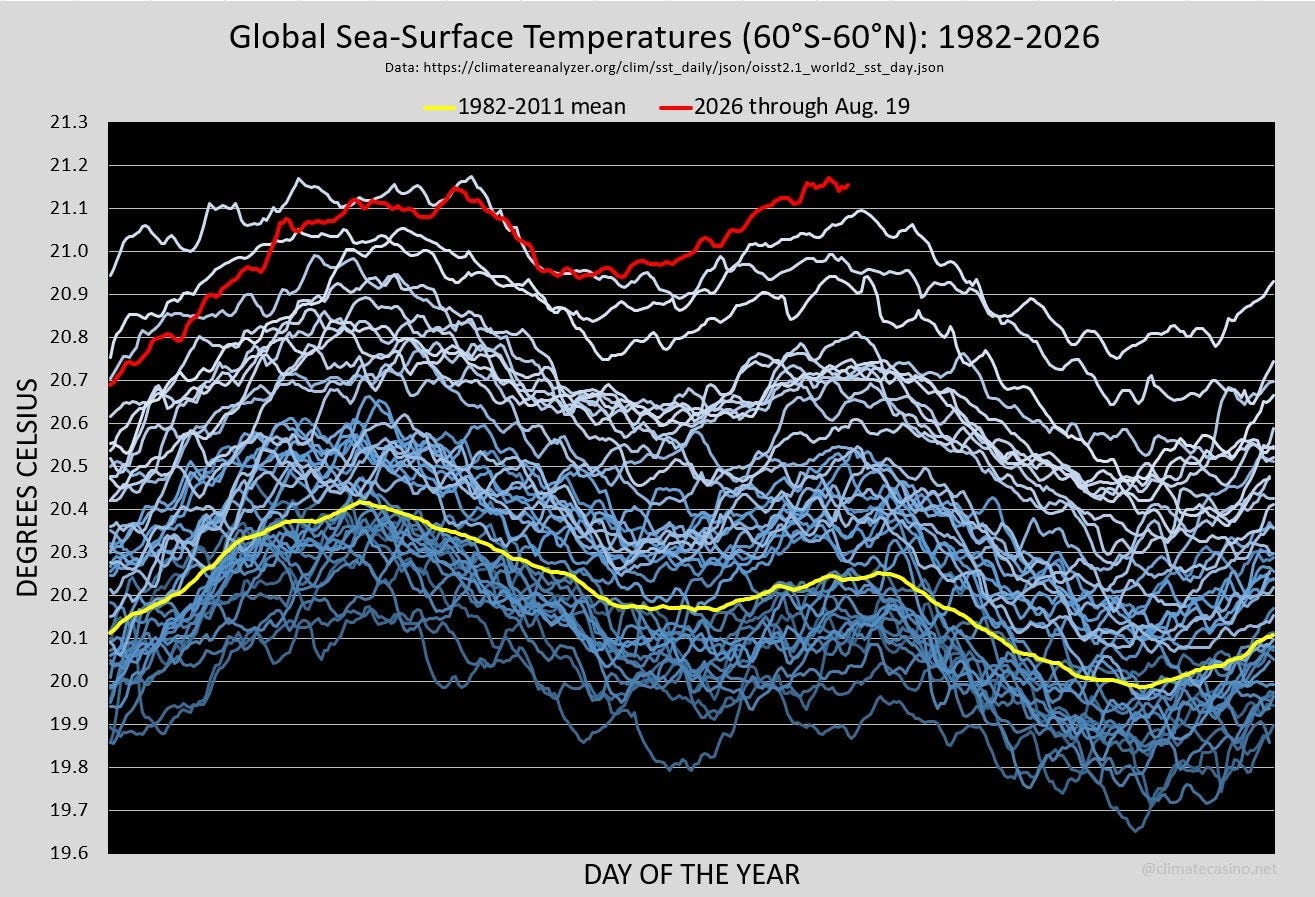
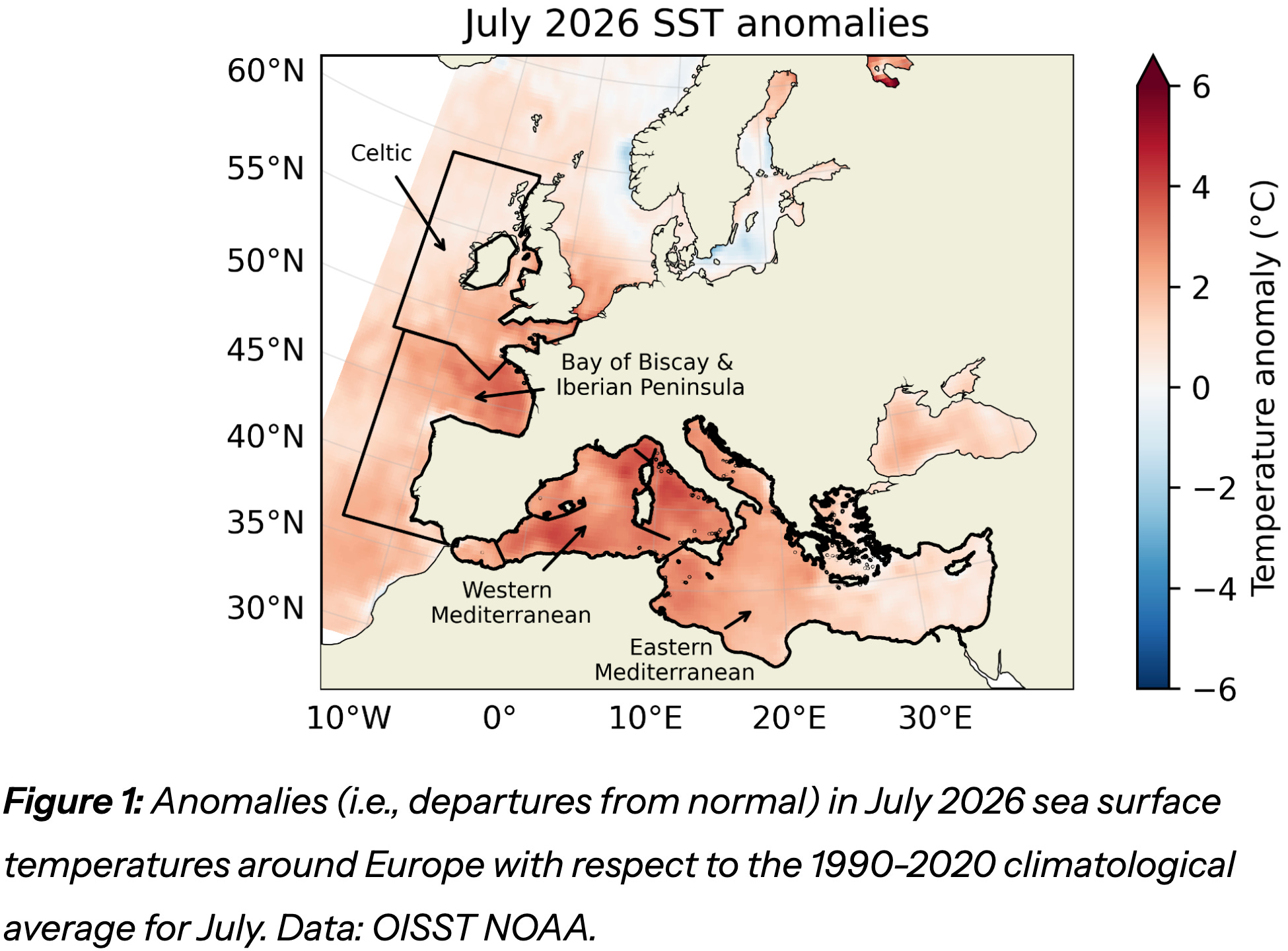
The World Weather Attribution group reported on Wednesday that 2026’s “high SSTs have been remarkable not only in their intensity, but also in how early in the year they were reached.” Marine temperatures in the Bay of Biscay “substantially exceed the level of global warming” for the summer, and “these events would have been very rare in a 1.4°C cooler climate despite being common today…a rapid transition away from fossil fuels is essential to save crucial ecosystems, fisheries, food production and tourism along the European coasts” but salvation is not forthcoming.
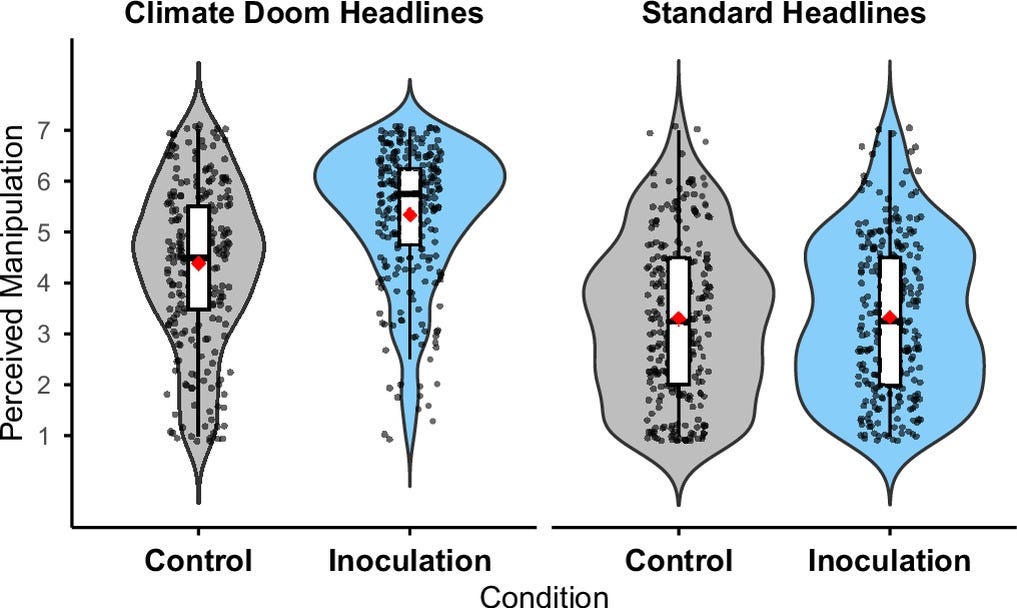
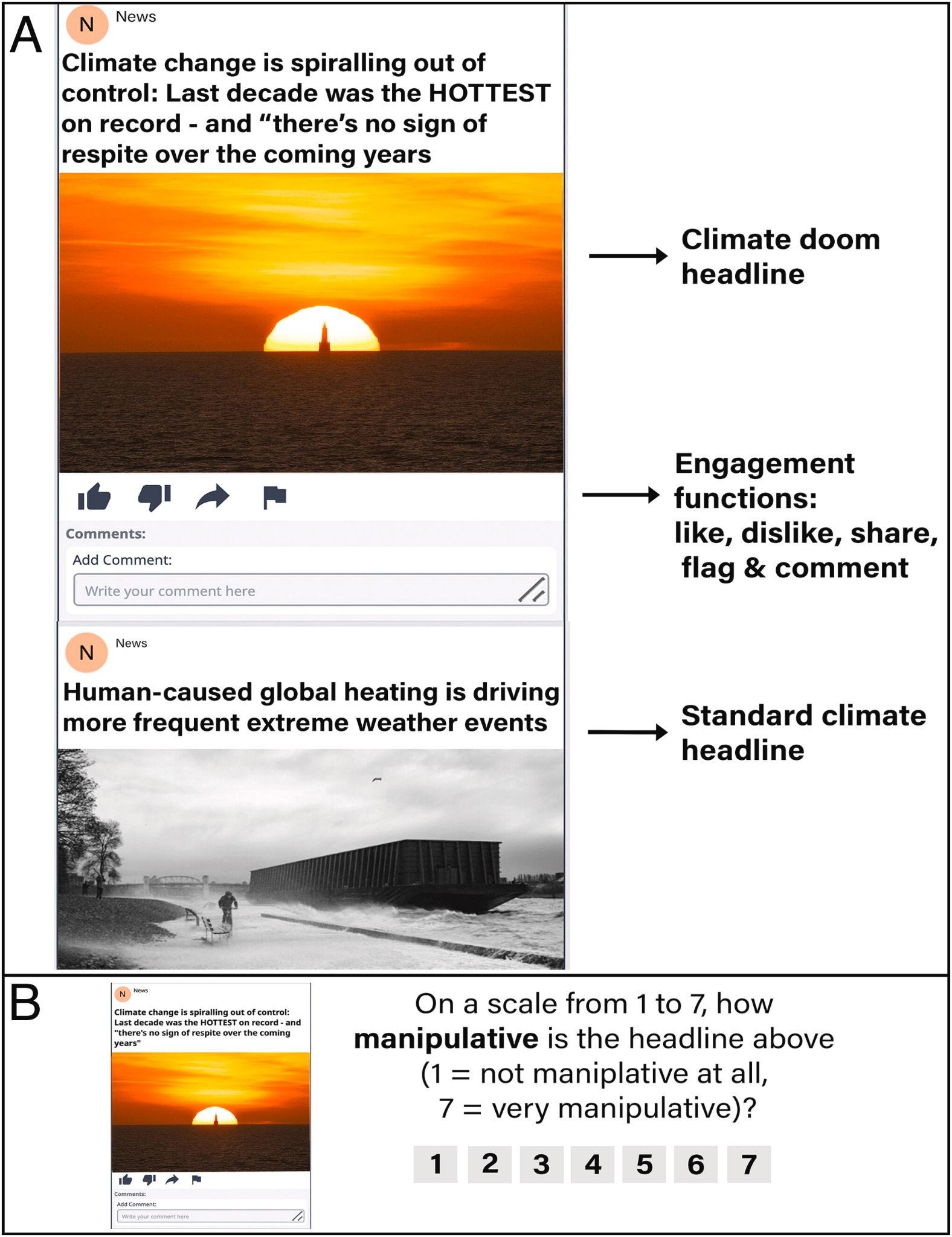
A PNAS study on “climate doom” determined that psychological “inoculation {to Doom content, via “extreme portrayals of climate change, on social media” such as this newsletter, or “preemptively protecting people against opinion manipulation”} substantially improves discernment of climate doom and that this is due to increased perceived manipulation of doom messaging specifically. There was no interaction between the inoculation condition and political leaning and while higher perceived manipulation of doom content predicted lower behavioral intentions, inoculation did not moderate this relationship. Inoculation increased engagement, particularly disliking and flagging of doom content, and decreased sharing….The prevalence of climate doom in the media could thus negatively impact climate action….inoculation increases scrutiny of doom headlines and thus may limit the spread of doom content.”
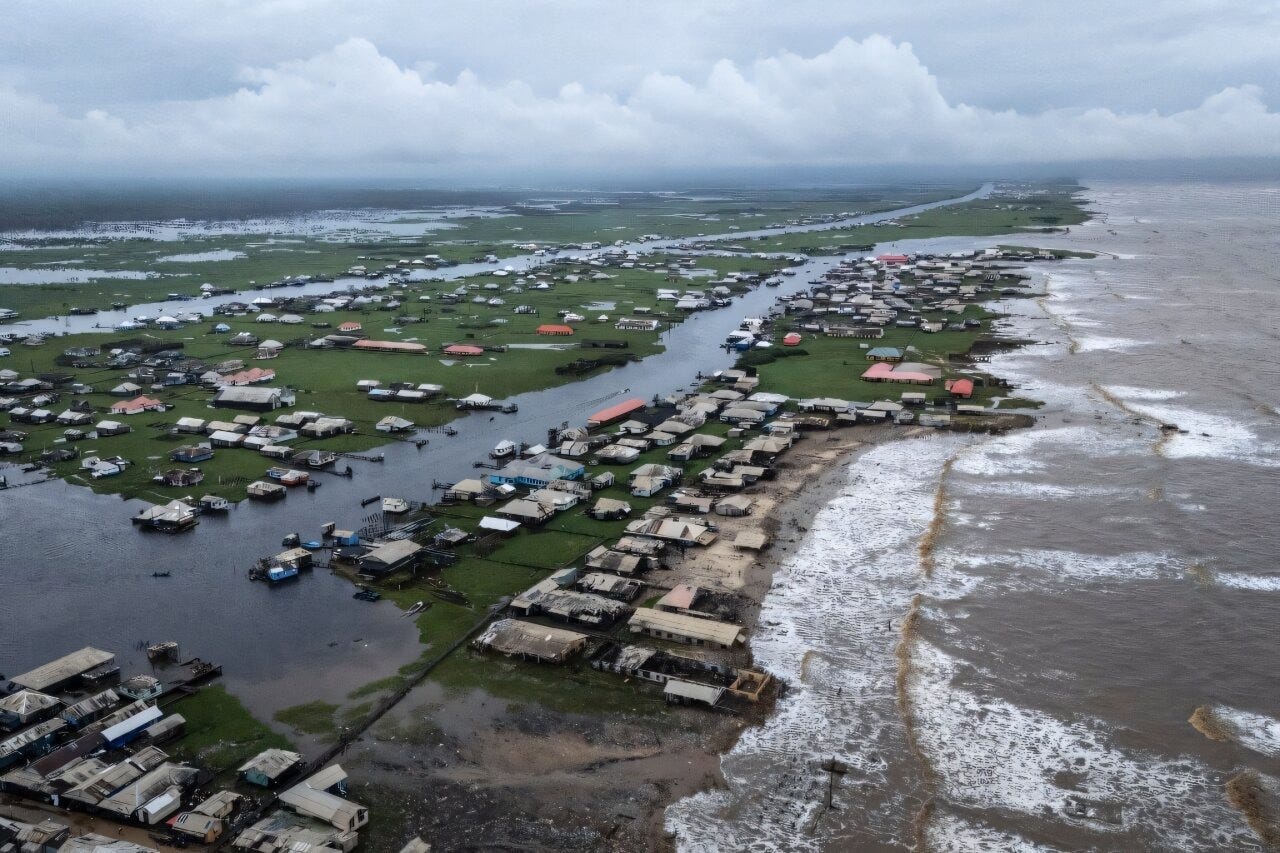
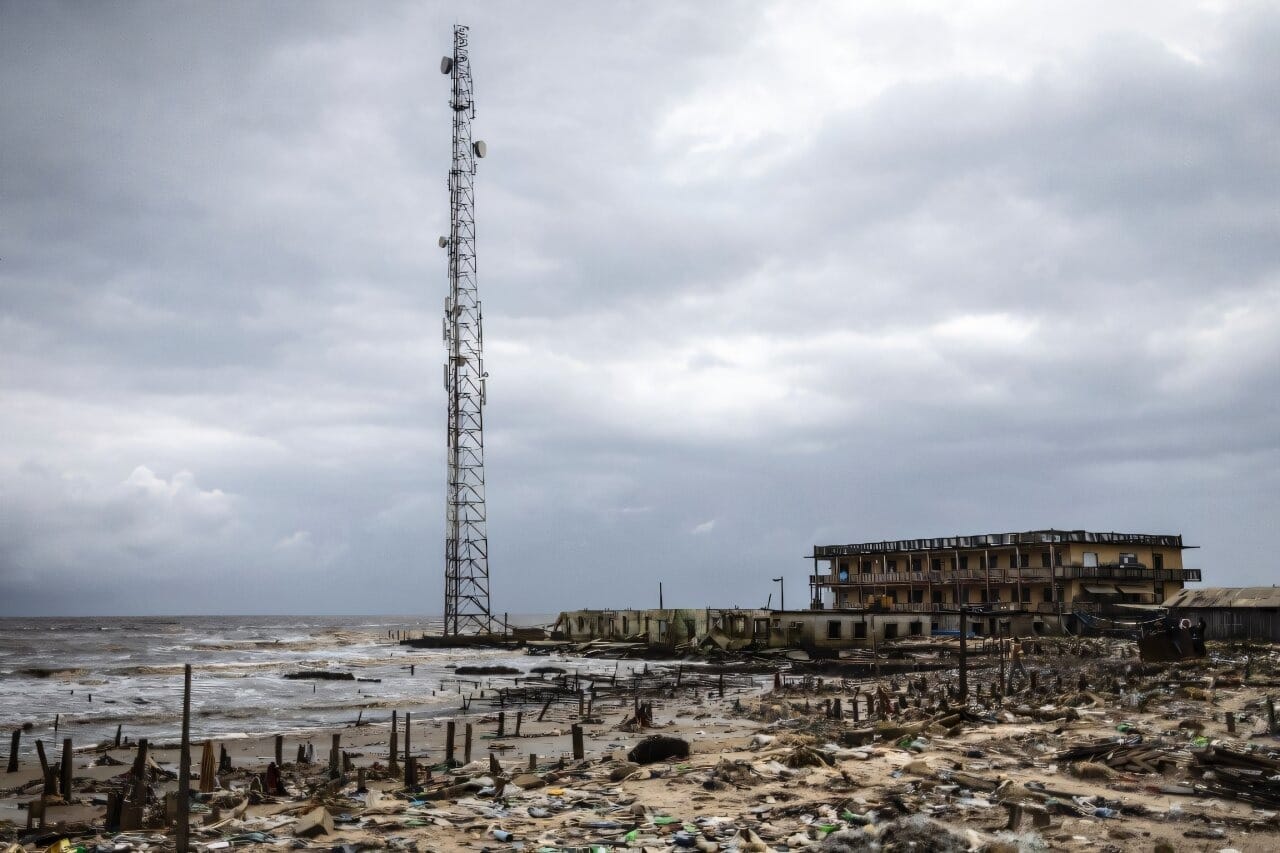
A profile of a Nigerian fishing town (pop: ~10,000) on the Atlantic Ocean depicts a community on the frontlines of climate change, with annual sea level rise of almost 4mm per year, and a coastline receding at a rate of approximately 15 meters each year. Yet the population refuses to move inland; instead they are relocating their schools and other key buildings every few years, stubbornly challenging the impassive, encroaching ocean.
Drought continues across the United Kingdom. France has now recorded 7,300+ heat wave deaths this year, so far. Forest wildfighters are in short supply across the U.S. this year, and the area of acres burnt by wildfires is at a 10+ year high—and it’s still August. Across Greece this year, more than 300 sq km of land has been scorched by wildfires (equivalent to the Greek island Kos, or Cythera, or a bit larger than Martha’s Vineyard).
A 50-minute film is making its way across free screenings in the UK, and slowly through Europe. The video is said to tell the straight doomy truth about the climate crisis, and move people to tears. The film, “the People’s Emergency Briefing,” is only available in-person; has anyone in the subreddit seen it yet?
A large landslide at an informal gold mine in the Central African Republic killed over 100 people in seconds. The Alps have also seen a record number of rockfalls, attributed to climate change. Switzerland’s Lake Zurich hit record lows since measurements began 75 years ago; about 20% of the country’s water sensors record record lows for mid-summer. An updated count of the dead from Typhoon Maysak in China now sits at 159 dead, and ten still missing. And, starting in September 2026, the number of ships transiting the Panama Canal will be cut (again) because of Drought—from 36 today to 32 next month.
Despite claiming to seek to phase out fossil fuels in Brazil, their President celebrated the discovery of oil under the ocean, a few hundred kilometers from the mouth of the Amazon River. A number of scientists believe global warming will be 25% greater than previously predicted, because of equilibrium climate sensitivity—the continual warming of the planet even after CO2 levels are stabilized, if they ever do stabilize. Contrary to predictions estimating a 2.6 °C rise by 2100, one scientist and his team suggest that 3.25 °C is more realistic.
Farmers in Egypt are testing a pilot project to install solar panels several meters above their crops, in the hopes that the shade will help the plants cool while also generating power. The Department of Agriculture is poised to undo a regulation that protects 44M acres of national forest (equivalent to the size of Florida, or Missouri) from logging & road development, following a month-long period for open comments.
Climate academics are warning about the potential for runaway permafrost melt, and the subsequent release of huge sums of methane and carbon stored, for now, within the long-frozen earth. One scientist warns,
“There is a time lag of decades between the climate warming and the permafrost thawing….The permafrost region is too big for the full system to go over a threshold at the same time – unless global heating reaches 6C….We could lose 200 to 300 gigatons of CO2 equivalents if the world warms by between 1.8C and 3.6C by the end of the century. That is many more times than the current emissions of the EU….The release from permafrost thaw is not expected to exceed all human emissions this century, but the broad assumption is that this is a very serious problem….there are no feasible geoengineering solutions on a broad scale. The only way to limit the thawing of millions of square kilometres is to reduce emissions rapidly. We need to act urgently.” -selections from his Q&A with The Guardian
Parts of south India set new temperatures for daytimes and nights, at almost 40 °C (104 °F) and 30 °C (86 °F) respectively. Namibia saw one location record a winter temp of 36.7 °C (98 °F), setting a new record. The U.S. Virgin Islands tied its hottest August night, at 28.9 °C. And scientists found a new use for AI: monitoring the explosive growth of algae blooms from satellite imagery.
——————————
In the not so Democratic Republic of the Congo (pop: 117M), the Ebola outbreak has become the country’s deadliest of all-time, with 2,325 dead by early last week. About 25 more are killed by Ebola every day. Vaccines and treatments for this strain of Ebola are being tested on humans; if the Moderna vaccine shows promising results, they will scale up production to make about half a million doses. This particular strain has a CFR/death rate of about 46%.
When Drought pushed Romania’s river levels too low to operate their nuclear power plant at full capacity, Romania restarted an old coal plant to fill the energy gap. Across the Western United States, West Nile virus is spreading due to Drought; the counterintuitive phenomenon is due to mosquitoes being concentrated around fewer water sources, where animals (namely birds) tend to gather.
A colossal data center is being planned for Ohio, to be leased by OpenAI. The pricetag of the enormous complex befits its rank among the world’s largest, with a cost ($500B USD) similar to the annual GDP of Denmark, and surpassing the GDPs of Egypt, Nigeria, and Pakistan individually. Another gigantic data center built in Texas, in service of Amazon (market cap: $2.8T), is expected to be the #1 single source of emissions in the country, and will produce some 33 million tons of CO2 per year when fully online (equivalent to the annual emissions—in 2023—of Switzerland, Hong Kong, Ireland, or Myanmar).
The rush to construct data centers and provide more and more power across the United States has also resulted in a shortage of transformers that appears endless. It has also worried electrical experts who fear terrorist attacks (whether state or non-state) on substations, and the potential failure of a regional power grid. Meanwhile, two weeks ago, Meta CEO Mark Zuckerberg (net worth: $220B, comparable to the GDP of Qatar) posted a long essay extolling the benefits of AI, which some observers call “deranged….full of platitudes and sentences that mean nothing….{it} describes a future in which bad actors essentially do not exist.” Do you think it’s unhinged and out-of-touch, or cogent and grounded?
“The Future is for Everyone….The defining questions of our age are who will have access to superintelligence and what will we direct it towards….it is surprising that the discourse from many developing AI is so filled with doom….As everyone gains more powerful tools, each person will become more capable of shaping the future, not less….Everyone will have an exceptionally capable personal agent that understands you, your goals, and everything you care about. Your agent will work 24/7 on your behalf to improve your relationships, health, career, finances, home management, hobbies, and more….Everyone will have powerful tools to create new businesses and the economy will become more entrepreneurial….Everyone will benefit from scientific advances and be able to contribute to scientific progress….There is no technological solution that can align with everyone’s opposing interests and values at once. Any singular superintelligence would have to prioritize some values over others and in the process would be incapable of being benevolent to everyone…” -excerpts from the essay
“...I expect we will start seeing small numbers of people with personal superintelligence agents able to run companies at significant scale. In the future, small businesses will continue to be the backbone of the economy, but each small business will be able to have a much larger impact….It has been possible for bad actors to synthesize harmful compounds for decades but this has rarely become a significant issue — perhaps because the financial motivation that exists for cyberattacks is not as present here….Any policy that slows American model releases — even by a month — could add significant risk to American leadership while letting foreign models race ahead….This is an incredible moment to live through. Developing superintelligence will be the most profound technological advance we will see in our lifetimes….If these values lead the way, then I am optimistic that the coming decades will be some of the most amazing in history….” -more excerpts from the essay
UK food experts warn of food system fragility facing their population, and growing worse as the climate crisis worsens. Most of the Kingdom’s fruit and vegetables are grown overseas, and the vast majority in regions of the world sensitive to climate change. Meanwhile, Australian government lawyers assert that the conglomerate 3M knew, for 50+ years, about the dangers to humans posed by some of its chemicals. And did nothing.
A cholera outbreak is spreading in Yangon (urban pop: 4.6M), Myanmar, where 180+ people have been hospitalized. 1000+ birds were found dead from avian flu in Australia. An effort is being made to temporarily capture and vaccinate 5,000+ young penguins in Australia; the trouble is, this vaccination requires a second dose, so they will have to be apprehended twice. Meanwhile, an analysis of legal claims from Americans suffering Long COVID appears to have at least recognized the condition is a disability—though proving the condition and its severity among the afflicted remains extremely difficult.
The United States’ national debt has hit $40 Trillion faster than expected. The milestone was reached ahead of schedule because a massive tariff refund forced the refund of some $100B to businesses, following the overturning of most of President Trump’s 2025 tariffs. And a tit-for-tat tariff conflict is now unfolding between Canada and the U.S. (again). Plus the ongoing price of the Iran War. An economist at The Economist writes that rampant deregulation of bank supervision and liquidity standards may throw the American global economy into a period of true instability and crisis.
Some economic observers say the bubble is going to pop before 2027 is done, since investment in AI and its infrastructure is reaching its ceiling: computing power & hard data storage is already committed years in advance, the workers who can build these facilities are close to maxed out, and electrical generation is strained. In other words, there are limits to growth. And since constant investment in this sector cannot continue at the 2025-2026 pace, growth will stall, the overall (American) economy will slow, and the fragility of the bubble may become evident. Yet, for now, the profits keep rolling in—and Anthropic is planning its IPO for 2027, at a price that could overtake SpaceX’s IPO valuation of $1.77 trillion USD.
As the Hormuz crisis rolls on, diesel shortages are pushing the prices to record highs, over $100 per barrel. Unlike oil and natural gas, whose absence can be partially supplemented by solar, coal, or nuclear power, there is no substitute for fertilizer, making the ongoing shortage of fertilizer a slow-moving catastrophe that cannot be reversed. The Super El Niño, plus disruptions to the Black Sea grain flow, may converge into a global food shortage destined to hit the poorest hardest.
——————————
The Iran War’s memorandum of understanding (MOU) is dead, and the following 60-day negotiation period between the U.S. & Iran is over, with no deal to re-open the Strait of Hormuz. Oman’s efforts to mediate between the two giants has not been successful, to put it simply. Instead, Iran reportedly seeks escalation, while some U.S. forces seem to be suffering a crisis in morale in the Strait. Iran is hoping political headwinds will turn against President Trump, while the U.S. is hoping for economic pressure to crush Iran’s spirit; neither seems decisive. Russia is meanwhile giving drones, missiles, and training to Iran; and the UAE is suspending all commerce with Iran. No talks are being planned to de-escalate, so the War will continue.
As Gaza’s famine intensifies, opportunists are cashing in on higher prices for everything—whether medical supplies, food, or cigarettes. An IDF strike on a cafe in Gaza reportedly killed six, including a Hamas commander. Israeli strikes against Lebanon on Saturday allegedly used white phosphorus, an incendiary weapon that can cause indiscriminate deaths.
An explosion at a school in Kabul killed 42+ children, though officials are not sure whether it was a deliberate attack or old unexploded ordinance that suddenly blew up. Meanwhile, in India, sources claim that India arrested 200+ Pakistan-linked “terror operatives” who were planning potential attacks—though Pakistan denies the events completely. In the waters off Somalia’s coast, eight pirates took over a cargo vessel; such attacks are becoming more frequent as U.S. forces are increasingly tied up in the Persian Gulf. In fact, a few days later, Somali pirates took over an oil tanker believed to be part of Iran’s shadow fleet.
Tensions are rising between Egypt and Ethiopia over Ethiopia’s ambition to construct three more dams on the Blue Nile; indeed, Egypt has suggested military force could be used. Elsewhere in Ethiopia, reports of continuing attacks on healthcare facilities long after the conclusion of the Tigray War—along with health workers going without pay for 6+ months, plus chronic medicine shortages, fuel, and other supplies—are pushing the northern Ethiopia’s healthcare system to the edge of Collapse. When Collapse finally comes, the only thing that might surprise us is how long society held on for.
Taiwan boosted its 2027 military budget to $35B, an 18% increase when compared to this year; the 2027 number accounts for 3% of Taiwan’s GDP. Saudi Arabia, Türkiye, and Pakistan inked a defensive pact, a so-called “Muslim NATO,” to deter armed intervention (mostly Israeli & Iranian) against any of the three countries. Houthi attacks apparently don’t qualify. Nevertheless, experts say that long-range drone warfare will imperil shipping routes and upend traditional risk management practices. In Somalia, an hours-long gun battle left almost 100 people wounded, and perhaps as many as 34 slain. The assault was launched by supporters of a rival President, and occurred alongside Al-Shabaab explosions elsewhere. And despite drone warfare being the future present of warfare, the U.S. is cutting a unit dedicated to exploring the potentials of UAVs.
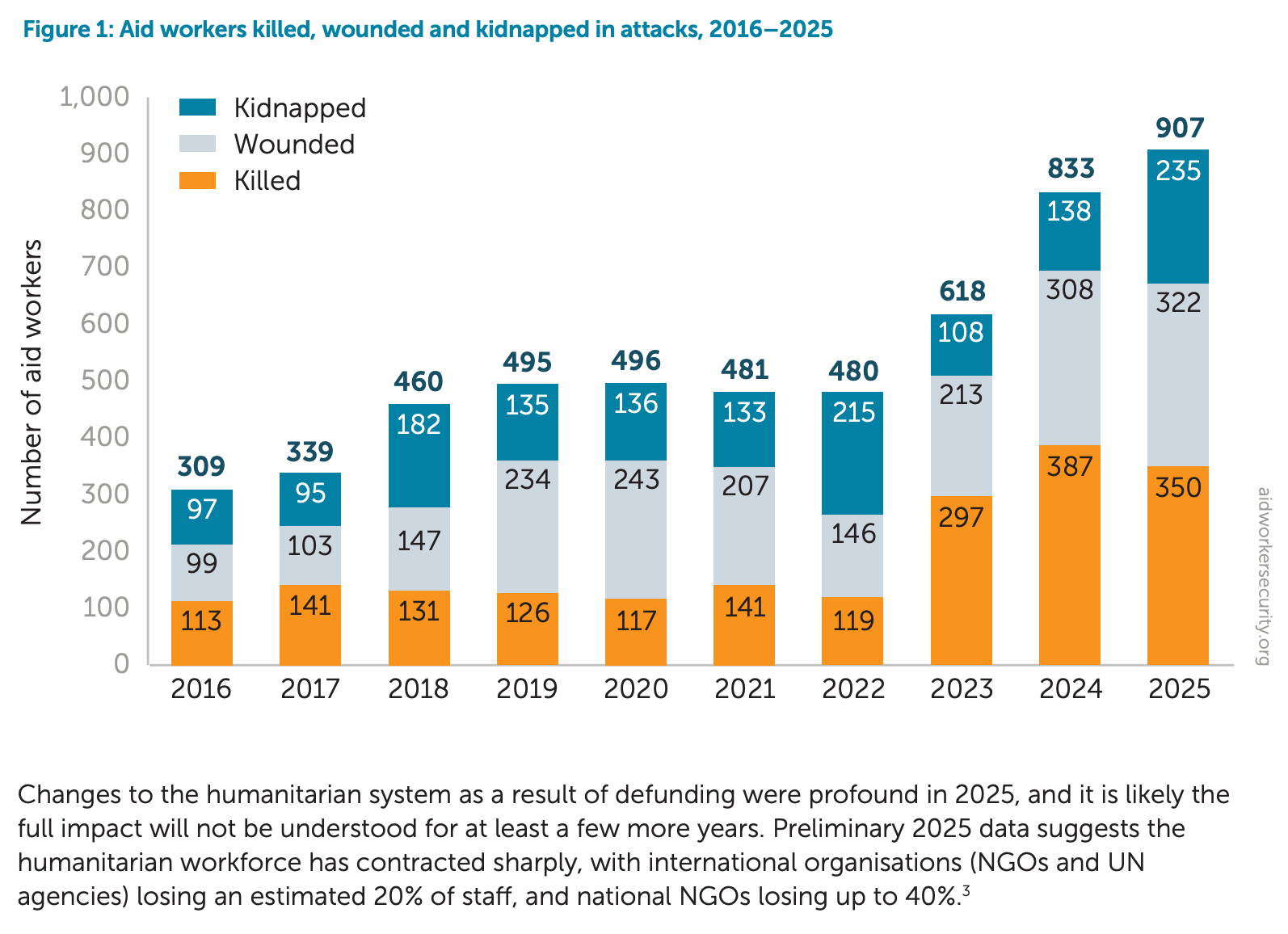
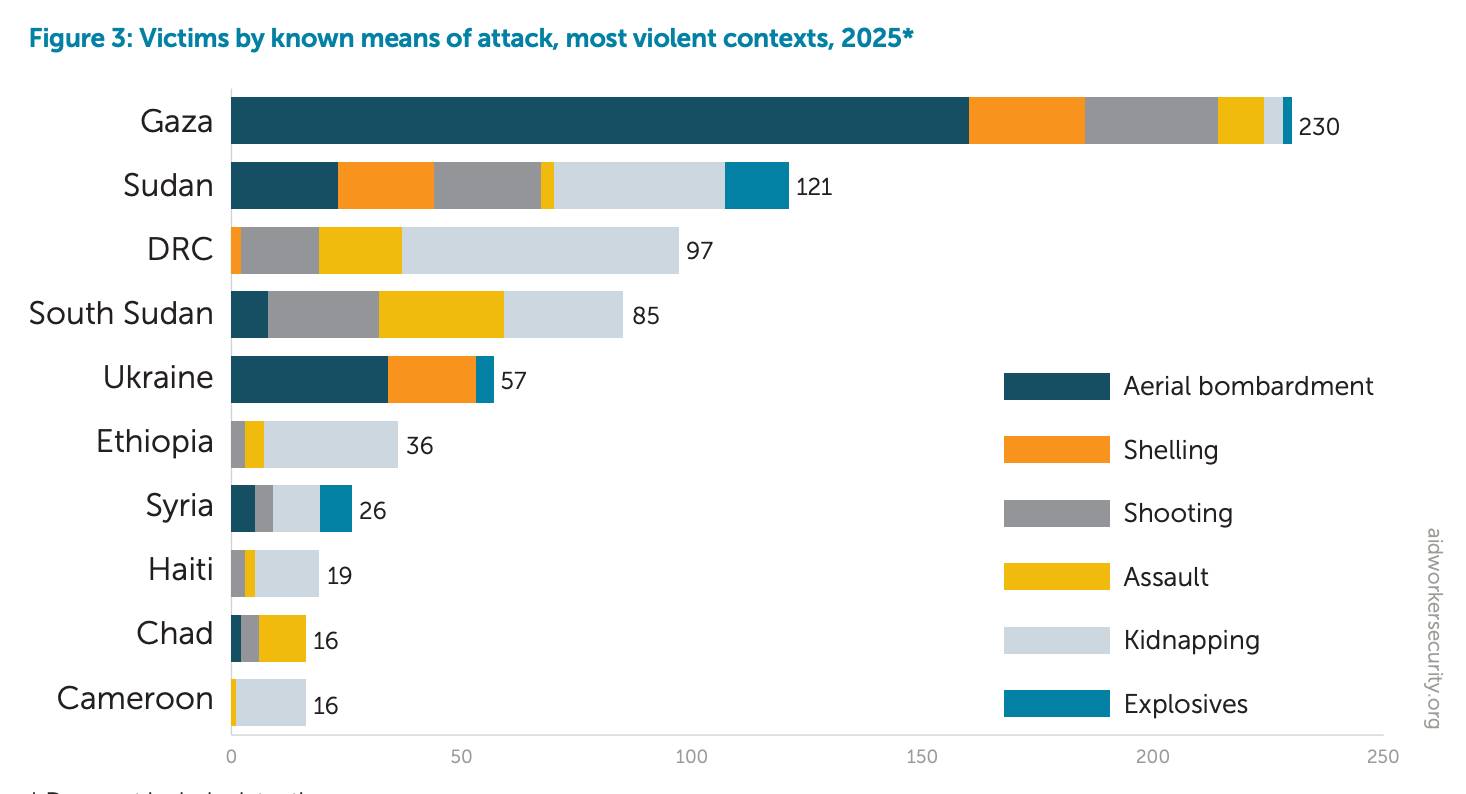
The 20-page Aid Worker Security Report for 2025 was released on Wednesday. Though the number of aid workers (however they are defined) slain fell to 350 worldwide, the number of injured & kidnapped aid workers both rose to record highs. The data are still considered preliminary, and may rise when more sources and information are brought together. Gaza greatly leads the locations for aid worker violence, followed by Sudan, the DRC, South Sudan, and then Ukraine.
“Gaza remained the most dangerous context for aid workers for the third year in a row, with 186 aid workers killed and 76 seriously injured – more than in 2024, despite the fragile ceasefire agreed in October 2025….The civil war in Sudan continued in 2025, with 71 aid workers killed, marking a new record for the third consecutive year. Kidnappings by the Rapid Support Forces (RSF) were the most common means of violence but small arms fire accounted for the most fatalities….Some reports estimate massacres by the RSF and ongoing military operations have killed over 100,000 civilians, creating an unprecedented humanitarian crisis where access remains severely constrained….escalated fighting between the Rwandan-backed M23 militias and the Congolese government forces tripled aid worker casualties compared to the previous year….Intensifying drone warfare, airstrikes on residential areas and artillery shelling on the front lines have created a more dangerous setting for civilians and aid operations in Ukraine over the last year. There was a 55% increase in violent incidents between 2024 and 2025….Historically the preserve of state militaries, the rise of unmanned aerial vehicles (UAVs, such as drones) makes aerial warfare more widely accessible. Trends suggest more non-state actors will soon have access to UAVs….of the 65% of detention incidents where motive was documented, roughly half were recorded as politically motivated – that is, related to the detainees’ affiliation with the humanitarian response…” -excerpts from the report
Myanmar government forces are forcibly clearing areas on the south coast in preparation for a “Russia-backed special economic zone” complete with a deep sea port. North Korea launched 10 short-range ballistic missiles into the sea following joint US-South Korea drills that the Americans had earlier scaled back. In Balochistan, Pakistani forces reportedly killed five terrorist separatists.
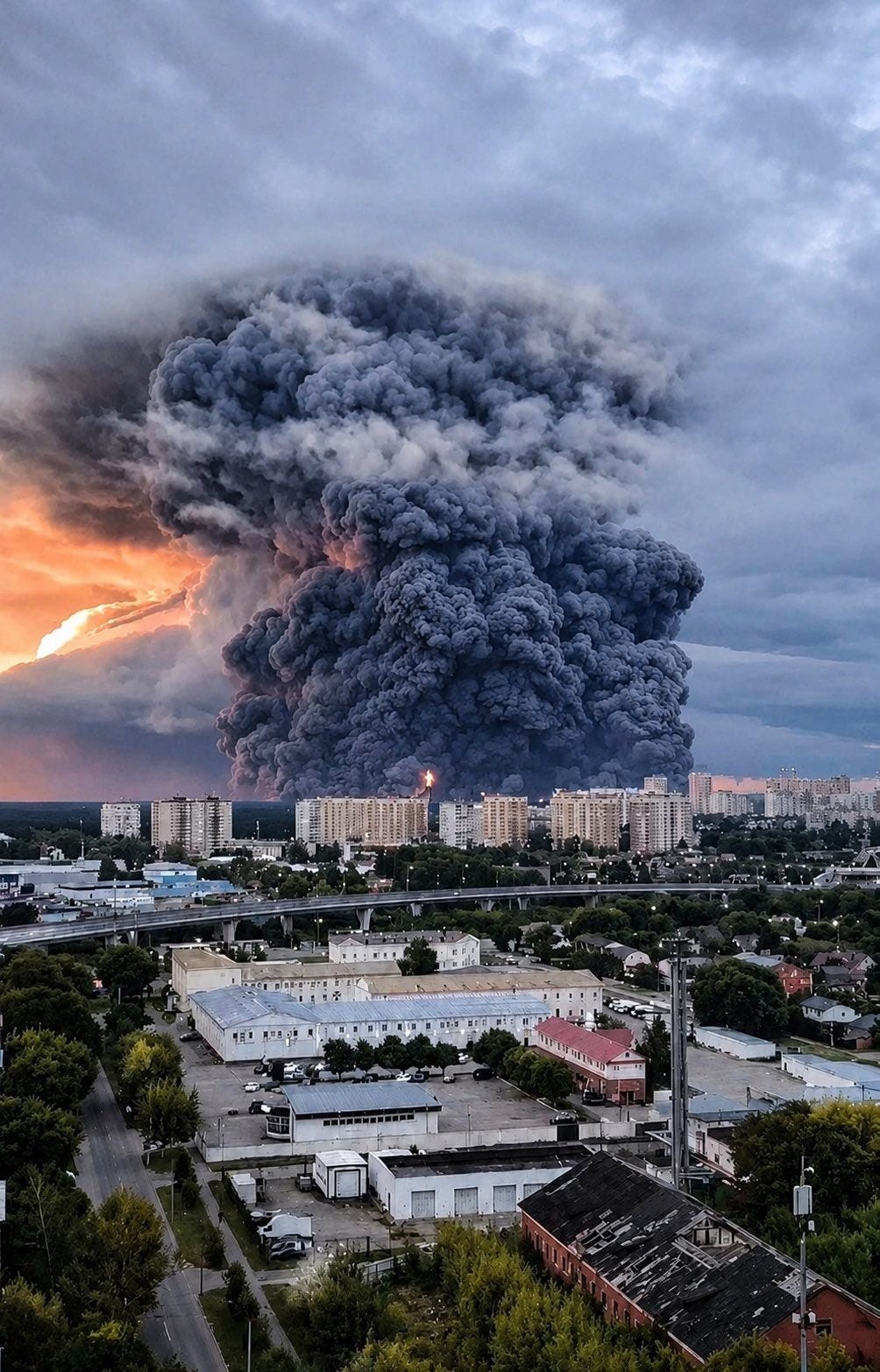
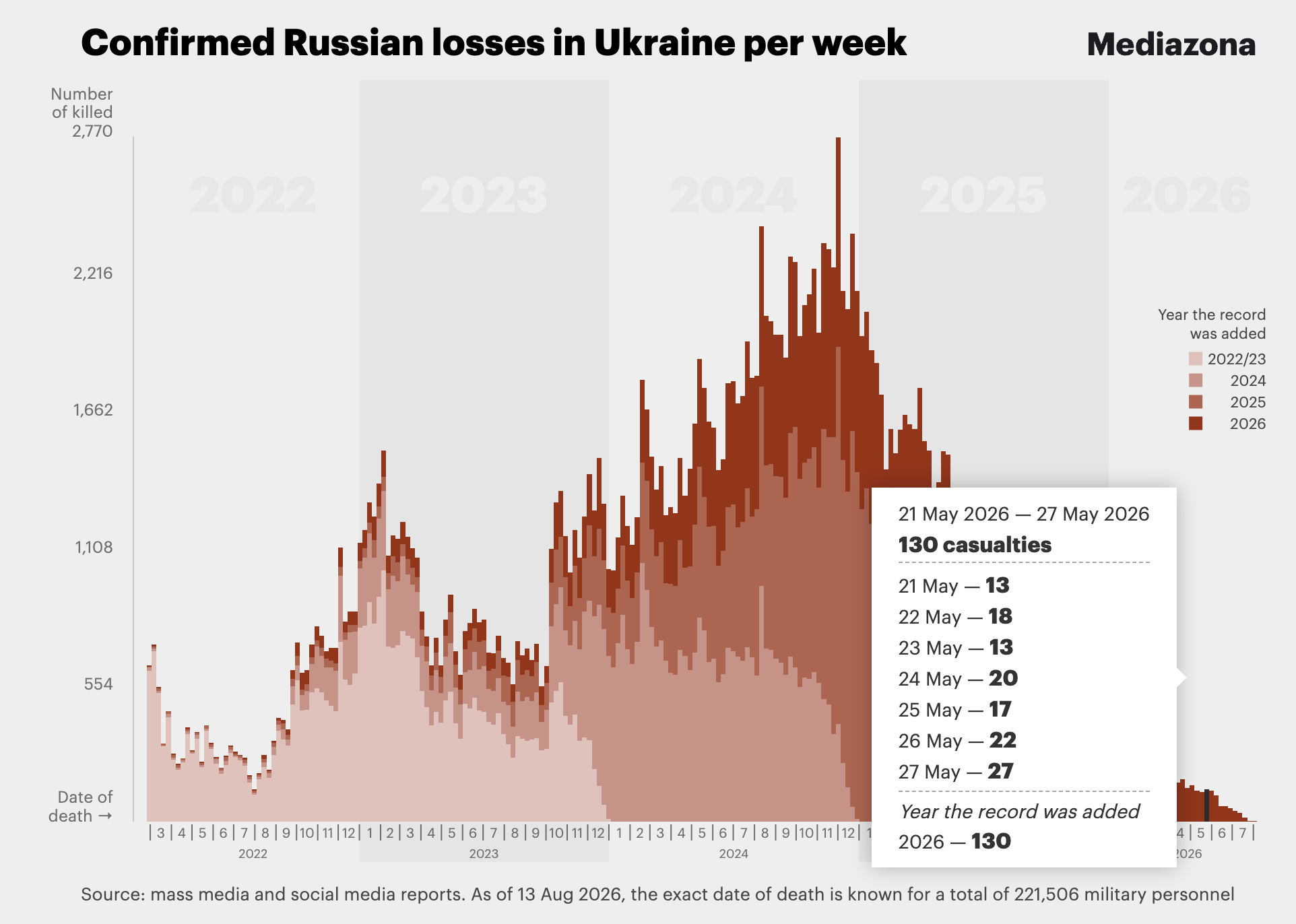
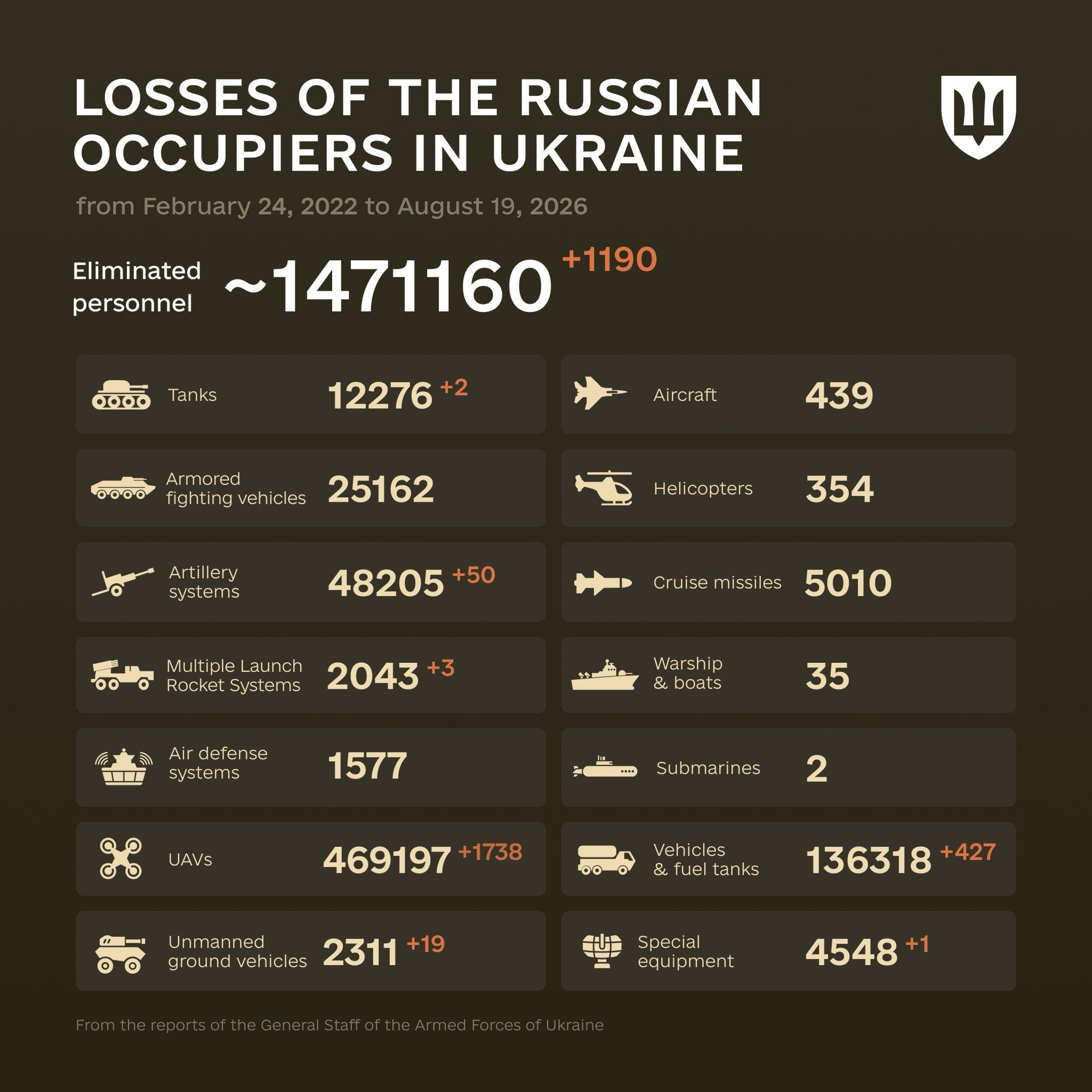
A Sunday morning attack on a Russian logistics hub outside Moscow opened a week of escalations between Russia and Ukraine. Ukraine is further integrating AI and machine vision into its vast drone fleet. A colossal column of smoke rose over Moscow; another swarm of drones on Tuesday hit Moscow, while Russia killed ten, and wounded more, outside Kharkiv. On Thursday, Russian drones slew 16 around Kyiv. Every day across the large Ukrainian front line (~1,200km, or 750miles long—and 30km, or 20mi deep) scores, perhaps hundreds, of Russian soldiers are being slain daily now; smaller but not-negligible numbers of Ukrainian fighters are also being killed and injured. Confirmed totals are hard to come by; accurate numbers are even rarer. Russia and Ukraine have both intensified attacks on commercial shipping in the Black Sea, though the real victims may be those long-awaiting delivery of the region’s grain harvest. “There is no instance of a nation benefitting from prolonged warfare.”
The New START Treaty, which limited the nuclear stockpiles of Russia (5,500+) and the United States (~5,100) for 15 years, has now been inactive for more than six months. China allegedly possesses over 600, and is still building more—creating a security dilemma for Japan, South Korea, and much of the rest of the world. Some experts say that the world is slipping into a dangerous age of proliferation and instability, in which more nations will seek to develop nuclear weapons. Iran and Saudi Arabia also have ambitions to secure nukes, or at least the material needed to generate nuclear power. In an age of mistrust, fears of future conflict are leading parts of the international community into a new nuclear arms race—and pulling the rest of us along with them.
——————————
-Everyone seems to have a different wake up call to Collapse, if the responses to this thread are representative of the community. Insurance rates, CO2 ppm, peak oil, literacy levels, short-term greed, population growth, biodiversity dieoff, etc. 350+ comments and rising.
-Those who are schizophrenic are at much higher risk of anxiety, psychosis, and death during heat waves, according to this informative thread from last week. There’s always new things to learn about in r/Collapse …
-It might be a useful through experiment to brainstorm a chain of events leading to Collapse, however you define it. This extremely neglected post from about nine days ago proposes a “game” to trace events through to a proper Collapse. I find it easier to go in the other direction though. Pity it was ignored by the redditors.
Got any feedback, questions, comments, upvotes, reports, hate mail, doomy ouija predictions, go-bag essentials, etc.? As always, thank you for your support. What did I miss this week?
No posts
Comments
Nothing yet. Say the first thing.
Sign in to join the conversation.