
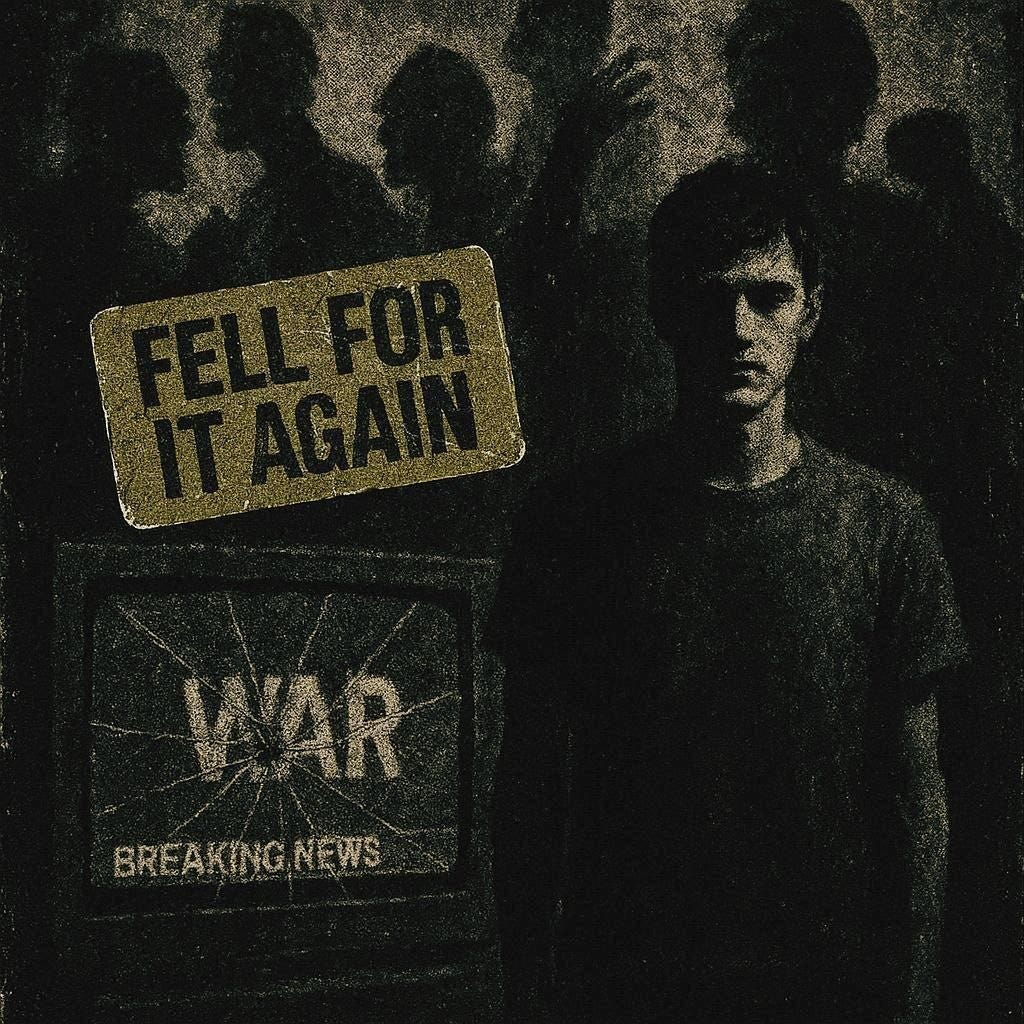
There it is again.
That tone.
That smug, slow-burn “fell for it again” energy, the kind that acts like it deserves a little gold star for panicking early and then pretending it was wisdom all along.
The same people who were just spiraling five minutes ago now want to rebrand themselves as the calm, rational voices in the room.
Matt Walsh’s tweet isn’t insight. It’s insulation. It’s narrative control after the fact.
This right here is the entire playbook.
Let’s actually break it down.
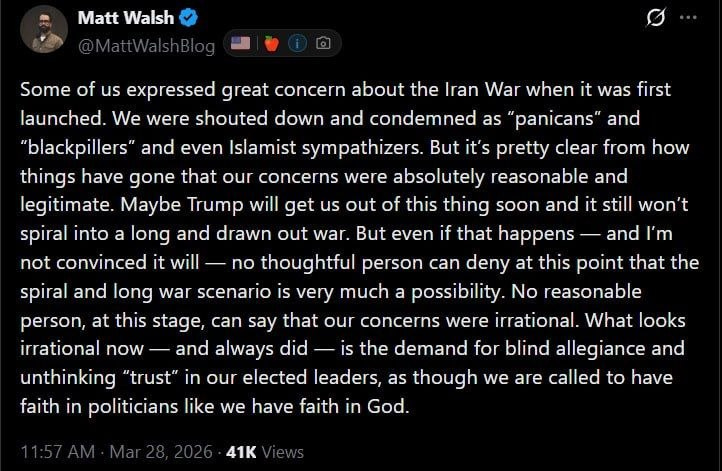
He opens with: “Some of us expressed great concern…”
“Some of us.”
That phrase is doing Olympic-level gymnastics.
It creates this illusion of a grounded, thoughtful minority, when what we actually watched unfold was a wave of instant ghey doomerism. Not measured concern. Not patience. Just immediate escalation to worst-case scenarios like the credits were already rolling on World War III.
Then comes: we were shouted down, labeled unfairly.
No.
People weren’t pushing back because questions were being asked. People pushed back because of the certainty, the confidence that everything was already spiraling out of control before we even had a full picture.
That’s not concern.
That’s emotional forecasting dressed up as intellect.
And when you do that, yeah - you’re going to get checked.
Then we get the pivot: “It’s pretty clear… our concerns were absolutely reasonable.”
This is where it falls apart.
Nothing is “clear” yet. The situation is still unfolding. But he’s trying to plant a flag early, claim the high ground before the outcome even lands.
It’s halftime, and he’s already writing the postgame speech.
And then, beautifully, he gives himself an out:
“Maybe Trump will get us out of this thing soon…”
That “maybe” is insurance.
If things resolve quickly? He called it.
If they don’t? He warned you.
That’s not analysis. That’s hedging.
That’s how you build a brand without ever having to take a real risk.
And then we hit the centerpiece of the whole argument:
The jab at “blind allegiance” and “unthinking trust.”
This is the part that’s straight-up dishonest.
Because nobody - nobody serious - is saying:
“Don’t think. Don’t question. Just obey.”
That’s a strawman built for engagement.
What people are actually saying is this:
We’ve watched this man for years.
We’ve watched the decisions.
We’ve watched the outcomes.
We’ve watched the pressure campaigns, the media hits, the internal sabotage, and how he navigated all of it.
We’ve seen the pattern.
America First wasn’t a slogan, it’s been a consistent through-line.
So when something complex hits, something messy, something that doesn’t fit neatly into a tweet - we don’t immediately jump to betrayal. We don’t spiral. We don’t start performing outrage for an audience.
We wait.
Because there’s a track record there.
That’s not blind allegiance.
That’s earned trust.
And the Iran situation? This is exactly where the difference shows.
Leaders operate in real time, with incomplete intel, real consequences, and no luxury of hindsight.
Commentators?
They get to speculate.
They get to dramatize.
They get to farm engagement off uncertainty.
And a lot of them love it.
Because outrage is profitable. Panic spreads faster than patience. And being first to declare disaster gets you more clicks than being right.
But here’s the part that’s going to sting:
This isn’t going to be the long, drawn-out catastrophe they’re fantasizing about.
It’s going to move fast.
It’s going to resolve before half of these takes even age properly. And when it does, watch how quickly the tone shifts. Watch how the same people who were warning about spirals and endless war suddenly start acting like they were measured, balanced, “just asking questions” the whole time.
They always do this.
Because the goal was never clarity.
It was positioning.
And then there’s the louder crowd - The paid shills and AstroTurfed conservative influencers.
You know exactly who I’m talking about.
The ones who realized that tearing down your own side is the fastest way to build a following. The outrage merchants who cosplay as truth-tellers while doing nothing but fragment the people they claim to represent.
They don’t build anything.
They don’t lead anything.
They don’t risk anything.
They just talk.
They nitpick. They posture. They turn every complicated situation into a purity test that nobody can pass. And they package it as “principle” while quietly feeding division.
It’s the same tired playbook.
And it’s fucking transparent.
Here’s the reality they can’t handle:
You don’t lead a country by appeasing the loudest voices on the timeline.
You lead by making decisions, sometimes unpopular ones, based on what serves the country as a whole.
And whether they like it or not, Trump has been consistent in that.
Not perfect. Not polished. But consistent.
That’s why the base doesn’t fracture every time things get complicated.
That’s why the panic doesn’t stick.
Because people remember what he’s actually done - not what someone says he might do.
So no, this isn’t about blind allegiance.
And it’s definitely not about treating politicians like they’re infallible.
It’s about recognizing patterns.
It’s about understanding leadership.
It’s about knowing when someone has earned enough credibility that you don’t immediately assume the worst the second things get messy.
The contrarians can keep performing.
They can keep hedging.
They can keep trying to get ahead of outcomes that haven’t even happened yet.
But when this resolves, and it will - they’re going to backpedal so fast it’ll look like a glitch.
And the rest of us?
We’ll be exactly where we’ve been.
Not panicking. Not posturing.
Just watching it play out.
Because this was never about “trusting the plan” like it’s some blind leap into the dark.
It’s something a lot simpler and a lot harder to fake.
We trust the pattern.
And that’s why we don’t flinch every time the noise gets loud.
Remember: Don’t be ghey - doomers were never cozy.
No posts
Comments
Nothing yet. Say the first thing.
Sign in to join the conversation.