Defined-Outcome ETFs: When the Shape of the Payoff Matters
Defined-outcome ETFs, also commonly known as buffered ETFs, have become a popular way to package downside protection and upside sacrifice into a single product.

My personal Substack
Live Last read · last published · next check
Defined-outcome ETFs, also commonly known as buffered ETFs, have become a popular way to package downside protection and upside sacrifice into a single product.
In my role as a consultant to financial advisors, I have been getting a lot of requests asking for help in addressing investor concerns about the elevated economic cycle risks, stretched equity levels, rising geopolitical risks, mounting government deficits and debt levels.
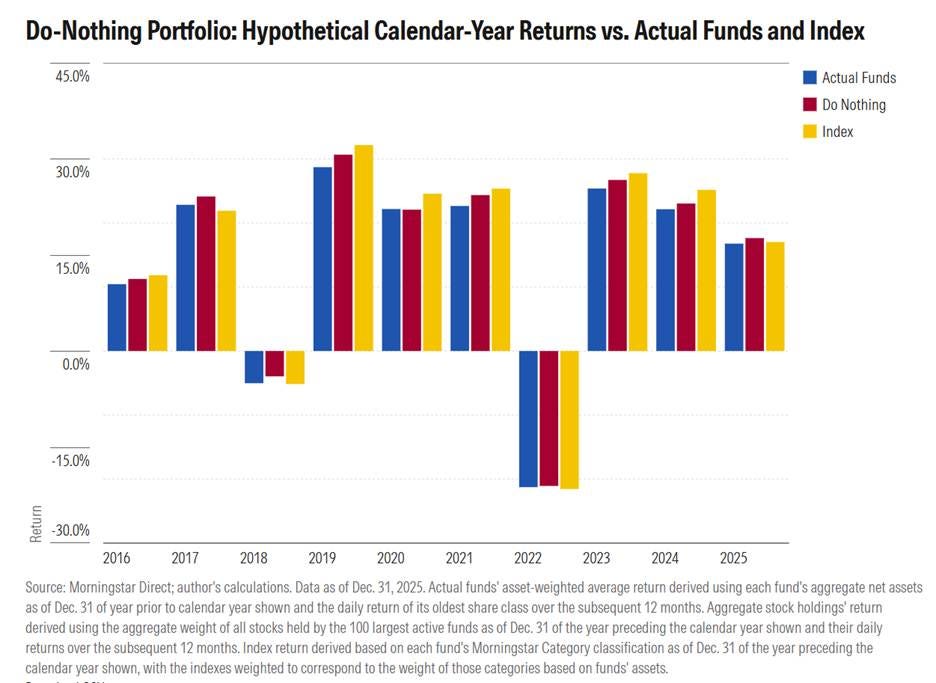
Morningstar’s Jeff Ptak recently examined the 100 largest active U.S.
In the world of finance, a long-standing debate pits traditional economists against behavioral financial analysts.
If you have spent time studying modern asset pricing models, you are likely familiar with the asset growth anomaly.
Jan Schroeder and Alexander Krause, authors of the study “Following Insiders to Outperform the Market,” published in the June 2026 issue of The Journal of Investing, revisit a question that has interested both academics and investors for decades: Does mimicking the stock purchases of corporate insiders generate market-beating returns?
New research suggests that flows into index funds and ETFs are creating structural headwinds for act
Investors increasingly use natural language processing (NLP) sentiment to extract signals from earnings calls.
A new paper spans 155 years of U.S.
Behavioral finance research has established that investors dislike negative skewness because it exposes them to rare but severe losses, while they embrace positive skewness because it offers the chance of occasional outsized gains — the lottery-like appeal that persists even when expected payoffs are modest.
The idea that markets are driven only by cold, rational analysis is appealing, but real investors often bring biases into the process.
Time series momentum (also known as trend following)—the tendency for an asset’s own past returns to predict its future returns—has become one of the most well-documented and widely exploited anomalies in finance.