
Welcome back to Glass Half Full and thanks for reading!
AS IT TURNED out, getting the lamp from Anne was easy. I showered and changed for the day, then found her downstairs as she was about to go out. “You know, I could take that lamp off your hands, if you wanted,” I said.
She looked at me uncertainly. “Could you? What would you do with it?”
“Do you really want to know?” I’d thought of telling her about the bonfire that night, keeping the details vague. But it would be best if I didn’t have to tell her anything.
“No, I suppose not. Take it home with you, throw it in the trash, it doesn’t matter. I only want to be rid of it. I couldn’t face doing it myself.”
“Consider it done. What do I owe you for it?”
She waved that away. “If I never have to see it again, that’s payment enough.”
She left to do her errands and I went into the sitting room with a couple of microfiber cloths I used to dry my car after taking it through the wash. I might not believe in magic lamps, but it never hurts to be careful. Insurance against the uncanny and the unlikely.
I wrapped the lamp in the cloths, careful not to rub it or touch it with my bare hands. In the car, I placed it carefully on the front passenger seat. I called Zeke and let him know I had the object in question and got directions to his place.
After that I went for the drive I’d neglected the day before. Stopped at the winery Anne had suggested, where I picked up a couple of bottles of the whites Joanie preferred and a couple of reds for one of my fellow detectives. He’d come back from up north raving about the dry reds Michigan had been producing in the last couple of decades. Said it had something to do with the global warming. I hoped I’d picked the right ones.
Next stop was the big sand dunes. Every Michigander has to see them once, I guess. And there they were, hills of sand with people going up and down them. That looked like work, so I continued on and got an over-priced sandwich at a shop that also sold wine, the schtick being that each sandwich had a type of wine listed next to it. “Pairings,” these were called. Twenty-dollar sandwich, fifteen-dollar glass of wine, and pretty soon you’d be broke. I stuck to an iced tea, also not cheap. But the place had a patio with a view of the lake, so it wasn’t all bad.
While I ate the sandwich — grilled chicken, some fancy type of local cheese, pesto sauce on house-baked sourdough, house-made chips on the side — I developed a theory. That’s how my mind works. I can’t stop coming up with theories to explain every little thing.
Here it is: I may not be a wine drinker, but I do know that the sweeter or table wines are never going to win awards among the connoisseurs. That’s for the dry reds and even whites like chardonnay, wines that Michigan had never been able to produce until the late ‘90s or so. Once the vintages began winning some prizes, that kicked off a whole foodie scene in places like Traverse City, which I wasn’t far from now. Then came the celebrity chefs, the film festivals, the crowds from Ohio, the development. Until here I was, paying twenty dollars for a fucking sandwich.
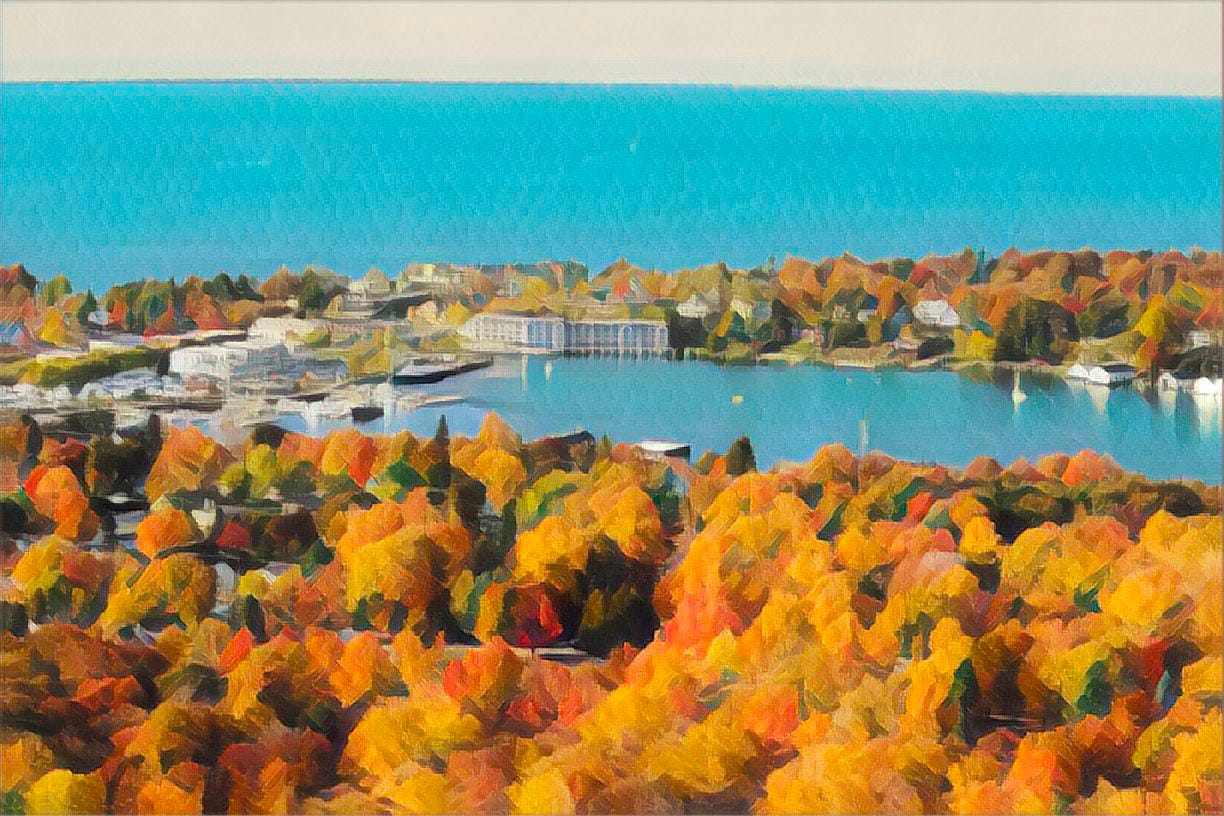
But on the way over here, passing through countryside away from any lake, it was like anywhere else. Some decent houses and farms, some rundown places, and some outright rural slums, moldy, beat-up trailers, junked-up yards, cars up on blocks, cheap plastic toys strewn about, and a few Confederate flags to express the residents’ rebellion against their lot in life. But get close to a lake, and the houses got bigger and newer, many of them second homes, empty half the year.
It was the same in Detroit, the developers and the yuppies had moved in, everyone was making hay, except for the average Joe. For them, life remained a struggle.
What’s the solution? I’ve got no solutions. I’m not an economist or a political scientist. I’m just a cop, and I know one thing: Eventually all the shit society wants to ignore while the well-off are making bank, it all rolls downhill, and the cops — maybe the social workers, too, if any of them survive the tax breaks for the rich — are left to clean it up.
I spent the rest of the day driving more or less aimlessly, stopping once for gas and a pack of Rolaids — heartburn from the sandwich — arriving at Zeke’s a half-hour before the scheduled event.
* * *
I leaned against the corner of the barn, watching the guests for the night’s festivities wander in to the area set aside for the bonfire. In the middle of it, Zeke and his sons had built a complicated structure using pallets, scrap lumber, and split logs. At the top, about six feet off the ground, sat another pallet, as level as they could make it, where the lamp would go. A wall of branches and scrap boards encircled the center of the pallet to keep any glass from flying out and hitting the spectators. That made it look like a crowned head, and I couldn’t help thinking of that old movie, “The Wicker Man.”
The crowd was in a festive mood. They’d brought lawn chairs and coolers. Many had already broken out the beer and the hard cider. Some had those tiki torches, which they erected next to their little encampments. Country tunes blasted from a sound system one of Zeke’s sons had set up. There was a lot of mingling, since everyone seemed to know each other. Kids ran around between the chairs and as close to the unlit bonfire as Zeke and his sons would let them.
“Is that it?” Zeke asked as he walked up to me, eyes on the plastic shopping bag at my feet.
I nodded and he picked it up. “Are you sure you don’t want to tell me where you got it?”
“Yep.” Short and to the point. No room for debate.
He looked in the bag, then turned to one of his sons who was nearby. “Daniel, take this and put it in one of those apple crates. A plastic shopping bag doesn’t seem proper for such a serious occasion. Better drain the oil out of it, or the fire might get too exciting. And be careful not to rub it.” After that, he wandered off to help people park. The acre of lawn in front of the house had already filled.
The sun had set, but it wasn’t full dark yet. In the twilight, I could make out the chief of police and the mayor approaching the bonfire. Reilly noticed me leaning against the barn and came over.
“Thought you’d want to know, we caught the perps who torched Amos’s.”
“Yeah?”
“It was Matt Hall and a friend of his. Hall claims he never would have done it, except you egged him on at the bar the night before.”
“Of course he does.”
The mayor had come over while we talked, and they both looked at me.
“I actually tried to calm that bunch down. Told them I didn’t see a connection between their miscellaneous troubles and the lamp.”
“Yeah, but what about before? Dolores was the only one going on about the lamp and the curse before you got here. Nobody pays much attention to her. But you get a big city detective asking questions, people begin to take it seriously.”
Was that true? Was I the spark that had lit this fire? Seemed like a lot to pin on any one person. “People were angry before I got here. Look at Hank. Everyone wants to find someone or something to blame for their situation. The more their own poor choices are to blame, the more desperate they get.”
“Let’s get this party started!” someone shouted out.
A lot of the tiki torches had been lit and it was nearly dark. The mayor and Chief Reilly went to stand next to Zeke, who welcomed the crowd. Next it was Mayor Sharp’s turn. He talked about the lamp as a symbol of the misfortunes the town had faced and left out anything about a curse. The bonfire represented the dawn of a new day for Lost Lake. I think he even mentioned a phoenix rising from the ashes, but I’d begun to lose track by that point.
I was paying attention to the faces in the crowd, lit up by the torches. Everyone looked serious but hopeful, as if the mayor’s words and the coming bonfire could magically turn the town’s fortunes around. And who knows? Maybe a hopeful, positive outlook amongst the townspeople would be enough to change things for the better. “Manifesting the change you want to see,” I guess Dolores would call it.
“Let’s bring the lamp forward,” the mayor said, and Daniel carried the apple crate up to him. The mayor reached in carefully. He didn’t appear to like touching it either, despite not believing in the curse. He wasn’t quite tall enough to reach up and set it at the center of the pallet, so Zeke’s other son did the honors.
Zeke himself grabbed a tiki torch and stuck it into the center of the wooden structure. I don’t know if the lumber was that dry, or maybe they’d soaked it in kerosene, but the whole thing went up in towering flames in less than a minute, to cheers from the crowd. The lamp didn’t explode or anything exciting like that. I could barely make it out amidst the inferno, its shape distorted by the shimmering heat. After a while the whole structure collapsed, to more cheers.
Someone started a chant, and soon the whole crowd was following along: “Hey-hey! Ho-ho! This bad luck has got to go!” Those in front started marching in a circle around the bonfire. More joined in, forming a second circle going the opposite direction. The music changed to something more hard rock, psychedelic maybe, and the marchers linked hands, dancing in circles around the fire.
A puff of colorful smoke went up from the fire, then another, bringing out oohs and ahs from the crowd. Magnesium shavings, if I had to guess, plus something to add color. Someone was a chemist, but I couldn’t see who was doing it. Off to one side, Chief Reilly and the fire marshal were looking apprehensive.
With the flickering firelight on the faces in the crowd, it was hard to make out their mood. Elated? Rapturous? Vengeful? Demons of many sorts were being exorcised this night.
This was my cue to leave. The vibe was already wild enough. I didn’t want to be around if the crowd went full-on pagan and started looking for a sacrifice.
As I made my way around the dancers and the bonfire, I thought I saw Anne standing on the other side, a still figure apart from the tumult. She looked serious, not to say sad. I walked around the fire, dodging several drunk or tripping people (the intoxicant of choice varying by age), but couldn’t find her. Had it been my imagination? I’d hoped she’d never find out about this strange rite, but in such a small town, how could she not? Even before social media, news spread fast in places like this.
I gave up looking for her and made a social move borrowed from my colleagues back in the precinct: the Irish farewell. I made my way to my Impala, dislodged it with some difficulty from the mass of cars on Zeke’s front lawn, and headed down the long driveway, hoping I could find my way back to town, map service being spotty out here. It was only ten o’clock, but I felt like I hadn’t slept in years. I just wanted to get a good night’s sleep, then put this town behind me in the morning.
Thanks for reading! If you enjoyed this installment, please give it a like, a comment, or share it with your friends. And if you really liked it, I hope you’ll subscribe or upgrade your subscription.
Comments
Nothing yet. Say the first thing.
Sign in to join the conversation.