
Welcome back to Glass Half Full and thanks for reading! It’s a short one this week, and it will be about the same for the next two weeks.
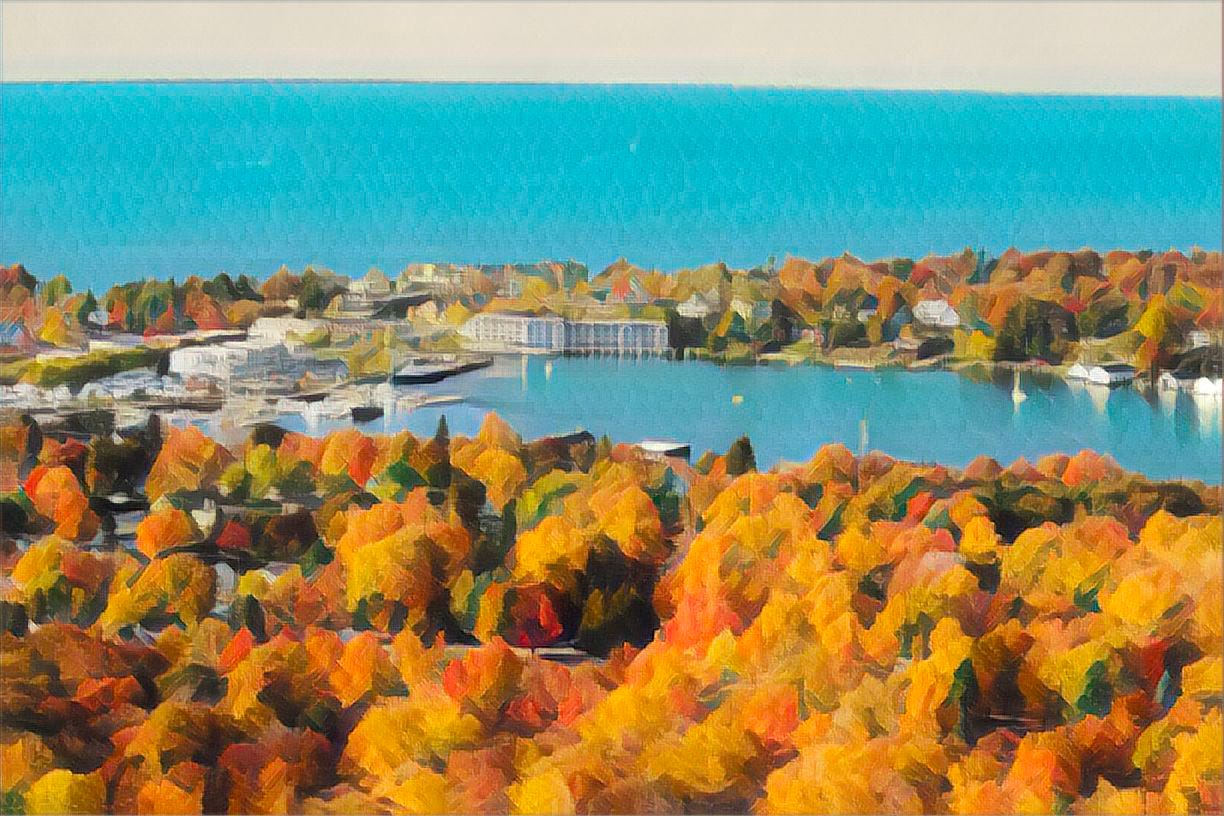
I WOKE UP late and got downstairs right before the nine a.m. breakfast cutoff, feeling bad for keeping Anne waiting that long. She probably had other things to do, especially with new guests coming in later in the day.
She didn’t seem to mind when she poured my coffee. “Trouble sleeping again?”
“More weird dreams.”
“Did you try that technique I mentioned?”
I shook my head. “I thought I heard something. You didn’t hear any noises, did you?”
“All quiet, as far as I know.” She looked at me with concern, but didn’t press it. “Shout when you want a refill.”
After breakfast, I cleared the table and brought the dishes into the kitchen, where Anne was cleaning a counter. “You didn’t need to do that,” she said, taking the dishes from me.
“Save you a few steps. Say, I’m thinking of doing something less active today. What do you suggest?”
“Not up for a paraglide?” she teased. “I usually suggest the history museum, it will really give you a deeper feel for the area. And if you enjoy wine, Sunny Hollow Vineyards has a worthwhile tour.”
“Not a wine drinker myself, but maybe I could buy a couple presents.” I was thinking Joanie might appreciate the thought.
I took Anne’s suggestion, and around eleven a.m. I sauntered down to the history museum, which occupied the stone edifice of the old city hall, across the town square from the library. The admission of twelve bucks seemed a little steep, but what the hell, I was on vacation.
The museum presented Lost Lake’s history in chronological order, as to be expected. First was the glaciers carving the area into hills and lake basins. I skipped over most of that. A brief bit about the local Odawa Indians and how they’d lived before Europeans came. I could have done with more of that.
Then it was on to the settlers, starting with a quick nod to the French, but moving quickly to the heyday of logging in the late 1800s, early 1900s. Some of the photos here were mind-blowing. Timber fellers standing on top of giant logs, hillside after hillside without a tree in sight. All of that white pine gone to build places like Chicago and New York City. It was hard to imagine the forests I’d been walking, biking, and driving through looking like a war zone only a century back.
A section featured historic houses, and there was Wainwright House. Ann had told me Wainwright was her given name, and the house had been built by her great-grandfather. He’d owned one of the big mills outside town, right where Lost Lake emptied into the big lake. He must have been one of the richest men in town. We didn’t get into the twists and turns that led to the house passing down to her, but I knew it wasn’t that usual. Most families with money to build a large Victorian had moved on to more modern styles.
The exhibits wrapped up with a section on the growth of tourism as the town’s main industry, from the ‘20s through the ‘50s. And that apparently was where history ended, 1962. A dead end.
Like my investigation, or whatever it was, which also seemed to have come to a standstill. Maybe it was a reaction to that play last night, but I felt like kicking myself for considering such an absurd explanation. If you squinted, you could make a pattern out of all the bad luck that had befallen the people of Lost Lake. But in the cold light of day, that pattern looked more like confirmation bias and cherry picking.
My vacation seemed to have hit a dead end too, with nothing much left to do here. I supposed I could drive farther along the coast tomorrow, see some dunes, maybe get a last-minute spot on a charter fishing boat. But I really just wanted to skip town before the meeting that night, before Zeke and his friends could pressure me on the whereabouts of the lamp.
I’d decided to head back to my room and pack my things when I came to the last exhibit before the gift shop. Or not really an exhibit, but a display of past history talks at the museum.
One caught my eye, a framed front page from the local newspaper. “Surprising link between whaling and the Great Lakes,” with the subhead, “Lost Lake librarian Marjorie Kendall gives presentation at History Museum.” It said something about the number of newsworthy events in this town that a local history talk merited a photo on the front page. But if not for that color shot, I might not have noticed its most significant detail. There was the librarian, a woman about my age, standing at a lectern, gesturing at a screen showing a 19th-century vessel passing through a lock. A bunch of historical objects covered a table in front of the lectern. A harpoon, of course. A couple pieces of scrimshaw.
And an antique lamp. One with a clear glass chimney and a blue glass reservoir for the oil. I checked the date on the newspaper: October, two years back. I was out of the museum and across the square before I could wonder what the connection between the Great Lakes and whaling might be.
Thanks for reading! If you enjoyed this installment, please give it a like, a comment, or share it with your friends. And if you really liked it, I hope you’ll subscribe or upgrade your subscription.
And remember, if you’d like to read the whole novella right away, it’s available to paid subscribers here. You can upgrade your subscription below.
Comments
Nothing yet. Say the first thing.
Sign in to join the conversation.