
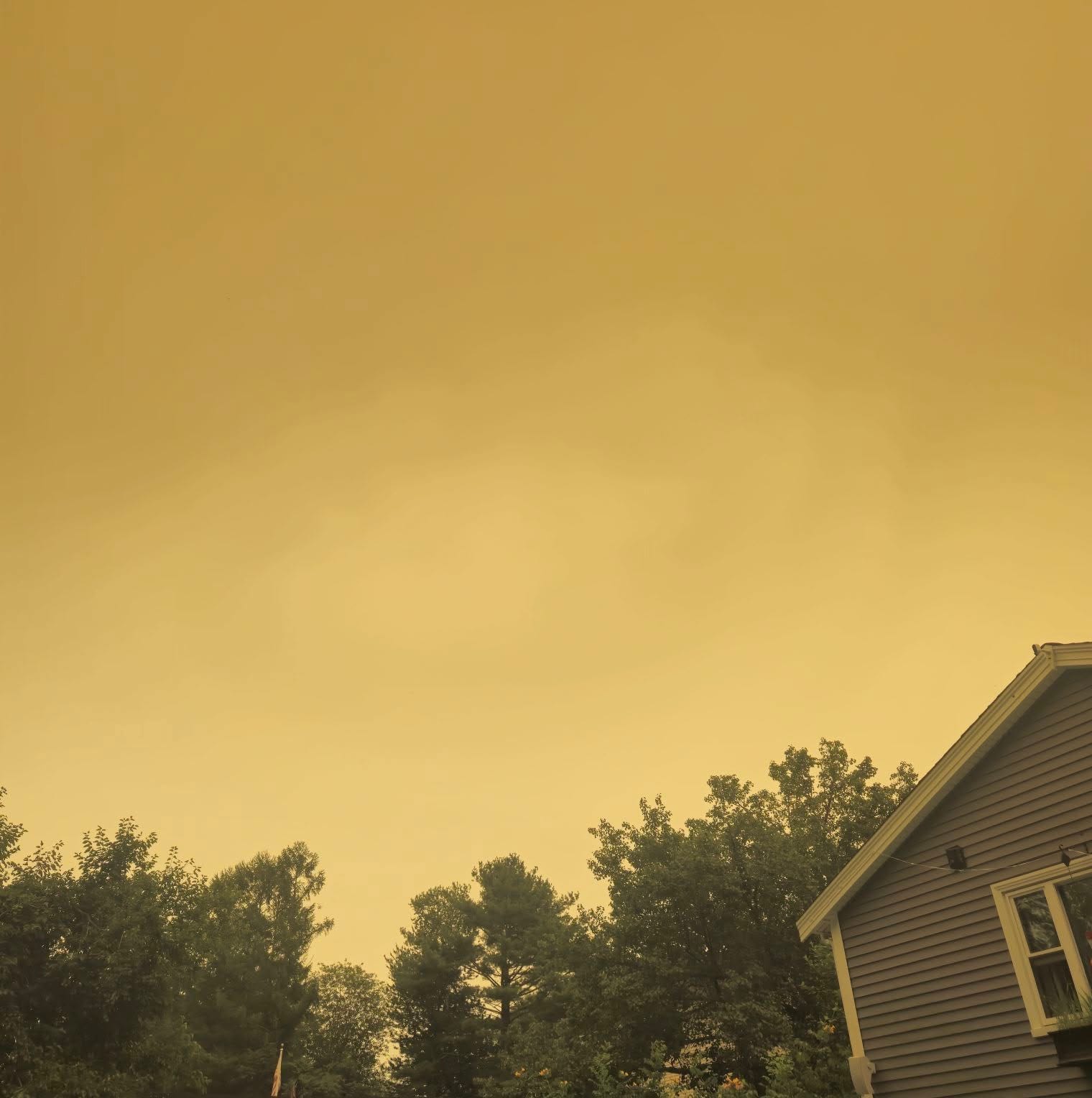
As I’m sure you all observed, the sky looked strange last week, orange and heavy. I first thought a storm was coming, then learned our skies had been officially rated “unhealthy” or on some days “hazardous” due to ash in the air from far-way fires in Canada and Michigan. Apparently, smoky air is among the most dangerous threats we’re all facing as the billionaires hasten us all toward the apocolypse.
Armed U.S. thugs, likely hired for their propensity toward violence (or at least not screened out of ICE for their violent history), killed three Hispanic men last week—two with bullets, one by chasing him onto a highway. The first man killed was a Mexican national who’d lived in the U.S. for 35 years, had three grown, American sons, and ran a construction business. The second was a Columbian man who was here legally and had a job and Social Security number. The third man was also here legally on a tourist visa but got spooked when the vehicle in which he was riding was stopped by ICE; he fled, only to be hit and killed by a semitruck.
To be clear, even if you are in the country illegally, you have committed only a civil violation rather than a criminal offense. If you are caught illegally crossing a border, you can be criminally charged, but if you’re caught just being here, the worst that should happen to you is that you get sent home. Under the first Trump administration, criminal prosecutions for illegal entry were vigorously pursued, resulting in a record 106,312 such prosecutions in 2019. Once Biden was in office, border patrol was ordered to expel rather than refer for prosecution most illegal enterers, causing the number prosecuted to drop to 14,297 in 2021.
Following last week’s murder of three immigrants, did our president offer any reassuring words to help unify us as we mourn the violence of our nation? Of course not. (Even Nixon held a press conference to address the shootings at Kent State, but this president only addressed the nation to tell more lies about election fraud, setting up the challenges he’s planning to make after the midterms.)
Also this past week, confirmation hearings for the horrible Todd Blanche prompted a PSA from the Epstein survivors. (And if you haven’t called your reps to beg them to keep Blanche from being confirmed as our next attorney general, please do it!)
These horrors leave me feeling powerless and enraged—even though I am a penpal to a detained immigrant through VIDA (where you, too, can be assigned a detained penpal) and march against what’s happening as often as I can and make occasional calls to my reps to urge them to keep fighting. But since I can’t change much, I let myself consume a lot of fabulous media.
A friend and I went to our local independent theater and saw a gorgeous documentary, Mary Oliver: Saved by the Beauty of the World—and I am excited to have discovered you can all stream it through PBS.
The documentary, made by a woman named Sasha Waters, is filled with beautiful moving images of the natural world. Even if you aren’t a huge fan of the poet, the film is worth watching—and made me want to be in nature more.

I listened to the audiobook of Gisele Pelicot’s memoir, Shame Has to Change Sides: A Hymn to Life, the life story of a woman who discovered in her sixties that her husband had been drugging and raping her for more than a decade and had brought home more than 200 men to rape her while she was unconscious. (He was caught videotaping up women’s skirts in the supermarket, which led police to seize his computer and discover the many, many video files he’d kept of his wife being raped by strangers while unconscious. He was later discovered to have raped and possibly murdered real-estate agents who’d shown him around a house for rent, as well.) When Gisele realized that everyone who raped her would be able to shield his identity in order to protect hers, she decided to go public to ensure all her rapists would have to face public scrutiny.
The book was translated into English, so Pelicot did not read the English-language version, but extraordinary British actress Emma Thompson did. She does a phenomenal job recounting Pelicot’s rage, bewilderment, and steely fortitude. Sadly, though perhaps not surprisingly, Pelicot’s daughter has estranged herself from her mother, angry that her mother didn’t do more to protect her—even though it appears the only one abused was the mother. But the father did take photographs of his daughter sleeping (and of his daughters-in-law changing), so no one can be sure what horrors he perpetrated. This is a powerful memoir, poignant in its demonstration of how we all want our good memories to stay preserved; I highly recommend it.

I read a horror novel, We Used to Live Here by Marcus Kliewer (pronounced Cleaver), which is currently in development as a film starring Blake Lively as main character Eve. Horror is an unusual genre for me, but the book gripped me the whole time—though then left me bewildered asking what had just happened. Something about alternate timelines, getting stuck in a loop, pretending to be someone you’re not, I don’t know. The basic story has a lesbian couple living in a house they just bought to fix up and flip; Charlie is the take-charge, take-care-of everything partner while Eve is anxious and unsure of herself. One night when Eve is home alone, a family shows up on the doorstep. The dad says he used to live in the house and hopes to show his children around; will Eve let them in? Things get wilder from there. Even though it was a compelling read, I can’t really recommend it. Maybe the film will help make better sense of it all.
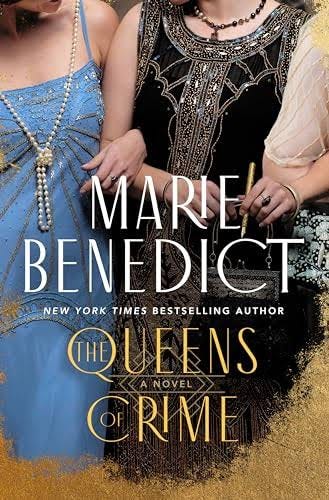
I also read a novel recommended by a neighbor, The Queens of Crime by Marie Benedict. Set in London in the 1930s, the novel tells the story of five women mystery writers who band together to solve a murder in order to prove to the boys’ club of detective writers that they should be taken more seriously. The novel is a blend of history and fiction but features five main characters based on real writers: Agatha Christie, Dorothy Sayers (the book’s narrator), Ngaio Marsh (a New Zealand writer who dressed often in men’s suits), Baronness Emma Orczy, and the baby of the group, Margery Allingham. While I of course appreciate the feminist spirit of the story, I felt the author underestimated readers’ ability to understand women’s lot in the 1930s. A lot of the cultural proscriptions seem overly spelled out. For example, the women realize their murder victim must have been pregnant when she is found in a pool of blood with no visible injuries. Dorothy reflects: “Never in my wildest imaginings did I think these proper women would launch headlong into a discussion of such taboo topics—subjects the male journalists and police and governmental authorities have most studiously avoided.” I admire Benedict’s creativity in putting this story together but if you don’t love who-done-its, you might not love this book, either. (I’m glad to have read it, but I didn’t love it.)

I had never read an Agatha Christie novel when my wife and I recently saw the play Agatha Christie’s Murder on the Orient Express at Mt. Holyoke, which has revived its summer theater program after a 25-year hiatus. I was surprised the show was so comical; I hadn’t realized the play would be farcical, like the Knives Out movies. Did Agatha Christie write her mysteries and play her detective Hercule Poirot for laughs? Google suggests he is eccentric—overly fastidious and vain, a bit of a hypochondriac, but that we are not meant to laugh at him but rather to appreciate his extraordinary genius in contrast to his eccentricities. All I have learned from this bit of research is that I will likely not be interested in reading any Agatha Christie novels. Still, we love live theater and enjoyed the show.
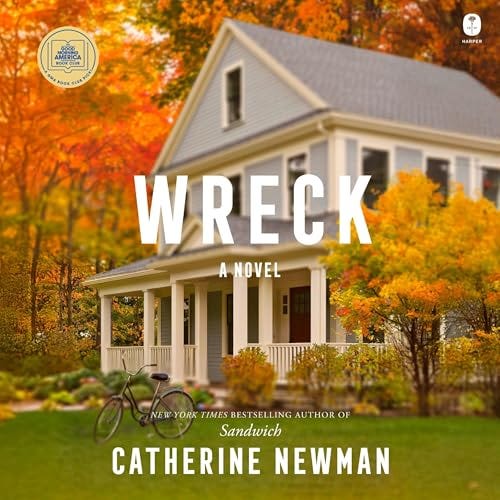
I listened to a five-hour audiobook that I absolutely loved, Wreck by Catherine Newman, author of its prequel, Sandwich. I 100% related to the book’s narrator, a mother of adult children grappling with health concerns, phone bots, Buy Nothing posts, and endless anxieties. The mother’s relationship with her children is hilarious and tender, and her inner monologues are smart and funny. Highly recommend. Plus, as I listened at 1.5x the normal speed, this was a very fast read.
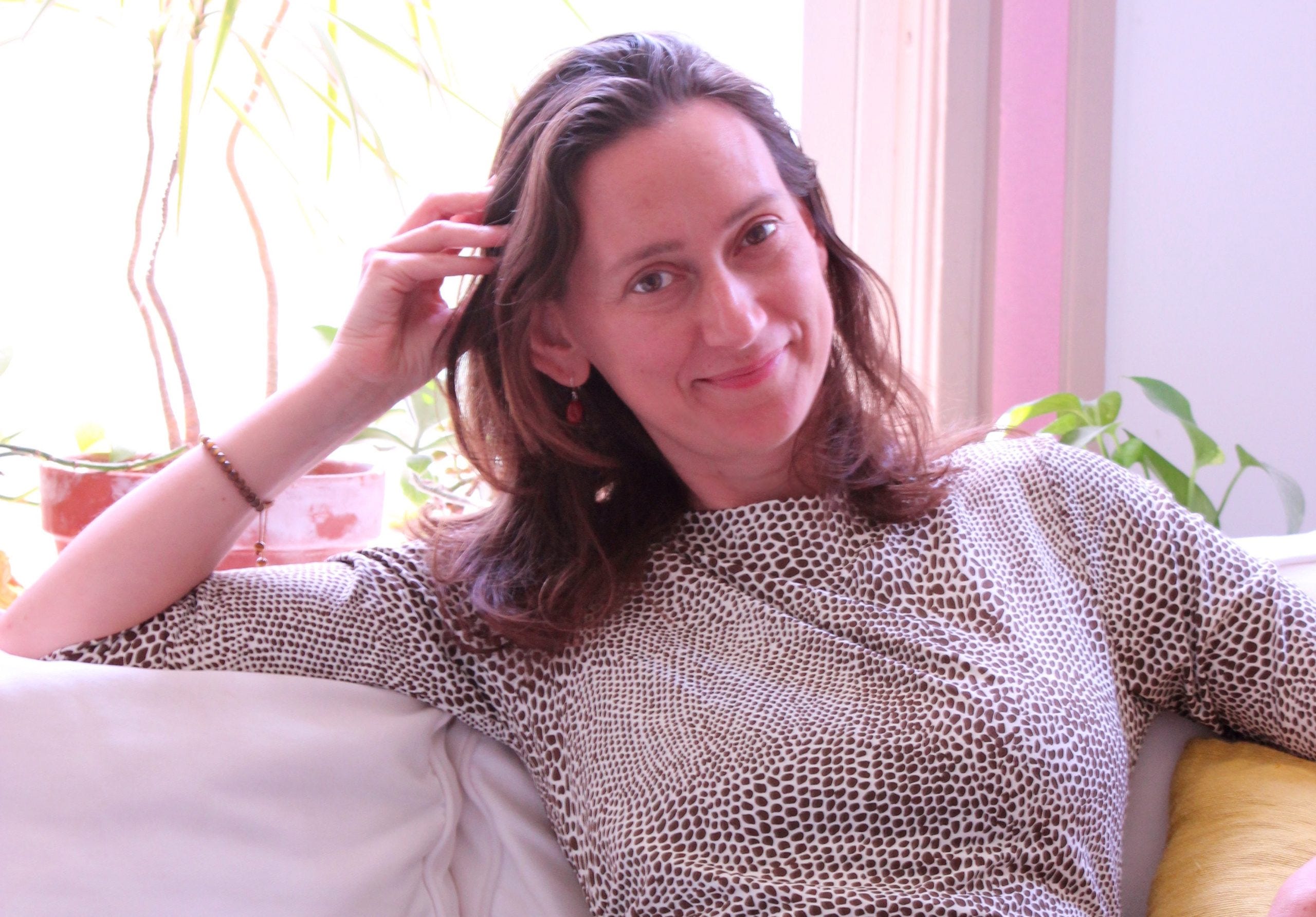
Finally, I am taking part in two online workshops that I am greatly enjoying. First, Nadia Colburn (above) is offering a master class in poetry for free in hopes you will sign up for her longer poetry class (which is out of my price range but I’m sure worth every penny). I love the spiritual nature of the poems she chooses to share and the prompts she gives. The course inspired me to write a poem about how I’m a bridge between my forbears and progeny, which I’ll share at the end of this post. I have taken other courses with Nadia, and she emphasizes mindfulness and paying attention, two lovely ways of moving through the world and seeing poetic opportunities. You can watch the masterclass here for one more day here.
The second workshop takes place over six sessions offered in as many weeks, the first session of which was last week, and is offered by life coach to estranged parents and grandparents Barbra Drizin. I love how heartfelt, well researched, beautifully organized, carefully presented, and deeply inspiring Barbra’s programs are. This one is called Sovereignty Sanctuary and encourages us to take charge of our own peace of mind, a real challenge for any parent who has been cut off from a child or grandchild. In last week’s session, Barbra talked about how different people carry light or darkness, as we can clearly see when we look at various colleagues or neighbors. She asks if we want to bring more light to the world or more darkness, if we want to spend our time focused on our loss or focused on the beauty and love we can still embrace in our lives. She then talked about agency, our inner authority over our own emotional regulation and self-respect. The workshop was wonderful and you can still join (and get a recording of the one week you missed) and enjoy learning with me about how to choose to be a light carrier, even when you’re experiencing a lot of dark disappointments in your life. Learn more here: https://barbradrizin.as.me/SovereigntySanctuary
I keep painting and repainting my large canvas ocean scape. Now I’ve started to watch Youtube videos on how to paint waves… and clouds… and beaches. I love having this art project in progress.
What have you been creating or consuming? Please tell me in the comments. I just started Yesteryear, which is gripping from the get-go. I look forward to talking more about that book next time.
No posts
Comments
Nothing yet. Say the first thing.
Sign in to join the conversation.