
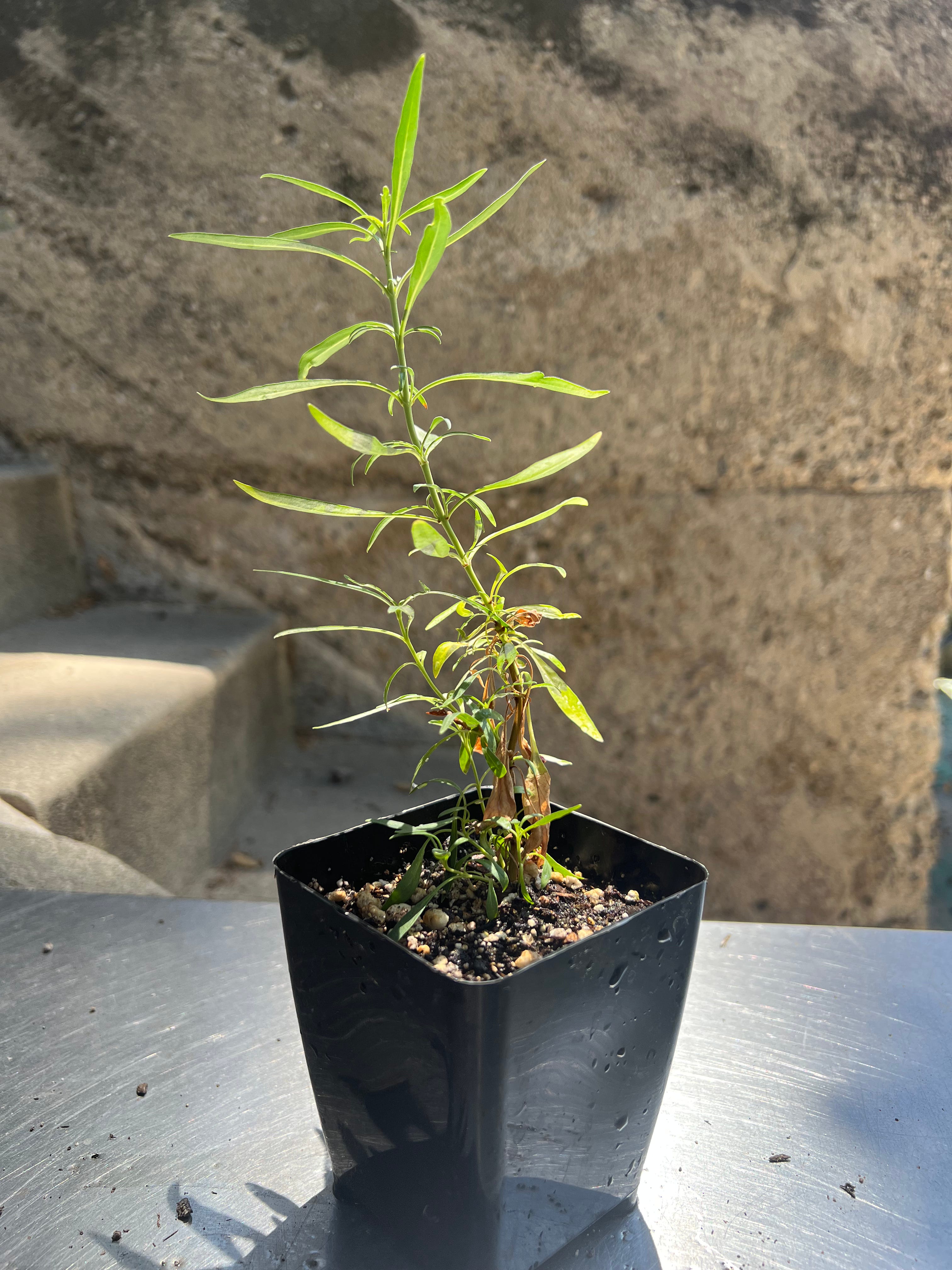
Back in November, when the days were short and mercifully cool, you added some nursery-grown California native plants to your garden. But it’s now August, and the days have grown longer and unmercifully hot. That means having to grapple with what is, perhaps, the most maddeningly opaque conundrum with which native gardening in California presents you: when it comes to getting these new plants through their first summer in the ground, how the hell should (or shouldn’t) you water them?
Our local flora are uniquely adapted to California’s Mediterranean climate, with its cool, wet winters and hot, dry summers. That’s why most plants native to the region go into dormancy during the summer, enabling them to survive our months-long, cyclical summer drought with virtually no precipitation. From a California native plant’s perspective then, the season might be expressed mathematically as:
Long Days + Elevated Temperatures + Drought = Summer
If we were to alter this formula by replacing “Drought” with “Moisture,” we’d get something like this:
Long Days + Elevated Temperatures + Moisture ≠ Summer
Which ultimately leads to this rather ominous equation:
Summer + Moisture = Dead Native Plant
If you’ve been gardening with native plants in California for any length of time, chances are you’ve found out, perhaps the hard way, that adding “Moisture” to “Summer,” while a necessity, also poses a risk to new plantings. But why?
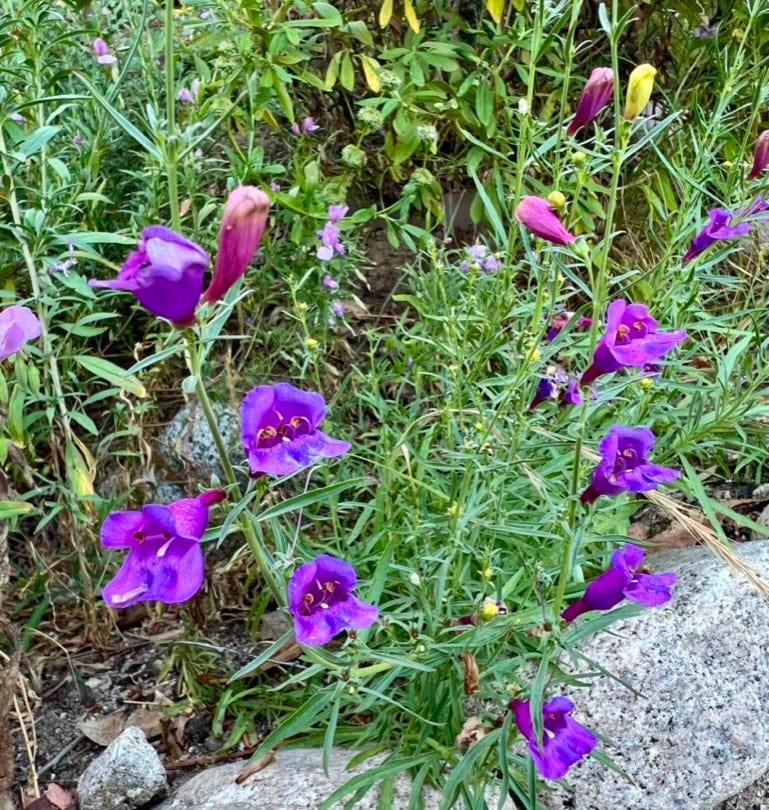
Let’s say you’re a local chaparral species like Foothill Penstemon (Penstemon heterophyllus) who started life as a seed on a dry, rocky slope somewhere in the San Gabriel Mountains. In that case, your system of roots has been able to spread freely underground in exact proportion to your above-ground growth from the moment of germination. In other words, your root system has been able to freely expand in every direction and as a result, it’s always been proportionate to your overall moisture needs at each given stage of your development. That’s why you’re still alive after whatever brutal heat waves have come your way.
But what if you’re a Foothill Penstemon who started life within the confines of a plastic nursery pot and one day someone comes along and pops you into the ground somewhere, willy-nilly? In that case, relative to your above-ground size, you simply don’t have the kind of wide-ranging root system you’ll need to survive a summer in the ground without extra water. You may have a lot of roots, but they’re all crammed into a relatively small area, limiting your source of potential moisture to a few square inches below ground. You may have been planted in the fall or winter, when rain events might naturally be expected and temperatures are cooler – both forgiving conditions that lent you a distinct advantage and encouraged your roots to venture into the surrounding soil. If so, hurray for you. But that’s all just a distant memory. It’s now the height of summer, and in a self-cooling process known as transpiration, you’re becoming increasingly stressed as you release water vapor through the stomata in your leaves to the hot, dry atmosphere without the kind of root system you’d need to replace that lost moisture as it evaporates.
It is at this precise moment that you find yourself caught in a potentially deadly paradox: you have an abnormally constrained and therefore underdeveloped set of roots. As a result, you need some kind of artificial watering to survive summer’s intense heat and drought while you’re establishing, but that same watering could just as easily kill you. But how?
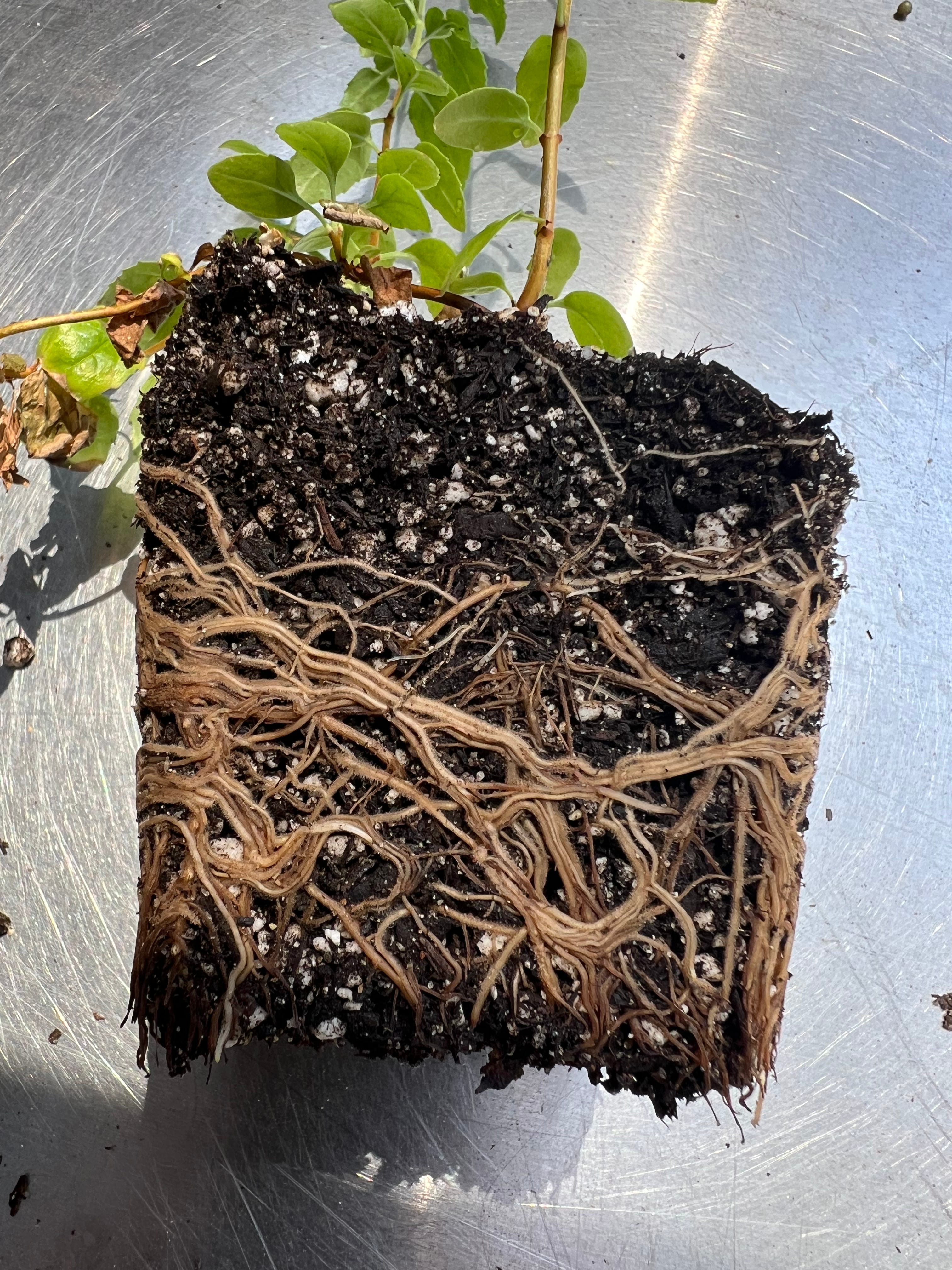
When we artificially moisten warm summer soils that would otherwise remain dry, we can unwittingly awaken a host of naturally occurring pathogens that normally lie dormant in California’s dry summer soil. These include such lethal fungi and molds as Fusarium, Pythium and Armillaria mellea, all of which attack and kill their host plants via their roots. What these organisms also have in common is a need for simultaneous heat and moisture in order to thrive, a combination that pretty much describes the environment in and around the root zone of a plant when you water it in the summer.
So it’s not the water that kills the plant; it’s the nasty pathogens the water brings to life in the surrounding soil that do the dirty work.
If it’s starting to feel like gardening with California native plants in the summer puts you in an untenable position, that’s because it does. You’re having to care for a baby native plant with an insufficient root ball who’s still basically on life support – in triple-digit weather, no less – and the one thing keeping the patient alive (water) is also the one thing most likely to lead to its untimely end. In all honesty, you could be forgiven for thinking that it may be time to just plant some Begonias from Home Depot, water the shit out of them and call it day.
Before you commit such an atrocity, however, I am here to tell you that it’s not all that difficult to prevail in this game of chicken. Actually, the overall strategy is quite simple: give recently planted natives just enough water to survive – but not enough to create the conditions that might activate deadly soil pathogens.
Sounds easy enough, right? But how, exactly, do you go about threading this particular needle? How do you avoid killing your baby plants with kindness?
Water Deeply
Whenever you do water, it’s always best to water deeply. Roots have an uncanny intelligence and will follow moisture wherever it leads. (They’ll even grow upward, if your watering is typically shallow.) Ideally, you want to encourage your young plant’s roots to penetrate to the cooler, nether regions of the soil where it’s less likely that the added moisture will trigger a pathogenic event.
Here in the LA Native Plant Source garden, we try to water to a depth of around 16” or more each time we irrigate any plant – new or established. An inexpensive moisture meter that can probe at least a foot underground will come in handy. (In fact, it’s kind of a necessity. See the “Size Matters” sidebar in “Woolly Blue Curse” for more on moisture meters.)
I should also mention “The Curse of the Dry Root Ball.” The soil-free, highly porous planting medium in which your new plant’s root ball has formed becomes somewhat hydrophobic when it’s allowed to dry out and will almost always lose moisture more quickly than the soil surrounding it. Directly after watering, your soil meter may give you a “Wet” reading from the true soil in the plant’s periphery, but may still read “Dry” when you insert it into the planting medium at the center. Be sure to double check! If the root ball is still dry after you’ve watered to a depth of about 16 inches, let your hose trickle right over it for a minute or two, allowing it to soak up the water as if it were a sponge. (This presupposes that you’re watering your new plants by hand. See “Hand Job” for more on the joys of standing around in your garden with a hose.)
Water and Wait
After deep-watering, the length of the interval before you water again is probably the most critical factor when it comes to a new plant’s first-summer survival. Say the moist conditions in the root zone following irrigation have activated some virulent soil pathogen. As the soil dries out in between watering, one of the two requirements for its survival is removed, returning the little monster to dormancy and hopefully saving the life of the plant. In other words, the intervals between watering need to be long enough to short-circuit a given soil pathogen’s lifecycle. Depending on the drainage capacity of your soil (clay/loam versus sandy/granitic) those intervals could be anywhere from a couple of days to a week or more during the summer.
Of course, the trick here is that you can’t let the soil stay dry so long that you deprive the plant of the minimum amount of water it needs to survive. With each “Water and Wait” cycle, you’re trying to hit that sweet spot – a long enough pause to starve the pathogens of moisture, but not so long that you kill the plant in the process. This balancing act requires careful attention, including frequent visits to the planting site to monitor the conditions on (and in) the ground.
Don’t be Fooled
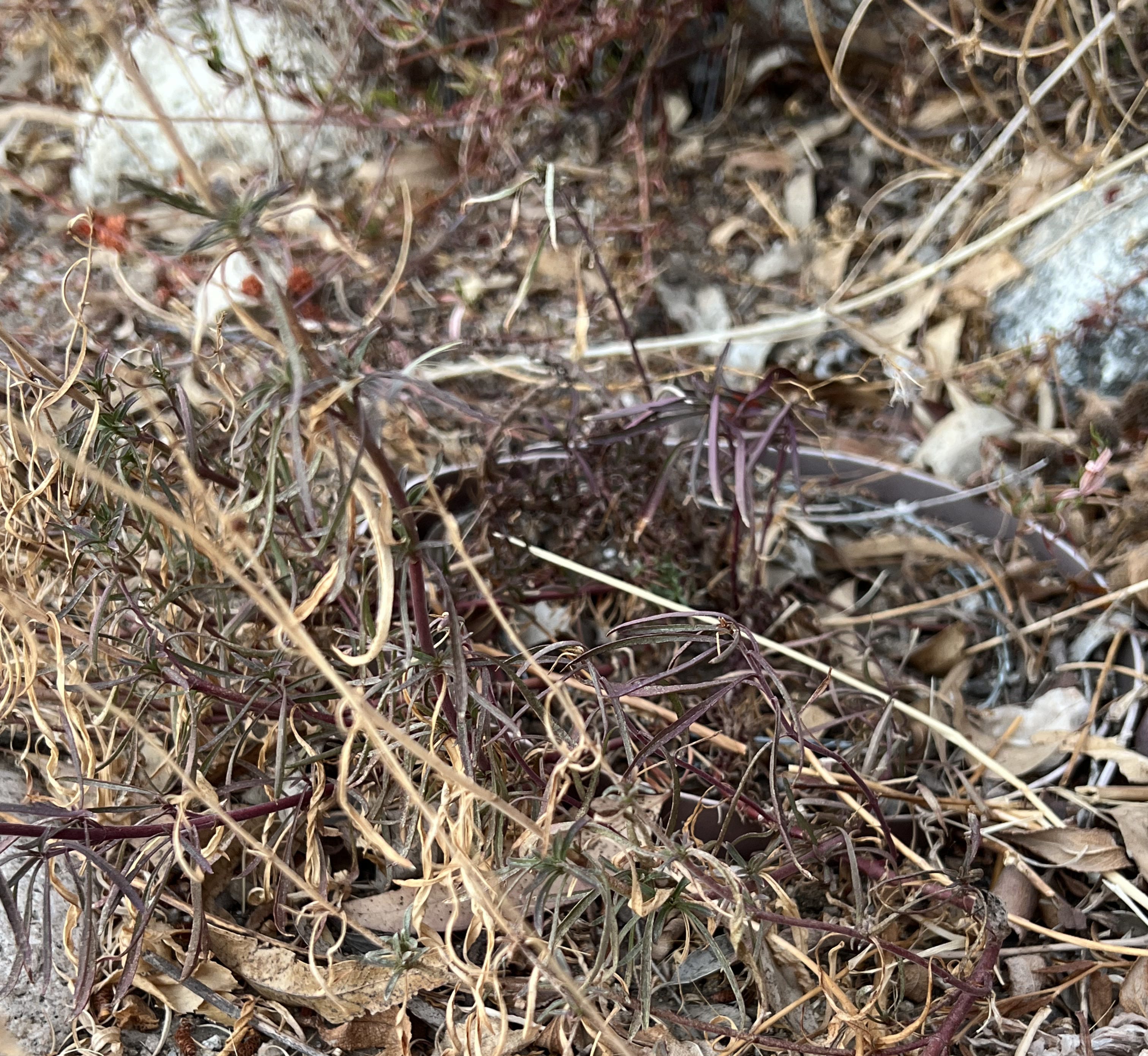
Your new plant will most likely begin to look a little beat up as the summer progresses. You don’t need to keep it as artificially green and plump as it was when you got it from the nursery. A little drought stress is to be expected, especially for plantings in full sun, and it doesn’t necessarily mean the end is near. Allowing some measure of drought stress is actually beneficial, as it gives the baby plant an opportunity to gradually acculturate to its future, water-free summers.
If in doubt, feel the leaves at the uppermost tips of the plant. Even if they’re not exactly green, as long as the leaves there are even the least bit pliable, the plant’s probably still alive. You can also use a fingernail to gently scratch a small spot on a lower branch in the case of woodier specimens in order to check for signs of life. If you see green, the plant is still in the game; if all you see is brown, say a prayer and call your rabbi.
Dormancy and Duration
At this point, you may be thinking, “Wait a minute. I thought you said most California native plants go dormant during the summer. Why would you water a dormant plant?”
Good question. Strictly speaking, it’s true that a dormant native plant with an established root system doesn’t need any extra water in summer. But despite being an integral expression of its true nature, summer dormancy is a luxury a recently planted, pot-restricted native plant simply can’t afford. When you think about it, a typical nursery plant has never known a day without all the moisture it could possibly need, so its experience of dormancy is still somewhat theoretical. (An actual experience of the conditions of summer (heat + drought) might allow a nursery-grown plant to enter its natural summer dormancy, but in that case, the dormancy would likely be, um, permanent.)
So, how long before you can take off the training wheels? After planting, an extremely “drought-tolerant” genus like Eriogonum (Buckwheat) will be ready for full summer dormancy in about 45 minutes. Others, like Diplacus (Monkeyflower) may take several years before they’re ready to fly solo. In general, however, it’s safe to say that just about any native species will need at least two summers of extra water before you allow it to experience a completely dry summer. (Note that the irrigation schedule for the second summer will usually be about half of what it was during the first.)
Water Early
For obvious reasons, early morning, when conditions are coolest, is the best time to water a young native plant during the summer. However, don’t allow this bit of advice to deter you from watering an extremely drought-stressed plant at noon if that’s your only option. It may be in “Hail Mary Pass” territory, but I’ve found that this aspect of summer watering protocol is at least somewhat forgiving and that, in such situations, it’s better to take the risk of watering than not.
Stay Ahead of Heat Waves
If you wait until it’s 105 degrees before you water, you’ll find yourself in a situation where you’re having to add moisture to the root zone of your new plants when soil temperatures are at their highest. Try to stay one step ahead of the next heat wave by regularly monitoring your 10-day weather forecast with a reliable weather app. When you see a spike in temperatures on the horizon, make a plan to water deeply well before it gets too hot.
Control Mulch
If you’ve applied a thick layer of imported mulch around your new plant, make sure you keep it pulled away from the immediate vicinity of its root crown. As we all know, organic mulch can help to retain moisture and keep the soil cooler, but it also sucks up water when you irrigate and you don’t want to subject the root crown to sustained moisture in the form of soggy, anaerobic mulch. It’s therefore best to maintain a mulch-free zone of about 8-12” around new plants. Better yet, switch to a mineral mulch of small rocks or chunky gravel, which can be applied pretty much right up to the root crown. I’ve found it to be far more effective than organic mulch when it comes to regulating soil temperature, and rocks obviously don’t share organic mulch’s tendency to stay damp. Lean-soil-loving chaparral species, in particular, will also appreciate the absence of all that foreign, overly enriching organic material.
Know Your Customer
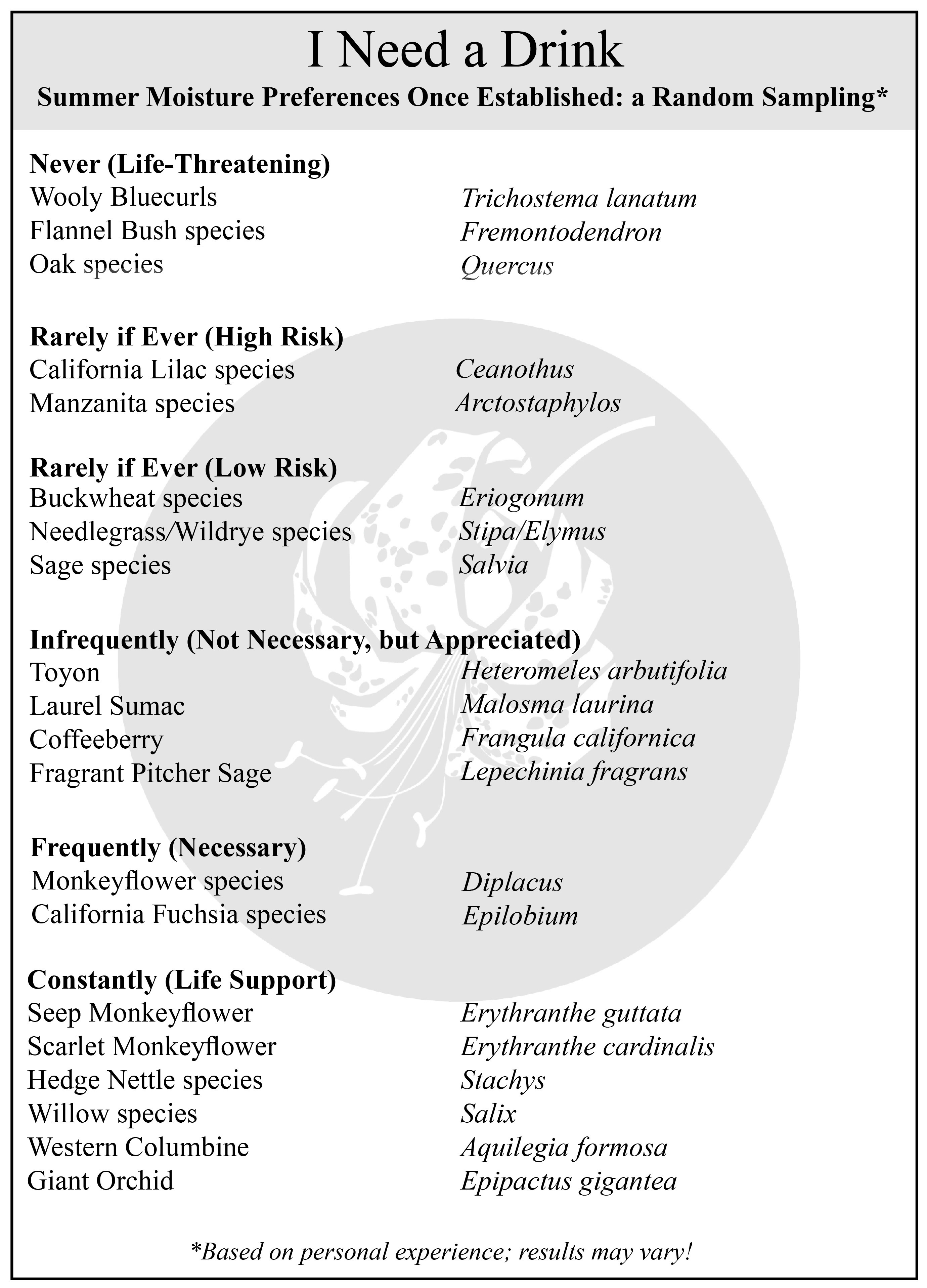
Given that there are over 6,500 discrete plant species native to the California Floristic Province, it follows that watering any one of them in a garden setting is not a one-size-fits-all proposition. Some native plants will not only tolerate regular summer water – they require it. Others may quickly shrivel and die after just one ill-timed irrigation. (I’m lookin’ at you, Woolly Bluecurls.) Knowing which is which is therefore critical. Generally speaking, a given species’ moisture preferences once established can offer some guidance as to how frequently it may need watering during its first summer.
Despite all the above do’s and don’ts, watering a young native plant in summer shouldn’t make you feel as if you’re defusing a bomb. These plants want to survive, down to their last strand of DNA, and despite the built-in disadvantages of going from a pot into the ground, most of them will make it, given half a chance. You may lose one now and then, (we all do) but once you get the hang of it, you’ll be successfully watering your new plants through their first summer like a pro.
Comments
Nothing yet. Say the first thing.
Sign in to join the conversation.