
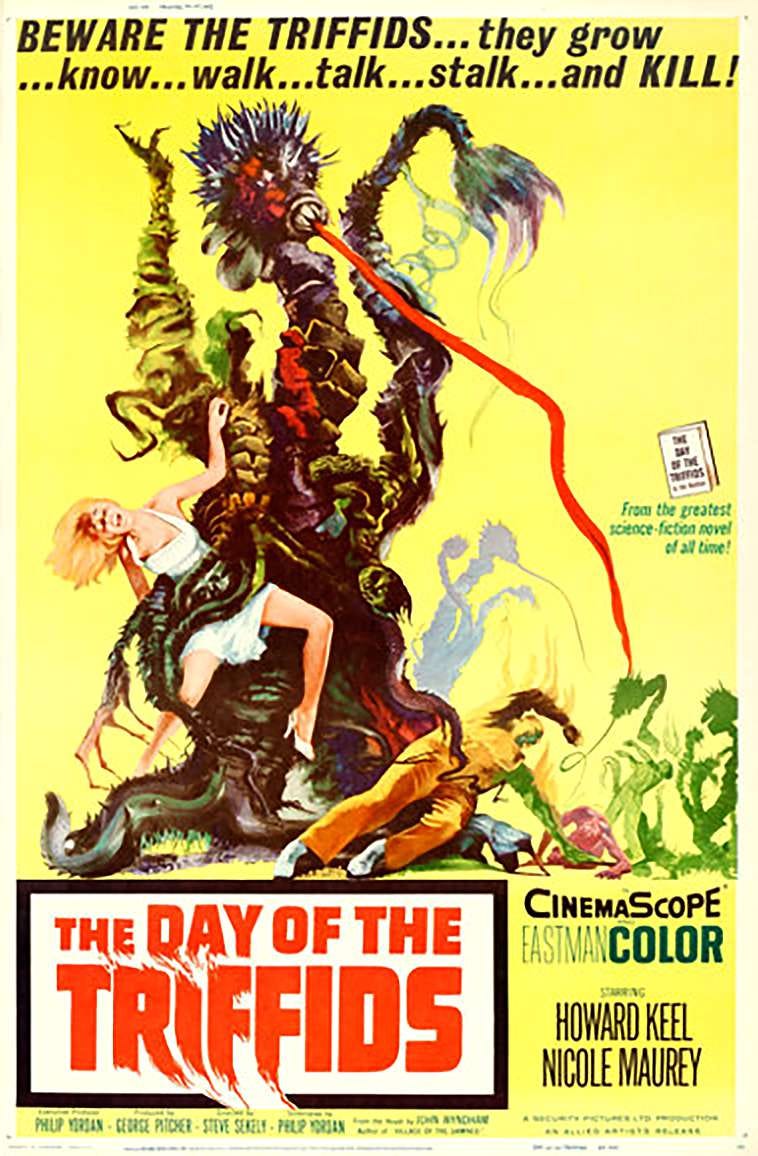
In “The Day of the Triffids,” a justly forgotten B-movie from the 1960s, a massive meteor shower causes a mutation in “Triffids,” a (fictional) carnivorous plant species, enabling them to uproot themselves, move about at will and start eating people. (These things happen.) Part of the frisson of the film, such as it is, derives from a central, transgressive notion: that a plant – a life form widely considered to be wholly benign – could somehow pose an existential threat. Here in California, where there are enough exotic, noxiously invasive plants infesting our wild landscapes to fill several Saturday matinees’ worth of shlocky sci-fi flicks, such a proposition doesn’t seem all that far-fetched. The list of these “escaped exotics” is, unfortunately, a long one, and while it may not be the most widespread or destructive among them, one of the absolute worst, in my opinion, is Sticky Snakeroot.
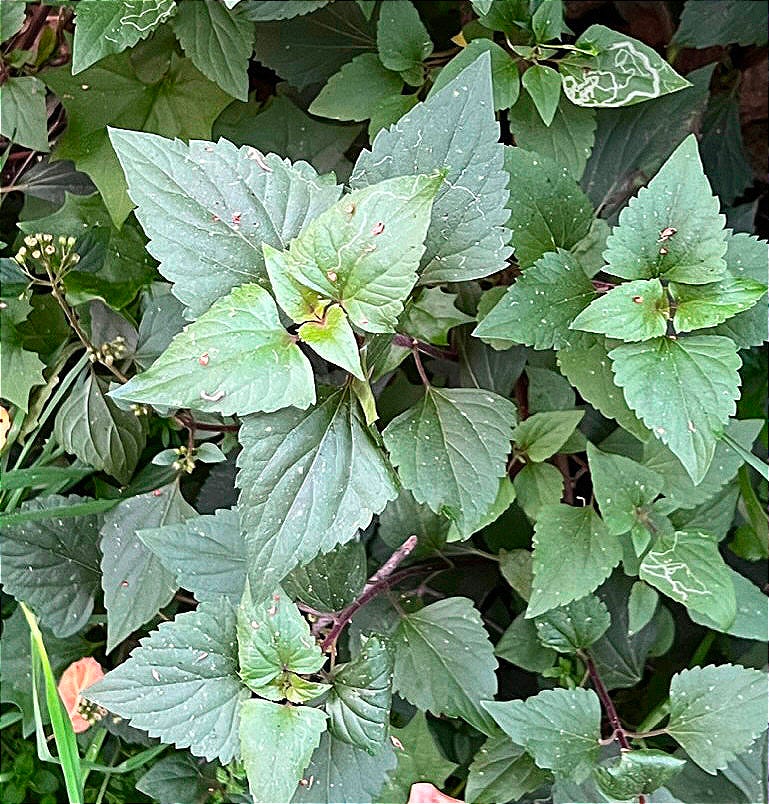
Also known as Eupatory or Croftonweed, Sticky Snakeroot (Ageratina adenophora), is a species in the Asteraceae family native to Mexico (it’s also called “Mexican Devil”). Like so many other frivolously imported species, Sticky Snakeroot was introduced to California as an ornamental plant. It soon escaped the nurseries, spreading quickly into the wild with predictably disastrous results. You’ll now find it on the California Invasive Plant Council’s list of destructive non-natives, but Sticky Snakeroot is, in fact, a global scourge, considered a noxious weed in Hawaii, as well as Australia, New Zealand and parts of Asia.
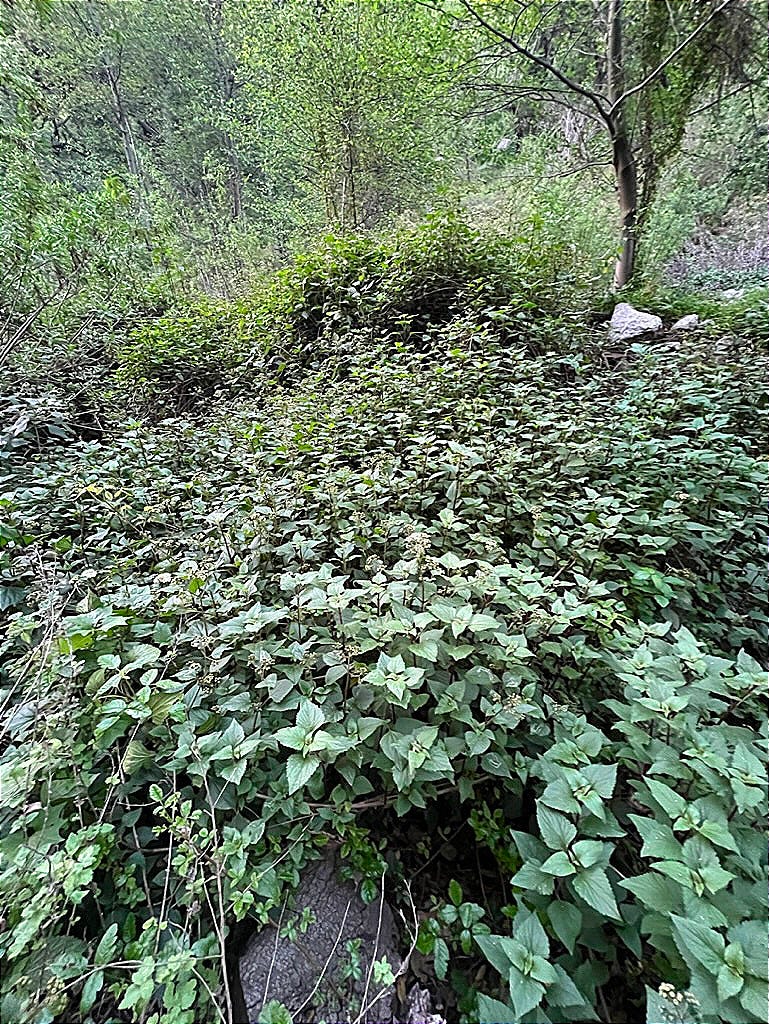
A moisture-loving plant, Sticky Snakeroot subjects creek-beds in our local canyons to literal strangulation, crowding out the native flora as it forms a dense, suffocating monoculture. As if that weren’t bad enough, Sticky Snakeroot also exudes allelochemicals that discourage other plants from growing in its vicinity. This erasure of biodiversity impacts native wildlife as well, disrupting the web of resources upon which it depends. It’s even poisonous to most domestic livestock and has been shown to cause liver damage in laboratory rats. What’s not to like?
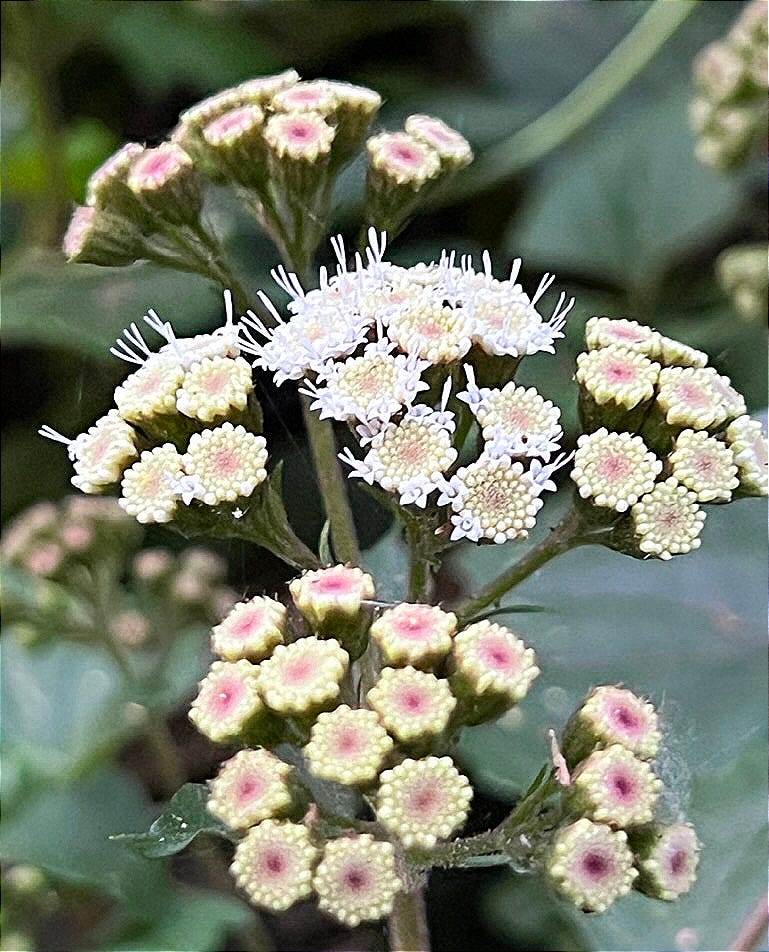
Heavy rain and subsequent flooding will occasionally sweep away masses of shallow-rooted Sticky Snakeroot, providing a breather for struggling canyon floors, but not for long. Just one surviving plant will generate literally tens of thousands of wind and water-borne seeds.
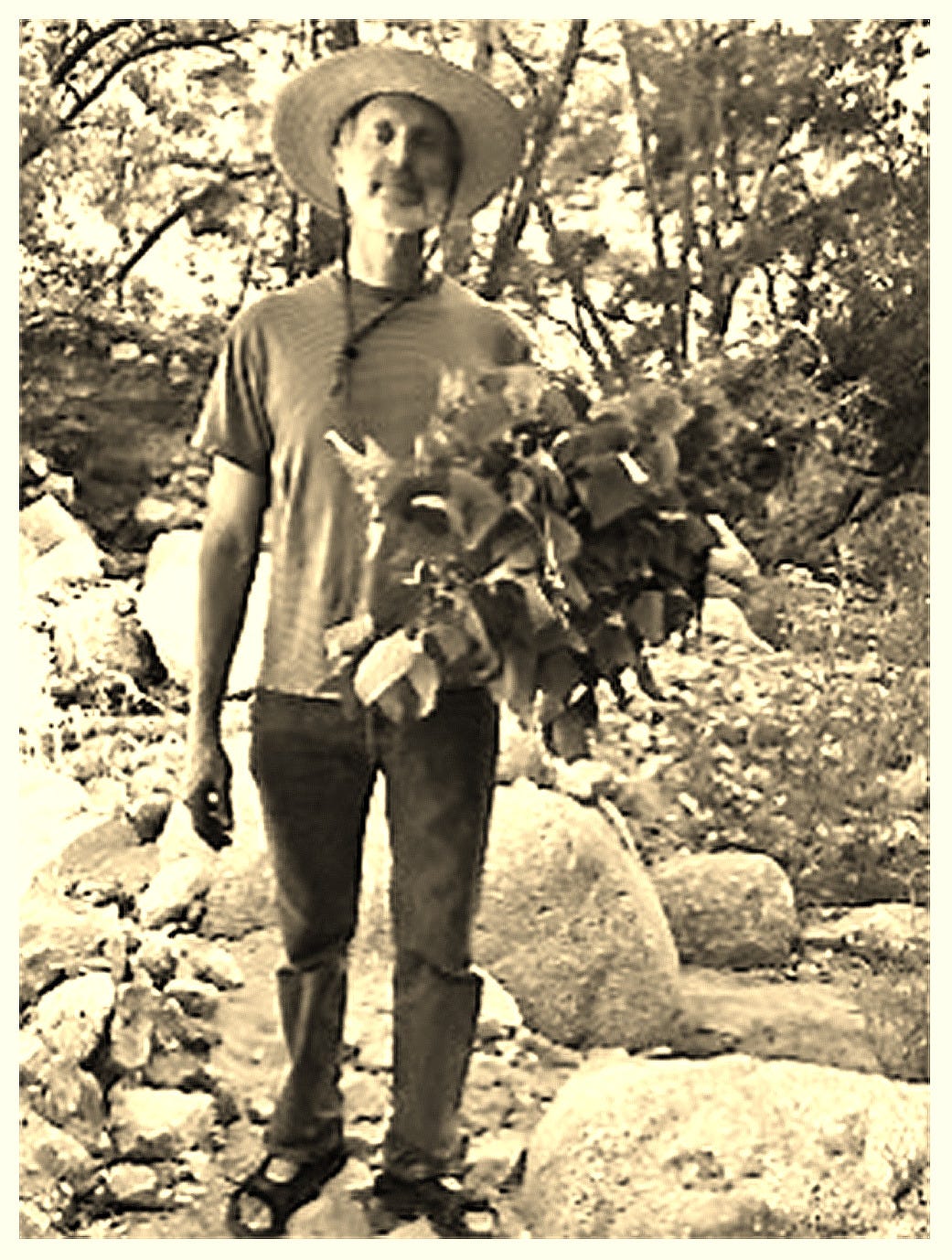
While Sticky Snakeroot is classified as a “noxious weed” in the USDA’s exhaustive “San Gabriel Mountains National Monument Management Plan,” if anything is being done to remediate this extremely aggressive species as it overruns every riparian habitat in the forest, it’s hard to see that those efforts are having much of an impact. In all honesty, I’d be very surprised to learn that the US Forest Service is doing much of anything to control the numerous invasive plants currently plaguing public lands. I’ll admit that the vacuum created by this lack of resources or commitment and the sheer frustration of watching Sticky Snakeroot rampage through the canyons without anyone in charge lifting a finger, has rendered me something of a vigilante. (If you encounter a madman standing in a creek, ripping out clumps of Sticky Snakeroot with his bare hands on your next hike, that’ll be me.)
This is usually where someone in the studio audience raises a hand and asks, “Why would you pick on an innocent, little plant like that? Don’t you know that all plants are inherently good?”
“Yes,” I might reply, quoting Dorothy Parker, “and I am Marie of Romania.”
As a longtime advocate for native plants, I encounter this deeply embedded bias all the time. Triffids notwithstanding, there are apparently a lot of people out there for whom it is an outrage – an outrage! – to suggest that a plant, any plant, could possibly be an agent of destruction. This somewhat naive Weltanschauung, or philosophical worldview, extends to the domestic sphere, where some gardeners will respond to the suggestion that their plant choices have consequences with any number of variations on “You can take my Fountain Grass when you pry it from my cold, dead hands.”
Case in point: I was attending a gathering at a cabin in Millard Canyon. There I was, describing the horrors of Sticky Snakeroot in excruciating detail to a hapless, fellow guest I’d managed to corner. Standing on a deck overlooking a dense mass of the very plant in question, I had just finished describing the cataclysmic impact of Sticky Snakeroot on the creek below when the poor guy awoke from his understandable stupor long enough to rise to the plant’s defense.
“It’s just trying to live,” he muttered.
Undeterred, I replied with an utterly brilliant analogy: “Oh, really? Well, in that case, if you ever find yourself battling a life-threatening bacterial infection, I assume you’ll refuse antibiotics. After all, antibiotics would kill the bacteria and they’re just trying to live.”
Actually I didn’t say that. I thought of saying it a week later.
But really, he was right. There are no “bad plants.” Sticky Snakeroot is just “trying to live” in whatever environment it happens to find itself. It didn’t ship itself hundreds if not thousands of miles from its natural range, a place where it no doubt fit in because it had co-evolved with other species in the same biome over eons. A human being, armed with an overdeveloped prefrontal cortex, opposable thumbs and unfathomable stupidity, has to decide that it’s a good idea to move a plant halfway around the world just for kicks, oblivious or indifferent to the possibility that it might find its way into vulnerable ecosystems where it could disrupt local habitats by displacing native plants.
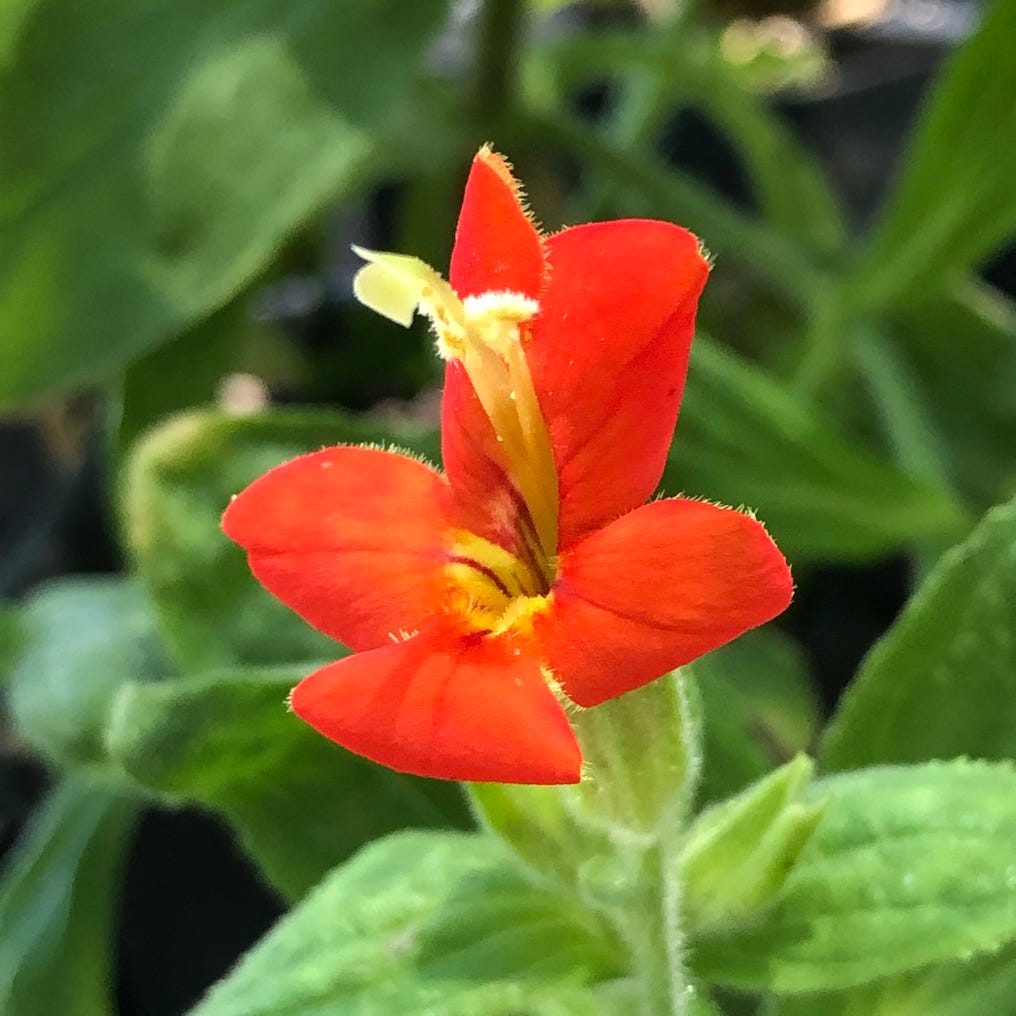
So, while I agree that we shouldn’t project a human capacity for malign intent onto a plant nor hold escaped exotics “personally” accountable for the destruction they cause, let us not shed a tear for Sticky Snakeroot. For that matter, let’ hope for a greater organized effort and increased allocation of resources to control Sticky Snakeroot and other escaped exotics – Cape Ivy, Fountain Grass, Spanish Broom, Pampas Grass, Castor Bean, Tree of Heaven and Tamarisk to name just a few – and for a limit to their unmeaning depredations. Let’s save our sympathies for the creek-loving Scarlet Monkeyflowers and all the other embattled, essential, native plants who are also “just trying to live.”
Comments
Nothing yet. Say the first thing.
Sign in to join the conversation.