
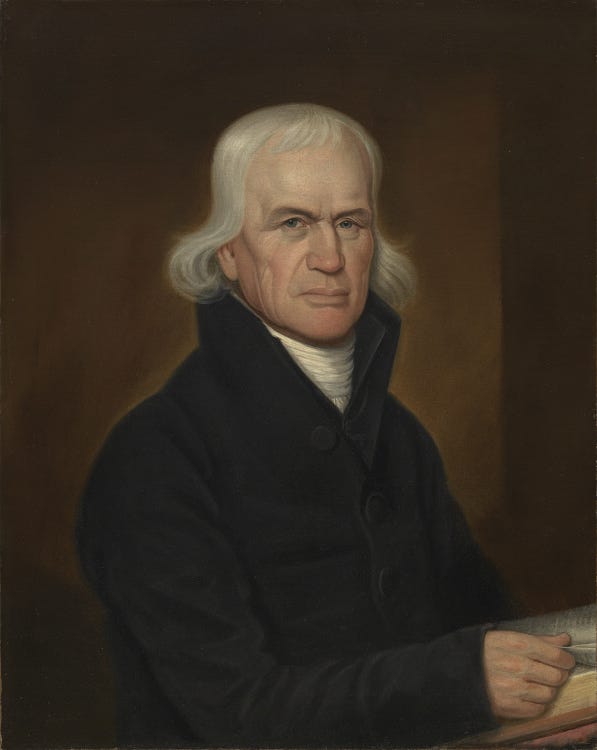
Luke 10:1-11, 16-20 (CEB)
After these things, the Lord commissioned seventy-two others and sent them on ahead in pairs to every city and place he was about to go. He said to them, “The harvest is bigger than you can imagine, but there are few workers. Therefore, plead with the Lord of the harvest to send out workers for his harvest. Go! Be warned, though, that I’m sending you out as lambs among wolves. Carry no wallet, no bag, and no sandals. Don’t even greet anyone along the way. Whenever you enter a house, first say, ‘May peace be on this house.’ If anyone there shares God’s peace, then your peace will rest on that person. If not, your blessing will return to you. Remain in this house, eating and drinking whatever they set before you, for workers deserve their pay. Don’t move from house to house. Whenever you enter a city and its people welcome you, eat what they set before you. Heal the sick who are there, and say to them, ‘God’s kingdom has come upon you.’ Whenever you enter a city and the people don’t welcome you, go out into the streets and say, ‘As a complaint against you, we brush off the dust of your city that has collected on our feet. But know this: God’s kingdom has come to you.’
…
“Whoever listens to you listens to me. Whoever rejects you rejects me. Whoever rejects me rejects the one who sent me.”
The seventy-two returned joyously, saying, “Lord, even the demons submit themselves to us in your name.”
Jesus replied, “I saw Satan fall from heaven like lightning. Look, I have given you authority to crush snakes and scorpions underfoot. I have given you authority over all the power of the enemy. Nothing will harm you. Nevertheless, don’t rejoice because the spirits submit to you. Rejoice instead that your names are written in heaven.”
In just a few days, we will celebrate the 250th anniversary of the signing of the Declaration of Independence. I normally follow the Revised Common Lectionary when lay speaking, but in this occasion, and with Brother Jim Overcast’s permission, I wanted to tell you the story which includes the role the American Revolution played in Methodist history.
To put the story in context, we must go back to the early days of the Methodist movement, in the 1700s in England. John and Charles Wesley had been a part of a small group called the “Holy Club” at Oxford University, and it was there that they, and others, began an organized program of religion that included Bible study, and works of charity, and small-group accountability. John and Charles were not the founders of that group, just two members of it – and Charles joined before his brother John did.
In 1735, both John and Charles sailed to the American colonies -- these were the days before Independence -- and spent time as missionaries in Savannah, Georgia. John was already an ordained minister in the Church of England; Charles was hurriedly ordained as part of the preparation for the trip.
The mission trip to Georgia was not all that either John or Charles had hoped for, and each of them ended up returning home to England sooner than expected. Not long after this, both brothers had profound, pivotal spiritual experiences. John Wesley, in the depression over his failure in Georgia, was concerned that -- even as an ordained minister, a spiritual leader, and a recent missionary -- he didn’t know for sure that he was saved.
John Wesley’s transformative experience came in a small group meeting in a house on Aldersgate Street in London. As one of the speakers read some commentary by Martin Luther about the book of Romans, Wesley said he felt his heart “strangely warmed.” He began to realize that his salvation was not based on his own good works but on God’s grace.
The Wesleys were only two of a number of participants in a revival movement going on in England at the time. In cooperation with some of the other leaders of the movement, such as George Whitefield, they established religious societies in various towns and parts of England.
So you had people gathering in a Methodist society, but they might not have the support of the local Anglican church, or the local Anglican minister. In fact, for much of this period it’s quite likely that they didn’t have the support of the local Anglican minister. Methodists were seen as fanatics, crackpots, by the church authorities.
That is why Methodist leaders like Whitefield had to preach outdoors, in the streets, or in the fields, or even in cemeteries. And when Whitefield left for his own mission trip to America, he talked a reluctant John Wesley into taking up the practice in Whitefield’s place. Soon, Wesley was traveling, preaching outdoors, and establishing new Methodist societies throughout Great Britain.
The term “Methodist” was originally applied to a number of different leaders and movements, but as some leaders went in different theological directions, the term gradually came to be most associated with John and Charles Wesley and their network of societies.
John Wesley organized the societies, held annual conferences with representatives from across Great Britain, and became the unquestioned leader of the Methodist movement.
John and Charles Wesley were both loyal members of the Church of England, which is sometimes called the Anglican church. Their father had been an Anglican pastor. They had been raised in the Church of England and were devoted members of it throughout their lives.
The Church of England was and is the official, sanctioned church of the British government. It is the king’s church. If you were being ordained as a minister in the Church of England, you had to swear allegiance to the king (or queen). Even today, the Archbishop of Canterbury, the highest-ranking ordained minister in the Church of England, is the one who places the crown on the head of a new British monarch. Bishops in the Church of England are automatically members of the House of Lords, which is part of Parliament. Changes to church policies have to be approved by Parliament.
Catholic churches, or other denominations, were allowed, but in Wesley’s day, any church other than the Church of England had to register for a license to operate as a “dissenting” church. And the people who were members of a dissenting church lost some of their rights as citizens.
John and Charles Wesley had no intention of starting a dissenting church. They saw themselves as leading a revival movement within the Church of England. Charles was especially outspoken about this, and sometimes when John would take some bold step, Charles would worry about Methodism burning its bridges with the mother church and would try to reel his brother back in a little bit.
If you were a member of a Methodist society, you would go to society meetings, perhaps in someone’s home or some other location, but John and Charles Wesley wanted you to continue to attend your normal Anglican church, and they wanted you to take communion whenever it was offered.
As much as John and Charles Wesley professed their love of the Church of England, some of the high officials, and a lot of the ministers in the church, remained quite suspicious of the Methodist movement. Some thought it was only a matter of time before the Wesleys would try to break away from the mother church and start a dissenting church based on their societies.
As the Methodist movement grew, it needed leaders -- people to lead those societies. And while there were some ordained Anglican ministers who considered themselves Methodists, there weren’t nearly enough to go around. As Jesus stated in today’s Gospel passage, the harvest was big but the workers were few. So, John and Charles had to approve un-ordained persons – lay speakers like me – to lead those society meetings.
They would set up circuits -- and John Wesley would personally decide which speakers were assigned to which society or circuit. The speakers were given strict instructions and guidelines, and told only to preach and support the official positions of the movement. In fact, if they wanted to, there were published collections of John Wesley’s sermons and they could simply read one of those aloud. This was actually encouraged.
As I said, it was Charles Wesley who was the voice for making sure the Methodists didn’t ever give any appearance of trying to break from the Anglican church, and it was Charles who sometimes laid down the law on the lay speakers. Charles was not afraid to decommission speakers who had been commissioned by his brother.
The Anglican church believed that only an ordained minister should preside over communion. And in some cases, that was a problem for some of the Methodists on the front line. If their local Anglican preacher was hostile to Methodists, they might not feel welcome going into the church and taking communion.
If some of the lay speakers could have become ordained, of course, they could have begun serving communion. Because of the officials within the Church of England who were suspicious of the Methodists, it was hard to get Methodist candidates ordained.
Meanwhile, the Methodist movement had spread to the British colonists on the other side of the Atlantic -- and that created another problem. As I said, the Church of England was the King’s official church and was closely entwined with the British government, and that put it in an awkward place when the American colonies wanted independence from that King and that government.
John Wesley was originally sympathetic to the colonists’ desire for independence, but once war broke out he changed his tune and became a staunch supporter of the British cause.
When the Revolutionary War ended and America won its independence from Great Britain, it also became independent of the Church of England. The church declared that it no longer had any obligation to the former colonies and recalled its pastors back to the British Isles. Some went back home; others now considered themselves Americans and stuck around. Some had already left, as soon as the war broke out.
When the revolution ended, only two ordained Anglican ministers who were Methodists remained in all of the U.S.; one of them was Francis Asbury.
Some of the abandoned Anglicans formed what we now know as the Episcopal church. But those who were part of Methodist societies appealed to John Wesley for help. Wesley first tried to see if the Church of England would reconsider its decision and keep providing clergy to America.
That proposal went nowhere, so Wesley took the extraordinary step of helping to start a new Methodist church in America, appointing leaders for it and ordaining several new ministers to serve in it.
Charles Wesley was furious about this. He did not believe that his brother had the power to appoint bishops or ordain clergy, and he was certain that John’s defiant act would lead to a break with the Church of England for the Methodists in Great Britain. Charles even wrote a hymn criticizing his brother for his overreach.
John had a different interpretation of the rule and believed special situations called for special measures. He sent Thomas Coke to America and named Coke and Francis Asbury, who was already in America, as the leaders of the new church. He also gave them the power to ordain additional pastors.
Asbury, Coke and other leaders took the new church in their own direction, following Wesley’s theology but adapting his policies and procedures to the needs of a growing frontier nation. Wesley wanted Coke and Asbury to call themselves superintendents, but they decided to use the title “bishop,” which better reflected the powers that they had been given. Wesley wasn’t too happy about that, but he was on the other side of the Atlantic Ocean and there wasn’t much he could do about it.
Coke was distracted by other commitments, both in the West Indies and back in Great Britain, eventually leaving Francis Asbury to lead the church on his own. Just as John Wesley had become the face of Methodism in Britain, Asbury became the face of Methodism in America.
Asbury traveled so much, led so many conferences and preached at so many church services, that some historians say he was probably the most-recognized person in America in the early 1800s. There were no photographs or TV news shows, and even newspapers didn’t normally publish engraved drawings. Average people in that day and age had no idea what George Washington or Thomas Jefferson looked like, but many thousands of people knew what Francis Asbury looked like, because they’d seen him in person.
As America grew, Methodism grew with it -- but we had our own problem, not too different from what Wesley had experienced; there were not enough ordained ministers to go around. Once again, as in our Bible passage, the harvest was plenty but the workers were few.
This shortage of willing and trained clergy led to the famous Methodist “Circuit Rider,” an ordained minister who would travel by horseback from town to town, preaching at a different church on his circuit every week.
A circuit rider might need six weeks or more to visit all of the churches on his circuit. The harvest was plenty – Methodism, in the early 1800s, was the fastest-growing form of Christianity in the U.S. But in a new and rapidly-expanding nation, the workers were few.
That, by the way, is how Methodists came to celebrate communion once a month, something that would have shocked and offended John Wesley. It’s never been an official policy of the church; in fact, in recent years some church leaders, following Wesley’s lead, have encouraged us to take Communion more often.
If your circuit-riding pastor was only in town once every six weeks, churches, or small home groups, might want to meet more often, for prayer and Bible study. There was a need for lay people to step up and take a leadership role during those periods. There is still a need for that.
Some years back, the program within the United Methodist Church that had been known as “Lay Speaking Ministries” changed its name to “Lay Servant Ministries,” and it expanded to include other ways of serving the church. But there’s still a need for lay speakers.
Just this week, it was in the news that the Catholic church in Germany had asked the Vatican for permission to use laypeople as preachers. I don’t know many of the details, but I’m assuming this was a similar situation, where there simply aren’t enough ordained priests to cover every service at every church. But the Vatican denied the request and said that the authority to preach, in their church, remains the sole province of ordained clergy. I’m not criticizing any other flock of the church, but I will say I’m proud of the Methodist heritage of lay speakers and lay ministry, and I think it’s in keeping with the Gospels.
In this morning’s Scripture passage, Jesus sends out 72 of his disciples in ministry – or maybe it was 70; there seems to be some disagreement among the oldest available manuscripts. These were not rabbis or priests; they were ordinary people. At this point in time, they had not yet been filled with the Holy Spirit, and in fact their understanding of Jesus and his ministry was far from complete. But this was a preview, if you want to call it that -- a first look at what was to come. Jesus told the disciples that the harvest was plentiful but there weren’t enough workers to bring it in.
In the United Methodist tradition, we honor and respect those who are in ordained ministry. I have served a couple of times on the District Council on Ordained Ministry, often called “D-COM,” which is a body, made up of both lay people and ministers, that has the responsibility for evaluating those in ministry. I have been a member of the Stones River D-COM, and even though the Stones River District will be ending this week as part of our conference redistricting, they’ve asked the outgoing D-COMs to continue to function a few more months until they figure out how to set the process up for the new, larger districts.
Both times I have been on D-COM, I was impressed by the commitment and calling of the men and women I encountered there. As a “preacher’s kid,” the son of a minister, I have nothing but respect and admiration for those who have devoted their lives to this sacred calling.
But it’s also clear that ordained ministers aren’t the only ones called to bring in the harvest. The harvest is plentiful, but the workers are few. God calls all of us – ordained ministers, lay speakers or anyone sitting in the pews – to share the Gospel message with those around us. You may not be called to stand here in the pulpit – although you might be surprised what God can do through you should the need arise. But even if you never stand here, you are called to share the Gospel. Even if you are never a pastor, you are called to be a leader in the church. God calls all of us to be in ministry to the people around us, to show compassion for those who are sick or discouraged or in need. God calls all of us to be lay servants, whether we’re a member of the Lay Servant Ministries or not.
The 72 disciples that Jesus sent out in ministry may not have felt prepared or qualified; I have a suspicion that a lot of them did not feel prepared or qualified. But the saying goes that God does not call the qualified; God qualifies the called. Jesus told his disciples he was giving them authority to crush snakes and scorpions. Fortunately, snakes and scorpions aren’t something I have to deal with much as a lay speaker, but the point is that God calls all of us into ministry, and God will extend grace and wisdom and protection to all of us as we step out in faith.
America was born, 250 years ago, out of heroic action by individuals, whether the members of the Continental Congress who signed the Declaration of Independence or the ordinary farmers and merchants who took up arms and fought for their freedom. We, as Christians and as United Methodists, are called to do our part to establish God’s kingdom. That does not mean taking up arms or forcing our faith upon others – on the contrary, Christians should be the biggest defenders of religious freedom, even for those with whom we disagree. Rather, it means living out the Good News in our daily lives, and sharing it with others through our words and deeds.
The harvest is plentiful, but the workers are few. God wants you to help bring the Kingdom to the people of your community.
No posts
Comments
Nothing yet. Say the first thing.
Sign in to join the conversation.