
“Never doubt that a small group of thoughtful, committed citizens can change the world. Indeed, it’s the only thing that ever has.” — Margaret Mead, “Culture and Commitment.”
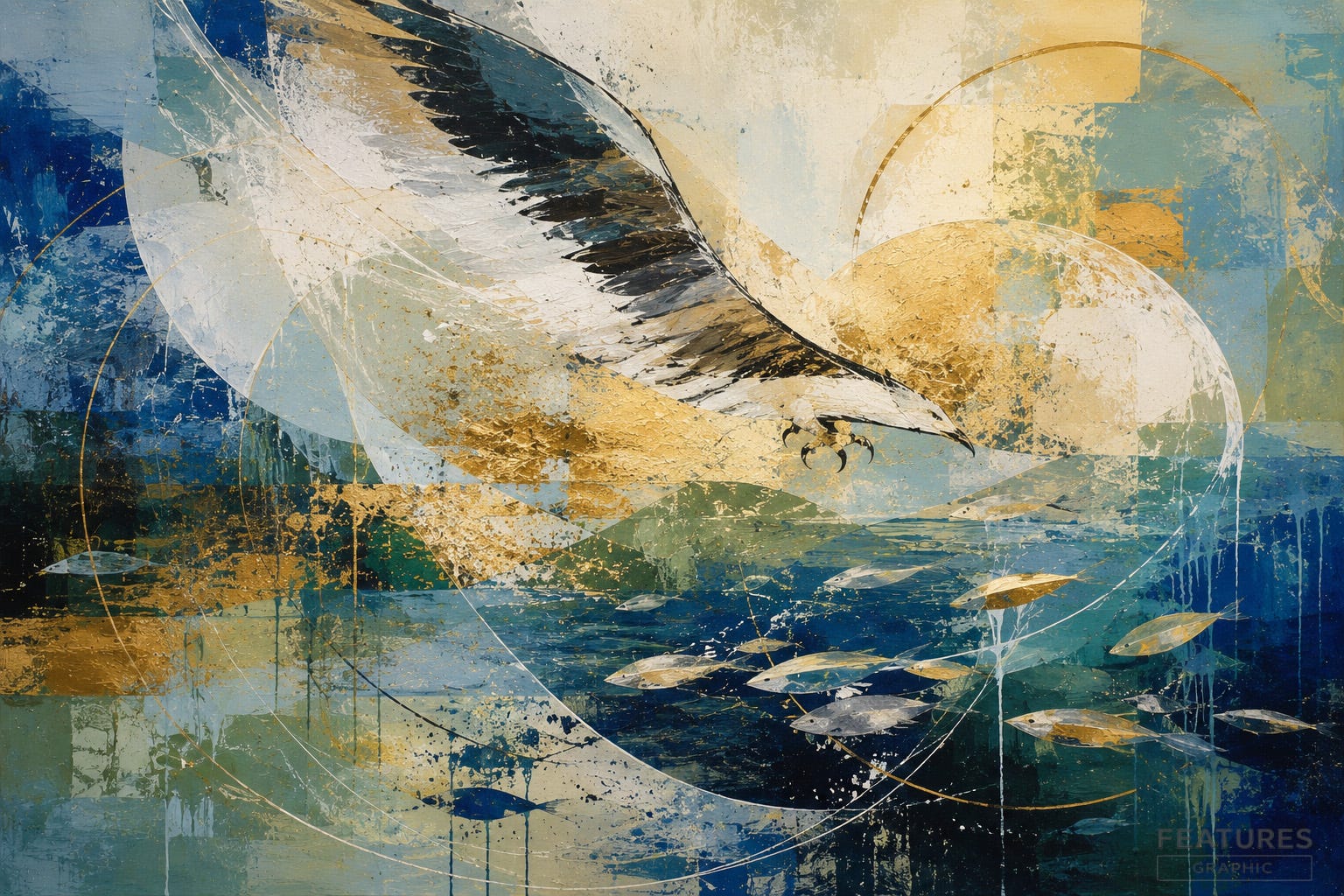
LAKE COUNTY, Calif. — If you have ever thrilled to the sight of an osprey as it swoops down feet first to catch its prey then watched as it fed its young high up in an enormous nest, you can count yourself lucky. This happens with some frequency in Lake County, home to a growing osprey population due to its many streams and lakes chock-full of fish that feed the magnificent raptors.
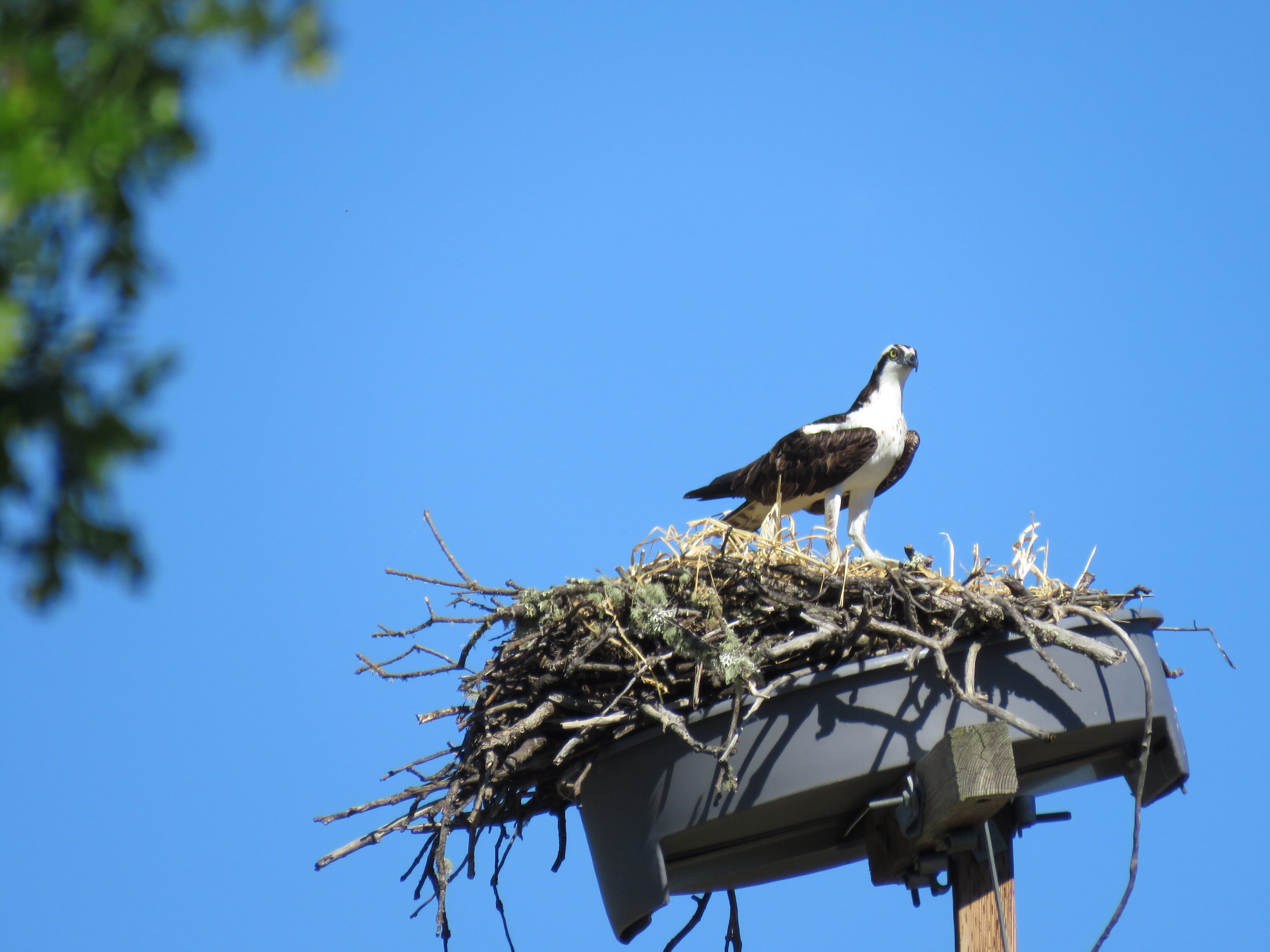
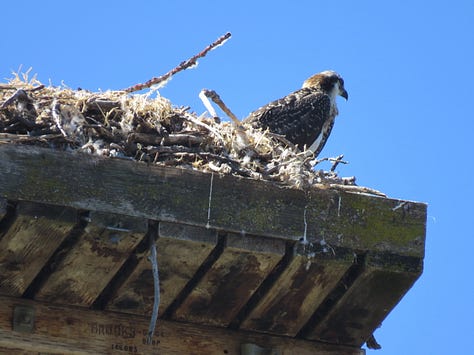
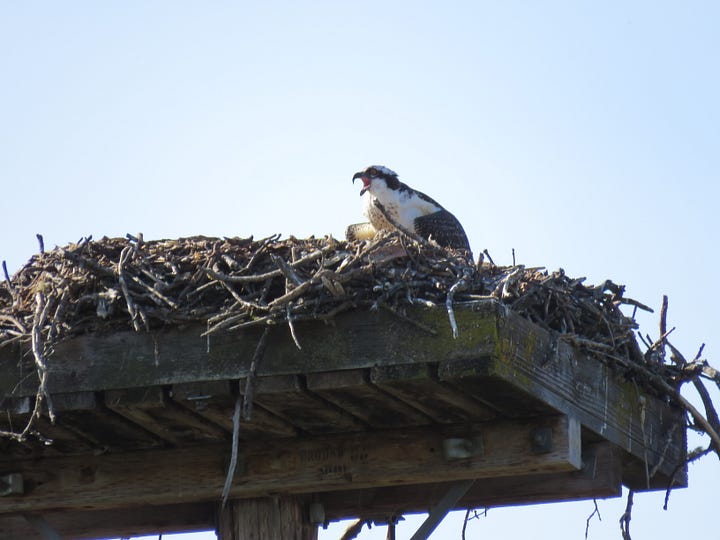
Also called fish hawks, these majestic birds are viewed all across Lake County near Clear Lake, Lakeside County Park, Putah Creek, Blue Lakes, Hidden Valley Lake and more. You can’t miss their huge nests, many of which are situated in Pacific Gas and Electric platforms, well away from electric wires in order to prevent fires, power outages and the demise of the birds.
Lake County’s chapter of the Audubon Society, Redbud Audubon Society, holds numerous programs such as field trips and meetings with speakers throughout most of the year. One program featured a new osprey program in which the public was invited to participate that monitors ospreys. The featured speaker on Zoom, Elizabeth Meisman, is a wildlife biologist and graduate research fellow at Cal Poly Humboldt who has been researching raptors for the Northern California Osprey Collaborative for a decade.
Meisman’s talk focused on the new community-driven raptor research initiative that she hopes will add to an understanding of ospreys and their breeding across Lake County and Northern California. These birds, Meisman said, are powerful symbols of healthy waterways, and so far, thanks to decades of conservation, ospreys present a wonderful wildlife success story. Led by Meisman, the research project is constructing a collaborative network of community scientists, youth groups and professional scientists. All of this teamwork and monitoring of nests adds valuable information and can make a meaningful difference, Meisman said.
The Northern California Osprey Collaborative project is conducting research to fill gaps in regional research and to expand their monitoring from Humboldt Bay to other coastal areas, river systems and reservoirs. These include Lake County and its namesake, Clear Lake.
Meisman, a dedicated conservation communicator, is also surveying breeding peregrine falcons statewide, which is another opportunity for volunteer participation. She has garnered interest in osprey and falcon nesting sites via numerous classroom visits, birding trips, presentations and by sharing her findings with broader scientific communities by way of her conference presentations and publications.
Through the program her team hopes to learn about osprey populations across a broader area by focusing on coastal areas, river systems, reservoirs and streams. In addition to the collaborative network of researchers, community scientists, birders, mentors and youth groups with whom she works, are the folks from the California Department of Wildlife and research aides from Cal Poly Humboldt Wildlife alumni. Currently the Northern California Osprey Collaborative is looking for more volunteers to help locate nests and help out in other ways. I went on the link mentioned above and told them about some nests I’ve spotted in south Lake County. It was easy.
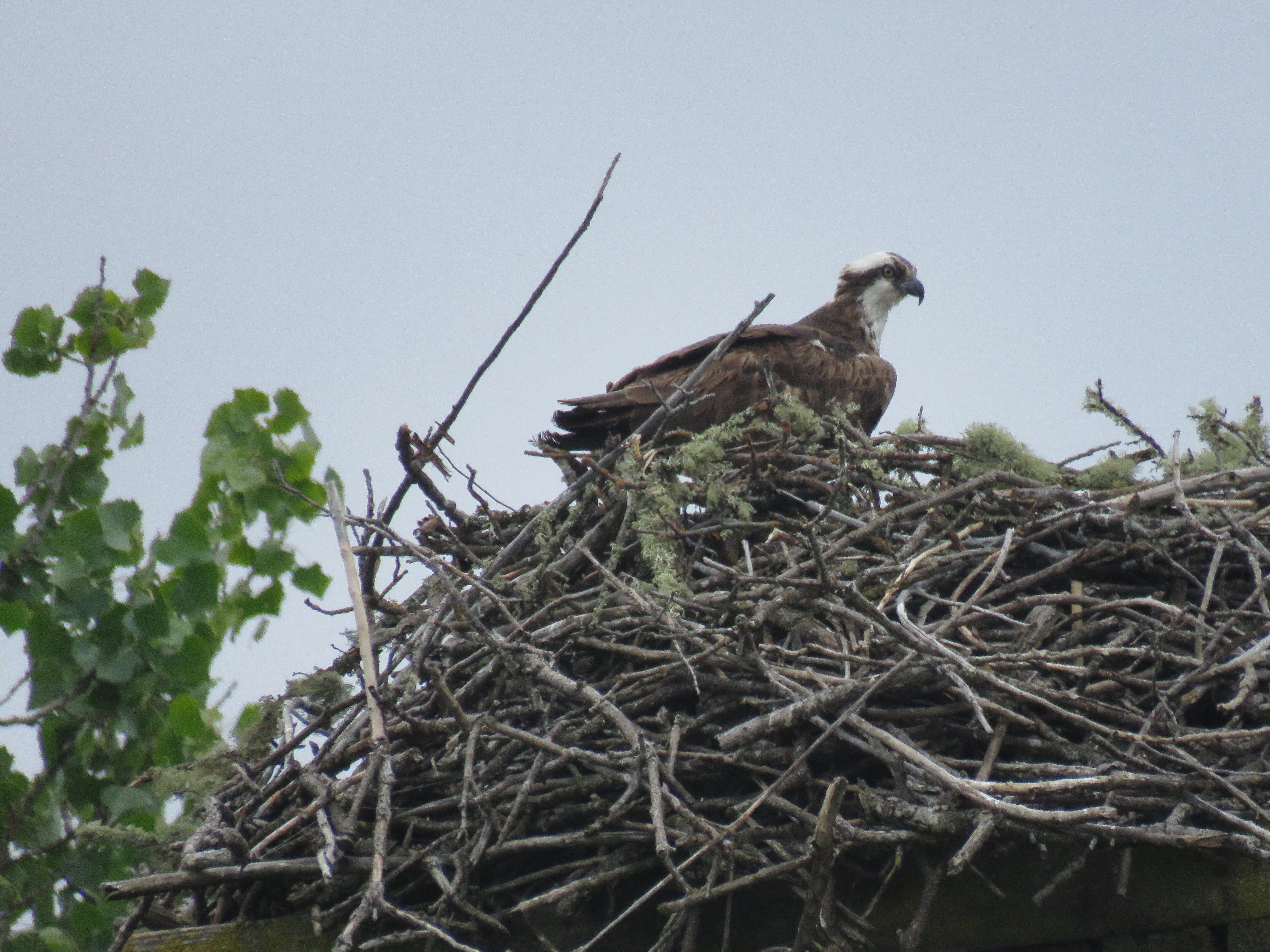
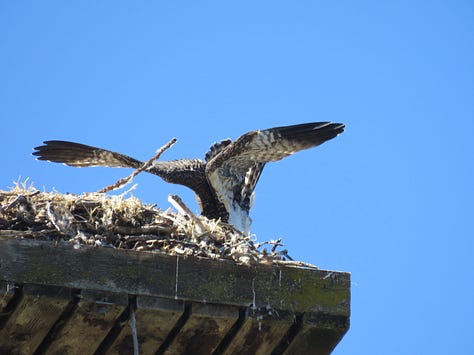
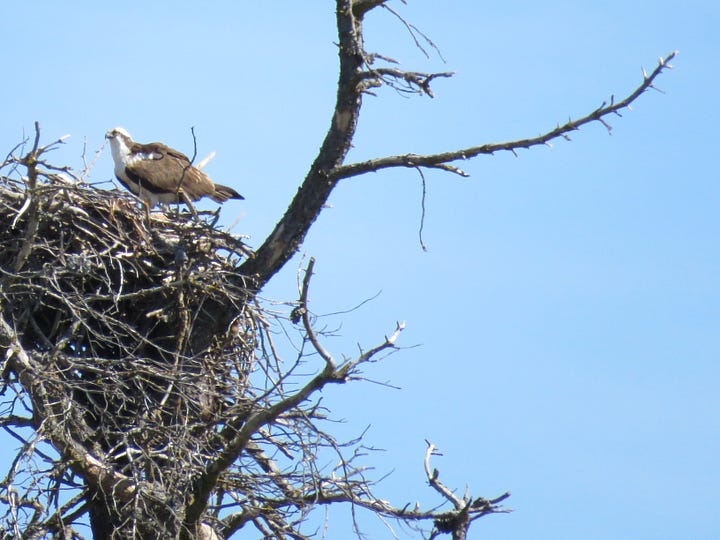
Nests are built with grasses and twigs, as the birds often return to add to the massive homes that can reach several feet in width. Ospreys breed on every continent except Antarctica. They incubate between two and four speckled eggs that hatch in about 35 days. The young can fly off at approximately 8 weeks old and join their parents as they fly south in the fall. The young stay in their winter homesite for two to three years.
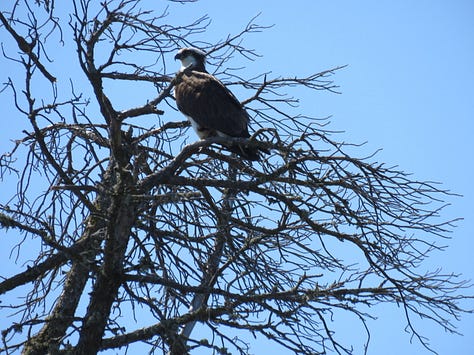
Ospreys have dark upper-wing patterns and white-with-dark-underside-shading. These superb birds, about 26-inches in length, often mate for life, and they are some of the only raptors to soar over open waters. Since they consume fish almost exclusively, they are a treat to watch as they circle and dive to catch prey with their powerful talons.
Their talons are rounded instead of grooved, and their toes are uniquely reversible to allow them to grasp slippery fish. They possess two toes in front and two behind. Another interesting trait to aid osprey in fishing is that these birds have closeable nostrils.
Listen to Cornell University’s All bout Birds osprey site, and you’ll note the distinctive whistle of an osprey as it flies. They can communicate with other calls and chirps as well. Depending upon what they are “saying,” ospreys might sing out threats or warn off rivals.
The majority of bird species have completed their main nesting activity that started early in spring. However, the Clear Lake Environmental Research Center recommends that folks keep an eye out for various birds’ nests before pruning bushes and trees to ensure that birds are protected. CLERC says you can minimize disturbances to nesting birds by surveying for nests prior to pruning. Take a peek close to your work date to ensure new nests are not under construction. If a nest is present, then delay the work for two to three months. If you spy eggs, allow time for hatching and fledging.
“Ospreys sit at the top of the aquatic food chain, feeding almost exclusively on fish,” said Donna Mackiewicz, president of Redbud Audubon Society. “This makes them excellent indicators of environmental health. When osprey populations are thriving, it often reflects clean water, abundant fish and functioning ecosystems.
If you are interested in contributing to community-based raptor research — or if you know of any osprey or peregrine falcon nests, please share observations or questions at: NorCalOsprey@gmail.com.
—
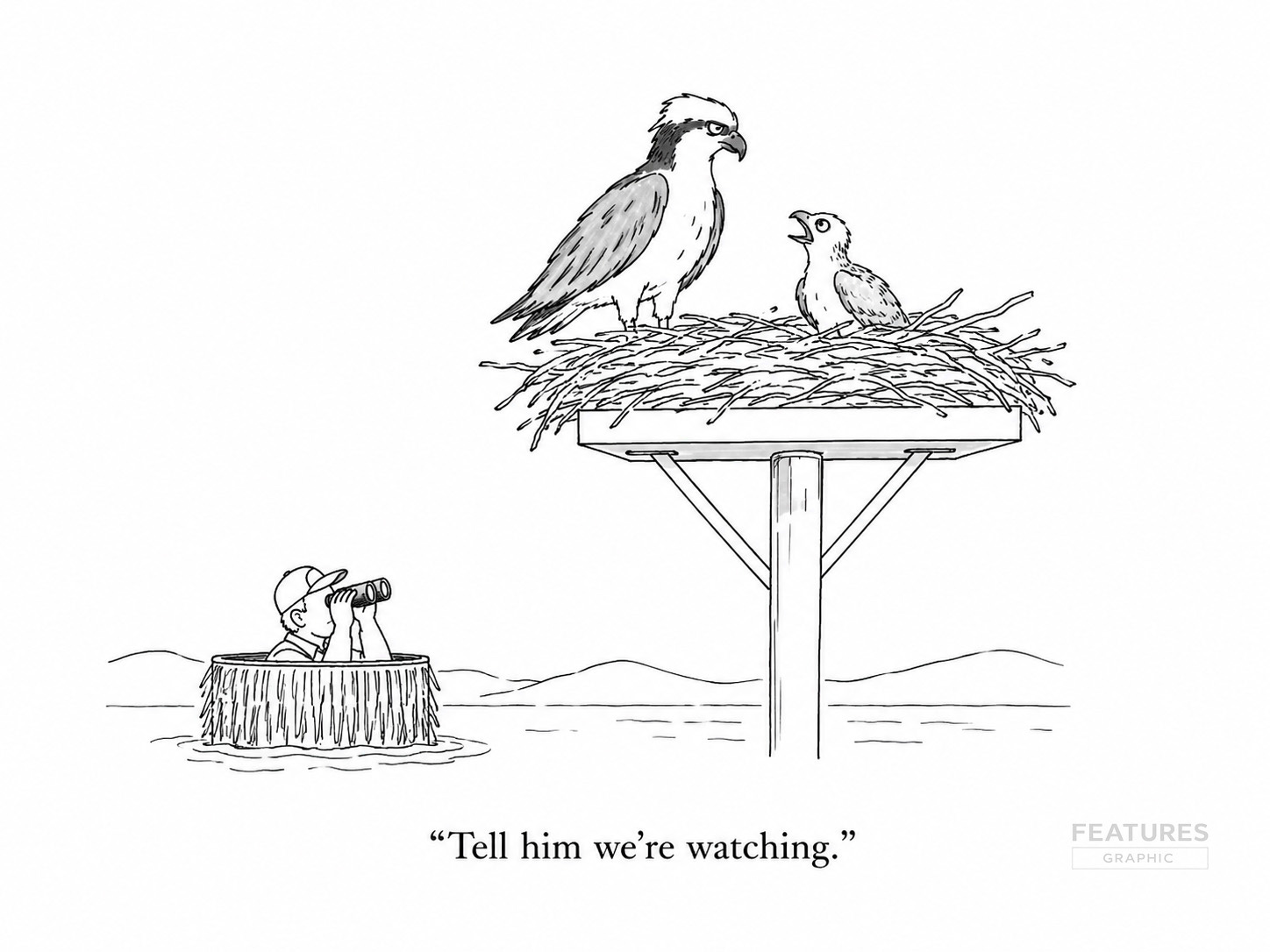
Kathleen Scavone, M.A., retired educator, is a potter, freelance writer and author of “Anderson Marsh State Historic Park: A Walking History, Prehistory, Flora and Fauna Tour of a California State Park,” “People of the Water” and “Native Americans of Lake County.” She loves hiking, travel, photography and creating her single-panel cartoon, “Rupert.”
—
The views, opinions and data presented in this article are those of the author and do not necessarily reflect the official policy, position or perspective of Lake County Features or its editorial team. Any content provided by our authors is their own and is not intended to malign any group, organization, company or individual.
No posts
Comments
Nothing yet. Say the first thing.
Sign in to join the conversation.