
If your portfolio is publicly published or hosted and relatively easy to find, there is a high chance that variations of your creative work have reached different decision-making rooms. The interesting part, the work is yours, but it doesn’t bear your name or anything that indicates it was created by you.
In the creative industry, where track records are important, and clients often want to see evidence that you can do what you claim to be capable of, it is not surprising when we see and hear about incidents of stolen portfolios or work. Whether it is a shameless lift of your entire portfolio—project-by-project—a seemingly mindful selection of some of your work, or a case of concept and direction theft, with no attribution to you in any way, portfolio theft is never an ethical or excusable practice as a creative. While it is totally acceptable to be inspired by the work, process, or methods of another creative, it is a different story when you preemptively brand their work as yours in an attempt to score gigs and win pitches with hardly any acknowledgement of the original creator.
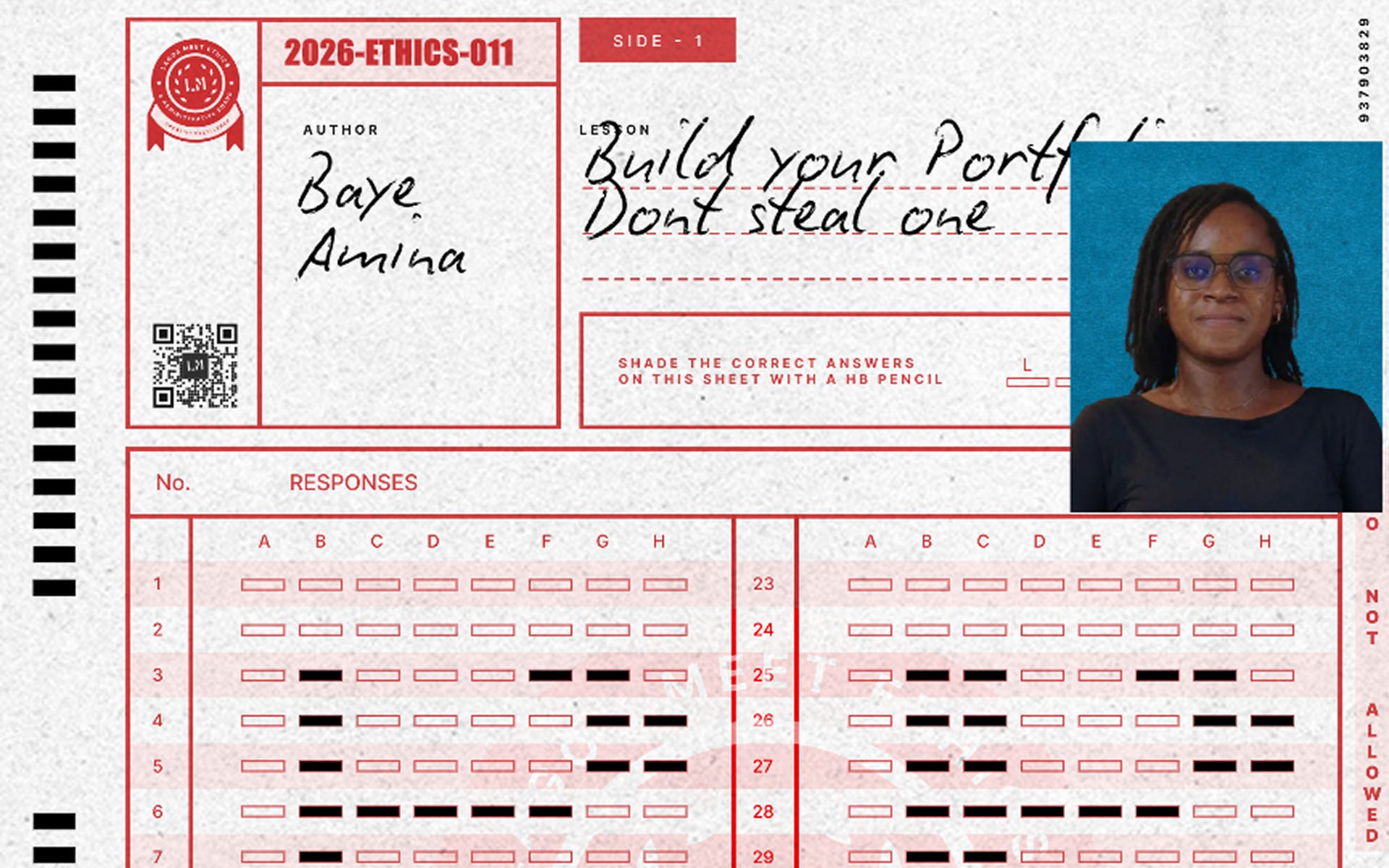
As with numerous events of a display of a lack of integrity by a creative, a stolen portfolio doesn’t just affect the original creator or the thief; it tends to ripple farther into that creative sector than we might consider in the moment. When a creative wins a bid with a style of work, and they cannot deliver on the (un)spoken promise communicated by including that work in the portfolio, the client is likely to, subconsciously, associate that creative style with something that would produce disappointing results. And since styles can be replicated, adopted, or iterated, this association of distrust might affect other creatives that a portfolio thief has never come across or interacted with. When cases of stolen works, personal projects, and portfolios become rife, clients begin to have a distrust for portfolios over time. This may then result in them utilising tests or mini-projects to test the competence of creatives that they might be interested in working with. While there is nothing inherently wrong with an assessment test, it can result in exploitation of creatives by ill-meaning clients, and in other cases, make creatives spend time ideating and solving problems for a project that they may not be selected for in the long run.
Dubbing all of, or a part of, a fellow creative’s portfolio is not only dishonest, but a blatant disregard for the years of learning, development, and honing one’s skills to get to the point of having works worth stealing. So, instead of stealing and appropriating their work as yours, put your head down and do the work required to build a portfolio equally memorable. It pays off in the long run. A creative who builds an honest portfolio, project by project, year after year, sets themselves up to build skill and hone their craft and creative intuition with each project they tend to work on.
Finally, while it is easier to lift and claim another creator’s work as yours, it is worth mentioning that being in the early phases of building your portfolio is nothing to be ashamed about. Every creative’s journey is different, and the earlier you learn to own and embrace your journey, the better-rooted in your experiences and expertise you are likely to be as you progress in your creative journey. So, build your portfolio, from the ground up—don’t steal one and attempt to build a creative career around a lie.
Thanks for reading Lagos Meet! This post is public, so feel free to share it.
Comments
Nothing yet. Say the first thing.
Sign in to join the conversation.