
For someone who spends most of her time thinking about clothes, I am surprisingly repetitive in how I get dressed. I have favourite shirts that are years old. The same trousers on rotation. The same jewellery most days.
Which is perhaps why I pay attention when a new piece manages to earn a permanent place in that routine.
Unquiet | Seasonless’ 26 has a few of those pieces.
This month, I thought I’d tell you about them.
I have always had a soft spot for pieces that do a lot with very little.
The Jaali Bib is one of those pieces.
Perhaps because it isn’t really a garment in the conventional sense. It sits somewhere between an accessory, textile object, and clothing. It can completely change an outfit while taking up almost no space in a wardrobe.
Most mornings, if I’m feeling uninspired, I throw it over a shirt and a pair of cotton trousers and call it a day. Somehow that is enough. The bib does all the work.
What I enjoy most about it is the contradiction it carries.
Inspired from the 'Jharokas' and latticed screens found across India’s architectural landscapes, it is made from leftovers. Small fragments of fabric that remained after other garments had been cut and stitched. Materials that could easily have slipped into obscurity. Yet when assembled together, they become one of the most labour-intensive pieces in the collection.
Every bead is wrapped in thread. Every connection made individually. What began as scraps becomes something unexpectedly precious.
I also love the fact that it is entirely unconcerned with sizing. It doesn’t ask the wearer to fit into it. It simply adapts. There is a generosity to that which feels increasingly important to me.
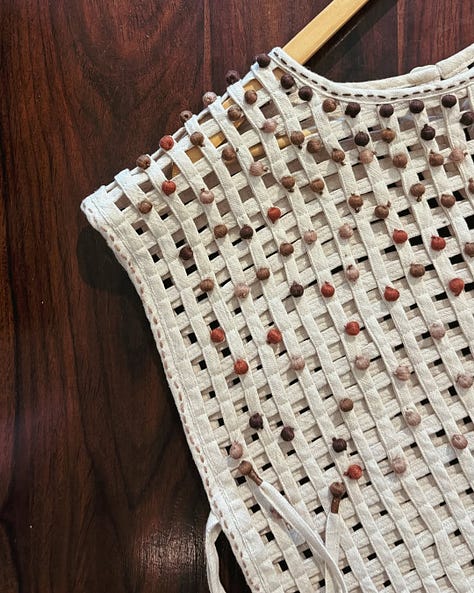
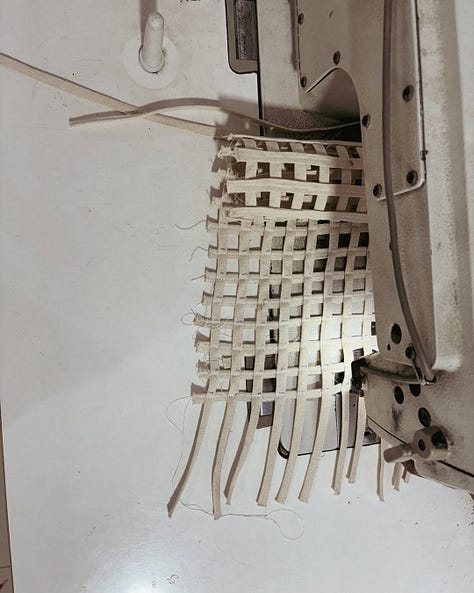
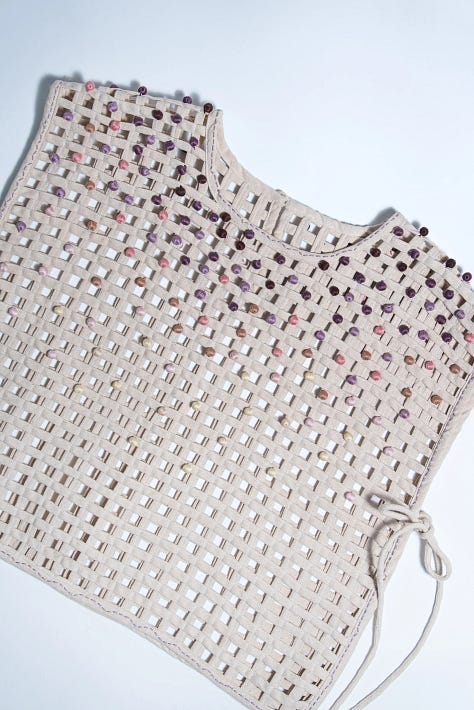
And then there are the beads. When we were developing the piece, I kept returning to the way they altered the surface. The textile no longer sat flat against the body. It lifted and created little moments of shadow and dimension.
The result feels almost sculptural, but not intimidatingly so.
Just enough texture. Just enough colour.
The kind of piece people often notice only after a second glance.
If there is one category of clothing I buy with absolutely no restraint, it is shirts.
I have convinced myself many times that I own enough shirts. I am wrong every single time.
The Curve Shirt became a favourite long before it became a finished garment.
I remember spending a few days in Mumbai while we were developing these ecoprints.
Most of my time was spent in the studio, surrounded by fabrics, flowers, steaming bundles, and long conversations about colour, placement, pressure, and timing. There were sketches pinned to walls, samples in various stages of completion, and, naturally, a few resident cats overseeing proceedings.
What stayed with me most was how much patience the process demanded.
You can influence ecoprinting, but you cannot fully control it.
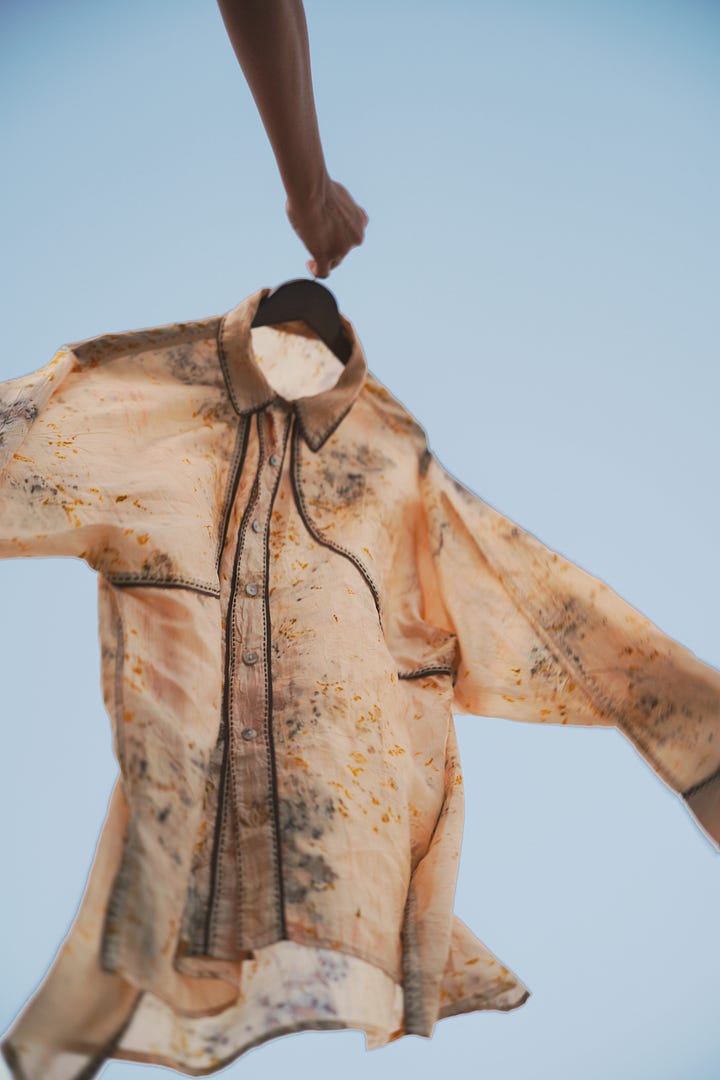
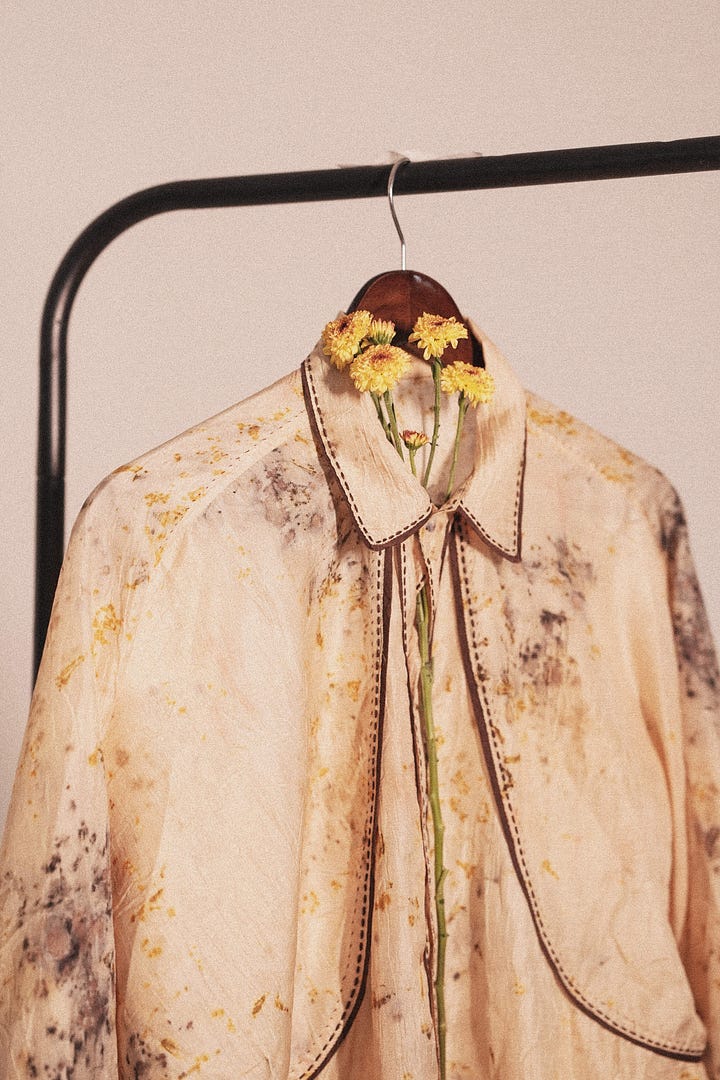
At some point, the flowers begin to leave their own mark. The textile emerges carrying traces that no amount of planning could have produced on its own.
The textile that emerged from those experiments remains one of my favourites we’ve ever developed. Not because it is loud, but because it isn’t.
The silk already carries its own quiet luminosity. We wanted the flowers to complement that rather than compete with it.
What I particularly love are the moments where colour unexpectedly deepens. Small concentrated patches that feel almost painterly. Areas where the flowers leave behind traces that are impossible to replicate.
I find myself staring at those sections every time I wear the shirt.
And the silhouette is incredibly forgiving.
Some shirts make you aware of your body all day long. This one doesn’t. It moves. It accommodates. It simply gets on with things.
I wear mine most often with old denims, though it also works beautifully with a long straight skirt when I want to feel a little more put together.
I nearly chose another bib for this list.
In particular, one of the reversible versions because I remain deeply convinced that reversible clothing is underrated.
I’ve always liked the idea that a garment doesn’t have to be fixed in a single identity. Turn it around, style it differently, wear it with something unexpected, and it becomes something else entirely.
Good clothing, I think, leaves room for interpretation.
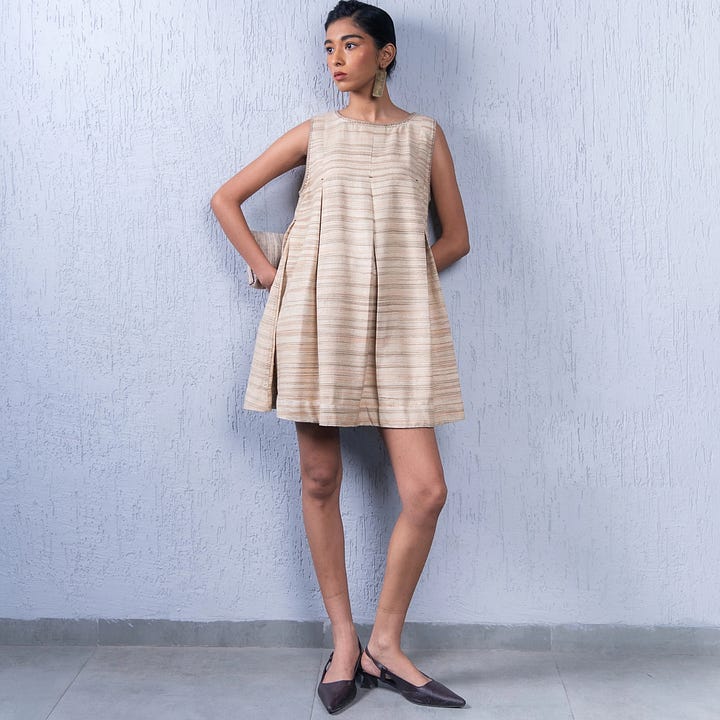
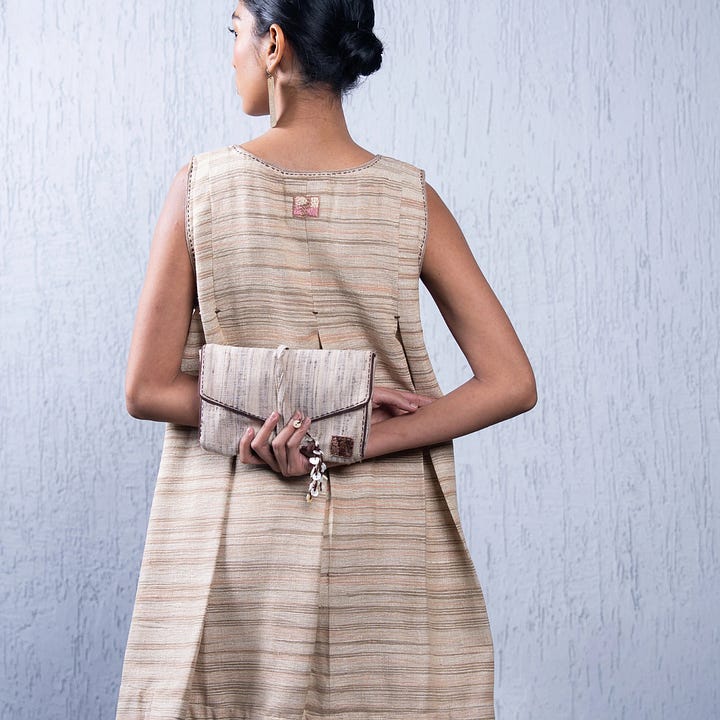
But every time I thought about which piece from the collection has surprised me most, I kept returning to the Textured Dress.
Partly because of the textile.
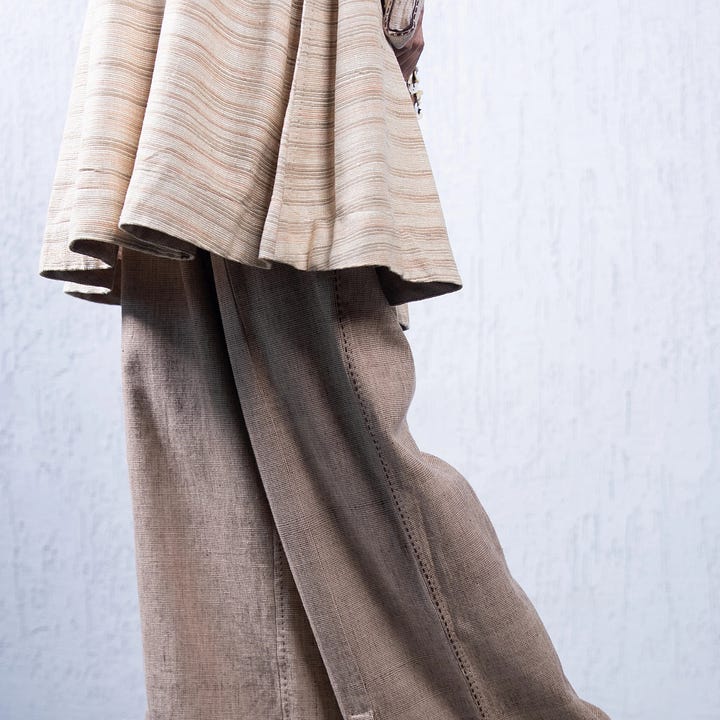
Developed in collaboration with a Master Weaver, it brings together cotton and Tussar silk indigenous to the region of Nawada, Bihar.
Tussar silk has always fascinated me. Unlike mulberry silk, it carries a certain irregularity. The surface is textured. The sheen is softer and more muted. Woven together with cotton, it becomes remarkably versatile. The cotton introduces breathability and ease, while the silk lends depth and character. The resulting fabric sits somewhere between structured and fluid, matte and luminous.
What surprised me was how beautifully it responded to pleating.
The folds hold shape without feeling rigid.
I also appreciate how easy the silhouette is. It works just as comfortably on its own as it does layered over trousers- a combination I’ve always been partial to. There is something about dresses worn with pants that feels both practical and slightly subversive, while remaining completely effortless.
Perhaps that’s why this dress has stayed with me.
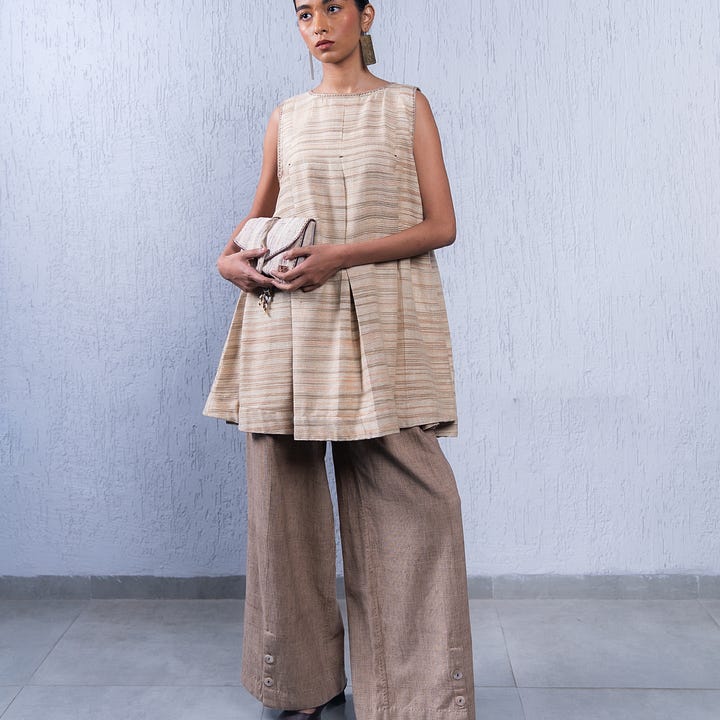
It isn’t the loudest piece in the collection, nor the most technically complex. But it brings together many of the things I value most: thoughtful materiality, skilled craftsmanship, and a sense of ease that allows the textile to speak for itself.
One of the strange things about making collections is that once they are launched, your attention is immediately pulled towards whatever comes next.
Writing this gave me an opportunity to pause and spend time with a few pieces that continue to feel important long after the work of making them is done.
I’m glad I did.
Until next time,
Drishti
Comments
Nothing yet. Say the first thing.
Sign in to join the conversation.