
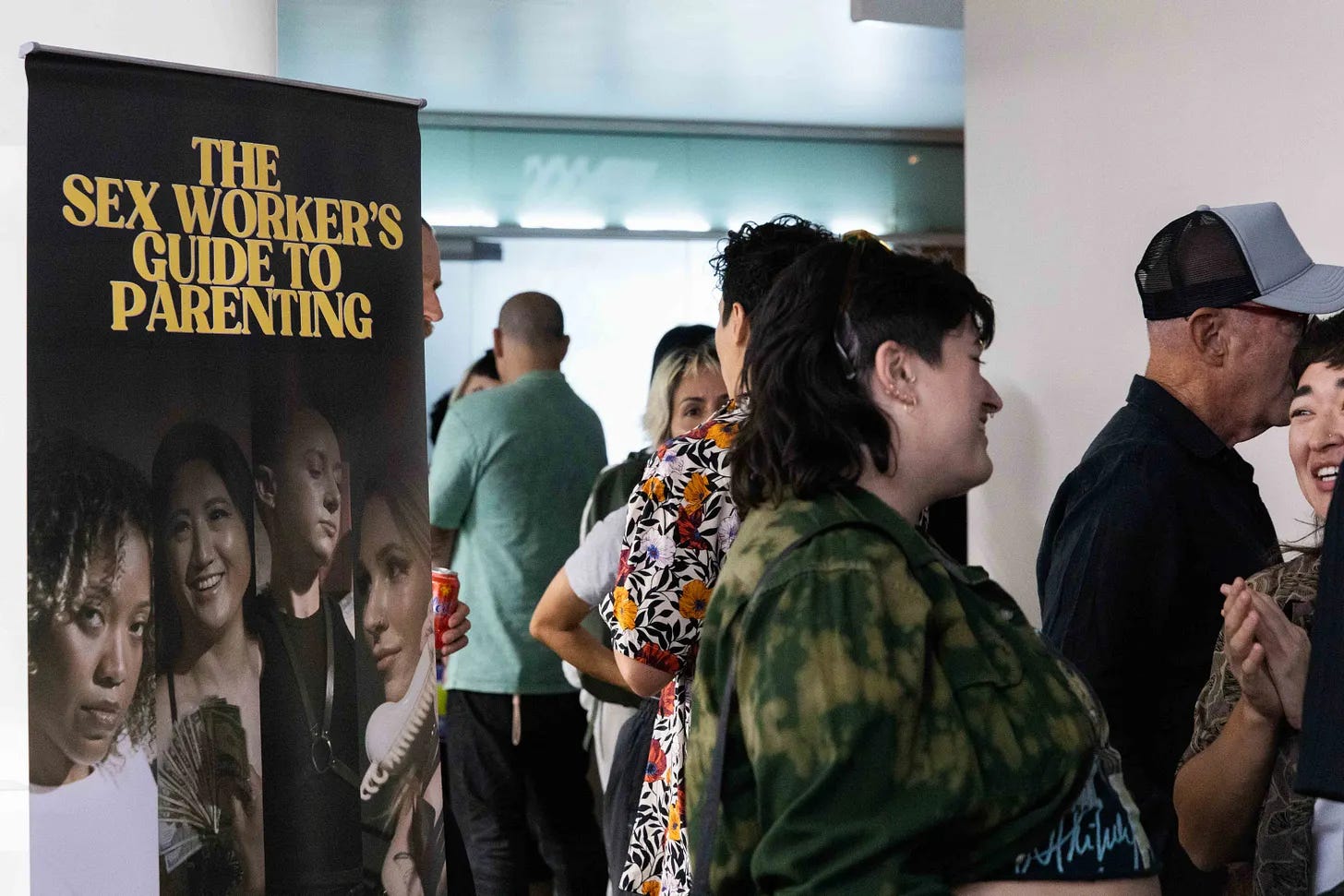
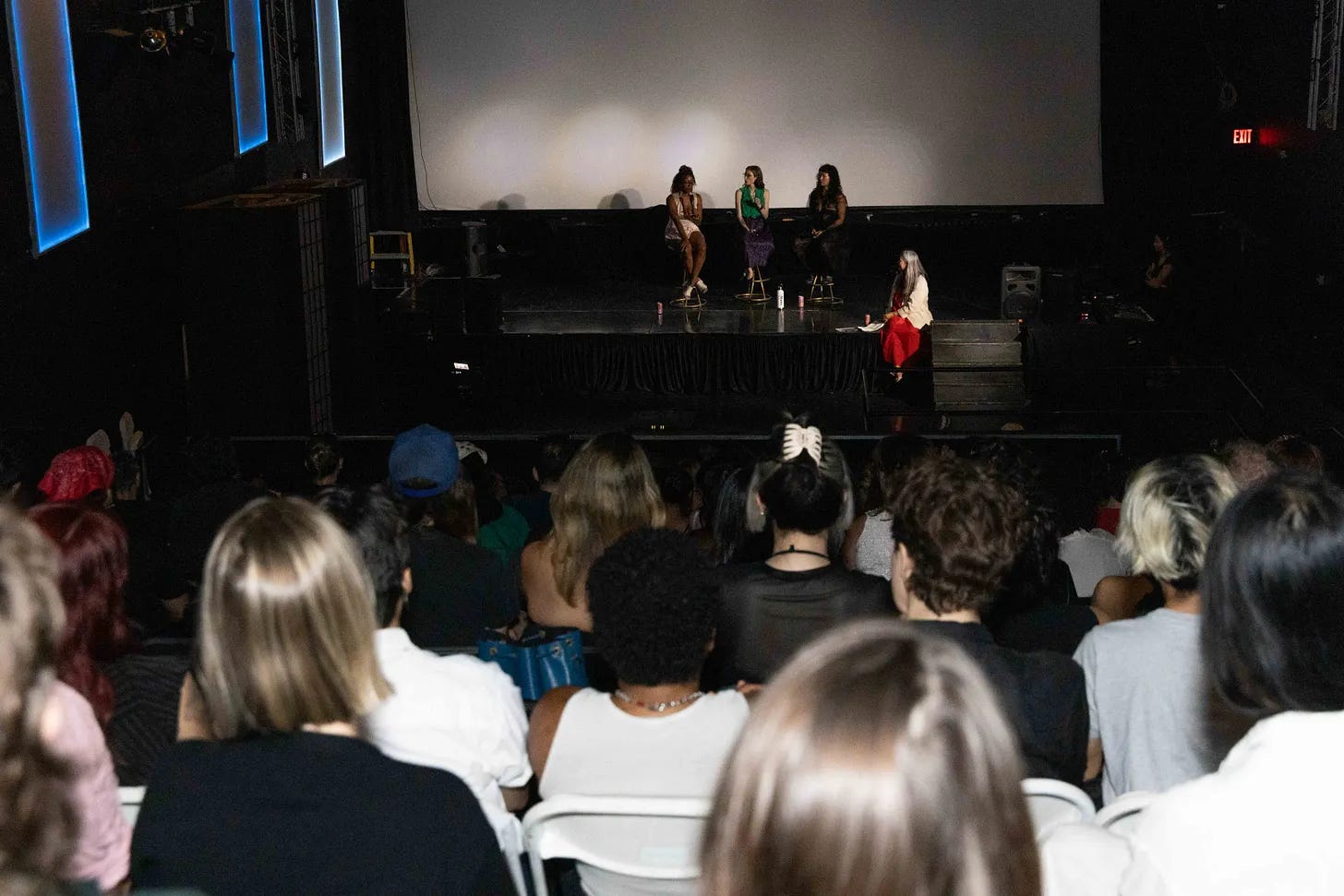
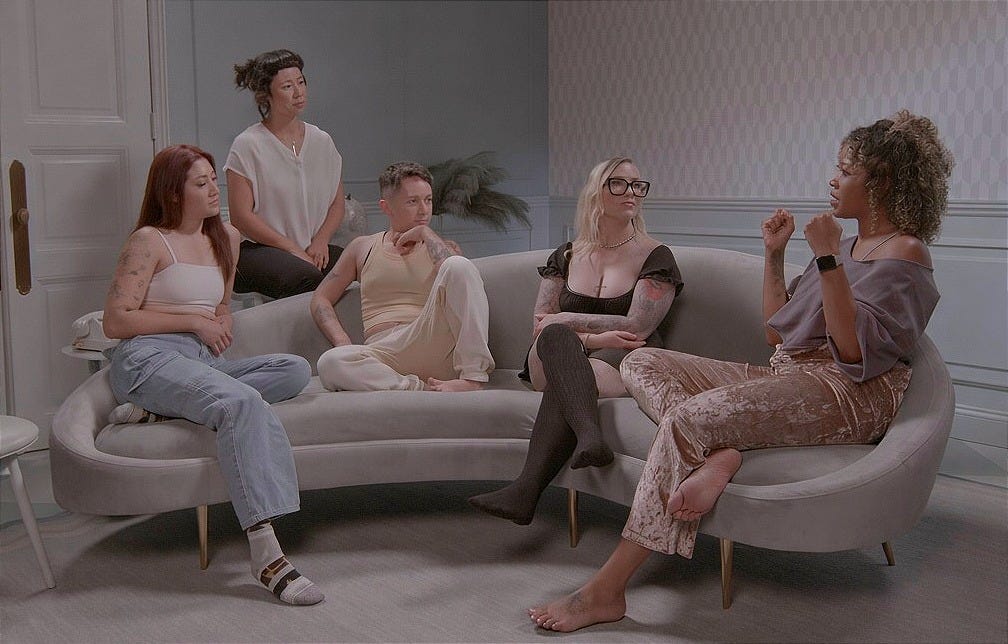
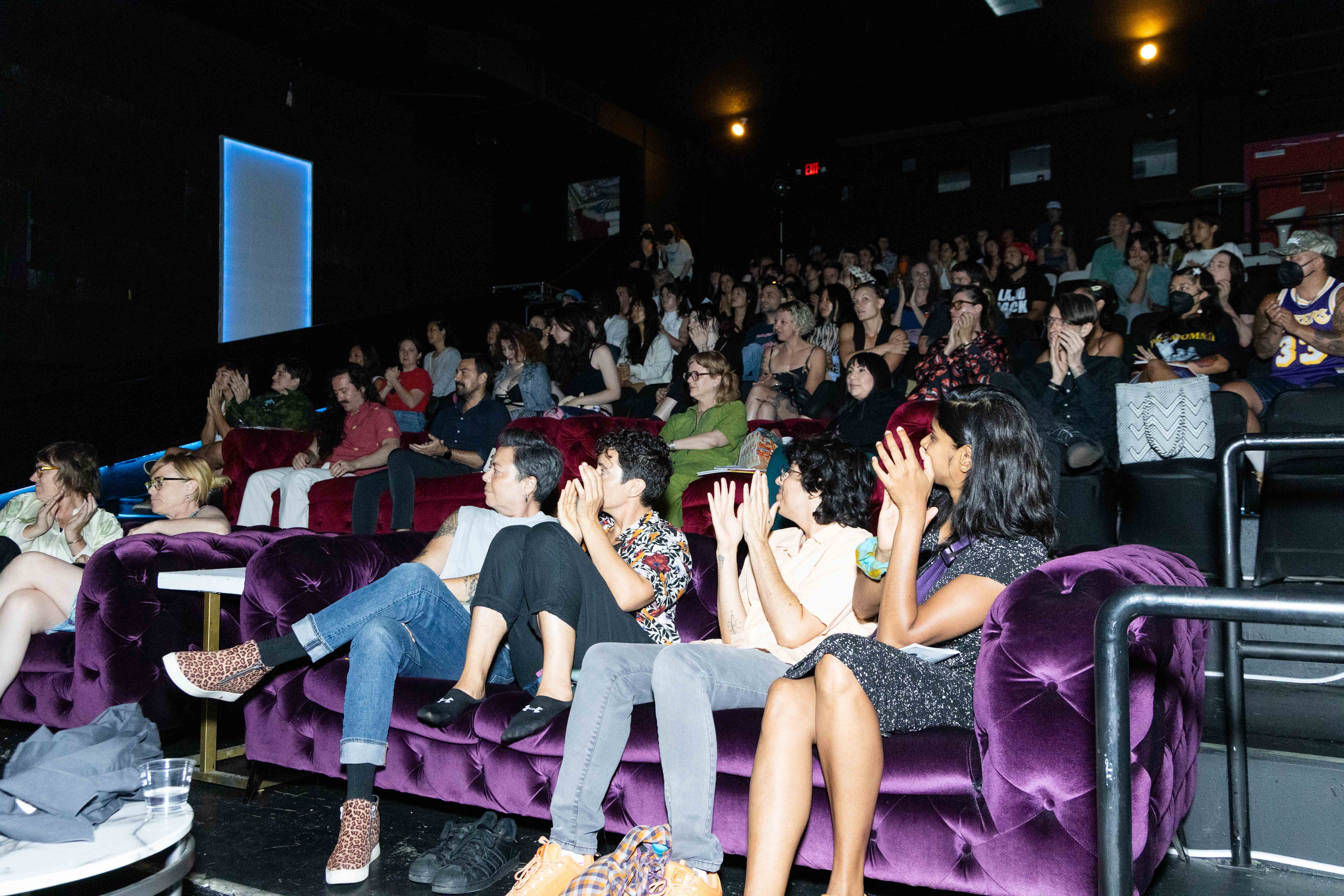
This panel took place in a packed theater in Downtown Los Angeles after the screening of The Sex Worker’s Guide to Parenting, a film produced in association with Sex Workers Outreach Project, Los Angeles (SWOPLA). In the film, six parents in the sex industry, including me, reflect on how erotic labor shapes the ways they care for children, build community, and navigate stigma. Moving between intimate interviews, group conversations, and collective research, the film was part of my It’s not a Whore House, it’s a Whore Home installation included in the Radical Kinship Exhibition at Feminist Center for Creative Work in Los Angeles (FCCW).
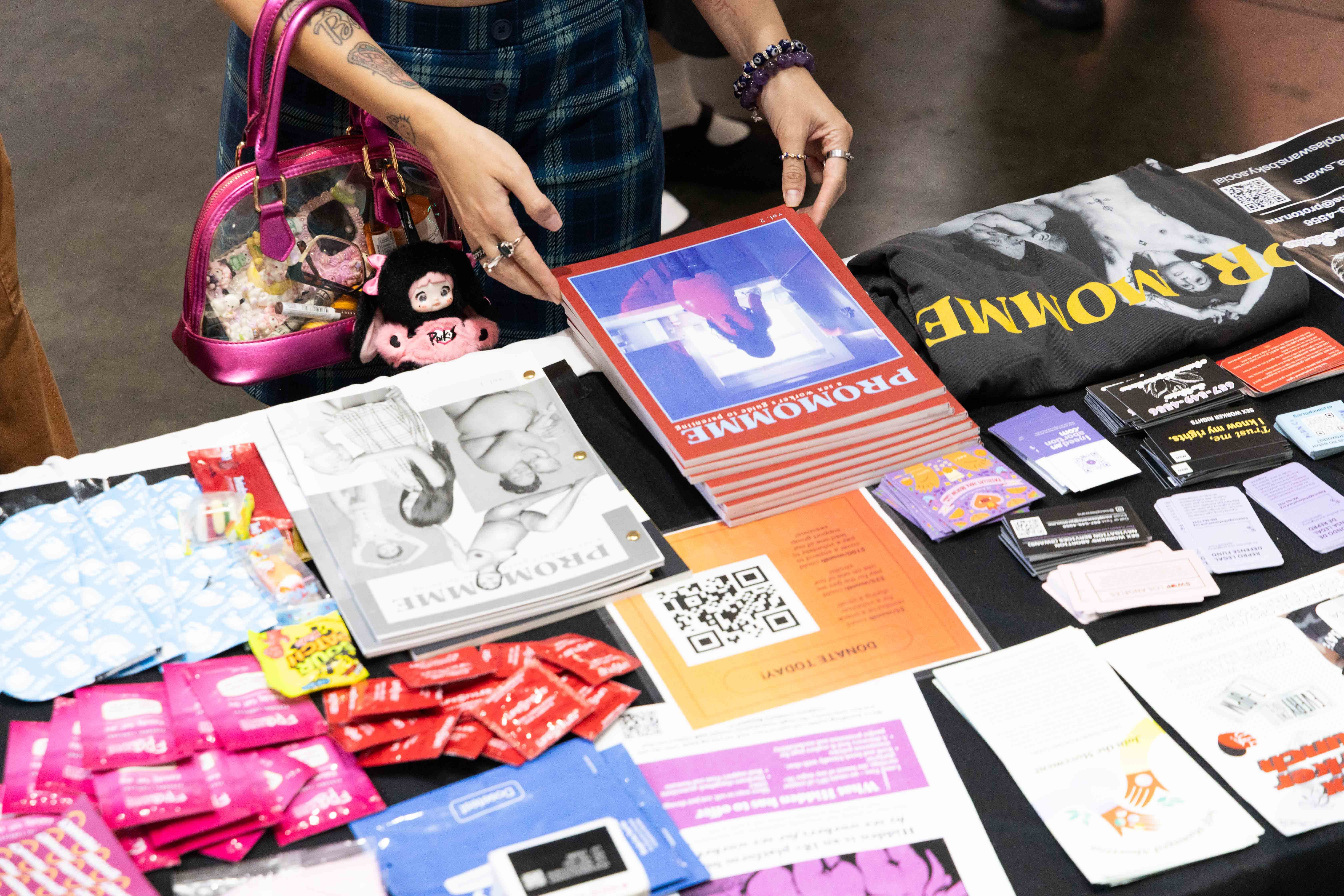
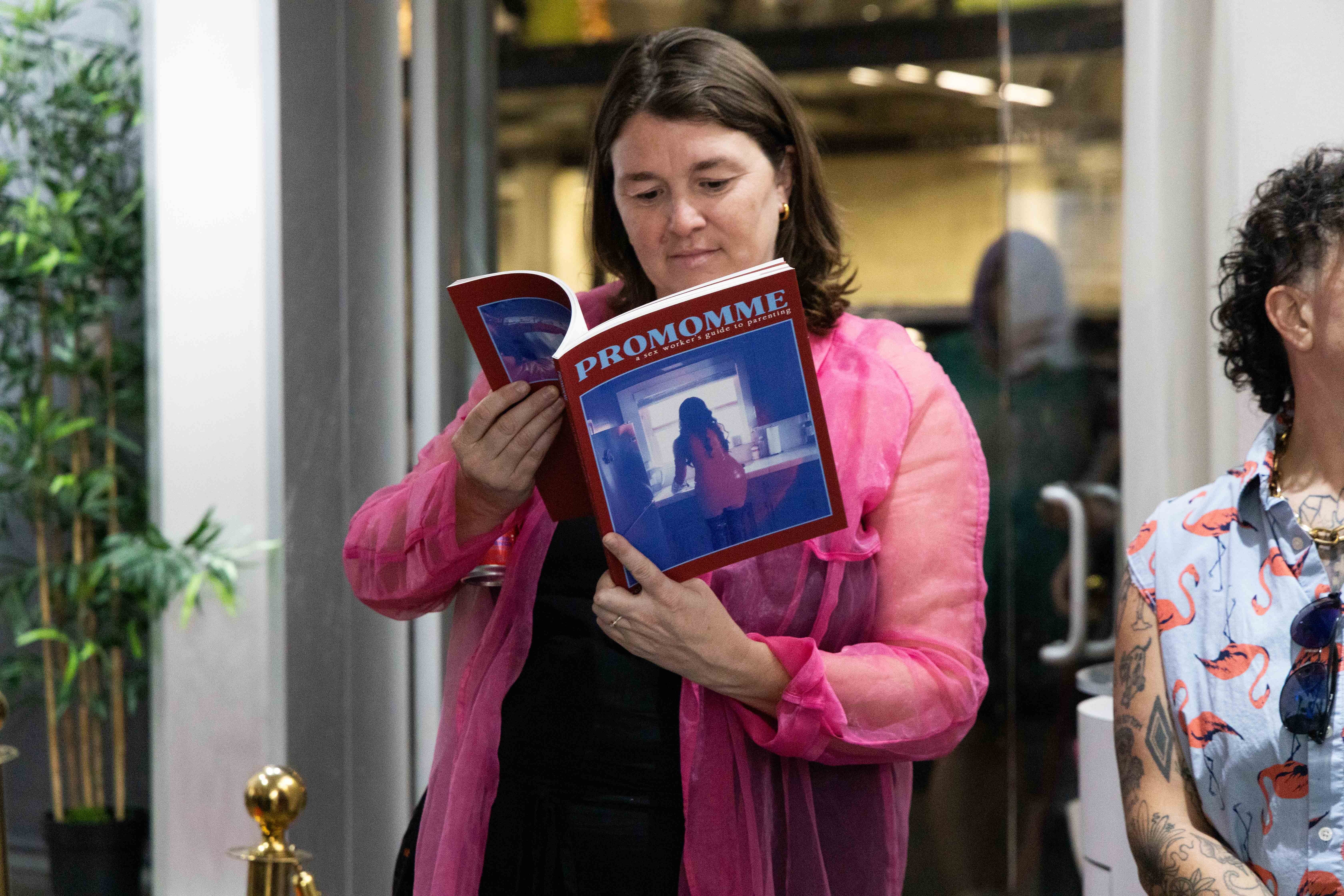
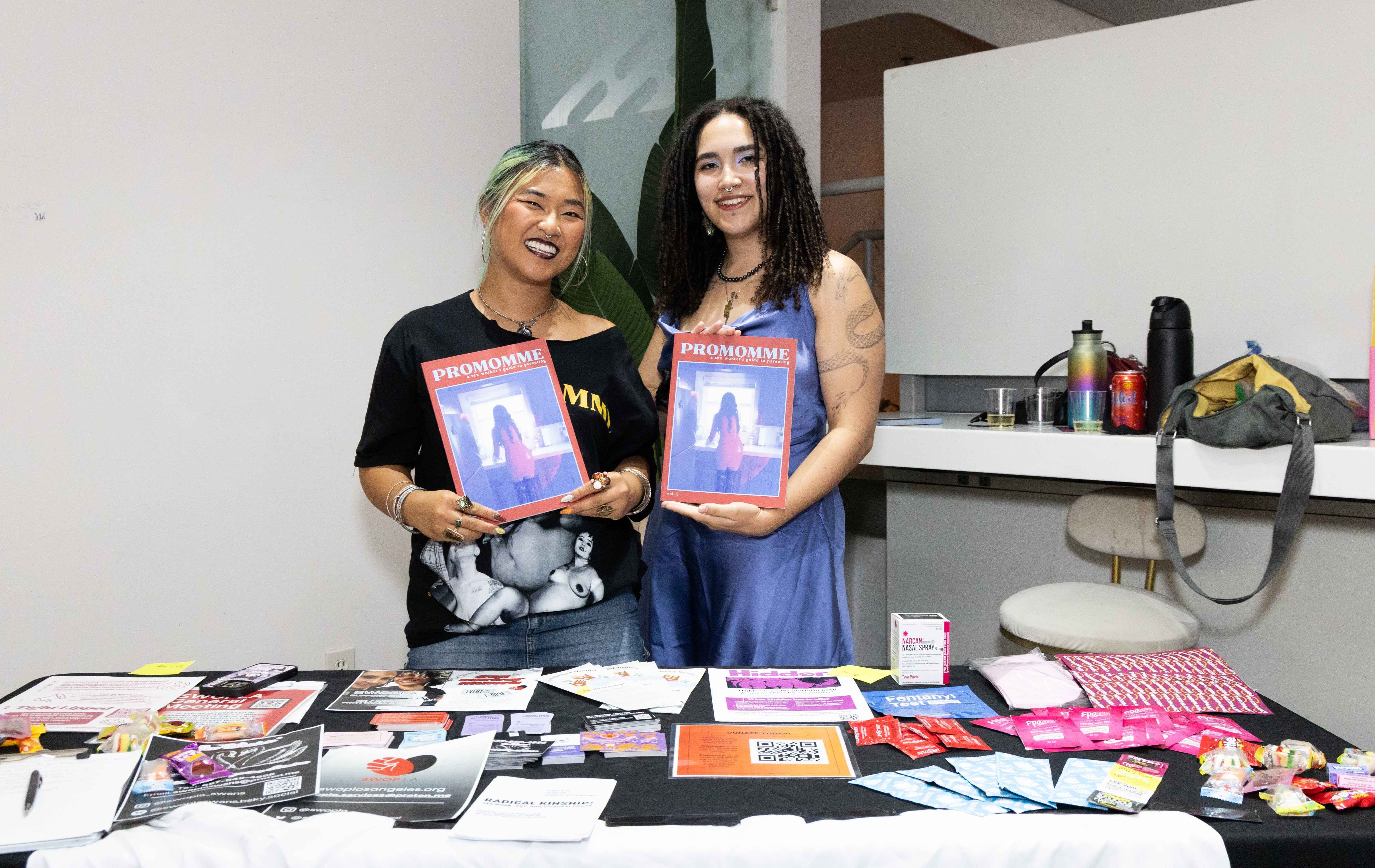
The evening also celebrated the launch of ProMomme Vol 2, the first parenting magazine by and for sex workers available through publishers Sming Sming Books (Saratoga, CA) and Cash Machine (Los Angeles, CA).
This community presentation is part of the exhibition Radical Kinship, curated by Chloë Flores, which brought together eight contemporary women artists who enact kinship as a practice of resistance, survival, and world-building. It features work from Patty Chang, Kim Ye, taisha paggett, Kimberly Robertson, Corazón del Sol, Emily Marchand, Kiyo Gutiérrez, and Sharon Chohi Kim. Emerging from deeply feminist, queer, and Indigenous frameworks, this exhibition centers relational ways of being that counter the logics of separability, individualism, and extraction through work that is responsive to the world. Engaging with communities, traditions, and pressing social issues, the works model interdependence, reciprocity, and care as methodologies for making art and for living.
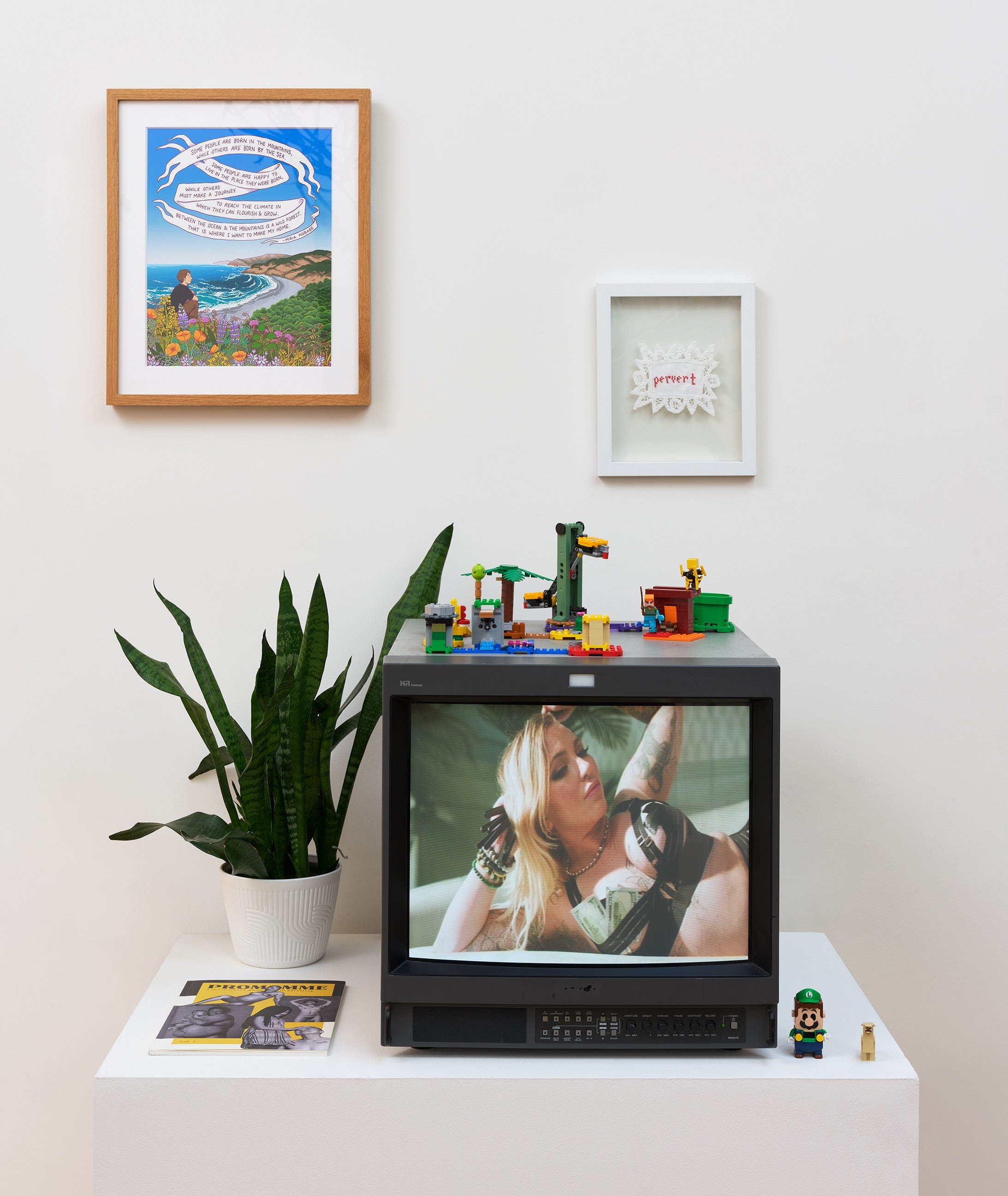
The works model interdependent reciprocity and care as methodologies for making art and for living. For those who aren’t familiar with the Feminist Center for Creative Work in Los Angeles, the FCCW nurtures feminist and queer creative practices through ever-evolving collaborations, modeling and resourcing the conditions for liberatory futures to take root and grow through exhibitions like this, artist-in-residence projects, community programs, and our publishing operation Co-Conspirator press. We work towards a joyful, liberated world that flourishes through collaboration, creative work and collective care.

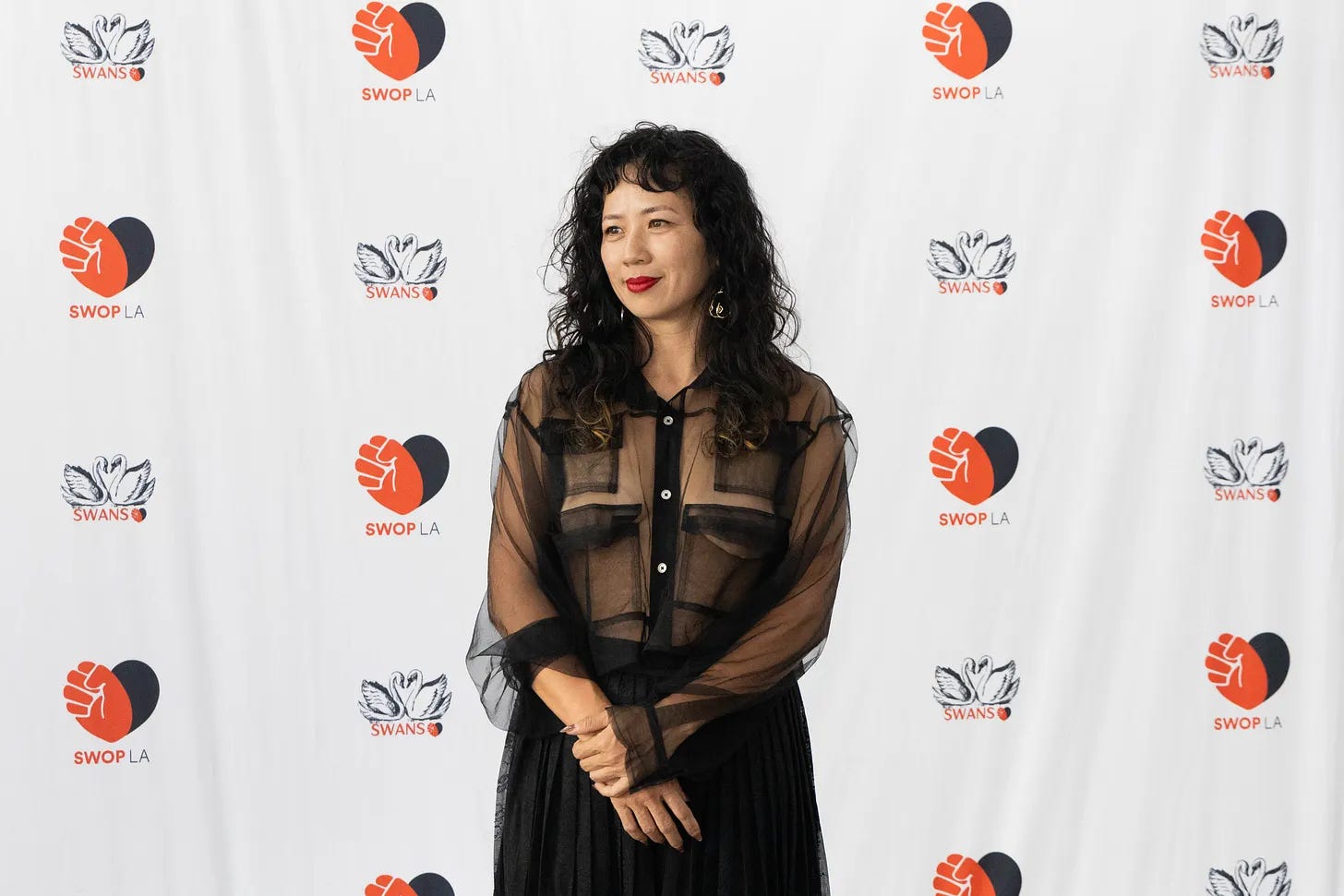
Kimberly Ye is an artist whose interdisciplinary research-based practice produces films, performances, writings, and installations rooted in her communities. As a queer first-generation Chinese American, longtime worker in the sex industry, and mother of two, she makes work for and with people whose lives are routinely misrepresented–using humor, autofiction, and pop cultural aesthetics to translate marginalized experiences into mainstream visual language. Currently, she organizes with sex workers at Sex Workers Outreach Project Los Angeles (SWOPLA), and slaves alongside her subbyhubby beneath their three and five-year-old.
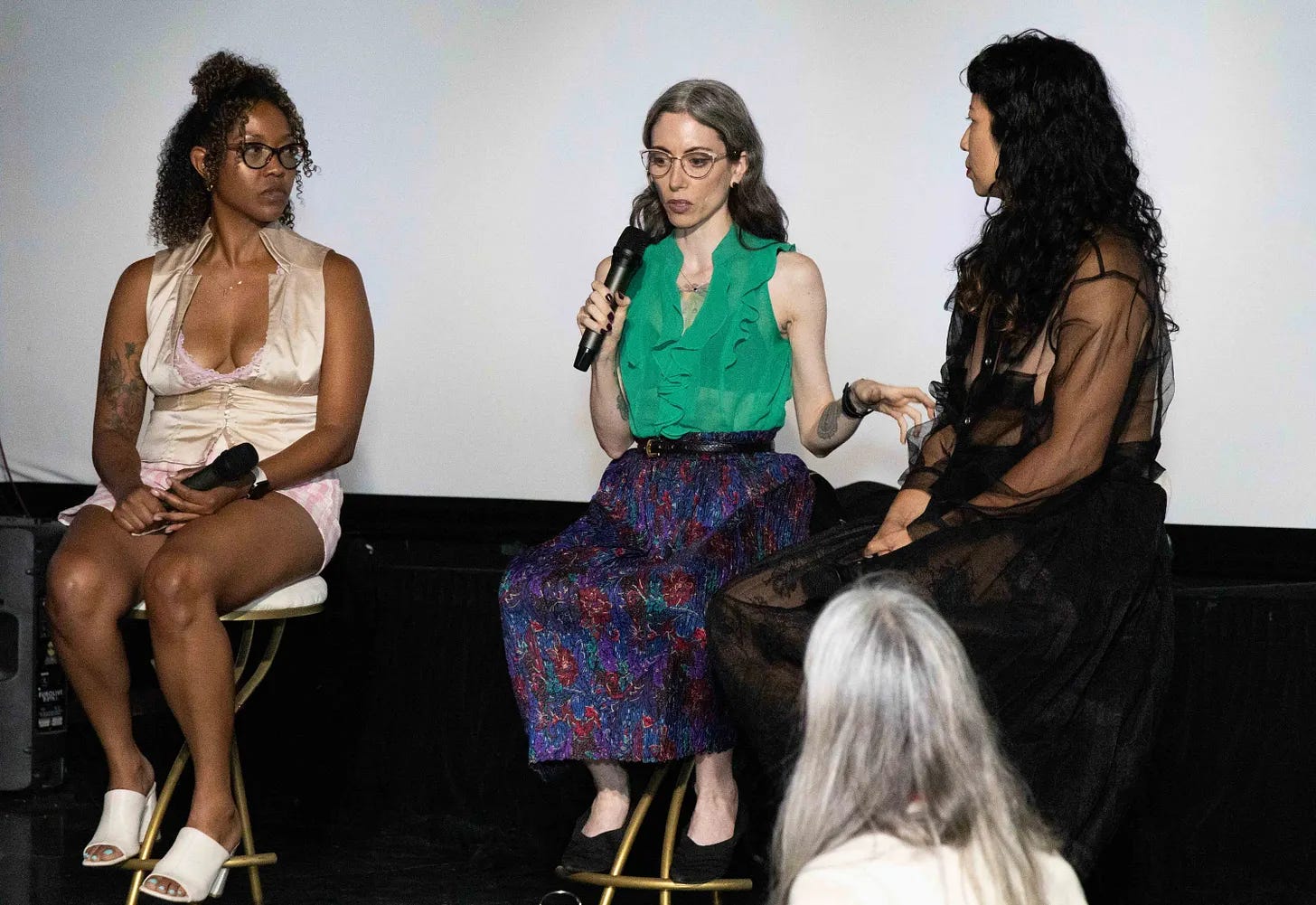
Lauren Levitt (all pronouns) is a postdoctoral researcher at the XCITE Center for Teaching and Learning at the University of California Riverside. Her book, Sex Worker Solidarity: Networks of Caring and Sharing — forthcoming on NYU Press — examines how sex workers and sex worker organizers in New York and Los Angeles develop non-biological kinship structures and engage in non-capitalist caring and sharing practices to manage precarity, stigma, and criminalization. Their current project explores how sex workers create cultural content to represent themselves, build community, and organize politically. Lauren is on the editorial board of The Journal of Femininities and the advisory board of the Sex Workers Outreach Project Los Angeles (SWOPLA, and she regularly acts as a sex worker advocate at public and academic events and in the media.
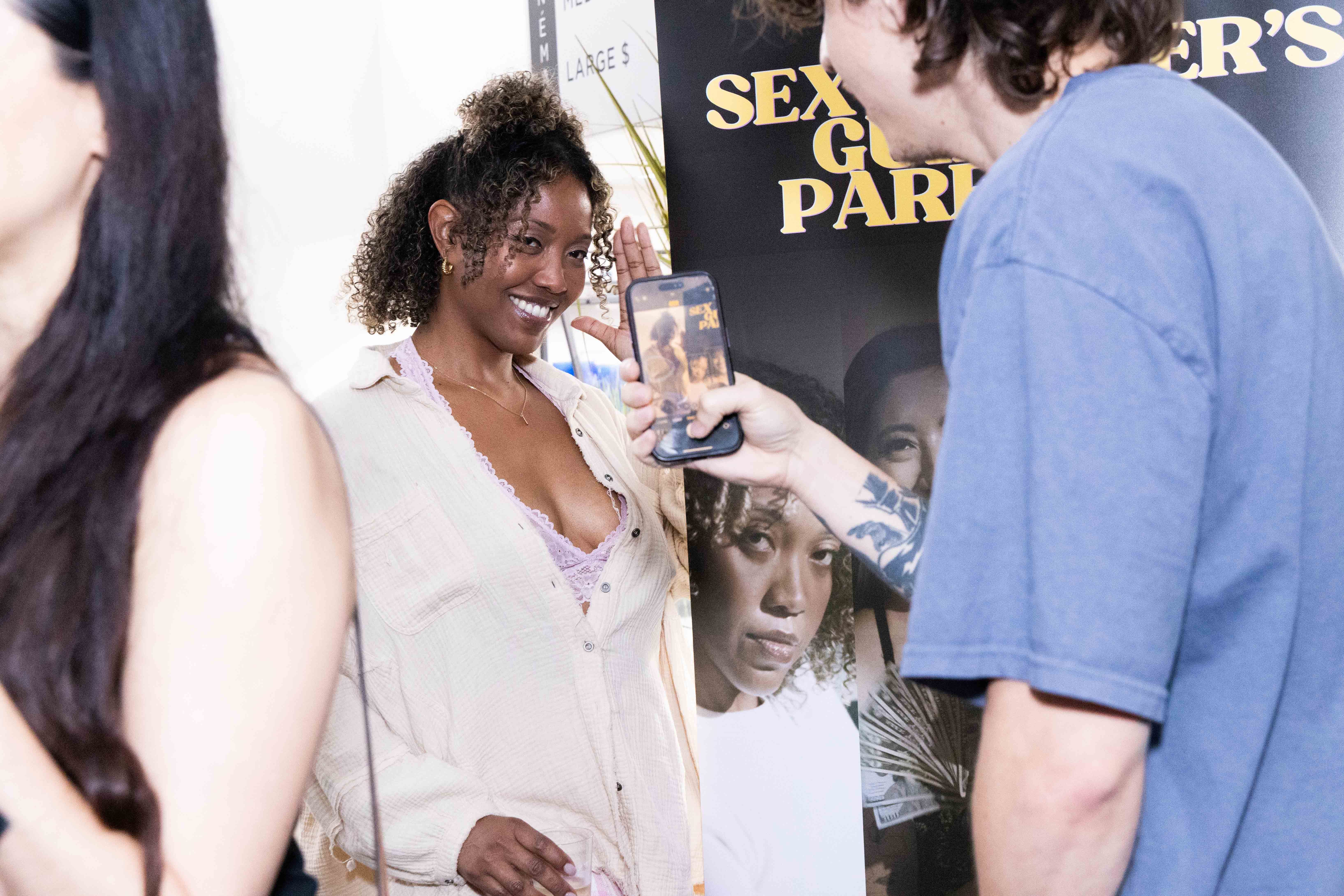
Lotus Lain is a globally recognized influential public figure in the realms of consent, sex worker’s rights, self advocacy & intimacy. Throughout her 12+ year career she’s been a Dominatrix; Hall of Fame Adult Performer; a published writer, guest speaker, producer and now intimacy coordinator for mainstream TV and film. Lotus has appeared at SXSW and on Showtime and Netflix for her work. Most recently, Lotus has spoken at the UN in Geneva and New York to inform the Human Rights Committee of the US Government’s failures to prevent trafficking and discrimination against people of LGBTQ identity.
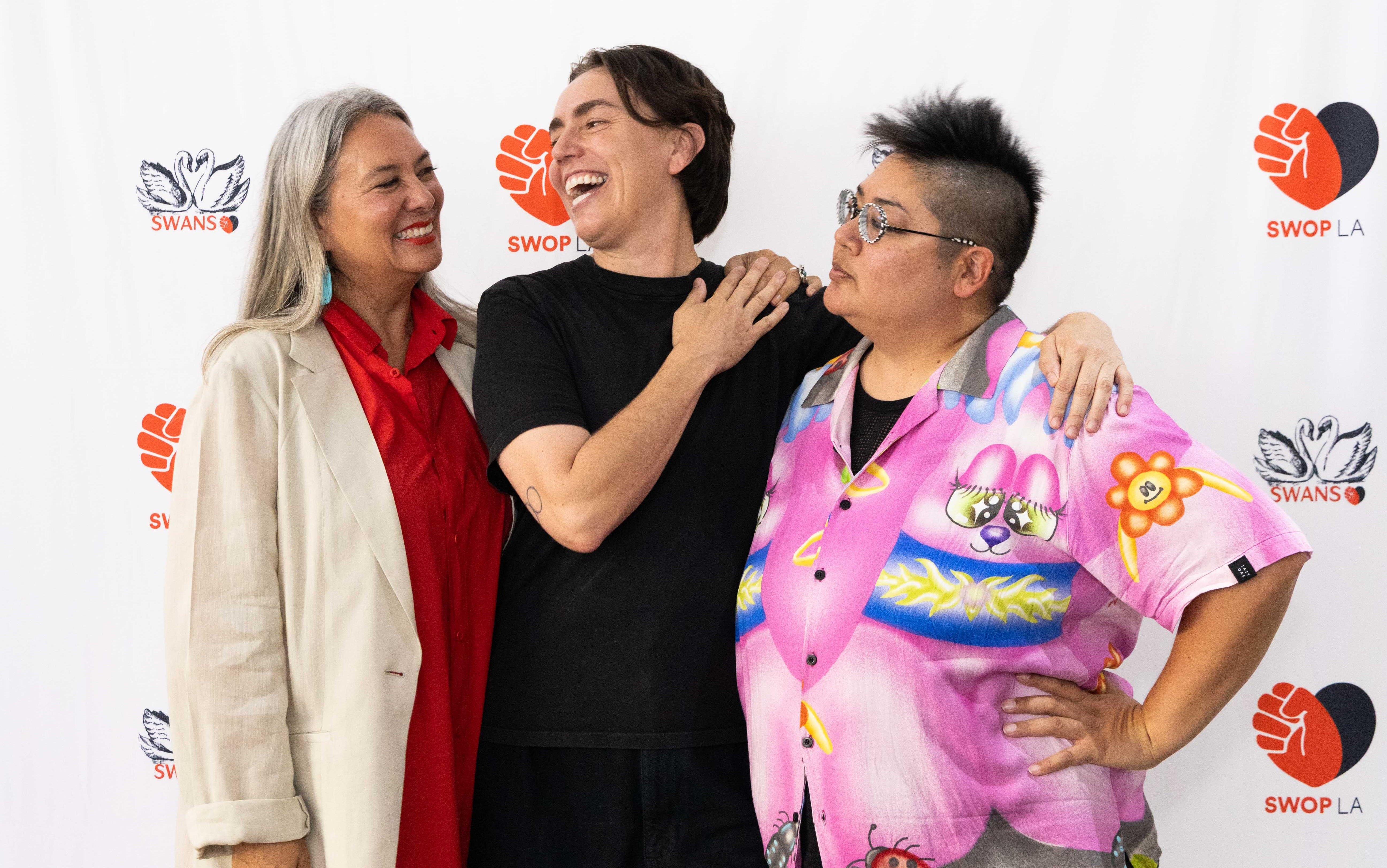
Chloë Flores is a curator, writer, and arts leader whose work explores performance, place, and advocacy. She is the forthcoming Director of Learning and Engagement at the ICALA and the curator of Radical Kinship, an exhibition examining care, interdependence, and collective survival through contemporary art.
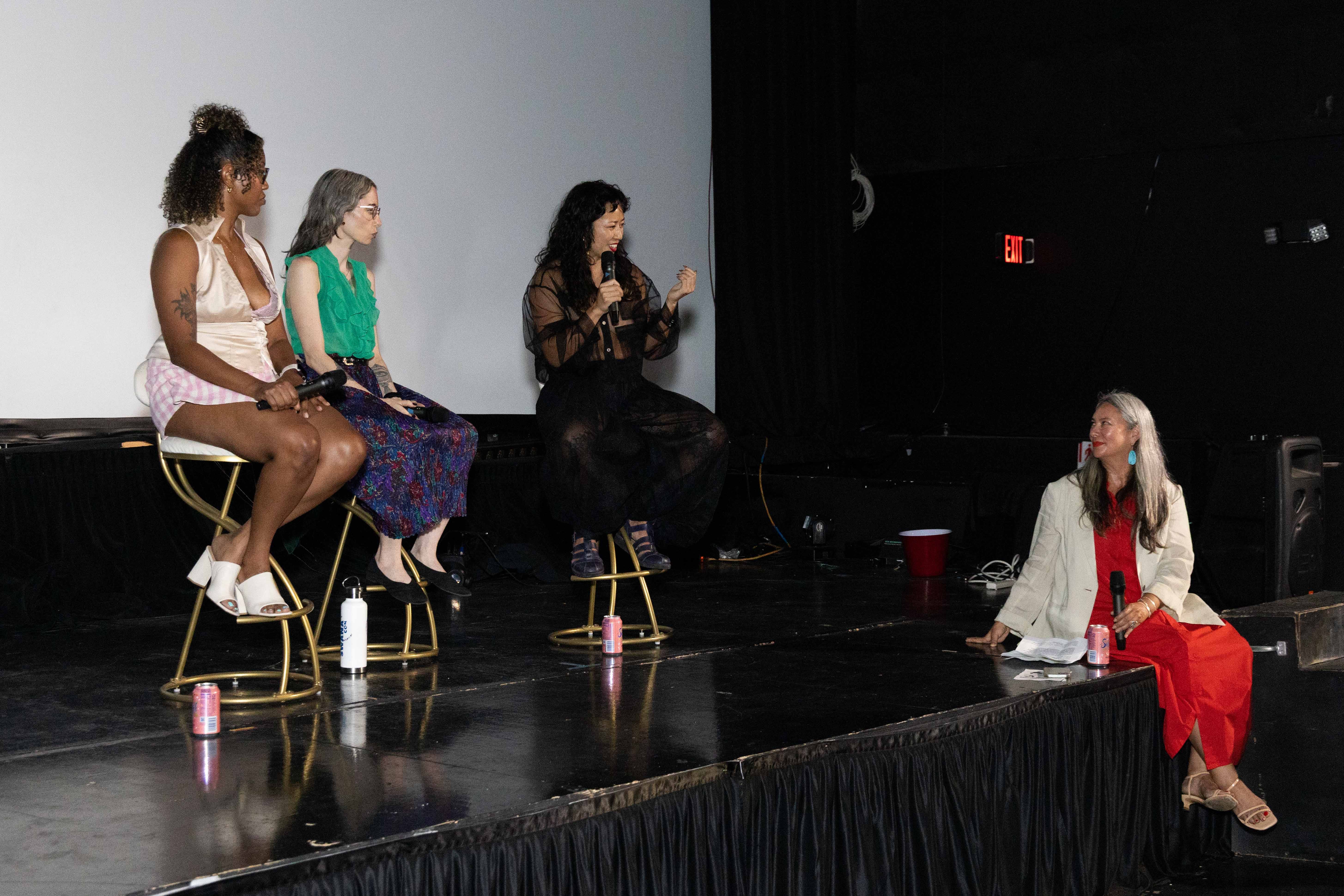
Chloë: One of the ideas that runs through Radical Kinship is that relation is not sentimental, it is actual and brings out the possibilities of people to be together. It is this web of interdependence that care is part of. What forms of care are you hoping to bring forth in the film that are invisible as we consider conceptual norms around family, parenting, and work?
Kimberly: In our society, we really like to have dramatic moments. It’s big disruptions we can point towards that get recognized, whether it’s wars, conflict, or drama, or stereotypes of who people are. Parents–mothers especially–are very flattened out by their role, and so are sex workers. In common narratives, there’s not a lot of room for complexity in those roles, and through this film, I wanted to create a web of people’s stories in their own words, spoken from inside their own homes, that create a more complex narrative around what it means to be a caregiver today, and what skills it actually takes to do sex work.
It’s so easy to make sex work and sex workers into a caricature or an abstraction that points to moral depravity, or criminality, or things like this, but those assumptions clearly show a lack of understand in what sex work is. Folks have no idea what skill it takes to screen people, take bookings, and make people feel safe and sexy even when you yourself aren’t feeling that way. Care is not just a feeling, but it’s also an affective performance. Parenting is very similar in that way. You have to continue to show up and hold space for people relentlessly day after day, like brushing teeth or other tiny moments of frustration and negotiation, stress, and also joy and humor. So the thing I wanted to point towards with this work is that these endurance roles that we take on as parents and sex workers and organizers–that’s what actually sustains community, connection, families, this country, and the world.
It’s not these big disruptive actions, it’s actually just the daily grind of showing up over and over again in all these different ways, whether that be giving people who lack intimacy a chance to reconnect with pleasure and human touch, or raising a kid on your own when you don’t know how that’s gonna work. This applies on the collective level too, like in organizing. In the work of SWOPLA and other sex worker orgs and groups who have been working diligently to maintain, preserve, and broaden human rights for everybody. It’s not sexy galas, it’s filing paperwork to get your 501c3, tracking down your money, and calling up people to get free condoms. I wanted to make this really unsexy grind into a sexy film.
Chloë: Lauren, I have a similar question for you. Another idea that runs through Radical Kinship is that radical forms of kinship often emerge when institutions fail us. These forms of kinship aren’t inherited, they are cultivated. Your research suggests that because sex workers have been excluded from legal, medical, and labor protections, they’ve developed alternative infrastructures of care. I’m curious what you would say those communities understand about care that our formal institutions often fail to recognize?
Lauren: I really like this question. I think it’s a really astute one. These alternative kinship structures recognize that care is social. It’s not individual, and it’s not just familial. For people to be cared for, we need to think beyond self-care, or caring for our parents, or caring for our children–we need to think about how care can be distributed throughout society and the ways that we care for our friends and chosen family members too. But also the way that we care for people that we don’t know, and people who we don’t like, people who we disagree with. We need to think about how we are going to care for all of the people who voted to take our rights away. We have to take care of them too.
Chloë: Lotus, something that you said earlier when we met has really stayed with me. You said, “Everything that I’ve ever learned, I’ve learned sex work.” That’s a very powerful statement, and I wonder if you could share what some of those lessons are, what you think society has learned–perhaps even without realizing it–from sex workers, and where you see those networks of care shaping broader culture.
Lotus: Thank you for the question. When I say “everything,” I mean everything I’ve learned positively in relationships. I know that there are harmful porn tropes, so it’s not about that messaging, but it’s actually being in the industry and in the practice of sex work. And like Lauren was saying, maybe dealing with people you don’t like, even when you’re not feeling sexy or turned on by what or who you’re interacting with. I always think of this in my intimacy coordinator role. When I explain to actors that we’re being careful with each other, that means we are full of care. That mindset is not in the popular culture, it’s not taught in school, it’s not really taught in families unless you have a particular kind of family. We learn these in our own communities–maybe on sets.
For me, it’s how do I stand my ground for certain things I don’t want to do? Or how to share what it is that I am willing to do, or maybe a little curious about? So many people, especially people born female, are conditioned to just go with the flow, to not push back. Now, I worry about the backlash of what’s happening culturally with people moving towards this trad-wife mindset. What’s that going to instill back into people if they’re demonizing us because we’re horrible, and full of pleasure, and make money? They are manipulating the young population into this horribly backwards mindset that doesn’t advance civilization at all.
Chloë: Each of you work in a different field to reshape how sex work is understood. Kim does it through art, Lauren does it through scholarship, and Lotus does it through organizing and advocacy. Each of you invites us to consider who gets to tell sex worker stories, and what becomes possible wshen sex workers represent themselves rather than be represented. I would love for you to share who has traditionally benefited from telling stories about sex workers and what shifts socially, politically and culturally when sex workers reclaim that authority.
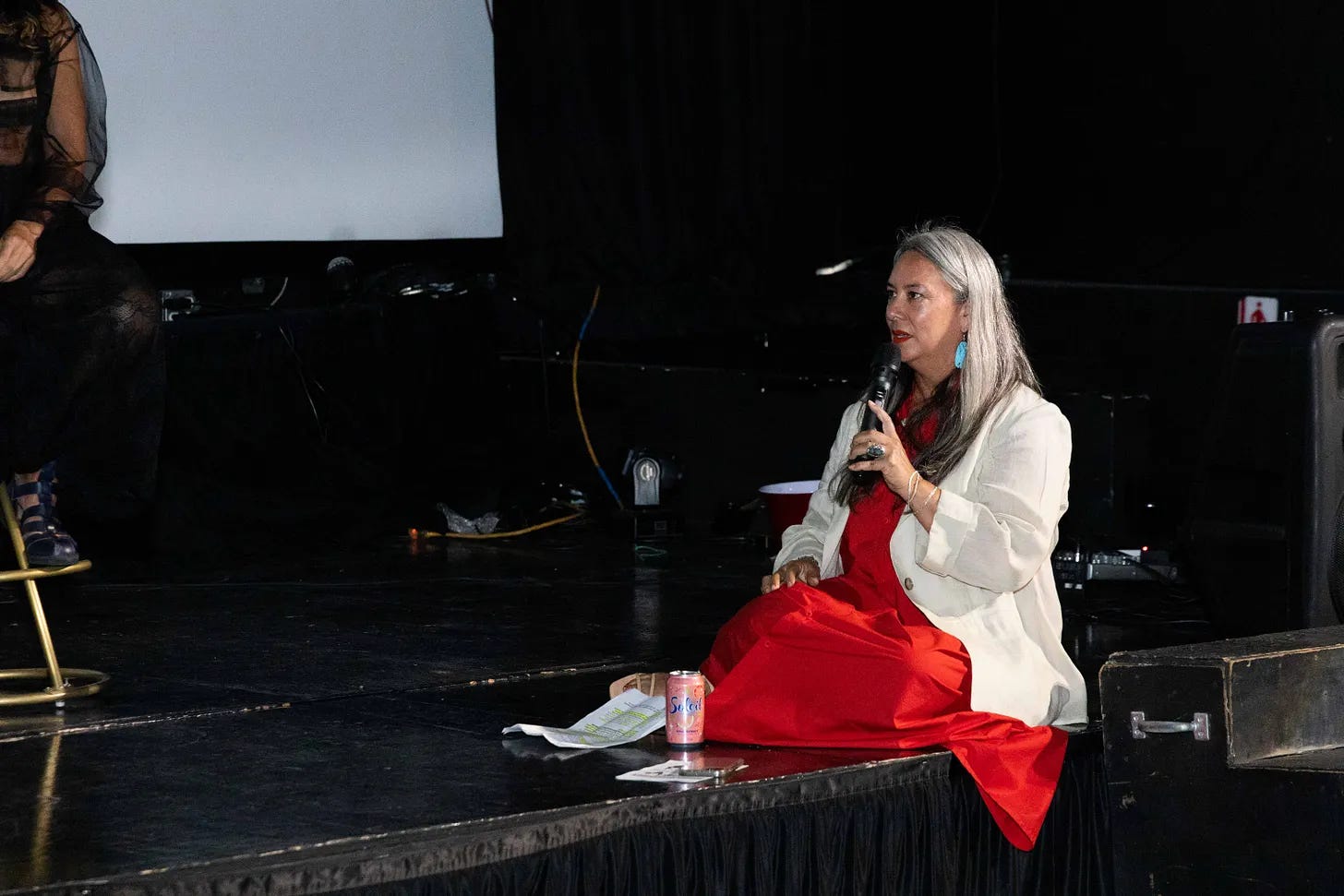
Lotus: Sure, I would say cis white men continue to benefit from stories about sex work, as we can see in the last few Oscar-winning directors and the films they won those Oscars for. Not that it’s not good that people kind of see depictions of sex workers in a somewhat positive way, it’s just like, who’s writing this story, this character, this woman, and this sex worker like this, and why? My big takeaway from these kinds of things is that it’s not benefiting our community. I literally heard in an interview that he just wanted his Russian friends in a movie, so he wrote around that. Awesome, right? Our trauma and work life is the forefront for the background of these character friends getting to be in an Oscar-winning movie, yay. And what sucks is I don’t even think he’s that terrible of a person, I just think people can’t see when they’re talking in front of people about their own lives.
Kimberly: This makes me really mad. It’s so extractive, because the way that sex workers are used in popular media, we’re used to advanced lines. Or it’s a bit character and reduced to this abstraction of “sex worker.” And like, there’s no connection or homage paid to the actual work, the care, the complexities of it, the things that we bring into that work of ourselves from other parts of our character or our experiences, or that come back out from the work. It’s the siloing that I find so tired. Why is it that only male characters can be problematic, complex people, and sex workers are these one-note stereotypes? If that is the only thing that’s out there in popular culture for people to refer to, or is the most widely disseminated thing, that association itself does so much harm. When people think of or learn that someone’s parent is a sex worker, these are the images that get conjured up, and there’s a zillion associations that happen within a split second before they know anything about them. It causes people to lose custody of their kids and causes real harm to families, to children, to the parents. It’s used to police how families can be and what kind of sexuality is allowable in the state.
Lauren: So historically within the Academy, sex workers were represented, studied, and written about initially within the field of sociology and criminology. So they were written about as deviant, criminal, and then since the AIDS crisis, they have increasingly been written about as a health concern in a public health context–this idea of sex workers as vectors of disease, which is represented in a lot of HIV research. And then, more recently, there have been feminist ethnographies on sex work, like my own book that tries to understand group perspectives, which I think has done a good job opening up academic representations or studies on sex work.
I think when sex workers do their own research and represent themselves, these tropes and discourses about sex work I just mentioned–sex workers as criminals, vectors of disease, and sex work as deviancy–can get reframed in novel ways. Like sex work as labor, sex work as a way of escaping work, which reframes sex work through new and different discourses that do different kinds of political work. That’s what sex worker self-representation brings to the table.
Chloë: Thinking about authorship and representation, a lot of your scholarship and research is on books and scenes and journalism self-published media. Can you expand on why these are important forms?
Lauren: The forms of media that I’m currently writing about are DIY forms of media. I started with these types of media because they’re low barriers to entry, and because of that they can bypass institutional media structures. Eventually, I hope to look at things like documentary and, and memoir and, and things that require a bit more institutional access.
Chloë: Kim and Lotus, you worked on the ProMomme zine as well right?
Lotus: I didn’t work on it, but the conversation all of us parents that we had on the couch, that is in Vol. 2 of the Promomme zine.
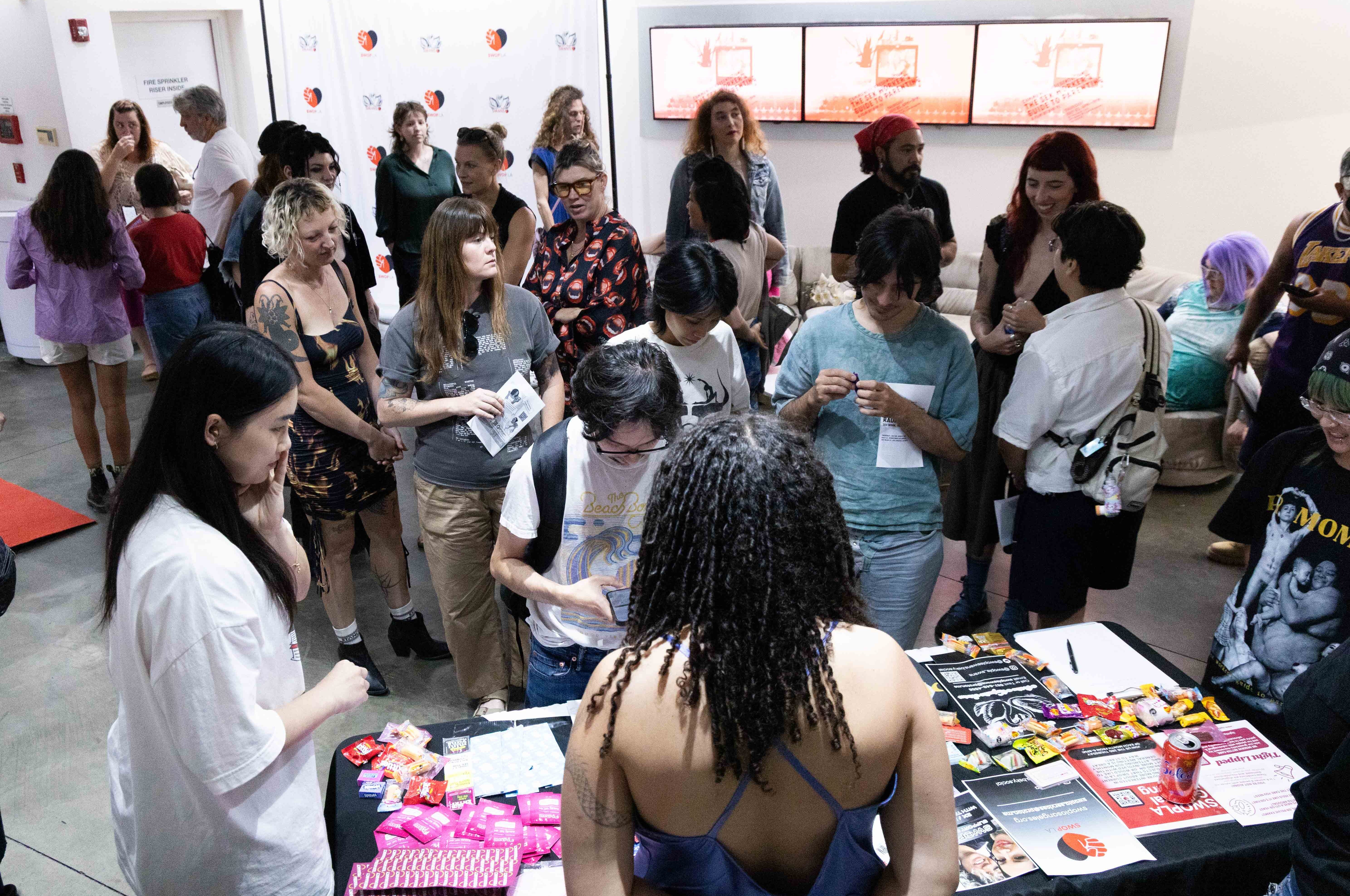
Chloë: So Volume 1 and 2 are on sale outside. When we’re done, please go check it out as well as some merch from SWOPLA.
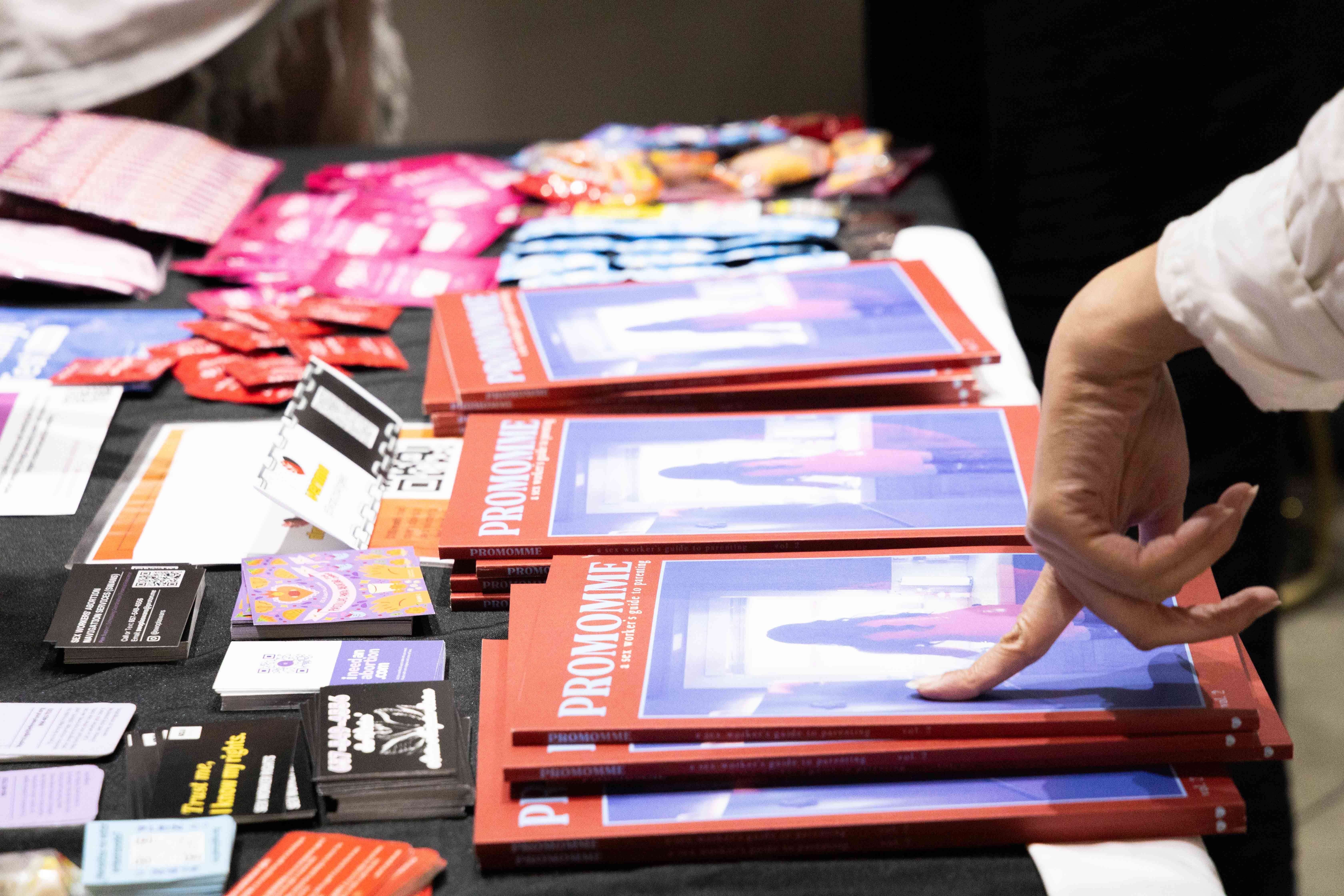
Chloë: Kim, do you want to talk a little bit about the zine and why that format? As a curator I think about format and how form creates meaning. And here you can think about like an installation, or a conversation, or a film, or a publication–they all are asking different things from an audience. Earlier on in our conversation for the exhibition, your film was going to be a stand-alone film, and it grew into an installation. And then, because the format was longer, we wanted audiences to engage with it deeper as a film screening and conversation. So I really feel like this is activating the film in a way that creates a social space and a collective experience. I’m curious about the format that you have chosen, and just how collective experience informs the intent and information of the film.
Kimberly: I’m going back to what I mentioned earlier about like sex work and parenting. These are both things that happen in very private spaces, behind closed doors of the home,domestic space, at a motel. These don’t get a lot of light in our public, collective experiences together, so as a society, we don’t have a lot of experience talking about our own desires, intimacy, and shame in this sort of setting. This whole work came out of a years-long process through SWOPLA research that first began with focus groups and then an academic paper. We were like, wow, this is really important information that is emerging from this community, but nobody is going to read an academic paper. So it was finding different formats for this to circulate beyond these esoteric circles, like the Academy or event art spaces. I think very few people will go and see an exhibition in comparison to a documentary or film or streaming something on their phone, or a magazine–which I’m like, oh, maybe wasn’t such a good idea at this point in history.
My fantasy is to actually change the cultural imagination, and be part of the wave that changes what people think about and associate with sex work and sex workers. In order to do that, you need to build a world and hit people on multiple levels of media consumption and cultural consumption. Because we’re porous beings, we soak up so much just from the air without somebody being didactic and teaching it to you. It’s like these feelings and these vibes that we get from each other when we say we do a certain thing, and someone gasps or is like, Oh, that’s cool. That gives us information that’s below the conscious level.
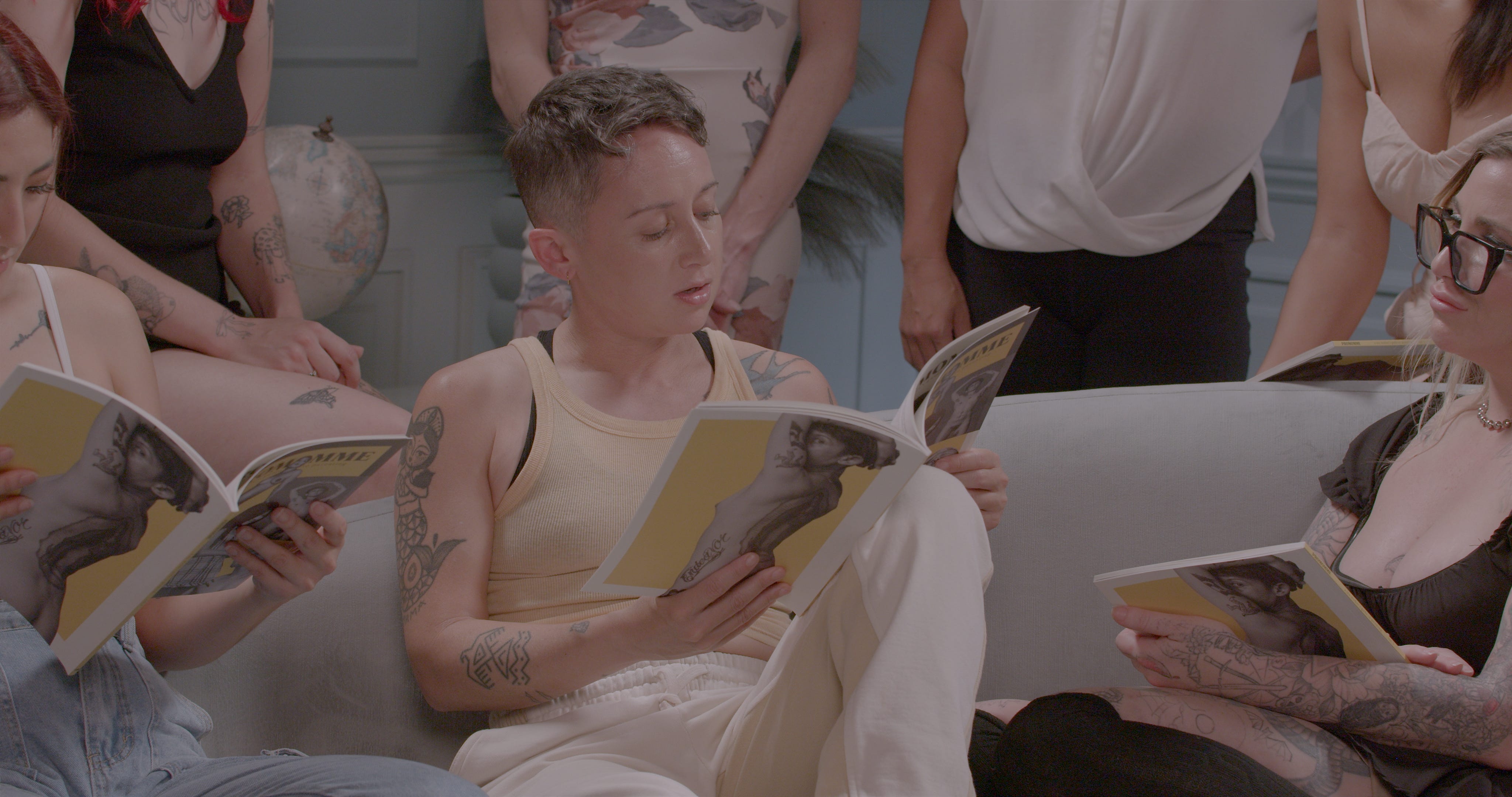
I’ve discovered that I’m a maximalist. I want this conversation to hit at all the different registers: in the Academy, in popular media, with other sex workers in the underground. I want this to permeate the air, because we share that air, right? And so each of these formats is doing a very different thing. Maybe you’re consuming your ProMomme zine alone in your home. That gives you more space to have a more personal one-on-one relationship with it. Tonight, watching this film with everybody in the room, is so much different and more powerful than me hunched over my phone reviewing edits. So I think there is a cumulative effect that happens. You have to hear a message over and over and over and over for it to become the norm, which is ultimately what I want to do—broaden the scope of what is considered normal. Like, take it by its edges and stretch it out to be more inclusive, because that’s the real power of any society, right? It’s not the top-down power, it’s the normalizing power, and what we believe to be normal and whether we can fit into that “normalcy,” which gives us our sense of belonging. So I want to take these aesthetics from daytime talk shows and The View and stuff like that, and I want us to inhabit it with our stories and see that, when you present it with that aesthetic, it looks normal too
Chloë: I have one more question. This is a political moment right now where we’re seeing, trans rights and healthcare being pulled back, and education and arts and expertise being decentralized. Culture isn’t secondary, it’s one of the places where political struggles happen and our current culture wars are evidence of that. We hear that arts scholarship and advocacy raises awareness and creates visibility, but awareness and visibility seem like a really low bar at this political moment. I feel like all three of you are making work that’s asking more of culture than that. Your work circulates knowledge, it creates community, and it influences policy and produces resources that people can actually use. I’m curious how you think about the relationship between representation and action. Where does culture production stop being about visibly, awareness, and representation, and becoming a part of the infrastructure that actually sustains the community?
Lauren: Yeah, I want to answer this one because I think it’s a bit of a red herring. I don’t think that there is a clear separation between representation and materiality. I think all representations have a material aspect to them. There is a political economy that is involved in their production. I think that Marx’s cultural theory tells us a lot about why this is the case, and I think Gramsci’s right in that the base and the superstructure influence each other. And what is really interesting to me about sex worker subculture is that it’s explicitly political. It is proffering resources, it is advocating for laws. It is, because the existence of sex workers is criminalized and therefore politicized.
Lotus: The way I am going to answer this is by returning to your earlier question about what sex work contributes to society. One of the things I think of is our health system in the porn industry and how all of the contact tracing practices that everybody implemented to get over the COVID crisis literally came from our productions. I remember our executive director at Free Speech Coalition, which is our industry’s trade organization that advocates for the legality of the industry, being on the phone with the Centers for Disease Control and the World Health Organization, literally discussing how we contain the growth and rapid spread of infectious diseases in such a small community. How do we do it? As you know, they really did not have a plan for dealing with COVID.
The way we manage our health in the industry is something that the greater public doesn’t realize they are now benefiting from on a global level. The way we address emerging STI’s, even the way that we talk about infections and disease–trying to remove the stigma because we’re already so stigmatized–we are actively educating each other. Just the other day in one of the chats with the performers someone said, “This is not political, I just want to be slutty and fun!”, and someone else corrected them like “No, girl, we are inherently political, whether you like it or not. You can put your head in the sand, but all of this stuff is going to affect us and we should know about it.” That’s why I love us–we do build grassroots movements, we do self-educate and educate others in our communities–whereas outside of this, it’s very much like if you don’t know, you’re screwed. I know our testing system is even educating regular medical doctors right now about emerging STI’s they’ve never heard of, and that we’ve been dealing with and doing research on. So we’re very much affecting even the future health of sexually active people.
Kimberly: There’s ongoing debate about how art can affect change on a tangible political level. And I actually don’t know if putting up exhibitions, or through visual culture alone, is the best place to affect change. Where art has great potential, because of its proximity to capital and power and the legitimizing forces of institutions and museums, is redistributing resources. Like this film and ProMomme were funded by the California Arts Council through a grant. And with that grant money, we paid all the contributors to write pieces, we paid them to attend writers’ workshop, we paid sex workers to copy edit, and then we sold the finished magazine to fund the second volume. And everyone that was a part of this film were compensated for their time in some way. Compared to other films, our budget was tiny, but it was meaningful to compensate members of our community. In doing so, we’re saying “We value your experiences enough to pay you money for your expertise, for you to show up and drop knowledge, and share with the world what you know.
I think a very tangible, direct way to affect change through the arts is to spread out the money that comes from big donors, institutions, family foundations or whatever, and through that granting of legitimizing power. I’ve had my art videos taken off Vimeo multiple times, and as part of the appeal process, I sent in my CV, I name-dropped this award, and that grant, Stanford, and blah blah blah, and then it got reinstated. But without those accolades, my account would be over–just like my spicy account is over, because I don’t have those accolades for my ProDomme account, right? So by aligning with artists who work, or have worked, in the erotic industry–which, by the way continues a long, unacknowledge history of sex workers as cultural producers, not just as muses or as objects of paintings or whatever–that’s offering a sort of protection against censorship for those of us trying to have this conversation in public in a very unfriendly conservative, backwards-ass climate.
Chloë: The California Arts Council is your state tax dollars at work here. So, this project was funded by you.
Kimberly: Thanks, everyone!
Audience Question #1:
In terms of just the people in the room, how can we continue to support this, and others stories about sex work told by sex workers themselves?
Lotus: We are in the middle of creating a sex-worker-friendly credit union because of all of the banking discrimination that people in our line of work experience, often having our funds completely seized at random, at the whim of whoever at the bank decides to close our accounts for whatever reason, and usually without a full explanation as to why. It’s just like a “flag” that happens on our account. You can scan the QR code, donate to the cause, and spread the word, because the hope is that we will have enough by late next year to open. But the only way that can happen is if we gain numbers and membership to show that we are a community of abundance and worthy of actually opening a credit union. And a tiny disclaimer: we don’t want to post about it on social media because of the political climate that we’re in. We don’t want to publicly put the word out and get all of the “anti” people against us alerting federal regulators because that’s what’s really going to happen if we do. So yeah, scan the QR code, share with three friends, and then get them to share it with three more.
Lauren: I have a book coming out next year called Sex Worker Solidarity Networks of Caring and Sharing. It’s going to be open access on NYU Press, so you don’t need to buy it because everybody will be able to read it for free. But if you want a physical copy, you can preorder one. I’m also continuing to publish about sex worker cultural productions. I just had a paper accepted in Society about sex worker journalism and anti-porn policies. So read it and go read all the wonderful journalists who I cite in it.
Kimberly: I think in terms of supporting this film and work like this, this was produced in association with SWOPLA, the Sex Workers Outreach Project, Los Angeles, which needs the support of individual donors. So please make a donation. We’re working on making a sex workers artists fellowship in the future, and really embedding sex worker media production in the public consciousness. If you can, follow us, share the work we’re doing, share this film with people, talk about it to people. Just helping to spread the word and gas us up because it’s already emerging in mainstream consciousness in shows like Margot’s Got Money Problems, and TLC’s new reality show coming out about OnlyFans suburban moms in Saint Louis. We are right on time, but we want the media that is made by sex workers, from our embodied perspectives, to actually benefit from this wave. Thanks for helping us spread the word.
Chloë: While we’re waiting for the next question, I just want to say thank you for making this film. Would the other parents who’ve joined us on stage like to introduce themselves?
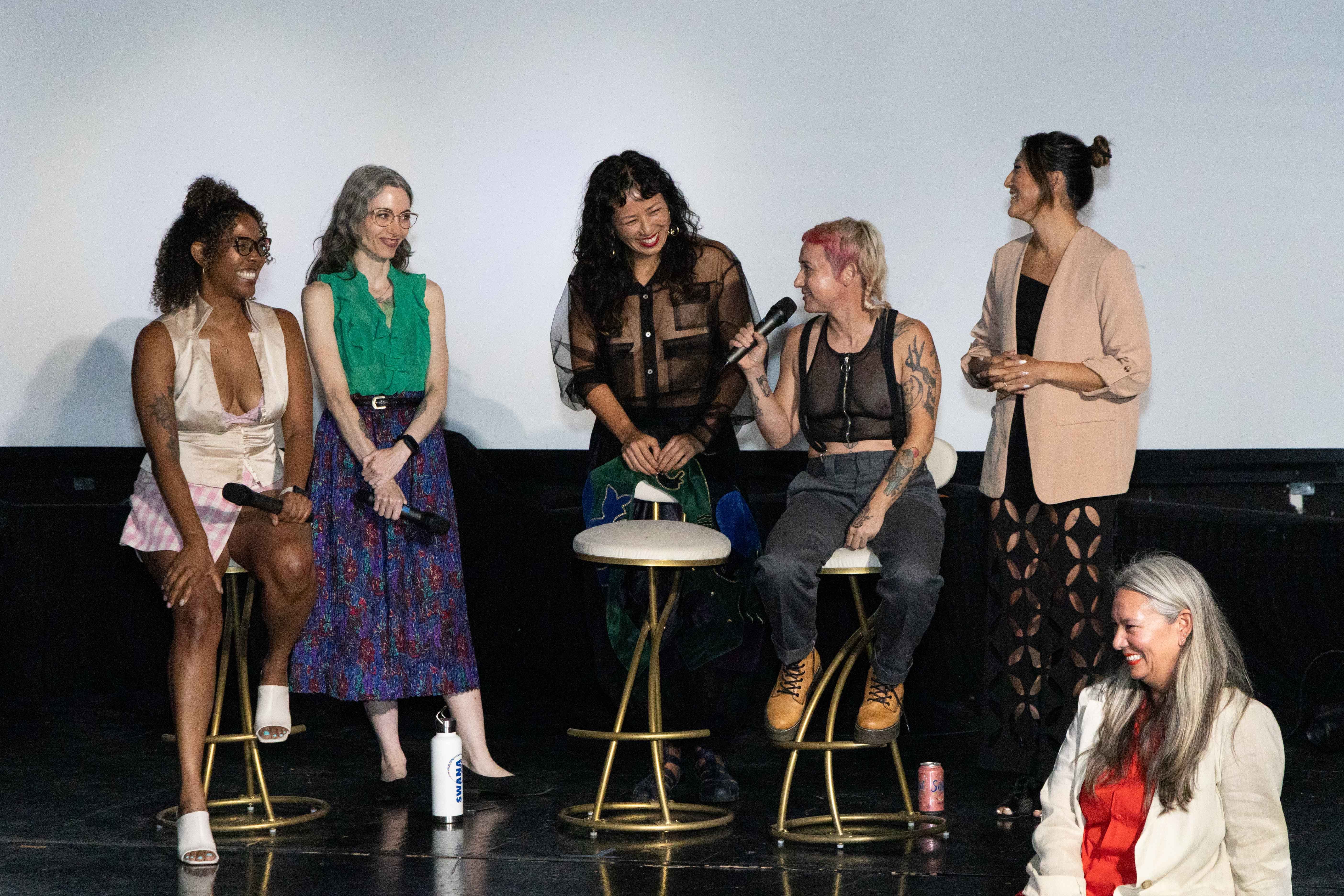
Lorde: I’m Lorde Destroyer. I’m a Daddy Dom, and I just feel very honored to be here, and I think that this film turned out brilliantly. And thank you, everyone, for being here. And I don’t know, that’s all I have to say. It was so much fun, and my kid’s so fucking cute, isn’t he?
Ella: I’m Ella. and that was really beautiful. I don’t know, I’m just really overwhelmed. Lots of emotions and feeling all the feelings. It was filmed two years ago, so I don’t remember half the things I said, and then seeing myself on screen and trying to reflect back on that time. Yeah, my oldest is fourteen now and, since the filming of this, I came out to her as a sex worker and educated her on what I do. Just today, I told her we were coming to this, and she was like, “I’m proud of you Mom”.
Audience Question #2:
I’m sure that there was much footage that you couldn’t fit in this beautiful film. Do you each have a special moment you would like to share with the crowd that may not be included, or your favorite scene from this movie? There have been lot of questions is about your knowledge, and I would love to hear what you love most out of this screening as well.
Ella: There was a lot of the couch conversation that wasn’t put in, but there’s one moment that stuck with me, and it’s just all of us crying, pretty much. I don’t remember what we were talking about, but we’re all crying, so I was really excited to see that. But it wasn’t in there, and I was like, what were we crying about?
Lorde: I liked when your kid threw their tree down the stairs. It just had momentum and gravity, and it made me laugh.
Lotus: My favorite part about making the movie was dancing in the, like, fake kitchen. So the B-roll moments of me playing with my hair and stuff–we did, like, a whole dance sequence where they just put on music and I just danced all over the place, and then afterwards I was like, fuck, I should have recorded that on my phone, it was so cool. I just felt all empowered. After that, we started doing the couch interview, so I guess I was just fully charged after that. And then my favorite part about watching it on screen was seeing that you got my full Instagram screenshot, like all the other pictures that were in there too, so that was fun.
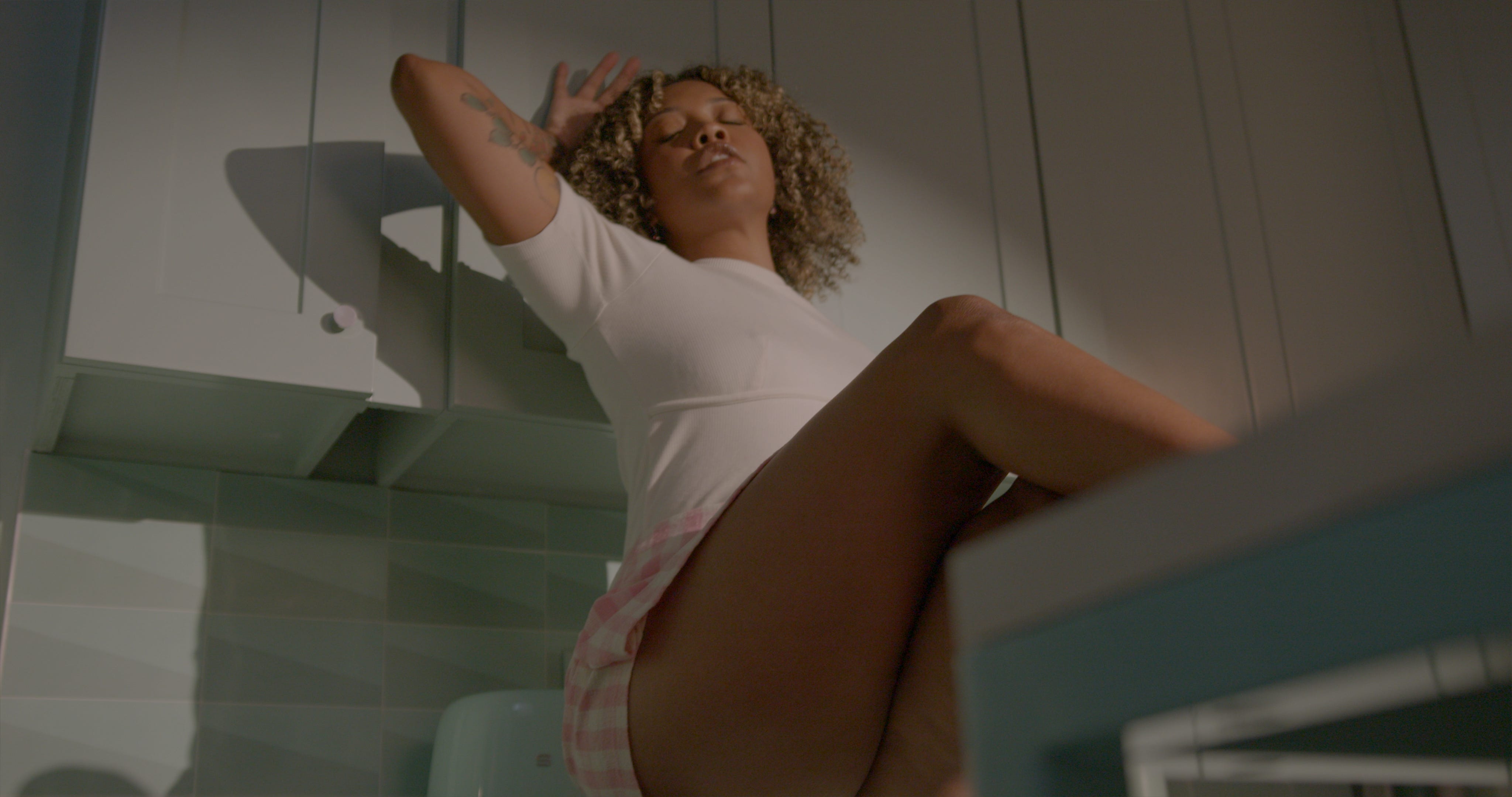
Kimberly: I love hearing this because I worked on this film for such an extended period of time–so basically the whole time I’ve been a parent, I’ve been in conversation with sex working parents. It has really guided my own experience and identity, and expectations of what it is to grow into this role. Your words have guided me as my kids are now three and five, and not nine months and three, anymore. As things change–I’m not a drinking fountain anymore; now I’m a jungle gym–just hearing your voice saying things like “It’s okay to tell them you don’t want to play.” “It’s okay if you don’t want to be around them.” “You can talk to them like a human, not a baby goof-nugget!” Yeah, I hear your voices in me, and it informs my parenting. So thank you so much for being willing to share your experiences and that knowledge with me and with everybody through the film.
Audience Question #3:
I just wanted to ask kind of on that material conditions note–sometimes the culture changes because we get to vote in elections, and then policy makers make laws. I wonder if you could talk a little bit about some successes we’ve had in changing the laws as a broader group and, and how people could plug in for policy advocacy purposes in addition to everything already mentioned?
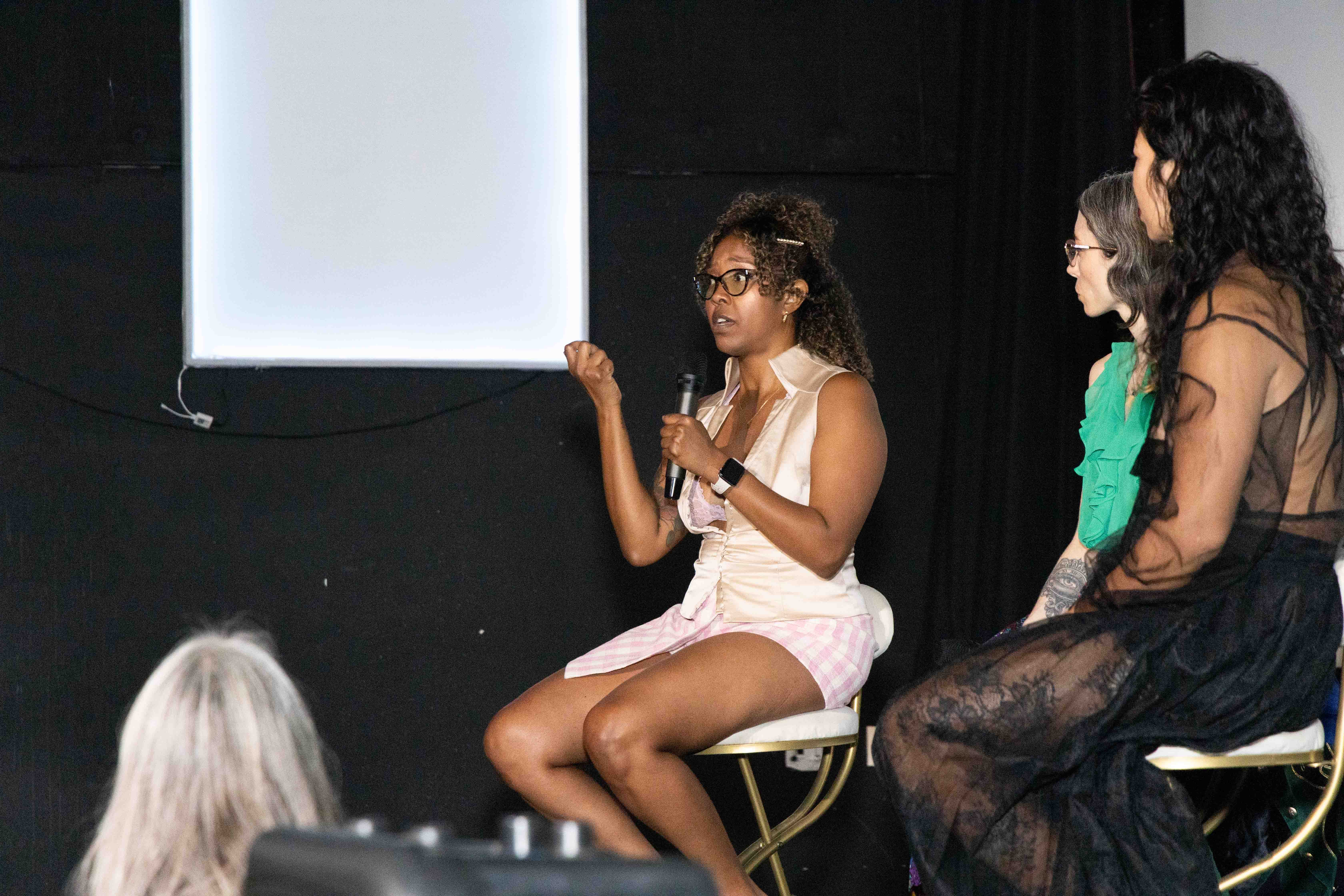
Lotus: Thank you for that question, Woman in the Audience. No, that’s my girl, Ashley. I’d recognize that voice anywhere. She is a part of an organization with me called Decrim Sex Work California. We formed kind of around the time of pandemic, and our ultimate goal is to influence the decriminalization of sex work in California. We did have really good success our first year with the passing of SB 357, which prevented people from being arrested for loitering with intent to solicit. It had led to a lot of discrimination and targeting of black and brown people, people of indigenous looks, and LGBTQ people–especially trans people. So that was a really big win for us in our first year, and we are still working on new legislation. Donations and awareness helps because it is a grassroots organization. We work with organizations like SWOPLA, we form larger coalitions with other groups that have like minded interests–whether it be about immigration, parenthood, housing discrimination, or banking discrimination. It continues because with one push forward there’s two steps back now that we’re in this very hostile environment against sex worker advancement of any kind.
The video of this panel can be viewed on the SWOPLA YouTube channel.
No posts
Comments
Nothing yet. Say the first thing.
Sign in to join the conversation.