
I wrote this piece when I was first trying to get pregnant during the first 6 months of the COVID-19 pandemic in 2020. Like many non-essential workers, I was left with rolling expanses of time for the first time in many years. Between guzzling boxed wine from Costco and stomping around with virtual Zumba in my living room, I spent many moments reevaluating how and to what end I was exerting myself. I’ve always had a bit too much energy, which my jagged nails and over-developed masseter muscles betray to careful observers, and this collective moment of stillness reeled me back from the edge of burnout on which I had been teetering while teaching video art to liberal arts students during the week, and using men as toilets in my basement on the weekends.
For the first time in years, I was questioning how I was bringing in resources and why I was working myself so furiously towards exhaustion without even consciously realizing it. Ascending to some mythical place of respectability in the ArT wOrLd seemed like a foolhardy, if not totally pointless, goal in the era of house-bound social distancing, open-ended medical catastrophe, and economic precarity. Ironically, this was also the era when OnlyFans took off, and the account that I had been running half-assed since 2017 had 20x’d its subscriber base over a single weekend. I felt compelled to put clip production in overdrive, yet perturbed by the competing desire to spend the time in my studio instead. There’s nothing like a crisis that stimulates a rejiggering of what you think you know! It was from this cage match between my identities (Artist? Sex worker? Future parent?) taking place within a collapsing world, that this essay was written.
In my studio, I have a $5 bill mounted in a gold picture frame from the first sale I ever made of my artwork. I still remember the linoleum print from the exhibition two of my fellow art majors and I organized shortly after undergrad. We paid a middle-aged white man to rent us his second-story retail space in Westwood for a week, and we bought a case of 2 Buck Chuck and an assortment of presliced cheese - hauling the paper Trader Joe’s bags up the stairwell next to Buffalo Exchange. I sold my piece for $75 to the man whose space we rented, but spent more than that on exhibition costs, which is why I only ended up only framing five bucks.
As a teenager, I told people that I would be an artist when I grew up. As if responding on cue, adults would ask how I planned to support myself doing such a thing. I shrugged and gave some variation of “I’ll figure it out”, with no access to any artist who actually did so. My formula for future success was the following: my hard work + delta of “talent” between myself and my art class peers + declaring myself a Professional Artist = sales and money. This vague notion of putting product to market in a meritocracy was not only completely disconnected from the general reality of the art market, but also from the specific art I made.
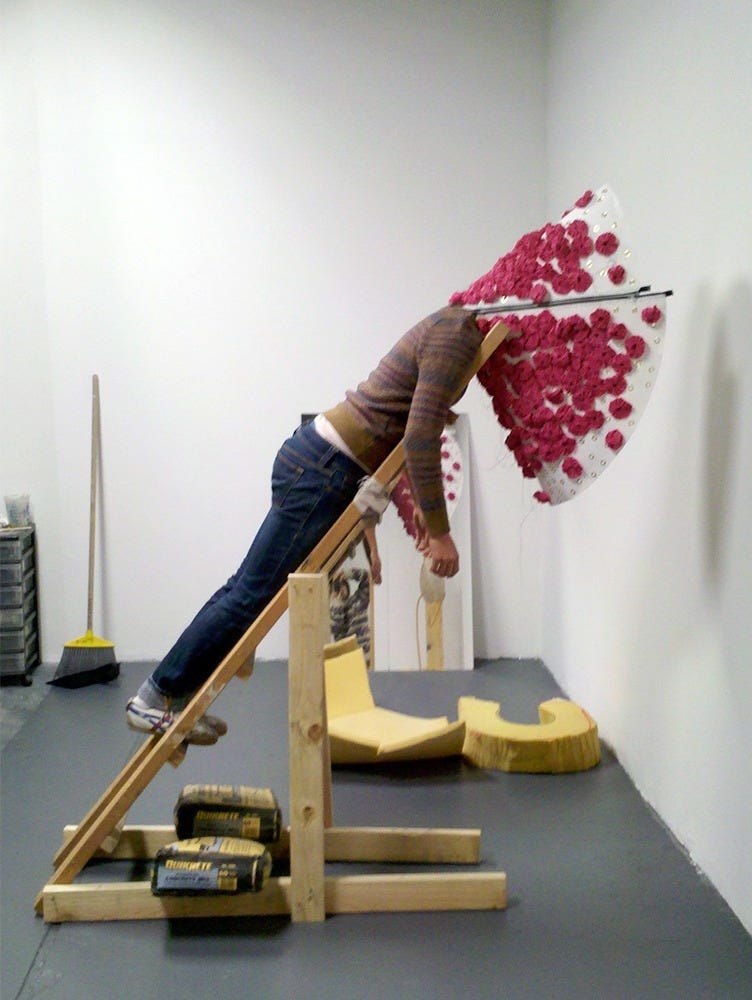
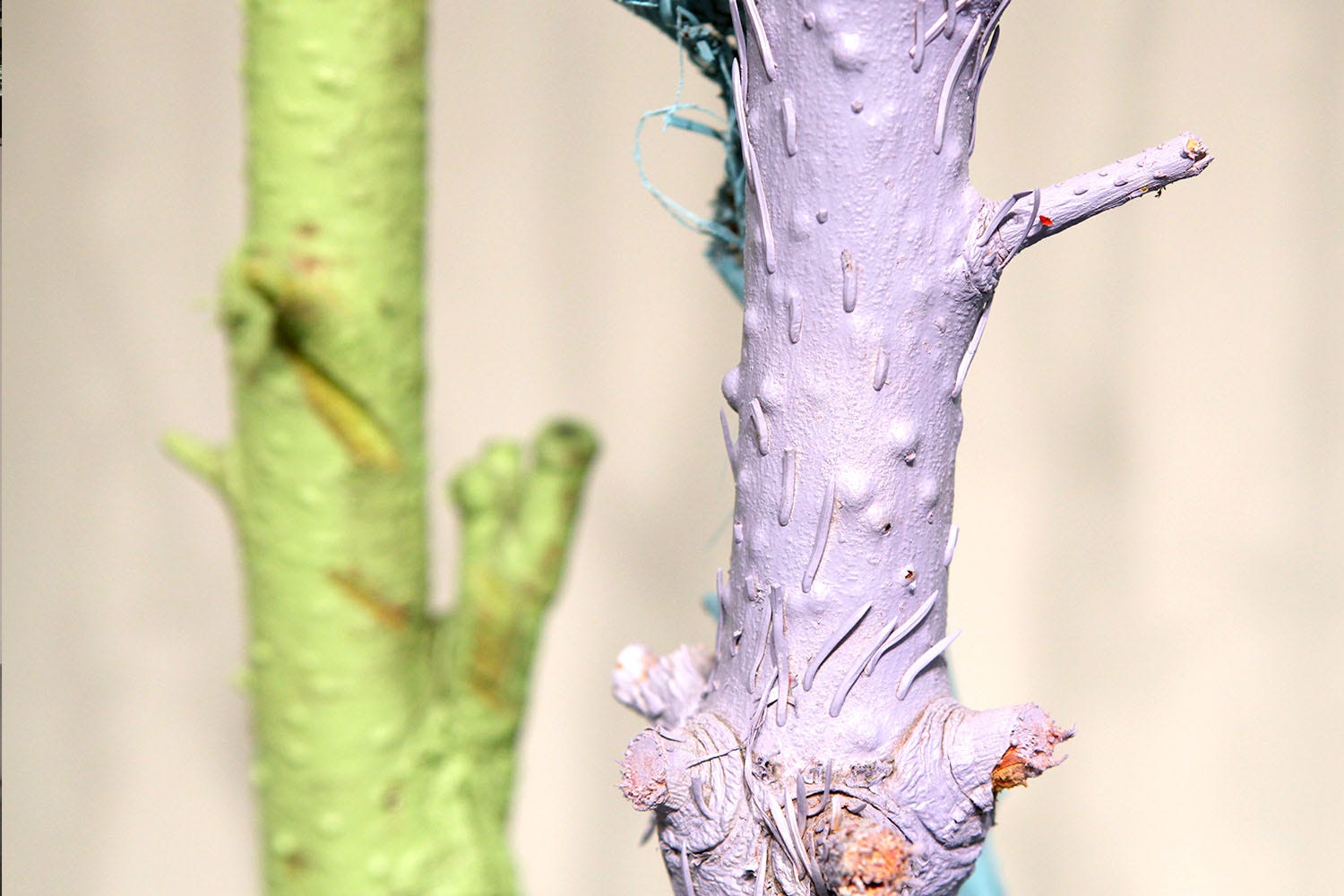
The art I made were mostly endurance performances: carrying around my poop for a week (Poo Project, 2007), wearing a human-sized cone of shame for a 40-hour work week (Polite Fiction, 2010), and scaling the gallery walls in my underwear (Domestic Escape Artist, 2012). Even when I made actual objects, they were often precariously constructed, large and unwieldy video installations, or made of ephemeral materials like latex, which break down over time when exposed to basic elements like air and light. I was compelled to surround viewers with non-precious objects on the brink of being discarded, like the 52 dead Christmas trees I scavenged from the streets of Los Angeles using the Craigslist Free section and proceeded to transport into the gallery.
Operating an artist in public since that first exhibition almost 20 years ago, I’ve made a few more sales with a few more zeros, collected a smattering of artist fees for performances and lectures over the years, and even landed a couple of teaching gigs in academia. But never have I ever fully supported myself financially from my art-making alone.
Instead, I made money in the most lucrative ways I could find with the minimum time commitment required. I donated my eggs for other peoples’ IVF treatments, worked seasonal jobs at film festivals once a year, sourced “vintage” clothes from the nearly deceased, and tried my hand as a sugar baby. Anything from my life that I could double dip for profit was fair game: my pleasant appearance, my body’s biological capabilities, the symbolic capital of my academic pedigree and past athletic accomplishments - I commodified it all. When young artists now ask me for how to make a living after graduation, I tell them to protect their time as their most valuable resource. Half jokingly, I ask about their attitudes towards sex work and drug dealing.
For me, making art has not been economical, but it has schooled me on economics: the art of household management and thrift, according to the word’s Ancient Greek etymology. Haunted by the starving artist archetype within a system built upon the magical, reproductive powers of capital, what does it mean to claim a role that fails to create or sustain material wealth?
Modern economics centers around the individual desires of the “rational actor” who makes decisions based on cost/benefit analysis: If I give this, I get that; is this a good deal or bad deal; do I come out a winner or a loser? Behavioral economists assume that one always seeks to maximize one's own fulfillment of desire, so if my art practice makes me a loser, does loving it make me a masochist?
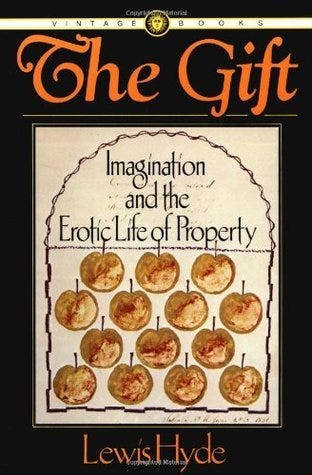
If so, then I want to put my finger on the pleasure I get from this pain. In Lewis Hyde’s book “The Gift: Imagination and the Erotic Life of Property,” he describes the different relationships that gifting vs. purchasing produce. Gifts create kin, and are circulated within a family, tribe, or community, designating who belongs within the group. Gifts involve temporality and only return to the giver in time, so being part of a gift-giving community requires faith in your social network and trust in your neighbors, and peers. On the other hand, purchasing is how strangers exchange. Little faith or trust is necessary between parties who buy and sell on the spot. Exchange takes place in a single instant, with each party seeing what they get and what they give. Once the deal is done, there are no ties that entangle the participants and each one is free to go their own way. The difference between the gift economy and the market economy is what draws the line between self and other.
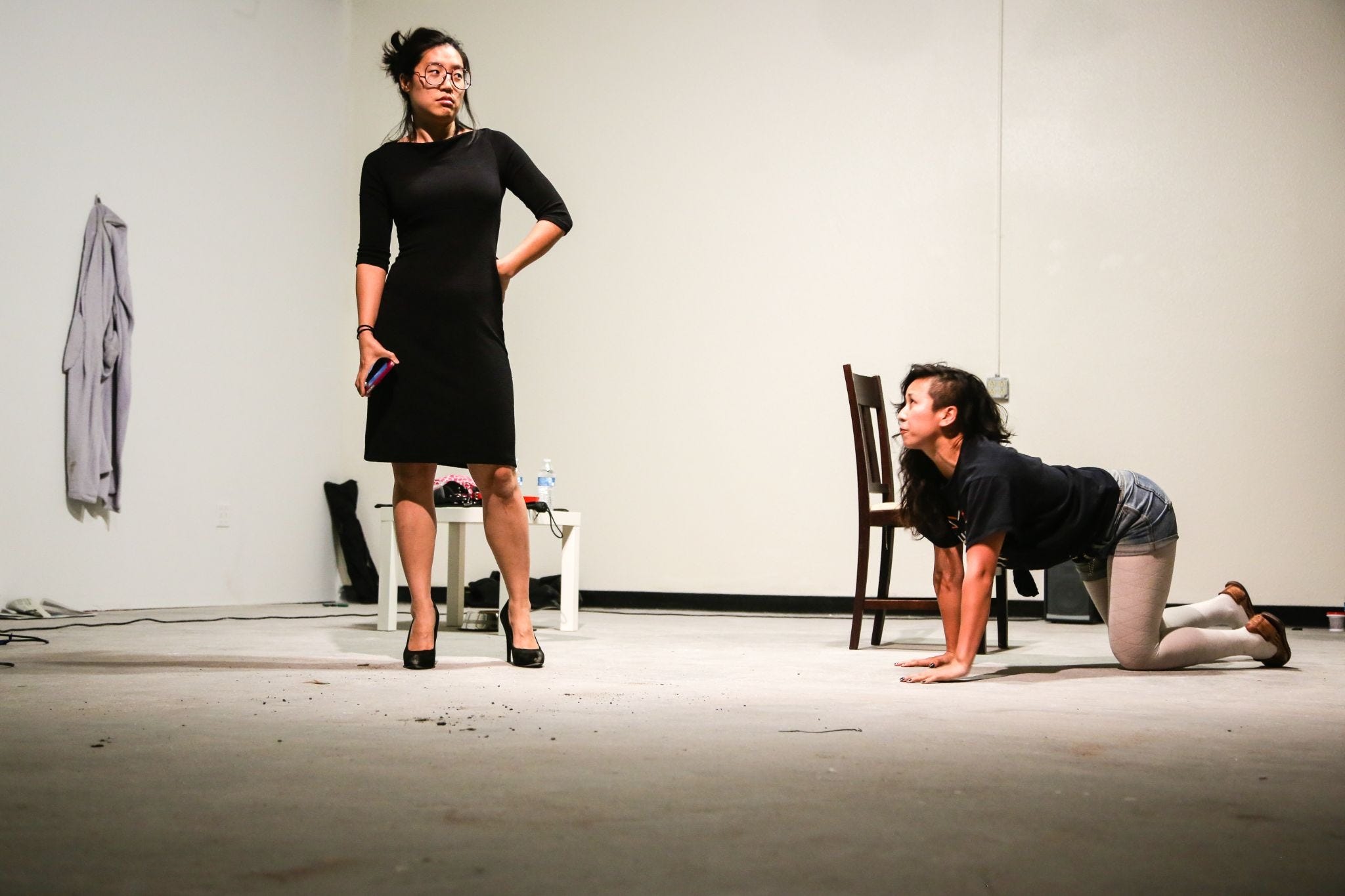
Us and them, sibling and stranger, human and alien, me and other. These are circles of varying circumferences, and I’m coming to understand that art allows me to play with the shapes and sizes of the boundaries we draw. As goods change hands, as humans share our time and give our attention, we simultaneously shape relationships. Treating life events as material to be processed in the studio, my art becomes a rumination on the deals I make. A participant-observer of my own choices, my work asks questions like What happens when you fulfill artists’ fantasies in exchange for a piece of their work? (Shared Value, 2016) What benefits arise when you confess your troubles to a stranger while trapped in an elevator? (7 minutes in Hell, 2017). What social and cultural capital do I give up and gain in getting married? (DOMestication, 2019-2021).
But gifts given aren’t only between humans. Hyde’s anthropological accounts tell of priests and shamans giving gifts to the forest, the river, and the gods and the spirits as a way to conjure protection and cultivate abundance. Great leaders would offer up a season’s worth of harvest to be consumed by the people in a single night, or to be consumed by fire in a potlatch ritual. This functioned not only as a way to honor their gods, but also as a demonstration of their own power. How different this is from the way we characterize power today in our world of market exchange. Instead of idolizing those who give away resources freely, we idolize those who amass and privatize resources. We worship those who take capital out of circulation and extract resources from the commons. As a culture, we fetishize the ethic of the miser against our own best interest
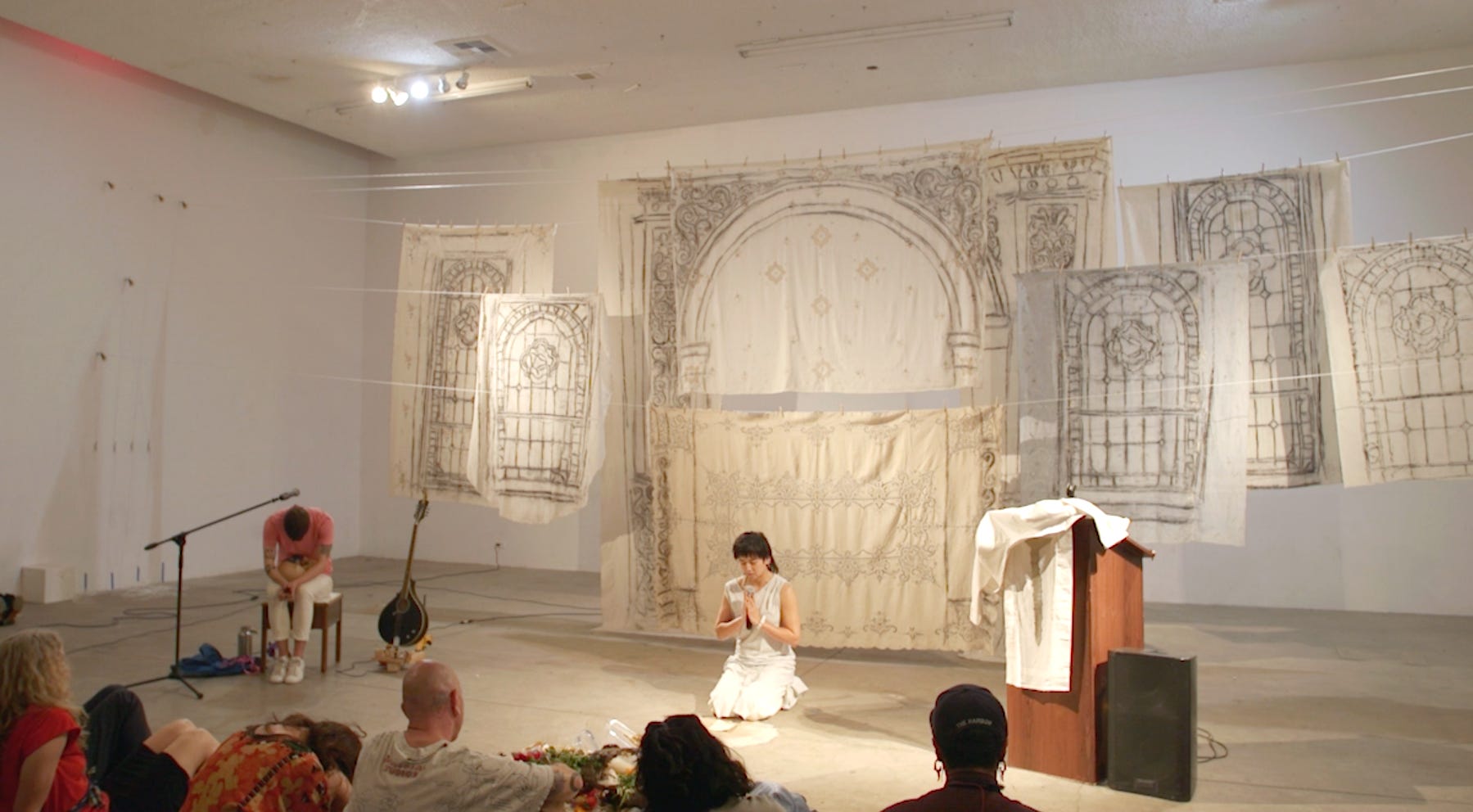
The things I grab and give in my daily interactions all contribute to the dynamics of circulation. In my life, I see the tension between these two systems play out continually. Art embodies my participation in the gift economy, as I willingly stoke the fires that consume my time, energy, and resources in the studio. My money-making hustle as a professional dominatrix embodies my participation in the exchange economy. Each day, there is a choice to be made: Do I practice art and invest in the gift economy, or do I practice BDSM and invest in the exchange economy?
Ironically, while I first began my dominatrix work as a way to fund my art, I’m now observing the two systems battle for my body, time and attention.
I could make a comfortable living as a full-time dominatrix, which is creative in its own right. In fact, many dominatricies identify as performance artists themselves. Capitalism whispers that if I devoted myself to this trade without wasting my time and attention on my money-pit studio practice, I could maximize my profits, increase my purchasing power, and replace whatever pleasure art-making gave me with an endless menu of exotic experiences that money absolutely can buy. A rational actor would take this deal.
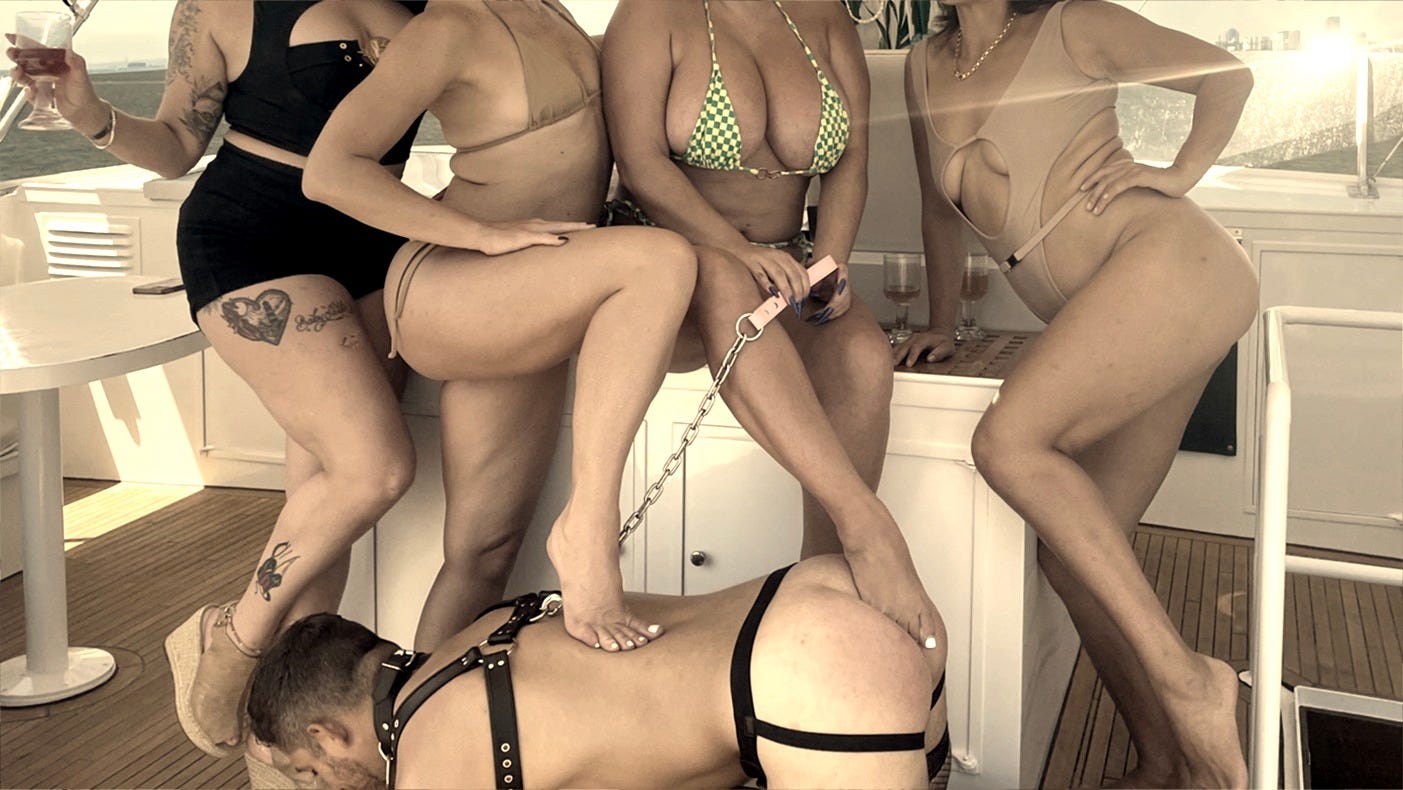
But instead, I’m finding myself asking whether I want to keep domming. I keep fantasizing about turning away from this career and devoting more of myself to art making. So, why isn’t money enough? I don’t have an answer for this, except to postulate that the thing money can’t buy is kin, it cannot buy community and by the act of purchasing, it actually draws a line between the two halves exchanging the money. Belonging is begotten through devotion and I want to see the possibilities that exist when people devote themselves to each other, to the creative act.
For me, art making is my faith.
I am pulled to this path because it is irrational, because it makes no sense through the lens of modern economics and market exchange. The fact that my studio continues to exist despite the rational actor’s objections is precisely the point: it embodies the limitations of the system to make sense of human motivations through the lens of self-serving logic of capitalism. Making art is an assertion that as humans, we are more than rational actors, and I keep doing it - keep squandering my resources - as an act of faith. Art making is a ritualistic burning of my resources, and it is through this act that I claim my power and my place in the cycle of creation.
No posts
Comments
Nothing yet. Say the first thing.
Sign in to join the conversation.