
Hi all,
We have two recent event recaps that I wanted to share with the wider community, both touching on themes that are increasingly shaping our industry: the UK's grid bottleneck and a new collective committed to advancing gender equity across the built environment.
Plus a nudge on upcoming events. Booking links below, open to all, with members’ discount codes at the end of the newsletter:
📍 Networking Breakfast with Koba – 16 July from 8 am
A relaxed morning of coffee and conversation on Sustainability in Flex Offices with the LiRE community. We’ll be joined by Zoe Moss from Cast Group in conversation with Koba.
📍 LiRE Investment Club with Puma Property Finance – 21 July from 6 pm
We’ll be joined by Judith Fischer, a strategy & capital markets expert, previously with Knight Frank and Savills IM, to discuss designing an investment strategy. Free virtual tickets are still available.
KOE Group was delighted to take part in the recent LiRE event, “The Grid Bottleneck: How Power Availability is Reshaping UK Real Estate”, hosted at Greenberg Traurig and moderated by Monica Miranda.
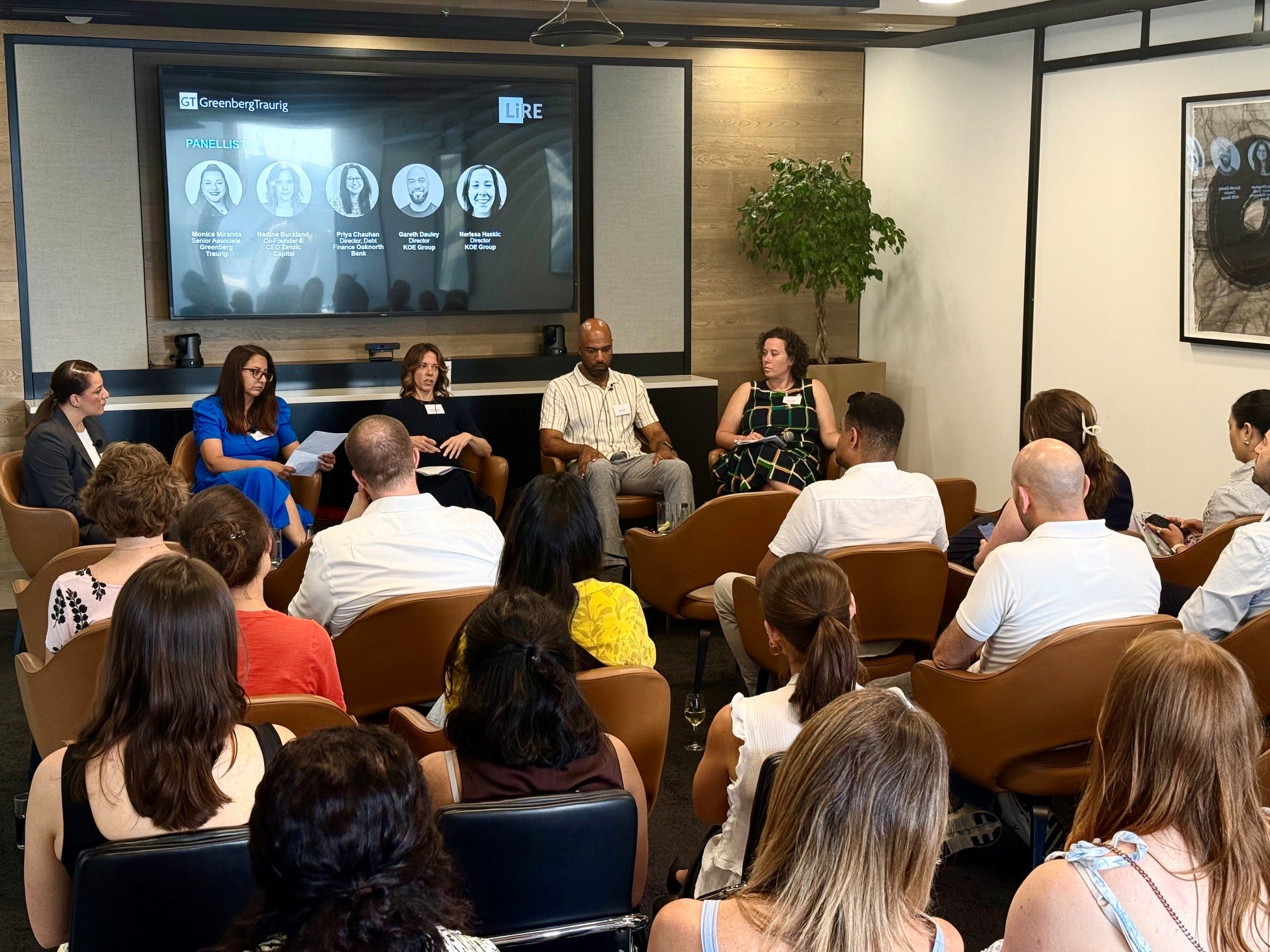
The panel brought together KOE’s Gareth Dauley and Nerissa Haskic, alongside Nadine Buckland, Co-Founder and CEO of Zenzic Capital, and Priya Chauhan of OakNorth, to discuss why power is increasingly becoming a value driver for real estate — not simply a development cost or technical constraint.
Key takeaways from the discussion:
A power connection is an asset, not just a cost.
A secured, deliverable and properly understood power connection can enhance valuation, improve funding prospects, support exit value and reduce delivery risk. Captured early, power becomes part of the investment case and can also support compliance requirements, including EPC improvement and future operational resilience.The market needs to think in terms of “power gain”, not just planning gain.
Just as planning gain can unlock land value, early power diligence can unlock and protect real estate value. Those who identify, secure and understand power early will be better placed to capture upside, mitigate downside risk and move with confidence.Planning ≠ Power.
Planning permission does not guarantee power availability. Landowners may control the route or right of way required for a connection, but they do not own the grid capacity itself. Planning authorities allocate land use, not power, and power availability may not be tested unless it is specifically raised and evidenced.Power should be treated as a first condition precedent.
For any development, acquisition or financing, power availability needs to be tested at the outset. Developers, lenders, equity investors and private credit providers can no longer afford to leave power diligence until later in the transaction or delivery process.A connection offer on paper is not enough.
The key question is whether the connection is bankable, deliverable and aligned with the development strategy. An offer that is conditional, delayed or not properly understood can materially affect valuation, leverage, programme certainty and whether the business plan is genuinely achievable.This affects every asset class, across the UK.
Power is not just an issue for data centres or traditionally “power hungry” uses. Residential, mixed-use, offices, logistics, industrial, retail, hospitality and life sciences are all increasingly exposed. Larger residential developments can be particularly at risk given electrification, heat pumps, EV charging, ESG requirements and future occupier demand.
If you missed the event, you can watch the recording at this LINK. Passcode: 6E&2A9k!
If you'd like to continue the conversation or discuss power strategy for your projects, feel free to contact Nerissa via nerissahaskic@koe-group.com.
Big thanks to Charlotte Moon for taking part in this initiative on behalf of LiRE. Huge props to Rebecca Lovelace and Charlotte Morphet for launching and leading this work!
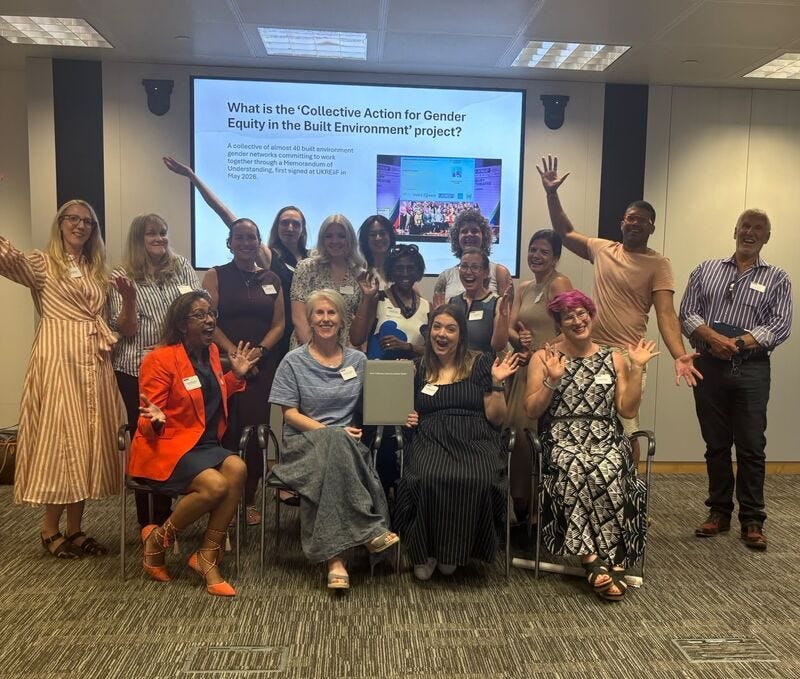
LiRE is proud to be one of 40 organisations committed to advancing gender equity across the built environment.
Together, we’ve committed to combining our reach, experience and (largely voluntary) resources over the next three years to help move our industry forward — for the benefit of everyone working within it.
Initiatives will focus on the following 4 areas:
Attract - How do we attract more diverse talent into the built environment? The representation gap is most acute in the skilled trades, but it exists across our industry.
Retain - How do we keep women in the industry once they're here? Female engineers, for example, leave the profession around 17 years earlier than their male counterparts. What needs to change?
Create - How do we design buildings and public spaces that better reflect the needs of women? Too much of our built environment still relies on anthropometric and ergonomic data historically based on men.
Engage - How do we influence decision-makers and measure whether our collective efforts are actually making a difference?
We will continue to provide updates as the initiative develops.
As always, thank you to everyone who speaks, volunteers, hosts, writes recaps, and helps keep this community moving forward. LiRE is built by its members, and I'm incredibly grateful for your support!
Comments
Nothing yet. Say the first thing.
Sign in to join the conversation.