
This essay was commissioned by Netflix as part of My Brilliant Career: My Way, a series of personal essays inspired by Netflix’s new series My Brilliant Career, now streaming.
When I started Lab Muffin in 2011 between chemistry experiments, “independent online science communicator” wasn’t a job, let alone a career. Blogging about science online was, at best, a prelude to an unpaid internship for the “real job” of science journalist.
Fifteen years later, “YouTuber” regularly shows up in top 5 lists of dream jobs for kids, and my mum no longer sends me random job applications. I’m regularly asked for career advice from bright-eyed students, and invited to science career panels by organisers who want an option that isn’t “academic”, “industry” or “doctor” - which honestly scares me, since I’m still not entirely convinced that what I’m doing is sensible.
But there are some lessons I’ve learned about forging your own creative career that have served me well, and are sensible enough for my inner immigrant parent to feel comfortable sharing.
“Identifying a gap in the market” is an incredibly unromantic way to describe the start of any creative endeavour, so I prefer “create what you want to see”, or “create what the world needs”.
That’s how Lab Muffin came about. Back in 2009, I was researching which beauty products to buy, and couldn’t find any simple and accurate explanations online about how different products worked. At the same time (literally in the next browser window), I was reading science communication blogs. There’d been a surge in measles, and the Andrew Wakefield scandal was coming to light. And I was really struck by the parallels I was seeing.
Many of the arguments about the dangers of vaccines and beauty products were the same, down to the ingredients that people were told to avoid. But while plenty of science communicators were debunking antivax myths, no one was addressing these same arguments for cosmetic science.
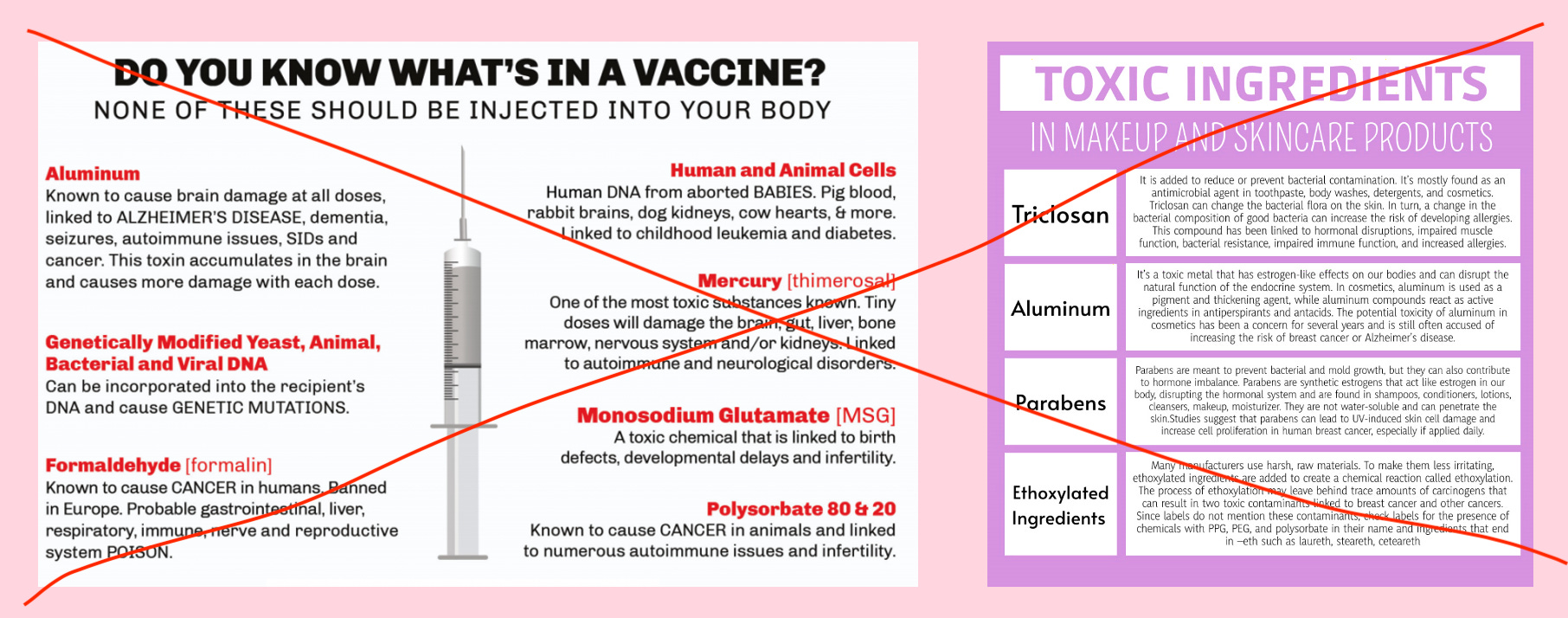
To me, this was a huge missed opportunity. I’d come across so many people in beauty Facebook groups who were genuinely interested in learning about the science behind their products (the scientific method is just a systematic way to find answers, after all), but never studied science because it hadn’t felt relevant to their lives before. At the time, mainstream science communication only covered science-coded topics like space and medicine and nature, and social media outreach was seen as a waste of time.
The beauty industry wasn’t much better. Even multinational brands who had invested billions in scientific research were hesitant to talk about science, in case potential customers found it boring. Even now, companies think it’s easier to reformulate all their products than to explain that hey, we’re not actually trying to poison our customers.
But for me, there was a more important, more sinister problem.
If someone’s been bombarded with messages about not putting scary-sounding chemicals on their skin since age 12 without seeing any pushback, you really couldn’t blame them for being hesitant about injecting scary-sounding chemicals into their baby decades later. So my goal was to bridge this gap, and divert people into scientific thinking earlier on.
My initial strategy with Lab Muffin was to try to squish the nuance, accuracy and empathy of the best science communicators into a friendly package, as digestible as beauty blogs and fearmongering infographics. This has been a recurring theme - much of what’s distinctive about my content comes from taking skills I’ve developed in other areas, and applying them to science communication.
My mythbusting approach comes from structuring legal arguments during my abandoned law degree (start with your strongest argument, follow with more arguments that stand on their own even if the first one fails)
A lot of my source analysis skills - being able to sift through conflicting sources and work out the likely truth for unfamiliar topics - come from studying history.
My old day job as chemistry coordinator at a large tutoring college gave me plenty of practice in balancing simplicity with scientific accuracy. Writing teaching materials for PhD-qualified teachers who weren’t hesitant to give harsh feedback was, in many ways, scarier than posting on social media.
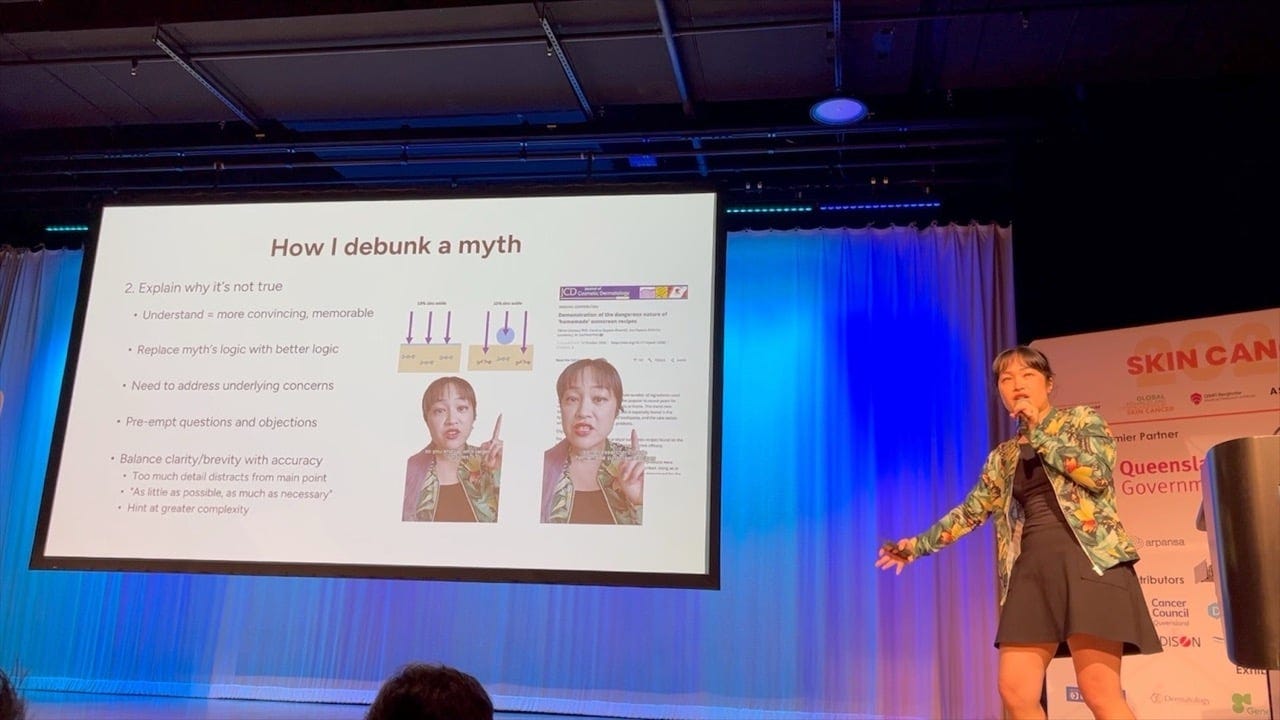
Many other creatives I’ve spoken to have similar stories - plenty of skills are transferable, and you can get valuable experience even from seemingly wrong turns.
I know, I know - this is horrifically cliched LinkedIn-sounding advice. But it’s important, especially if you’re prone to overthinking. Nothing replaces actually doing the thing.
You’ll find out what it involves, and if you actually enjoy it. All work looks very different from the inside, and creative work is no exception. If you hate it, congratulations! You’ve saved yourself months of agonising and you’re now free to move onto something else.
There’s probably a perfect moment to start. But if you have no experience, you’re not going to be able to pick it, so you may as well start getting experience.
You can’t get good at something without practice.
At the same time, this doesn’t mean you should quit your day job with no plan. Again, if you don’t have much experience, a big gamble will more than likely fail. Start small and learn from each new try. It’s like walking into a dark forest - every step you take lets you see further ahead.
I can’t pretend that my scicomm career has been smooth sailing. Standing up for science, even when it’s unpopular, opens you up to lots of hostility and harassment, even from supposedly pro-science influencers and brands (especially when it threatens their profits).
Putting your face online as an Asian female science communicator has also turned out to be a surprisingly radical move in itself. When I went through the top 150 science and tech YouTube channels on Hypeauditor in 2023, I discovered that only 6 were hosted by a woman on screen. Women speaking about their scientific work are perceived as less authoritative, annoying, undeserving and overly confident.
One analysis found that female science YouTubers get more than twice as many negative comments, many of which are sexist and appearance-based - I have an extensive collection of racist comments to add to that too.
And that’s on top of the long hours, financial uncertainty and deplorable sleep hygiene that comes with running your own business.
But, as many creatives know, not creating often feels like you’re suffocating.
Is it worth it? Right now, I’d say yes - and when it’s not, I hope I’ll be brave enough to start down a new path. At least my mum’s used to disappointment.
Comments
Nothing yet. Say the first thing.
Sign in to join the conversation.