
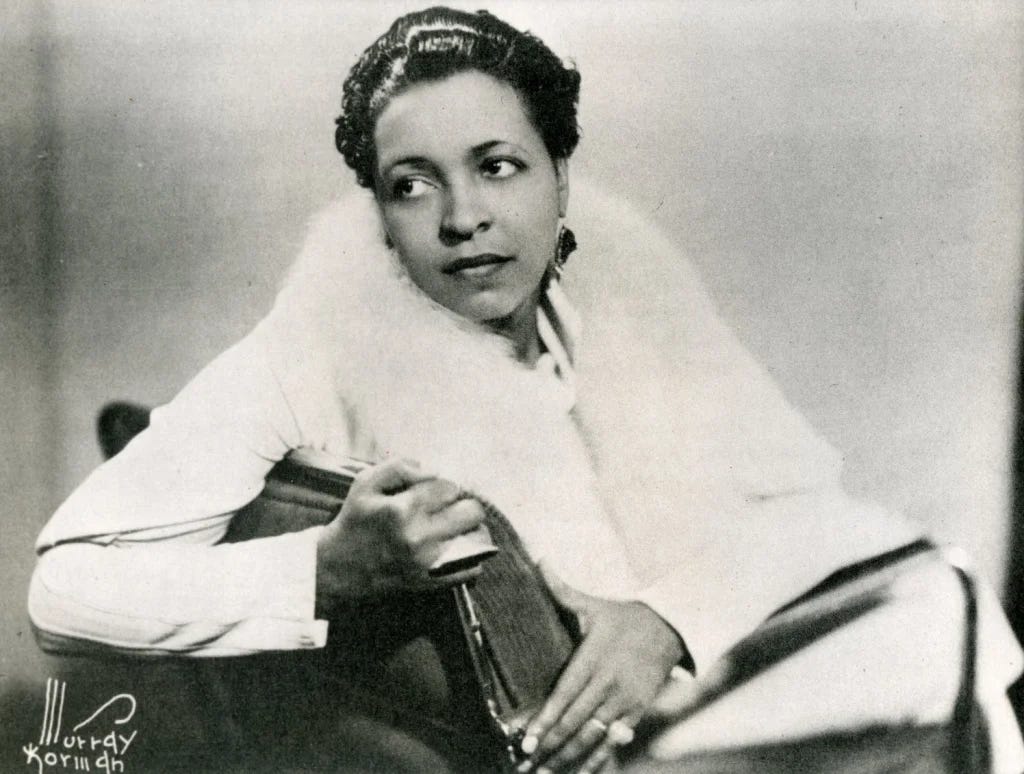
The most common word people who worked with Ethel Waters used to describe her was “Difficult.” Some thought, “Troublemaker,” was more accurate. Others simply labeled her as “A Problem.”
Those were the descriptors they chose when they were feeling polite.
But when I read up on her while researching my historical novel, THE GREAT MANN, I did not come to the conclusion that Ethel Waters was “Difficult.” Rather I came away thinking…
…Ethel Waters was A Boss.
This is a woman who had been through it. A child of rape, Waters was left to basically fend for herself before she was finished with elementary school. At 13 she was married off to an abusive husband whom she left within a year. After that she worked as a maid for less than $5 a week ($147/week in today’s dollars). It wasn’t enough to live on. To survive she learned to shoplift. She also learned to hold her own in a fight.
That could have been her life, navigating poverty and the streets, just trying to get through each day. But Waters had a voice, and a presence, a dynamism. And she knew it.
At the age of 17 she put that to work and landed her first professional singing gig at The Lincoln Theater in Baltimore.
Before long she was touring on the Vaudeville circuit. A few years later she landed a gig in Atlanta where she performed at the same club as Bessie Smith.
And then she relocated to Harlem right at the dawn of the Harlem Renaissance.
She performed at the best clubs and quickly became a sensation. She got a record deal which made her only the 5th Black woman to ever record an album. By the time she was 26 she had become the highest paid Black recording artist of all time.
And she famously didn’t take any shit.
She told the highly respected composer who her record label paired her with that his style wasn’t to her liking and that his music lacked the “damn-it-to-hell bass” she wanted. While touring she barely escaped the South with her life after telling off a white club owner before a performance.
When a white director asked her why she was so difficult she smiled demurely and said, “Because Lincoln freed me too.”
While Waters never publicly discussed her own bisexuality (which is well documented) she was open about her connection to, and support and fondness for the LGBTQ community, boasting in her autobiography about the number of drag queens who won their competitions in the dresses she lent them.
She moved to Los Angeles when her movie career was at its height. It was there, in L.A.’s Sugar Hill that she bought her first home, a three-story, 10 room mansion.
In her autobiography, His Eye On The Sparrow she writes:
“I shook with happiness that first evening when I walked into my house. During the day the moving men had brought my things, and when I saw that they had placed each chair and table exactly where I wanted it, I burst into tears. ‘My house,’ I told myself. ‘The only place I’ve ever owned all by myself.’”
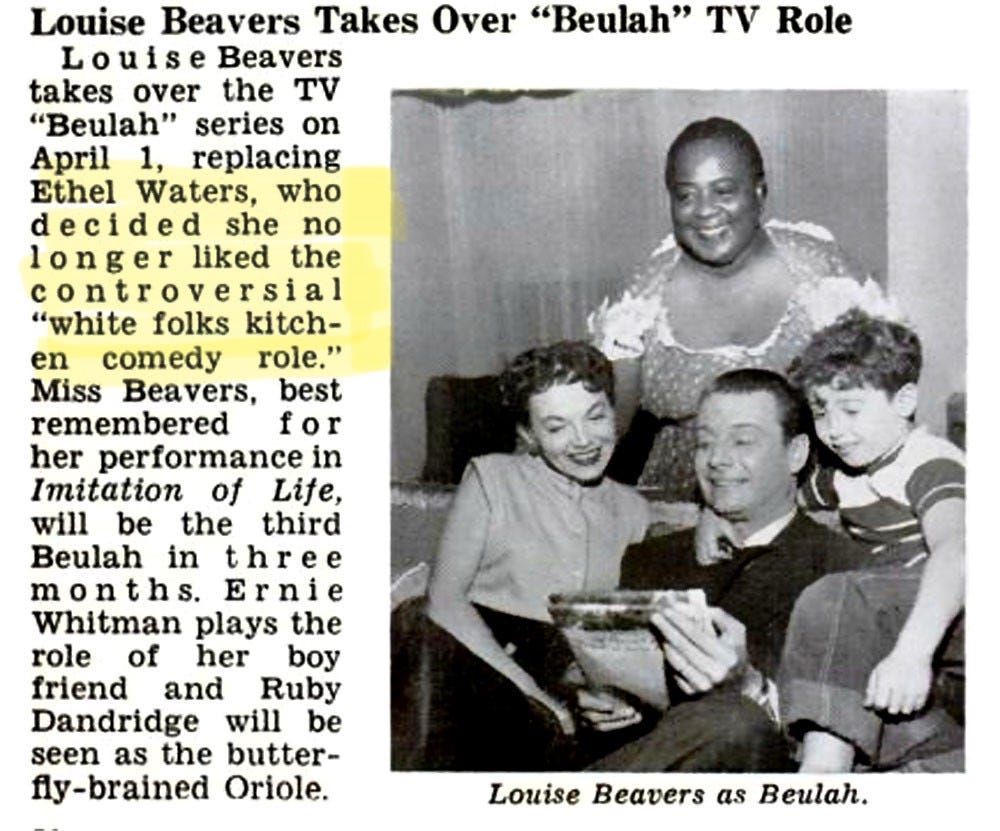
In 1950 she went on to become the first Black actor to star as the title character in a TV series, The Beulah Show. She played the lovable, humorous maid who gave counsel and help to her white employers.
That lasted exactly one year.
She quit, relinquishing the role to fellow actress and Sugar Hill resident, Louise Beavers. Waters explained to the press that she was done with “…the white folks kitchen comedy role,”
With that parting shot she left her beloved home and moved back to New York where she focused on theater and clubs.
But by far, my favorite Ethel Waters story is from before she moved to L.A., back when she was newly wealthy and was part of the group who defined the Harlem Renaissance. It was during that period that she happened to walk by a store with fur coats in the window. The store was in a white neighborhood, with an all white sales staff. Still, she went in and one of the clerks allowed her to try on a white mink…not because he thought she was a potential customer, but because he thought it was funny. He went so far as to loudly announce that he’d sell her the coat for $450 (approximately $8000 in today’s money) even though it was worth $1200. That earned him a chuckle from some of the nearby patrons who were confident this gullible, Black woman wouldn’t be able to afford either price.
But once she had it on, Ethel Waters refused to take off the coat. When she said she wanted to buy it for the $450 the employee, now flustered, insisted she’d have to pay all cash, upfront. But that didn’t faze Ethel. She simply had another salesperson accompany her to the bank where she withdrew $450, placed the bills in the stunned associate’s hand and then went off on her merry way, wrapped up in her brand-new mink.
This post is of course a highlight reel of Ethel Waters life. Her uncompromising attitude did at times limit her opportunities. There were several times when she went through career slumps, she had multiple failed romantic relationships. Her life road had plenty of jagged potholes and unplanned, harrowing detours.
But she was particularly skilled at getting up after a fall and she never forgot how to fight.
Ethel Waters was not accommodating. She wasn’t always polite. She didn’t care if she made others uncomfortable. A lot of people didn’t like her.
But me personally? I absolutely love her.
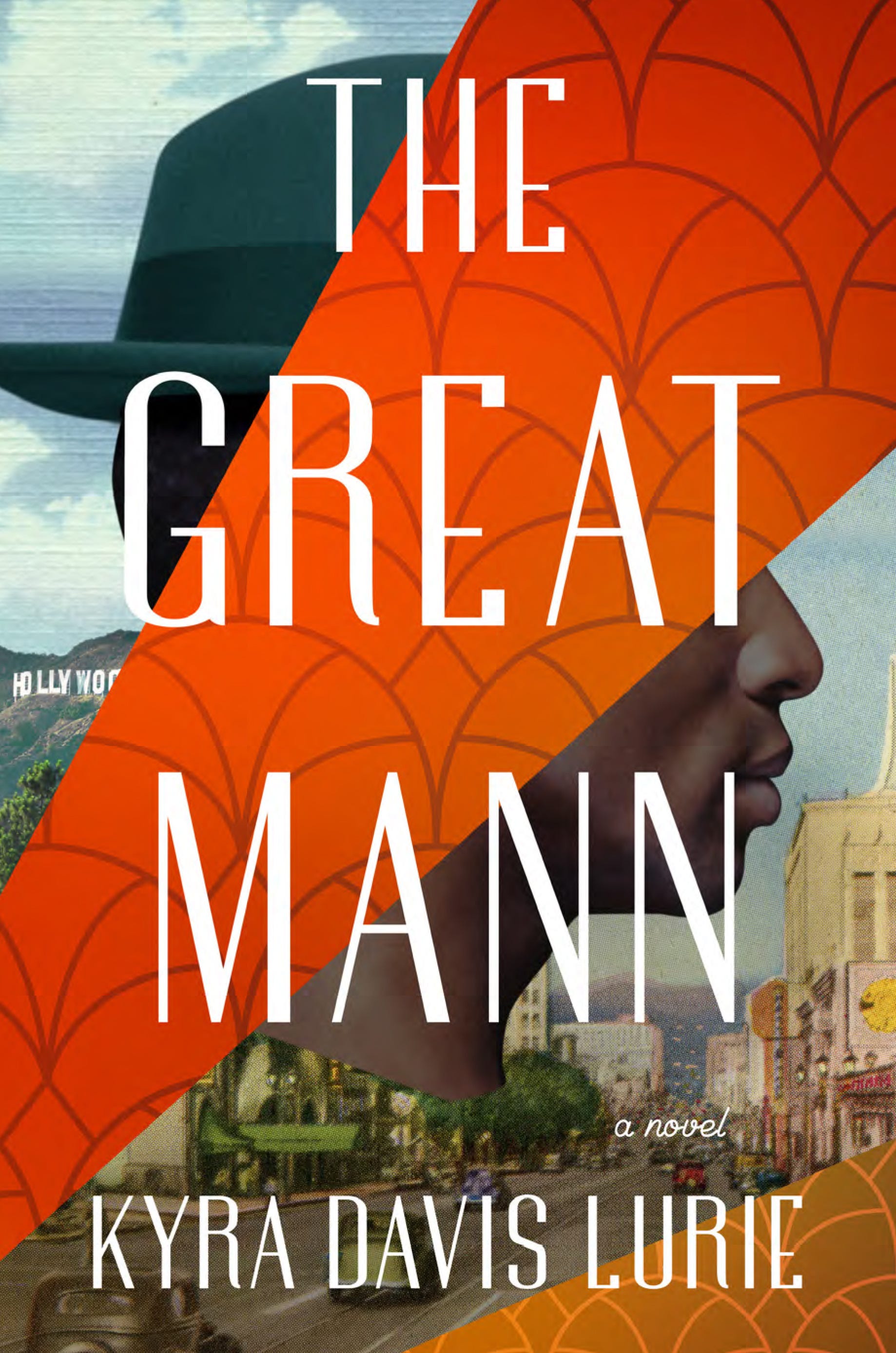
Ethel Waters and many other historical figures who lived in L.A.’s Sugar Hill are featured in my novel THE GREAT MANN.
Comments
Nothing yet. Say the first thing.
Sign in to join the conversation.