
In my last post I focused on how people misunderstand the spiritual disciplines conversation. Too many, implicitly or explicitly, have come to think that spiritual disciplines form us.
Now, admittedly, the spiritual formation conversation has done a good job of rejecting that. I don’t know anyone in that conversation who thinks that spiritual disciplines form us and I can’t think of any book where that view isn’t explicitly rejected. But what I will say is that this isn’t enough.
One of the failures in Christian publishing is to think that we can just pass on true information without actually shepherding people.
I have read many books on spiritual disciplines that seem to assume disciplines form you - and where the only answer to growth is doing spiritual disciplines - that say explicitly once or twice: “Spiritual disciplines do not form you.”
That isn’t enough. If that is actually true and is really believed, that should shape not only what we say but how we say it.
It turns out it is not enough to just assert the truth. You have to lead others into the truth. When John Coe and I wrote Where Prayer Becomes Real, the first book in a trilogy we are writing on spiritual formation, our primarily wrestling was about how to lead people into things they already think they know.
Let’s be honest, almost everyone knows that they should be honest in prayer. I rarely meet someone who doesn’t already know that to some degree - or at least assert that it is obviously true. I also rarely meet someone who actually is honest with God in prayer. But it is also true that I rarely meet someone who is aware of how dishonest they truly are.
So when teaching spiritual formation, we are never simply tacking-on information or practices, we are shepherding people into things they think they already know but have not truly internalized.
To speak well about spiritual practices requires that understand that means of grace are means of grace. God has given himself to you in Christ Jesus by the Spirit, such that the means of grace are not simply “working out” to get stronger spiritually, but are means of receiving, embracing, and offering.
Receiving: In the means of grace (spiritual practices) we are first and foremost receivers. Not just once, however. Even in our actions and discipline we recognize that we do not move from a foundation in and of ourselves. We move from his grace in us - Christ in us - so that by his Spirit we are able to walk by the Spirit.
Embracing: There is no movement of the Christian life that can make a direct line from our action to our formation. Any such thought would be a failure to walk by faith. We no longer stand under a law that says “do this and live,” but we recognize that the righteous shall live by faith. Faith leads us to Christ to be conformed to his life.
Offering: In Romans 6 we hear the call to “present yourselves” and in Romans 12 to “present your bodies as living sacrifices.” As a proper sacrifice, our self-presentation is with and through a broken and contrite heart as we offer ourselves to the Lord by drawing near to him in our practices. Means of grace are ways to present our lives to God. This is not just in thought but in deed.
Unfortunately, one of the main stories woven through Scripture is that the people of God take everything God gives us and we misuse it to try to tether him to ourselves. We take everything to use in the flesh. We are a people who are always gravitating toward beginning with the Spirit but trading that to try to advance ourselves by the flesh (Gal. 3:3).
Spiritual practices are not somehow protected from this. This is why we cannot simply offer spiritual disciplines to people and then send them off to grow. True Christian growth is always the growth that comes from God as we grow into Christ who is our head (Col. 2:19).
We do not just generate this growth, and this is not something we achieve on our own. The Christian life is not parallel to the self-created moral life.
This is the life we need to shepherd people into.
Because holiness is about life in God’s presence, and because, after the Fall, God’s presence is something we seek to protect ourselves from in the flesh, what people need is not simply a path of growth, but life in the household of faith. As we partake in God’s presence in the people of God we need to be shepherded - pastored - as we draw near to him.
This is why John Coe and I are writing our series on spiritual formation the way that we are. If we just lead with spiritual practices then people will inevitably use them in the flesh. That is exactly what happened in the earliest churches (Col. 2:23; Gal. 3:3). It doesn’t take generations for this problem to emerge. It happens immediately.
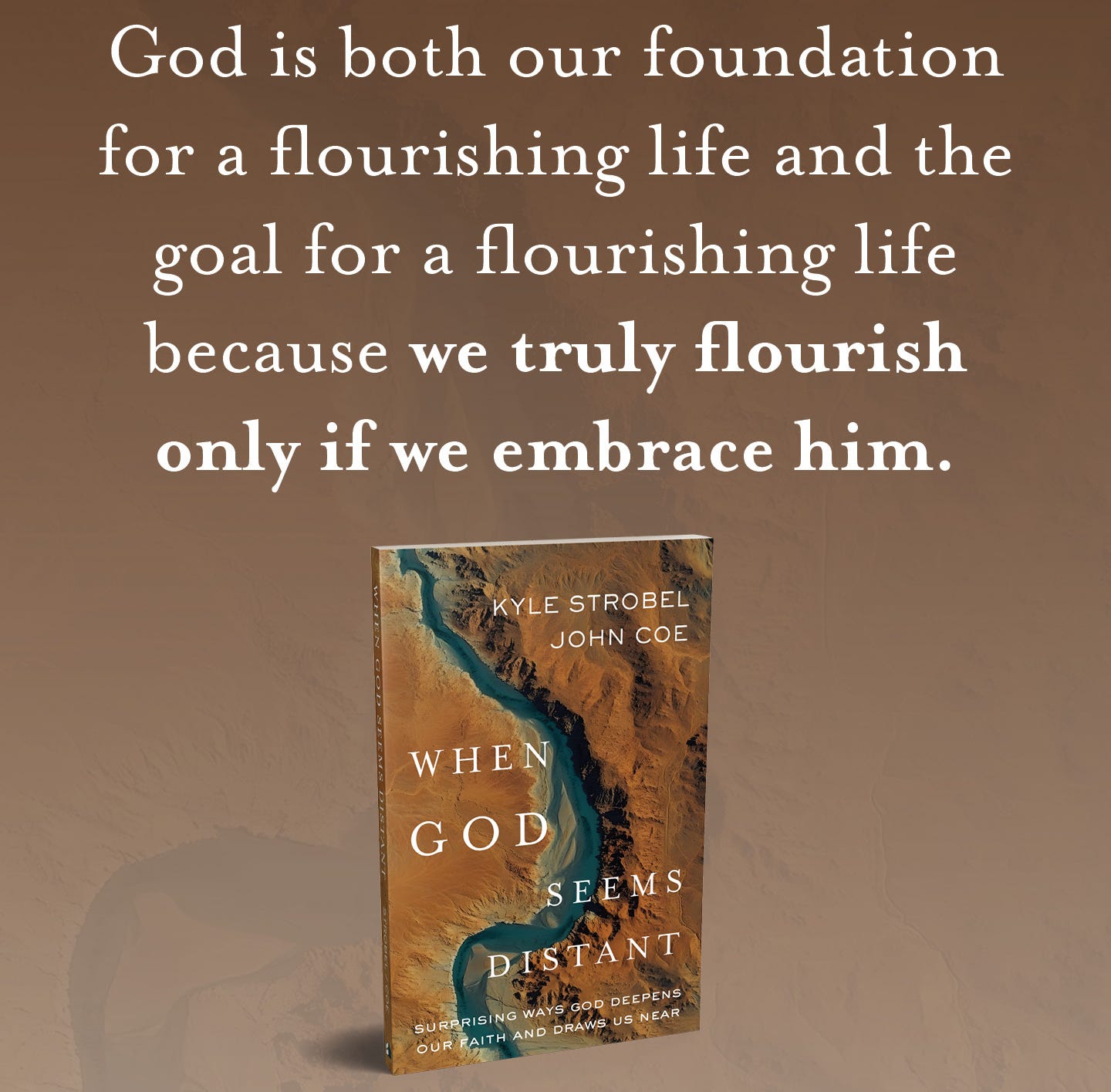
We need a deeper form of guidance that shepherds people to their Lord, and does not merely give them a path to walk. We have a way, but because our way is a person, spiritual practices are not merely means of growth.
For my paid subscribers I want to talk a bit more explicitly and personally about the nature of spiritual practices and the potential failure of hearing the call of Christ as we participate in these things. Take a look at the video below.
My commitment to this Substack is to provide reflections for free that can help the church wrestle deeply with spiritual formation. But I am also committed to a more engaged path with my paid subscribers. Your support is a profound help to me and a way to participate more directly in engaging these questions.
My paid subscribers can comment on posts, have access to mini-courses, and can engage in the paid subscribers chat. I often take these questions and write posts devoted to answering them, and I commit to engaging these comments and questions quickly and deeply.
If you want to wrestle with these questions more, and want a bit more engagement in doing so, please consider upgrading to a paid subscription.
Comments
Nothing yet. Say the first thing.
Sign in to join the conversation.