
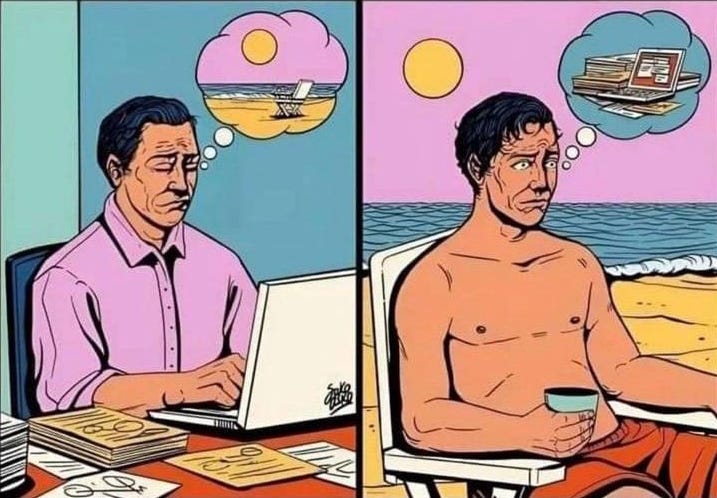
Everyone and their mother already knows a day of rest brings them clarity and makes them sharper. You don’t need me to add a scientific explanation to back that one up, and you’d probably skip it anyway.
You know it’s valid because you’ve actually lived it. You know the feeling of staring at the same computer screen for two straight hours on a Friday afternoon and nothing of substance is flowing out of your noggin. Your brain feels fried. You switch tabs, check your phone, or zone out until it’s socially acceptable to leave the office for the weekend.
Then the answer hits you on a Saturday morning as if God downloaded a .zip file into your head, arriving when you least expect it.
It feels like magic. But your problems can often work themselves out without you having to pay attention to it. You took a step back from the canvas and saw the whole painting. You sat down to sharpen the axe before going hog-wild and swinging at the trees. Frame it however you want, but you already have the deeper insight: that rest should be a strategy for work, not a way of surrendering to it.
So go ahead, take a day off. But think about the premise you just agreed to.
You had to justify your rest in the currency of work.
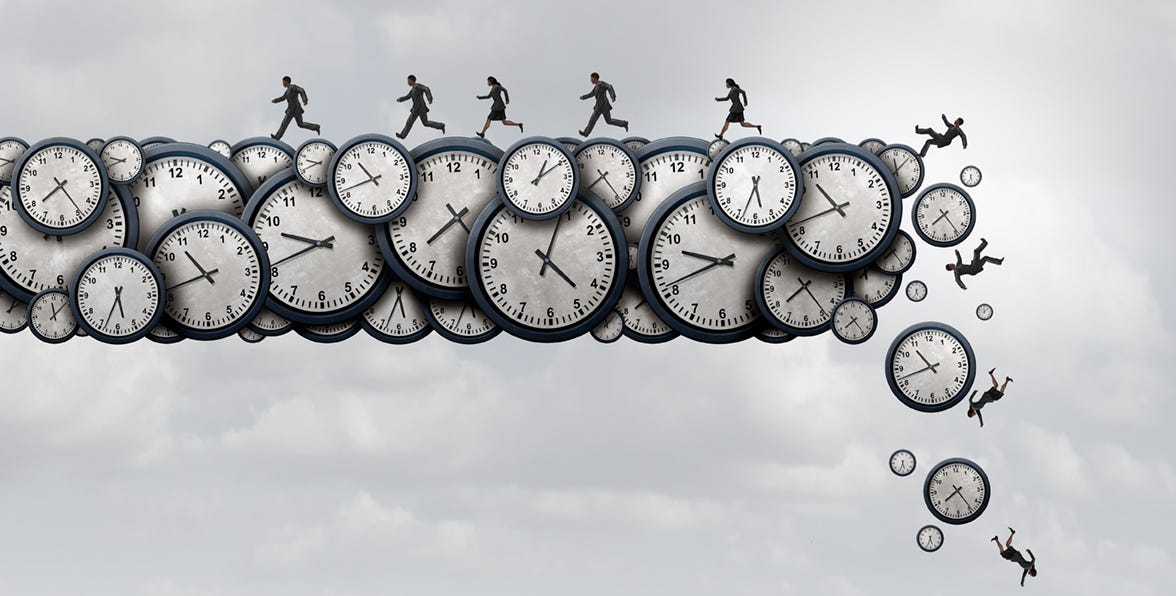
You refused to treat yourself to a Saturday morning of peace until someone came around to prove it would pay for itself on Monday. As if you needed a defense attorney to make a case for your right to just exist for a day without producing something of monetary value. And there you were, nodding along, just feeling grateful someone handed you a reason to take care of yourself.
Your poor relationship with rest isn’t a rest problem. It’s actually a byproduct of a poor relationship with your work.
While working my last corporate job, I admit there were some great benefits that I no longer have. The money was consistent and more abundant than it is now. Combine this with a generous PTO, and I was able to take trips all around the country to reset myself.
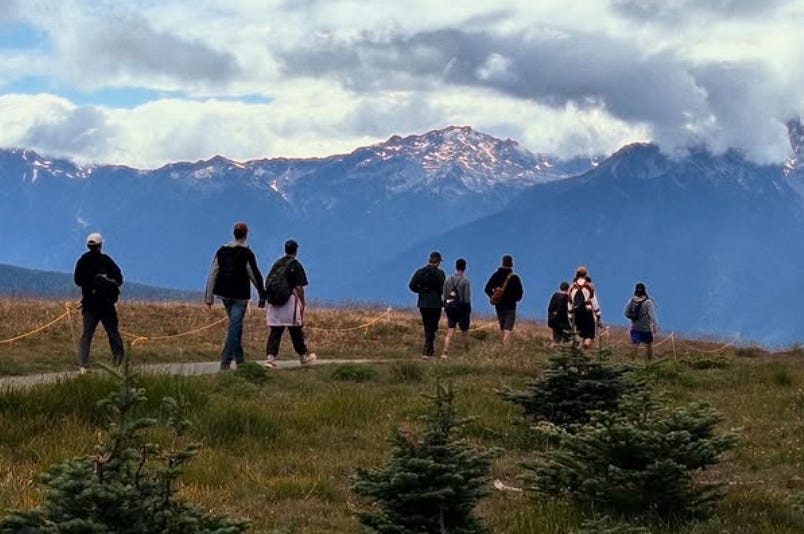
Last August, I met up with ten of my high school friends and took a trip to the Olympic mountains. We backpacked, hiked, and played games together for seven days and six nights.
I hate to say it, but I checked my work email every day. I even answered a few.
Nobody at work pressured me to stay online. I did it because the cost of falling behind felt greater. I knew damn well that I’d get back to Seattle with 100-200 unread emails if I didn’t. I would’ve spent half a week playing catch-up before I could actually be a helpful teammate again.
By the last night of the trip, I wasn’t tired anymore, but I wasn’t rested either. I was with my best friends, in one of the most beautiful places in America, my mind already dreading Monday and all the things I’d need to do when I got back.
Fast forward to the present, and (yes) I still occasionally check emails when I’m on trips. Even when I’m relaxing. But my framing is completely different now. I check on things because I’m excited to get back to work. New emails bring me joy because they often bring new opportunities, not just more work to get done. I might only get half the amount of rest I used to, but because of what I get to return to, it feels like a perfect amount.
Quality of rest should not be the input for work. It’s the output from it.
What does this mean?
The quality of your time off, whether you’re on a beach in Aruba or vegging out on the couch, hinges on the quality of what you’re returning to. You can’t R&R your way out of a life you dread. Rest isn’t just a reward for being useful to society, or the necessary “refueling” to stay productive. It’s about the relationship between the breaks and the thing you’re taking a break from.
The day off is a test; the results tell you what you’re building for yourself.
A prisoner might get an hour out on the yard. They feel the fresh breeze and the sun on their skin. But it’s not rest - it’s the best hour of a bad day - and every minute spent outside gets compared against the building they’ll be walking back into. This is what a weekend can feel like when your work feels like a sentence you’re serving instead of a dream you’re actively building. The yard isn’t the problem.
Where it gets complicated is how easily we can lie to ourselves when we say we need a day off. And we don’t even realize we’re doing it - exhaustion and avoidance often feel identical.
You separate the two when you realize: true exhaustion gets better when you take a break. Avoidance gets worse. Rest a tired mind and it comes back swinging. Rest when you’re avoiding the work, and the work will follow you around like TP on the back of your shoe. You won’t truly get an escape from it, even if you think you can.
On your next day off, don’t plan it. Don’t optimize. See what you reach for when nothing’s being asked of you. You’ll either feel naturally pulled back into your work, or pulled away from it. Whether Monday feels like a new day of opportunity, or a chore being thrust upon you, it won’t be left to question. Your body will send the message.
The feeling you get from one Sunday is simply an observation. But twenty Sundays with the same conclusion quickly becomes a verdict.
Most people build lives they need to escape from and call their escape self-care.
Take a day off and find out what you’re building.
-KPG
I hope you enjoyed this one. Feel free to DM me or respond to this email if this essay resonated with you. I always look forward to speaking with new people, seeing how I might be able to make others’ lives a little bit closer to the one they want to live.
Have a great Sunday and I’ll see you next week.
No posts
Comments
Nothing yet. Say the first thing.
Sign in to join the conversation.