
As part of my one-place study research into the lives and interactions of individuals and their families at the Kyeburn Diggings in Central Otago, New Zealand1, I looked into whether any of the women at the Kyeburn Diggings signed a Women’s Suffrage Petition in 1893.
Signing one of the petitions was a small step to take for each of the women who signed yet it was a significant step forward for all New Zealand women. Together, the individual actions of these women resulted in a sizeable set of petitions. This, in turn, contributed to a change in the law giving New Zealand women the right to vote.
The main 1893 Suffrage Petition comprised 13 separate Suffrage Petitions. These encompassed more than 500 individual sheets of paper. The main petition is sometimes referred to as the Carpenter petition after Mary J. Carpenter whose name appears at the top of it2.
The sheets had been dispersed from Christchurch and sent around the country by Kate Sheppard—the most prominent person in the New Zealand Suffrage Movement and a very effective organiser3. Once complete with signatures, the sheets were returned to Christchurch where they were pulled together into one petition. The sheets were glued together to form a single roll that stretched more than 270 metres4.
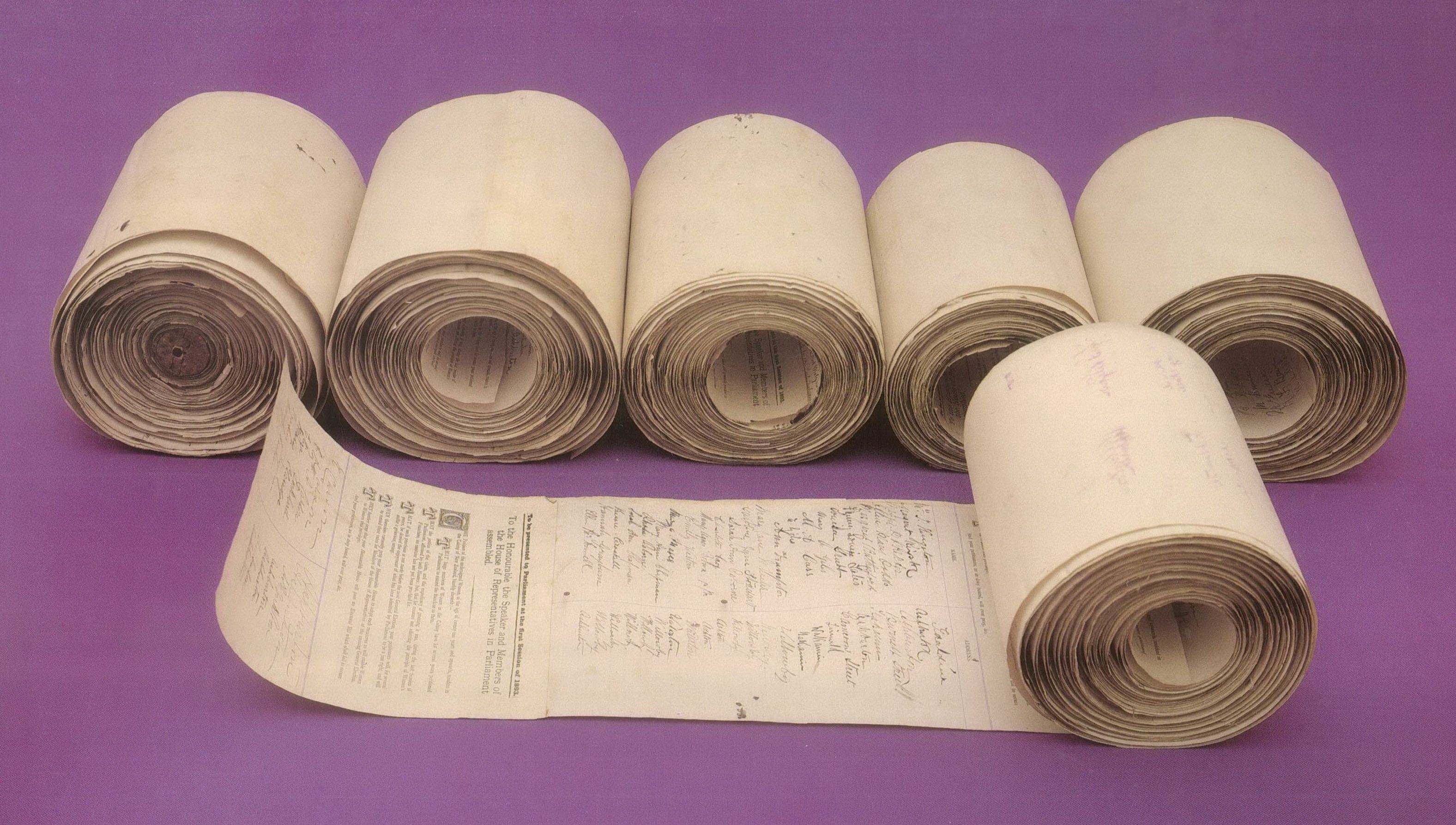
This petition was submitted to Parliament on 28 July 1893. It contained the signatures and addresses of 25,519 women aged 21 years or older5. There were another 12 rolls containing 6,353 signatures. These were submitted separately and subsequently lost.
When pro-suffrage Member of Parliament, Sir John Hall6, presented both the main petition and the 12 additional rolls to the House of Representatives on 11 August 1893, he noted that together they contained the signatures of 31,872 women, almost a quarter of the adult (voting age) European female population of New Zealand7. This is quite remarkable given the likelihood that many in more isolated and rural areas wouldn’t have had an opportunity to sign.
There are a number of territories that enfranchised women before 1893. However, in 1893, New Zealand was the first self-governing country to change its law to grant women the right to vote8. The Electoral Act 1893, giving women this right was signed into law on 19 September 1893.
In 1893, nationhood in New Zealand was very much tied to Britain. To be eligible to vote, a woman had to be a British subject and aged 21 or over. This included most New Zealand women, including Māori, but excluded some groups, such as Chinese women9.
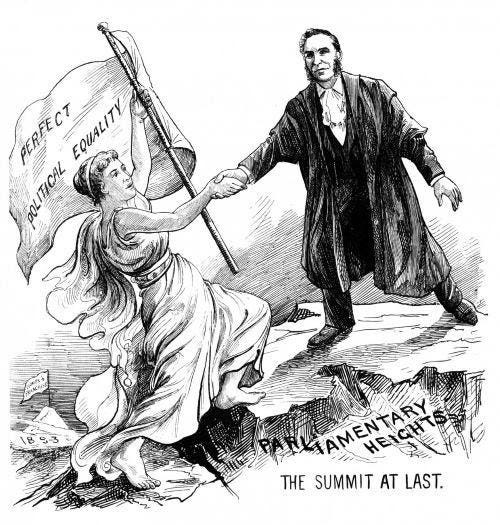
The law change came just one month after Sir John Hall presented the 1893 Petitions to Parliament but this should not be seen as a quick and easy win. By the time the 1893 Women’s Suffrage Petitions were submitted, Parliament was already well primed towards law change. The 1893 Petitions were a final push following many years of effort by suffrage campaigners, led by Kate Sheppard. Prior to the 1893 Petitions, there had also been massive petitions in 1891 and 1892 calling on Parliament to grant the vote to women10. In fact, it could be argued that Mary Muller set the ball rolling as far back as 1869 when she wrote ‘An appeal to the men of New Zealand’ advocating votes for women11.
On the first page of the main petition presented in 1893, it was made clear that, given the number of years women had been petitioning Parliament, they expected an outcome that would enable them to Vote at the upcoming election later that year12 :
“ … That large numbers of Women in the Colony have for several years petitioned Parliament to extend the franchise to them.
That the justice of the claim, and the expediency of granting it, was, during the last Session of Parliament, affirmed by both Houses; but, that for reasons not affecting the principle of Women’s Franchise, its exercise has not yet been provided for.
That if such provision is not made before the next General Election, your petitioners will, for several years, be denied the enjoyment of what has been admitted by Parliament to be a just right, and will suffer a grievous wrong ...“13
The women wanted a prompt response to their 1893 Petitions and this they got—as they had requested—in time for them to vote in the next General Election.
The 1893 General Election was held on 28 November in the European Electorates and 20 December in the Māori electorates. 65% of all eligible New Zealand women voted in the 1893 election14.
The right to Vote from 1893 was a significant step forwards. However it was another 26 years before women could stand for election to the House of Representatives. That happened on 29 October 1919, when the Women’s Parliamentary Rights Act 1919 passed into law15.
I found one signatory from the Kyeburn Diggings—Margaret Mary [Alexander] Forgie16. Margaret’s signature is on one of the Dunedin pages—Sheet 161—amongst woman based in Dunedin. She must have signed the Petition while visiting Dunedin.
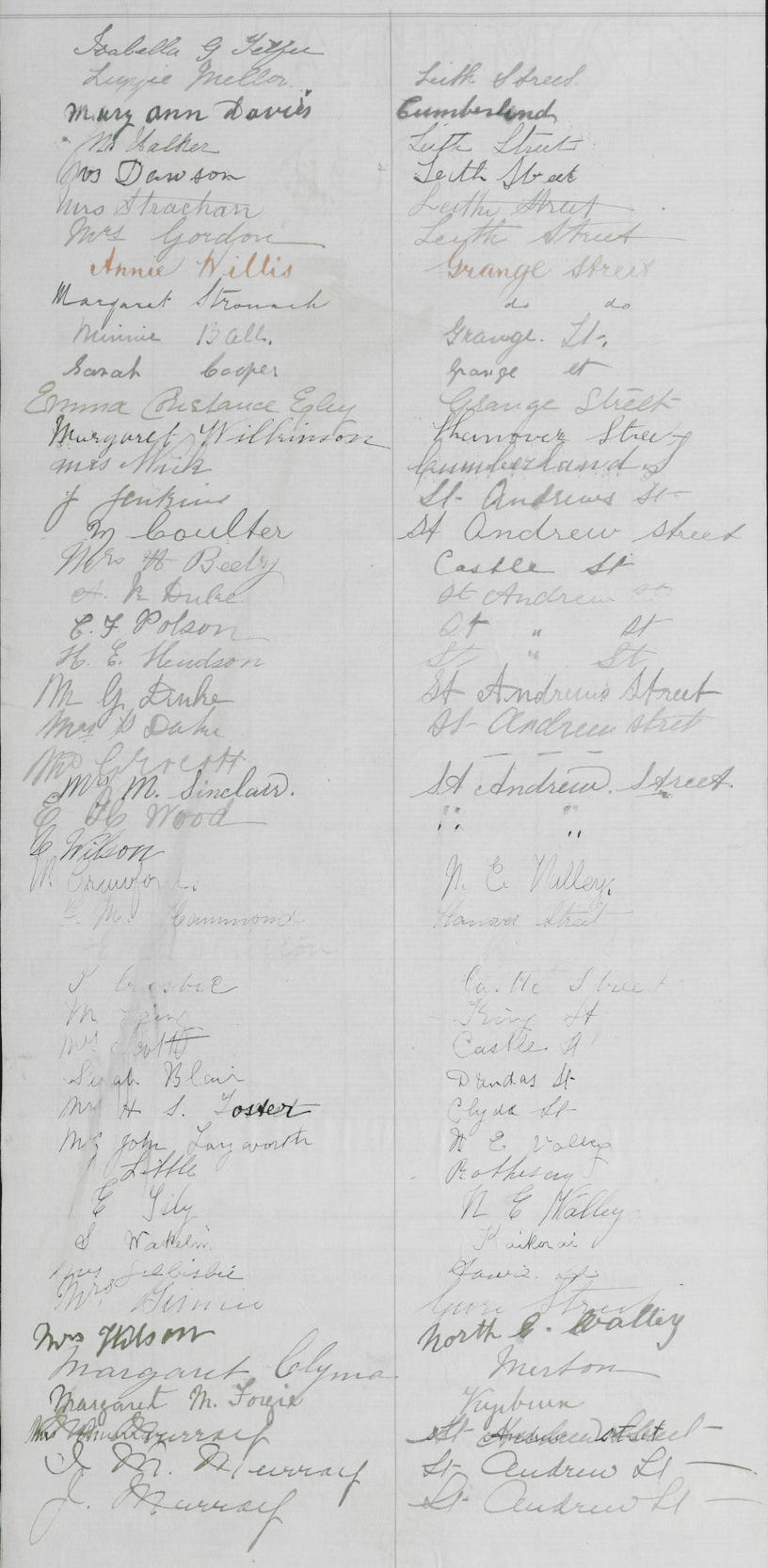

The Kyeburn Diggings area is remote by today’s standards—let alone by those of 1893. The absence of signatures from women at the Diggings isn’t really surprising. The petition probably didn’t make it there. If that is the case, women there wouldn’t have had an opportunity to sign—unless, like Margaret, they happened to travel away to a larger centre17.
Margaret would have been around 54 years old when she signed the Petition in 1893. I will tell you more about Margaret in a later post.
If you are already a subscriber to this publication—Kyeburn Diggings One-Place Study—thank you!
If not, and if you would like to receive future posts direct to your email inbox, please subscribe (it’s free!):
The information in this post is drawn from my one-place study website on the weare.xyz platform
You may like to check out my other Substack publication as well:
If not, and if you would like to receive future posts direct to your email inbox, please subscribe (it’s free!):
The information in this post is drawn from my one-place study website on the weare.xyz platform
You may like to check out my other Substack publication as well:
Archives New Zealand Te Rua Mahara o te Kāwatanga [Archives reference LE1, 1893/7a], ‘Suffrage petition, 1893’, New Zealand History—Nga korero a ipurangi o Aotearoa (Manatū Taonga — Ministry for Culture and Heritage), updated 25-Jul-2018. Accessed 15 June 2026.
See:
Tessa K. Malcolm. ‘Sheppard, Katherine Wilson’, Dictionary of New Zealand Biography, first published in 1993, updated May 2013. Te Ara - the Encyclopedia of New Zealand,. Accessed 15 June 2026.
‘Kate Sheppard’, New Zealand History—Nga korero a ipurangi o Aotearoa (Manatū Taonga — Ministry for Culture and Heritage), updated 8-Dec-2025. Accessed 15 June 2026.
‘New Zealand women and the vote’ - See Note 8.
‘New Zealand women and the vote’ - See Note 8.
See:
Archives New Zealand Te Rua Mahara o te Kāwatanga | National Library of New Zealand Te Puna Mātauranga o Aotearoa. The Women’s Suffrage Petition Te Petihana Whakaman Pōti Wahine 1893. Bridget William Books.
‘Suffrage petition, 1893’, New Zealand History—Nga korero a ipurangi o Aotearoa (Manatū Taonga — Ministry for Culture and Heritage), updated 25-Jul-2018. Accessed 19 June 2026.
A search of ‘Kyeburn’ in the database, shows up one other entry - Jane Taylor. I can find no trace of Jane having lived at the Diggings and a biography contributed by Katherine Blakeley says that, when Jane signed the suffrage petition the family were living in Hampden in North Otago - ‘Jane Taylor’ - New Zealand History-Nga korero a ipurangi a Aotearoa (Manatū Taonga — Ministry for Culture and Heritage). Accessed 15 June 2026.
Comments
Nothing yet. Say the first thing.
Sign in to join the conversation.