
Hi Kwik Brain,
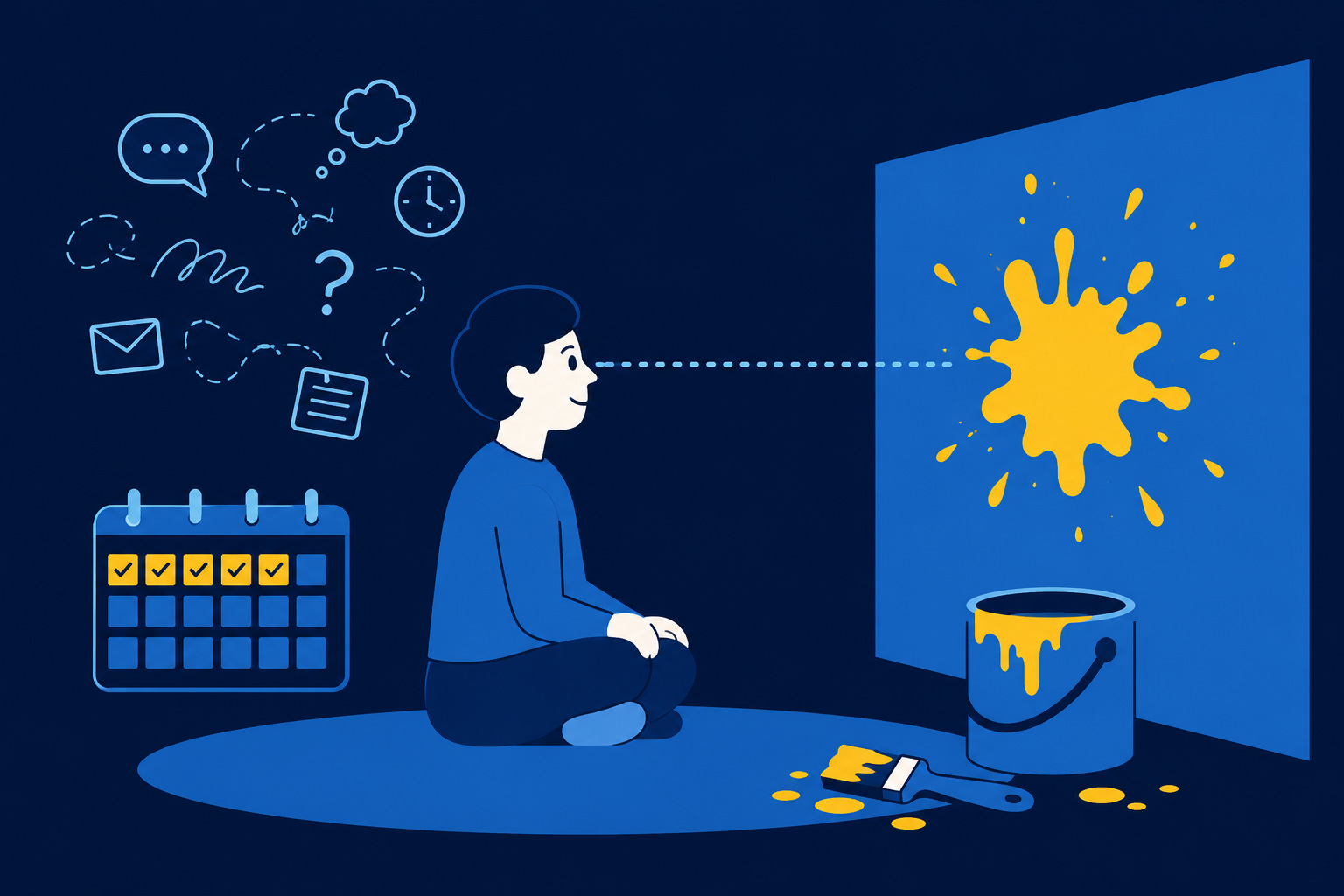
Your attention has a leak. Right now, while you read this, part of your brain is tugging you toward a memory, a worry, a plan for tonight. That pull has a name and an address in your skull, and you can train it down.
By the end of this you’ll know the smallest brain-training habit that reliably sharpens focus, stripped of every candle and chant. Then you get a 14-day test to run on your own numbers, so you trust the result instead of taking anyone’s word for it.
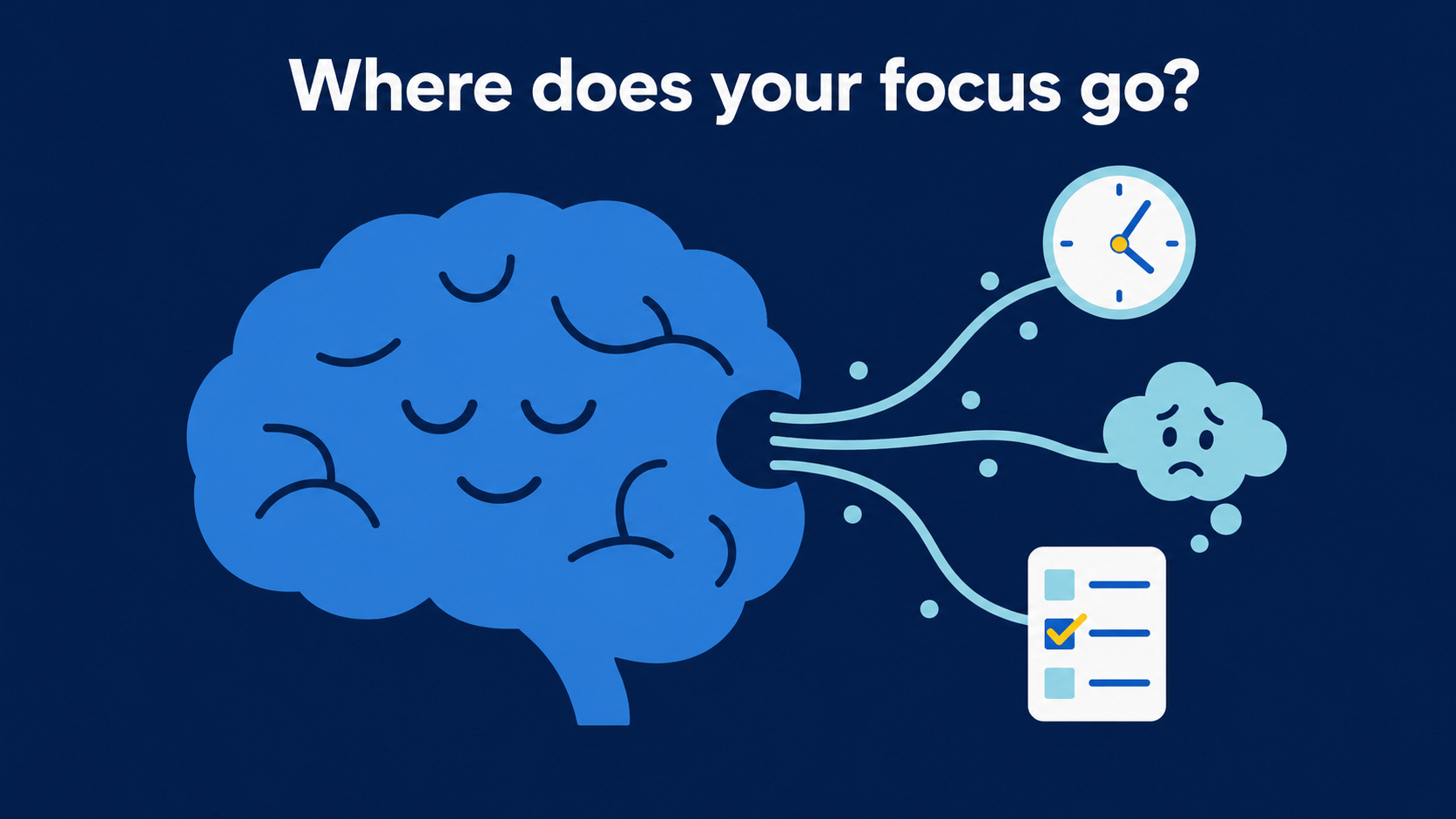
A network in your brain switches on the moment nothing demands your attention. Researchers call it the default mode network. It runs your inner monologue, replays the past, and rehearses the future.
Handy in small doses. A drain when it hijacks the hours you meant to spend on real work. Every time it fires mid-task, your attention splits and your errors climb.
Single-point drills quiet that chatter. You give the mind one thing to hold, and each time it drifts, you catch it and bring it back. That catch-and-return is the entire workout.
Trataka is an old practice. Fix your gaze on one point, a candle flame or a dot on the wall, and hold it there. Wrap it in incense and it reads like mysticism. Take that layer off and what remains is attention training with a number attached.
Think tempo runs, not spirituality. A sprinter grinds through dull, repeated drills so the fast stuff holds under pressure. Single-point focus is that same kind of drill for your attention and control networks.
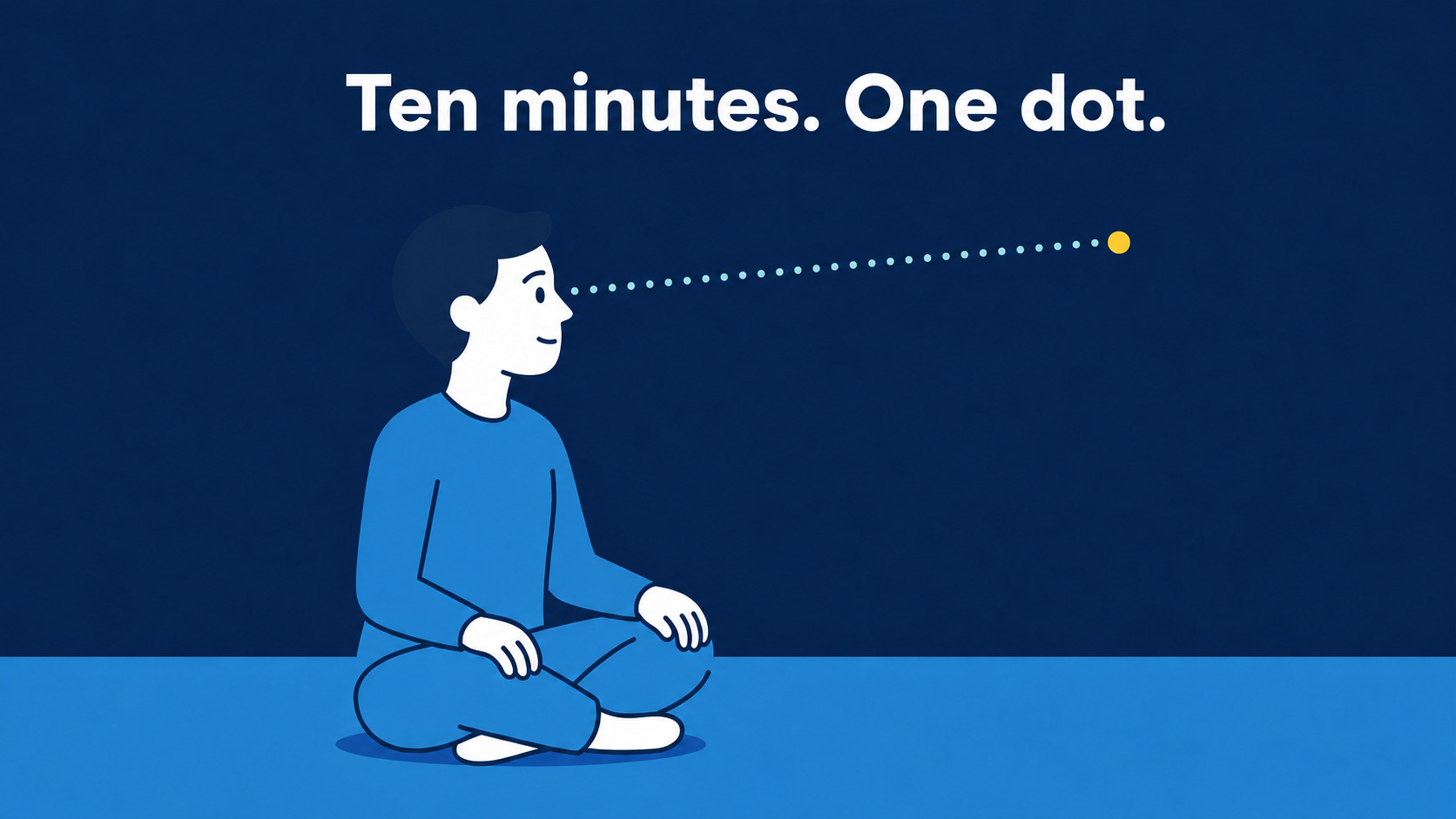
The wall-dot version needs no equipment at all. It’s trataka with the hardware removed.
Three points do the heavy lifting here, and each one traces to a study, not a vibe.
Short sessions work fast. Five to twenty minutes of focused-attention practice improves sustained attention, cuts mind-wandering, and raises task accuracy within weeks, in students, professionals, and athletes.
Visual fixation moves specific numbers. Trataka-style concentration lifts working memory and selective attention on tests like the Corsi Block and the Stroop, with gains showing up after a single session and in older adults.
Keep going and the wiring shifts. Longer practice reshapes the connections in attention and control networks, which tracks with steadier focus, calmer emotion control, and sharper problem-solving under stress.
None of this asks you to believe in anything. It asks you to run a drill and check the score.
Ten to fifteen minutes, then a hard task right after. Two halves, and the second half is the one most people skip.
Set a timer. Sit somewhere no one will interrupt you. Pick your anchor, a dot on the wall, a candle, or your own breathing.
Then run the loop. Notice when your mind wanders. Name the distraction. Bring your eyes or attention back to the anchor. Drift, label, return, that’s one rep, and the drifting is not failure, it’s the part that builds the muscle.
The second your timer ends, hit something short and demanding. A dual-n-back or Stroop-style app, or a focused sprint on real work. Watch whether it feels cleaner than a cold start.
Picture an emergency physician who stares at a dot for eight minutes before a shift. A warm-up, the same way a lifter never starts under a heavy bar cold.
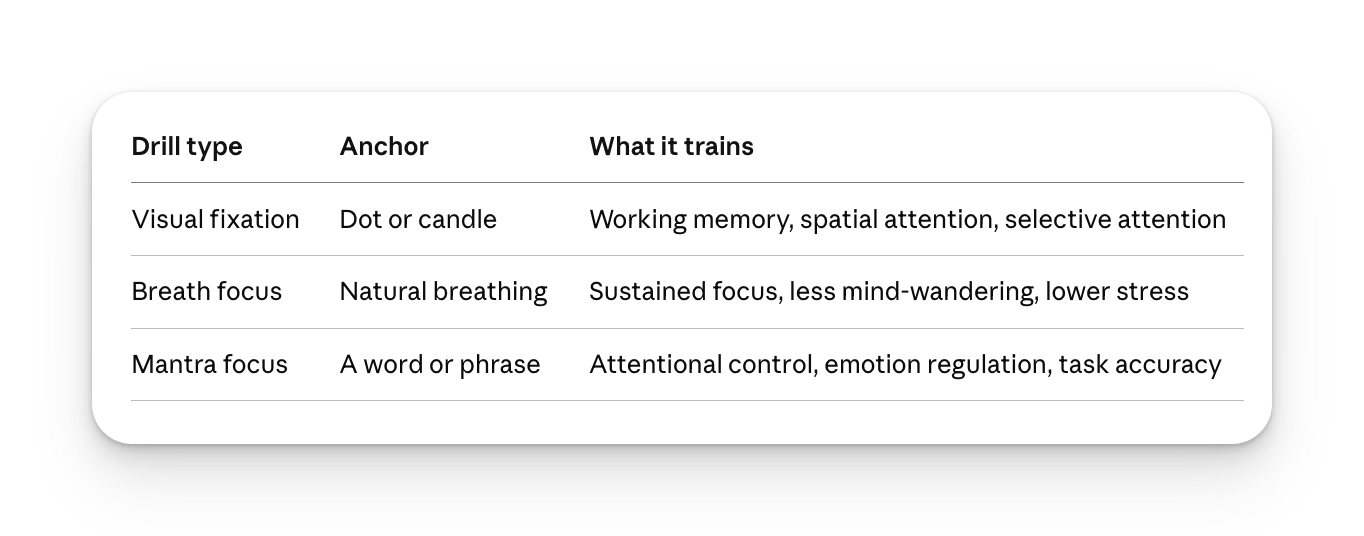
You can pick the anchor that fits you:
Reading about focus changes nothing. Measuring yours settles the whole argument. Run this for two weeks and let your own log make the call.
Each morning, one 5 to 10 minute focus block, then your hardest task of the day.
Log three things: a
focus rating from 1 to 10
whether the task got done,
and the errors you caught.
Read the trend across all 14 days, not any single morning.
These drills won’t hand you a new brain. They’re a noise-reduction layer that stacks on top of real skill practice. The dot doesn’t make you better at your work, it clears the static so your practice lands.
The smallest brain-training habit that reliably pays off might be the most boring thing you do all day. Ten minutes. One point. Your eyes and a wall. The real question isn’t whether staring at a dot sounds exciting, it’s what your focus rating reads on day 14.
Comments
Nothing yet. Say the first thing.
Sign in to join the conversation.