
Hi Kwik Brain,
By the end of this you’ll spot the two habits that fool your brain into thinking it’s learning, and you’ll have the two replacements that build real skill in less time. Both replacements come from decades of memory research. Both feel worse in the moment, which turns out to be the point.
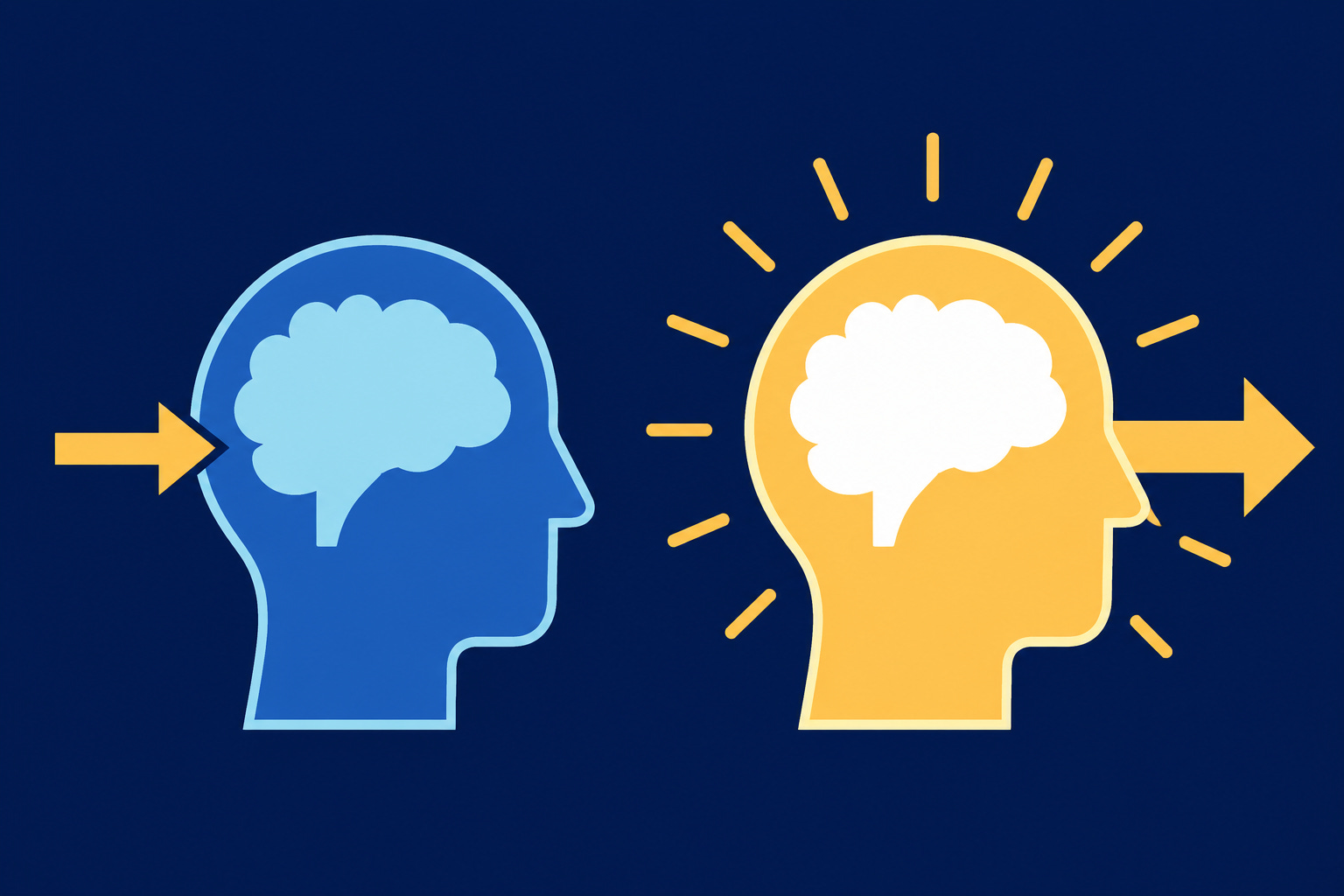
Your brain hands out a reward for effort that looks productive, whether or not anything sticks. Two activities trigger that reward while teaching you almost nothing: hunting for the perfect resource, and rereading material you’ve already covered. Both feel like learning. Neither is.
Before you start, you go hunting for the best book, the best channel, the best course. An hour passes, then another, and you’ve opened fifteen tabs and started nothing.
That hunt has a name in the research: structured procrastination. Chasing the ideal resource delays the work that builds the skill, and it comes dressed as diligence so you don’t notice. A resource you finish beats a perfect one you never open.
Most people never leave the selection phase. Switching resources halfway through is one of the most common reasons people abandon a subject entirely.
The fix is a hard cap. Give yourself one hour to choose, lock in one primary resource and one backup, then close every other tab and begin. Starting points like FreeCodeCamp, the Odin Project, MIT OpenCourseWare, or Coursera on audit are good enough to carry you a long way.
There’s a deeper reason to start before you feel ready. When you build and apply something from day one, your brain has to pull knowledge out and put it to use, which locks it in deeper than reading theory first ever will.
The doing is the learning. The same rule runs through this guide to teaching yourself anything.

You read the chapter, you highlight the good parts, and next week you read it again. It feels familiar, so you assume you know it.
Familiarity is not memory. That warm flash of recognition is the fluency illusion, your brain mistaking “I’ve seen this before” for “I can produce this on demand.” The researchers who ranked study methods put rereading and highlighting near the bottom for how much they help.
Here’s the number that should change how you study. A review of 159 experiments found testing yourself beats passive rereading for long-term retention, and it isn’t close. Five hours of rereading can leave you with almost nothing, while thirty minutes of pulling the material back out of your head can leave you with most of it.
The shift is simple. Stop pushing information in. Start pulling it out.
Close the book and write down everything you can remember. A blank-page brain dump from memory forces your brain to rebuild the material, and that rebuilding is what makes it stick. It will feel harder than rereading, and that difficulty is the work getting done.
Then explain it in plain words, like you’re teaching someone who has never heard of it. Wherever you stumble is your real gap, and now you know exactly what to restudy. A review of 64 studies covering around 6,000 people found this kind of self-explanation produces a real jump in understanding.
Two moves lock it in. Space your reviews instead of cramming them, same day, next day, a week later, a month later, so each return trip is a little harder and a little stronger. Keep a running list of what you got wrong, and hit those misses first next time.
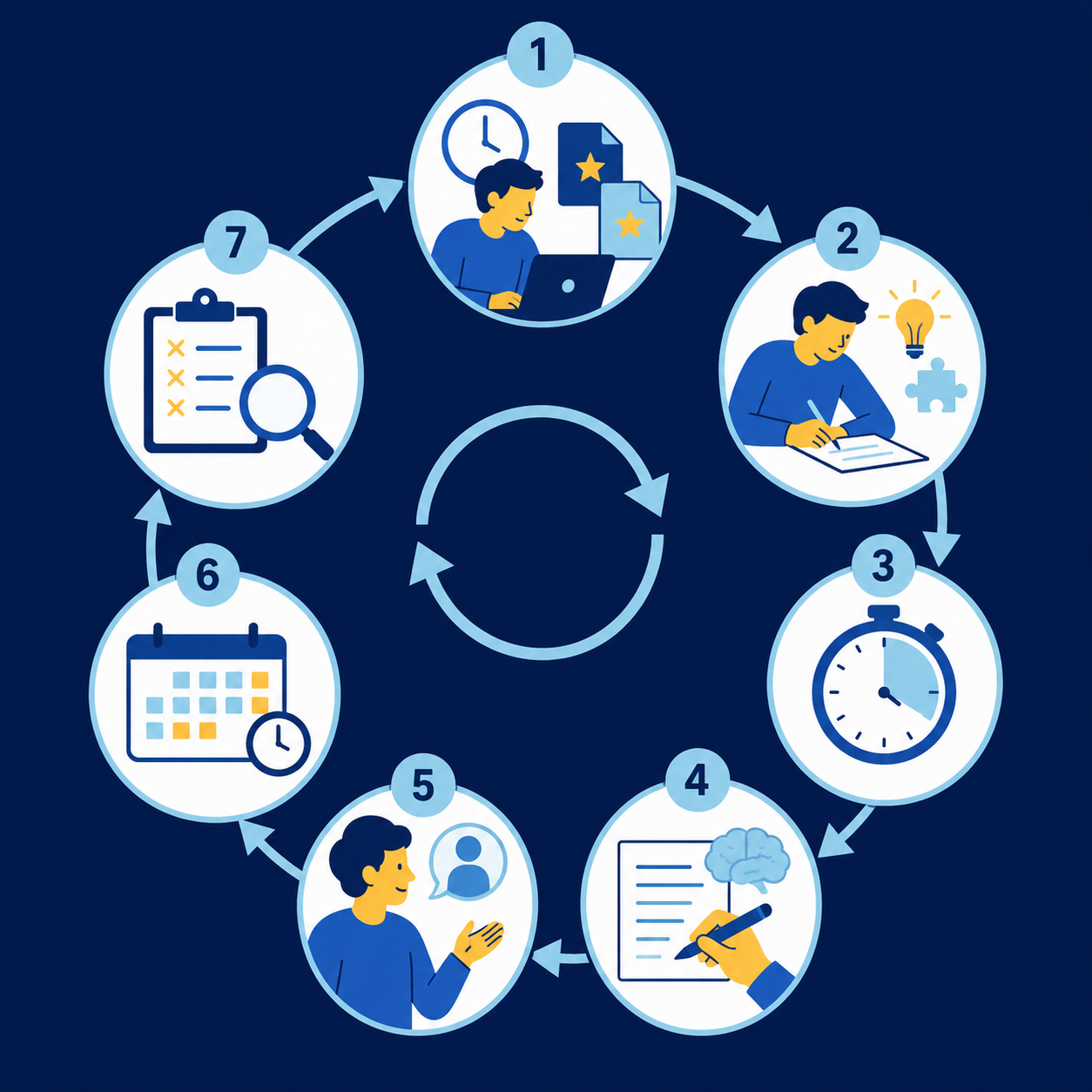
Put it together and the routine is short. Steps 1 and 2 you do once per subject. Steps 3 through 7 repeat every session.
Choose fast. Cap the search at one hour, pick one primary resource and one backup, and close the rest.
Build from day one. Put the material to work on a real problem right away instead of waiting until you have finished the theory.
Study in a short block. Twenty-five to fifty focused minutes, then stop taking anything in.
Dump it from memory. Blank page, write down everything you can recall without looking. The struggle to reconstruct is what builds the memory.
Explain the hard parts simply. Teach the sticky idea to an imaginary beginner. Wherever you fumble is the gap to restudy, and only that.
Space your returns. Revisit the same material same day, next day, a week later, a month later.
Track your misses. Keep a running list of what you got wrong and review those first next time.
The thread under both traps is the same. The studying that feels smooth and comfortable is the studying quietly failing you, and the studying that feels like struggle is the studying that lasts. The discomfort you’ve been avoiding was the learning all along.
So here’s my question for you. Which trap has been quietly stealing your study time, the hunt for the perfect resource, or the reread-and-highlight loop?
Reply and tell me the one you’re dropping first.
Comments
Nothing yet. Say the first thing.
Sign in to join the conversation.