
I used to think that the phrase the "mind's eye" was just a figure of speech. It felt like some way of talking about memories that related the mind back to the body. That was all before a moment a number of years ago, while lecturing to a master's contemporary art class, when I found out that I have something called aphantasia.
Aphantasia is the lack of an ability to visualise things. It's hard for me to explain as someone who experiences it. The example that I use most often when talking about it to someone is this: imagine the house that you grew up in. When you close your eyes, can you picture it? What about when your eyes are open? Most people, I've found out, say yes. But approximately 1-4% of the population, like myself, have aphantasia and cannot perform this very basic task.
My memories of my childhood home are all completely verbal–I could draw you a map of the house, but based on my verbal memory of how it was laid out. I am horrible at remembering names and faces, but if you tell me a story, I am much more likely to remember you. My memories are all rooted in language despite the plethora of imagery input that surrounds me in the world.
I was speaking to the class about my artistic practice and methods, which has always been evolving, but the foundations remains the same. When researching a concept, I use a balance of reading research and searching for images that are used to illustrate that concept. I have always been drawn to images and illustrations, especially ones that communicate higher concepts that are often complicated. And I hoard them religiously in my archives, collecting images and re-presenting them in a new contexts as a method for understanding.
While speaking to this class, the professor, Kristan, pointed out that she thought that I "had something that her brother had" and then explained to me what aphantasia was. I remember standing in shock and saying, "but the mind's eye is just a figure of speech!" I slowly realised through the conversation with the class that she was absolutely correct in her diagnosis. Everyone around me was telling me that they had an ability that I didn't just lack, but never even realised that it existed!
I was floored to report back to my husband about this information, and I quizzed him about his visual abilities over dinner after the class. Not only could he visualise something, but he could mentally manipulate the image in his vision. I was completely shocked to learn about this fundamental difference in the way we experienced life. Learning this information about myself completely rocked me, and suddenly so many things from my life made more sense to me.
I have always struggled with maths, and finding out that I had aphantasia helped me make more sense of this fact. I'm a generally intelligent person, but I count numbers on my fingers like an idiot, which makes sense if you think about it. Without the ability to visualise numeric concepts, it makes sense that I would struggle to complete equations or contemplate geometry.
I started reading more about aphantasia, and found this article about how many of the animators at Pixar have it. I was shocked but pleased to find out that I was not the only visual artist who completely failed to summon visuals. It turns out that the term aphantasia was only coined in 2015 by neurologist Adam Zeman at University of Exeter. So at the time, this new discovery about myself was also new to the world. Some people, like myself, are born with it, and for others the ability can be lost due to injury or trauma.
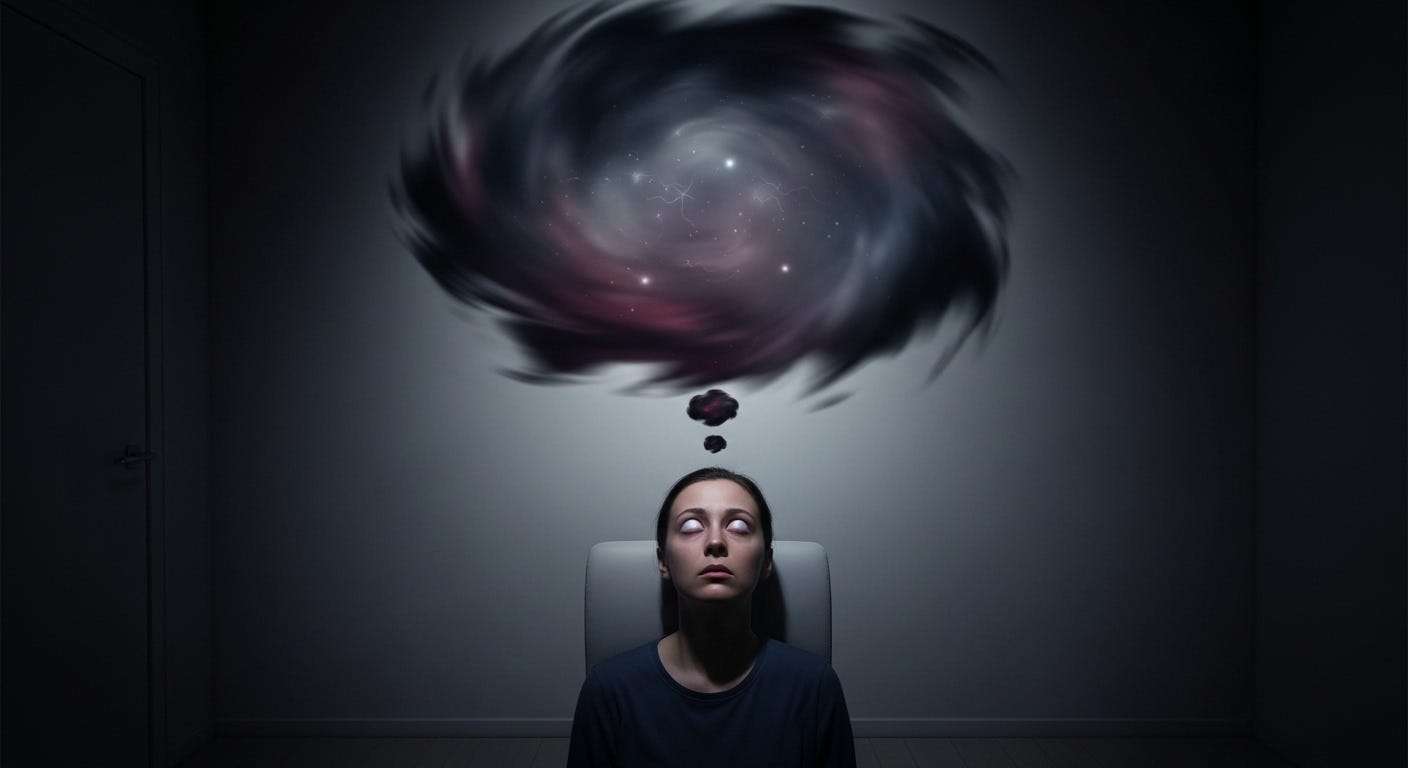
There's also the other end of the spectrum, called hyperphantasia, where someone has a superior ability in visual imagery. They can play a movie backwards and forwards in their minds, and manipulate a visualised artifact in their visual fields. Not only is this hard for me to even imagine, I also find myself feeling extremely jealous of this ability. I began doubting my intelligence and acumen and struggling to understand how I had gone this long in life without knowing how fundamentally different my experience was from others.
I found The Aphantasia Network, a website and YouTube channel that started publishing interviews with researchers about the....defect? Condition? I am not sure what to call it. They even have a test that you can take online to find out if you have aphantasia. I didn't need to take it to know that this was true about me. The fact that I was fully ignorant to the common experiences of others was enough for me.
I've struggled with this information since I learned it about myself, as I added it to the list of things that made me different from 'normal' people. I started chatting with Kristan's brother about it and it was really nice to speak to someone else who was trying to make sense of the same information. We both realised that our dreams weren't visual either. We were both creative people who felt a strong connection to visual art. But what did it mean that we couldn't perform this basic human task? I felt discouraged and frustrated that this aspect of experience was completely unavailable to me.
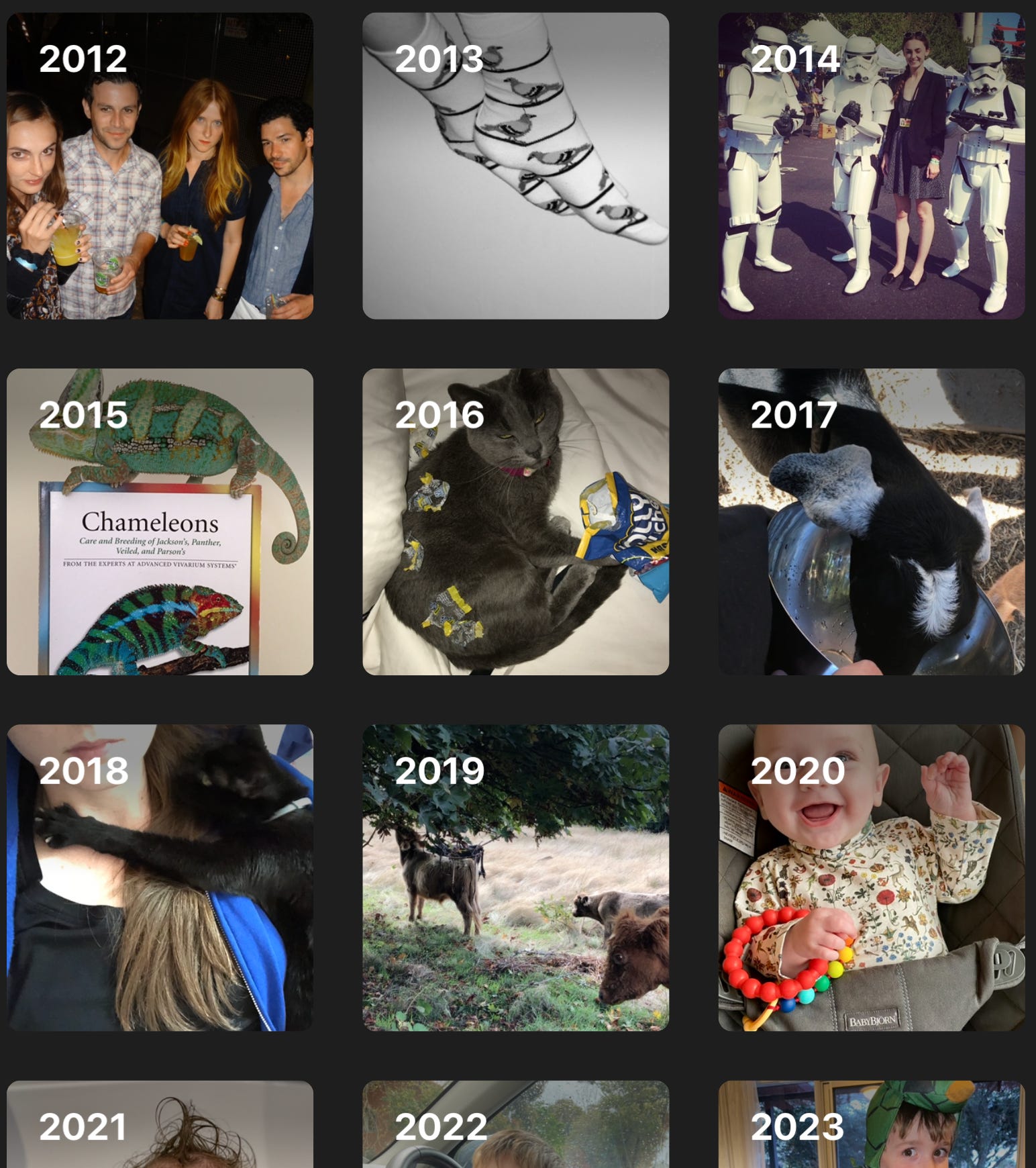
My writing practice has become even more important to me since I learned this about myself. I feel less inclined to make images and more inclined to rely on my strengths in verbal reasoning. My artistic practice has always been rooted in writing and language, but I have doubled-down since this came up. My memories are triggered by the photos and objects that I keep. My practice of photographing everything makes a lot more sense when you account for the aphantasia.
I still comb the internet and books for images that I can repurpose to help me tell a story. I think that's why I love to find the perfect image to help visualise an idea in my writing. I am stunned by the capability to prompt AI to generate images out of words, and I fantasise about being able to conjure up whatever picture I wished in my visual field. I've tried everything I can think of to try and spark even a fragment of an image in my mind, to no effect.
I know at my core that I have a very active imagination that just operates a little differently than most people. I may lament my lack of image-forming ability, but I still try to celebrate my verbal acumen and keep pushing myself to explore the world through linguistic means. While I cannot picture the face of a single human being, I could describe to you the faces of my children in great detail. And I will keep trying to trigger this ability in myself in an effort to catch up with the rest of the population. But for now, I will just keep on snapping photos and collecting objects and images that remind me of people and places that I have known and loved.
Comments
Nothing yet. Say the first thing.
Sign in to join the conversation.