
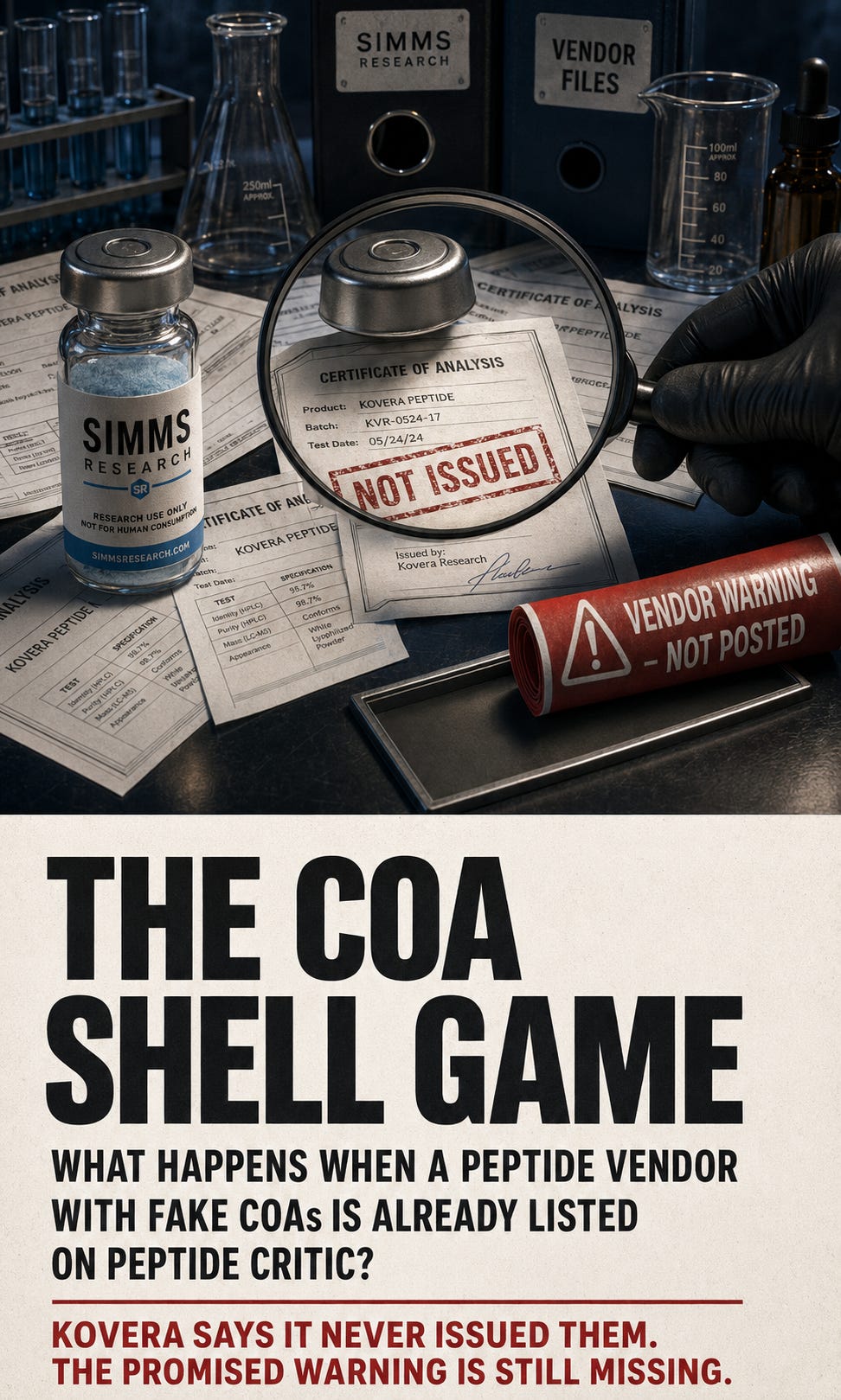
Simms Research doesn’t merely say its peptides are tested. It says every vial it ships is third-party tested, every batch goes to an independent laboratory, and every batch ID can be traced to a public certificate of analysis. That promise turns on one basic question: are the COAs real?
The promise Simms sells
On its About page, Simms makes an unusually comprehensive testing promise:
“Every vial we ship is third-party tested, batch-labelled, and documented — before it leaves our facility.”
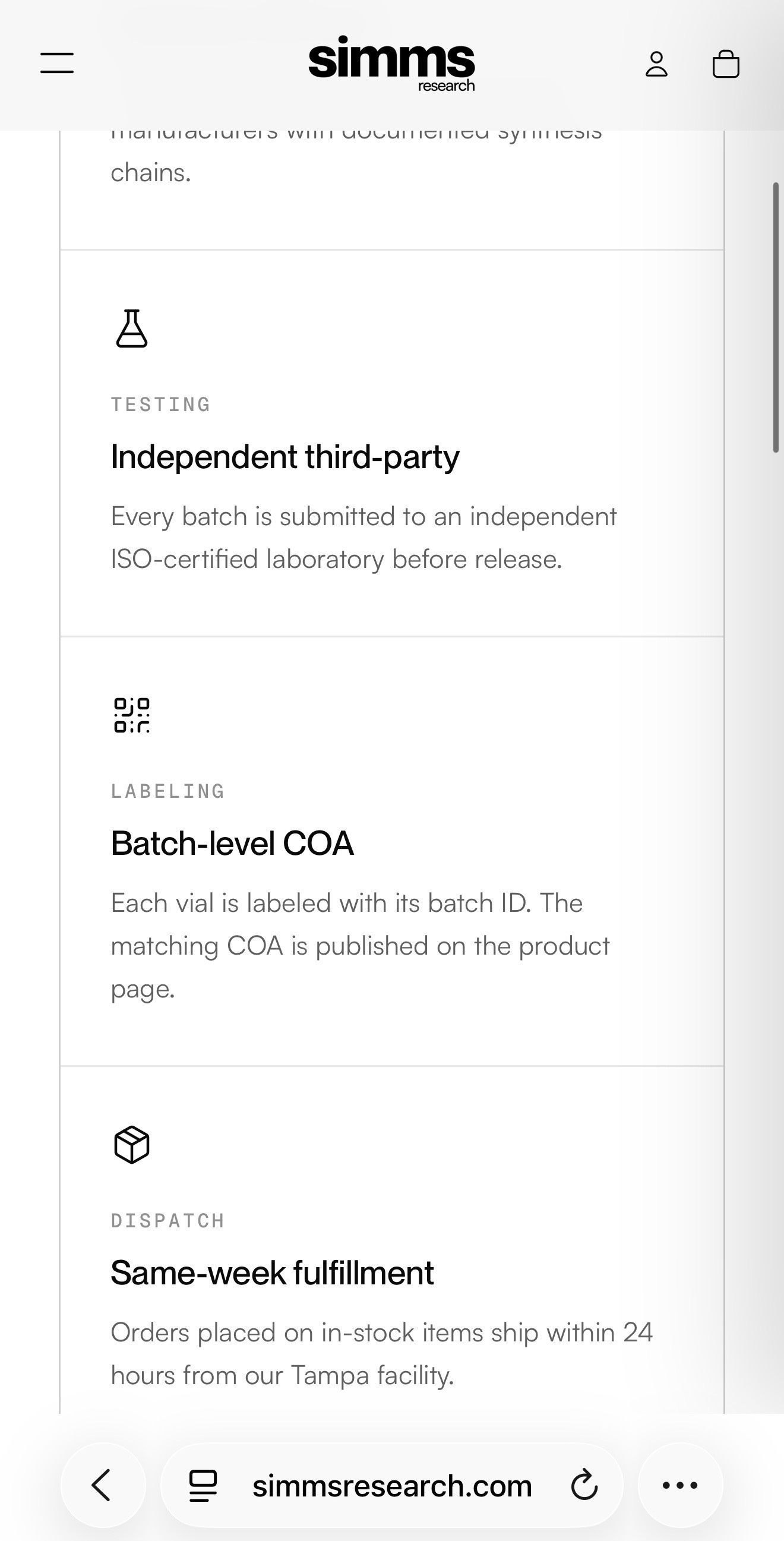
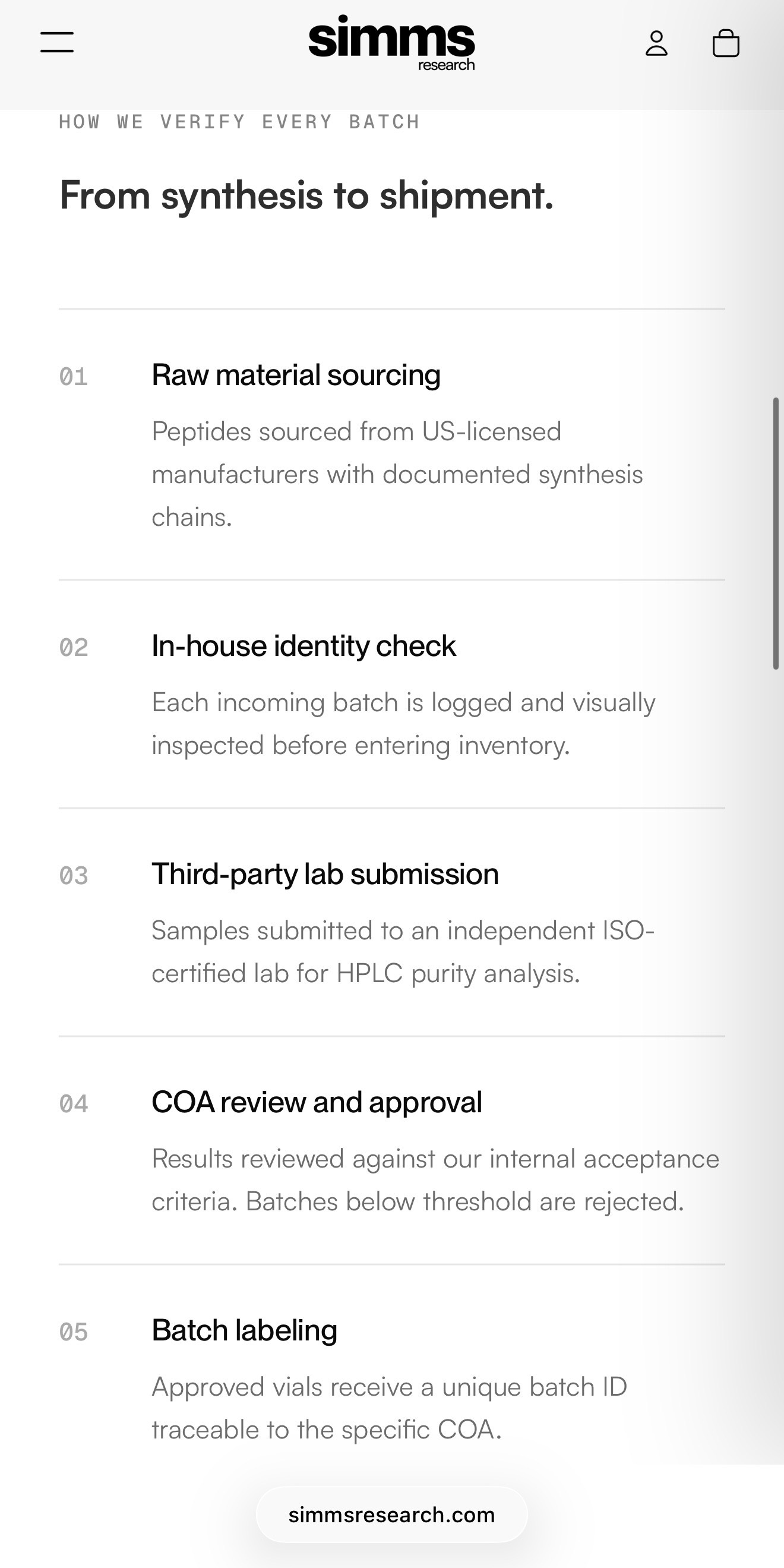
The same page says every batch is submitted to an “ISO-certified laboratory” before release, that each approved vial receives its own batch identifier linked to a specific certificate, and that Simms won’t ship a batch unless it can publish the test.
Its laboratory-results library currently advertises 50 tested batches with an average purity of 99.66 percent. “Every batch we ship is third-party tested,” it says, followed by rows of products, batch numbers, purity figures and buttons opening branded certificates.
The library underpins Simms’ sales claims, presenting its COAs as proof of each listed batch’s identity, purity and quantity.
Across its results library, Simms uses COAs from Kovera Labs and Freedom Diagnostics.
Kovera says the COAs are fake
There’s just one problem. Kovera says he’s never worked with Simms and that the Kovera COAs are fake.
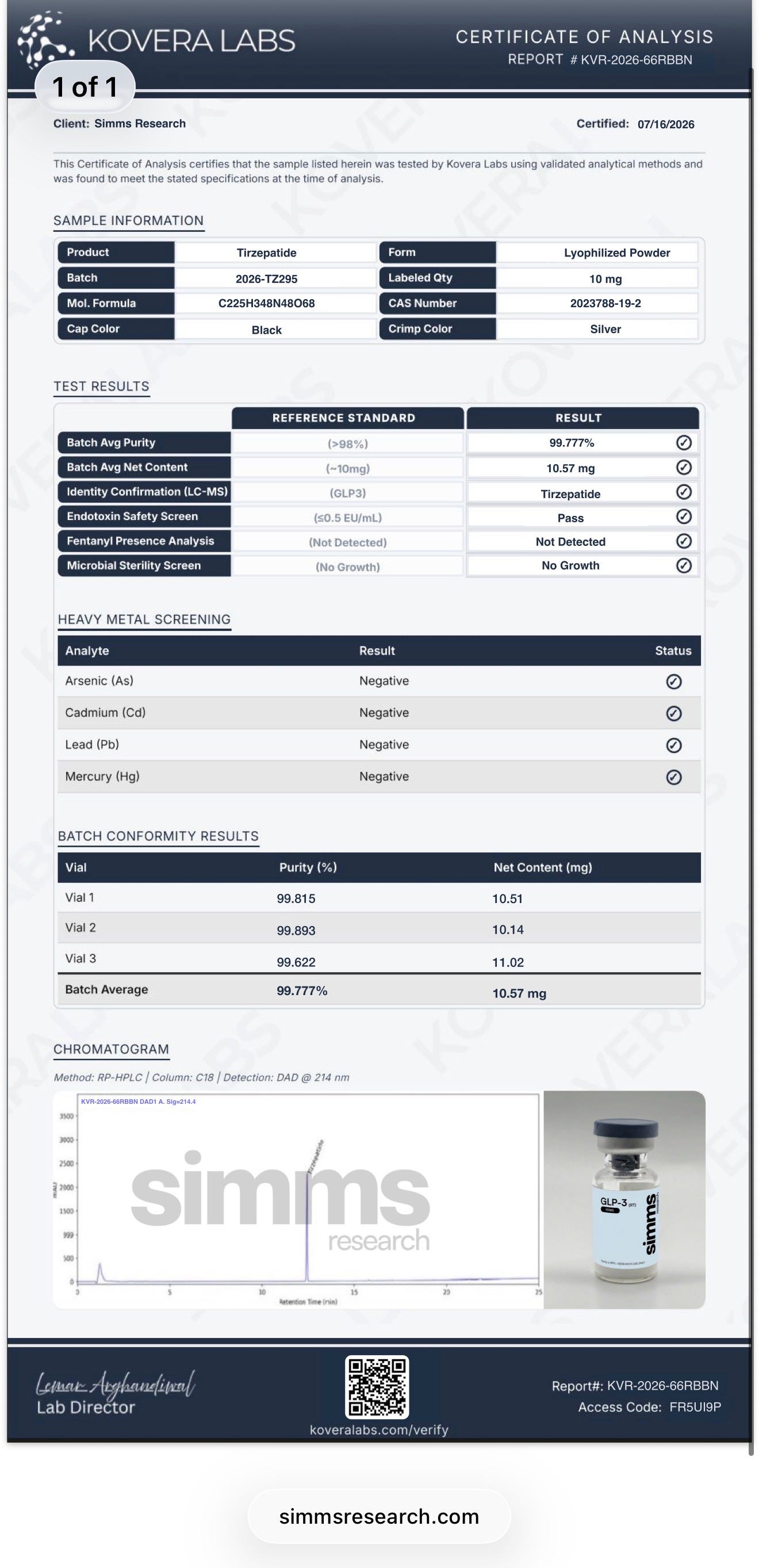
Looking at the COAs, they show basic copy-and-paste and quality-control failures. Unrelated products retain the same “GLP3” reference text. Every vial is black cap silver crimp adding to the template and some reported averages don’t match the individual results printed beneath them. Identifiers are also reused across different compounds. For example, Simms assigns the same batch number and purity result to DSIP and KPV. Separate certificates for KPV and Melanotan I carry the same purported Kovera report number and access code despite naming different products and batches.
These errors show how little scrutiny the documents received before Simms published them as evidence of their independent testing.
The Freedom certificates are a separate problem
Simms also publishes older Freedom COAs and the same black cap silver crimp vials appear on the sample picture.
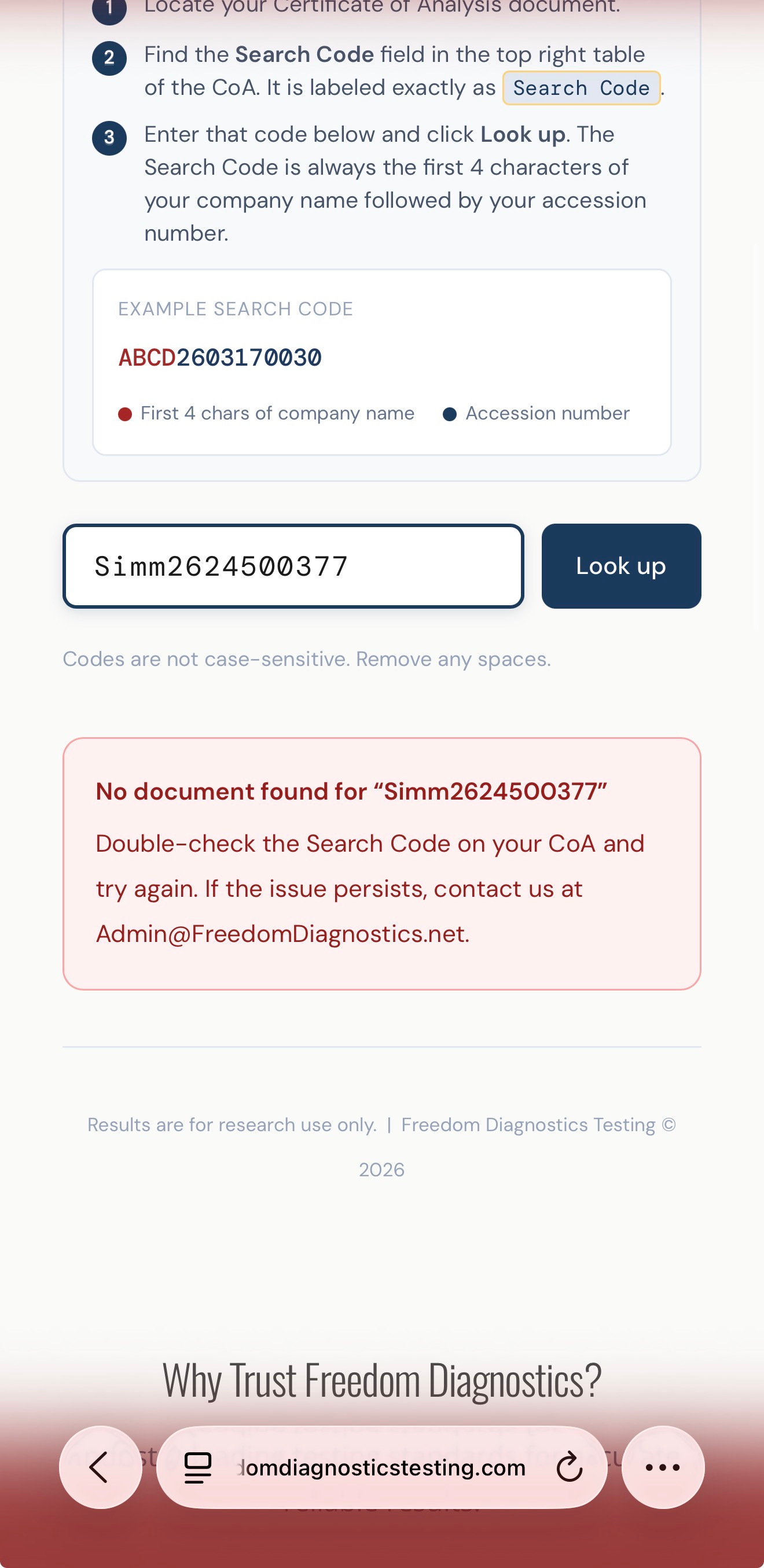
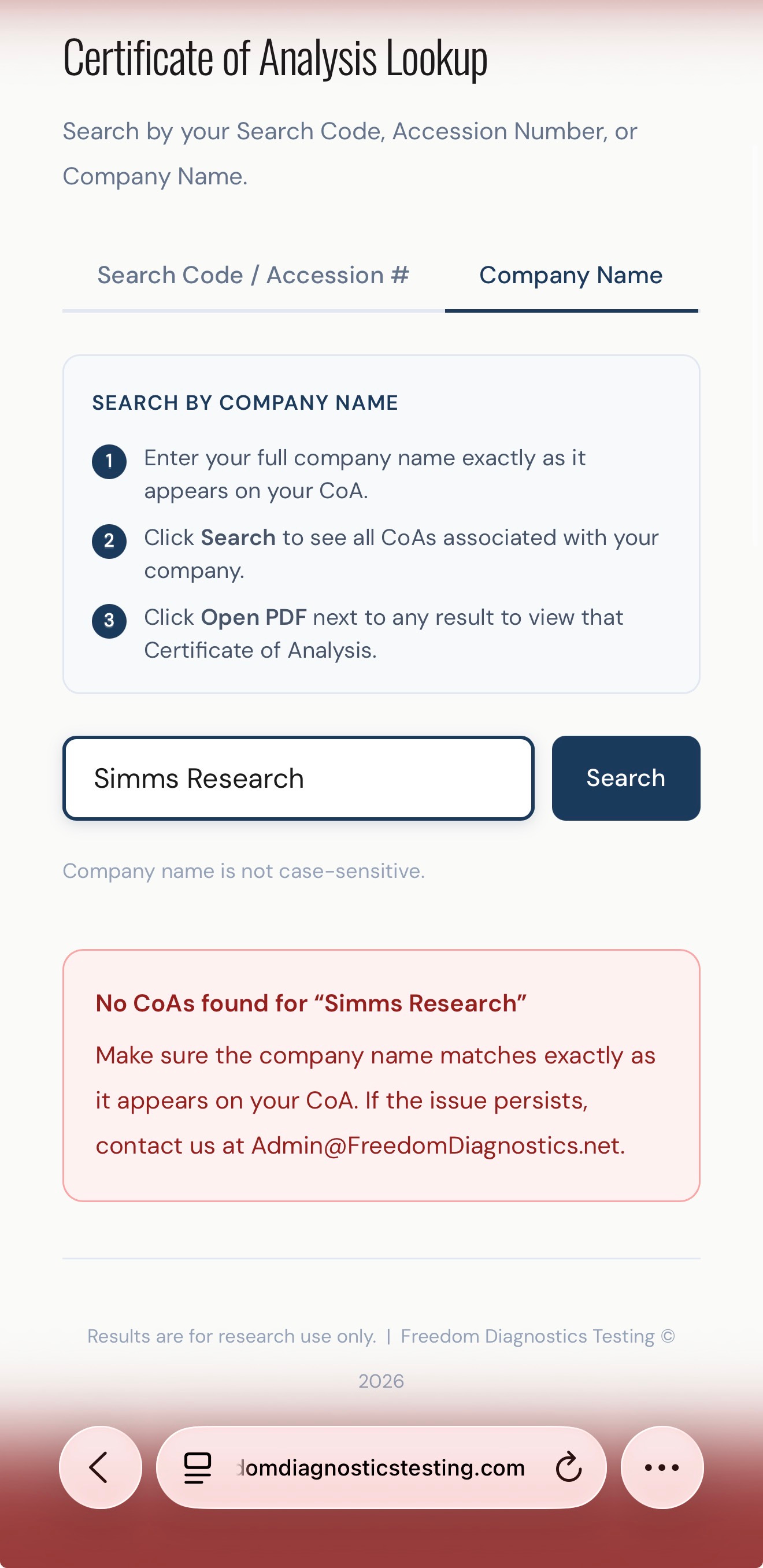
According to Freedom, its reports should be independently searchable. Its official lookup page instructs users to search by the exact accession number, by a code made from the first four characters of the company name plus that accession, or by the exact company name. Freedom’s website says every COA is searchable and advertises more than 42,000 publicly verifiable certificates.
However, the few COAs I did try to verify just come back with “No document found.”
When I tried to search by company name, it returned “No COAs found for Simms Research or Simm.” Until Freedom confirms whether it issued the reports, the accurate description is unverifiable through Freedom’s official public database.
But that qualification doesn’t rescue Simms’ claim, since public verifiability is the feature being sold. If the document tells a customer where to verify it and the named lab returns no record for the supplied code, the COA isn’t performing that function.
What this means
Simms’ products may be legitimate; these findings don’t establish what’s inside the vials. But the COAs are the evidence Simms uses to support its claims about identity, purity and safety. Kovera says the COAS carrying its name are fake, while the Freedom COAs checked remain unverifiable. Even if the products themselves are genuine, fake or unverifiable COAs are a major red flag.
Peptide Critic wrote the test. Simms failed it.
On 13 August, Kovera publicly warned Peptide Critic about Simms on X:
“Wow Simms is still up with no notes. I understand you don’t like me but when the owner of a testing lab states the vendor is forging COA’s I’d expect you to at least take a moment to check.”
That put Peptide Critic on public notice that the lab named on the COAs was disputing them. Peptide Critic’s stated policy on X was that vendors with fake or questionable COAs remain searchable but receive a warning:
“We keep the listing searchable, add a warning, and let users see the evidence and reviews.”
Eight days later, Peptide Critic published The COA Shell Game: What Happens When a Peptide Vendor Applies to Peptide Critic. The article made clear that warning banners are controlled by Peptide Critic:
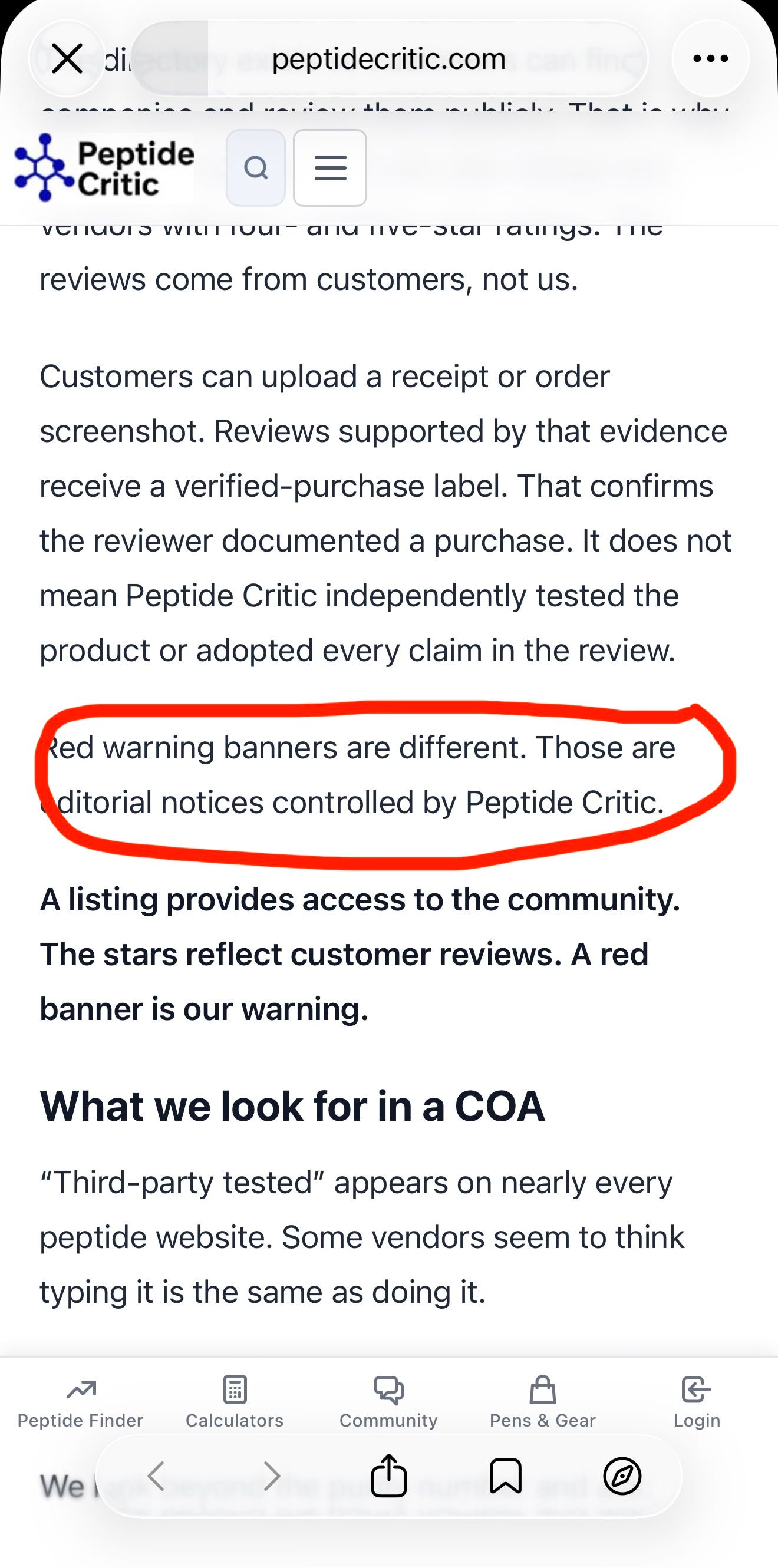
“Red warning banners are different. Those are editorial notices controlled by Peptide Critic.”
Under that system, a vendor with fake or questionable COAs isn’t removed. Its page stays searchable so customers can see the evidence and reviews, but Peptide Critic adds a red banner to mark the risk.
The problem isn’t that Simms remains on the site. It’s that Simms remains there without the warning Peptide Critic says such cases receive.
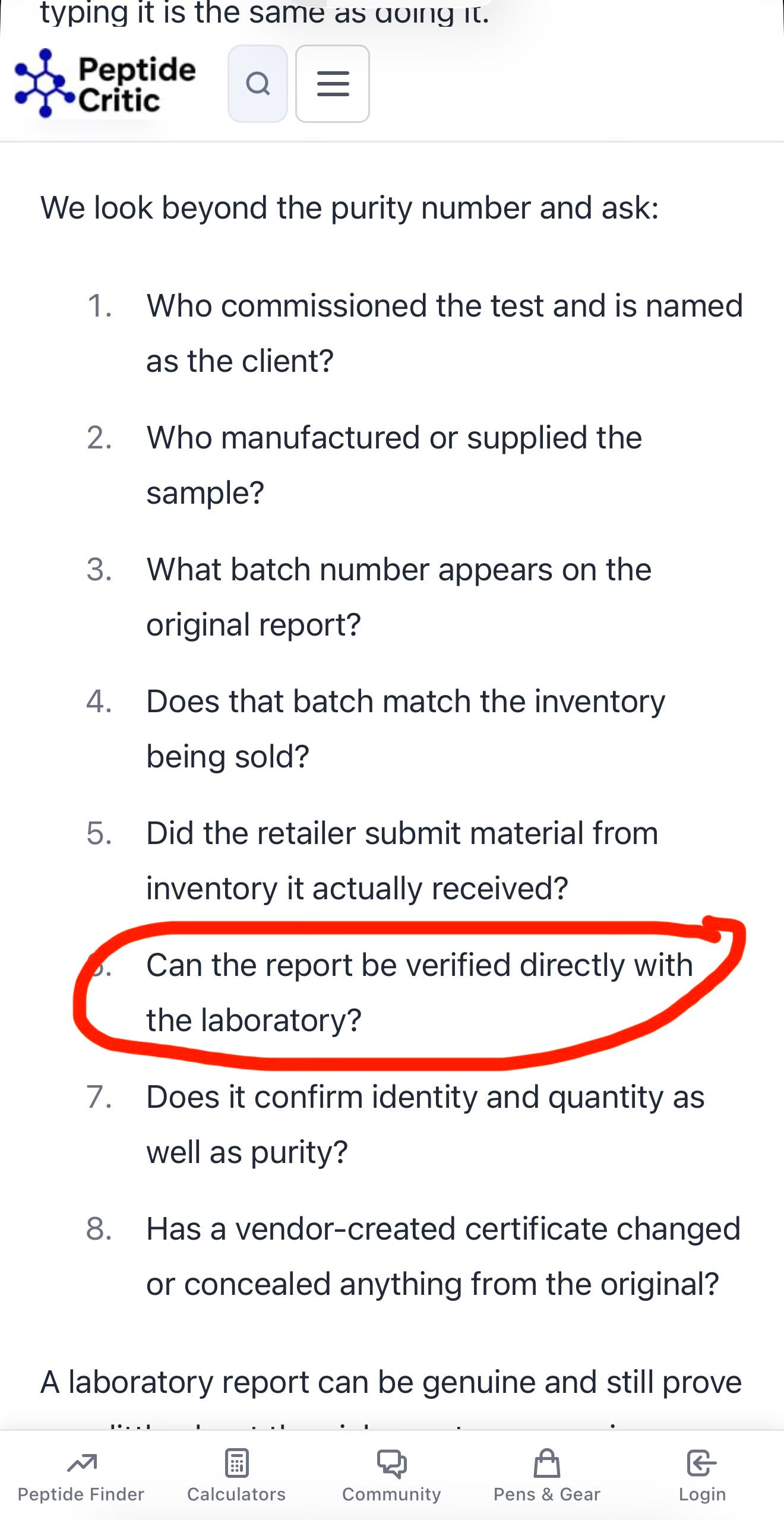
Its COA checklist also asked:
“Can the report be verified directly with the laboratory?”
Kovera has answered that question: he says he’s never worked with Simms and that the Kovera COAs are fake.
As of 22 August 2026, Peptide Critic’s Simms profile and directory entry showed no visible red warning. Its own test says to verify a report with the laboratory. Its own policy says fake or questionable COAs receive a warning. Kovera’s public warning had been visible since 13 August, yet the Simms warning is still absent.
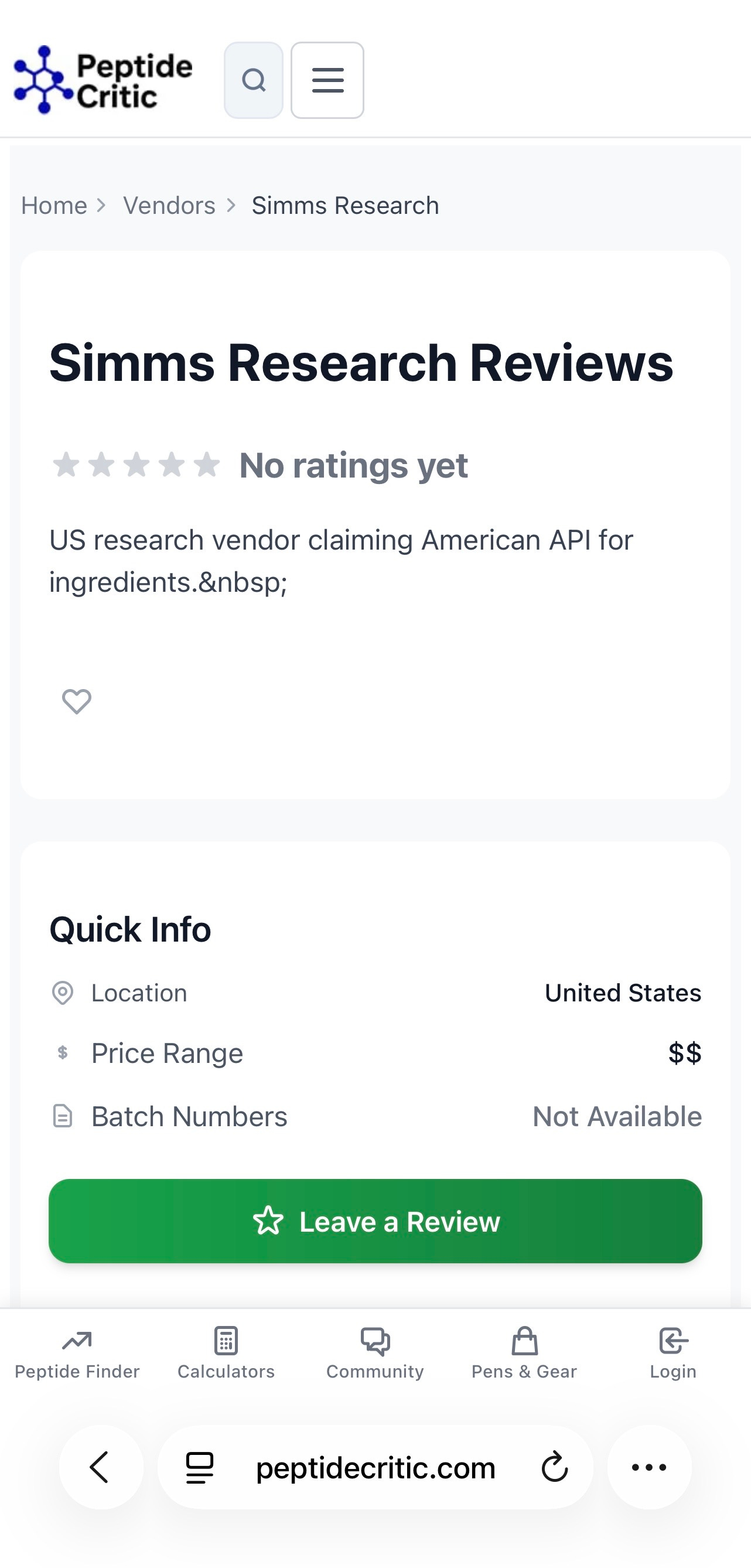
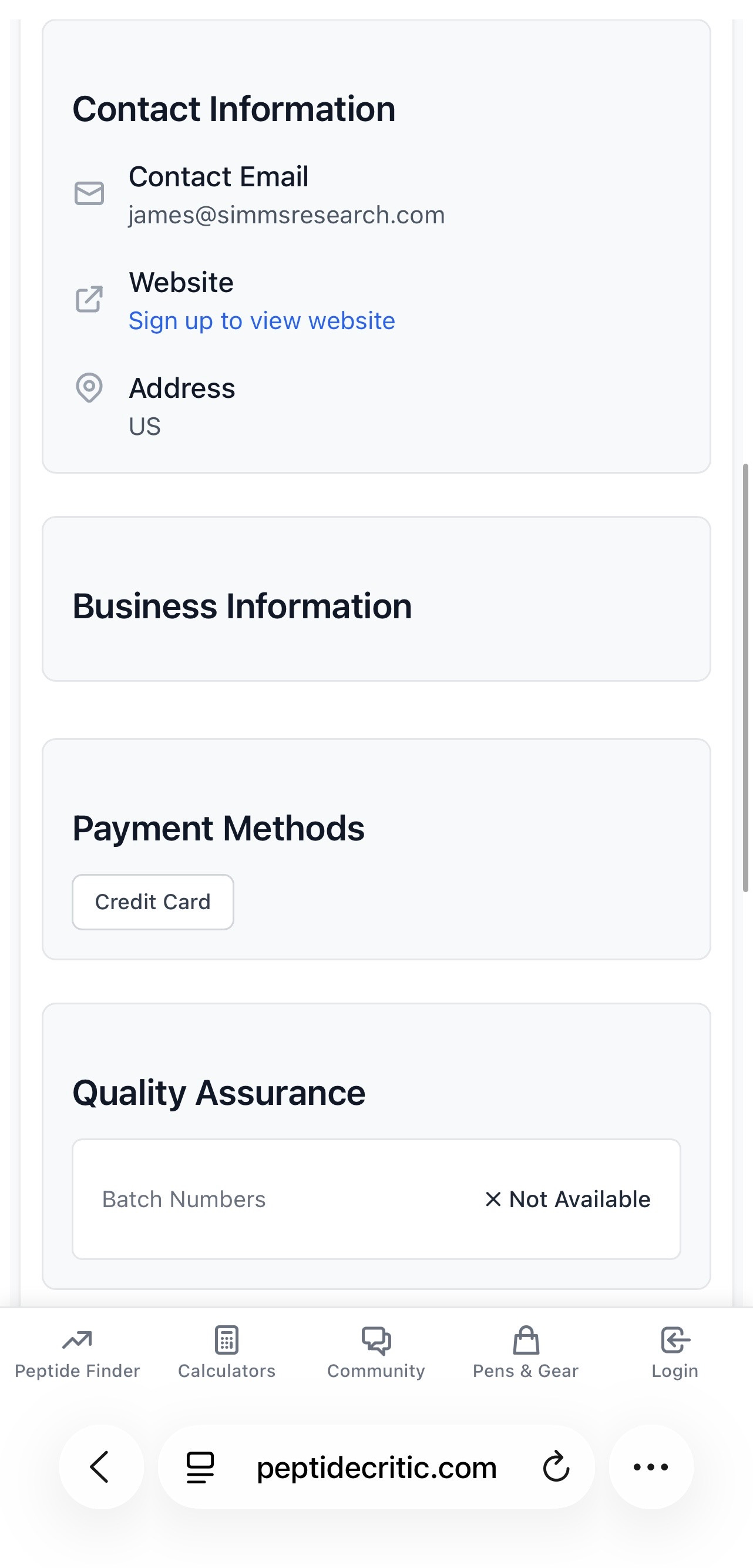
In The COA Shell Game, Peptide Critic says typing “third-party tested” isn’t the same as doing it. The same standard cuts both ways: publishing a warning policy is not the same as applying it.
No posts
Comments
Nothing yet. Say the first thing.
Sign in to join the conversation.