
Wine lovers from around the world feel like royalty when they arrive in the Loire Valley. The 630-mile Loire River provides the perfect setting for manicured gardens, ornate châteaux, and an unhurried glass of Sancerre.
Many flock to the Loire Valley specifically to see its awe-inspiring châteaux, the most famous being Chenonceau, Amboise, and Chambord.
The region’s wines are just as dazzling, ranging from minerally Sauvignon Blanc in Sancerre to Melon de Bourgogne near the Atlantic coast, one of the world’s great seafood wines. The Loire is also one of France’s great sparkling wine regions, producing an abundance of traditional-method wines (known here as Fines Bulles).
It’s also home to Chenin Blanc, a versatile white grape produced in styles ranging from bone-dry to sweet, and Cabernet Franc, the region’s signature red grape.
The climate across the vast Loire Valley varies according to proximity to the Atlantic Ocean. For the purposes of this guide, we’ll divide the region into four sub-regions from west to east: Lower Loire (near Nantes), Middle Loire (Angers, Chinon, and Tours), Centre Loire (Sancerre and Pouilly-Fumé), and the lesser-known Upper Loire.
Within these sub-regions, we’ll explore place (terroir), grapes (varietals), and bottles to enjoy. I’ve given extra attention to the Middle Loire thanks to my collaboration with Allison Slute of Cab Franc Chronicles, whose expertise on Cabernet Franc helped shape this section.
This is the western-most region of the Loire, centered around the town of Nantes. Here, the climate is decidedly maritime. The area experiences significant moisture, and viticulture would be difficult if not for the region’s exceptionally well-draining soils (based on metamorphic rock like granite and schist).
The most important varietal in this region is a white grape called Melon de Bourgogne, or “Melon B.”. (It was brought to this area from Bourgogne/Burgundy, but it's now clearly associated with the Lower Loire; you'll increasingly see the name “Melon B.”, an effort to distinguish the grape from Burgundy.).
Melon B is a high-acid white grape offering aromas of bright citrus (lemon, lime), green orchard fruit (green apple, green pear), and salinity (salty sea spray). It’s been hailed as the ultimate match for seafood, especially oysters.
The most important appellations in the Lower Loire are the Muscadet AOCs, the most productive of which is Muscadet Sèvre et Maine. (Remember that Muscadet is the name of the appellation; the permitted white varietal is Melon B.).
The Muscadet Sèvre et Maine appellation has nine approved DGCs (Dénominations Géographiques Complémentaires), which signify special parcels of terroir (with ideal slope and aspect, and with lower yields). They’re worth remembering if you’re looking for a premium bottle from this area. The first three are especially noteworthy: Clisson, Gorges, Le Pallet, Château-Thébaud, Monnières–Saint-Fiacre, Goulaine, Mouzillon-Tillières, La Haye-Fouassière, and Vallet.
The wines from this region are often aged sur lie, or on the dead yeast (lees), during the maturation process. As the lees are stirred into the wine (a process called bâtonnage), they impart their bready, biscuity notes. They also offer texture to the wine, usually detectable as a “roundness” on the palate. Look for that as you try these wines. It’s a characteristic distinct from the influence we see with oak ageing, and a great way to understand how lees stirring affects texture and flavor in wine.
Chereau Carre Chateau de la Chesnaie Muscadet Sèvre Et Maine 2024 ($17)
Chereau Carre Chateau de Chasseloir Muscadet Sèvre Et Maine 2023 ($18)
Famille Lieubeau Muscadet Sèvre et Maine Clisson 2022 ($24) This comes from Clisson, one of the special DGC sites.
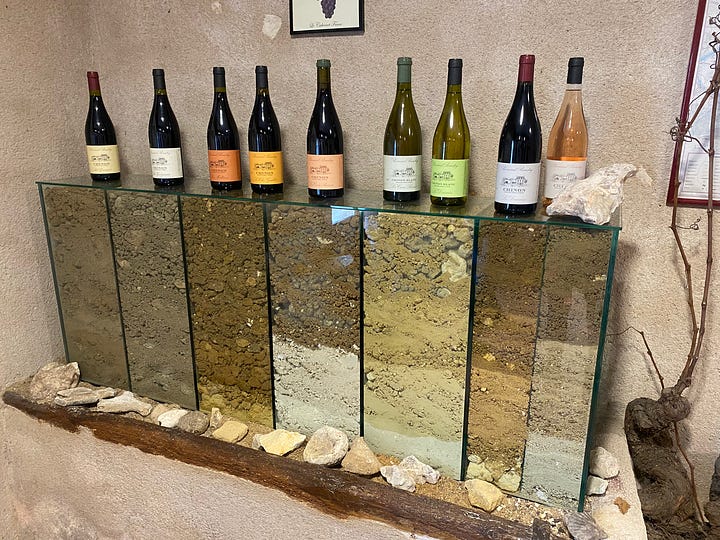
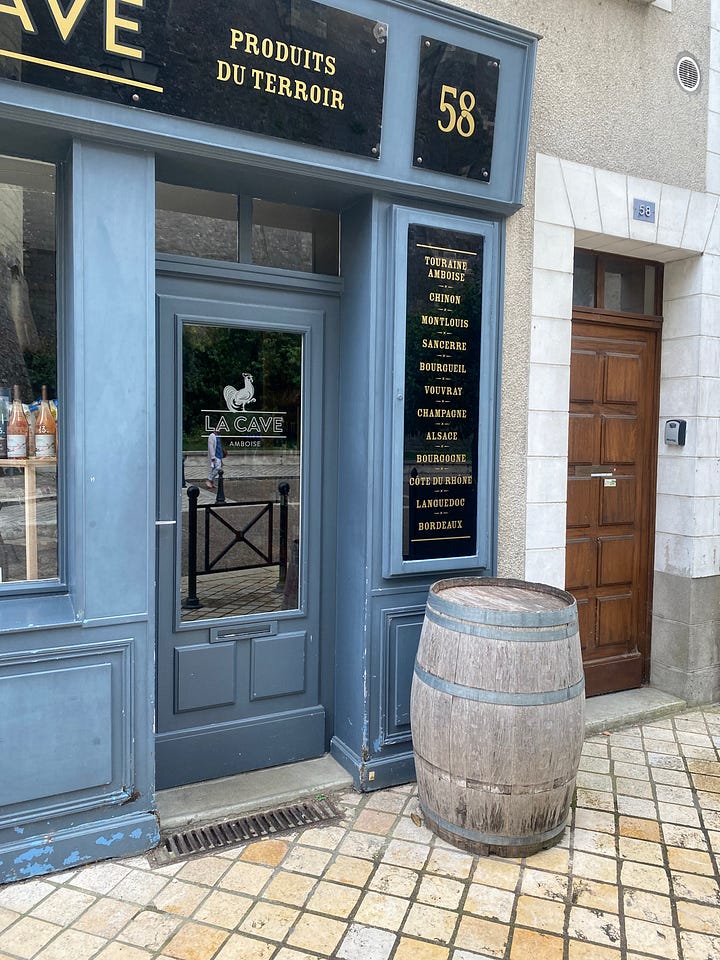
This section of Loire stretches from the town of Angers through the town of Tours. The soil changes significantly within this large band; the western portion has dark soils rich in gravel and schist (called “black Anjou”), and the eastern portion is based on tuffeau— a chalky limestone soil that is high in calcium (“white Anjou”). Tuffeau is especially well suited to sparkling wine.
Chenin Blanc and Cabernet Franc are the key varietals.
Petillant (not to be confused with pet-nat) means lightly sparkling, around 2.5 atmospheres of pressure in the bottle
Mousseux means fully sparkling, around 4.5 to 5 atmospheres of pressure (like Champagne).
Key appellations: Crémant de Loire, Vouvray, Saumur, Montlois-sur-Loire, and Touraine.
Rosé d’Anjou — an off-dry rosé based primarily on Cabernet Franc.
Cabernet d’Anjou — an off-dry rosé made from Cabernet Franc and/or Cabernet Sauvignon.
Rosé de Loire — a dry rosé, typically based on Cabernet Franc and other Loire Valley grape varietals.
Sec means dry.
Demi-sec indicates the wine has some sweetness.
Key appellations:
Savennières – Dry, powerful, age-worthy Chenin Blanc grown on schist soils; often considered one of Loire’s greatest white wine appellations.
Anjou Blanc – Dry Chenin Blanc ranging from fresh and approachable to more structured examples from schist-rich vineyards.
Saumur Blanc – Dry Chenin Blanc grown on limestone-rich tuffeau soils; typically elegant, mineral, and high in acidity.
Vouvray – Chenin Blanc in every style: sparkling, dry, off-dry, sweet, and dessert wines made with grapes affected by botrytis, or noble rot (Quart-des-Chaume); one of the Loire’s most versatile appellations.
Montlouis-sur-Loire – Across the Loire from Vouvray; Chenin Blanc in dry, sparkling, and sweet styles, often with a slightly leaner, more mineral profile.
I’m delighted to welcome Allison Slute from Cab Franc Chronicles to share her expertise in this section of our report:
Cabernet Franc is the most planted grape (of both white and red!) in the Loire Valley, representing 29% of the area under vine in the region (about 38,000 acres). In fact, there is more Cabernet Franc planted in the Loire than Italy, Hungary, South Africa, Argentina, Chile, the United States and Canada combined. Not only is the Loire Valley the only region globally with centuries of tradition producing single varietal Cabernet Franc red wines, the range of expressions that can be achieved in the Loire thanks to its temperate climate is unmatched – think, rosé (dry and off-dry), sparkling (blanc de noir, rosé and fizzy reds) and even white Cabernet Franc.
The Loire Valley is to Cabernet Franc lovers what Burgundy is for Pinot Noir lovers. And with the recent string of excellent vintages coupled with a quality-to-price ratio that is off-the-charts, there is no better time to discover and enjoy Loire Valley Cabernet Franc. Here are some key appellations and terms to look out for:
Breton – the local name for Cabernet Franc in the Loire. Some wines have fanciful names that use this term as a little nod to this ancestral name.
Chinon (red and rosé) – Part of Touraine, and the largest of the Cabernet Franc appellations. There are two key terroirs: alluvial soils on the flat terraces that flank the Vienne River and clay-limestone soils of the slopes. The wines tend to lean the most earth-forward or savoury of the Cabernet Franc appellations.
Bourgueil (red and rosé) – Part of Touraine, this is, in my opinion, one of the most underrated appellations for Cabernet Franc. We find alluvial soils closer to the Loire and clay-limestone soils on the primarily south-facing slopes. There is a lot of diversity in styles here, but generally the softer, early-drinking styles come from the alluvial soils and more powerful, structured wines from the slopes.
St-Nicolas-de-Bourgueil (red and rosé) – Also part of Touraine, and the Loire Valley’s only single-village appellation. While the terroir here is very similar to Bourgueil, it is dominate by alluvial soils (sands and gravels) and as a result the wines are more consistent stylistically. The reds are generally fruit-forward, supple and uber drinkable.
Saumur-Champigny (red) – Part of the Anjou-Saumur region, the majority of vineyards are situated on a large plateau of tuffeau limestone that sits perched above the Loire River. The caves dug out centuries ago that served as troglodyte dwellings are now ideal environments for making and aging wine. Thanks in part to the limestone, the Cabernet Francs tend to be the most refined with a beautiful backbone of acidity.
Saumur (red, rosé, rosé sparkling) – Part of Anjou-Saumur, a Saumur Rouge can come from a number of communes south of Saumur-Champigny. Wines must be 70% Cabernet Franc for the AOP, but most of the time they are 100% Cabernet Franc. There is a lot more diversity of terroirs and aspects, so the reds can be quite varied. Many share similarities to Saumur-Champigny, but a touch lighter in structure and concentration.
Saumur Puy-Notre-Dame (red) – A separate appellation under the Saumur AOP, Saumur Puy-Notre-Dame is centred around the village of the same name, Le Puy-Notre-Dame, which sits on a high limestone plateau south of the Loire. The wines are generally regarded to be the most structured, tannic and age-worthy Cabernet Francs of the Loire.
Anjou & Anjou Villages (red) – Anjou is a very large region with a lot of diversity of soils and aspects. While Anjou Rouge and Anjou Villages can be 100% Cabernet Sauvignon, it is more common to see 100% Cabernet Franc or a blend. Most examples will state the assemblage on the back label. Western Anjou is dominated by schist soils, which gives a different profile to the Cabernet Franc. They tend to be more dark fruited, fuller, and more fruit-forward.
Anjou-Brissac (red) – Once part of the Anjou Villages appellation, the village and area around Brissac now has its own appellation status. The wines can be Cabernet Franc and/or Cabernet Sauvignon or a blend. Schist is the dominant soil, and much like Saumur Puy-Notre-Dame, these wines from Anjou-Brissac are also known to be quite powerful and structured.
We can find incredible examples from key sites that now have DGC status:
Touraine Chenonceaux
Touraine Oisly
Growing in popularity and quality especially in these DGCs:
Touraine Amboise
Touraine Chenonceaux
Sparkling
Langlois Crémant de Loire Brut Réserve ($25) Owned by Bollinger! Toasty, elegant; one of the region’s benchmark sparkling wines.
Gratien & Meyer Crémant de Loire Brut ($20) A terrific value Crémant with bright citrus and green apple.
Chenin Blanc
Château du Breuil et de la Roche, Les Rochettes Anjou Blanc 2023 ($28) Fresh, mineral-driven Chenin with citrus and orchard fruit.
Château de Bois-Brinçon Anjou "Terre de Grès" Blanc 2023 ($19) A fantastic introduction to dry Anjou Chenin, and a great value.
Domaine Bourillon Dorléans "L’Oppidum” ($58) An example of Chenin Blanc brought up in new oak barrels with grapes from 80+ year-old vines.
Domaine du Margalleau Vouvray Sec ($23) Classic dry Vouvray with apple, quince, and vibrant acidity.
Domaine Huet Clos du Bourg Demi-Sec 2022 ($47) Off-dry Chenin from legendary Domaine Huet, balancing richness with zippy acidity.
Domaine Huet Vouvray 'Le Mont' Sec ($50) Dry Chenin from legendary Domaine Huet; one of the Loire's iconic white wines.
Rosé
Château de Montguéret Rosé d’Anjou ($15) off-dry and easy drinking. Lovely with summer grilling fare.
Cabernet Franc (13 bottles recommended by Cab Franc Chronicles)
Domaine Fabrice Gasnier 2023 Chinon “Les Graves” ($22) – A quintessential easy-drinking Chinon.
Domaine de la Noblaie 2024 Chinon “Les Temps des Cerises” ($30) – Fruity, floral and pure, an elegant, but still playful, early-drinking Chinon.
Olga Raffault 2020 Chinon “Les Picasses” ($38) – From one of the great “grand cru” terroirs in Chinon. One of my essential picks for starting your Loire Cabernet Franc cellar.
Charles Joguet 2019 Chinon “Les Varennes du Grand Clos” ($60) – Iconic “premier cru” terroir from one of the region’s star estates.
Domaine du Bel Air, 2024 Bourgueil “Jour de Soif” ($23) – The word “soif” (thirsty!) says it all. This is a fruit-forward, buoyant, food-friendly Cab Franc.
Lamé-Delisle-Boucard 2025 Bourgueil “Nom de Zeus” ($19) – Scrumptious, moreish, fruit forward deliciousness, and with no added sulphites!
Domaine Breton 2020 Bourgueil “Clos Sénéchal” ($50) – One of the great age-worthy expressions from the appellation. Cellar pick!
Clos des Quarterons 2021 St-Nicolas-de-Bourgueil ($31) – Benchmark expression from St-Nicolas-de-Bourgueil.
Château de Chaintres 2025 Saumur-Champigny “Les Sables” ($28) – Easy-drinking elegance from one of the region’s most historic estates.
Domaine des Closiers 2023 Saumur-Champigny “Les Closiers” ($47) – From one of the elite, rising stars in the appellation. Drink now or hold. Impress your friends!
Domaine des Sables Verts 2023 Saumur-Champigny “Les Poyeux” ($35) – From an up-and-coming producer, from the “grand cru” terroir of the appellation. Cellar-worthy bargain.
Domaine des Roches Neuves 2021 Saumur-Champigny “Franc de Pied” ($55) – Iconic estate with a rare expression of Cabernet Franc from ungrafted vines.
Domaine de la Bergerie 2023 Anjou Rouge “La Cerisaie” ($28) – A classic expression from the schistous soils of western Anjou.
Sauvignon Blanc
Domaine de la Chaise Touraine Sauvignon Blanc ($20). One of the Touraine bargains I (Kristen) mentioned earlier. I tried this wine at a seminar given by GuildSomm and Vins de Loire. I’m talking to local wine buyers to see if they can order it for me.
Domaine de Marce Touraine Oisly Coulee Galante 2024 ($20) Another Touraine bargain from the same tasting—proof you don’t have to spend Sancerre prices for outstanding Sauvignon Blanc.
Côt (Malbec)
Domaine Des Pierrettes, Côt 2023 ($29) Another gem from the InterLoire & GuildSomm tasting. Bright blackberry, plum, violets, and a touch of spice. A fresher, lighter take on Malbec than I had tried before (so drinkable).
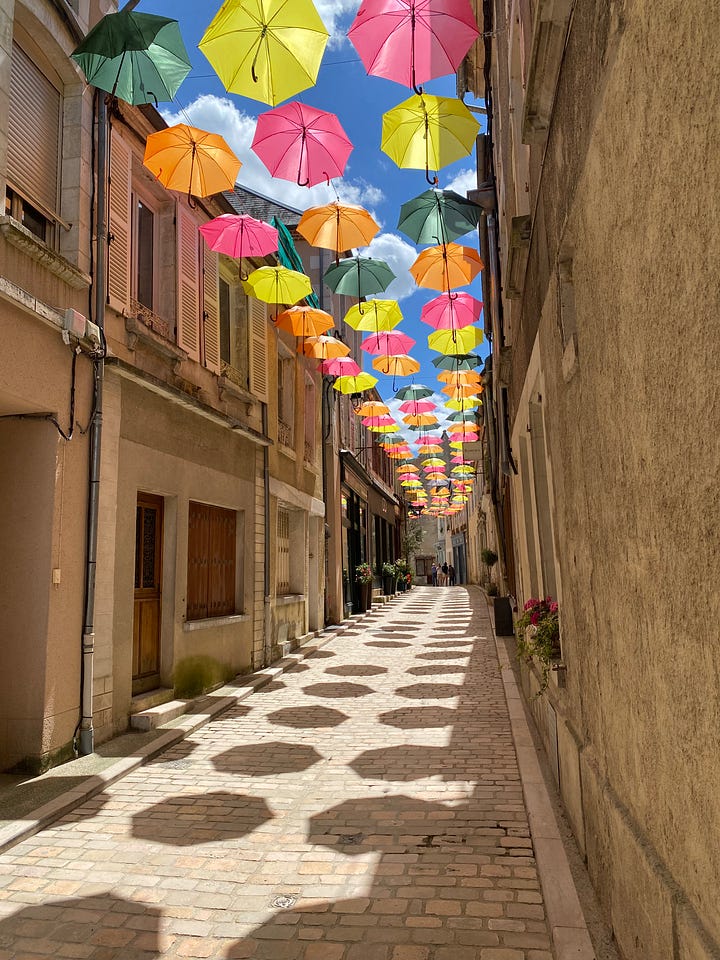
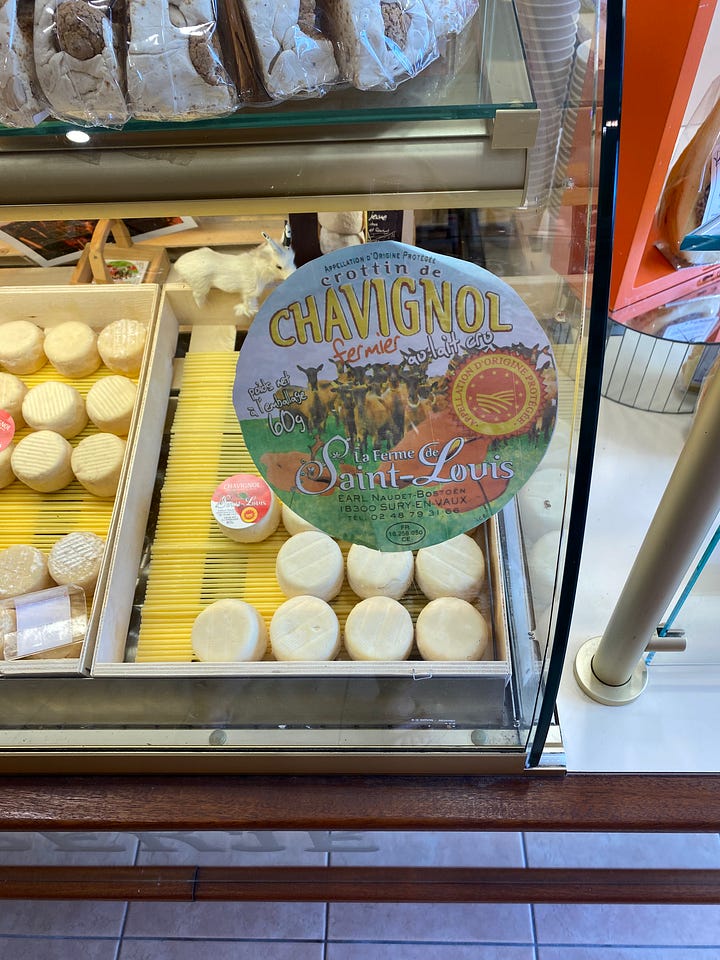
This section of the Loire Valley has a continental climate. The soils are based on Kimmeridgian marl, which is rich in marine sediment and fossilized shells.
There are three sub-types of soil that rest on top of the Kimmeridgian marl, and they each affect flavor in the wines: 1) caillottes (pebbly, limestone-rich), 2) terres blanches (rich in oyster fossils), and 3) argiles a silex (flinty).
This region is focused on two whites and one red varietal.
Sauvignon Blanc — superstar of the Sancerre and Pouilly-Fumé appellations. High acid, bright citrus (grapefruit, lemon), green orchard fruit (pear, green apple), minerally notes that range from wet rock to seashell to flinty (smoky).
Chasselas — a white varietal in the Pouilly-sur-Loire appellation.
Pinot Noir — permitted in Sancerre for red and rosé wines.
Hubert Brochard Sancerre ($33) Bright grapefruit, lemon zest, and flinty minerality. A classic expression of Sancerre Sauvignon Blanc.
Domaine de Terres Blanches Sancerre ($45) Sauvignon Blanc. The bottle that keeps selling out because it was spotted in Taylor Swift’s documentary series, The Eras Tour. (The Terres Blanches terroir is rich in oyster shells).
Lucien Crochet Sancerre Rosé ($35) A refreshing Pinot Noir rosé with wild strawberry, citrus notes (grapefruit), and crisp acidity.
Roc de l’Abbaye Pouilly-Fumé 2023 ($32) Sauvignon Blanc from nearby Pouilly Fumé.
This lesser-known section of the Loire Valley is closest to the river’s headwaters in central France. Recently, there has been a movement to refer to this area as “Volcanic Loire”, both to raise its profile and to highlight its terroir. Two of the region’s four appellations are defined by volcanic soils: Côtes du Forez and Côtes d’Auvergne. Côte Roannaise is planted on granitic soils, while Saint-Pourçain is known for its sedimentary soils.
These appellations focus primarily on Gamay and Chardonnay. Their wines can be difficult to track down, but I found one at Hazel’s in Boulder that I’ve linked below. If you’re curious, check with your local wine shop to see if they can source bottles from any of the region’s four appellations.
Côte Roannaise (Domaine Serol Cote Ronnaise Eclat De Granite $22- Gamay) I can’t wait to taste this side-by-side with Gamay from one of the Beaujolais Crus.
Côtes du Forez
Saint-Pourçain
Côtes d’Auvergne
Stay tuned for a companion post, "Planning a Trip to the Loire Valley," where Allison and I share our favorite places to stay, restaurant recommendations, and dozens of producers to visit throughout the region.
Thank you to Allison Slute of Cab Franc Chronicles for her generous contributions to this piece. Her bio is here: Allison Slute's long-time love of a single grape - Cabernet Franc - inspired her project 'Cab Franc Chronicles,' which she officially launched in the fall of 2020. Through her well-researched, in-depth content, she explores and analyzes the terroirs and expressions of Cabernet Franc from all over the world. Her professional career in wine spans 20 years in a variety of roles in sales and marketing in her native Canada and the US. Allison earned her WSET Diploma in the spring of 2022, and she also holds her Certified Sommelier accreditation through the Canadian Association of Professional Sommeliers.
Thank you, GuildSomm and Vins de Loire for the masterclass you hosted in May. Many of my bottle recommendations come from the wines I tasted at this incredible seminar.
Wine Scholar Guild, French Wine Scholar: Loire Valley chapter
April: Roussillon—Where Grapes Grow & Wild Boar Roam
March: Love in the Languedoc — A Guide to Southern French Wine
No posts
Comments
Nothing yet. Say the first thing.
Sign in to join the conversation.