
When we founded KR1 in March 2016, having met around Devcon 1 in London the year before, there were no templates for what we were trying to build. ICOs, Stablecoins, DeFi and other crypto innovations had yet to be fully sketched out, let alone built.
Not long after, we met Janos at an Ethereum meetup. After a promise of coffee the next morning turned into an hours long deep dive into the respective projects we were tracking, it quickly became clear we had our founding team.
But digital assets were a frontier idea; a few open-source projects, a handful of builders and no institutional frameworks. What stood out was the idealism and conviction of a small group of builders, rallying around a handful of foundational concepts that gave early shape to an uncharted field. We were hooked on the ideas and compelled by the potential.
KR1 was created to bridge the transition to that new frontier, with a mission to support and enable the infrastructure behind digital assets and protocols driving the broader ecosystem. Moreover, a company through which a diverse range of investors could gain exposure to the networks defining the future of the internet.
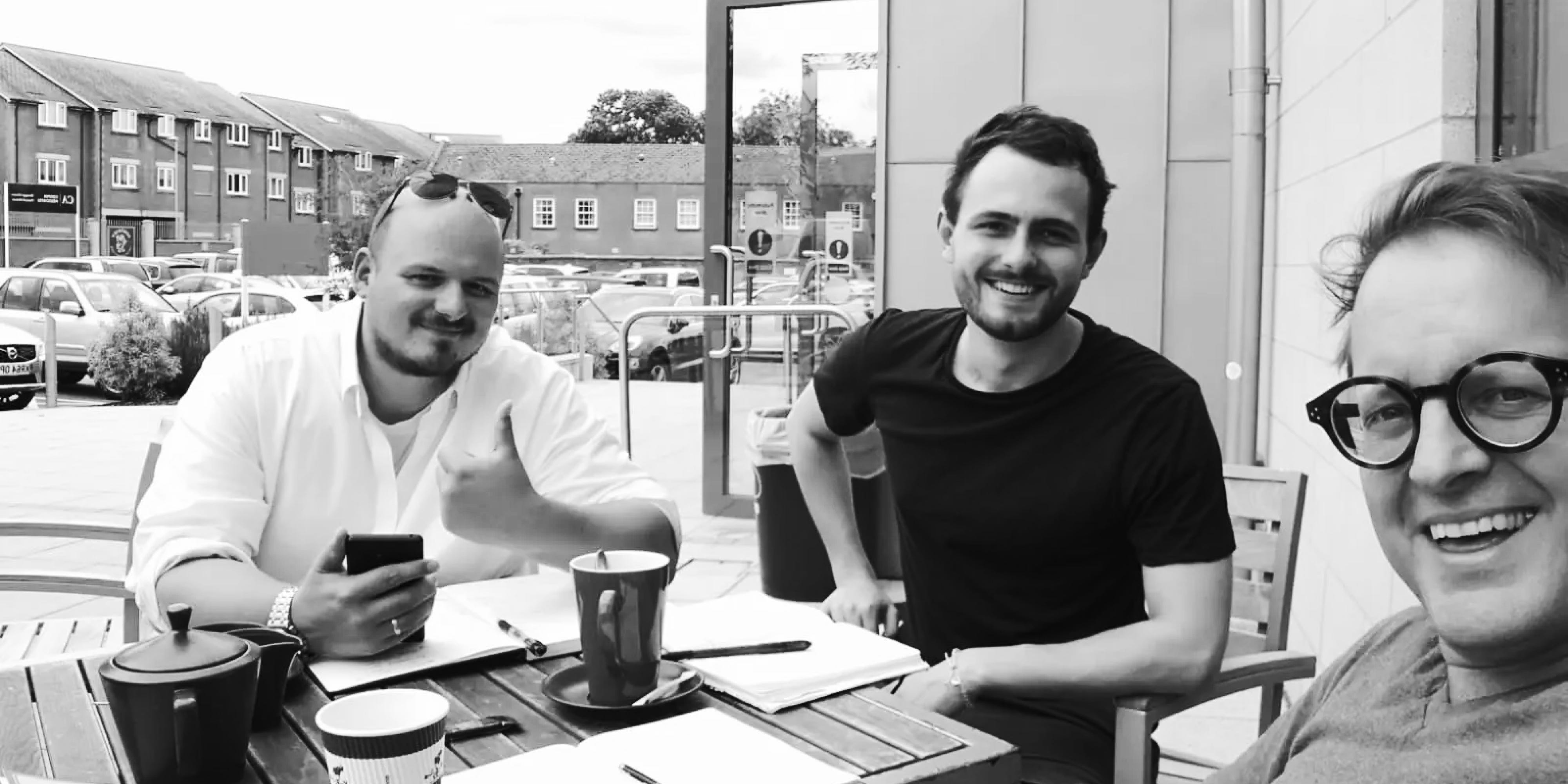
Building the bridge
When KR1’s journey began in 2016—by assuming operational control of Guild Acquisitions on London’s Aquis Exchange—it was an experiment (not least because the original name ‘Kryptonite1’ swiftly received a cease and desist from a well known global entertainment company).
We became the first publicly listed company in London focused on decentralised networks, with a balance sheet primarily consisting of digital assets. Our thesis was simple. If blockchains were to become the rails of a new tokenised economy, then early participation during the formative period would resemble venture investing in the early days of the internet. We took every call, read every whitepaper and tested every primitive we could, in order to understand what the most ambitious builders were working on.
We seed funded foundational teams; Ethereum, Lido, Polkadot, Celestia, Cosmos, Rocket Pool and others, long before they were household names, and built a balance sheet designed to compound through research-led conviction, active participation and disciplined redeployment into new projects. Anchored throughout was a long-term, builder aligned perspective to turn this new terrain into durable, scalable infrastructure for a better way to coordinate and exchange value on the internet.
Today, that thesis is maturing. While we continue to invest in new networks, our income predominantly comes from supporting network security through staking on major proof-of-stake blockchains.
A clear signal of how the industry has moved on. This shift—from primarily venture investing in networks to enabling, operating and securing them—creates ongoing income indexed to network usage. We believe it’s the natural evolution for durable digital asset companies, where public market discipline meets crypto-native technical and operational know-how.
The institutions are coming
The landscape within which KR1 and digital assets sit has shifted decisively in 2025. In the US, the Genius Act has given dollar-backed stablecoins formal standing, and allocations via 401(k) plans are now in view—hard to imagine when we founded KR1. In the UK, the FCA has opened retail access to crypto exchange traded notes, and our planned migration to the London Stock Exchange reflects the same shift. Crypto is being integrated into mainstream market infrastructure.
As the industry moves beyond the experimentation phase, we remain focused on turning early network participation into lasting value, through a transparent public market company that provides exposure to the foundational technologies driving the on-chain ecosystem.
What began in 2016 as proof that a listed vehicle could engage credibly with open-source protocols, is maturing into an operating company that translates network participation and domain expertise into long-term value for shareholders. We believe KR1 is now uniquely positioned to offer credible, institutional-grade exposure to digital assets on the London markets, while staying native to the networks, founders and ideas that we originally set out to support.
The long view
From Ethereum’s first block in 2015 to Celestia’s modular awakening in 2023, KR1 has been a consistent presence within the ecosystem. We’ve seen crypto evolve from a nine page whitepaper, to enabling the transfer and custody of trillions of dollars in value, and infrastructure that we expect will come to underpin significant aspects of the global economy. What hasn’t changed is the underlying flywheel: the migration of value, computation and coordination onto open systems. KR1 exists to give public markets a way to own that migration, credibly, transparently and at scale.
As founders, we remain driven by the same idea that started KR1 almost 10 years ago. Our north star endures: open networks as the economy’s base layer. We’re committed to helping steward that transition and couldn’t be more excited for what’s to come.
George and Keld.
No posts
Comments
Nothing yet. Say the first thing.
Sign in to join the conversation.