
Some news first: Parts & Charts is hosting an IRL workshop on Sunday, June 21st in San Francisco. Follow this link for more info —> Arts & Parts & Charts: The Sun and The Moon.
I am also meeting with potential book doula clients over the next few weeks. Right now, I have two retainer spots open and love working with people at the beginning - to - middle stages of their book project. If you’re interested in learning more about my approach to book companionship and development, fill out this waitlist form and I will be in touch.
This work, the work of making art, is talked about as about craft, about discipline, about showing up. And it is! But I want to argue that it is what fascinates us — what we love so much we can obsess over it — that brings us the energy needed in revision, in repetition, in commitment to the practice. This, the “something” and the “because.”
And I think that thing can be found in our birth chart and it is Venus.
When I was in my twenties, a boyfriend put songs on my iPod for Christmas. He was taking a philosophy of love course at the time, and instead of leaving the metadata fields blank, he wrote into each one — the title, the artist, and then, in whatever field held extra text, a small essayette about why he had chosen it. Yes, full on essays with argumentation (my love language???).
He chose two Beatles songs to explain how he loved me. “Something” — because I was the something. The irreplaceable particular that his love had latched onto and would not release for a similar object. This something, this specific one. And “Because” — because I was also the reasons. The qualities. The motivator. The because of.
I don’t remember which philosophers he cited because I left my iPod in the open window during a long storm in 2013 and ruined all evidence… but doing some research now I think these are where the concepts came from:
Philosophers split this into two camps, appraisal and bestowal. The because is appraisal: you love someone in response to value you find in them — they’re brilliant or kind or beautiful, and the love answers to those qualities. J. David Velleman is the modern name here. The catch is that reasons are portable. If I love you because you’re brilliant and kind, then someone more brilliant and kinder is, on paper, an upgrade. The because always has substitution built into it. The something is the side that refuses the upgrade. Harry Frankfurt called the beloved “ineluctably particular” — you can’t coherently swap them for a better-matched version, because the loving itself is what makes them irreplaceable, not the inventory of their traits. He went further and argued we make a thing valuable by loving it, rather than loving it because it was already valuable. That’s “bestowal.” Most people run on both at once — the beloved who couldn’t be exchanged, and the reasons you keep coming back.
I’ve thought about those two songs ever since. Not about him lol (young love, great guy) but about the framework. About what it means to have a something and a because.
I think most artists spend their lives returning to both: the irreplaceable subject, the one they keep circling, and the quality of attention they bring to it — the texture of their looking.
And your because — your reasons, your obsessions, the qualities of attention you can name — is the part that’s analyzable, portable, in theory tradeable for a better idea.
Your something is the subject you won’t swap, the one you’d keep even when a smarter project came along. I see Venus in the natal chart is where we find this information, if we’re not already conscious of it.
Possible: The sign is the quality of the attention.
Possible: The house shows us more about what areas of life catch our gaze.
Possible: The aspects are the complications.
What follows is a read for each Venus sign. I want you to notice what happens in you when you read yours. Do you agree? Do you want to fight me? I need to know (comment pls!)
Your something: the first gesture, the initiating body, the confrontation, the claim, the heroic figure at maximum scale, the declaration that doesn’t ask permission, the mark before thought, conquest as tenderness, urgency as form.
Your because: because you have to get there first, because the thing isn’t real until someone says so and you are going to be the one who says so, because waiting has always felt like dying, because force is the only honest language you’ve found.
Here is what I want to say about Aries Venus artists: they arrive. Before you’ve finished deciding what the space is, they’ve already claimed it. They are the Nike “just do it”!
Michelangelo had Venus in Aries at 24°. He painted the Sistine Chapel ceiling largely alone, over four years, working in physical agony, refusing help. This is usually framed as heroism. I think it was the refusal to let anyone else’s hand be in the work.
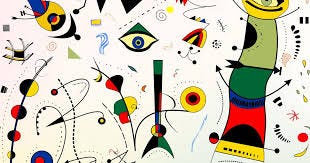
Joan Miró, Venus in Aries at 27°, said he wanted to assassinate painting. Kill it, and start again from the mark that comes before thought.
Kehinde Wiley took the visual vocabulary of European power portraiture — the most historically weighted pictorial language in the Western tradition — and reassigned it to Black men posed in postures of absolute grandeur.

The audacity! ;)
If your Venus is in Aries, the work is not the problem. The problem is the morning after the first gesture, when the thing is alive but unfinished and the thrill is gone. The first pass is not the draft. It is only the proof that there is a draft. Go back to it! Continue making marks!
Your something: the body as fact, texture as meaning, the weight of the thing in your hand, the ordinary made sacred, the sensation that arrives before the thought, the material world as sufficient evidence, slowness, endurance, the mark that took time.
Your because: because you have never believed the idea was more real than the object, because beauty lives in the surface and the surface is more than enough, because you feel it before you name it and naming it has always come second.
When I think about Taurus Venus, I see these artists never believed abstraction was more real than what they could touch. This is a philosophical position, whether they articulated it that way or not. It is the insistence that the body’s experience of a thing is the thing. That sensation is the meaning.
Salvador Dalí had Venus in Taurus, his Sun there too. His most irrational images have an uncanny tactility. You feel the melting clock before you understand it. It lands in the body first.
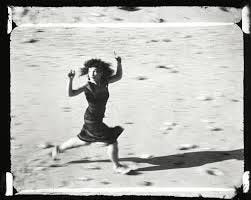
Maya Deren, Venus in Taurus at 9°, made films she described as being about “the idea of motion and the motion of ideas” — but her ideas moved through bodies walking on water, thresholds charged with ritual weight, the slow and deliberate enactment of myth through physical space.
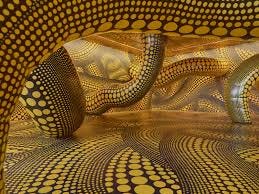
Yayoi Kusama covers every surface with polka dots and calls it self-obliteration. The infinity rooms work because they are overwhelming and present and you cannot think your way through them. You have to stand there.
The danger, if your Venus is in Taurus, is the belief that you need more time, more readiness, more perfect conditions before you begin. You don’t. The body already knows what the work is. Start making the thing before the mind talks you out of it.
Your something: the double, the split self, the conversation that doesn’t end, the face watching itself be seen, the hybrid, the in-between, the question held open, the questions!!!, the image that folds back on itself, the tension between two true things.
Your because: because you have always been more than one thing at once and the tension between them is the most interesting place you’ve found, because resolution feels like a lie, because the oscillation itself is where the meaning lives.
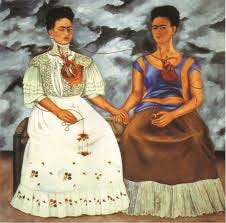
Frida Kahlo had Venus in Gemini at 24°, conjunct Pluto, which is almost too perfect — love as transformation through doubling, the self split and multiplied and held together by a thread. The Two Fridas, 1939: two versions of herself seated side by side, hearts exposed, connected by a single artery that one of them has cut. This is a psychological self-portrait of what it costs to contain multitudes (Yes, Walt Whitman is a Gemini sun), to be constituted by contradiction, to be unable to resolve yourself into a single legible figure.
Pina Bausch, Venus in Gemini at 28°, built her entire choreographic practice around a question she would put to her dancers — tell me something, show me something, answer this — and then assembled the answers into pieces that were never finished, never singular. She said, “I’m not interested in how people move, but in what moves them.” The interest is in the space between, the conversation, the oscillation.
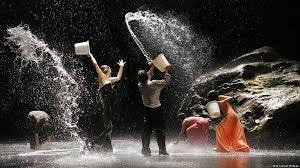
If your Venus is in Gemini, you have probably been told your work is inconsistent. That you have too many interests. That you need to pick a lane. Here is what I want to say about that: the oscillation is the gold! The space between your interests is not a problem to be solved.
Your something: the interior, the close room, the face of the person you love, memory as architecture, the domestic as the site of everything, the body as origin, shelter, the threshold between then and now, what persists after the thing itself is gone.
Your because: because the intimate is not a small subject, it is the largest one, because you have always understood that the person in front of you is the whole world if you look at them properly, because leaving has never been an option your attention was willing to take.
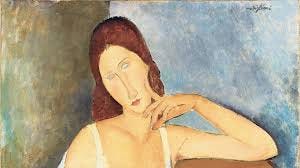
Amedeo Modigliani almost never painted landscapes. His subject, across his entire career, was the person in front of him. And their interiority. The space between their inner life and his. He rendered them in elongated necks, almond eyes with no pupils — faces that look inward rather than out, that seem to be attending to something the viewer cannot see. His portraits make you feel you’ve entered something private. For his Venus in Cancer at 19°, retrograde, conjunct Sun and Mercury: the portrait as act of shelter. The close frame as the form of love.
We treat the domestic and the intimate as lesser subjects — smaller, more provincial, less important than the grand and the historical. And yet the intimate is where we live. The interior is the territory of greatest human consequence. If your Venus is in Cancer, the work is not too small. You keep second-guessing whether it’s enough. It has always been enough. It has always been juicy. Go deeper into the close room, not wider into the general blah blah blah.
Your something: the beloved made visible, the face of someone you love, the body in the light, the celebrity and the friend with equal intensity, the moment of being fully seen, devotion as a formal act, the gaze that makes things real.
Your because: because you love what you look at and looking is, for you, already a form of love, because beauty without witness doesn’t exist, because the act of paying full attention to something is indistinguishable from devotion.
What I love about Nan Goldin is that she photographed her friends because she loved them. She moved through queer subcultures in the 1970s and 80s, through pleasure and crisis and the HIV/AIDS epidemic, and she photographed the people she loved because the act of looking was, for her, indistinguishable from devotion. The Ballad of Sexual Dependency is a love song to a world under threat. Venus in Leo at 16°, conjunct Mars and Pluto: the love is enormous, the stakes are life and death, and the camera is the instrument of witness.
Andy Warhol, Venus in Leo at 23°, in the first house, took the things America loved — Marilyn Monroe, Elvis, Campbell’s soup cans — and reproduced them until the love became ambient, until the gaze itself became the subject. What is beauty when it is also a commodity? What is devotion when it is also a mechanism?
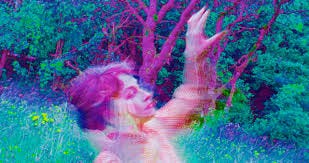
Pipilotti Rist makes immersive video installations famous for their joy — bodies submerged in color, rooms you enter and feel changed by. She has said she’s not interested in pain. She’s interested in joy! In a world that treats pleasure as suspect and delight as aesthetically unsophisticated, that is a radical stance.
If your Venus is in Leo, the danger is the belief that your gaze requires a worthy object. But it doesn’t, bella. Your attention makes the object worthy. You don’t need more impressive subject matter.
Your something: the unconsidered pose, the body not yet aware it is being seen, the overlooked creature given full attention, the ordinary object as the site of everything, the system of marks that constitutes a world, the close look that reveals what the wide one misses, craft and skill building as the subject.
Your because: because the careful eye is the eye that is alive, because precision is not the opposite of feeling but its highest expression, because you cannot look at something without wanting to understand exactly how it works.
Edgar Degas said he wanted to depict “the human animal attending to itself.” The body, caught in the unconsidered act of existing — dancers backstage adjusting their shoes, women bathing in private, the racetrack crowd not watching the race. The body not yet aware it is being seen. Venus in Virgo at 0°, the very first degree of the sign: the analytical gaze that doesn’t soften what it sees, and doesn’t need to.
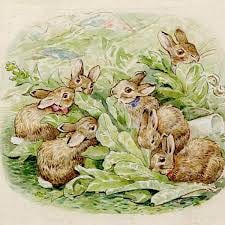
Beatrix Potter was a serious mycologist before she was a children’s author. Her rabbits are observed with the same precision she brought to fungi — the same loving, meticulous record of the world as its exactitude.
Marcel Duchamp, Venus in Virgo at 19°, spent his entire career on a methodical critique of the institution. The ready-made is a Virgo Venus object: the question about what art is, asked by repositioning something that was already there and asking you to look at it differently.
The danger, if your Venus is in Virgo, is the belief that precision is in conflict with effervescence and conviviality. That the careful eye and the alive eye cannot be the same eye. The thing you want to look at closely is worth looking at. The ordinary object, closely examined is a whole universe of wonder.
Your something: the threshold, the space between two things, the body in relation to the ground it stands on, the face in relation to the face across from it, the contradiction, the formal problem, the overlooked thing brought to consequence.
Your because: because nothing exists outside its context, because the relationship between things is more interesting than either thing alone, because beauty, for you, is never a property of a single object — but more how a single object sits next to another.
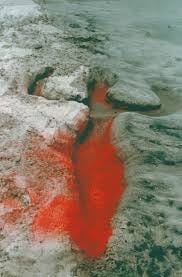
Ana Mendieta pressed her body into the earth and photographed what was left. In the Silueta series she used gunpowder, blood, flowers, mud — the impression of a woman in sand, in grass, in rock. She called the work her attempt to “re-establish the bonds that tie me to the universe.” She said it was about “the relationship between myself and nature.” Venus in Libra at 21°: the self as what exists in relation, the body as the place where inside meets outside.
Georgia O’Keeffe, Venus in Libra at 7°, enlarged flowers to the scale of consequence and insisted the erotic reading was reductive. She was interested in the formal problem: what happens to attention when you bring something that close. I see her art as the private becomes public — or the public (a flower) made private, sexual, velvet, felt.
Pablo Picasso — Venus in Libra — spent his career refusing to choose a single viewpoint. All is relational. The Cubist face holds all its angles simultaneously because the complete truth required the contradiction.
If your Venus is in Libra, the danger is aestheticizing the tension rather than inhabiting it. You understand relation — you see the space between things with unusual clarity. The work is to stop observing the threshold and capture it.
Your something: the wound that is also the wellspring, the unconscious given form, desire and death, the teeth, the fight, the thing that isn’t supposed to be made beautiful, the limit of the body, the secret, the shadow, the love that cannot resolve.
Your because: because you have never been able to look away from what frightens you, because moving toward the difficult thing has felt better than moving around it, because beauty, for you, has always included what it costs. Because you’re aware that popping or killing something is preferred to staying in a false sense of security.
Louise Bourgeois made work about her mother until she was nearly 100 years old. She built spider sculptures forty feet tall — Maman, installed at the Guggenheim Bilbao, in Ottawa, in Tokyo — because her mother, she said, was a spider: patient, industrious, protective, predatory, the source of everything. She had Venus in Scorpio at 17°, and she spent her life returning to the same wound, because the wound was also the wellspring.
Marina Abramović, Venus in Scorpio at 18°, retrograde, stood motionless for 736 hours across 79 days in The Artist is Present while strangers sat across from her and wept, sometimes without understanding why. The body as the medium for endurance. Extremity. Total exposure as the form of love.
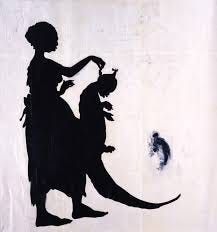
Kara Walker uses Victorian silhouettes — the prettiest, most decorative of forms, the parlor game of another century — to render the most violent histories. The antebellum South as a still-present psychic landscape. The shadow as the shape of what has never been faced.
If your Venus is in Scorpio, you already know what you’re making. You know it deeply, possibly without language. The thing you’re afraid to make is the work. You know the work will change you, make you unrecognizable afterward. This is why you need to.
Your something: the myth, the horizon, the grand system, the meaning behind the meaning, the individual body as monument, the philosophical proposition that can only be answered in paint, the pursuit itself, the thing that keeps receding as you approach it.
Your because: because the particular has only ever interested you insofar as it points toward something larger, because you cannot make work about a single thing without the single thing becoming a cosmology, because the pursuit is not separate from the beauty.
Claude Monet spent the last decades of his life painting the same pond (the water lily pond at Giverny), the same surface of water, over and over, in different light, across different seasons, for thirty years. But I don’t think he was painting the pond as much as he was pursuing light, capturing what he saw before it changed with the quality of light. Venus in Sagittarius at 21°: the horizon that keeps moving, the beauty of the pursuit itself.
Wassily Kandinsky, Venus in Sagittarius at 16°, retrograde, wrote a philosophical treatise on the spiritual dimensions of color before he made the abstract paintings that would embody his theory. The system preceded the art; the cosmology came first.
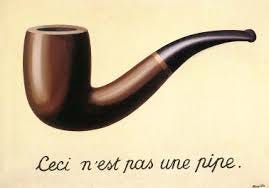
René Magritte, Venus in Sagittarius at 15°, retrograde, painted Ceci n’est pas une pipe — a pipe with a caption denying it is a pipe — and this is not a joke in the traditional sense. Meta-cognition, meta-representation. An expression of limitation at the same time as possibility.
If your Venus is in Sagittarius, the danger is scale anxiety in reverse — the suspicion that what you’re making isn’t large enough, doesn’t mean enough, hasn’t yet earned the bigness of its ambition. So, start where you can see. Trust that it points toward what you can’t.
Your something: the constructed self, the persona as material, the mask that tells the truth, the surface and what is underneath it, legacy, the long arc, what endures after the performance ends, the artifact of a life deliberately built.
Your because: because identity is a technology, because the crafted thing reveals more than the unguarded one, because you are interested in what the persona states.
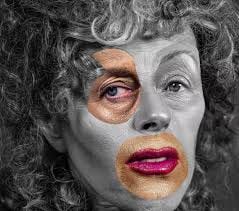
Cindy Sherman has photographed only herself, across fifty years of work. She has appeared as film noir characters, Renaissance Madonnas, old master portrait subjects, society matrons, centerfolds, clowns, disasters. She has never photographed “herself.” Venus in Capricorn at 26°, conjunct Sun: the constructed self as the subject, the persona as the material.
David Lynch had Venus in Capricorn at 26°, conjunct his Sun — the same degree as Sherman. The same preoccupation, rendered in a different medium: the American surface and what is underneath it, the beautiful and the disturbing occupying the same space without canceling each other.
Sandro Botticelli painted The Birth of Venus as a Neoplatonic idea of a goddess that lives outside of time (motherless, made from the sea, infinitely beautiful).
If your Venus is in Capricorn, the danger is the belief that the constructed self is not as “real” as its raw materials. What has been crafted with care, with time, with mastery, is just as evocative as what has been untouched.
Your something: the system, the grid, the invisible structure that organizes bodies and desires and value, the individual inside the larger pattern, the collective arrangement made visible, the language of power interrogated.
Your because: because you see the grid that other people move through without noticing, because exposure is, for you, the most intimate act available, because aesthetics are not plain, not innocent and neither is beauty.
Jean-Michel Basquiat painted anatomical diagrams crossed with text crossed with the names of jazz musicians crossed with commodity prices crossed with history crossed with the body always at the center. He put crowns on the heads of Charlie Parker and Miles Davis because capitalism had extracted their labor and their genius and denied them the dignity that was owed, and he painted that fact directly, on canvas, in the galleries of the same art market that would eventually sell his work for tens of millions of dollars.
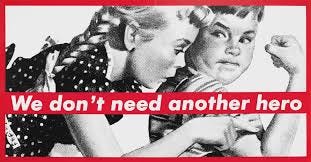
Barbara Kruger worked as a graphic designer before she became an artist. She understood, at a technical level, how visual language operates on people without their awareness. YOUR BODY IS A BATTLEGROUND. I SHOP THEREFORE I AM. The second-person address — you, always you — because the viewer is not outside the system being described.
If your Venus is in Aquarius, the danger is the distance. The view from outside the system that sees everything clearly and touches nothing. You can see the grid. The task is to put yourself in it.
Your something: the threshold between states, the soft edge, the form that releases into feeling, the world as internal weather, the moment before it resolves into something you can name, grief that outlasts its language, light on water, the almost.
Your because: because you have greater access to your own energy when you’re out in the open, because witnessing the end of something is an honor, and because the end becomes the material for the next beginning, because you feel the world before you think it.
Berthe Morisot was the only founding Impressionist to consistently paint the interior life of women — reading, resting, watching the garden through windows — without sentiment, without the condescension that made so much of her contemporaries’ work of women feel like looking at furniture. Her touch is barely-there.
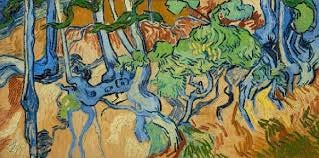
Vincent van Gogh wrote thousands of letters, mostly to his brother Theo, trying to explain what he was seeing. “I’ve tried to express the idea that the café is a place where one can ruin oneself, go mad, commit crimes,” he wrote, of one painting. His strokes depicted both what he observed externally and internally. Venus in Pisces at 28°, conjunct Mars: the love of the world and the pain of being in it arriving at once.
If your Venus is in Pisces, the danger is mistaking dissolution for lack of rigor. The soft edge is a choice that requires tremendous skill to sustain without collapsing into vagueness. Not everything that stays open is unfinished.
Your Venus sign can be found at astro-seek.com — enter your birth date, time, and location. The Swiss Ephemeris calculates positions back to 1800 CE with high accuracy.
All placements cited here have been pulled from Astrodatabank and the Swiss Ephemeris. Historical figures use Gregorian-converted dates where applicable.
Now that I’m finally publishing this… I feel very alive thinking about doing some close “reading” of Mercury signs, especially for poets and novelists. It could take me months to publish on that. I can’t rush it. But I want you to know it’s forthcoming!
Comments
Nothing yet. Say the first thing.
Sign in to join the conversation.