
Back in 2018-2019, as I was working on my thesis at the Royal Academy of Arts in the Hague (KABK), I had many questions that I believed would stop concerning me as the years would go by. ‘History is cyclic’ I would tell myself ‘this too shall pass’. And yet, a lot of times even today I think back onto the subject I chose to research that year. The positivism I critiqued, seems to have calmed down (or I have borrowed myself into a niche that brings me comfort and hides it’s presence from me) – and yet I look with peaceful intellectual sorrow at the words written by my 21 year old self. The idealist, the melancholic, overly poetic and a tad naive self.
Today, to my tristesse but no surprise, society hasn’t changed much. We are still fearful of fear. We still avoid anything even slightly unpleasant as a subject – as if it had no value and merely thinking about it were a crime. We are still scared of darkness, but instead of learning to accept it – we continue to pretend it shouldn’t exist. As if it had no right to. What a … motheistic… and emotional pop culture.
Today people still ask me if I am depressed only because of the reflectiveness in my tone, because I ‘critique’ the world around me. And the answer is – of course not. But this perception stems from our inability to distinguish between analysis and feeling. We no longer see critique as a constructive engine for growth, but as an unwelcome interruption to our daily escape from reality. This somnambula state of mind is what crushes my heart and what prompted me to repost that old, flawed thesis of mine from 7 years ago.
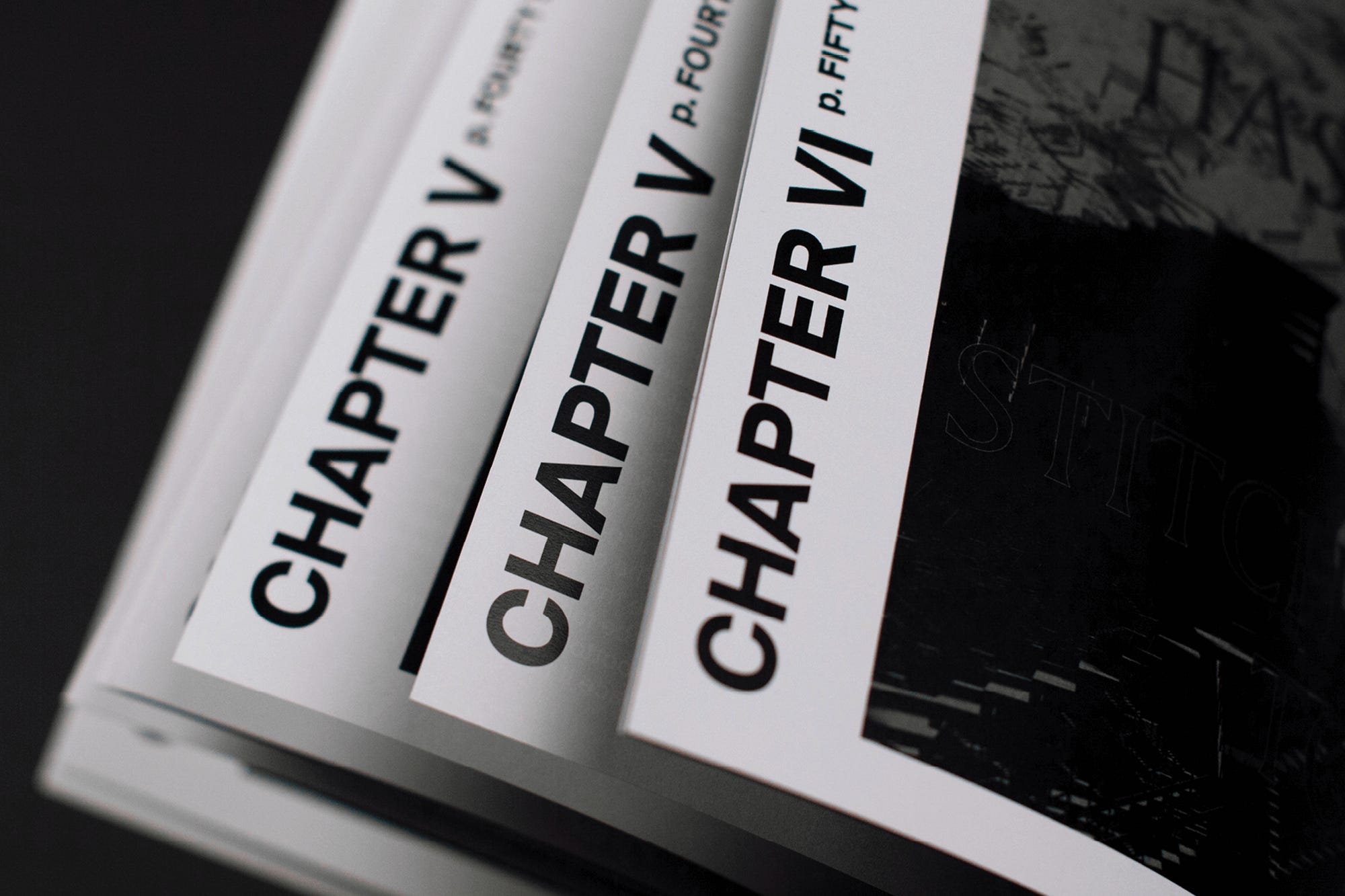
Today we are living in the world where fear and doubt are being condemned to the ever-lasting flight down the void. This becomes a reason for us to start denouncing other crucial parts of our lives as non-important ones or as those that are reinforcing fears and insecurities in favour of artificial shelter made of all that successful compensating and striving of today. I see such escapism as an eminently important issue that can have poor fallout for our civilisation’s present and thus - future. This is why I am interested in the topic of nocturnal culture and how dark aesthetics (especially the black image) and in general exposure to fear and dark concepts can influence our cognition and evolution. I strongly believe that such strategy can evoke higher modes of both self and general analysis and bring out the natural curiosity in humans and ability of interpretation, that are now unfortunately put into lethargic sleep. I seek to re-invigorate a sense of wonder, uncertainty and mystery in life by implementing and emphasising the dark colors, magic, questions with no answers, and night. In order to do so, I want to look into history of how and if various parts of Nocturnal Culture were influencing human evolution. And if they had an effect on individuals or masses (both positive and negative) in order to find proving arguments for my belief and be able to present it to our society which is drowning in “positive living bullet journals” and “books of everyday gratefulness” instead of simply turning of the lights and thinking. Along with that, topics of anthropology of fear, darkness and the psychological influence of them onto our cognition will be discussed, concluding with the influence nocturnal culture and esoterism had on the creation of contemporary art and visual culture. As a strategy I’ve chosen to go from the opposites by destroying the arguments opposing my hypothesis through attempts of defending them. Presented partly through the voice of the main text and partly in form of metaphor (through classic poetry) this paper is aiming to spark questioning of both sides and proving the absence of absolute. There can be no highest number, as there is only totality and there can be no final revolution as we exist. In such way this thesis is both: me finding artefacts of my beliefs and a manifesto to everything “Nocturnus”: of the night.
The full text and contents of the thesis are available on the Thesis Webpage.
Comments
Nothing yet. Say the first thing.
Sign in to join the conversation.