
As the Ho-Ho-Ho festivities are in full swing, Tabella presents a series ‘Days of Yule’ – a selection of seasonal thoughts to celebrate the winter solstice and the end of the year. Over the course of the remaining 8 days of this year, I will tell you 4 stories to wrap up 2025 with ideas, new and old.
End of December. I would like to say romantically, as is the rule of the season, that I’m sat in my living room across the library wall with a warm cup of cocoa listening to the melody of crackling fire in the hearth. But alas, my house lacks a fireplace to my biggest dismay, instead of cocoa my glass holds wine and the library has long taken over the rest of the house, migrating across the nooks and crannies of the living room, my bedside, entrance and even the kitchen. But I won’t complain, as this is exactly as I like it to be.
[Apart from the lack of a fireplace, this truly disappoints.]
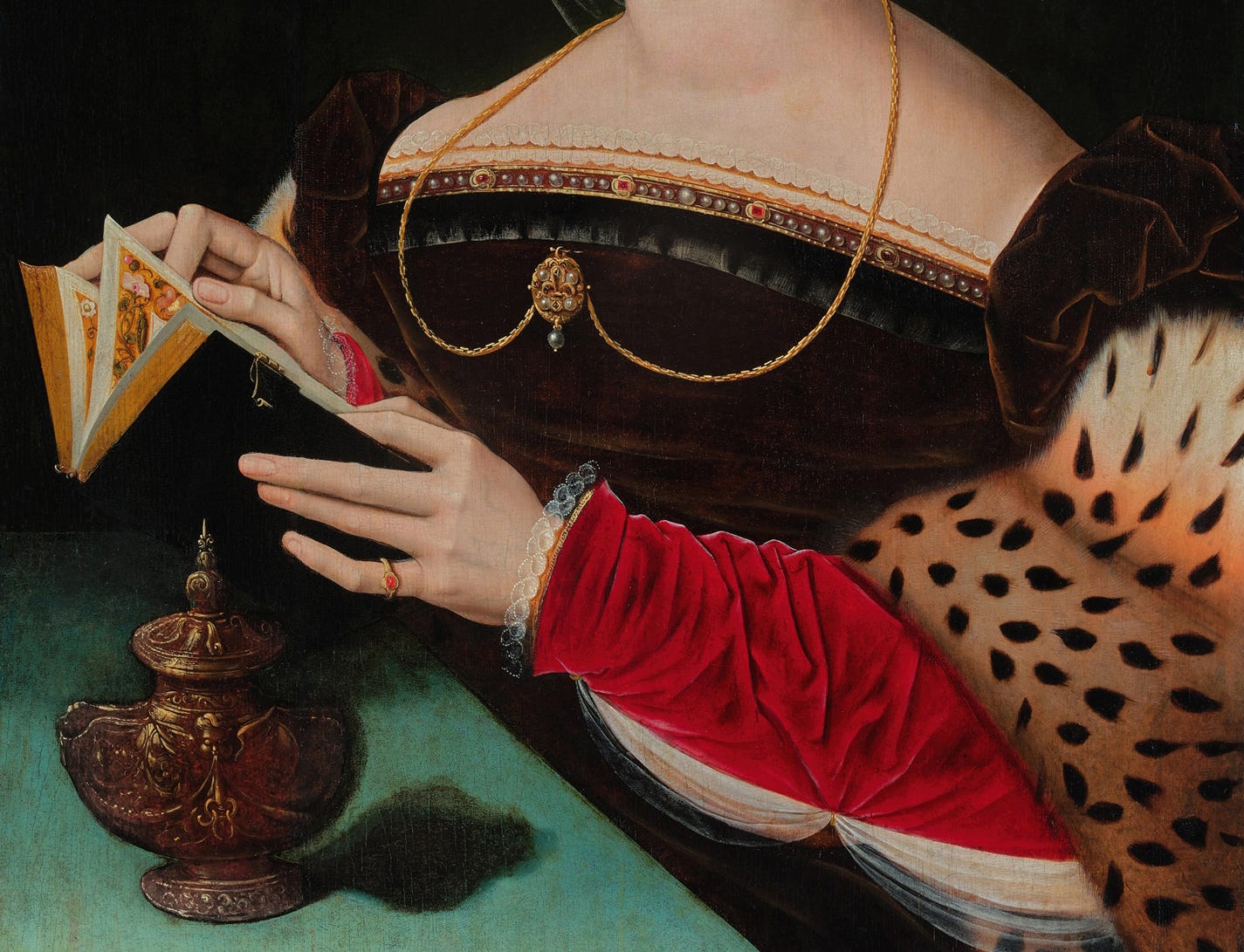
Because of this not-so-hostile literary takeover of my apartment, it is easy now for my eyes to be distracted from the current reading by another book, tucked to my side. Something comes over me and I decide to pick it up and open a random page.
‘Line five’, I whisper under my breath.
‘Empourpre les fruits blancs qui pendent à ses branches’1 is the line that greets me, and now I’m left thinking as to what it is, that the One wishes to communicate with me. I haven’t gone back to Ovid since I read him for the first time nearly a decade ago, but I find it very appropriate that in my sudden gale of bibliomancy it was his ‘Metamorphosis’ that crossed my path. Now I am sat thinking about all the possible ways I could understand this and, being my usual self, the thinking brought me to the subject of this text. To bibliomancy as a practice in the context of the End of Year period and how it compares to the other rituals we indulge in at this time.
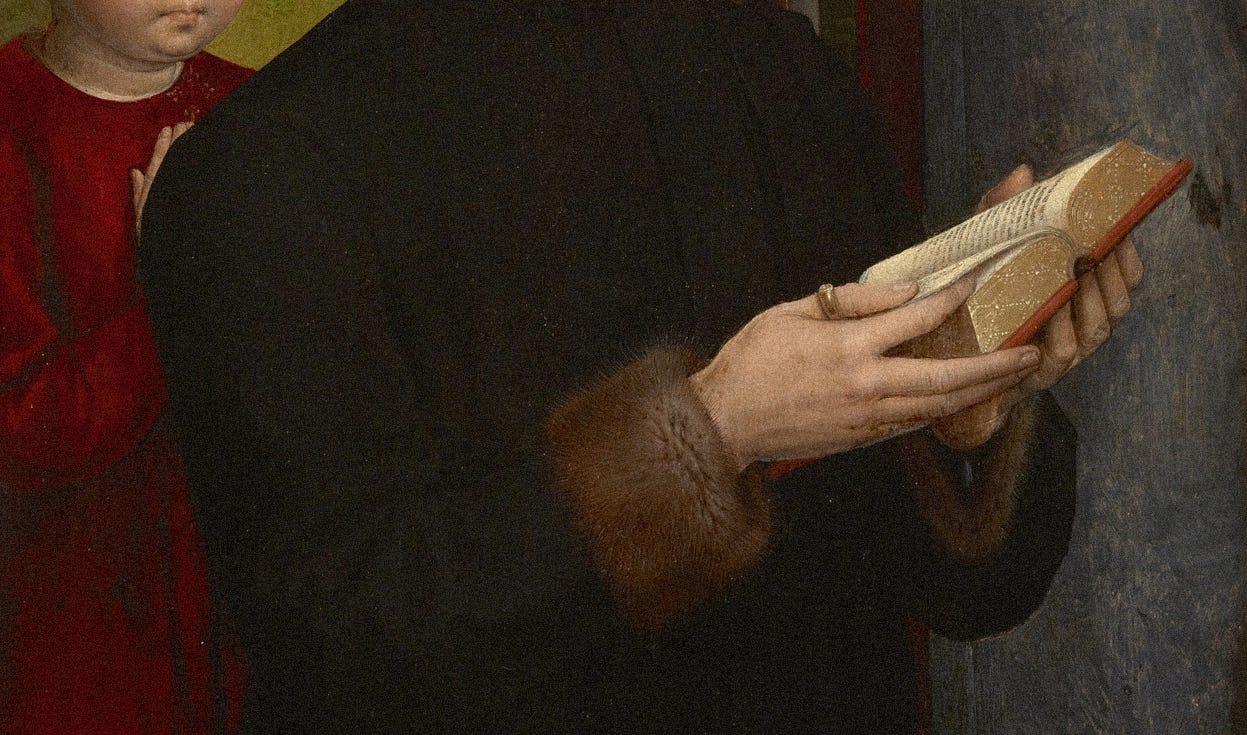
The days around Christmas and up to the New Year occupy a peculiar position in the calendar. Work slows, routines loosen, and time briefly loses its insistence on progress. Historically, as soon as the winter solstice is celebrated, this interval is treated less as a launching pad and more as a pause – a moment for orientation rather than decision, right before the wolf moon of January arrives.
Contemporary culture, as we all are aware, is however increasingly uncomfortable with this suspension, which is why this gap is now densely populated with end-of-year horoscopes, annual audits, and vision boards. And there is nothing maleficent about this. I too enjoy my Simon & The Stars predictions as well as indulge in creating moodboards; but I find that these activities are very aim-centered, very deterministic and smell awfully bad of ‘productivity’, as sometimes they lack an open question, a quiet taste of uncertainty in the end. Each of them offers a way to close the year: to summarise the experience, extract lessons, and project intention forward. Their forms differ, but their function is the same – imposing narrative resolution at a moment that was once allowed to remain unresolved and linger.
Before moving forward, it is worth clarifying what bibliomancy actually is. ‘Tis an ancient practice of consulting a book by chance – opening a text at random and reading a selected passage for orientation or reflection. It appears in Greek and Roman antiquity (often using Homer or Virgil), in early Christian contexts through random consultation of the Bible, and in other textual cultures where authoritative books carried symbolic weight (although most of us did it unwittingly for fun as kids, most of us born in the 90s and before, that is). Crucially, bibliomancy was never about prediction in the modern sense. It relied on randomness, ambiguity, and the interpretative responsibility of the reader. Meaning was not delivered to us on the platter; it had to be negotiated with oneself and the book, or sometimes left unresolved.
Today’s end-of-year practices, on the other hand, rest on a shared assumption: that the self is legible, continuous, and improvable, and that the turn of the year demands coherence. The year must be explained, the future must be outlined, and ambiguity should be converted into direction. Even symbolic systems such as horoscopes increasingly follow this logic, offering reassurance through structure rather than uncertainty.
Bibliomancy sits in the armchair opposite this tendency. Perhaps even with a little judgemental smirk faintly decorating its visage.
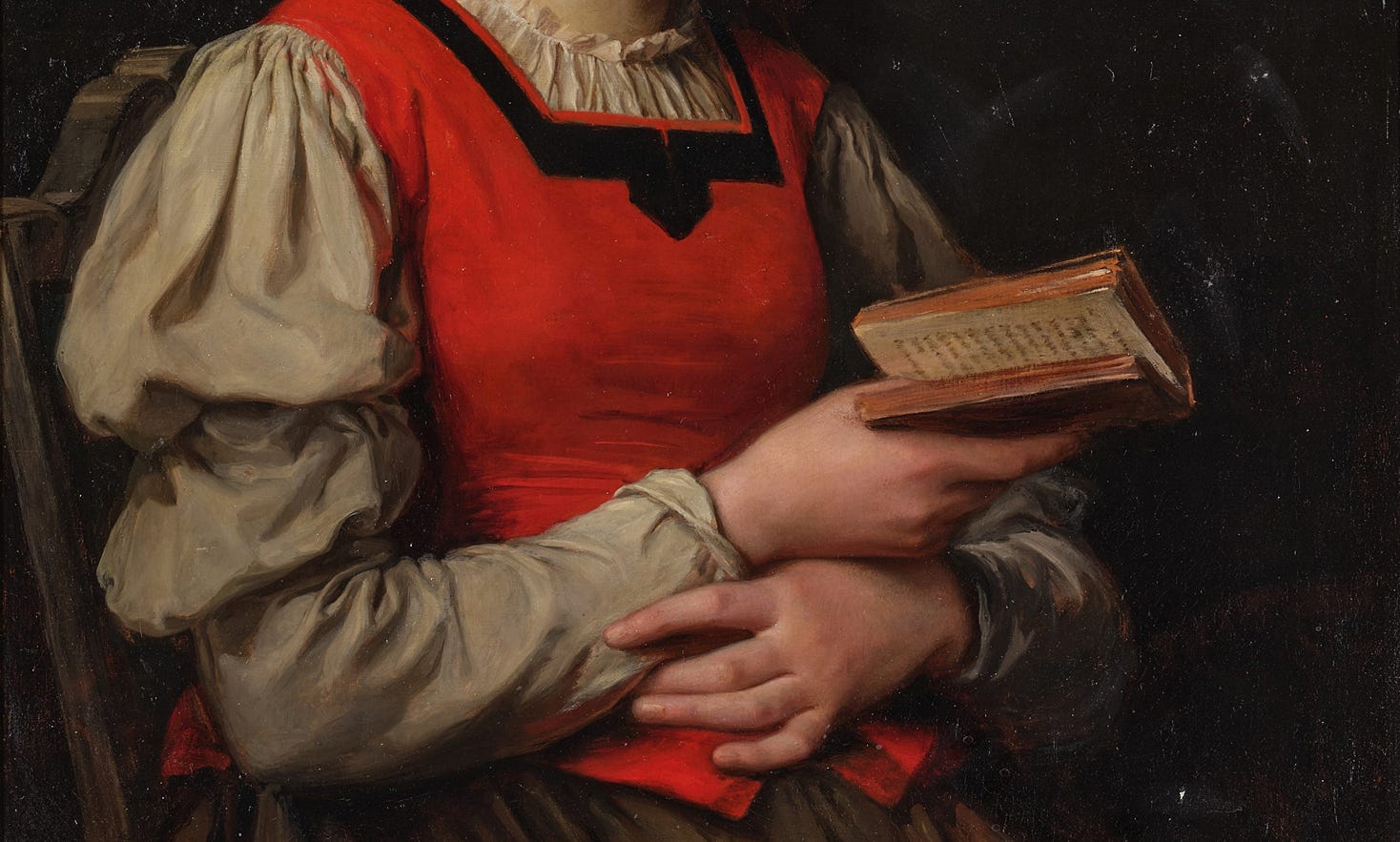
The difference is clear, but why should this matter? We could argue the importance of such types of practices as powerful educational tools, as prisms of learning about ourselves and the world, or simply as beautiful thought-games for accordingly attuned minds to relish in. Truth is, we are a terribly exhausted, poorly educated and a barely motivated society that is dependent on its smallest groups (or more so on technology) for the pre-processing of knowledge. Interpretation and conclusion are no longer anybody’s individual burden, and neither are these skills cultivated in today’s schools. This tendency feeds off of and back into the modern narrative of false ‘clarity’, where everything is simple, pre-digested and shared. Which is why bibliomancy and practices alike need to be awakened back into our lives. We must read into the uncertain in order to learn how to differentiate the ‘world of ideas’ from the ‘world of forms’, in order to develop the ability to remain with ambiguity without immediately converting it into direction.
Surely, nothing is without a potential for mischief. The world you can discover and the questions you’ll encounter through this practice depend heavily on the quality of the library you consult - be it a public one, that of your grandparents or your own. Thus, it could be that the New Year offers us an opportunity for reconsideration of sources, instead of goals or directions. Of what we allow to sit within reach, crowning the pile in the corner of the sofa, when the imaginary fire is crackling in our mind, the cocoa or tea are freshly brewed, and maybe, by the miracle of the season, some of us might see the snow. In such conditions, your house will inhabit one more tenant – an oracle, veiled, quiet and entirely dependent on the quality of what we have chosen to keep close.

Ovide, Métamorphoses, IV Pyrame et Thisbé, p 277 of the ‘Bibliothèque classique infernale’
Comments
Nothing yet. Say the first thing.
Sign in to join the conversation.