
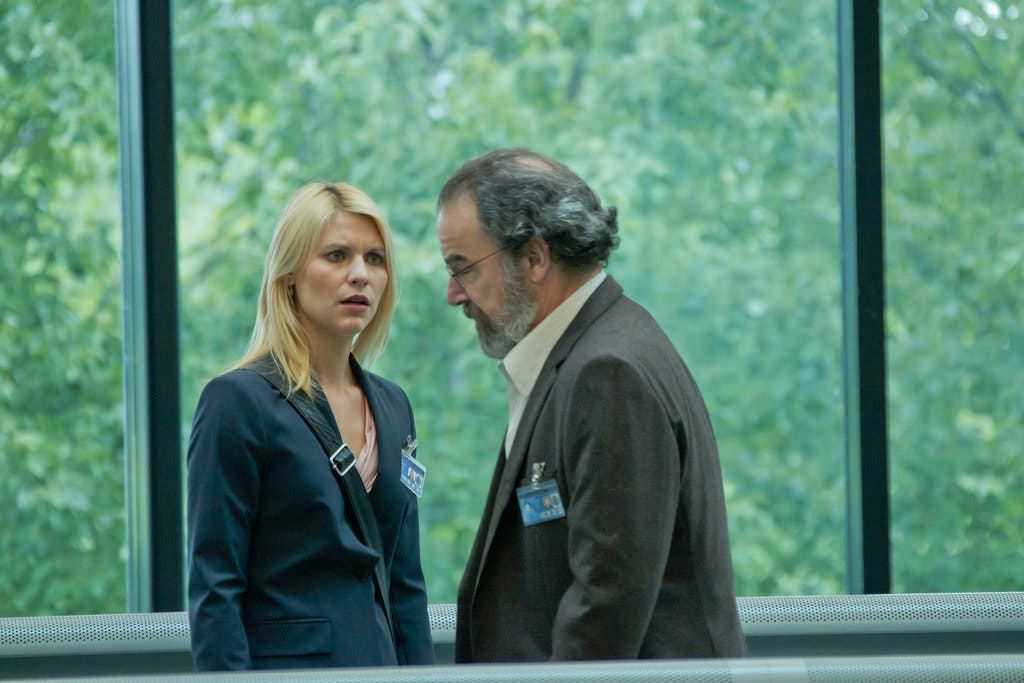
At first, it was just nostalgia. The pacing. The silence. The way intelligence work was shown not as heroics, but as tradeoffs. People lying to protect something abstract. People breaking because the cost got too high.
But midway through, something clicked.
A lot of what the show warned about is no longer hypothetical. It’s already here.
When Kabul fell and the U.S. pulled out, it wasn’t just a military retreat. It was a psychological rupture. Allies were abandoned. Local assets were left exposed. Trust was burned in real time. That moment changed how power is perceived globally. Homeland spent years showing what happens after moments like that. We’re now living in the “after.”
What struck me most rewatching it is how the show understood this early: modern conflict doesn’t announce itself. There are no clear fronts anymore. No declarations. No clean villains.
Wars now move through contracts, proxies, shell companies, and narratives.
Look at Ukraine. Yes, it’s a conventional war on the surface. But underneath, it’s also a mercenary economy. Recruitment pipelines crossing borders. Fighters from Africa, Eastern Europe, even parts of Asia, moving through informal networks. Not state flags, but plausible deniability.
Look at Venezuela. Energy leverage mixed with political instability. Sanctions workarounds that double as influence channels. The same routes that move oil also move money, messaging, and favors.
Look at parts of Africa. Military juntas trading sovereignty for security. Gold and rare earths leaving through guarded corridors. Private forces replacing official armies. This isn’t chaos. It’s a system.
Even closer to home, the West Philippine Sea feels different now. Not because of open war, but because of gray zones. Civilian vessels that aren’t really civilian. Contractors who aren’t officially soldiers. Maritime “security” that quietly escalates without triggering treaties. This is how pressure is applied without headlines.
What Homeland understood early, and what feels very real now, is that elections are the real battleground.
Not ballot boxes alone, but fatigue. Confusion. A slow erosion of attention. You don’t need to win a war if you can make people stop caring about the world beyond their borders. You just need enough noise, enough instability, enough “why are we even involved?”
That’s why 2026 matters. Not just in the U.S., but globally. These conflicts aren’t isolated. They’re timed. Economic pressure, migration, energy shocks, information warfare. All converging toward political moments.
Rewatching the show, I kept thinking about Carrie and Saul. Not as characters, but as archetypes.
Carrie was never about patriotism. She was about pattern recognition at any cost. Saul wasn’t about power. He was about restraint and consequences. If they were still “in play” today, they wouldn’t be chasing terrorists. They’d be mapping networks. Mercenaries. Funding trails. Narrative flows.
They’d be operating in the shadows of legitimacy, not inside institutions that move too slowly for this kind of world.
As a developer, I spend most of my time thinking in systems. Inputs. Outputs. Incentives. Failure modes. When you look at geopolitics that way, the patterns are hard to ignore.
What we’re seeing now isn’t disorder. It’s a transition.
From state wars to outsourced conflict.
From ideology to incentives.
From intelligence agencies to intelligence markets.
I miss Homeland not because it was entertaining, but because it trained you to watch quietly. To notice what isn’t being said. To understand that the most important moves rarely come with press releases.
If the show continued today, it wouldn’t feel like fiction.
It would feel like a delayed episode finally catching up to real time.
Koleen Paunon is a blockchain engineer and founder working at the intersection of software, security, and public policy. He builds and advises on blockchain-based systems with a focus on practical adoption and risk-awareness.
X: https://x.com/koleenbp
GitHub: https://github.com/kbpsystem777
Email: koleen.bp@outlook.com
No posts
Comments
Nothing yet. Say the first thing.
Sign in to join the conversation.