

A traditional destination during our annual summer stay at the Belgian seaside is the Oudenburg jumble market. Once a year, hundreds of sellers from the wide area join hundreds of locals to set up stall in the streets, offering all kinds of ‘rommel’. Thousands of bargain hunters from far and near, many equipped with large carts to transport their purchases, join them on this hagglefest, and it’s fun to watch the proceedings. Hardly anyone ends up paying the sticker price for a pile of plates or a box of Lego. The more naïve buyers ask what the vendor wants, more seasoned ones open with a lowball bid, and then, after some toing and froing, a price is agreed – a price specific to the customer. At the same time, there is commotion around the American airline Delta allegedly introducing personalized pricing for airline tickets. People seem happy enough with a price just for them from jumble sale vendors, but not from airlines. Isn’t that odd?
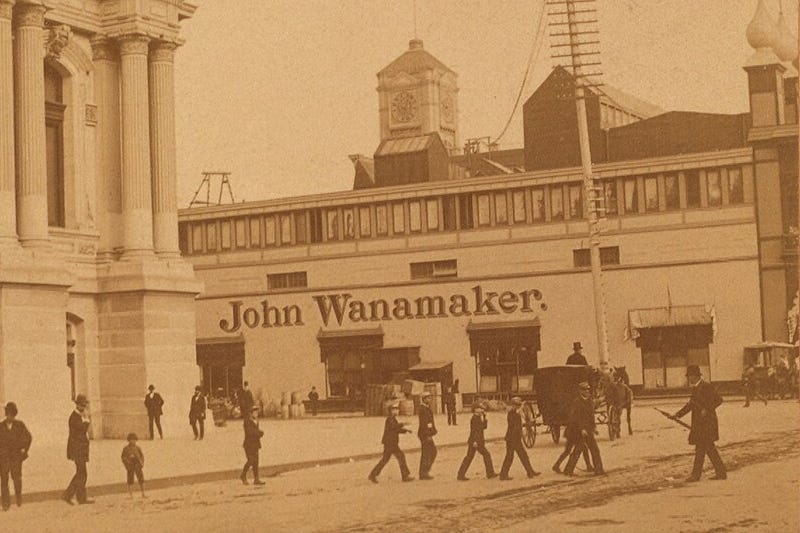
Haggling was the norm through the ages, until the middle of the 19th century. Then, US department store owners like John “one price” Wanamaker introduced fixed offer prices for goods and services, inspired by the moral advocacy by religions like the Quakers, but also because it made good business sense at scale. This practice effectively eliminated the price discovery mechanism haggling embodies: establishing an agreed price between the minimum the seller is willing to accept (WTA) and the maximum the buyer is willing to pay (WTP). The difference between the two is the economic surplus – the value created by the transaction, which makes both parties better off. Where the eventual price falls determines what share of that surplus each party gains.
Discovering a buyer’s WTP has gained renewed interest though. Modern technology purports to be able to accurately estimate someone’s actual WTP for any good or service, based on their online profile, search history, and purchasing behaviour. This would allow sellers to recover some of the money they currently leave on the table, rather than settling for the conventional fixed margin they take out of the surplus. At its most extreme, if every seller knew our exact WTP, we would be quoted that price wherever we turn, and the seller would pocket the entire economic surplus. Our only alternative would be not to buy. Such a nightmare scenario is unlikely to unfold anytime soon, but tailored pricing already exists, particularly in travel. The price to get from A to B is not uniform: flexible tickets cost more than tickets that cannot be altered or refunded, and travelling at popular (and hence busy) times is more expensive according to (expected) demand.
A particularly interesting example is that of the price differential between tickets booked in advance, and the walk-up price for immediate travel. Passengers who must fly today are likely to be willing to pay more for their urgent trip, airlines reason. This does not particularly bother most of us: the category of travellers with an urgent need is well established, with public and stable rules – and people chose to join it. We can even understand why this is not malicious economic rent extraction. The higher prices fulfil two clear and important roles: deterring occasional, budget-conscious travellers with a lower WTP, and compensating for any empty seats in case not enough urgent-need travellers turn up to fill them all. This approach is conceptually not that far from the hypothetical WTP discovery mechanisms that are mooted: over time, fine-tuning the walk-up price reveals how much a typical member of this category is prepared to pay. But such categorical pricing is still some way off hyper-personalization: the seller does not actually know any passenger’s individual WTP.
Our concern rests, in part, on a general suspicion, regularly aired in surveys, that sellers are always out to fleece us: 85% of Americans believe retailers use inflation to justify excessive price hikes, and in the UK, 7 out of 10 people experienced potential online rip-offs. Politicians happily exploit those popular misgivings: one of the first measures Britain’s brand new prime minister, Andy Burnham, announced a few weeks ago was a “crackdown on ‘rip-off’ business practices”. With such widespread, deep-rooted beliefs, it is no surprise that we expect personalized pricing to mean even more exploitation. Many people’s view of any purchase as a zero-sum transaction (they have the money, we no longer have it) is incorrect, but a shift in the relative share of the economic surplus is genuinely a zero-sum affair. At a garage sale or a jumble market that split is a matter of symmetrical negotiation: buyer and seller don’t know each other’s limits, but through haggling they settle on a mutually agreeable price in between, satisfying both sides. Most people see this as a fair process, but if sellers recruit AI to unearth their WTP, the symmetry disappears, and with it the fairness.
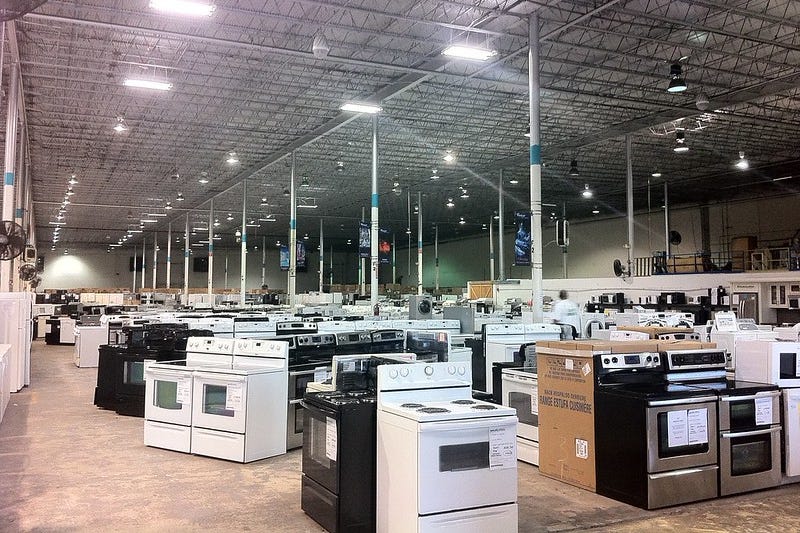
Even setting aside consumers’ suspicions, it may ultimately not be their protest that stops aggressive WTP exploitation by sellers. Personalized pricing will make running a business harder. It effectively eradicates the concept of a market price, an important signal that drives production planning, without which producers will be navigating blind. Furthermore, our WTP is not a fixed, stable number to be revealed, but fuzzy and highly context-dependent. We rarely know what it is ourselves, other than perhaps for commodities and staples. For more substantive and highly differentiated purchases like a stove, home insurance, or a holiday, the notion of a single WTP is preposterous. Most of all, such a system would only continue to work as long as every seller toes the line, and sticks to the ‘discovered’ WTP. As soon as one of them breaks ranks, normal competitive market pricing is set to resume.
Thanks for reading Koenfucius’s Substack! This post is public so feel free to share it.
But take a look at your own purchasing behaviour: how big a secret is your willingness to pay, really? Do you always look for the very cheapest product, whether toothpaste or jeans, energy or wine, bedsheets or garden tools? Do you always fill up your car at the cheapest pump nearby, and take advantage of your supermarket’s promotions, stocking up on discounted kitchen roll or duck breast? I thought not.
It has never been easier to compare prices, yet we still rarely look for the best bargain. Every time we are not buying for the lowest price, we expose our WTP, not just to ourselves, but also to the seller and to the market as a whole.
We don’t need AI trickery to make us do so. We already pay a price just for us, not only on jumble sales, but everywhere we have a choice of different prices. And we are happy to do so.
No posts
Comments
Nothing yet. Say the first thing.
Sign in to join the conversation.