
Kalidasa’s Meghaduta is perhaps the defining work that ties in monsoon, longing, and the Indian subcontinent, but rains and romance have a deep history across the nation.
In Kathak and across many other classical traditions, the rains are the recurring backdrop for viraha— yearning of love in separation. And Kathak is one familiar face amongst a wide set of often overlapping traditions of dances, songs, poetry, paintings, theatre, and artistic expressions—in classical, folk, tribal, minstrelsy, and bardic forms—that celebrate the rains in India.
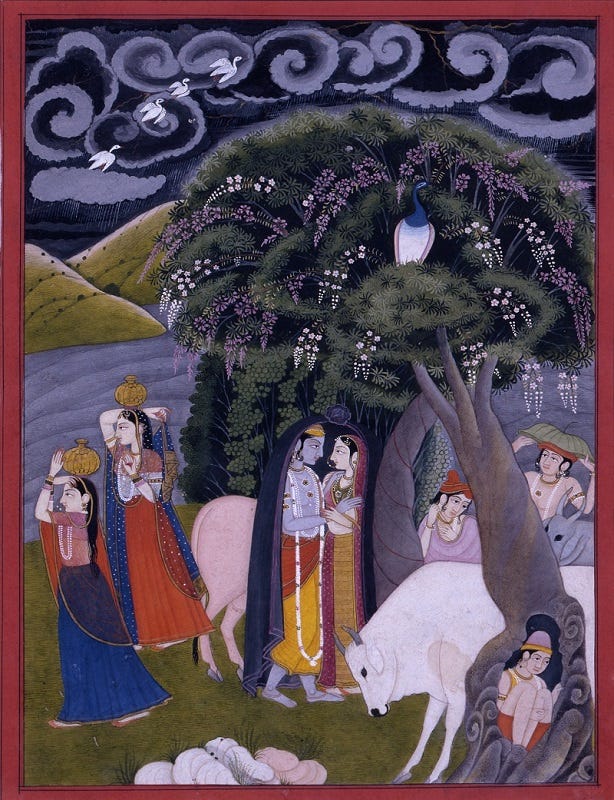
Some recurring themes include geese, clouds, adoration of flowers and trees (Kutaja, Kadamba), monsoon, tales of Radha-Krishna, invocations to Indra and Varuna, worship of nature spirits, cloud maidens, mountain-nymphs, deities, and the reverence of the earth’s fecundity itself.
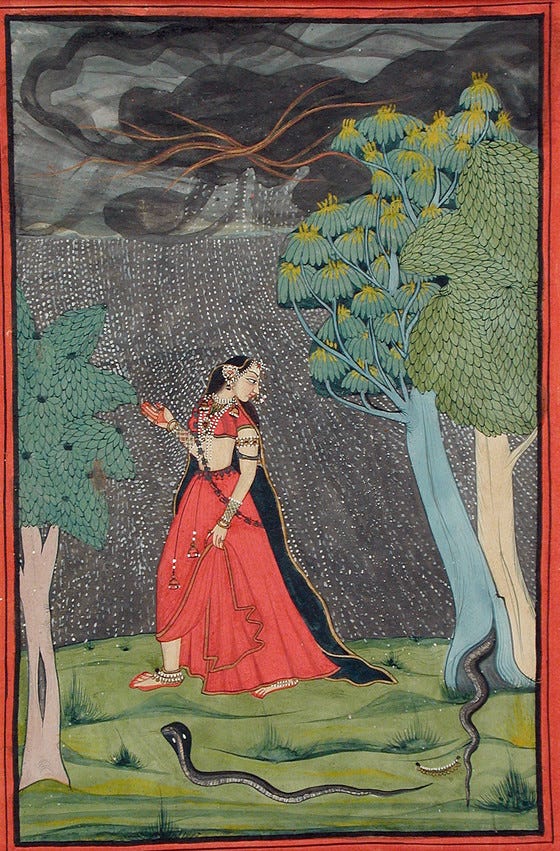
The themes of human love and longing that have been fostered for millennia in the moody monsoons share a commonality with the unfoldings of nature— this is also a season of courtship and reproduction in the subcontinental biome in general.
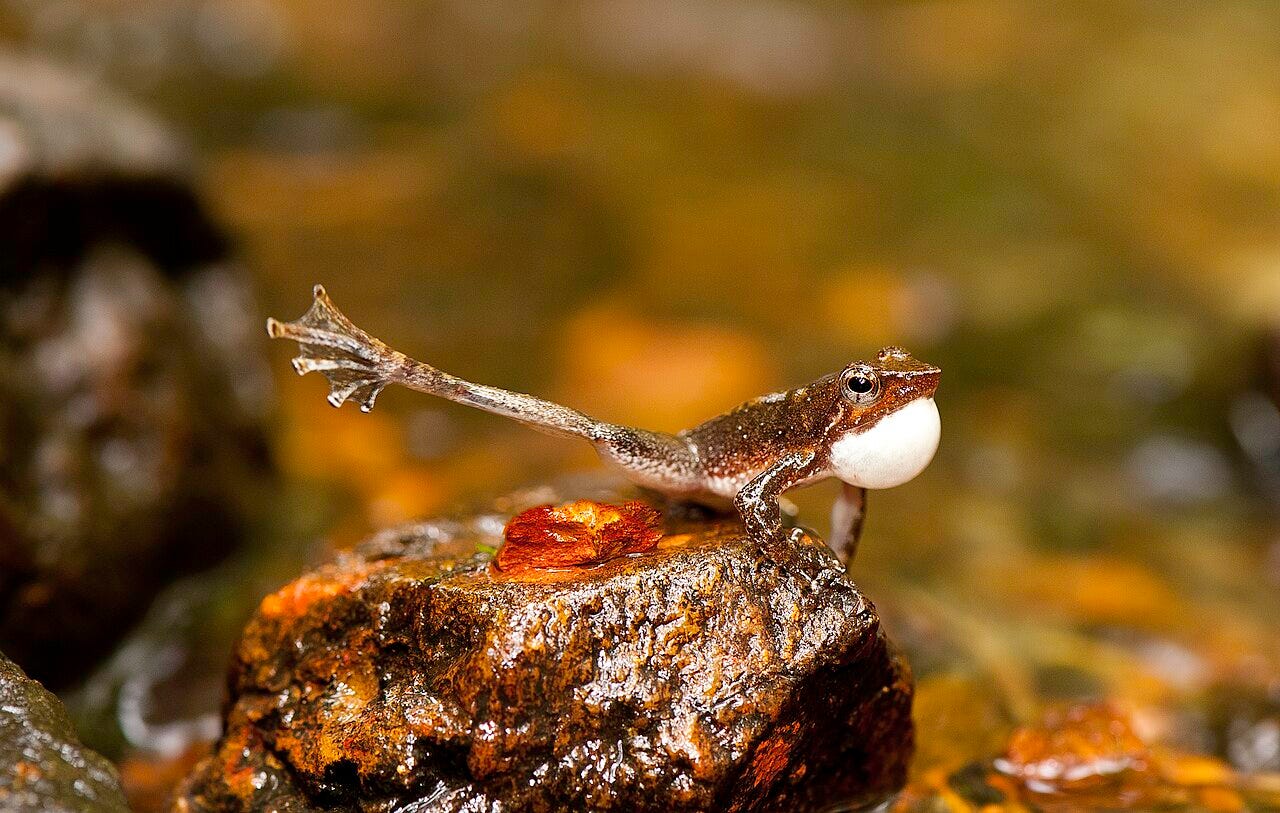
Moreover, aesthetic expression is not limited to humans either… one of our most favourite things about the ecological changes during the monsoons is that suddenly the forest becomes like an orchestra. This is because of all the mating and courtship calls, and especially because so many species have evolved louder and more distinctive calls that can be heard over heavy rainfall. So everyone, from frogs to peacocks to so many different kinds of insects, call out in this beautiful symphony, over the sound of the rain. And it’s not just the music… it’s dancing too.
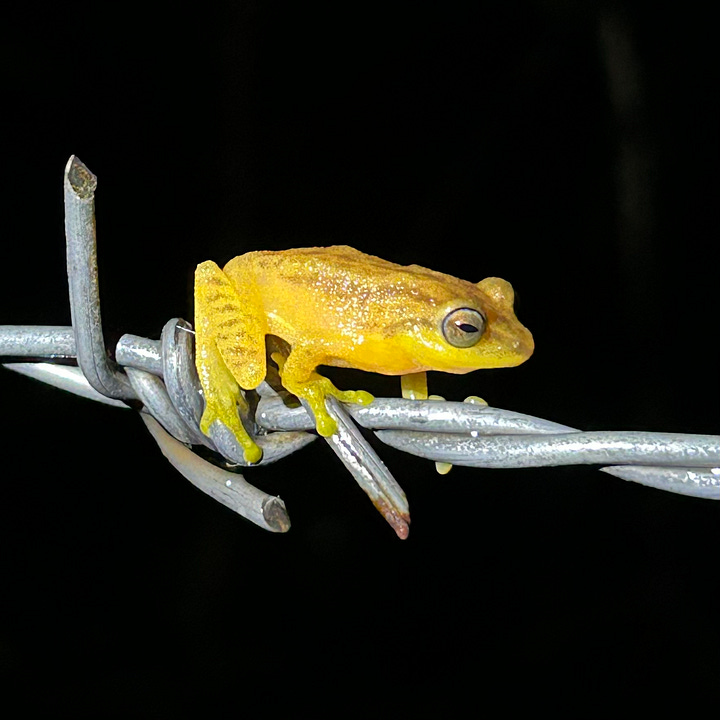
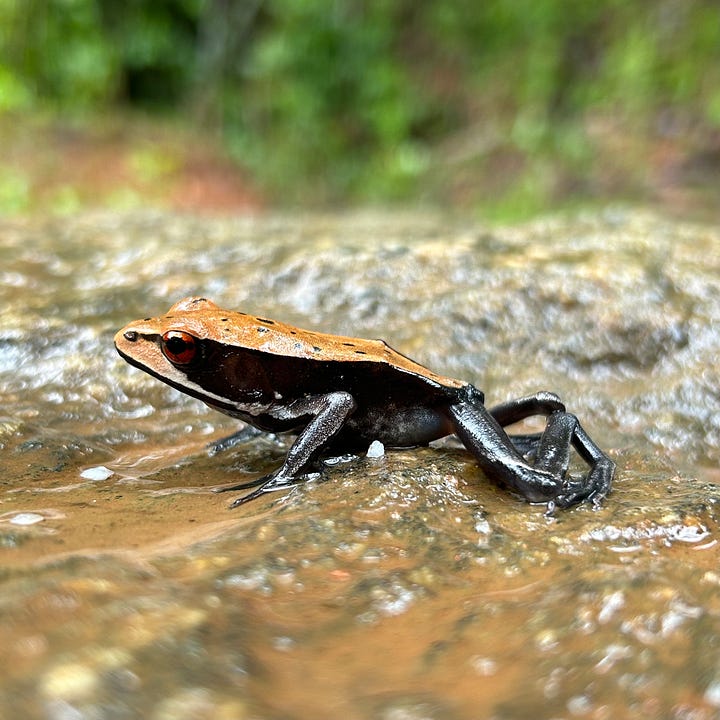
Dancing peacocks are well known, but other creatures love dancing in the rain too…


Speaking of frogs in the rain, one species exhibits a remarkable behaviour: the purple frog surfaces for a short period each monsoon to mate, then vanishes again. Despite being known locally in Idukki for generations, it wasn’t formally documented by science until 2003. And its behaviour and appearance aren’t the only unique things about it: its closest living relatives aren’t found anywhere in India, or even Asia— they’re in the Seychelles, nearly 3,000 miles away. This implies that this frog’s lineage can directly be traced to a time when Seychelles and India were joined as part of the ancient supercontinent Gondwana more than a hundred million years ago.
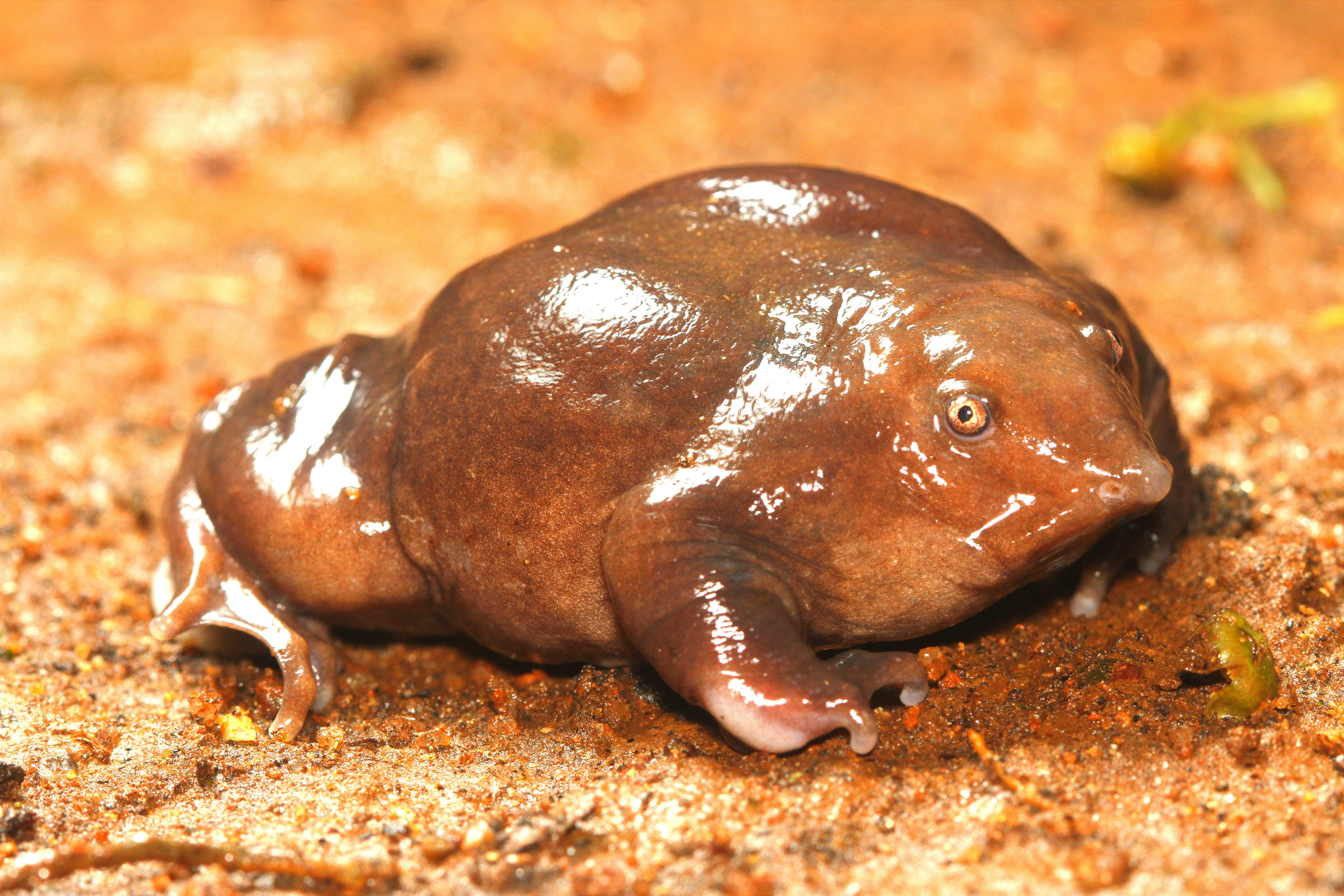
Locals sometimes call it the Mahabali frog, after the mythical king said to return from the underworld once a year to check on his people. For the rest of its buried life, it eats almost nothing but termites.
Speaking of termites— monsoon is also the time when male termites grow temporary wings and take flight to move out in huge hordes into new colonies. It’s also peak dragonfly season. The adult dragonflies emerge from small, temporary puddles and pools that the larvae have been growing in for all these months. And actually, these are interesting habitats because the monsoon is pretty much the only time these rock pools get filled, and there are whole ecosystems that live and die in them.
There is a particular kind of shrimp that only lives in such temporary rock pools, and it survives the dry months as dormant, drought-resistant eggs. When it rains each monsoon, they hatch and live out their adult lives.
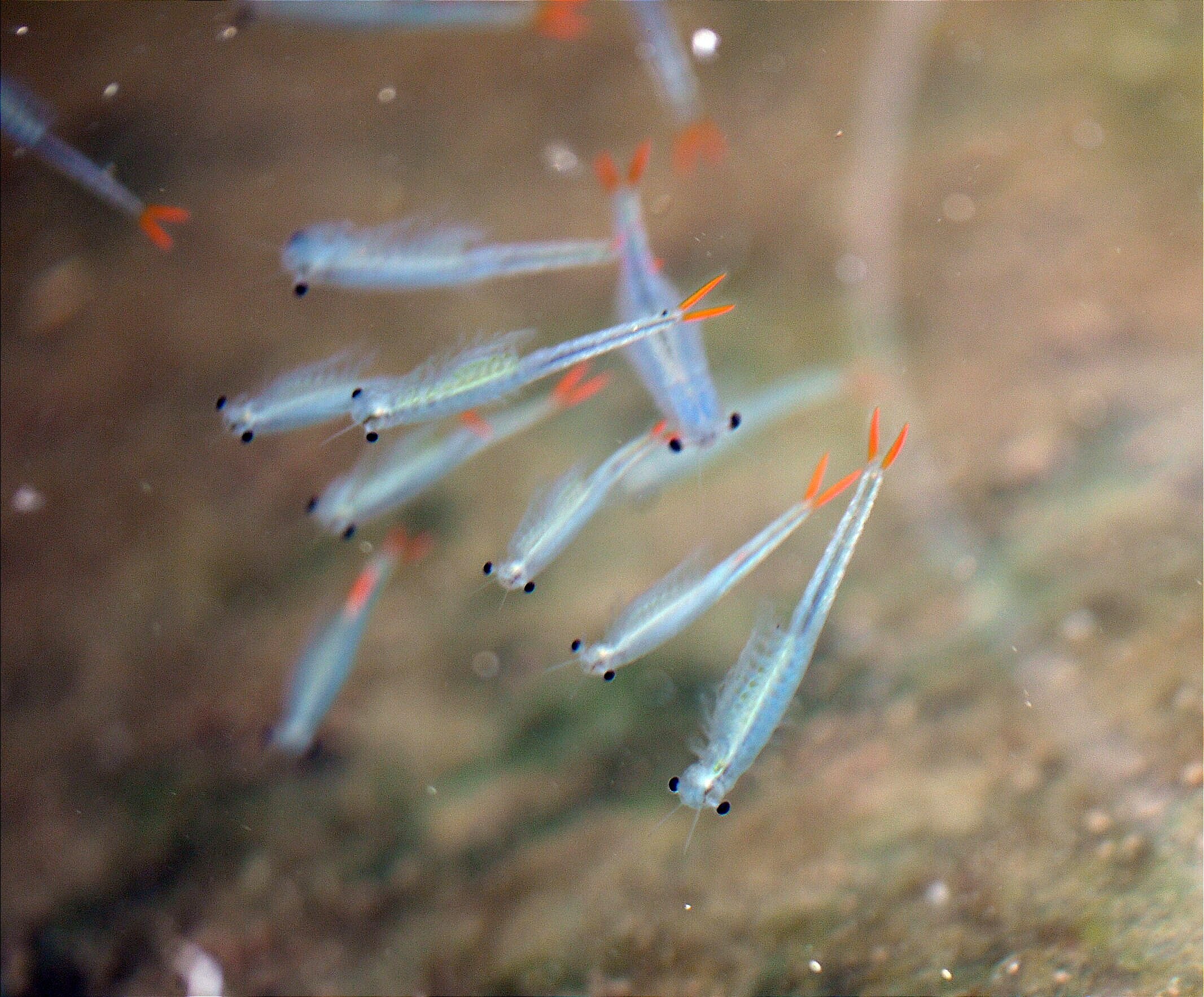
As recently as 2025, researchers examining an unremarkable roadside puddle on a lateritic plateau near Jawhar in Maharashtra, barely six metres across, described an entirely new species this way for the first time: Streptocephalus warliae (they named it for the Warli community whose land it sits on).
Monsoon is also a beautiful time to observe fungi. On forest floors and fallen logs, there is an explosion of shape, colour, and texture doing the essential, invisible work of nutrient recycling— after all, creation and decomposition are intertwined.


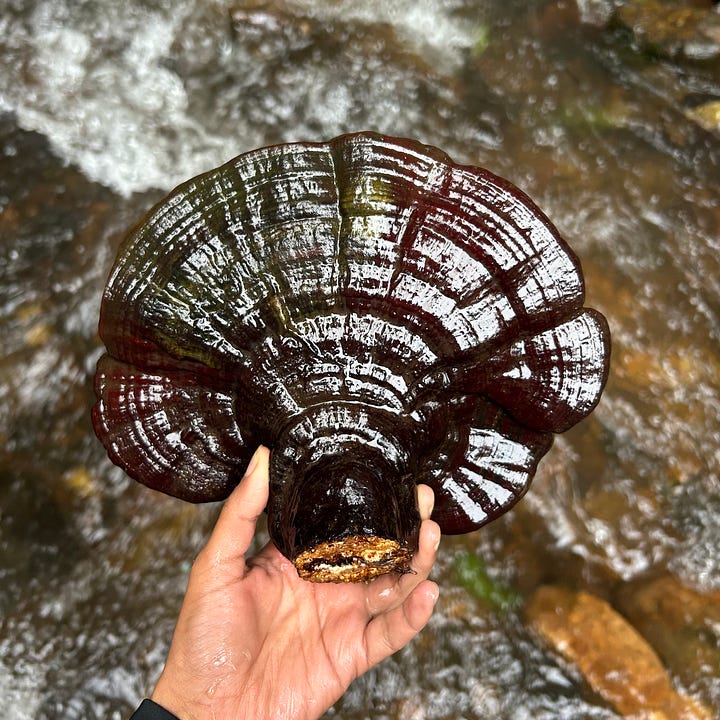
Some of it glows with bioluminescence.
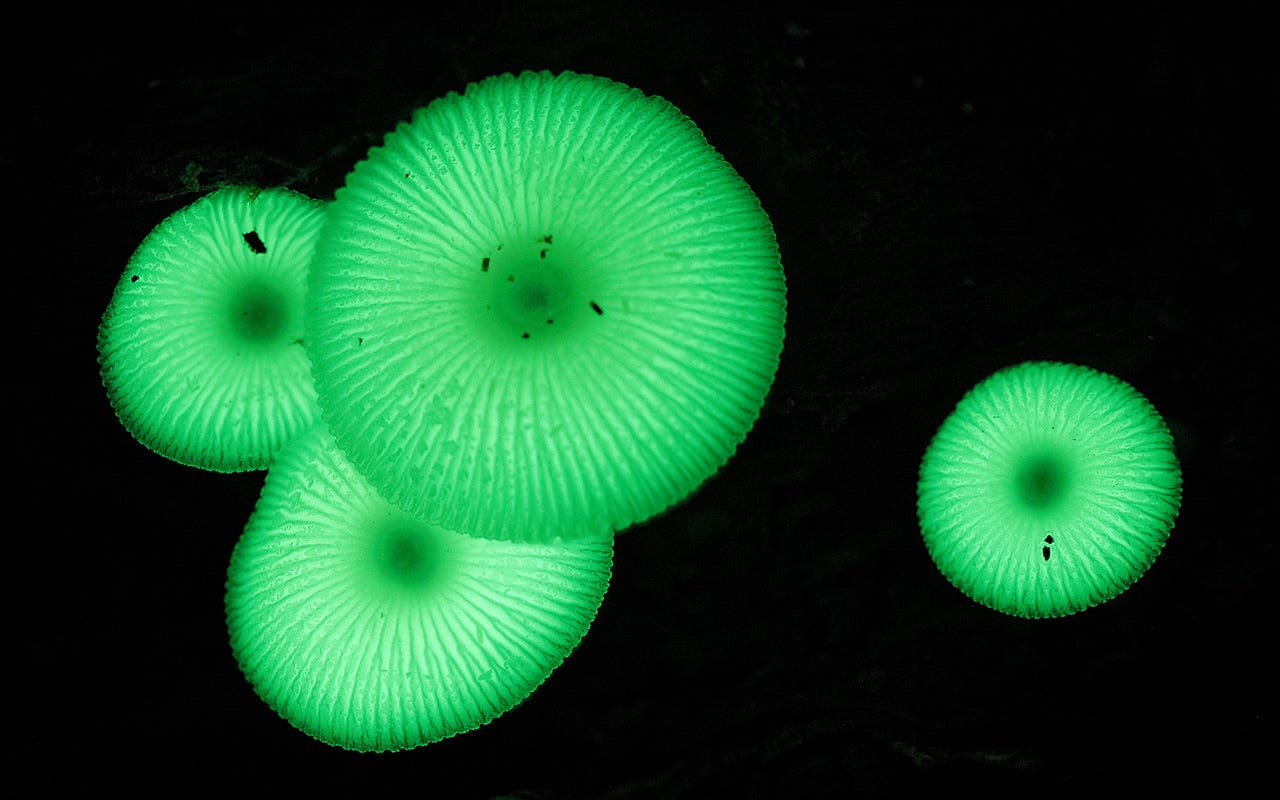
Even the bioluminescence from the marine plankton is easiest to spot along the coastlines during the monsoons.
Thank you for supporting The ⋮Knowhere Knewsletter. Please share this post, and do please let us know your thoughts about it!
Today, however, luminous fungi habitats are under threat from deforestation and the extreme variation in rainfall patterns. Apart from the direct destruction of habitable spaces, creatures like the purple frog, which timed a hundred-million-year survival strategy around predictable monsoons, are now also losing habitable conditions to very erratic rain and landslide risks that unpredictable monsoons bring.
Legal misclassification is another mechanism which drives ecological destruction— sensitive landscapes get sold off for quarrying, mining, energy megaprojects, industrial estates, and city development.
These destructive changes affect not just megaflora and megafauna, but also the tiniest things which require very little to live. The dancing frog is one of the most threatened amphibian genera in India— of 24 assessed species, 2 are Critically Endangered and 15 Endangered.
Other than land-use change, many other factors drive this change, including invasive creatures, water pollution, temperature and humidity variation, and extreme weather.
Climate change affects entire communities pretty directly, too.
2025 was the perhaps first year that the monsoon clouds managed to cross over the Trans-Himalaya in large volumes due to climate change, and it started raining heavily in Ladakh— far beyond what has been typically observed before.
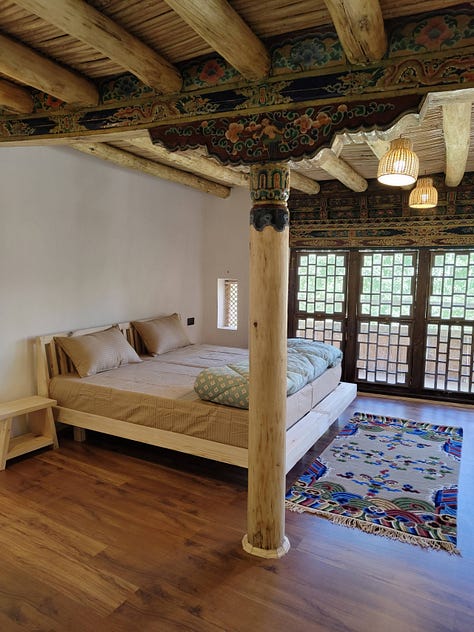


Erratic and excessive rain can be devastating.
For example, Tashi’s Citadel is a 300-year-old home on our roster— it was so badly affected due to excess rain that half of the house broke off and fell.


Now, during the rainy season, Ladakhis have begun to put tarpaulins on top and channel the water away using pipes, which is a kind of hack…
But since rain is such a powerful force, does this mean that we need to lean strongly on industrial technology for prevention and mitigation? Not necessarily— the living root bridges of Meghalaya are a testament to how architecture can be built with the climate rather than merely for it. The Khasi people call them jingkieng jri.
Rather than construct a permanent bridge from stone, timber, or steel-and-concrete—materials that a place this wet would eventually rot or wash away—builders guide the young aerial roots of the rubber fig (Ficus elastica) through hollowed-out betel nut trunks laid across a stream, coaxing them toward the far bank over fifteen to thirty years, until the roots fuse into a structure capable of carrying dozens of people at once. Some spans now run past 200 feet.
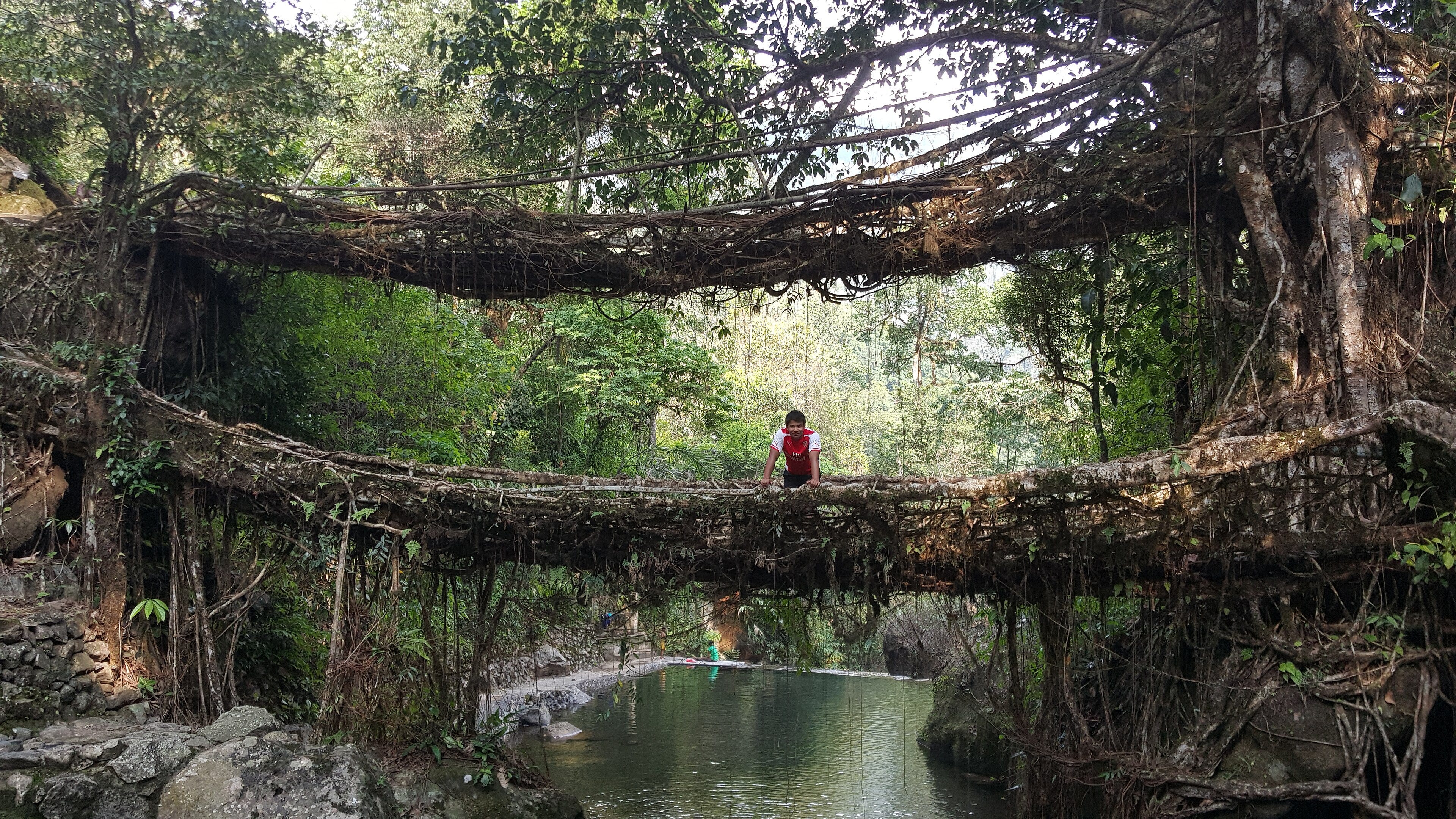
Properly tended, these bridges are expected to last for centuries— not despite the rain that falls on this stretch of the Khasi Hills (amongst the wettest places on the planet) but because of it. Unlike a bridge made with inert materials, which the monsoon here would ruin within decades, a living root bridge treats the rain as a source of nourishment and growth rather than a threat.
For many of our journeys, the climate’s behaviour shapes the experience our guests (and we) have every time, sometimes subtly, and sometimes quite significantly. For our river expeditions, we navigate the living, fluxing nature of rain, river, and reconfiguration. When we plan out the itineraries for the Brahmaputra Drift, we have to account for the river changing its course due to the sheer volume of water and the sediments that come with it.
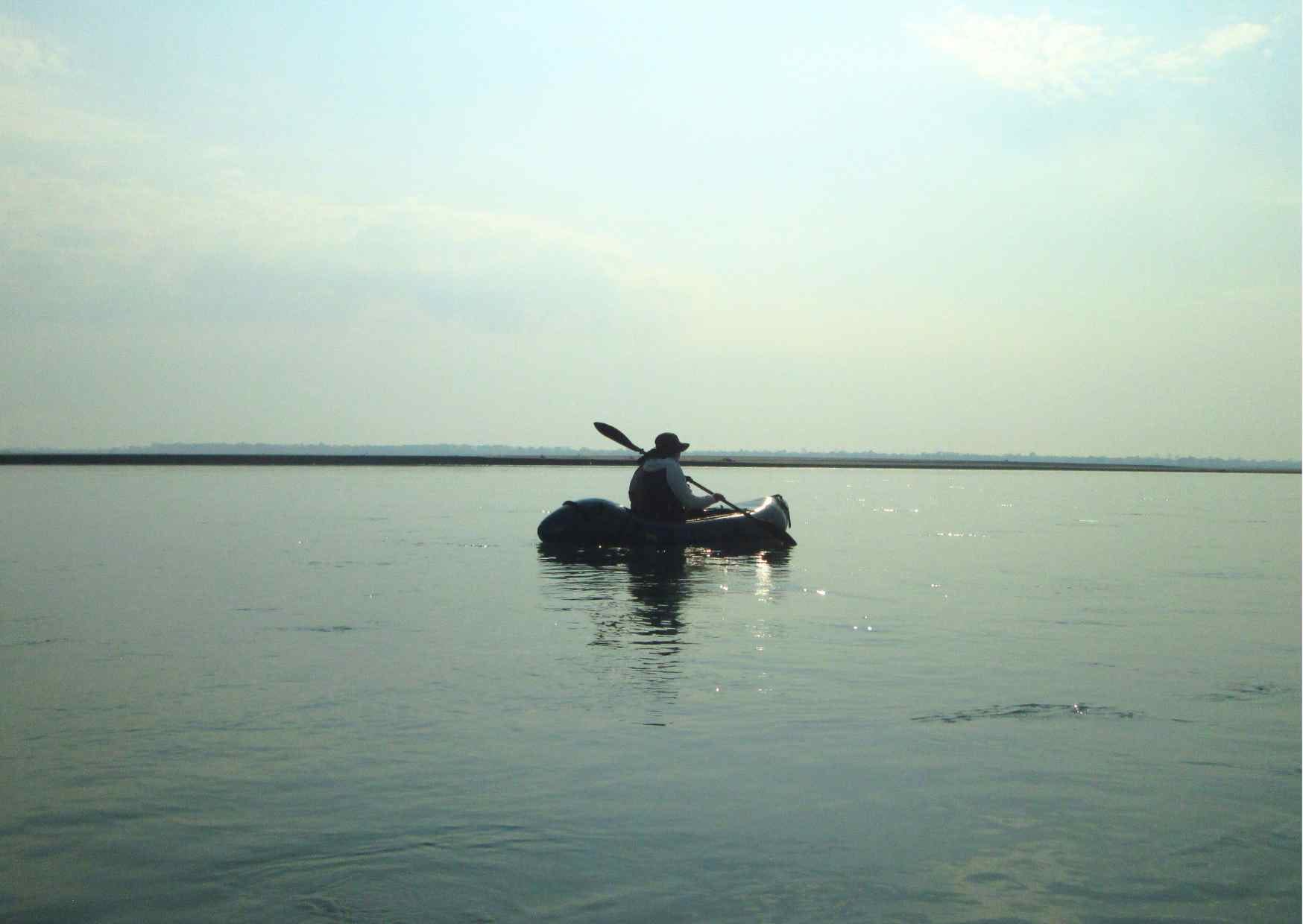
So, in our first season of the Brahmaputra Drift: Talo, the main river channel went and met the Lohit. And then in the second season, it met the Siang. And then in the third season, it met the Lohit again. And right now, for instance, we don’t know which channel the Talo is going to meet until the monsoon is over and the flood subsides a little.
The idea of flooding deserves some nuance: while India is no stranger to devastating floods, seasonal flooding in rivers is actually beneficial for the soil and for the cultivation of crops. Hence, many traditional communities do not frame this as a conflict in the first place. The Mising people of Assam, for example, build chang ghars, or kare okum: homes raised well above ground on bamboo stilts, often with livestock sheltering in the open space underneath, on the assumption that the Brahmaputra will do exactly what it always does.
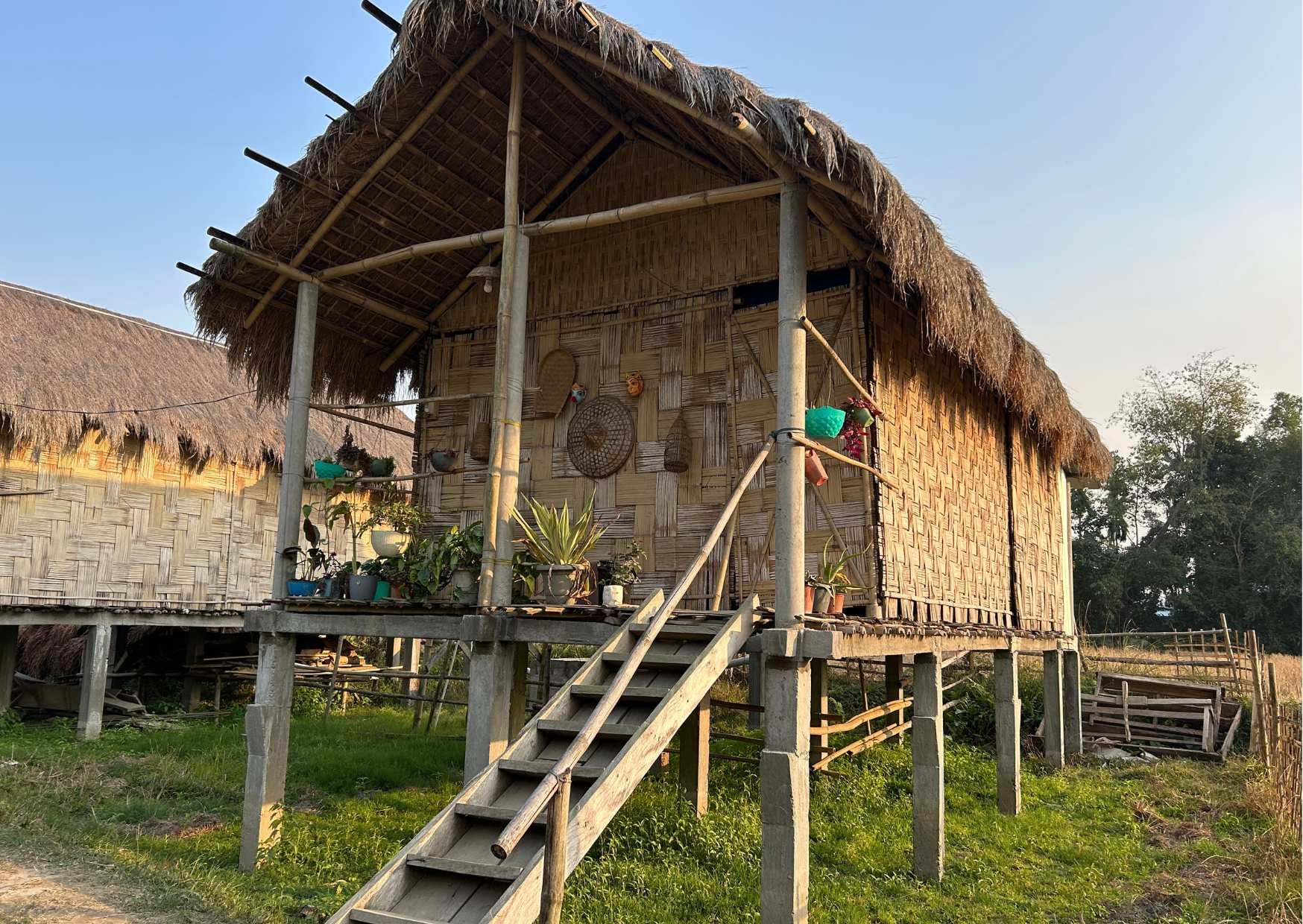
This is not an emergency response, but a design principle refined over generations— now, sometimes in updated form with wooden or concrete piling. And it is being adopted for schools and clinics across flood-prone Assam. The river isn’t fought. It’s accommodated, the way one leaves space on a table for a guest you know is coming.
Through our work with a vast diversity of communities, often in regions which have to face the impact of climate change most intensely, we have had a very slight—but crucial—change in perspective. Earlier we thought that the priority for all of us is to fight climate change; now we feel that the priority isn’t to overcome a changing climate, but instead to overcome the very roots which aggravate destructive patterns.

…the worst air quality in the world…

…terrible water quality (India is placed at 120th amongst 122 countries in the water quality index, with nearly 70% of water being contaminated; we are also in the top category of water-stressed countries), and rampant pollution… is there any line in the sand where we pause, take stock, and reflect?
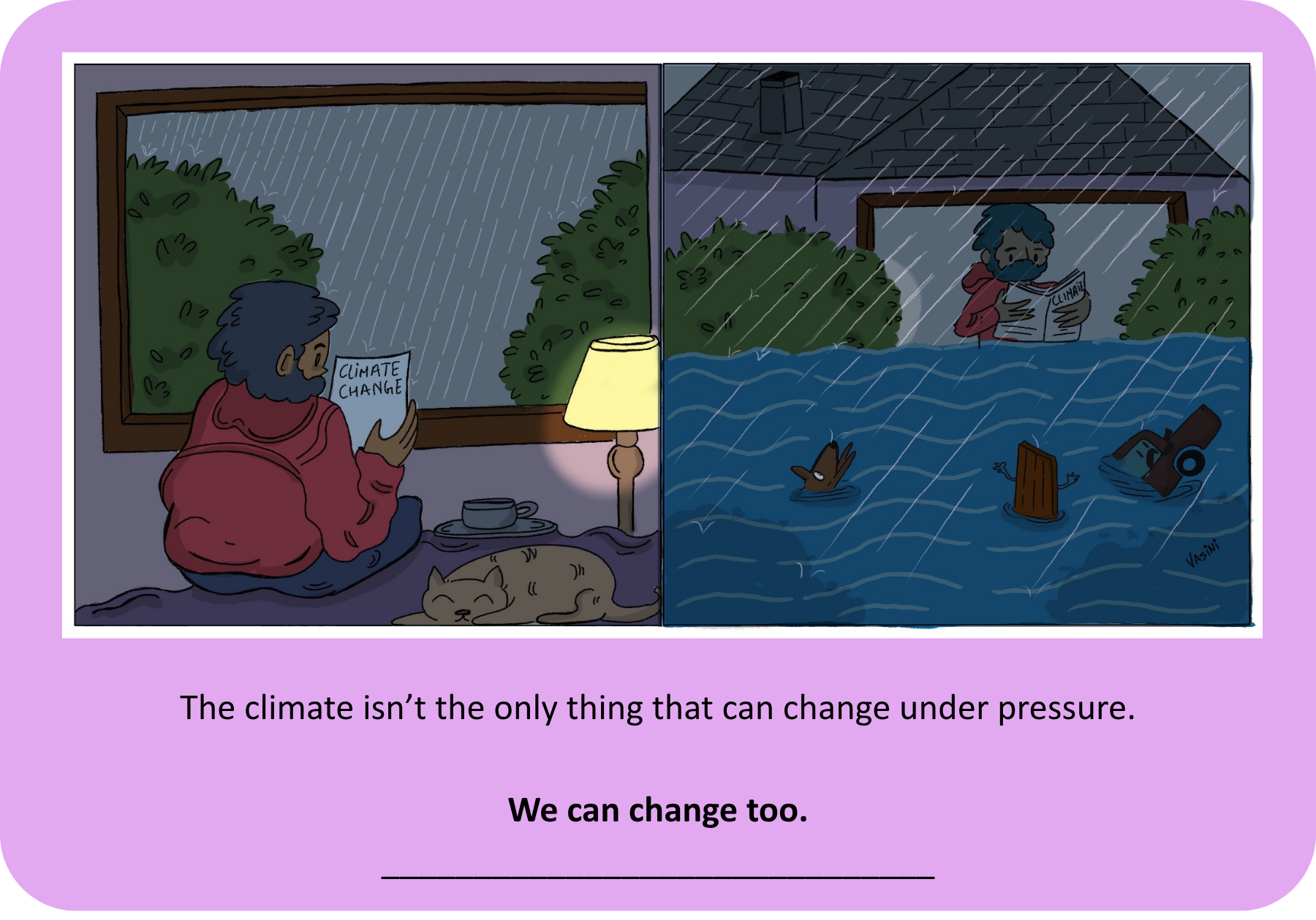
…and, if all the stars line up, maybe we can even correct our course, like a river does, in the monsoons?
You can read the previous versions here:
No posts
Comments
Nothing yet. Say the first thing.
Sign in to join the conversation.