
Two related truths I’ve learned in the ups and downs of life:
Art is the one place in the world where you’re always allowed to not be okay
Mitski’s music hits me like heroin.
I don’t think I can say that about anyone else. My top three of all time are her, Beyoncé, and Megan Thee Stallion. I’m obsessed with all of these women, they’ve all carried me through the highest highs and lowest lows. But it’s different with Mitski: I think my connection is so unquestionable and visceral; art that just grabs you and gets you the first time you hear it, is near impossible to be objective about. So don’t bother considering this a critique: it’s a paean.
It’s a very reductive thing to just say, “look, we are two very sad bitches who get each other and that’s what’s behind it.” Her music is that, but it’s so much more than that. You’ve just gotta dig deeper.
Four years ago, Mitski did a video for Crack Magazine called, “Mitski Reacts to Posts About Mitski.” Seems harmless enough, about as cutting as any of the many other “celebrities read mean tweets” videos similar to it. Yet when you watch it, you watch someone—who I personally consider a musical genius, but regardless of personal opinion is a hard-working industry professional— to sit there and endure a series of increasingly insulting comments about her, while pretending otherwise:
“My social media is run by my manager. He apparently gets threats on his email [laughs] saying ‘Put Mitski back online.’ But that…y’know, those threats just make me want to not be online. So I live in blissful ignorance about what is being said about me on Twitter,” she says, and then laughs again nervously. “Until today.”
She’s right to be nervous, because they deal a low blow out the gate:
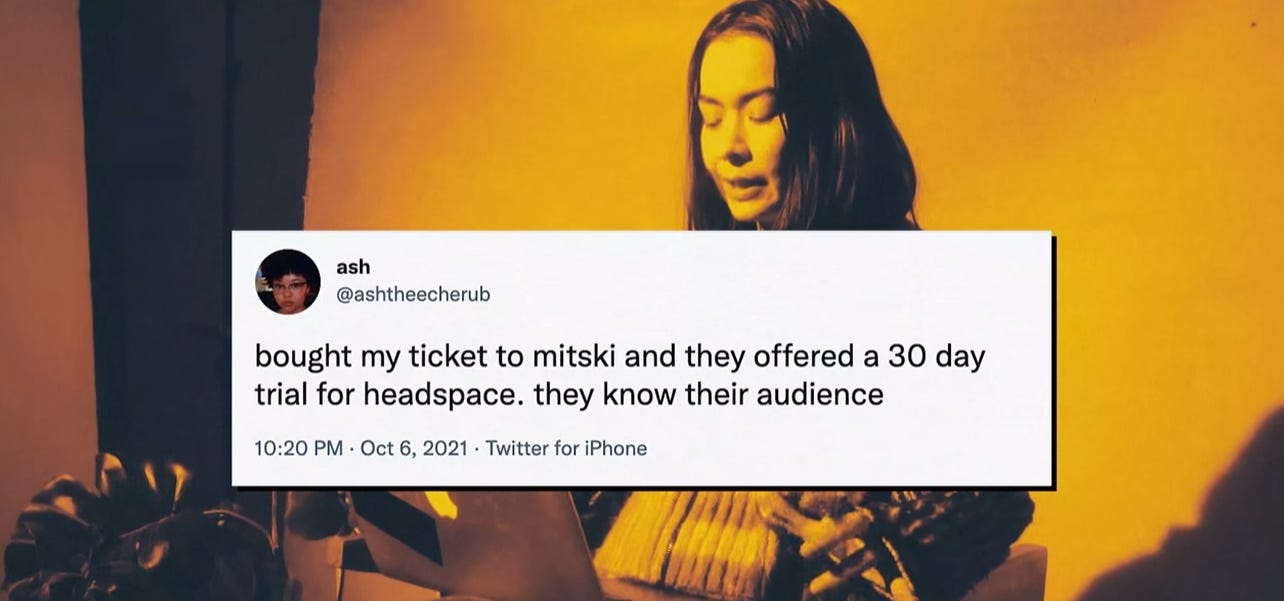
She’s made to read a tweet out loud that says “bought my ticket to mitski and they offered a 30 day trial for headspace. they know their audience.”
She plays it off with a joke about not being sponsored by headspace, leaves an uncomfortable pause at the end, and then moves on.
The next tweet reads “drunk listening to mitski in the airport. my main character syndrome is at an all-time high.”
Again, she politely plays it off as a joke by saying “same” and moving on again. I give her credit, because I feel there’s a vast difference between unrepentant narcissism, the kind that doesn’t make space for the needs of others, and art—either making it or consuming it—that simply speaks to your experience of grief. These little digs are part of a broader landscape that frames all feminine emotions (and I get into this more later, but it should be noted that of course, non-white emotions as well) as excessive and self-indulgent. I don’t know of a single musician who doesn’t make music about their own experience, their own feelings. Her music doesn’t even participate in the self-aggrandizement so consistently rewarded by capitalism and the Content Machine.
“I’m always the main character in my mind. That’s the big problem,” she adds, again seeming to hold back frustration but trying to cage it in a joke: “Maybe you should be a songwriter.”
Of course, there is music that addresses broader issues than individual experience, but it’s absurd to demand that all music do that. Most music doesn’t, at least not in an explicit, Bob Dylan/Public Enemy kind of way. Making art involves a certain amount of ego, but articulating your own experience is the entire point of art (and for marginalized people, is political in and of itself). Putting your own spin on it is what makes it good and interesting. But I assume Mitski knows if points that out, she comes off as stuffy, overserious, and a bitch who can’t take a joke.
The next tweet references her massive sapphic fanbase, and she relaxes a bit, taking that one in stride, too. But by the next tweet, the whole thing starts to feel like a setup:
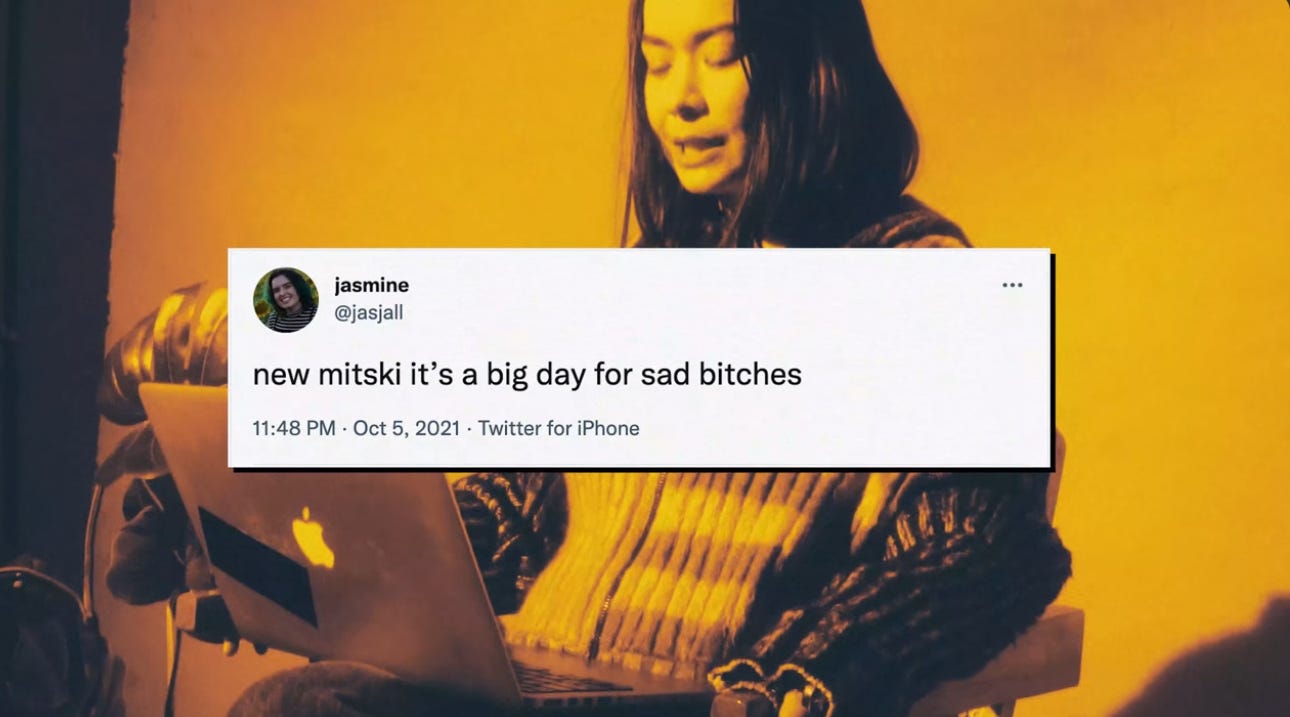
“new mitski it’s a big day for sad bitches.”
Again, major credit for not rolling her eyes into the back of her head and walking out, which is exactly what I would’ve done. Instead, she pauses, looks down, and says,
“Y’know…the sad girl thing was reductive like 5-10 years ago and still is today. I mean, I get this person means really well and I appreciate them.” She looks at the camera and says, “I appreciate you, jasmine. But let’s retire the sad girl shtick. It’s over.” And then, to gracefully move on and smooth the awkwardness with another joke, she says in a valley girl voice, “sad girl is over.”
Poor woman never gets a break for the rest of the video. Here are the other tweets presented to her:
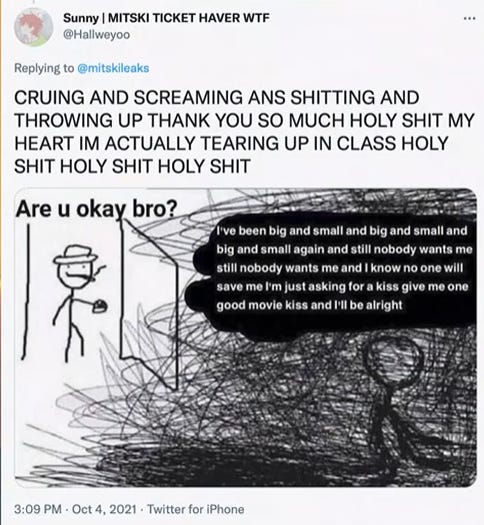
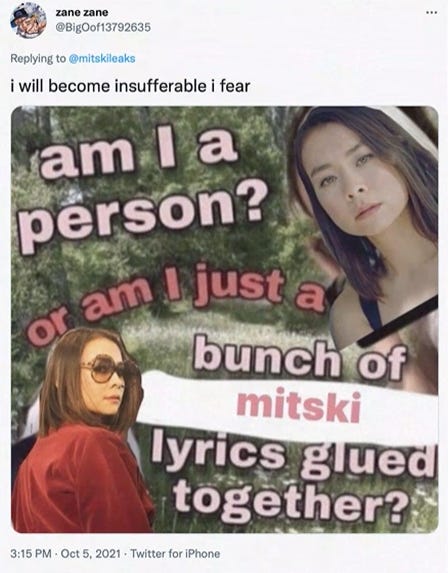
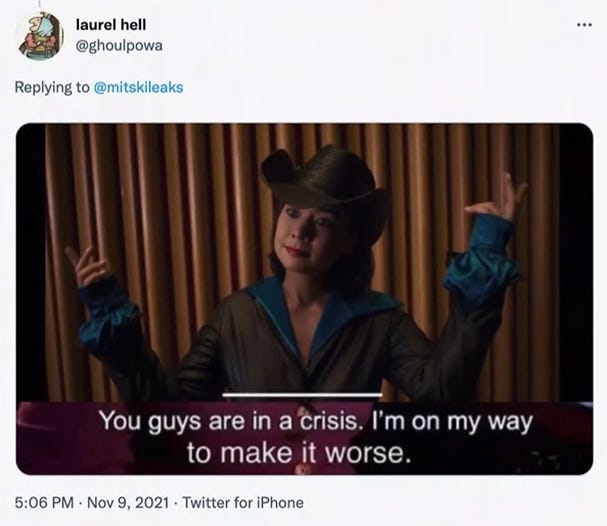
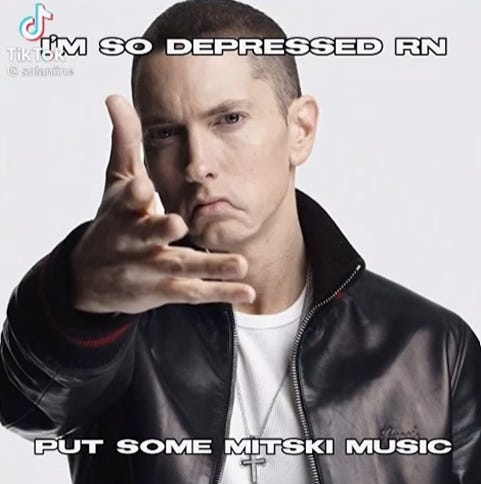
But people have been writing sad music for forever—so why do we talk about her this way? And why do even the ones that do get her love her with such a parasocial fervor?
Art and religion have inevitable comparison. The devotion, the feeling of humanity it instills, the devastation it gives space for. But it’s one of those things you can’t always explain: sometimes you can list the reasons why your partner is great, but at the end of the day, can you reason out such an intense connection as love? Mitski’s music is interesting, dynamic, raw, powerful, and ruthless in its truth. It’s also the only thing my brain has been able to take when I have been at my lowest, my most despondent. When I have been in that space, the albums that go on a mind-numbing loop are Lemonade and Mitski’s entire discography.
Actually, I listen to the rest of her discography enough that Beyoncé is still always my top artist every year. But, obviously, different albums are able to meet you at different emotional places.
I think Mitski is entirely justified in feeling a type of way that her music is so often over generalized and condescended to as “sad girl music.” It’s so blatantly sexist, the way we are so quick to prop up male genius and reduce the work of everyone else as a gimmick.
The other issue, and a clear driving thread through Mitski’s music, is the ways in which we don’t take feminine pain seriously or correctly. She’s also not the only one who’s ever expressed this type of artistry: her predecessors recall the likes of Björk, Billie Holiday, Joni Mitchell, Nina Simone, Fiona Apple, Amy Winehouse…
but she is also something undeniably her own.
Her music might strike you as weird if you don’t really click with it. It sounds different, off, morose, and an odd sense of phrasing and odd instrumentation. To each their own, I suppose. But for me, Mitski paints with all the wrongs of life, and makes them devastatingly beautiful.
I saw another essay on here by Max Freedman of Lavender Sound writing about her new album, Nothing’s About To Happen To Me, titled “Mitski Is Officially A Generational Talent.” (Who also read an earlier draft of this and gave great edits, thank you so much!!!!) Despite my obvious admiration, I wasn’t able to bring myself to read it for a long time—not until after I’d finished writing this entire essay. That, and a follow-up piece on the tenth anniversary on Puberty 2, were both excellent and, if you can believe it after this mammoth of text, covers a lot of ground that I don’t here (much more concisely, if that’s your thing). But the reason I’d avoided reading before was that I was afraid of realizing that Mark Twain quote about how dissecting a joke is like dissecting a frog: to do either, you have to kill it.
I’m all too aware that I’m not able to be rational about an artist I love this much—is anyone, really? But the world…life….does not have to be rational to me. And why should I have to feel rational about it???
Mitski’s music leaves this wide open space to carve a way forward through sadness by letting you drown into it. It’s not really forward—it’s not music that gets you up and going, (that’s when Megan comes on) but y’know, sometimes you’re just out of steam.
Her music is unafraid to fully feel vulnerable, lonely, panicked, scared, unhinged, done dirty, abandoned, unloved, conflicted, clinging, mournful, stubborn, not healed, regressing, healing imperfectly.
Her music does not ask you why you’re not smiling. It is instead a mutual shoulder.
She is able to communicate feelings in a few words, maybe a sentence, that it takes others entire essays or movies or books to do.
It’s part of the art to learn where you want to balance directness and poetic flourish. Not exactly flourish, but exaggeration for the sake of more accurately conveying an emotion than you could in more direct or “logical” language. (Which, it bears repeating, all genders do in their art.)
But I can feel (at least, believe that I feel) the exact locus of Mitski’s pain when she looks me in the eye (vocally) and says “I don’t smoke except for when I’m missing you, to remember your mouth, how it tasted true.” Girl, same.
She writes for the space of giant, soul-crushing emotions. Rage and hurt that I haven’t been able to unleash on those who caused it; that would frighten lesser mortals, that are fully draining just to feel. I’ve been through years of therapy, and it’s helped, but even the best, most accessible therapist only allows you to process so much at a time.
What about the times I lay awake at night wondering what could’ve been if only I’d made a completely different set of life choices? (Hello “Working for the Knife,” “I Bet On Losing Dogs,” and “Everyone”) When I feel stuck at a dumb job where my boss and coworkers get away with being dismissive and sexist to me all day (“Drunk Walk Home,” “Townie,” “Real Men,” now “Dead Women”)? When I feel lonely and abandoned yet again? (“Nobody,” “Francis Forever,” “Heaven,” “I Don’t Like My Mind,” “Wife,” “Last Words of A Shooting Star,” “The Deal,” “I Love Me After You”) When it seems like nobody has the patience to deal with me in all my complexities and imperfections (“A Pearl,” “Abbey,” “Love Me More,” “Buffalo Replaced,” now “In A Lake”)
When I feel a grief so intense I almost feel numb with delirium? (“Humpty,” “Bag of Bones,” now “Where’s My Phone?”) When, despite this, I still have to paste on a smile and, to quote a poem I read recently by Grief & Grits , “I’m forced to move at this pace, to pretend time and responsibilities are real, and that grief is not.” (“Strawberry Blonde,” “Brand New City,” “My Body’s Made of Crushed Little Stars,” “Stay Soft.”)
.
The first and only time I went to a Mitski show was shortly after the first time I shaved my head. It was after yet another year barely surviving both physically and spiritually the ups and downs of undiagnosed, untreated chronic illness, housing instability, an uncaring government, and friends and family that still didn’t understand why I was so sad and stuck all the time.
Admittedly, I think the change brought me to a new level of gayness and hotness, but that wasn’t what was behind the decision. It felt like a small but radical way to take control of my body, a way to loudly announce how emaciated I felt on the inside that seemingly no doctor could find a way to quantify. Test after test after test failed to provide answers for my daily bouts of brutal pain, fatigue, nausea, brain fog; my panic attacks, my long fits of crying alone in the dark. It was a way to make my suffering finally visible.
I couldn’t afford the tickets, but my partner at the time could. They were a Christmas present after they’d forgotten to get me one, because I hadn’t reminded them to.
I took my friend to the concert with me, who’d first seen Mitski back when she was playing tiny, dive-ier gigs. Years later, Mitski would still say that her favorite band is one she played with at a DIY basement show in Philly, Spirit of the Beehive. This friend and I had initially bonded over our mutual brain and body struggles I’ve just alluded to. My then-partner, in a spirit of contrition, had gotten us excellent seats just a few rows back at The Met (a confusing name for a concert venue in Philly).
Have I mentioned this was in Philly yet? I found myself seated next to a dad in an Eagles sweatshirt, next to his teenaged daughter, and bald like me. We immediately noticed the commonality, and had a fun laugh about it. I looked around the theater: it was a mix of teenage girls, sapphics, Asian-American women, and those who were some combination of those things.
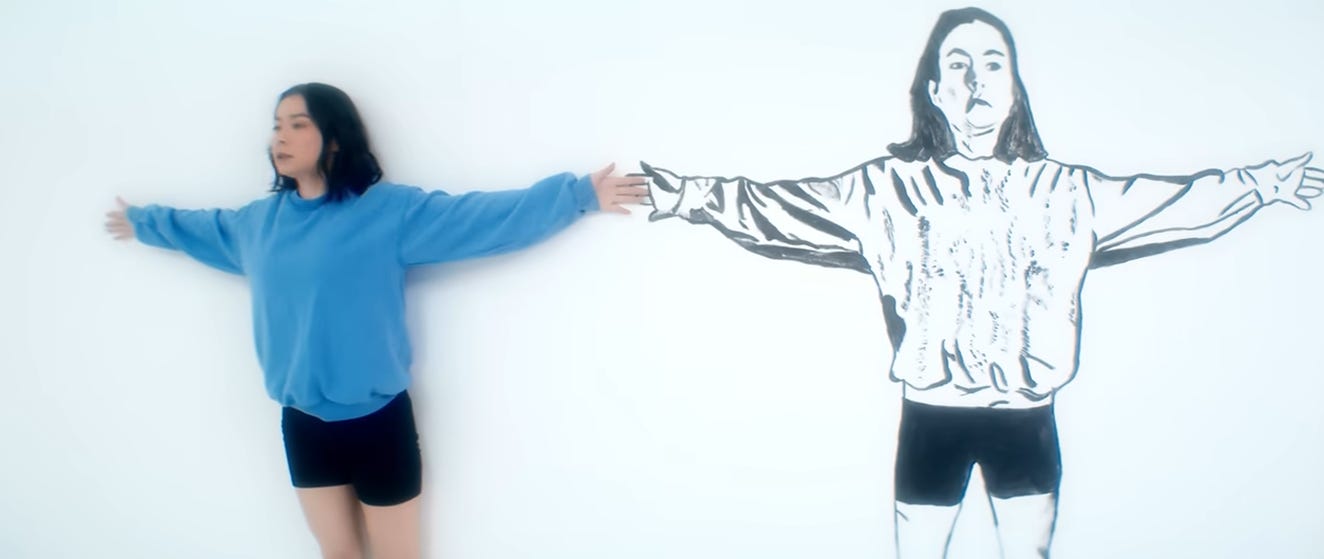
I never would’ve thought to go to a Mitski concert before then, I think, because my experience with her had been so insular. I think of concerts as grand, communal events full of hype and energy. But credit to my ex, because seeing her in person changed something in me: hearing her perform songs I could and have recited half-conscious, barely clinging to the world, incapable of any other thoughts. Watching her move methodically, emotionally charged, watching her sing perfectly lying down (non-singers, this is a feat of breath control!!!!) I realized on another level how much she meant to me.
“I would argue that you are one of the best singers,” Patti Harrison once told Mitski in a conversation for Interview. “And what makes you one of the best singers is that you have this crazy vocal ability, but you have restraint.”
Here’s the thing: feminine emotions get characterized as too much no matter the emotion. No one is telling Bob Dylan, John Coltrane, or Leonard Cohen to stop being such a bummer. Their art is considered grave and somber because they are Serious Artists. And in fact, this kind of Serious Male Artist posturing gets pulled out all the time on the other end of the musical mood spectrum to paint female pop artists as sanguine and shallow.
Yet even among otherwise subversive music spaces, a familiar brand of nightclub nihilism still reigns in the white boy angst pop punk resurgence, to the knockoff trap of Weeknd wannabes, men are just allowed to make women the vessels for their unresolved baggage and call it deep. But when the women turn around and share their own perspective, there is immediate suspicion.
Kelefa Sanneh draws out the issues with this in his legendary essay, “The Rap Against Rockism,” a term he defines thusly:
“A rockist isn’t just someone who loves rock ‘n’ roll, who goes on and on about Bruce Springsteen, who champions ragged-voiced singer-songwriters no one has ever heard of. A rockist is someone who reduces rock ‘n’ roll to a caricature, then uses that caricature as a weapon. Rockism means idolizing the authentic old legend (or underground hero) while mocking the latest pop star; lionizing punk while barely tolerating disco; loving the live show and hating the music video; extolling the growling performer while hating the lip-syncher…critics assail pop stars for not being rock 'n' roll enough, without stopping to wonder why that should be everybody's goal.“
But wait, you might be asking. Isn’t this just a preference? You’re arguing that you should be allowed to like what you like, aren’t fans of rock entitled to that same courtesy? And isn’t Mitski’s art in the mold of these so-called rockists anyway? I’ll get to the second part of that question in a bit, but first, back to Sanneh (emphasis mine):
“Rockism isn’t unrelated to older, more familiar prejudices -- that’s part of why it’s so powerful, and so worth arguing about. The pop star, the disco diva, the lip-syncher, the “awesomely bad” hit maker: could it really be a coincidence that rockist complaints often pit straight white men against the rest of the world? Like the anti-disco backlash of 25 years ago, the current rockist consensus seems to reflect not just an idea of how music should be made but also an idea about who should be making it.”
I quote heavily from this essay partly because it’s good, and partly because since its publication over 20 years ago, it’s struck a chord (pun intended) with so many that have felt their musical tastes poo-pooed for so long. It even popularized terms for a school of critique opposed to rockism: “poptimism” and its sugar-coated gendered genre relatives bubblegum and hyperpop.
In the end, I don’t know why we try to divorce emotion from the evaluation of any music. As AI music proponents fail to understand, the emotion and humanity behind it is the entire fucking point. If a Mitski song is drowning in grief and loss, it’s because she’s worked meticulously to craft it that way and drag it there because that’s what artists do. I’m sorry if food makes you feel full.
Normally, my Substack is centered on disability. Specifically my collection of chronic afflictions—EDS, POTS, PTSD, PMDD, endometriosis, anxiety, depression, Long Covid, etc. etc.—that disproportionately affect people assigned female at birth and/or queer people. These conditions are vastly underresearched; the means of testing and diagnosis remain expensive, extremely difficult to access, or nonexistent, and medical professionals remain very undereducated about them and often characterize them—sometimes behind our backs, sometimes to our faces—as psychosomatic.
All of this despite (glacially) growing research that these things are way more common than previously believed, that they are legitimately debilitating, and that those affected are caught in a crosshairs of doubt by those around them, and a virtually impossible path to support through disability/SSI assistance, which as a feature and not a bug denies even the most flawless applications, let alone those with emerging diagnoses.
Though it can reach problematic levels, I do understand the fervor Mitski’s fans have for her. I haven’t exactly polled them, but my gut says they are largely not attention-seeking narcissists, but merely people who are unheard, underserved, unbelieved. In the dark depths our trauma brings us to, we see someone who sees us and understands us. Someone who can articulate our pain in such overwhelmingly beautiful ways.
That said, it’s important to remember that Mitski is, indeed, a person, and the love can get creepy and dehumanizing. Stop emailing Mitski’s manager, guys. And stop yelling things at her shows!!!!!!! The one I went to was great save for someone, I assume either inebriated or young, relentlessly interrupting the show to screech “I LOVE YOU MITSKI!!!” Involuntarily, I finally groaned “Shut the fuck up!!!”
Thankfully, and this is why I love Philly to death, my voice was drowned out by a theater full of people turning around and saying that exact same thing at the exact same time. Can AI create these moments of pure magic???????
To ease the tension, Mitski addressed the audience and said that she couldn’t even hear anything the audience yelled at her with her earpiece on anyway. Then she moved onto her next song and of course executed it perfectly. We don’t need to talk about how many times I cried that night.
I understand the euphoria of finally feeling heard. I understand that her music lets you into some very personal feelings and may allow you to access some of your own. And I also understand that a portion of her fanbase are young people who don’t yet know any better. But if my words mean anything to you, sad girl to sad girl, the best way to respect someone you love is to respect their boundaries.
If more people did, maybe we wouldn’t be so fuckin sad in the first place.
Despite this knowledge, I know that privately, though I also call her a genius, I’ve also talked about her music as “sad girl music” quite a bit. In fact, my old roommate once read me in such an accurate, devastating way that remains true to this day. They told me that when I was depressed, I’d without fail be blasting Mitski. When I recovered, I’d finally open the door, clean my room, and blast Megan Thee Stallion.
I like to tell this anecdote to people to convey that I contain multitudes, but I admit that this may come at the cost of flattening both of these women’s wide and varied discographies. Megan might be a hot girl life of the party at heart, but she’s made plenty of vulnerable, personal music that reflect the traumatic blows she’s been dealt over the past few years as seen in the likes of “Cobra,” “Ain’t Equal,” “Crying in the Car,” “Plan B,” “Ungrateful,” “Not Nice,” “HISS,” “Worthy,” “Moody Girl,” and “Anxiety.” As she says in the latter song, “Bad bitches have bad days too.”
I don’t think it’s an accident that these women of color get pigeonholed in their artistry. As if being in the music industry weren’t enough of a mindfuck, they have to deal with a world that wants to tell them how they should think and feel and behave, navigating all sorts of impossible rules to command respect as artists and as people. And when these impossible standards push them to a breaking point, they’re woefully underprotected and ignored. As Megan said in “Cobra,”
Every night I cried
I almost died
And nobody close tried to stop me—
Long as everybody gettin paid right
Everything will be okay, right?
I’m winnin, so nobody trippin,
But if I ever fall off, everybody go missin
The critique of Mitski as morose reminds me of a video I once saw of GOAT boxer Claressa Shields, when meeting with prospective advertisers about an endorsement. Mind you, Olympic athletes and particularly female athletes almost never get paid what they’re worth, so she needed this check.
A table of uncomfortable white corporate types talked about how they really wanted her on a campaign. How they were excited to work with her. But…she was a little….aggressive. Could she maybe tone it down?
Again, credit to not rolling her eyes and marching out the door, but she said, “…I’m a boxer.”
At their highest and lowest, we fear emotions because they are construed as feminine and uncontrollable. That effect is exponentially apparent in women of color. The fact of the matter is that bad things happen, and we are allowed to feel bad about it without being pathologized or condescended to. Mitski is some intoxicating blend of medium, soothsayer, priest, enchantress, but most importantly, she isn’t a total pussy about being a human with feelings.
As Sanneh writes, “Rock ‘n’ roll doesn’t rule the world anymore, but lots of writers still act as if it does. The rules, even today, are: concentrate on making albums, not singles; portray yourself as a rebellious individualist, not an industry pro; give listeners the uncomfortable truth, instead of pandering to their tastes. Overnight celebrities, one-hit-wonders and lip-synchers, step aside.”
The impossibility of pleasing the rockists (and their not-so-quiet bigotry) makes itself apparent in its contradictions. When women—especially women of color—don’t conform to these standards, they are quick to pounce. But even when women do meet these standards, the rockists are slow to notice.
Ironically, Mitski almost became a J-Pop act in her youth, and gave it up because she felt like the material she was being given—by her male manager—was shallow and not expressing her authentic self.
“He tried to get me to be like, this, y’know, cute, young girl artist—or, not artist, pop idol—and at a certain point I just turned to him and said, ‘All of these songs you’re giving me are…really bad. I don’t want to sing any of this,’ “ she told an interviewer on WNYU The Sound Between in 2014.
I don’t know how to paint a more exact picture of a “rebellious individualist” who is more interested in albums over singles. She later attended a music conservatory and as her final project came out the gate with a masterpiece, Lush, in 2012. Fourteen years after its debut, I still listen to it constantly. In 2024 I took up learning piano initially because I wanted to learn to play “Liquid Smooth” and “Wife” (and did, you’re welcome, neighbors). The guttural belt at the end of “Pearl Diver” alone (another crazy feat of breath control) has singlehandedly saved me from driving off a cliff more times than I can count.
But it seems that Mitski’s truth is just a little too uncomfortable.
We want women to suffer in silence and be grateful when we look their way. We want women to internalize that their opinions, their pain is not worthy of our sympathy outside of a very narrow, performative lane that is light on the actual feelings part and heavy on the sexualization. Mitski makes people (read: men) confused because they always get confused when confronted with the harsh truth that women’s entire purpose in life isn’t getting men to fuck them.
Take the opening lyrics from “Happy,” the first song off of Puberty 2, sung-spoken with a somewhat detached, not particularly hopeful romantic agnosticism:
Happy came to visit me
He bought cookies on the way;
I poured him tea and he told me
it’ll all be okay;
Well I told him I’d do anything to have him
stay with me.
So he laid me down
And I felt happy come inside of me.
He laid me down and I felt…happy…
You may think these lyrics undermine the point I just made. But I consider this a mournful parody of the roles and aspirations women are expected to fulfill. Being worthy enough for a man to want to fuck you, and perhaps even love you, or half-pretend to, is supposed to make us femmes (or whatever weird in-between gender I occupy on a certain day) happy. It’s supposed to fill us up, to paraphrase from the hook of “Love Me More.”
But anyone who’s had their heart crushed by cruel romance has surely experienced a strange, depressing dissonance when you realize that the love that’s supposed to fix everything does anything but. It’s proven a popular theme recently with the enthusiastic reception of Olivia Rodrigo’s You Seem Pretty Sad For A Girl So In Love.
I can attest that I’ve been deeply, securely in love with someone and still felt like shit most of the time. For me, these lyrics speak to the wide distance between the tiny space that is allotted to women to be people, and the actual amount of space they need to express themselves and act like full people. To be loud and messy and complicated and full of emotions, with nothing tied up in a neat little bow.
I don’t think not liking Mitski alone necessarily makes you a misogynist. I know plenty of women and hardcore feminists who just don’t feel she’s their cup of tea. Her music isn’t and doesn’t have to be for everyone. But perhaps take a minute to reflect as to why you don’t like her music, particularly if you get a strong sense of ick. What are you afraid to feel?
The way Mitski fans (myself included) talk about our love for her reveal a self-aware guardedness about the gendered trappings of musical taste and public vulnerability. We joke about listening to her because we’re sad, we sing her lyrics through tears on the way to inpatient, we occupy the sad girl lane because that’s the space we’re given to publicly articulate our thoughts about her, particularly in Official Music Spaces. The sad girl half-joke is our way of laughing through pain that no one else is listening to.
Back to Sanneh again: “Are you really pondering the phony distinction between ‘great art’ and a ‘guilty pleasure’ when you’re humming along to the radio? In an era when listeners routinely -- and fearlessly -- pick music by putting a 40-gig iPod on shuffle, [THEMMA’S NOTE: again, reader, this essay was published in 2004] surely we have more interesting things to worry about than that someone might be lip-synching on ‘Saturday Night Live’ or that some rappers gild their phooey. Good critics are good listeners, and the problem with rockism is that it gets in the way of listening.”
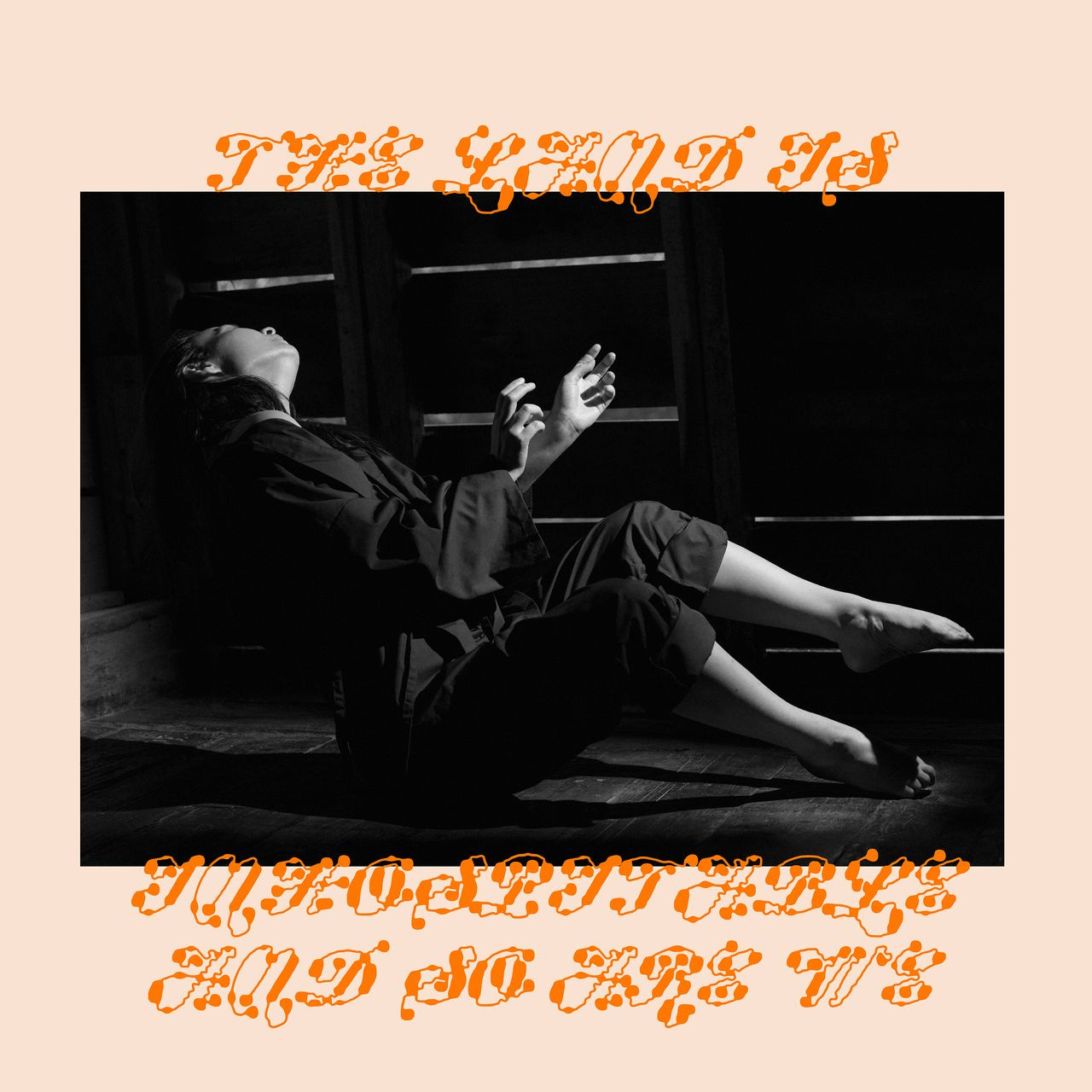
But if you want to take it there, then let’s get technical. Let’s talk about her arrangements here, because her influences are really underrated. She loves the modernist composer Béla Bartók for his melodies, which Thomas Little of Classic Nerd describes as “unusual, but they work.” Without getting too into the theory, he was really into atypical chords, making weird sounds out of instruments, and cataloguing folk music, all of which our beloved chanteuse is also keen to do. Her last two albums particularly, The Land Is Inhospitable And So Are We, and Nothing’s About To Happen To Me, really lean into an Americana folksy sound and imagery; the vibe feels more pastoral.
If you want the folksy/country-ish sound, full of acoustic guitars and orchestral/string sounds that make you feel like you’re standing on a prairie, I’d start with “Bug Like An Angel” or the heartbreaking “Heaven” off of TLIIASAW. That continues through “The Deal” and “I Don’t Like My Mind,” two of my personal favorites of all time/the soundtrack to many a spiral/inspiration for much of my own writing. It gets more rock/country electric guitar sound for “My Love Mine All Mine” and “The Frost,” but in some neat symmetry, we go back to the strings for “Star,” (if you’re going through a breakup or the end of a relationship, get ready to cry again), then back to the prairie country for “I’m Your Man.”
“Buffalo Replaced” and “I Love Me After You” are truest to the pop-punk sound she’s probably best known for from Bury Me At Makeout Lake and her massively popular Puberty 2. These songs are the least traditionally country, yet fit seamlessly with the others, and still somehow make me feel like I’m in a field in a flyover state, looking at a sea of stars unaffected by local light pollution. This may be basic but I also love her use of buffalo as imagery, as quintessential Americana—once thriving and numerous, that which was indigenous to the land eventually forced off and violently “replaced” by the whirring trains.
She’s not the only one who plays with this idea: Lana Del Rey is an inevitable comparison. The queen of summertime sadness herself, she has received her own share of dismissiveness about her less-than-upbeat music and persona woven with her gothic reinterpretation Americana. Though Norman Fucking Rockwell! and Lust for Life have become adopted favorites with her earlier releases, Born to Die and Ultraviolence, her ascent into the mainstream was not exactly smooth.
Of course, I’m referring to her debut performance on SNL, at the time called “the worst performance in history.” When you watch it, one can’t help but think, “THIS was the worst???? Or does a woman being sad and pretty just confuse you too much?”
A reddit user on r/popheads captured the dissonance between online critics and her core audience.
I was so excited when I heard she was booked on SNL. Did I watch it live? I did not. I was probably avoiding homework and scrolling Tumblr, reblogging pictures of girls with light blue hair. However, I have re-re-re-rewatched this performance so many times that I feel I was in the live audience that night. A part of me certainly was.
Picture this: Lana takes the SNL stage. She looks dreamy, in a white mermaid dress with her hair in Hollywood waves. Harry Potter is there. He, as the evening’s host, tells the audience her name. We, as the audience, give a polite little clap. A few of us say that weird “wooooo” that people in crowds emit when they decide clapping just won’t suffice.
[…]
The next day, reporters and schmucks on Twitter had lots to say about the performance. Honestly, they weren’t very nice. Lana was the laughing-stock of the internet. Everything about her performance was slammed. All her critics jeered and felt vindicated - see? Old Hag Lizzy was So Bad. She was literally called the “worst SNL performer in history”. The publication Vulture was particularly rude, mocking Lana’s “timid falsetto” and “lip snarl”. The author, Amanda Dobbins, snarks, “how many moody pirouettes can one woman do over the course of four minutes?”.
Perez Hilton, a man who deserves no introduction, tweeted that “the OVERWHELMING consensus is that Lana was horrible on SNL”.
Gawker published a piece which called Lana “a perpetually pouty Instagrammed pout monster” and claimed she “stunk up the joint”.
This friction is still present and unresolved between music aimed at young women and the larger professional music conversation among mainstream critics and industry professionals. The internet also seems to never tire of the opportunity to dogpile on women for any excuse whatsoever. I refer to this as “folks hiding in the bushes,” by which I mean “people who normally don’t know or could care less about a woman suddenly spring into action to moralize on whatever real or perceived slip-up and act the whole time like it’s a final straw moment.”
(This conversation finally started happening around the anti-Doechii/contrarian backlash that happens every time a female rapper gets big. I first saw it discussed on OlurinattiBITES, but I also recommend these pieces by Kiy and Nova on Substack, in addition to Hit Girls by Nora Princiotti and Bad Fat Black Girls: Notes from a Trap Feminist by Sesali Bowen which discuss this audience-versus-mainstream-criticism disconnect in pop and trap/hip-hop respectively).
As we speak, it’s a discourse being had in the current outrage/debate over Anthony Fantano’s criticism of Halsey and Taylor Swift—though I would argue it’s not an exact parallel. Having watched many of his reviews, I think Fantano’s critique, at least in recent years, (I repeat, in RECENT YEARS) lands from a much more nuanced, informed, and less flippant and reactionary place. In fact, he also defended Doechii when the hate train was happening.
But I understand the distaste for white heterosexual men being the dominant voices in music discourse (especially hip hop) still holds. Ten years ago, those conversations were still taking place every time I sat in a car full of young women and queer people blasting “Blue Jeans” out of rolled-down windows. The girls just have a more public platform for it now than sensationalized clips with shrieking fangirls of yore.
As Del Rey said when asked a few years ago if she’d perform again on SNL,
"I didn’t know if it would be received well," she told People. "But there’s a lot of weirdos out there now, so, we’re fine. We’re in good company."
Still, Lana is an imperfect comparison to Mitski. (A more interesting and fertile one is undoubtedly Björk, but that’s a whole other essay, stay tuned.) While initial perceptions of Del Rey’s persona might have been steeped in sexism, the evolution of her public politics have exposed the cracks. From her tone-deaf statements on some of her musical colleagues, all of whom just happened to be women of color, to antagonizing newer female musicians clearly inspired by her (a very T*ylor S*ift/N*cki M*naj move, gross), to her dating a cop.
In this way, Lana destroys some of her “sad girl” cred, because she can’t have it both ways: you can’t play victim while sympathizing with the oppressor.
It does make a statement when someone who could just be a presentable, respectable pop girl instead engages in open pessimism. It’s bad press for the powers that be when someone rejects the very oppressive system that would otherwise advantage them. Still, it rings different from the privileged position of choosing to do so: it’s why no matter how authentic a Sabrina Carpenter or Taylor Swift type might be, many listeners may never really trust someone who could, in a heartbeat, become an alt-right favorite.
Mitski is clearly someone who thinks about her place in this country from a unique perspective, not only as someone who’s not a white man under this administration, but as someone who herself has physically blitzed through much of it. She moved around a lot—domestically and internationally—both in childhood and as an adult as she started touring.
As she said in an interview in 2016, “I'm supposed to be American, but I'm not really from there. I never grew up there and I've spent my adult life trying to figure out what it means.”
Though she discouraged an overt political reading of “Your Best American Girl,” (or moreso those that insisted it was solely a rallying cry of for first-generation Americans and nothing else) it’s not like feeling unmoored and out of place in America is tied to one identity, again, especially now. I’d argue all but a loud minority of Americans don’t feel that way right now, albeit to varying degrees. I have nothing against an explicit protest song, but I also find it incredible when artists manage to convey a similar sense of tension or expression without it spelled out. It not only lets more people in, but it gives the listener the same sense of community or connection without having to hear “Trump” for the 96th time today.
Camonghne Felix said it best in Let The Poets Govern:
“The poem is always political, even when it is concerned with the abstract and the ineffable,” she writes. “I can write a poem about the transmutation of water into wine, and still the question of whose water, and whose wine will remain.”
Perhaps this is why, despite her lack of explicit political statements, her work still lands as genuine to listeners who have been politicized. I remember an early exposure to her music via a parody filmed by a transbian in her bedroom, with a lesbian flag hung from the wall. It was titled “how to make a mitski song,” and lovingly nailed down her most recurrent themes and motifs like the happy-sounding sad songs (having to grin and bear your way through the horrors of each day) and lyrics about just wanting a kiss (desiring intimacy). The original video has since been lost to time, but I did see that Mitski responded something like “great, you got it down, now you can take over.”
And even when she is more direct, she doesn’t make the mistake that Del Rey seems to have made, which is to make bold statements about American iconography, only to backtrack later and feign the message as apolitical. Over the years, the Born To Die singer has failed to resolve these contradictions, and in fact only seems to get more lost in them. As she told Billboard in 2021,
“The madness of Trump, as bad as it was, it really needed to happen. We really needed a reflection of our world’s greatest problem, which is not climate change, but sociopathy and narcissism. Especially in America. It’s going to kill the world. It’s not capitalism, it’s narcissism. I was surprised we didn’t have a live-television psychopath crazy person as a president a long time ago because that’s what we see on TV and that’s what we see on Instagram.”
Again, the internet loves to pounce on people, especially women, for not articulating a particular thought perfectly. Through an optimistic reading, it seems like she’s trying to reach across the aisle, to move certain issues less through buzzwords, and more through what she believes are less charged terms for these maladies: “sociopathy” and “narcissism.”
It’s an omen to the “it’s not x, but y” false parallel empty takes characteristic of LLM slop. This is what I mean when I say you can’t have it both ways: you must grapple with the fact that it is capitalism, it is climate change, and narcissism. And we should be specific about terms we use because a label like “narcissist” is only going to be used against art like ours. She was the one they used to call “a perpetually pouty Instagrammed pout monster.”
In her 2012 video for “Ride,” she narrated the quiet part out loud: “I believe in the country America used to be.” Del Rey wants to believe that she’s past this, but you can hear that she’s not in her reaction to to criticism of her Chem Trails Over The Country Club artwork. It’s very her: it has the flavor of being subversive, while critically missing the point.
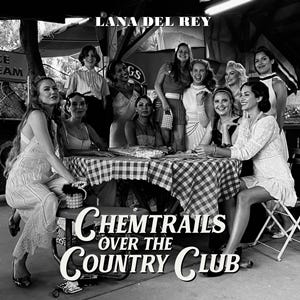
If you’re gonna have a punch in the gut like juxtaposing two forms of longtime colonial violence, that she herself is far removed from, it rings hollow to follow that up with a cover image of essentially the brat round table in black and white. It’s a way to invoke tragedies like those seen by those that imperial forces couldn’t give less of a shit about harming. Poor queer people arriving in San Francisco in the 1950s, the countless Vietnamese civilians ravaged by Agent Orange, the mass airborne and herbicide poisonings and chemical warfare and torture covered up by the CIA, the permanent damage to the people and land of Hiroshima and Nagasaki. That’s really what the country used to be and still is. But instead of talking about any of that, even in interviews, she followed up with a classic “I have Black friends” defense:
“These are my friends this is my life. We are all a beautiful mix of everything- some more than others which is visible and celebrated in everything I do,” she wrote. “In 11 years working I have always been extremely inclusive without even trying to. My best friends are rappers my boyfriends have been rappers. My dearest friends have been from all over the place, so before you make comments again about a WOC/POC issue, I’m not the one storming the capital, I’m literally changing the world by putting my life and thoughts and love out there on the table 24 seven. Respect it.”
In contrast, listen to how Mitski described the inspiration behind Be The Cowboy to Trevor Noah on The Daily Show,
“I don’t mean like, the working cowboy of today. I literally mean the cowboy myth. Like the Marlboro commercial cowboy, where there’s a white man leaning on a fence and squinting. Or Clint Eastwood riding into town, like that kind of cowboy. There’s such an arrogance and a freedom to it, that is so appealing to me,” here her expression changes slightly. “Because I am an Asian woman, and I think…I walk into a room and feel like have to apologize for existing.”
There are similarities in the theme of these two statements, but subtle differences that matter greatly. Not only that one is by a white woman and one is not: Mitski explicitly speaks of Americana as propaganda and myth-making. She speaks about race from a lived experience rather than a seeming convenience. She uses language like arrogance, which suggests aggressive masculine privilege more sharply than narcissism, more of a dog whistle that can be interpreted either way.
She’s also just more careful and thoughtful in her language so as not to use words like “live-television psychopath crazy person,” a messy ableist phrasing that someone with a team behind her surely could’ve coached Del Rey out of. This non-committal all-over-the-place-ness feels like she’s just trying something on. Mitski’s measured intentionality, on the other hand, conveys more of a genuine respect for anti-imperialist thought.
“I think the cowboy, the idea of the cowboy,” she adds, “is so American. The idea of a man riding into town and wrecking shit, and walking out like he’s the hero.”
“In A Lake,” which starts off Nothing’s About To Happen To Me, continues this idea (to me, anyway). Mitski draws on a long American tradition of juxtaposing small towns and big cities. From Springsteen to Chappell Roan to Invisible Man to To Wong Foo, the real and perceived cultural battles on either side of this divide are always shifting yet assumed to have been always that way. Small-town life is painted as where real Americans live, where people are sensible yet humble and hardworking, and what others find parochial, the locals simply deem honest. Their world is ruled by a sense of comfortable rootedness.
City life comes back with a fire: What do you mean, by real Americans??? Why are you entitled to the American Dream, and we must be grateful to be castoffs? Sure, there’s stacks of money here but the reality is that most of us are broke, desperately trying to make it, bred tough, exposed to rich cultural variety, and your small-mindedness keeps you from realizing we’re more alike than you realize.
We can’t do a deep dive into Miss Mitski Miyawaki without talking about one of her biggest influences: Hayao Miyazaki and Studio Ghibli. She’s revealed how much his films have meant to her in many an interview: about her early repeat viewings of Princess Mononoke on VHS, her opinions on the Nausicaä comics versus the movie, how she fancies herself the heroic princess warrior protagonists—a San or Nausicaä type—but feels that realistically, her reticence and firm personal boundaries would cast her more as a No-Face type.
“I don’t know why, but I’m just obsessed with concepts of lost worlds,” she told Dazed. “I love Castle In The Sky because I love even just the idea of a floating island up there, that’s just deserted and has a history that we don’t know about.”
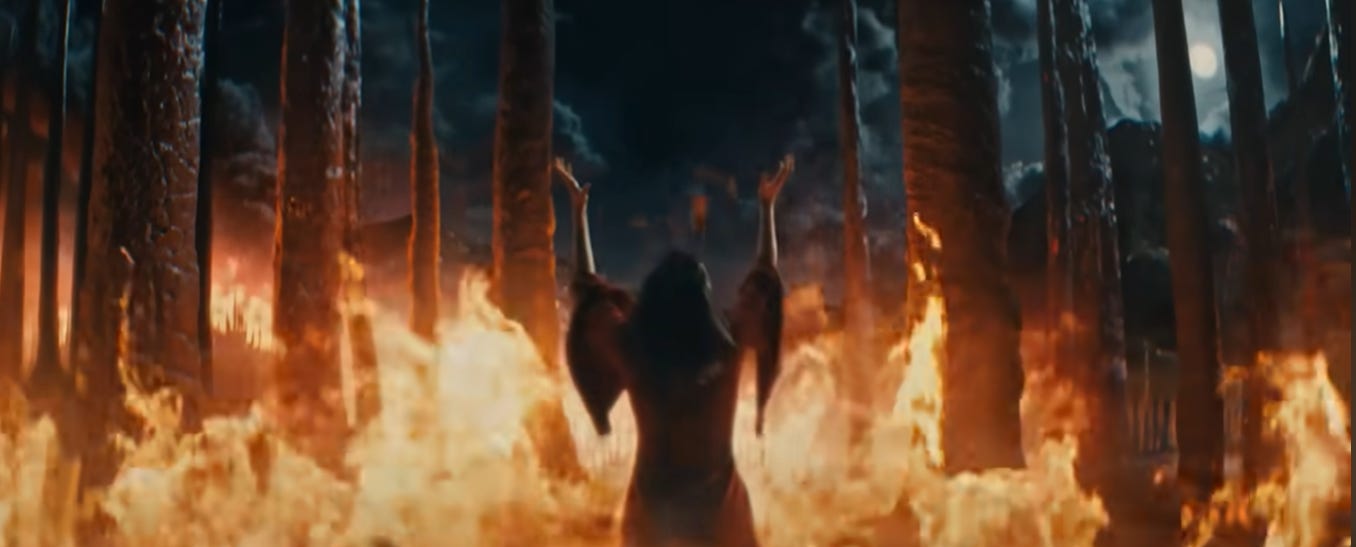
You might see this gothic curiosity in the playful magical realist aesthetics of “Nobody,” which are colorful and bright but increasingly frenzied and surreal:
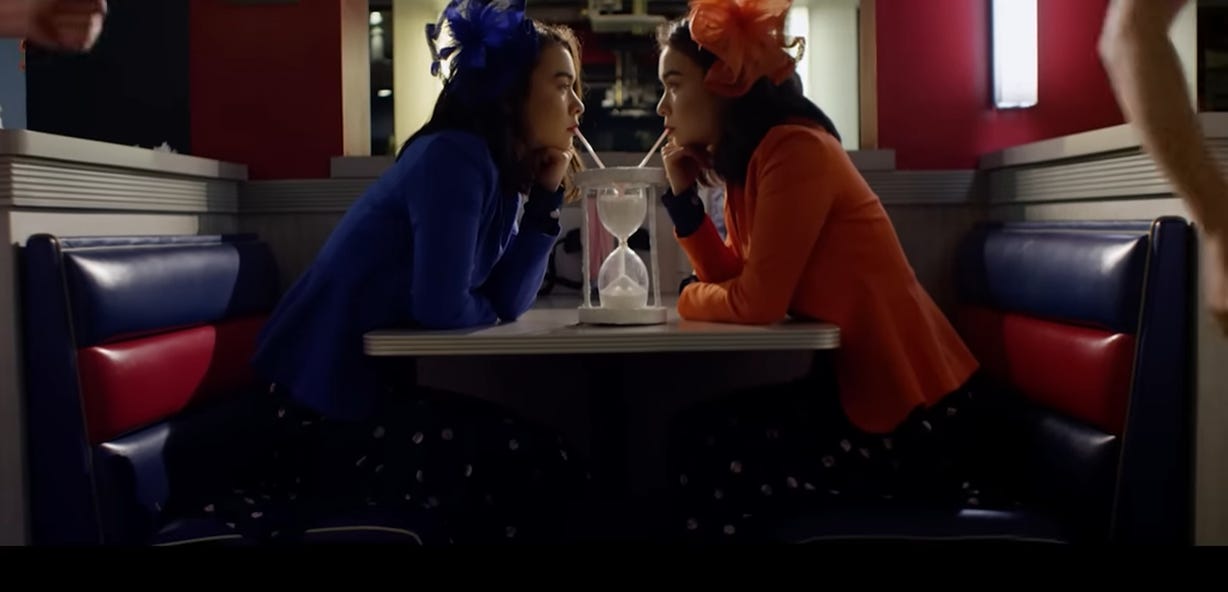
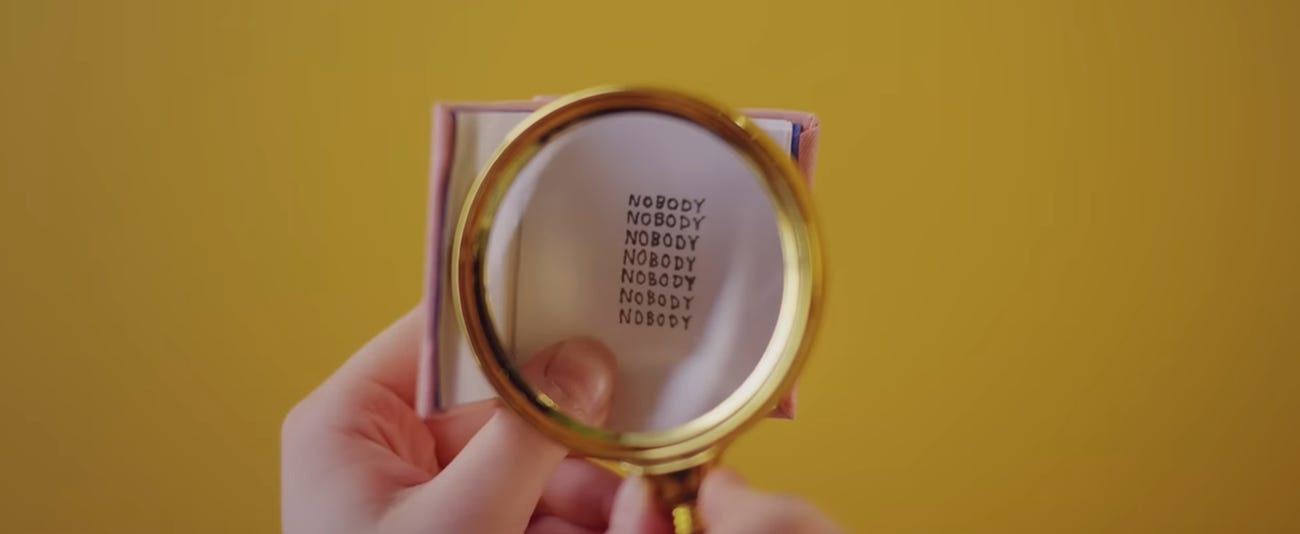
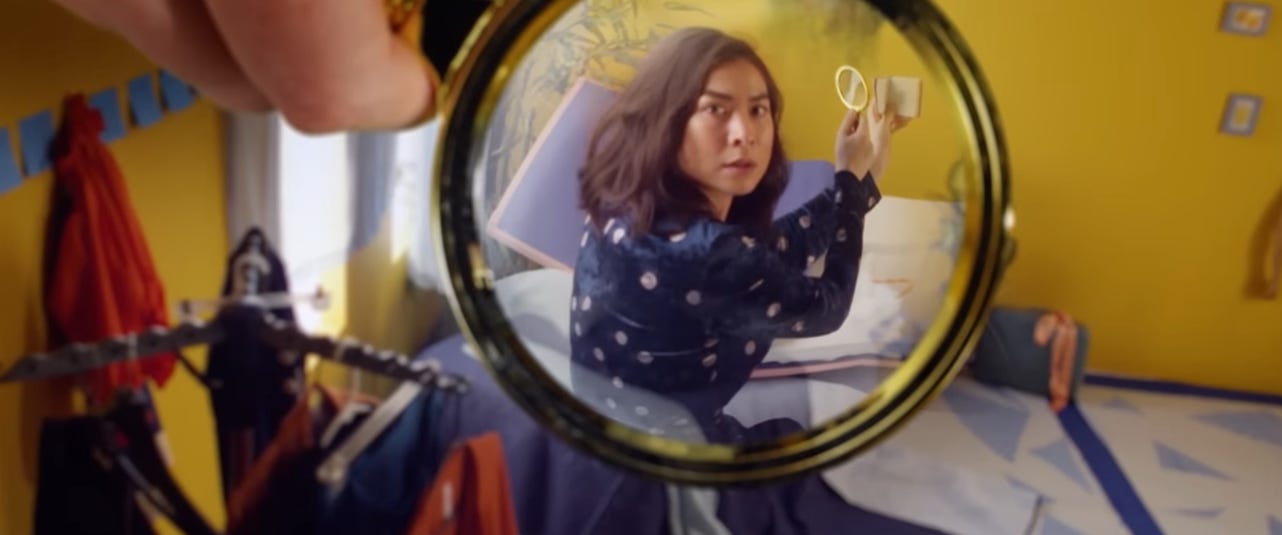
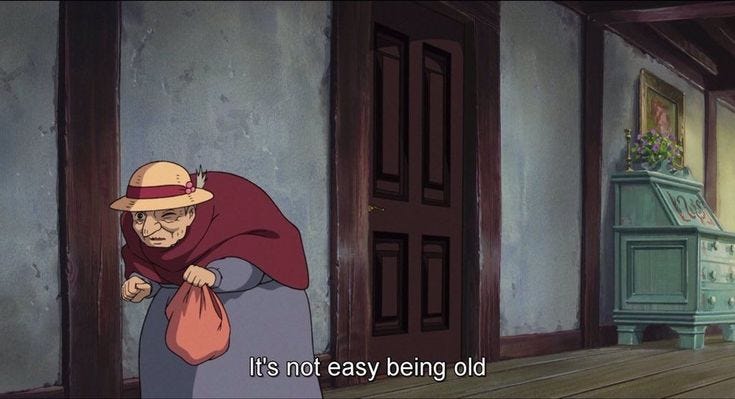
Another example: both the “Bug Like An Angel” video and Miyazaki’s Howl’s Moving Castle can teach you:
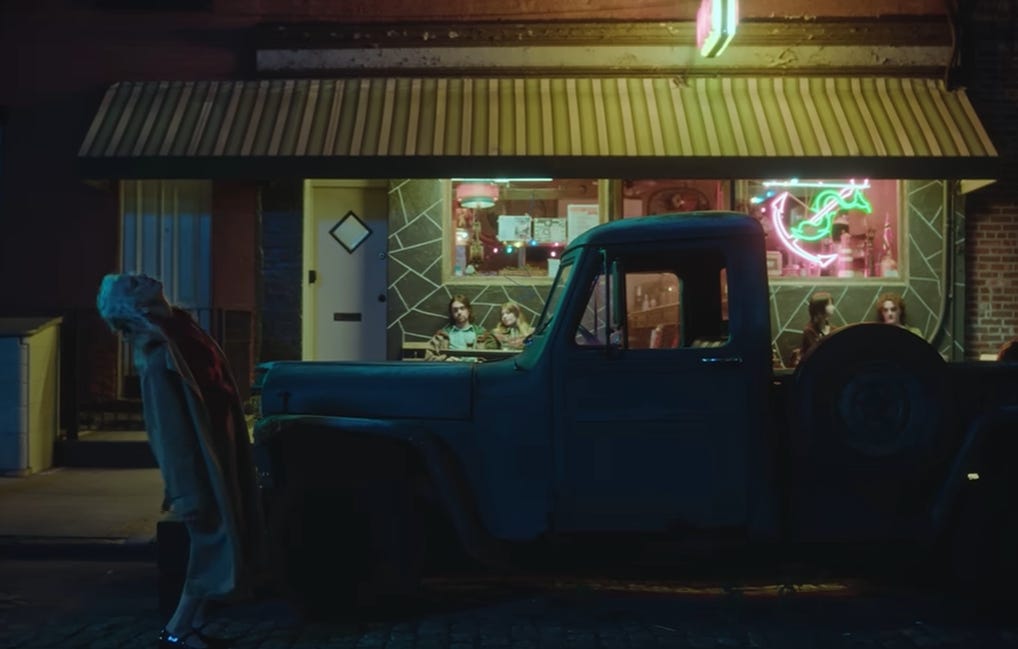
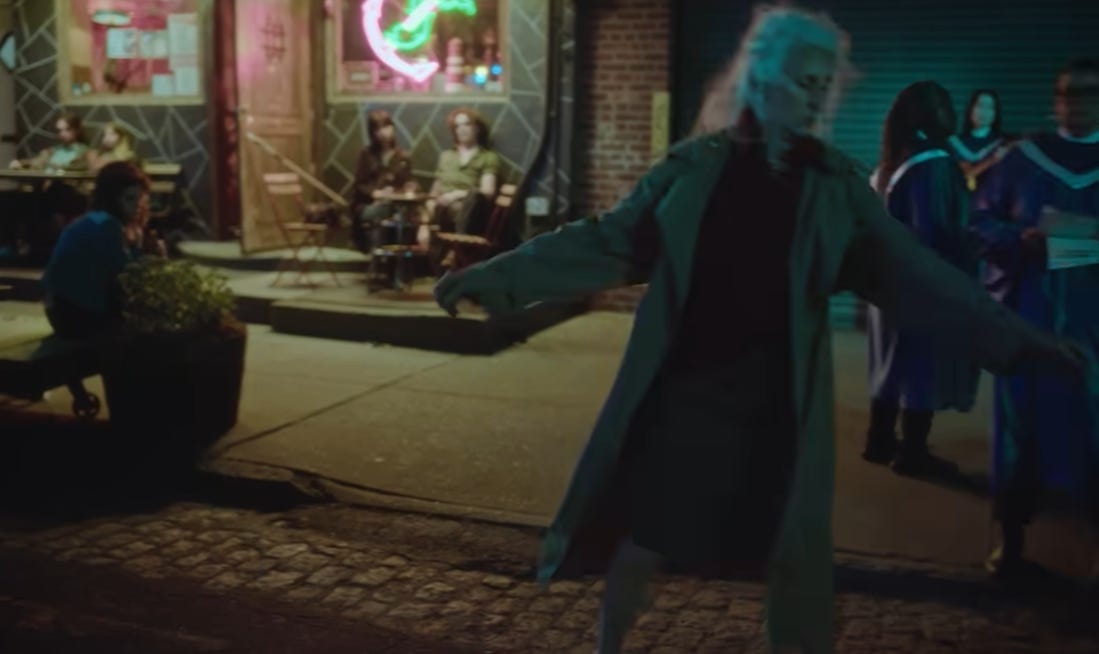
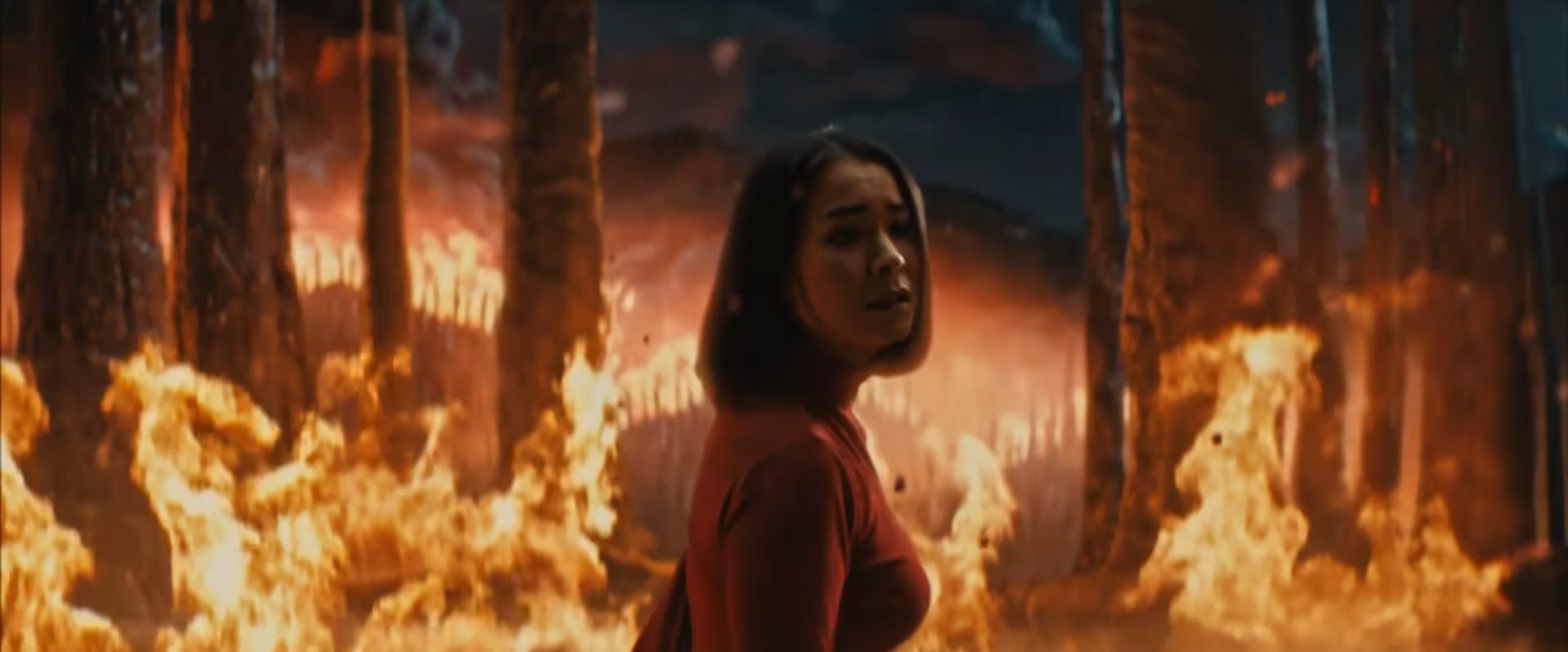
For peak weird gothic forgotten world aesthetic, I highly recommend the video “Stay Soft.” Its existence somehow escaped me until I was done writing this but it’s so good?????
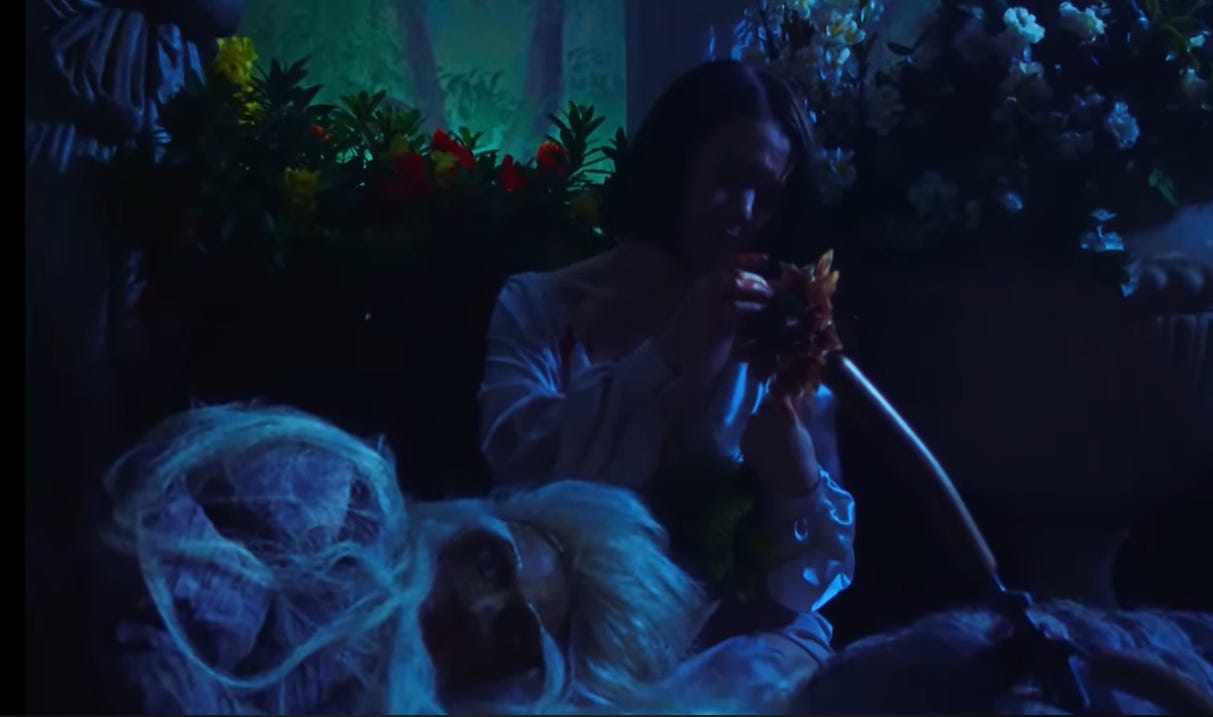
But you don’t even need to look for it in the visuals alone. I feel the similarities most in a certain shared ethos evident in how Miyazaki and Mitski each talk about their art, and the art itself.
They both possess a rare ability to bear a certain lightness against the darknesses of reality, a commitment to artistry, an insistence on dreaming, a deep love of nature. Their pride and yet complicated feelings about Japanese identity and culture. (Side note: I highly recommend her choreographer Jas Lin’s breakdown of Mitski’s Butoh-inspired movements onstage. I won't cover it here because this essay is long enough and I can’t do it the same justice anyway.) A certain “less is more” quality without sacrificing the core message. Ghibli has a style of artful intentionality in every detail. So it’s sort of, in a way, simple on its head but richer the deeper you go.
She discussed on The Daily Show a common problem with women in art (and poetry more broadly), the perception that her art is an unfettered diary entry, and not a highly crafted, skilled, labor-intensive process. But the proof is always in the pudding with these things:
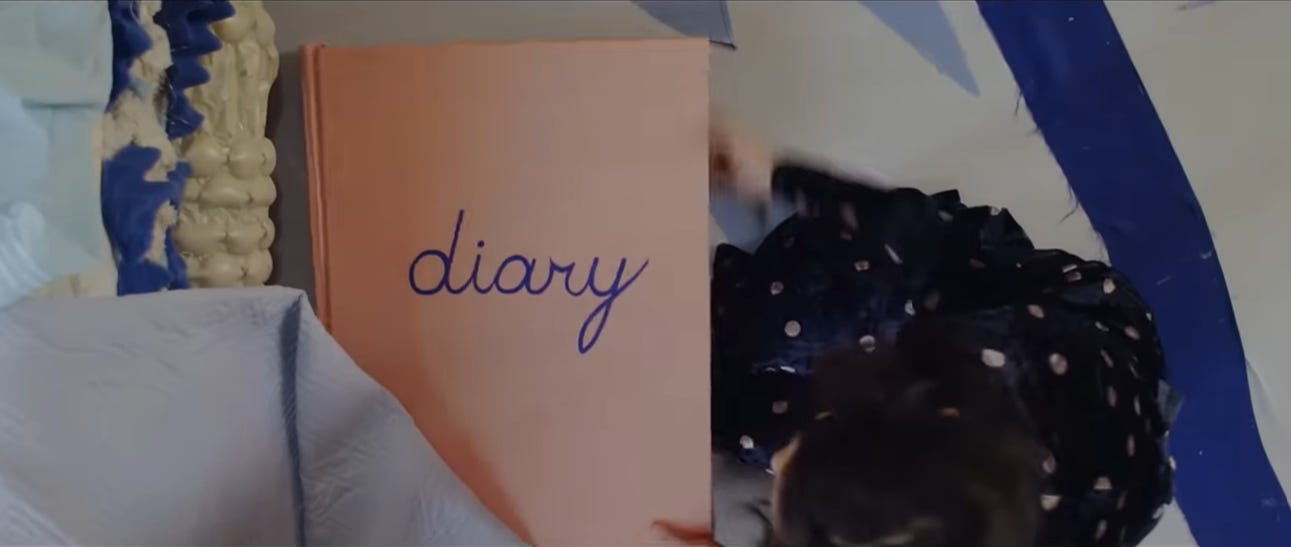
“Music is my closest relationship,” she said. “It’s been my only friend sometimes, growing up, cause I grew up moving around.”
As a fellow poet, I love her lyrics for their evocative precision. She has a gift for quotidian synecdoche that grounds the giant feelings in an undeniable realism. The desperation for something lost by smoking to remind oneself of a former lover; the sleepless nights of longing in “Francis Forever”; the post-breakup identity crisis of “Wife”; the “sipping on the rest of the coffee you left” in “Heaven.” I feel like I know exactly the kind of relationship she talks about in “Last Words of A Shooting Star”
You wouldn’t leave til we loved in the morning,
You learned from movies how love ought to be;
And you say you love me and look in my eyes
But I know, through mine, you were looking at yours
She is not always talking about romantic love (again, an artistic move much more readily afforded to men); plenty of her music is about her relationship with music. She’s got enough depth and ability to discuss all different kinds of love and relationships. Her recent work features my favorite lyrics about cats by anyone, ever. On “Buffalo Replaced,” there is a stunning, concise accuracy:
I have a hope, and though she’s blind with no name,
she shits where she’s supposed to, feeds herself while I’m away;
sometimes I think it would be easier without her,
but I know, nothing can hurt me when I see her sleeping face
Having waxed lovingly about my own cat, SHE GETS ME. I was eager to see her double down with a cat as the cover of Nothing’s About To Happen To Me. Notably, it’s one of only two albums in her entire discography to not show her face. Charlixcx’s hyper-minimalist brat cover was an excellent commentary on the complicated feelings one may have, especially as a woman, about self-portraiture on album covers.
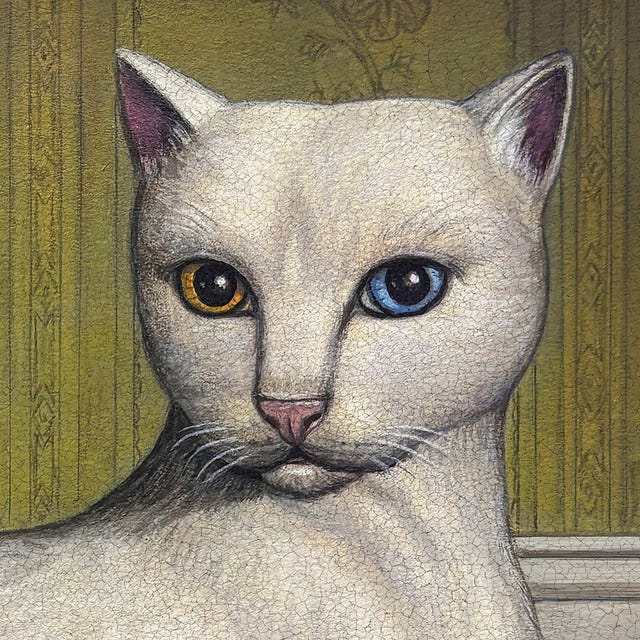
Mitski’s dichromatic, Byzantine-painting-style cat is an interesting way to continue this conversation. Cats are thought of as cold narcissists, but most of the time they’re really just very explicit and firm about their boundaries. Perhaps their commanding insistence is another way for Mitski to explore the freedoms she coveted with her cowboy persona. It sure does seem that way in the lyrics to “That White Cat,” a color choice that does not appear to be any accident:
The white neighborhood cat marking my house
It's supposed to be my house
But I guess, according to cats, now it's his house
You can read it as a colonial critique, but it’s also a tongue-in-cheek embrace of the lovable ridiculousness of cats. They are absolute divas, but worthy life companions nonetheless. At the end of the day, as she writes in “Cats,” no matter who else leaves her, there’s still going to be two cats by her side, making sure she’s alright.
She draws from other artists who have been perceived as weird, enigmatic, moody, who insist on making bold, original art in a different way. Besides Miyazaki, she cites Ringo Sheena, Jeff Buckley, and even the 60’s-era Czechoslovakian surrealist film Daisies as major inspiration. When asked which three of her idols she’d like to brunch with, she said Björk, Iggy Pop, and Lassie. Like them, she’s not afraid of her own uniqueness; she’s not afraid to take risks.
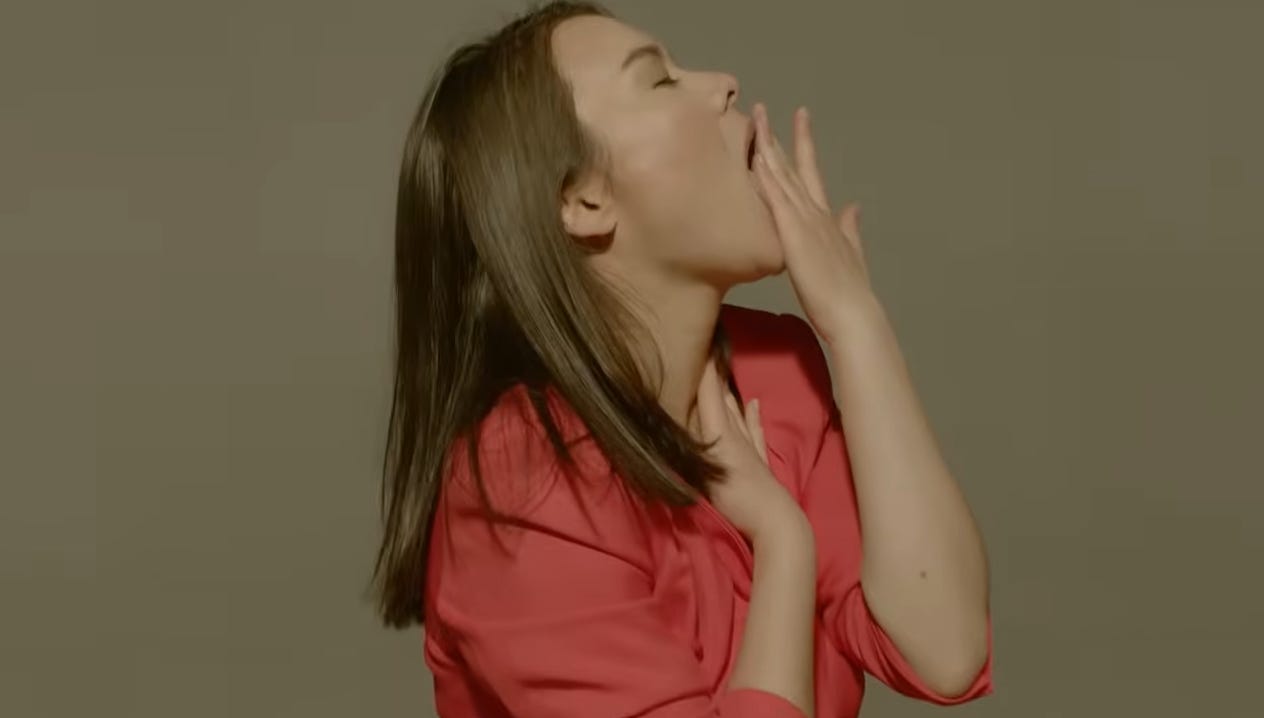
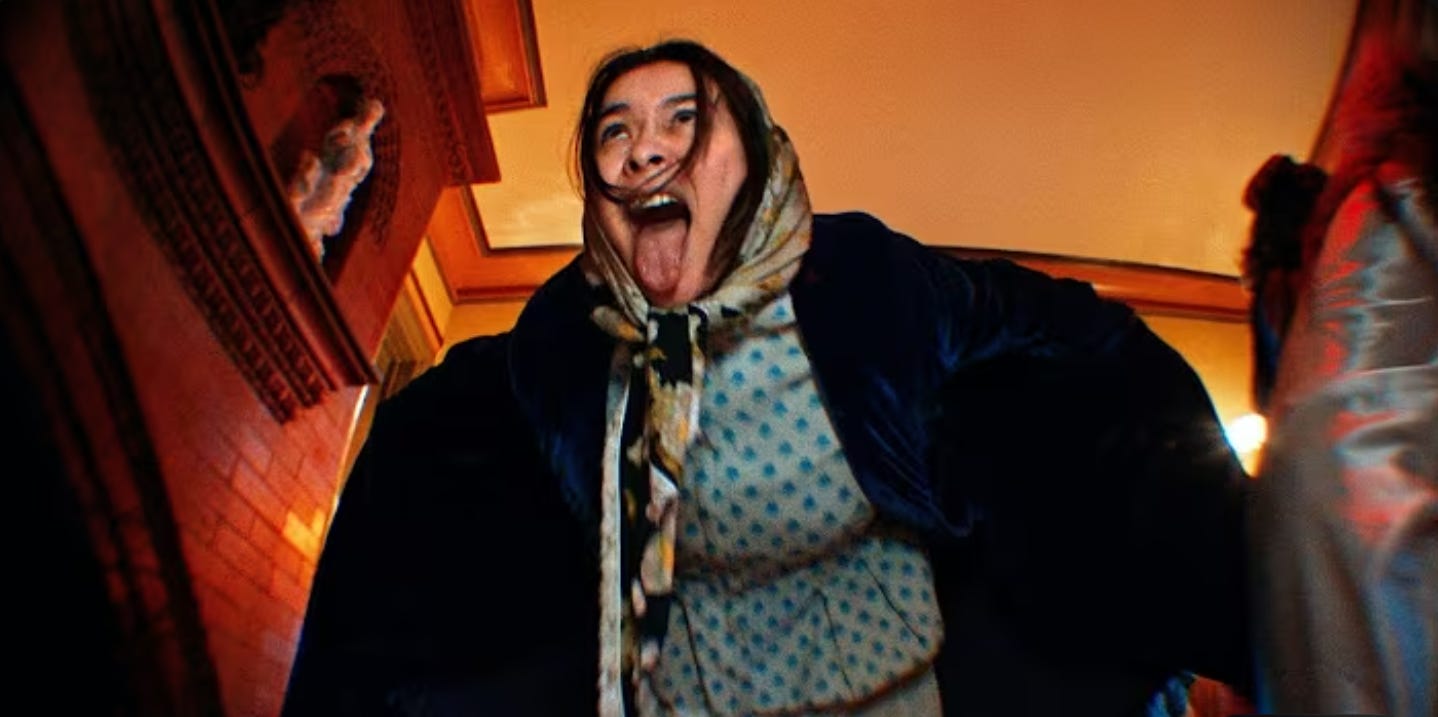
She’ll roll around on the ground in the “Geyser” video, a song which itself is notorious for a loud, off-kilter glitch sound that also somehow sounds so right there. She’ll be dressed as a haggard old woman losing her mind over a pretty ingenue (in a house that oddly reminds me of the one in Björk’s singular movie role to date, Dancing In The Dark—anyone else?) for “Where’s My Phone” and spin herself dizzy and delusional for the live performance.
A quick footnote to “Geyser” I can’t help but include: Patrick Hyland, Mitski’s longtime collaborator and himself a fascinating innovator is behind the glitch, which it seems struck everyone, including Mitski, a little sideways at first.
“But then,” she said in an interview, “I was like ‘fuck it, it’s cool, it’s fun.’ Evan from the label, when he first heard it, he was like “is this glitch intentional?” and Patrick responded via email saying ‘you are experiencing the art.’ “
I love artists who are aggressively weird and poppy like Peaches and Lady Gaga and Chappell Roan. But that’s not everyone’s lane: particularly, it seems, for women of color. Mitski is part of a lineage of women who don’t—or don’t have the luxury—of caring about being perceived as esoteric and unreadable: your Solanges, your Ringo Sheenas, and of course, your Björks.
Part of me hesitates to make this comparison because I think of Prince chafing at all the times he was compared to Michael Jackson. The implication of his distaste being: “Yeah, I get it, we both have melanin and make soul-inspired music. We’re both popular now. Can we move on?” Still, even Black critics like Touré and Questlove have pointed out that there are germane comparisons to be made.
I think the most prominent overlap in both comparisons, besides a crossover of influences, is an insistence on challenge. Of oneself as an artist; of genre, of art itself, of those in power, of the listener, of musical convention. A commitment to fearlessness. That’s what makes great, timeless and timely art. That’s what makes true progress, even in terrifying times.
I’m of course lightly paraphrasing that famous Nina Simone quote. “I’ll tell you what freedom is to me,” she told an interviewer in 1968. “No fear.”
Mitski has only gotten even sharper as both she and I have aged: her bitter truths have become more and more my own. Each album blends seamlessly together. Every time I hear a new one, (I first hopped aboard the train around the Be The Cowboy era) it seems to make so much sense that I can’t believe her catalog existed without it. That is a fucking feat all on its own. That’s not something just anyone can do.
I first listened to her newest album, Nothing’s About To Happen To Me, in an extremely “me” kind of way: talking myself down from a panic attack, on the way to something I was late to.
Specifically, it was the very first poetry reading I’d ever been to. I was taking a leap of faith, some scary and uncomfortable risks with my own art. I’d landed in this mess, it felt, sort of by accident. Someone posted on Lex about a poetry night for trans poets, and I sent them a poem of mine that I’d written in a sea of loneliness and grief. It should be noted that I wasn’t listening to Mitski that particular night, because as People Who Have Seen Some Shit understand, there are so many different shades of sadness. It’s a shame that we’re somewhat limited when articulating that via prose: how many different words, and how many of them annoyingly imprecise, do we even have for different types of grief? Music, however, has an entire galaxy of lives and souls and sounds and subtleties.
The night I wrote my poem, Billie Holiday and I were mourning in solidarity. But unlike her legendary crooning, the way it soothed me without placating me, the way it made such big emotions feel familiar and intimate, I figured my writing amateurish and morose. I didn’t think I’d actually hear back about it. That might come off as false modesty, but I assure you, the doubts really do run that deep. But nonetheless, I was invited to read at a tiny bookshop in Brooklyn. That news, like much confessional art, was a bittersweet development. The opportunity was technically reachable, but not without significant financial and physical strain. To take myself and my art seriously, I had to be the cowboy.
When a new Mitski album drops, I wait for just the right moment to listen. That moment was on my fourth train ride that evening, when I finally was on the right one, but due to be a good half-hour past the starting point of the reading. I’d been putting out fires the whole day, trying to be there on time. I stared up at the cold metal ceiling while I sat there thinking terrible things about myself. I tried to push down the panic attack I felt coming on. Then I realized—now was the moment. I took a deep breath through my mask, threw on my headphones, and let the bittersweet accordion on “In A Lake” hold my hand through the moment.
Thankfully, the organizer understood, and still let me read. What followed was one of the most cathartic experiences of my life. I’d come in shaken, shameful, and feeling stuck. But as I read those poems—ones I hadn’t shown anyone else, self-conscious that they were alarmingly or depressingly dark. But I didn’t have to tame my terrible frame of mind to get through it: for once, the pain was actually incredibly useful. Beautiful, even. My voice quivered with anxiety and pain. I choked up several times reading poems about my divorce, my body falling apart, and the way that art, for better and worse, that demands everything of us and more. Maybe the real diva is art itself.
A bunch of people came up to me after to share how they resonated. “I just went through a breakup,” one confided, “and I really felt a lot of what you were talking about.” A few others told me how they’d also been struggling with chronic illness and felt seen. It felt so surreal. I felt so grateful, so overwhelmed, my body was buzzing.
While I’ve taken up more open mics and public readings and loved it, Murphy’s Law seems to hound them all. The reasons, frankly, are boring: last minute ride cancellations, sudden overdrafting, interpersonal hostilities, reading a sign too quickly, getting held up because someone else is taking too long but it’s also for some valid reason, stairs in every single building I occupy, and the Third-Reich-style overzealousness of the Philly Parking Authority. Or just the goddamned reality of being queer, poor, and disabled.
I think of another famous Nina Simone quote and a personally adopted motto: “An artist’s duty, as far as I’m concerned, is to reflect the times.”
While still possessing certain privileges, life during the times of Mitski…I mean, look at the fucking world.
I’m just saying, sad girl really could be over if sad girl were given a reason to be over. If sad girl were given the material conditions to thrive.
The lyrics (which appear here condensed) to one of my top played songs, “My Body’s Made of Crushed Little Stars” have been true for the past eight years since I’ve heard it. Technically, they’ve always been true:
“I’m not doing anything
My body’s made of crushed little stars
I wanna see the whole world
I don’t know how I’m gonna pay rent
I wanna see the whole world
Kill me, Jerusalem
Come find me
I better ace that interview
I should tell them that I’m not afraid to die
Uh
I work better under a deadline
I pick an age when I’m gonna disappear
Until then, I can try again
Go and kill me.”
No posts
Comments
Nothing yet. Say the first thing.
Sign in to join the conversation.