
Hey,
Last week I opened Composer — Klaviyo's brand-new AI campaign builder — inside a live account and typed one sentence: build me a win-back campaign for customers who haven't bought in 90 days.
Then I just... watched it work. It pulled the brand's context. Loaded their visuals. Scanned their past subject lines. Read the catalog. A couple of minutes later it handed me a finished draft — subject line, preview text, layout, audience, the lot.
Here's the honest part: it was good. It was also completely forgettable.
The copy wasn't wrong. It just sounded like the default version of every brand — the email you'd get if a very fast intern guessed what a promo should look like. Laryssa Wirstiuk at Joy Joya ran her own test (a Fourth of July sale) and nailed the verdict: "Composer can be accurate and still be generic."
That tension — genuinely useful in some places, genuinely half-baked in others — is the entire story of Composer right now. It hit public beta on June 30, it's free on every Klaviyo account for 90 days, and it's going to show up in your account whether you asked for it or not.
So let me save you the trial and error. Here's what it's actually good at, where it falls apart, and the one thing that decides which of those you get.
Before you hand an AI the keys to your account — is your Klaviyo setup even ready for it? Composer's output is only as sharp as the flows, segments, and brand voice underneath it. We'll audit yours and tell you exactly what's holding it back.
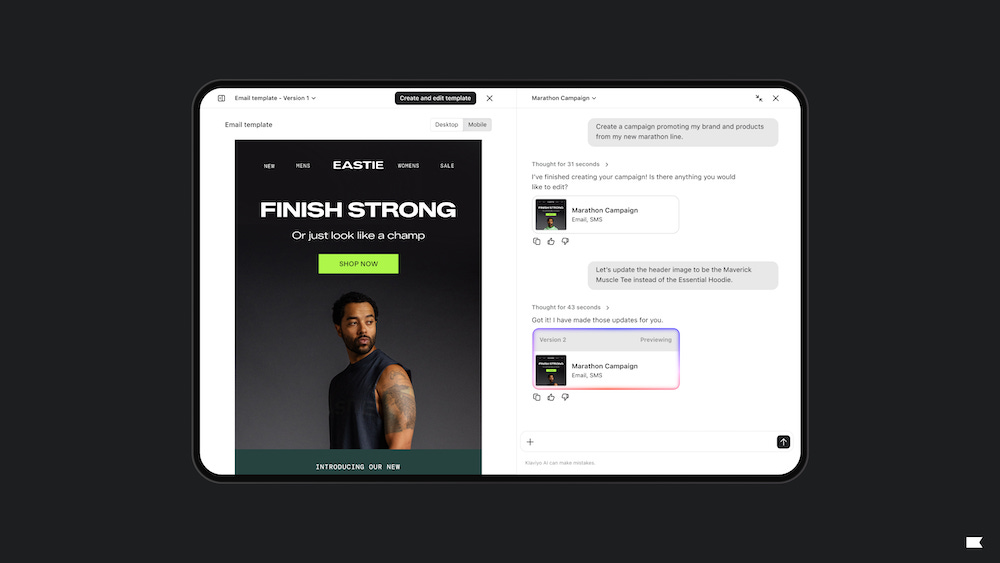
Composer is Klaviyo's AI marketing agent, now baked into every account. You describe a campaign in plain English — "a summer sale for lapsed customers, email and SMS" — and it drafts the subject line, preview text, and full copy, proposes an audience, and recommends a send time based on your account's real performance history.
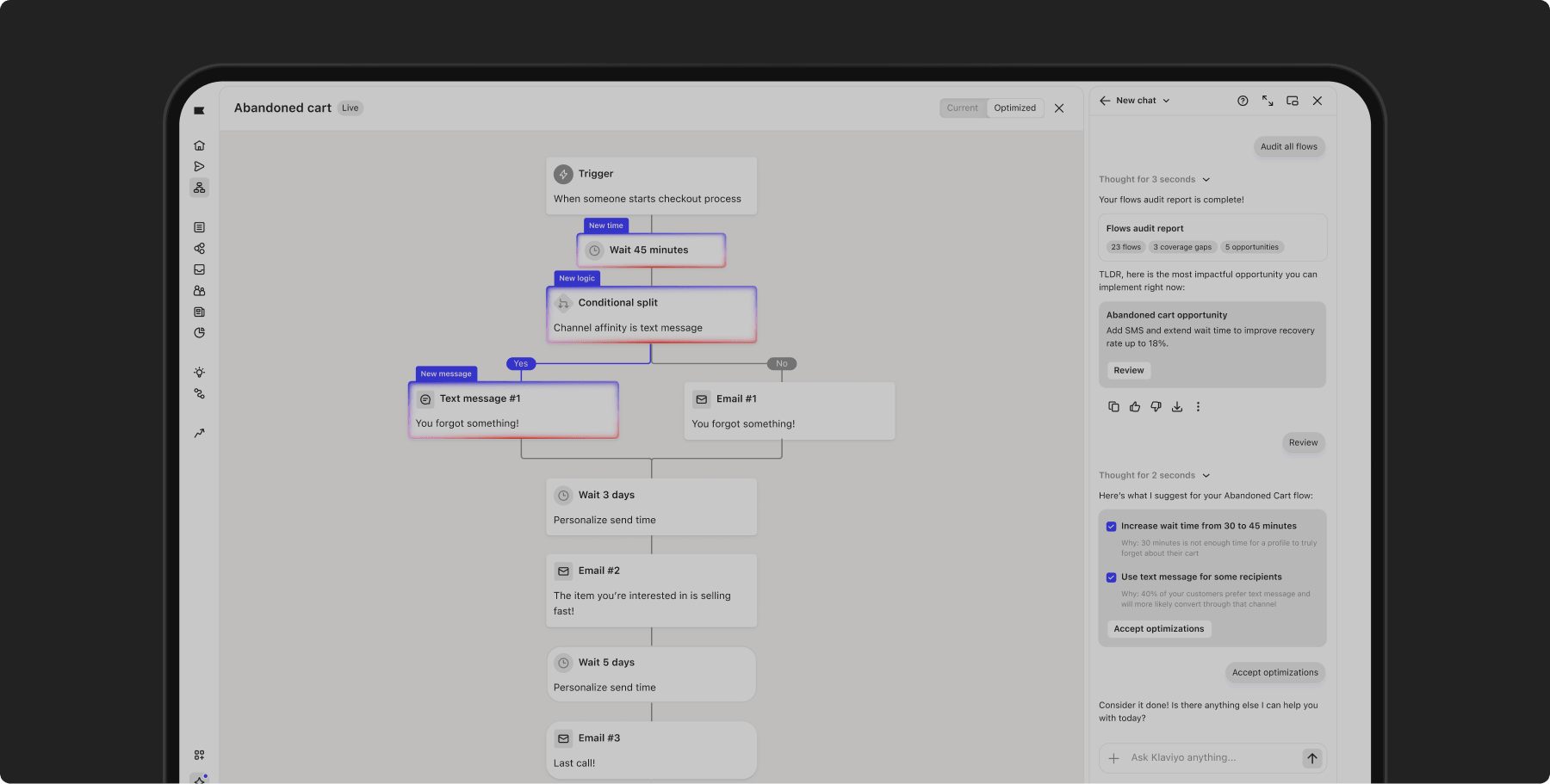
It also works in reverse. Point it at an existing flow, segment, or campaign and it audits it, then hands you a ranked list of revenue opportunities — the abandoned-cart flow that's underperforming, the welcome journey leaking subscribers, the high-value segment nobody's mailing.
Everything lands as a draft inside Klaviyo's normal drag-and-drop editor. Fully editable. And there's no "send as-is" button — Klaviyo says it flat out in their own FAQ: "Never — you're always in control." Every draft needs a human to approve it before it goes anywhere.
One thing to clear up, since I covered Klaviyo's other AI agent a few months back: this is not the K:AI Marketing Agent. That one's the onboarding tool — paste your URL, it stands up a whole starter email program from scratch. Composer is the day-to-day co-pilot that lives inside your existing account and works one task at a time. The Marketing Agent is the thing that got you started; Composer is the thing you'll actually open every week.
Here's the part most of the launch coverage skipped: what it actually costs you.
Every Klaviyo account — even free plans — gets 10,000 Composer credits, free for 90 days, no credit card (Klaviyo's own credit breakdown). Sounds generous. Then you look at the price of things:
Generating a full campaign: 100-850 credits
Auditing a full campaign: 140-700 credits
Auditing a flow, form, or template: 5-180 credits
Auditing a segment: 4-85 credits
Do that math and 10,000 credits is somewhere between a dozen and a hundred campaign generations — fewer once you stack audits on top. After the trial, the cheapest paid tier is $14/month for 2,000 credits. This is not unlimited AI forever. Budget for it.
On speed: Klaviyo says campaigns "that once took days can now be generated in minutes." Their own Reddit account got more specific — a 90-day win-back across email and SMS, "ready to send in under 30 minutes." I'd treat those as the ceiling, not the average. There are no independent ROI benchmarks yet — Composer is weeks old — so every performance number floating around right now is Klaviyo's own.
Their pitch for why it beats ChatGPT is fair, at least on paper: "The problem with using ChatGPT to build campaigns isn't the copy. It's that ChatGPT doesn't know your segments, your catalog, or what's actually converted for your customers." Composer, they say, is grounded in 14+ years of data across roughly 196,000 Klaviyo customers. True in theory. Whether it holds up on your account is a different question — which brings me to the people who actually tested it.
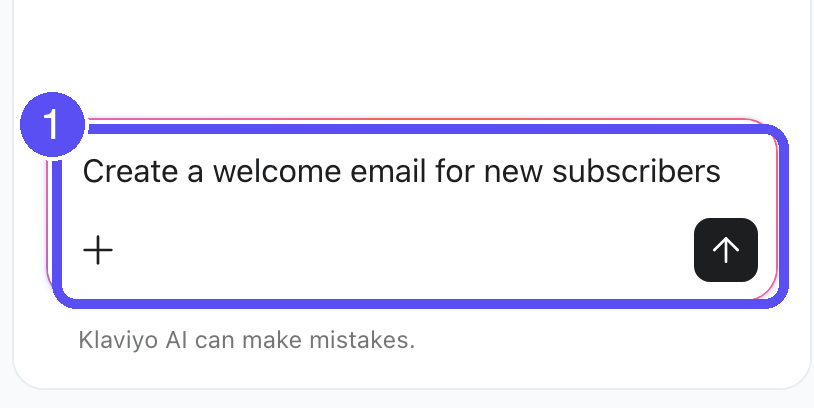
Two people who don't work for Klaviyo tested Composer on real accounts and wrote down exactly what happened. Their reports line up almost perfectly.
Test one — Joy Joya. Laryssa Wirstiuk gave Composer a simple prompt: a Fourth of July weekend sale, 25% off a sale section. Before writing a word, it ran a visible background checklist — fetching brand context, loading visuals, reviewing email history, analyzing audience patterns, scanning the catalog. Minutes, not seconds.
It came back with a clean draft: a subject line ("25% Off the Sale Section, This Week"), preview text, a basic layout stitched together from image slices in past emails. Accurate. Generic. The design didn't quite hang together, either.
But here's where she was genuinely impressed — and so was I: the send-time recommendation was backed by the account's real history — revenue per recipient, open rates, references to specific past sends. Not "Tuesday at 10am is best." Account-specific. That's the part generic AI can't fake, and it's the part Composer is quietly good at (her full review is worth a read).
She also flagged a trap I want you to remember: if your emails are built in Canva or Figma and uploaded as flattened image slices, Klaviyo literally cannot read the text inside them. So Composer learns your "brand voice" from your website and whatever native Klaviyo text exists — not from your actual best campaigns. More on why that matters in a second.
Test two — one agency's live demo. Elliot Kovac ran Composer on camera inside a real client account and called it straight: "The potential is clear, but the product still feels very beta." Useful starting points, sure, but off-brand messaging, weak visual hierarchy, mobile issues, and slow editing through the chat box. (Kovac also promotes a competing AI email tool, so treat his critique as informed-but-not-neutral — though it lines up with what the more neutral Joy Joya review found independently.)
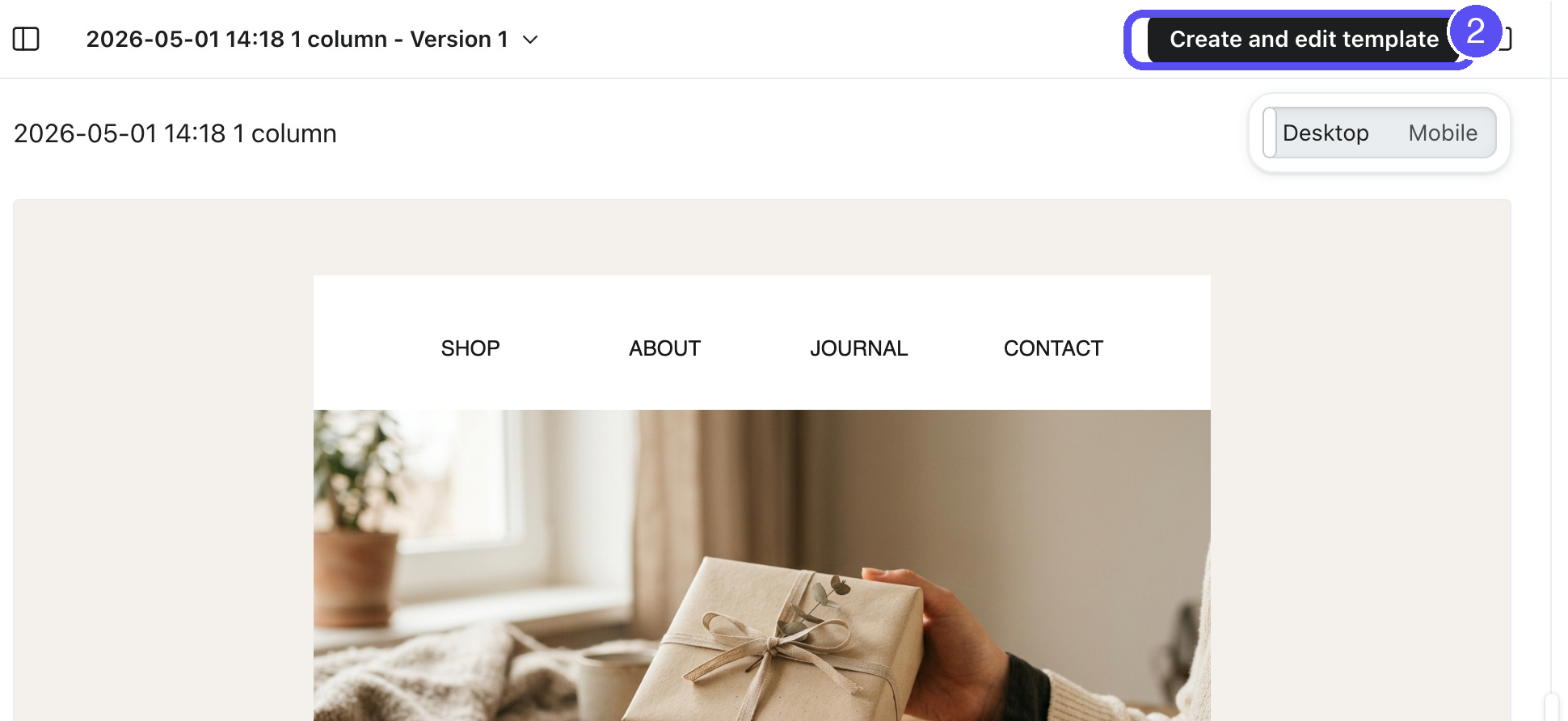
Now the flip side — the part that impressed me more than the campaign builder did. During the private beta, AS Beauty pointed Composer's Flow Audit at their setup. Katherine Cabe, their Senior Director of Retention Marketing:
"Composer's Flow Audit tool surfaced collision issues across our 113-flow library, showing us where automations were unintentionally competing for the same customers, creating unnecessary message volume, and potential revenue loss."
A 113-flow library with automations quietly fighting over the same customers. That is exactly the kind of expensive, invisible mess that takes a human auditor hours to untangle — and Composer flagged it (Digital Commerce 360). SPANX and Dermalogica got early access too; AS Beauty's is the one with real numbers attached.
Let me put it in two lists, because that's honestly how it breaks down.
Good at:
Audits and opportunity-spotting. Pattern-matching against your real account data — flow collisions, underperforming flows, neglected segments. The unsexy, data-heavy work in-house teams never have time for. This is the most credible part of the whole pitch.
Send-time recommendations grounded in your account's actual history, not generic best-practice.
A fast first draft when you're staring at a blank campaign — skeleton, subject line, audience, in minutes.
The human-approval gate is real. No draft sends itself. Both testers had to fix drafts by hand before anything shipped, which is a feature, not a bug.
Not good at (yet):
Sounding like your brand. The single most consistent finding across both tests: accurate, competent, and generic. The default version of any brand, not yours.
Reading image-heavy emails. If your program is flattened Canva exports — which describes a huge chunk of DTC brands — Composer has less real voice to learn from, and its drafts need more rework.
Editing speed. Reworking through the chat interface is slow. If a draft needs heavy fixing, the "minutes not days" math quietly falls apart — you can burn more time fixing the AI draft than you would've spent writing it yourself.
Beta polish. Mobile hiccups, shaky visual hierarchy, the occasional wrong output. It's a beta, and it behaves like one.
I'd genuinely tell most people to go kick the tires — it's free for 90 days, low risk. But a few ways folks are already getting it wrong:
Treating it as set-and-forget. There's no send-as-is mode for a reason. Every draft needs a human pass on prices, discount codes, product names, dates, and links. Klaviyo warns generated content "can occasionally be wrong." Skipping QA isn't saving time — it's gambling.
Feeding it vague prompts. Output quality scales directly with prompt specificity — offer, context, tone. "Build a sale email" gets you slop. Klaviyo's own docs admit brand-new accounts with thin context get weaker results until that context builds up.
Forgetting the AI-disclosure question. Composer doesn't add AI-use disclosures for you — that's on you. And 2026 is not the year to hand-wave it: New York's AI-disclosure law took effect in June, the EU AI Act's transparency rules land this August, and the FTC has been leaning on a "just disclose it" line. Worth a five-minute conversation with whoever owns your compliance.
Assuming "grounded in your data" fixes bad data. It doesn't. An AI campaign builder amplifies whatever's already in your account. Clean segments and flows in, sharper campaigns out. Messy data in, confidently-wrong campaigns out — just faster.
That last one is the whole game, so let me finish there.
Here's the thread running through every limitation above: Composer's output is gated by the state of your account.
Brand voice guidelines configured, or not. Segments clean, or a graveyard nobody's touched in a year. Native Klaviyo blocks it can read, or flattened Canva images it can't. Two brands can switch on the exact same AI and get wildly different results — and the difference has nothing to do with the AI. It's the foundation underneath it.
That's the part I think most people will miss in the rush to try the shiny new thing. Composer isn't a strategy. It's an amplifier. And an amplifier turned up on a weak signal just gives you louder noise.
Composer is genuinely useful at the boring, data-heavy stuff — audits, flow-collision detection, send-time calls grounded in your real history. It's still shaky at the thing that makes an email sound like you. Go try it — it's free — but review every single draft, and don't expect it to replace strategy or taste.
And before you spend 10,000 credits discovering where your account is weak, it's worth knowing that in advance.
Composer is only as good as the Klaviyo foundation under it. If your flows are still flattened Canva images, your segments haven't been cleaned in a year, or you've never written a brand-voice guideline, no AI — Composer included — is going to hand you something you'd actually send. We'll audit your flows, segments, templates, and setup and give you a prioritized fix list. Detailed report, 3-5 days.
→ Request Your Free Klaviyo Audit
Go kick the tires this week — it's free.
— Sahil
No posts
Comments
Nothing yet. Say the first thing.
Sign in to join the conversation.